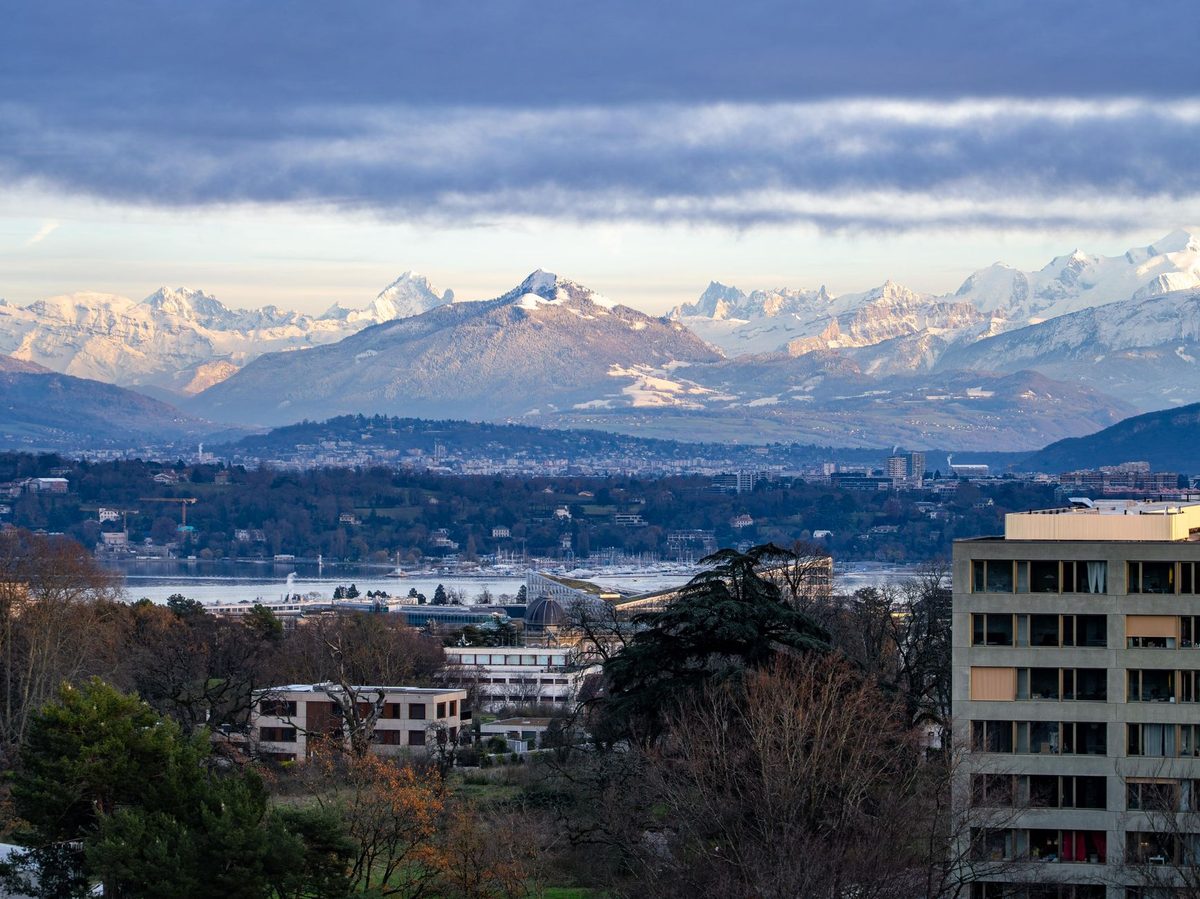
The first thing to know about Mont Salève is that it is French, not Swiss, which surprises almost everyone. It is the long wall of rock you see to the south every time you look across Geneva, rising about 900 m straight out of the suburbs. The second thing to know is that you can be standing at the top, 15 minutes from the city centre, with the whole Geneva basin laid out below you and Mont Blanc on the horizon, for less than the price of a fondue. Genevans call it the balcony of the city, and they mean it literally.
This is the mountain locals actually use. People hike it before work, paraglide off it in the evening, train on its limestone in spring, and snowshoe its plateau in winter. The cable car finished a full renovation in April 2026 with new cabins, and the Grande Varappe climbing wall at the summit reopened the same month. If you are spending more than a couple of days in the city, this is the one outdoor trip I push hardest. For the wider picture, start with the Geneva outdoor activities pillar; this guide goes deep on the Salève itself: every route up, the 2026 cable car prices and schedule, paragliding, via ferrata, the restaurants, and the sunrise hike I keep recommending.
Mont Salève at a glance
If you only skim one section, make it this one. Everything below is detail.
| Detail | What to know |
|---|---|
| Altitude | 1,379 m at Grand Salève; Le Grand Piton, the technical high point further south, is 1,397 m |
| Where it is | Haute-Savoie, France, just over the border from Veyrier |
| Cable car (2026) | New cabins. EUR 13 one-way / EUR 18 return adult, EUR 6 child (4-15), EUR 9 youth/senior. Free with the Geneva Tourism Card |
| Getting there | TPG bus 8 to Veyrier-Douane (about 25 min from Rive), then a 9-minute walk across the border to the base |
| Best-value ticket | Combined TPG bus + cable car for CHF 21 |
| Open | 1 Apr-1 Nov daily 9:00-18:45 (Thu/Fri/Sat to 22:45). Winter 17 Jan-1 Apr Wed-Sun 9:00-16:45 |
| Skiing | No downhill skiing. Snowshoe, cross-country, sledge, ski-tour uphill only |
Geography: there are three Salèves
People muddle these constantly, so here is the quick version. The Salève is a single limestone ridge with three sections:
- Petit Salève (north-east, lower) is the gentler shoulder above Monnetier-Mornex, around 900 m. Quieter trails, and where Genevans go when they want a Salève hike without the Sunday crowds.
- Grand Salève (the main ridge) is the long flat spine running south from Croisette. The cable car arrives here at La Thuile, and this is where most hikers walk and where the restaurants are.
- Le Grand Piton (the highest summit) is 1,397 m, the technical peak further south, reached on a longer ridge traverse.
The whole range is karst limestone, shaped by ancient seas, riddled with small caves and cliffs. The sheer west face, the one that towers over Geneva, is what makes the mountain look so dramatic from the city. The east face slopes far more gently into the Bornes.
The cable car: 2026 prices and schedule
The Téléphérique du Salève finished a full renovation in early April 2026: new cabins, an updated lower station, and refreshed summit infrastructure. The ride itself takes 5 minutes from the lower station at Étrembières / Pas de l’Échelle (just over the Swiss border from Veyrier) up to La Thuile at 1,100 m. Here is what it costs in 2026:
- Adult: EUR 13 one-way / EUR 18 return
- Child (4-15): EUR 6 return
- Youth / senior: EUR 9 return
- Family packs: discounted multi-passenger options
- Free with the Geneva Tourism Card, the transit card every Geneva hotel hands guests on arrival, so bring it
- Combined TPG bus + cable car ticket: CHF 21, the best value if you are not already carrying the Tourism Card
On the schedule: from 1 April to 1 November the cable car runs daily 9:00-18:45, with Thursday, Friday and Saturday extended to 22:45 in summer for evening dinners at the top. From 17 January to 1 April it runs Wednesday to Sunday, 9:00-16:45. It closes for maintenance for two to three weeks each November or early December.
To reach the base from Geneva, take TPG bus 8 to Veyrier-Douane, then walk 9 minutes across the French border (Schengen, so normally no checks) to the cable car. Cornavin to summit runs about 50-55 minutes including the connection; from Rive it is closer to 30-35. If you are weighing up transit passes for the rest of your trip, our Geneva Pass vs Swiss Travel Pass comparison is worth a read first.
Hiking Mont Salève: five routes up
This is the most-hiked mountain in the Geneva area, and deservedly so, with routes for every fitness level and all of them reachable by public transport. Here is how they stack up.
| Route | Distance / gain | Time | Character |
|---|---|---|---|
| Pas de l’Échelle | 9 km / 700 m | 3-4 hrs | The classic, cut-stone steps and ladders |
| Petit Salève via Monnetier | 6.6 km / 480 m | 2.5 hrs | Quieter, gentler, fewer crowds |
| Grande Gorge / Orjobet loop | 11.5-15 km / 800-1,000 m | 5-7 hrs | Caves and the Trou de la Tine, vertigo warning |
| Pas du Loup | varies | varies | North-face local favourite when the classic is busy |
| Full Grand Salève traverse | 15.8 km / 1,030 m | 4.5-5 hrs | End to end, descend by cable car |
The classic: Pas de l’Échelle
Nine kilometres, 700 m of gain, 3-4 hours round trip. It starts at the same place as the cable car base and climbs through forest to a steep notch, the Pas de l’Échelle (Ladder Pass), where 14th-century stone steps and a few metal ladders are cut straight into the cliff. Above the notch the walking eases off to the ridge and the summit station. Bus 8 to Veyrier-Douane.
Quieter: Petit Salève via Monnetier
6.6 km, 480 m, about two and a half hours. Gentler and far quieter, starting from Monnetier-Mornex. Same ridge, a fraction of the Sunday foot traffic.
For the connoisseur: Grande Gorge / Orjobet loop
11.5 to 15 km, 800-1,000 m, five to seven hours. This is the route hardcore Salève walkers rave about. It climbs past the Orjobet Cave, a substantial karst cavern, and the Trou de la Tine, a circular hole worn clean through the rock by ancient streams. It pairs naturally with the Pas de l’Échelle as a loop. There are cable-protected sections, so skip it if you have a head for heights problem.
Two more: Pas du Loup and the full traverse
The Pas du Loup is a less-trafficked north-face alternative, a local favourite when the classic route is crowded. The full Grand Salève traverse (15.8 km, 1,030 m, 4.5-5 hours) starts at Étrembières on the north end, runs the entire ridge south to Croisette, and descends by cable car. That is the complete Salève experience in one go. For more walks in the region, the outdoor activities guide rounds up the best trails near the city.
What to do at the top
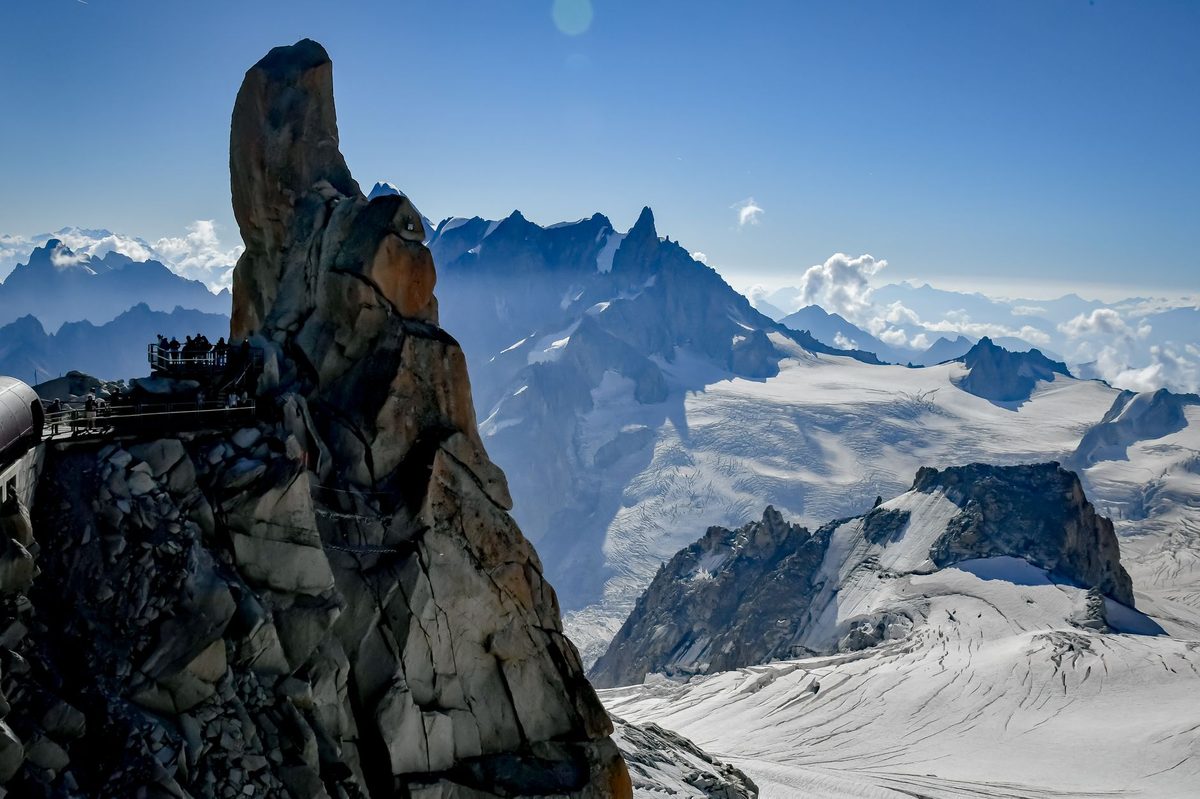
The summit plateau is a working playground, not just a viewpoint. Once you are up there, you can:
- Eat well. L’Horizon sits right at the cable car arrival and is the casual option; L’Observatoire is a 20-minute walk south along the ridge and serves homemade seasonal cooking, mains EUR 25-40, the destination-dinner choice.
- Paraglide off the launch slope (more on that below).
- Climb a via ferrata on the south face, or the reopened Grande Varappe wall.
- Walk the Observatory loop (about an hour, family-friendly, marked from the station).
- Reach the Treize Arbres viewpoint (15 minutes from the cable car, the postcard Geneva panorama).
- Ride the plateau and descent mountain-bike trails.
- Picnic with Mont Blanc in front of you.
Paragliding off Mont Salève
If you want one Geneva activity you will still be talking about a year later, this is it. The Salève is one of the best-known paragliding launch sites in Europe: predictable thermals, a gentle launch slope, a valley landing in Veyrier, and easy access by cable car. Tandem flights with an instructor are bookable, no experience needed.
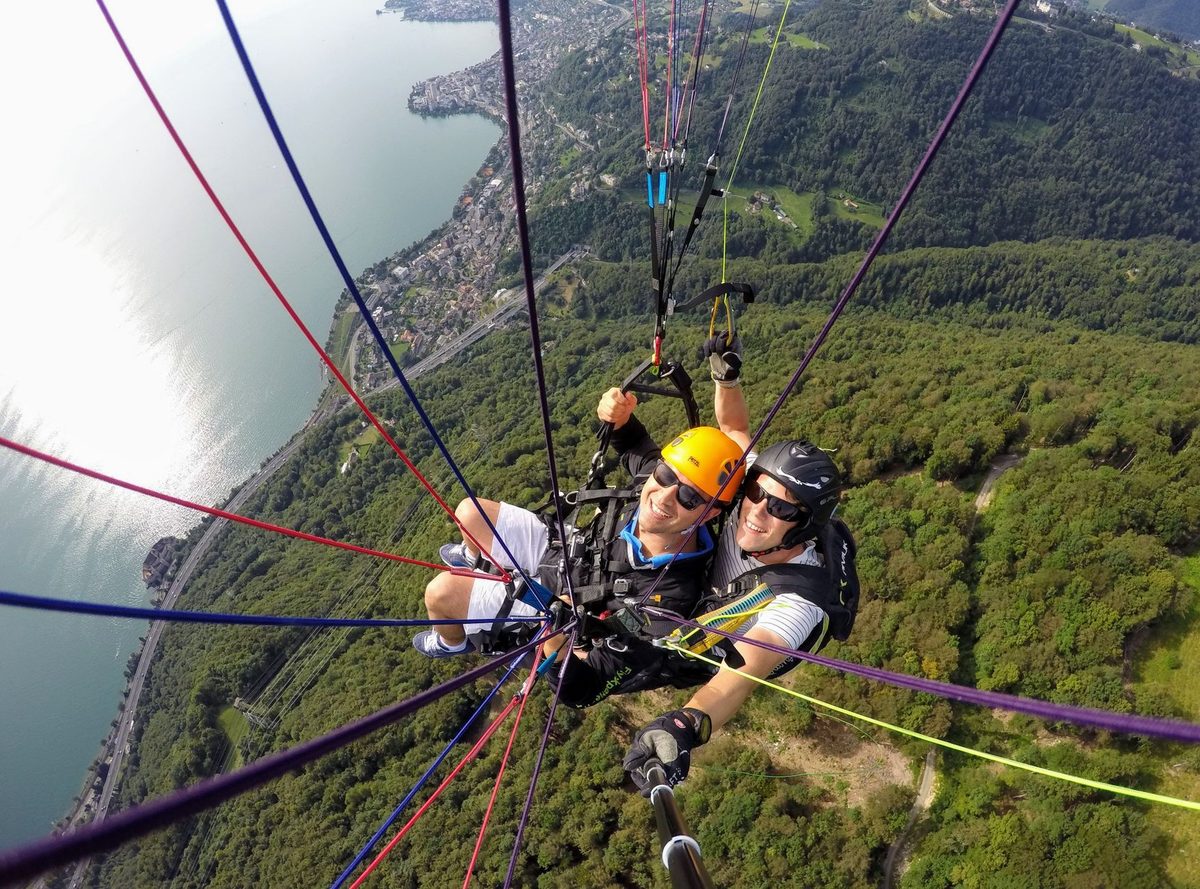
The established operators are Paradelta (running flights for more than 50 years), Salève Airlines, and Esprit Sport. Current tandem prices:
- Discovery flight (10-15 min): CHF 140
- Traditional flight (20-25 min): CHF 190
- Complete flight (25-35 min): CHF 240
Flights run Tuesday to Sunday at 13:30, 14:45, 16:00 and 17:15; book the last slot for golden-hour light. The season is March through October, minimum age 11. The drill: meet at the cable car base, ride up with your instructor, walk 5 minutes to the launch, take a short safety brief, run a few steps and lift. You sail out over the Geneva basin with the mountain at your back, and land in the Veyrier valley, where a taxi or operator shuttle brings you home. Book ahead in summer.
Via ferrata and climbing
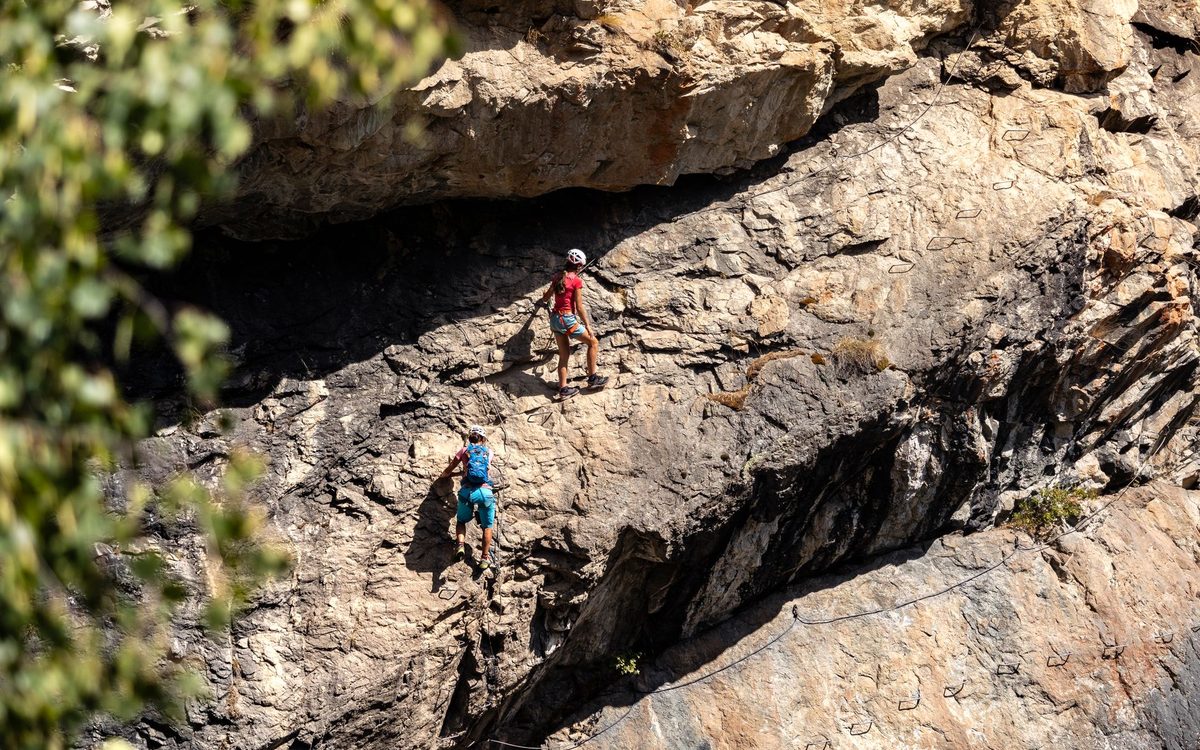
The south face has several via ferrata routes managed by the Bureau Montagne Salève, grading from K1 (beginner) up to K3-K4 (intermediate, steep secured terrain). A guided half-day runs around EUR 50 and is the way to go for your first time, since they provide the kit and walk you through the technique. If you already own a harness, lanyards and helmet and have done via ferrata before, going independently is fine.
Up at the summit, La Grande Varappe climbing wall reopened in April 2026 after refurbishment: six routes, 900 holds, beginner-friendly with instruction, open during cable car hours. The mountain has real pedigree here. This is where 18th and 19th-century alpinists like Horace-Bénédict de Saussure trained before tackling Mont Blanc, so in a roundabout way the 1786 first ascent of Mont Blanc was rehearsed on these cliffs.
Winter on the Salève
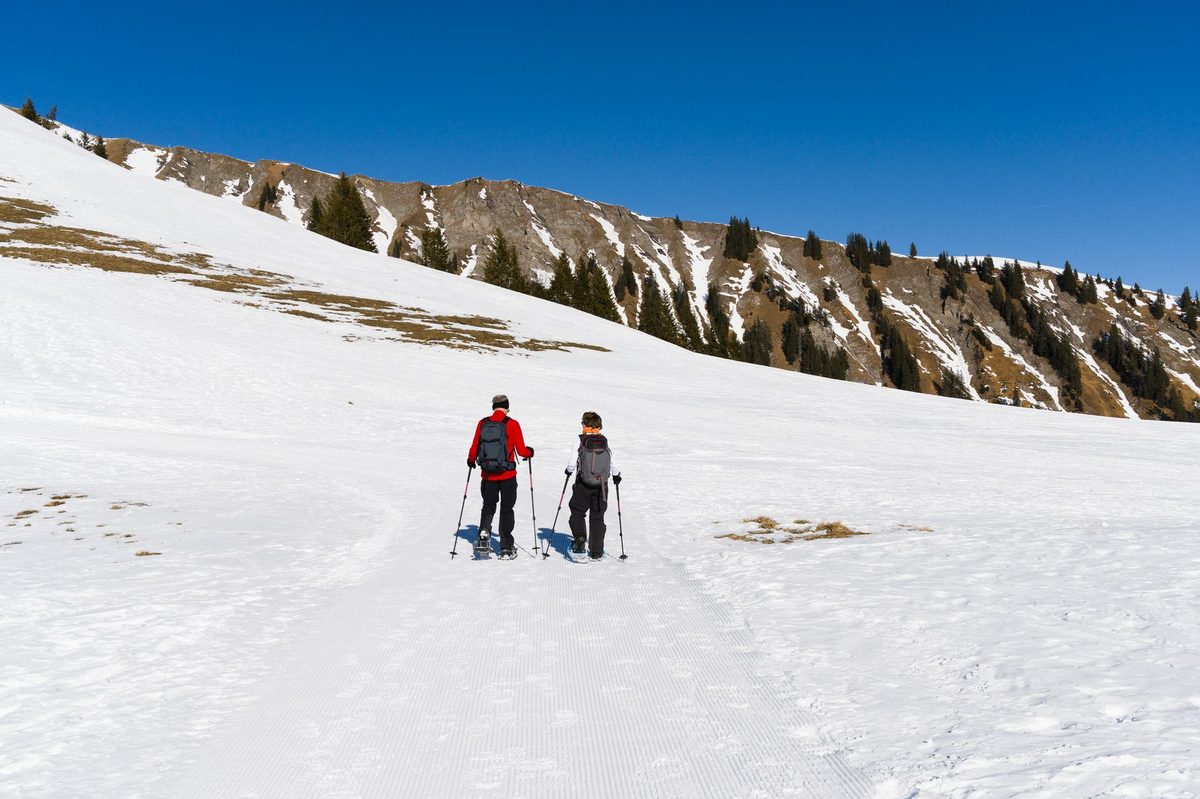
The honest part first: there is no downhill skiing on the Salève. The old lifts were dismantled years ago, and any article that tells you otherwise is out of date. Do not turn up with skis. What the mountain does offer in winter is plenty:
- Snowshoeing on marked plateau and ridge trails, easy to moderate. The cable car runs Wednesday to Sunday, January to April.
- Cross-country skiing at the Domaine nordique du Salève in La Muraz, 25 km of tracks, rental from around EUR 10/day on site.
- Sledging on gentle family runs near Croisette.
- Ski touring (uphill skinning) on popular early-morning routes from Étrembières and Veyrier.
- Winter walks on the plateau when the snow is light.
The Salève has one trick in winter that locals treasure: it often sits above Geneva’s stubborn winter fog. The city stays grey for days while the plateau is in full sun, which makes that 15-minute cable car ride the cheapest mood-fix in town. For the full cold-season rundown, see our companion guide to Geneva winter outdoor activities, and for proper downhill, the Swiss Alps excursions from Geneva are an easy add-on.
What you actually see from the top
On a clear day the summit area gives you, roughly west to east:
- Lake Geneva (Lac Léman), the whole western basin, with the Jet d’Eau a tiny white needle.
- The city itself spread below you, Cornavin station and the Cathedral St-Pierre both pickable out.
- The Jura ridge to the west, La Dôle’s radar dome catching the light.
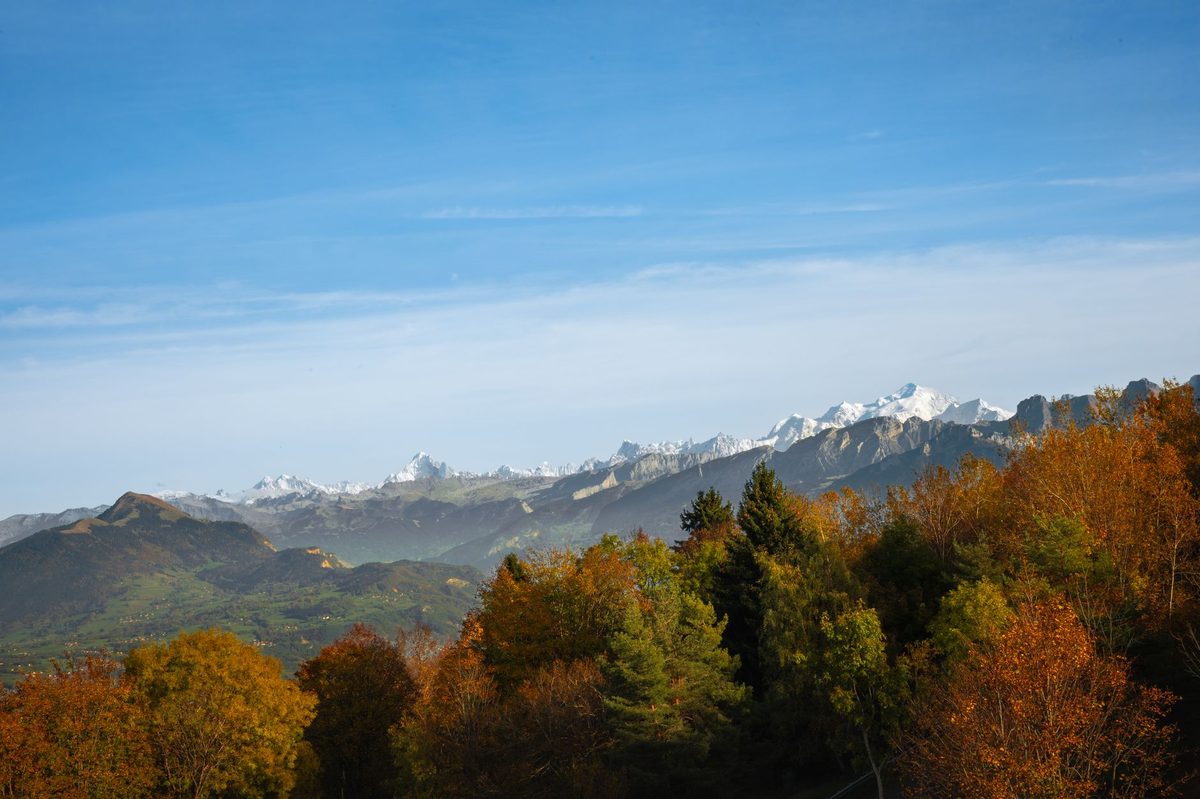
- The Mont Blanc massif on the south-east horizon, dominant on clear days.
- The Dents du Midi further east in Valais, and on the very clearest days the Aiguille Verte and Grandes Jorasses.
Visibility is usually best from October to March (less haze) and worst in August (afternoon haze). Sunrise paints the lake pink; sunset turns the Jura gold.
A short history
The Salève has been the Balcon de Genève for at least two centuries. The original cable car opened in 1932; its concrete modernist lower station, now restored, is still in use. Before the lift, generations of climbers walked or scrambled the Pas de l’Échelle stone steps to the top.
Horace-Bénédict de Saussure, the Genevan natural philosopher who first proposed a scientific assault on Mont Blanc and bankrolled Jacques Balmat’s 1786 first ascent, trained extensively here. In a real sense, Mont Blanc was conquered by Salève climbers first. As for why a Geneva mountain is French: it has belonged to France since the Treaty of Turin in 1860, when Savoy joined the country. Geneva sits on the Swiss side of a border drawn across the lake basin, and the Salève simply landed on the other side of the line.
Practical tips
- Border crossing: Schengen. An ID is recommended but rarely checked at Veyrier-Douane. Carry it anyway.
- Parking: free at the Étrembières base station; limited and paid at the summit on the Route des Crêtes.
- Dogs: allowed in the cable car for a small fee, and on most trails. Watch for grazing cattle on the upper pastures in summer.
- Restaurant booking: L’Observatoire fills up on summer weekends and on the Thursday/Friday/Saturday late-cable-car evenings. Reserve.
- Weather: check the cable car webcam before you go; fog and storms occasionally close it.
- What to wear: always one layer warmer than the city, since the summit usually runs 6-8C cooler than central Geneva.
- No accommodation up top: plan a day or evening trip and head back to Geneva for the night.
Best time of day and year
A few combinations are worth planning around:
- Sunrise hike: walk up the Pas de l’Échelle pre-dawn (start 4-5 am in summer), summit by 6 for pink-light photos of Geneva and Mont Blanc, then ride the cable car down when it opens at 9.
- Sunset dinner: use the Thursday/Friday/Saturday late hours. Cable car up at 18:00, dinner at L’Observatoire, sunset over the Jura, last cabin down at 22:45.
- Summer evenings: best paragliding light and fewer crowds than midday.
- Weekdays: skip the Sunday crush, especially in summer.
- Autumn: clearest Mont Blanc visibility, larch colour, fewer hikers.
- Winter weekday with snow: snowshoe above the city fog with the basin laid out below.
Four one-day plans
Pick the version that matches your energy:
- The sunrise hiker: up the Pas de l’Échelle pre-dawn, summit for sunrise, breakfast at L’Horizon, the Treize Arbres loop, cable car down around 09:30, back in Geneva for a late second breakfast.
- The family day: bus 8 to the base, cable car up at 10:00, picnic at Treize Arbres, the Observatory loop, ice cream at L’Horizon, cable car down at 16:00.
- The adventure day: cable car up at 10:00, guided via ferrata in the morning, picnic, a paragliding tandem at 16:00, cable car down at 18:00.
- The sunset diner: cable car up at 18:00 (Thu/Fri/Sat), walk to L’Observatoire by 19:00, dinner at sunset, back for the last cabin at 22:45.
Pair your Salève visit with
The Salève slots cleanly into a wider Geneva day. Combine a morning on the mountain with an afternoon swim, or follow it with an evening ride along the lakeshore using our cycling routes in Geneva. If the Alps are the real draw, treat the Salève as a warm-up and book a bigger day out with the Swiss Alps excursions from Geneva or a day trip to Chamonix, where you can stare straight at Mont Blanc. And the Geneva outdoor activities pillar ties the whole season together.
Frequently asked questions
Is Mont Salève in France or Switzerland?
France, in Haute-Savoie, just over the border from Veyrier. Schengen rules apply, so carry an ID, but you will rarely be checked at Veyrier-Douane.
How much is the Mont Salève cable car in 2026?
EUR 13 one-way or EUR 18 return for adults, EUR 6 for children (4-15), and EUR 9 for youth or seniors. It is free with the Geneva Tourism Card that hotels give every guest, and the combined TPG bus plus cable car ticket is CHF 21.
How do you get to Mont Salève from Geneva?
Take TPG bus 8 from Rive to Veyrier-Douane, about 25 minutes, then walk 9 minutes across the border to the cable car base. Allow roughly 50-55 minutes from Cornavin including the connection.
Can you ski on Mont Salève?
There is no downhill skiing; the old lifts were removed. You can snowshoe, cross-country ski at the La Muraz Nordic area, sledge, and ski-tour uphill. For lift-served slopes, look to the Alps via our excursions guide.
Can you paraglide from Mont Salève, and how much is it?
Yes. Tandem flights run from CHF 140 for a 15-minute discovery up to CHF 240 for a 35-minute complete flight, with operators including Paradelta and Salève Airlines, Tuesday to Sunday from March to October.
When is the best time to visit Mont Salève?
October gives the clearest views and autumn colour; summer is best for paragliding and via ferrata; winter is for snowshoeing and escaping the city fog. For photos, aim for the sunrise or sunset golden hours.
Related Geneva guides
Keep exploring with our Geneva outdoor activities pillar, the winter outdoor activities guide, cycling routes, the Swiss Alps excursions, and the broader things to do in Geneva list to build the rest of your trip.