Geneva has a peculiar advantage most European cities can only dream of — a 580 km² freshwater lake clean enough that locals dip in on lunch breaks, with a public-bath culture so embedded that two of the city’s most beloved institutions are essentially municipal swimming spots. Lake Geneva (Lac Léman, if you’re being French about it) hits 23 °C by mid-July, holds that warmth into September, and the official Geneva beaches don’t charge much — most are free.
I’ve been swimming in this lake for years across every season, and what surprises visitors most isn’t the cleanliness (Geneva’s CIPEL monitoring keeps the bathing-quality standards stricter than most coasts). It’s the variety. You’ve got a CHF 2 historic pier with sauna; a 2020-vintage sandy beach right next to the Jet d’Eau; a free pebble bay that locals BBQ at on Sundays; a brand-new curving reed-bed swim platform almost nobody knows about; and a string of village beaches along the Mouettes ferry route that turn the lake into a beach-hopping highway for the price of a tram ticket.
For the wider picture of getting out on the water, start with our Geneva outdoor activities pillar and our Lake Geneva geography guide. This is the 2026 guide to every place worth swimming in Lake Geneva from the city — what each spot delivers, when to go, what it costs, and how to get there.
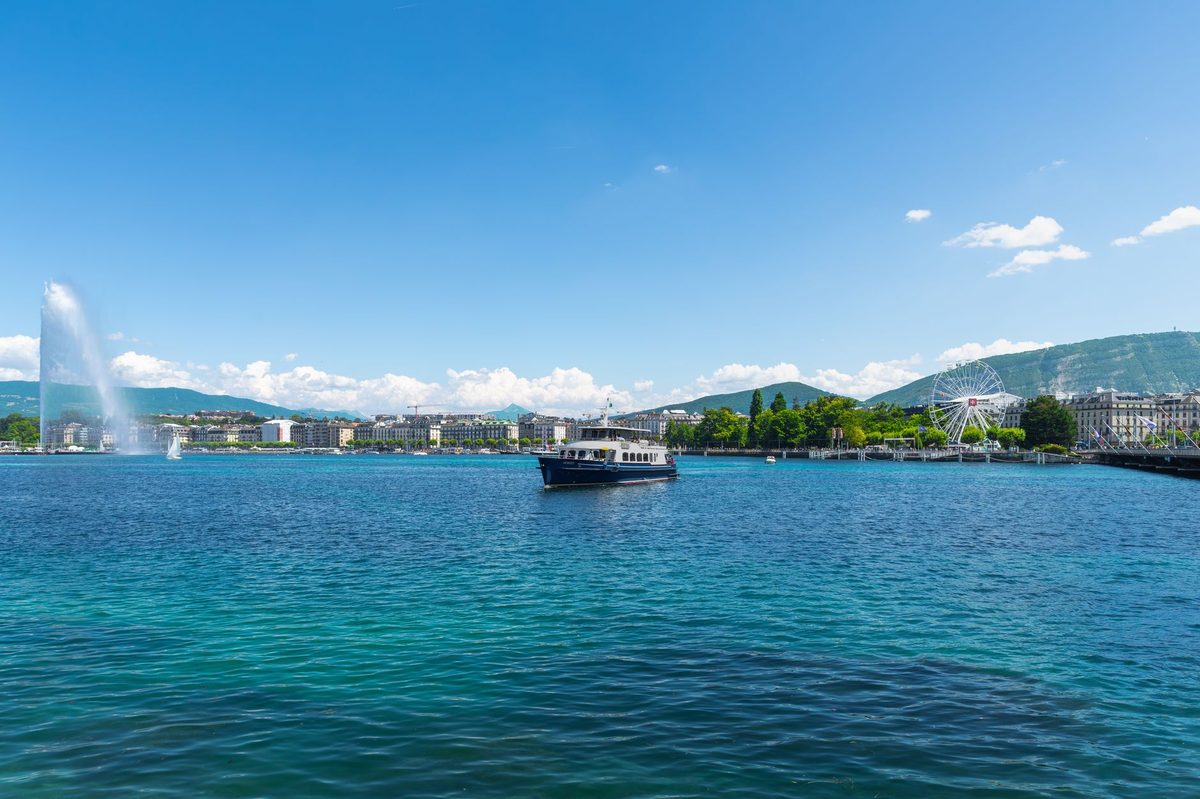
Lake Geneva swimming at a glance
Five things worth knowing before you start packing the towel:
- Most beaches are free. Bains des Pâquis charges CHF 2 in summer (free in winter), Genève-Plage charges CHF 8 adults. Everything else is free.
- The water is clean. CIPEL — the international Lake Geneva water quality body — monitors every official beach and publishes results. The Geneva beaches all rank “good” for bathing.
- Season runs May to September for comfort, year-round for the hardcore. The lake reaches 15 °C in May, 21-23 °C July-August, drops to 16 °C in October, and bottoms around 6 °C in February.
- Geneva swimming spots are pebble or grass, not sand. The only proper sandy beaches are Baby Plage (tiny), Plage des Eaux-Vives (newer, sand-and-pebble), and Excenevex on the French side.
- No glass bottles, please. It’s the one universal rule. BBQs only in marked pits. Dogs on leashes (designated areas only on actual beaches).
Water temperature month by month
Lake Geneva warms slowly and cools slowly — that’s the upside of having 89 km³ of water acting as a heat reservoir. Here’s what to expect:
| Month | Avg water temp | Comfortable to swim? |
|---|---|---|
| January | 6-7 °C | Winter swimmers only |
| February | 5-6 °C (coldest) | Winter swimmers only |
| March | 7-9 °C | Brief dips, sauna pairing |
| April | 10-12 °C | Cold but possible |
| May | 14-16 °C | Acclimatised swimmers |
| June | 18-20 °C | Yes — beach season begins |
| July | 21-23 °C | Perfect |
| August | 22-24 °C (peak) | Perfect |
| September | 19-21 °C | Still warm; locals’ favourite |
| October | 15-17 °C | Brisk but doable |
| November | 11-13 °C | Cold-water territory |
| December | 8-9 °C | Sauna-then-plunge season |
The Bains des Pâquis publishes a live water/air temperature reading on its website every morning — useful for deciding whether today is a swim day.
Bains des Pâquis — Geneva’s year-round bathing icon
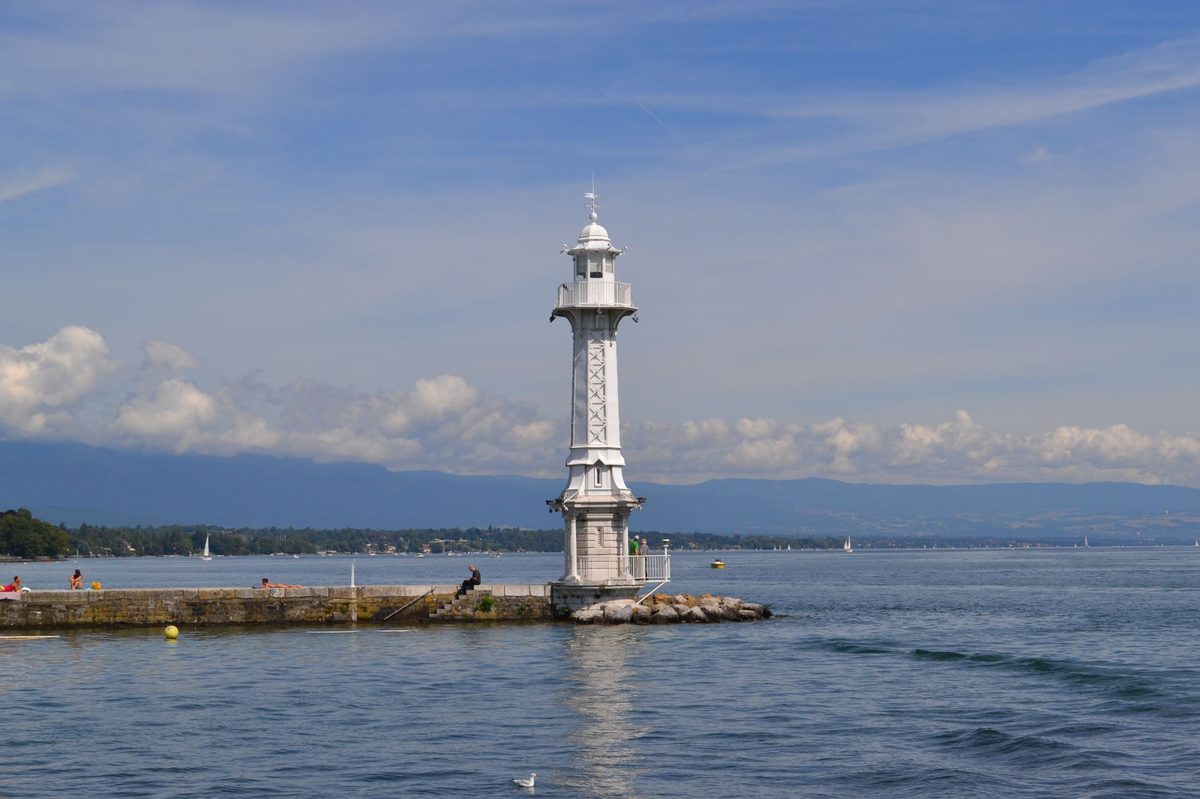
This is the one you’ve already seen on Instagram. A long concrete pier with a lighthouse at the end, jutting into Lake Geneva from the right bank — Quai du Mont-Blanc 30. Built originally in 1872, almost demolished in the late 1980s, saved by a citizens’ referendum that turned it into one of Geneva’s most loved spaces.
Entry: CHF 2 summer (11 May – 11 September), CHF 1 child, free under 6. Free entry the rest of the year. Season pass CHF 50. Sauna access is separate (combo pass around CHF 22 in winter).
Hours: Open year-round. Summer 10:00-21:00 (Sundays from 09:00). Winter the sauna runs evenings.
What you get: Pebble beach, high diving boards (the 10 m board has poetry written on it), a sauna with hammam and Turkish bath, swimming lessons, cold-water swimming sessions every Monday and Wednesday at 12:30 (yes, even in winter), the La Buvette restaurant with the CHF 14 plat du jour, and the legendary fondue dinners that book out weeks ahead. In July there are the Aubes Musicales — free classical concerts at dawn, around 6 am, that have become a Geneva summer ritual.
Transport: Bus 1 to Monthoux, tram 15, or the Mouettes M1/M2 yellow water taxis from Molard. From Cornavin station it’s a 10-minute walk.
The view: Jet d’Eau front and centre, the Salève behind it. Sunsets here are about as good as Geneva gets. We dedicate a whole guide to the Bains because there’s that much to know about it.
Plage des Eaux-Vives — Geneva’s newest sandy beach
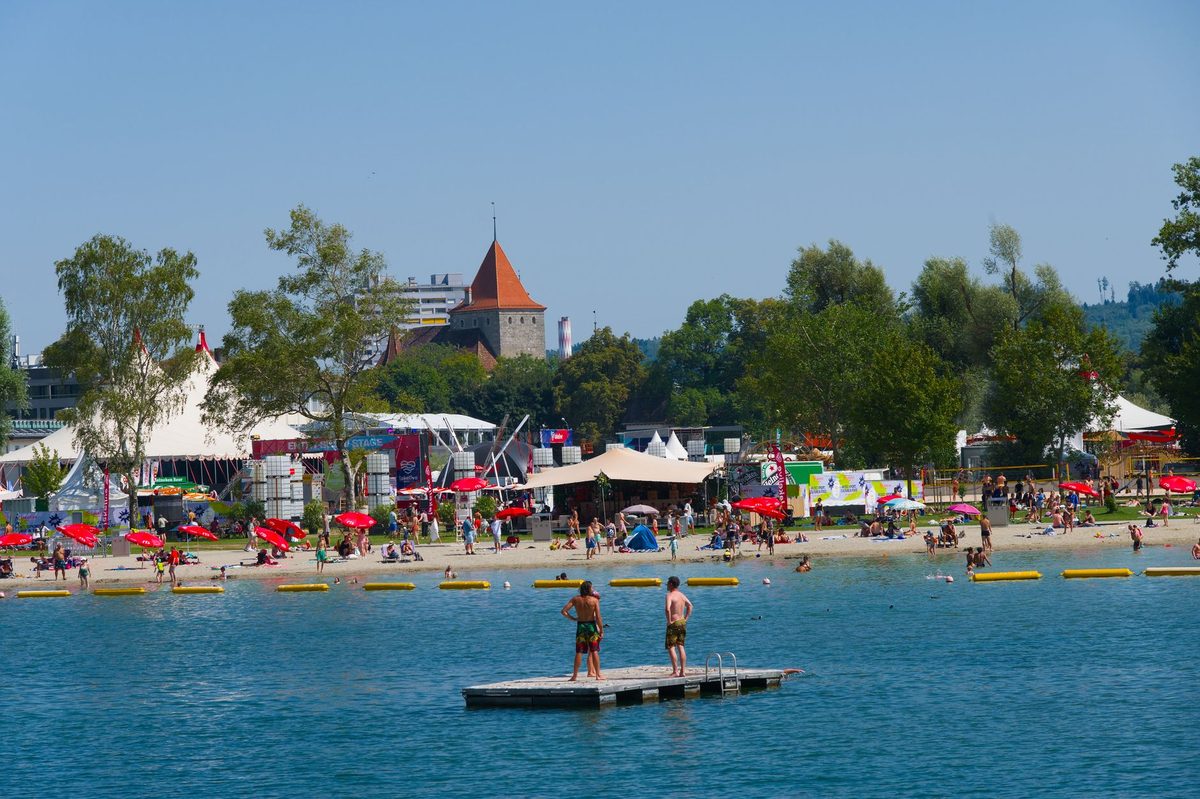
Opened in July 2020 after a decade of planning, the Plage des Eaux-Vives changed Geneva’s swimming geography overnight. 400 m of sandy and pebble beach stretching along Quai Gustave-Ador between Baby Plage and Genève-Plage, with a wooden footbridge crossing protected reed beds, lifeguards in summer, showers, toilets, a kiosk, and a wheelchair-accessible ramp into the water.
Entry: Free.
Best for: Anyone who wants to spread a towel on actual sand, families with kids who can’t handle pebbles, sunset photos with the Jet d’Eau perfectly framed.
Transport: Bus 2 or 6 to Vollandes or Helvétie, Mouette M2 or M3 across the Rade. Walking distance from the Jardin Anglais — count on 20 minutes along the quay.
Six summers in, it’s settled into being Geneva’s most popular beach. Get there early on hot weekends — by midday in August the lawn is wall-to-wall.
Baby Plage — the best free family spot in the city
Don’t let the name fool you. Baby Plage is small, but it’s a perfectly executed little urban beach — Quai Gustave-Ador 63, right next to Parc La Grange. A tiny stretch of actual sand, a grass lawn for picnics, a playground with swings, an ice-cream kiosk, public toilets, and lifeguards on duty in summer.
Entry: Free, no hours, always open.
Best for: Families with kids who need shallow water and a playground in arm’s reach. Couples wanting a sunset picnic with a Jet d’Eau view (the Jet is just across the bay).
Transport: Bus 2 or 6 to Parcs — 5 minutes’ walk north of the Jet d’Eau.
Genève-Plage — the Olympic pool and high-dive complex
The big one. Genève-Plage sits at Quai de Cologny 5, on the southeastern end of the city’s main lake basin. It’s an entire aquatic complex: a 50 m Olympic pool, a paddling pool, a 10 m high-dive tower, water slides, a beach club, beach volleyball courts, a diving school, paddleboard and kayak rentals, and a restaurant.
Entry: Around CHF 8 adult / CHF 4 child for 2026 (the long-circulated CHF 7 figure is outdated — check geneve-plage.ch the morning you go). Season pass CHF 100/50.
Season: Mid-May to mid-September, 10:00-20:00.
Best for: Active families, swimmers who want proper lengths in a real pool, anyone who wants to spend an entire day at one venue with food, sport, and lake access.
Transport: Buses E, G, A, 2, or 6 to Genève-Plage; Mouette M3 to Port-Noir. On-site parking is CHF 1/hr weekdays — usually full by 11 am on hot weekends.
The Quai de Cologny reed-bed pier — Geneva’s best-kept secret
This one almost nobody writes about. A curving wooden swim platform built recently along the Quai de Cologny, with 7,000 planted reeds protecting an ecological zone underneath and ladders dropping straight into the lake. It’s tiny, free, photogenic, and weirdly empty.
Best for: Locals’ lunchtime dip away from the crowds. Photographers chasing morning light. People who think Geneva-Plage is too organised.
Transport: Bus 33 to Cologny-Temple, or Mouette to Port-Noir then walk.
The hidden left-bank locals’ spots
Past Genève-Plage, the lakefront becomes a string of small free beaches that most tourists never reach. They’re worth it.
La Savonnière (Collonge-Bellerive). Grass and pebbles, shade trees, very clean water, paddleboard rentals in summer. About 15 minutes by car or bus E from Rive.
La Nymphe (Collonge-Bellerive). Tiny hidden cove, no facilities, locals only. Bring everything — water, snacks, your own shade.
La Belotte (Cologny). A small lakefront port with a modern wooden swim deck and a café in walking distance. Bus A from Rive.
Plage d’Anières and Tougues. Free pebble coves between Corsier and Hermance, perfect for picnics.
Beaches a short ride beyond the city
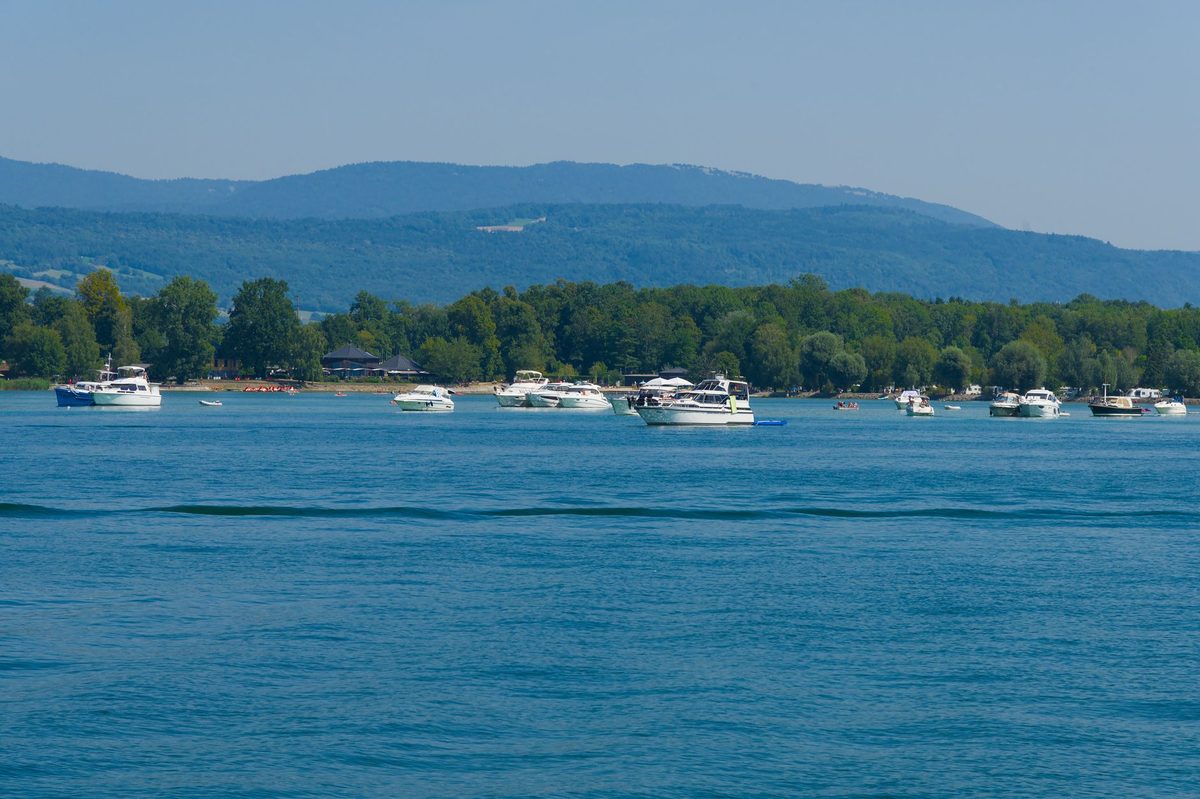
Le Vengeron (Pregny-Chambésy). Route de Lausanne 222. A big free pebble-and-grass beach next to a marina, with a kitesurf and windsurf launch (the Bise wind hits hard here), the Restaurant du Vengeron, free parking, and marked BBQ pits. Bus V to Vengeron stop, or train to Genthod-Bellevue plus a 10-minute walk.
Port-Choiseul / Versoix beach. Free, family-friendly, lawn and shade, sailing school next door, cafés in Versoix town a short walk away. The Léman Express RER reaches Versoix in 12 minutes from Cornavin.
Plage d’Hermance. Furthest commune on Lake Geneva on the Swiss side, right by the French border. A small fee in peak season, sometimes free off-peak. Pebble beach, lawn, the Le Lacustre café on the lake, a scuba-diving school, lifeguards in season. Bus E terminus, 35 minutes from Rive — and a properly different vibe from the city.
Plage de Crans-près-Céligny. Tiny, quiet, free, grass and pebbles. Train to Céligny.
French-side day trips by boat
Excenevex (Haute-Savoie). The only natural fine-sand beach on the entire lake. About 45 minutes by car from Geneva, or take the CGN paddle steamer to Yvoire then taxi or bike the last few kilometres. Parking €5-8, beach access free, lifeguards in July and August (11:00-18:00). Shallow bay, paddleboards and pedalos for rent, restaurants behind the beach. If you can only do one French-side swim day trip, do this one.
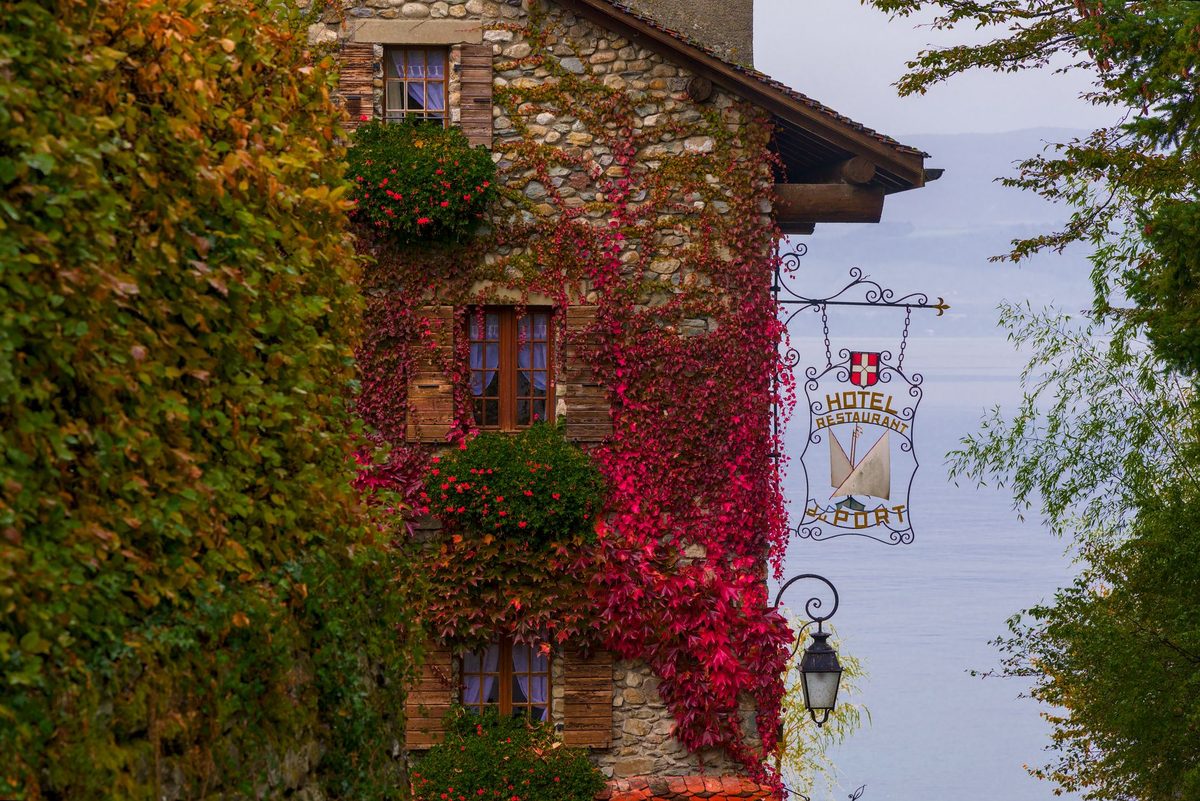
Yvoire. Medieval flower village. The swimming spot is La Garitte, on the village’s lake edge. Combine with a wander through the cobbled streets and lunch at one of the lakeside restaurants.
For the full transport breakdown, see our guide to day trips from Geneva.
Swimming in the rivers — for the brave
Geneva sits at the confluence of two rivers and a few locals swear by river swimming in summer. La Jonction is the famous one — where the icy turquoise Arve meets the warmer green Rhône, you can see a clean colour line in the water. People swim and float downstream from a launch point above the confluence to the next bridge, then walk back.
A warning: the Rhône current here is real. People drown most summers. Only do this if you’re a strong swimmer, never alone, and never after rain. The Bains des Pâquis and Genève-Plage are a much smarter idea if you’re not local.
Winter swimming in Geneva
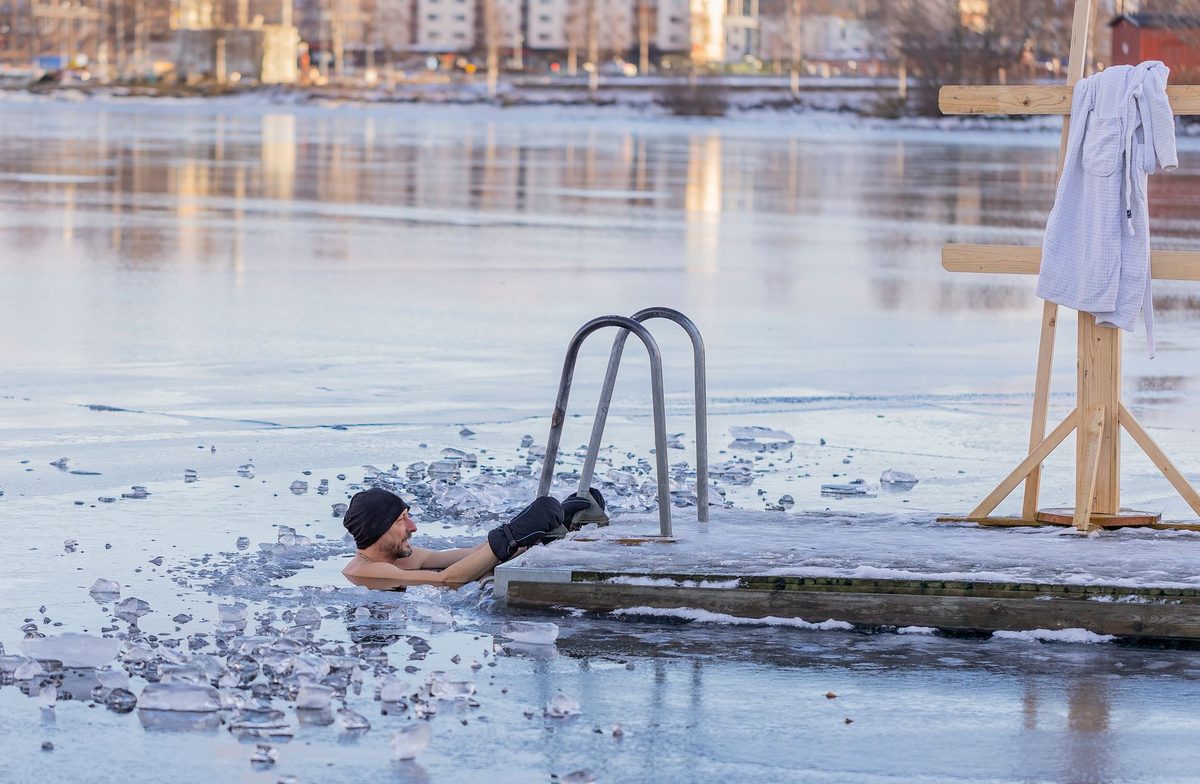
Geneva has a small but growing cold-water swimming community. The Bains des Pâquis runs cold-water swimming lessons twice a week year-round. The pier itself is free in winter. The protocol is sauna 15 minutes, then a 30-second to 2-minute lake dip, then back to the sauna — repeat four times. Locals will tell you it does extraordinary things to your nervous system, mood, and Monday mornings.
If you’re visiting Geneva in winter and have any tolerance for cold, this is one of the most authentic city experiences available. Our Bains des Pâquis guide covers the sauna ritual in detail.
How to get between beaches — the Mouettes hack
Geneva’s yellow Mouettes Genevoises water taxis (four lines, M1-M4) cross the Rade dawn to dusk for CHF 2 a ride — or free if you’ve got the Geneva Transport Card given to every hotel guest. That means you can hop between Bains des Pâquis, Eaux-Vives, Pâquis, Molard, and Port-Noir essentially for free, turning the lake into a beach-crawl highway.
A perfect Sunday: morning swim at Bains des Pâquis, Mouette to Eaux-Vives, lunch on the lawn at Plage des Eaux-Vives, walk to Genève-Plage for an afternoon at the pool, finish with apéro at the Buvette back at Pâquis.
For the full breakdown of Geneva’s lake transport options, see our Geneva transportation guide.
What to bring (and what not to)
Lake swimming in Geneva is a casual affair — locals show up with very little. But a few things help:
- Swim shoes if you’re tender-footed. Most beaches are pebble. Not painful, but not zero either.
- Towel. Obviously.
- Reusable water bottle. Public fountains are everywhere in Geneva and the water is excellent. No need to buy.
- Cash. The little kiosks and Bains des Pâquis entry desk are CHF cash-friendly, contactless not always reliable.
- Sun protection. The lake reflects, the altitude is 375 m, and Geneva sunburns are real.
- Glass bottles — leave at home. Banned at every beach. Bring cans or boxed wine.
- Picnic, not BBQ. BBQs only in designated pits at Le Vengeron and a few left-bank parks. Otherwise just pack a picnic.
Where NOT to swim
A few warnings worth flagging:
- The Rhône bridges in the city centre. Strong current, boat traffic, signs forbidding it.
- The Jonction confluence, unless you really know what you’re doing — see above.
- Around the Jet d’Eau. The fountain creates currents you don’t want to be in.
- Late-summer algae blooms. Late August into September the lake occasionally has visible algae. CIPEL posts warnings — when posted, switch beaches.
Best Lake Geneva beach for…
First-time visitors: Bains des Pâquis. It’s the iconic one for a reason.
Families with small kids: Baby Plage — small, shallow, sandy, playground, free.
Active people who want a full day out: Genève-Plage — pool, slides, sport, food.
Sandy beach lovers: Plage des Eaux-Vives in the city, Excenevex if you can travel.
Locals’ picks away from crowds: Le Vengeron, La Savonnière, the Cologny reed-bed pier.
Photographers: Bains des Pâquis at sunrise; Plage des Eaux-Vives at sunset; Cologny reed-bed pier any time.
Couples: Sunset at Baby Plage with a picnic, then the Bains des Pâquis sauna.
Winter visitors: Bains des Pâquis sauna with the cold plunge — a Geneva ritual.
Day-trippers wanting a beach village: Hermance (Swiss side) or Yvoire (French side).
Pair your swim with…
Geneva’s beach culture works best when you string it together with other lakeside experiences. After a Bains des Pâquis swim, the best cafés in Geneva are a short walk away. Renting a paddleboard or trying a sailing course pairs naturally — see our guide to water sports on Lake Geneva. And for the bigger picture of how Geneva’s outdoors fits together, the Geneva outdoor activities pillar ties it all in.
Related Geneva guides
Keep planning your time on and around the water with the Geneva outdoor activities pillar, our Lake Geneva geography guide, the Bains des Paquis guide, the day trips from Geneva roundup, the Geneva transportation guide for the Mouettes water taxis, and things to do in Geneva.
FAQ
Is it free to swim in Lake Geneva?
Mostly yes. Baby Plage, Plage des Eaux-Vives, and every beach outside the city centre are free. Bains des Pâquis charges CHF 2 in summer (free in winter). Genève-Plage is the only paid option in the city, around CHF 8.
Is Lake Geneva clean enough to swim in?
Yes. CIPEL — the international body monitoring Lake Geneva water quality — rates all official Geneva beaches “good” for bathing. Results are published seasonally and you can check them at cipel.org before your visit.
What’s the water temperature of Lake Geneva right now?
The Bains des Pâquis publishes a daily live water and air temperature reading on their website. As a general rule: 21-23 °C in July, 22-24 °C in August (peak), and 18-21 °C through September.
Which Geneva beach has actual sand?
Three options. Baby Plage has a tiny strip of fine sand. Plage des Eaux-Vives is the city’s main sandy beach (sand and pebbles, opened 2020). Excenevex on the French side has the only natural fine-sand beach on the entire lake — but it’s a 45-minute drive or boat ride away.
How much does Genève-Plage cost in 2026?
Around CHF 8 for adults and CHF 4 for children. The CHF 7 figure circulating online is outdated. Check geneve-plage.ch for current pricing the day of your visit.
Are dogs allowed on Geneva beaches?
On leashes in most lakeside parks, but generally not on the actual beach areas during the swimming season. Le Vengeron has more relaxed rules. Check the signage at each spot.
Can you swim at Bains des Pâquis in winter?
Yes, and a small community of locals does it daily. The water sits around 6-9 °C December to February. Cold-water swimming lessons run twice a week at 12:30 on Mondays and Wednesdays. The sauna pairing makes it tolerable — even enjoyable.
What’s the best beach in Geneva for families with kids?
Baby Plage for under-fives — sand, shallow water, playground, free. Plage des Eaux-Vives for older kids — sand, lifeguards, lawn for spreading out. Genève-Plage for the full water-park day with slides and a pool.
How do you get to Hermance or Vengeron from Geneva by public transport?
Hermance: bus E from Rive, terminus, about 35 minutes. Vengeron: bus V to the Vengeron stop, or train to Genthod-Bellevue then a 10-minute walk.
Is the Plage des Eaux-Vives free?
Yes, completely free. Open all day, lifeguards in summer, public toilets, showers, kiosk, and wheelchair-accessible ramp into the water.
Can you BBQ at Geneva beaches?
Only at designated grill pits — Le Vengeron is the main one, and a few left-bank parks have them. Otherwise stick to picnic food. No glass bottles anywhere.