Geneva’s Old Town is small, intact, and the single most rewarding hour of walking you can do in the city – but it rewards people who know what to look for and frustrates the ones who don’t. Most guides treat the Vieille Ville as a backdrop for Saint-Pierre Cathedral and the Reformation Wall and move you along. That misses the point. The Old Town is the reason Geneva exists: the rocky outcrop where the Allobroges settled before the Romans, where Caesar fortified a river crossing in 58 BC, where Calvin reorganised European theology in the 1540s, and where the details that make a walk worthwhile – medieval cannons under the arches, secret passages, the longest wooden bench in the world – are still there if you slow down.
This is my honest 2026 guide to walking Geneva Old Town: the circuit that hits the real highlights without turning into a forced march, the cafes and restaurants worth a small detour, the photo angles most visitors skip, the cathedral tower climb that is the best CHF 7 you will spend here, and the timing that matters most – the Old Town is distinctly quiet from 08:00 to 10:30, before the tour groups arrive. It sits within the wider Geneva neighborhoods guide, and pairs naturally with the rest of the city in our things to do in Geneva roundup.
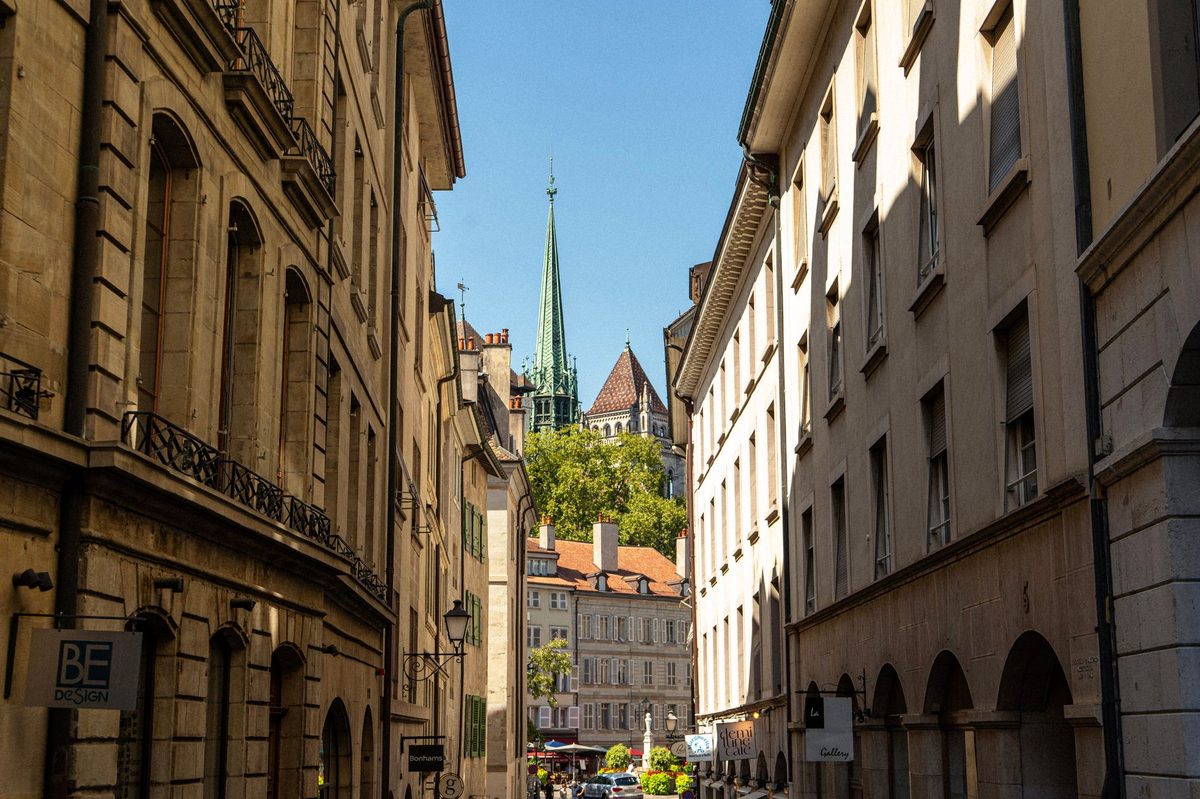
The 60-second plan
Take tram 12 to Bel-Air, or walk up from Place du Molard (five minutes uphill). Start at Place du Bourg-de-Four. Wander the cobbled streets north to Saint-Pierre Cathedral and climb the north tower (CHF 7) for the best Old Town view. Walk west along the Promenade de la Treille, home to the world’s longest wooden bench, then drop down to Parc des Bastions by the side stairs and finish at the Reformation Wall. Minimum walking time is 90 minutes. Add an hour for lunch at Cafe de l’Eveche, and another 90 minutes if you visit Maison Tavel (free) and the Musee d’Art et d’Histoire (free).
Geography and orientation
Geneva’s Old Town sits on a small rocky plateau above the south shore of the lake and the Rhone, about 30 metres higher than the modern city, reached by short uphill walks from every direction. The plateau runs roughly 600 metres east to west and 200 metres north to south, so the whole thing is genuinely small – you can walk every meaningful street in 90 minutes.
The layout makes sense once you see the geography. This outcrop is the only naturally defensible spot at the south end of Lake Geneva, with steep drops on three sides. The Allobroges, the Celtic tribe Caesar fought, settled here in the late Iron Age; the Romans fortified it; the medieval bishops built the cathedral and walled it in; the Reformation kept it as Geneva’s civic and religious centre. The modern city only spread outward and downhill after the walls were finally pulled down in 1849.
The main streets to know:
- Grand-Rue – the medieval main street running east to west, now a quiet cobbled run of antique shops and boutiques.
- Rue de la Cite and Rue du Soleil-Levant – perpendicular to Grand-Rue, with medieval shops and small squares.
- Rue du Puits-Saint-Pierre – the short street up to the cathedral; Maison Tavel is here.
- Place du Bourg-de-Four – the central medieval square and social heart of the Old Town.
- Rue Calvin – the narrow medieval street where Calvin’s house stood.
Place du Bourg-de-Four: the living room
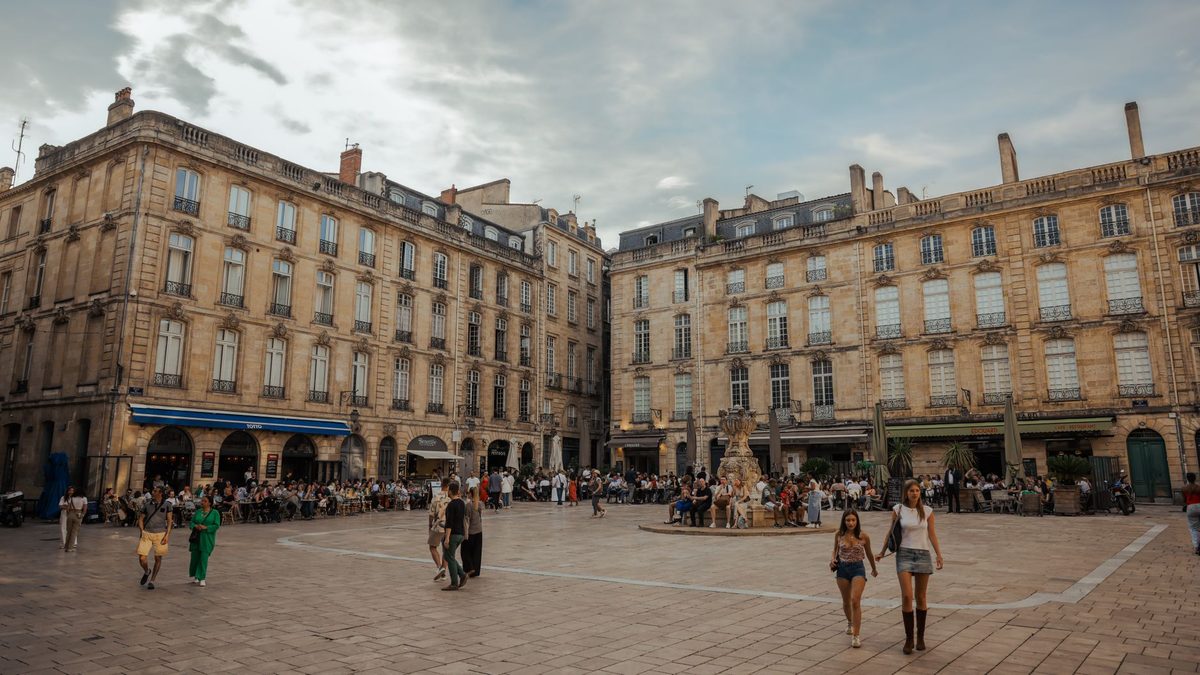
If the Old Town has a centre, it is Place du Bourg-de-Four, a square that has been a meeting point since the 9th century and a market – sometimes a cattle market – since Roman times. Today it is pedestrianised and cobbled, ringed by 17th and 18th-century buildings, with two fountains and a handful of restaurant terraces.
The terraces that work:
- La Clemence – the historic cafe terrace, going since 1950, catching the afternoon sun. CHF 4.50 espresso, and the local benchmark.
- Cafe Papon – more food-focused, Swiss with a twist, with a pretty terrace under the trees.
- Confiserie Arn – a historic chocolate shop with a small terrace, CHF 4 espresso and excellent pastries.
Best time: late morning (10:30-12:00) for sun on the square without the lunch crowd, or early evening (17:00-19:00) when locals fill it for apero. It is also one of Geneva’s best people-watching spots – a working mix of law students, lawyers on lunch, retired Genevans and tourists with maps. Sit for half an hour with a coffee and the city does the entertaining.
Saint-Pierre Cathedral and the tower climb
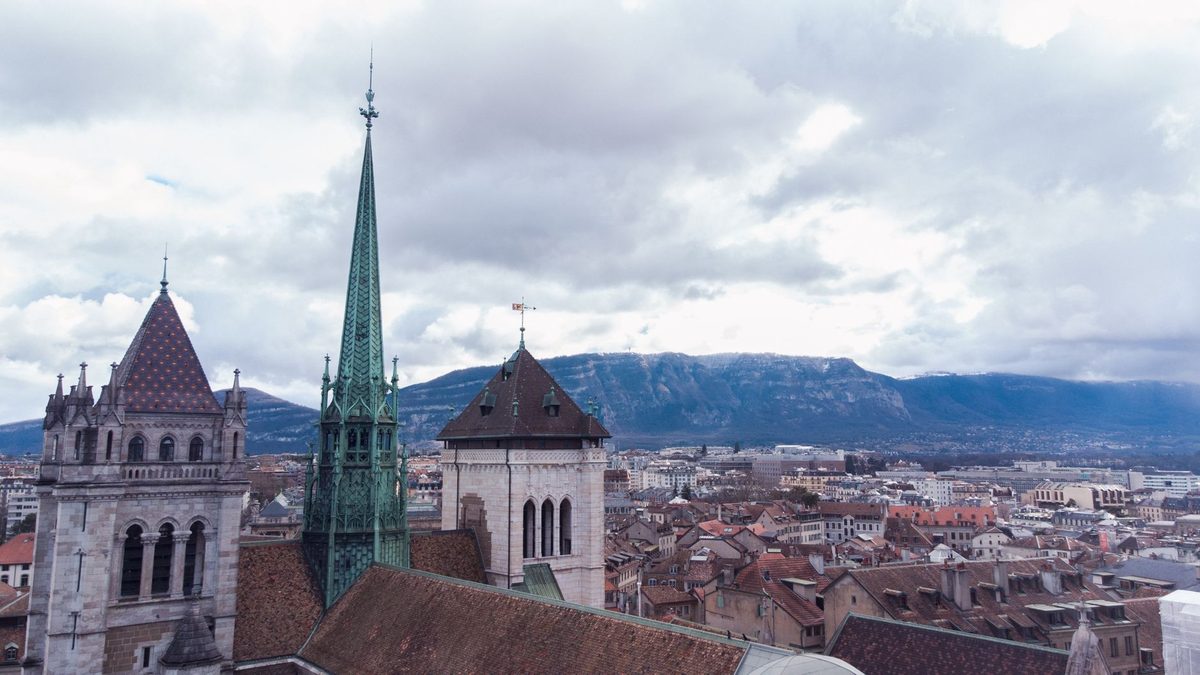
The cathedral stands on the highest point of the plateau, visible from anywhere in the Old Town. It was built in the 12th and 13th centuries on the foundations of a 4th-century Roman basilica, converted to Protestantism in 1535 during the Reformation – the interior stripped of Catholic decoration – and it has been a working church ever since.
The cathedral itself
The nave is free to enter, and the bare Reformation interior is striking in its own right: vast, plain, with only the medieval stained glass surviving from before the Reformation. Calvin’s preaching chair sits in the right transept. The neoclassical facade, added in the 18th century, sits oddly against the medieval body of the building.
The tower climb (CHF 7)
157 spiralling stone steps to the top of the north tower, and the best view in Geneva: the Old Town rooftops directly below, the lake stretching north, and Mont Blanc to the southeast on a clear day. Allow 30 minutes including the queue and the descent. Worth every franc.
The archaeological crypt (CHF 8)
Beneath the cathedral, the excavations show the layers: a 4th-century Roman temple, an early Christian basilica from the 5th-6th century, a Romanesque cathedral, the 12th-century reconstruction, and the present structure. It is genuine historical evidence rather than a tourist add-on. Allow 30-40 minutes.
Combined ticket
CHF 18 covers the tower, the crypt and the adjacent Musee International de la Reforme – the best value if you are doing the full circuit. The wider story is in our Geneva museums and culture guide.
Promenade de la Treille
This 200-metre tree-lined walkway runs along the southern edge of the plateau, looking down over Parc des Bastions. It is free and genuinely lovely, and it holds one of Geneva’s quiet curiosities: the world’s longest wooden bench, a 126-metre continuous bench installed in the 18th century and still in daily use, with its own Guinness World Record certificate.
The promenade catches the afternoon and evening light beautifully, and the view down into the park takes in the Reformation Wall to the right and the Bibliotheque de Geneve. Kids love running the length of the bench while adults sit in patches of sun. It also holds the historic Chestnut Tree of the Treille – by Geneva tradition, the date its first leaf appears each spring is officially recorded by the city chancellor as the unofficial start of spring, a custom going back to 1818.
Maison Tavel and the medieval houses
Maison Tavel, on Rue du Puits-Saint-Pierre, is Geneva’s oldest surviving private house – 12th century, rebuilt after the 1334 fire – and it is free to visit as the Museum of Urban History and Daily Life. The top-floor Magnin Model of 1850 Geneva is the must-see.
Other surviving medieval houses worth noticing:
- Maison Calandrini (Grand-Rue 24) – another 14th-century survivor.
- Rue Calvin 6-11 – Calvin lived on this narrow street, and the houses date to his period.
- Rue du Soleil-Levant – several preserved medieval houses.
- The 16th-century stone facades on Rue Verdaine and Rue de la Cite, which survived the modifications around them.
Maison Tavel and the other free museums are covered in our Geneva museums and culture guide.
Details most visitors walk straight past
Five Old Town details to look for that most guides skip:
1. The five cannons under the arches
On Rue de l’Hotel-de-Ville, near the Town Hall, look up under the stone arcades: five real 17th and 18th-century cannons are mounted there, old symbols of Geneva’s defence, pointing toward where the Savoyard attack of the Escalade came from in 1602.
2. The Escalade plaques on the city walls
Several small bronze plaques along the surviving walls mark where Savoyard soldiers tried to scale them on 11-12 December 1602. Look for them between Place du Bourg-de-Four and the Promenade de la Treille.
3. The Auditoire de Calvin (free, often empty)
The small Gothic chapel behind the cathedral where John Knox preached to English-speaking refugees in the 1550s, now the parish church of the Church of Scotland in Geneva. Free entry, genuinely important, and rarely crowded.
4. The secret passages
The Old Town has a network of medieval passages running between buildings, used historically for quick movement during attacks and now mostly closed, though a few sections open up on guided tours. The Passage des Degres-de-Poules, the Hens’ Steps, off Rue Henri-Fazy, is one of the most atmospheric.
5. The Promenade des Lavandieres
A short walkway on the southern edge near Maison Tavel, quieter than the main Promenade de la Treille and with similar but lesser-known views over the Bastions park.
Where to eat in the Old Town
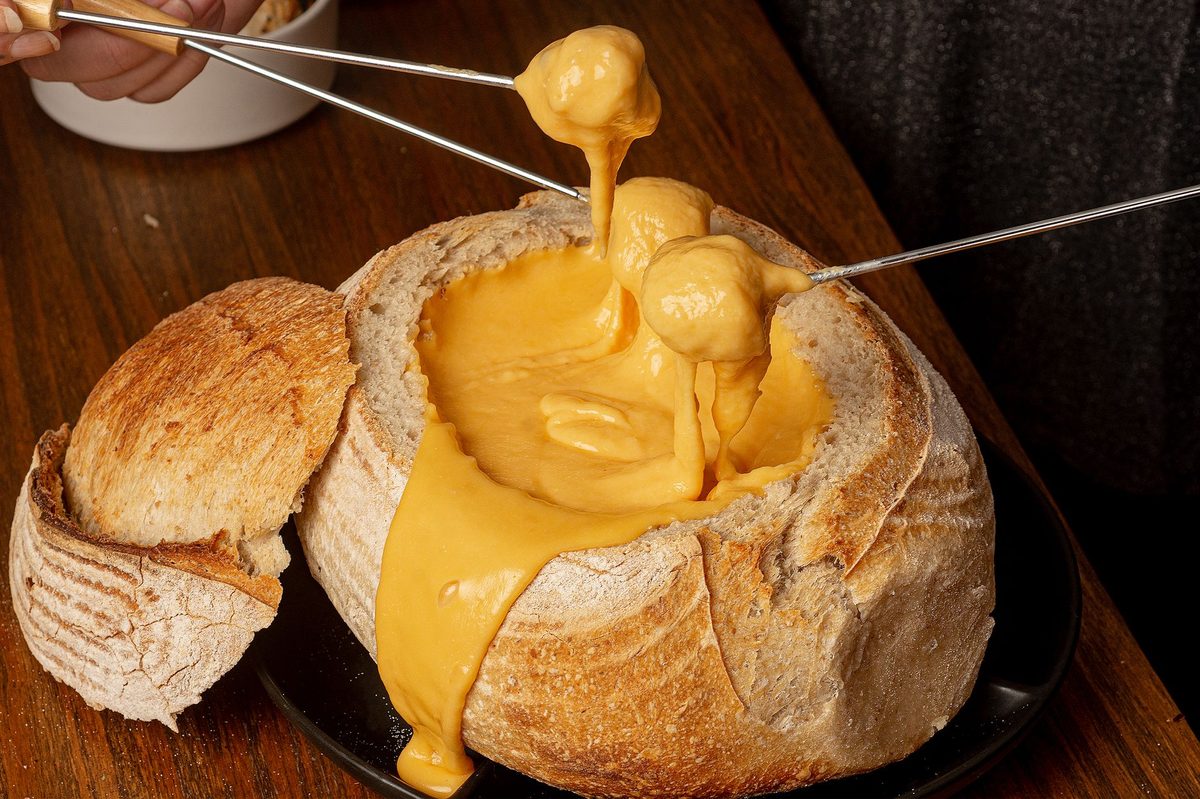
Cafe de l’Eveche is the Old Town’s best lunch spot – a small square behind the cathedral, a lovely terrace, contemporary French-Swiss cooking, and CHF 22-32 plats du jour. Book ahead for weekends; the fondue at dinner is also very good.
Les Armures is the 17th-century historic restaurant: beautiful room, traditional Swiss fondue and raclette, tourist-rate prices. Bill Clinton ate here. Worth the splurge for the setting alone.
Cafe Papon, on Bourg-de-Four, is the square’s reliable bistro – Swiss with a twist, good cheese fondue, and an atmospheric medieval cellar dining room for dinner, with CHF 25-40 mains.
La Clemence is the historic cafe for coffee and apero rather than a full meal; the terrace is the point. Confiserie Arn is the Old Town’s historic chocolatier with a small terrace, good for a quiet 30-minute afternoon stop and CHF 8 Pave Glace chocolates. If you only have 30 minutes, the Boulangerie Pouly on Rue de la Croix-d’Or, just below the Old Town, does a CHF 6 baguette sandwich you can eat on the cathedral terrace.
For the rest of the city’s tables, see our where to eat in Geneva guide and our pick of the best fondue in Geneva.
Antique shops and boutiques
The Old Town holds Geneva’s antique and rare-book trade, mostly along Grand-Rue and Rue de la Cite. Hours are typically Tuesday to Saturday, 10:00-18:00, with longer Saturdays.
- Galerie Grand-Rue – 19th-century paintings and decorative arts.
- Librairie Bertrand – antiquarian books, especially historic Swiss and travel writing.
- Several small antique dealers on Grand-Rue, in furniture, silver and ceramics.
- Boutiques on Rue du Soleil-Levant – contemporary Swiss design, jewellery and handcrafted pieces.
Prices reflect the location – these are not budget shops – but the browsing is free and the windows are part of the Old Town’s character.
My three-hour walking itinerary
08:30 – coffee at Confiserie Arn on Bourg-de-Four, in the quiet before the crowds.
09:00 – Maison Tavel, an hour for the museum and the Magnin Model.
10:00 – uphill to Saint-Pierre Cathedral: nave (15 minutes), tower climb (30 minutes).
11:00 – the archaeological crypt, 30 minutes.
11:30 – the Promenade de la Treille: the world’s longest bench, the chestnut tree, the view over Bastions, 30 minutes with photos.
12:00 – down to Parc des Bastions by the side stairs: the Reformation Wall (20 minutes), the giant chess set, the park.
12:30 – lunch at Cafe de l’Eveche, back uphill, 75 minutes.
14:00 – the Auditoire de Calvin (free, 20 minutes) and the cathedral square.
14:30 – a final Old Town wander: antique shops, the cannons under the arches, the medieval streets, ending at Bourg-de-Four for a coffee at La Clemence.
The best photo angles
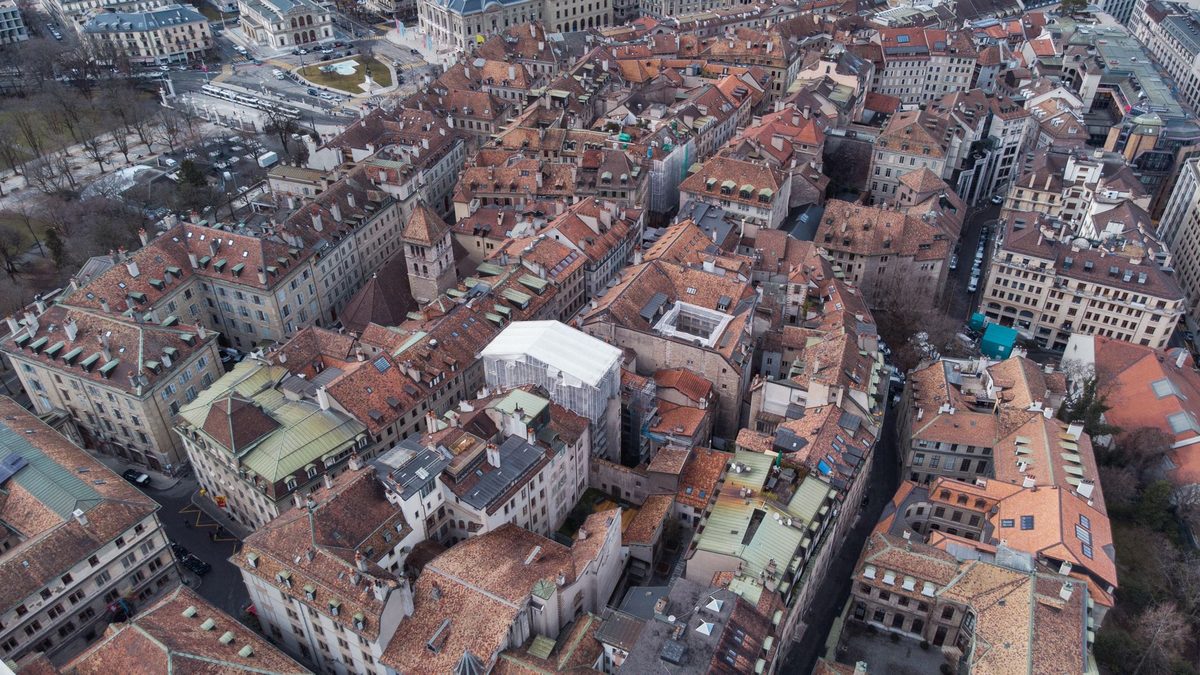
A few spots reward a camera more than the rest. From the cathedral north tower, shoot the rooftops in the morning when the light rakes across them. On Rue du Perron and the stepped lanes dropping toward the lower town, frame the cobbles with the towers behind. Bourg-de-Four works best in late-afternoon sun with the fountain in the foreground, and the Promenade de la Treille gives you the long bench leading the eye out over the park. For the postcard of the whole plateau, cross to the Parc des Bastions side and look back up at the cathedral above the trees.

Frequently asked questions
How long does it take to walk Geneva’s Old Town?
Ninety minutes is the minimum for a circuit hitting the main highlights. Allow three to four hours for a thorough visit with the cathedral, Maison Tavel and lunch.
Is Geneva’s Old Town worth visiting?
Yes. It is the city’s historic core and the easiest single walk for understanding what makes Geneva distinct – small enough to do in a half-day, dense enough to surprise you on a second visit.
What is the best time of day to visit?
08:00-10:30 for empty streets and morning light, or 17:00-19:00 for golden-hour photos and the apero atmosphere on the terraces. Skip the midday crowds in summer if you can.
How do I get to the Old Town?
Take tram 12 to Bel-Air, a five-minute walk uphill, or walk up from Place du Molard in about five minutes. Cars are largely restricted, so use public transport or walk.
Is the Old Town suitable for children?
Yes. The cobbled streets are walkable for most ages, the cathedral tower climb is exciting for older kids, and Maison Tavel’s Magnin Model fascinates all ages. Strollers work but the cobbles need attention.
Is the Old Town accessible for visitors with mobility issues?
Partially. Many cobbled streets and the cathedral tower are not accessible, but Place du Bourg-de-Four and the main Grand-Rue are paved and accessible, and Maison Tavel has a small lift.
Related Geneva guides
Keep exploring with the Geneva neighborhoods guide, our museums and culture coverage, the city-wide things to do in Geneva, where to stay in Geneva, and the Geneva trip planner.
Geneva’s Old Town is the single most rewarding three hours you can spend in the city, as long as you walk it deliberately, climb the cathedral tower, look up at the cannons under the arches, and sit for a coffee at La Clemence to watch the square. Most cities its size have lost their medieval core; Geneva still has hers, the streets are still walkable, and the layered history from the Allobroges to Calvin to the modern UN sits in one walkable kilometre. Start at Bourg-de-Four. Climb the tower. The rest will follow.