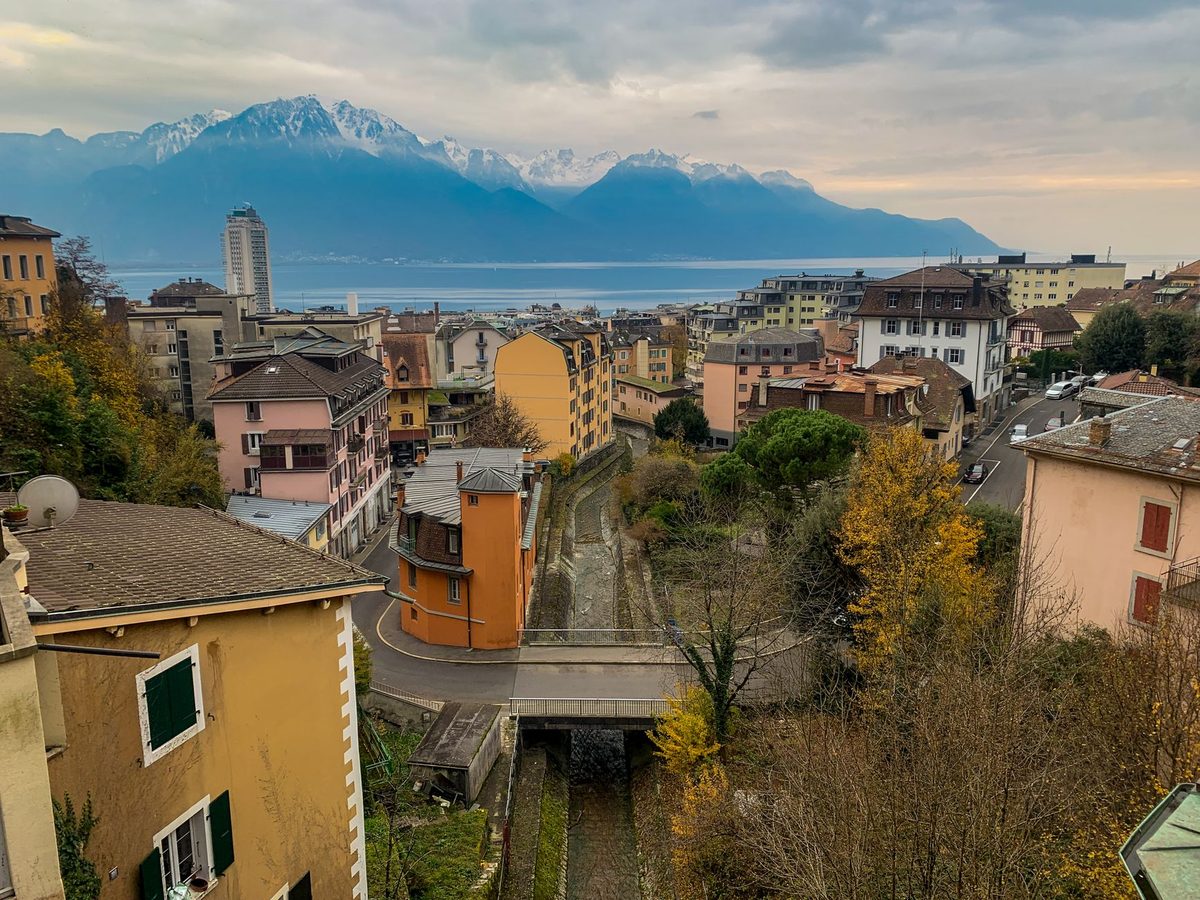
Champel is the Geneva neighbourhood most tourists skip, most Genevans aspire to live in, and most travel guides ignore, which is exactly why it is worth knowing about. This leafy hillside district about 1 km south of the Old Town is upscale, residential and quietly handsome: Belle Epoque villas behind garden walls, mature trees lining calm streets, the 11-hectare Parc Bertrand at its centre, the university hospital (HUG) on its southern edge, and an unexpectedly good restaurant scene aimed at residents rather than visitors. It is where old-money Geneva families have lived for a century, where senior UN officials and bank executives buy apartments, and where you go to see what an affluent Swiss residential neighbourhood actually looks like from the inside.
This is the short but useful guide to Champel: what is here, why it is worth a half-day, the Parc Bertrand (one of the city’s best free parks), the architecture that gives the district its look, the restaurant addresses locals keep to themselves, and the practical case for it as an underrated place to stay if you have a car or do not mind a short tram ride into the centre. Not every visitor needs Champel, but the ones who go usually come back enthusiastic. To place it among the other districts, start with our Geneva neighborhoods guide and the where to stay in Geneva overview.
Champel at a glance
- Location: Left bank, south of the Rhone, 1-2 km south of the Old Town. The hillside elevation gives it some of Geneva’s best views.
- Size: about 1.9 sq km, population around 10,000.
- Character: upscale residential, leafy, calm, almost no tourist traffic.
- Centre: Parc Bertrand, the 11-hectare hillside park.
- Major institutions: Hopitaux Universitaires de Geneve (HUG, the city hospital) and the Cite Universitaire student housing.
- Getting there: tram 12 from Place du Molard or Cornavin to Champel-Hopital, 10-12 minutes.
- Best for: seeing residential Geneva, couples after a quieter base, hospital visitors and long-stay travellers.
A short history
Champel was farmland and small villages until the late 19th century, when Geneva’s wealthier residents started building villas on the hillside south of the Old Town. The tramway of the 1880s made it accessible, the elevation gave it views and slightly cooler summers than the lakefront, and the area filled in fast between 1880 and 1914 as the city’s premier residential district.
The Belle Epoque period set the architectural character: large detached villas with garden walls, smaller four-storey apartment buildings with ornate Art Nouveau detailing, and wide tree-lined streets. The Champel Tower went up in 1907 as a viewing platform for wealthy patients staying at the area’s then-prominent sanatoriums; for two decades in the early 20th century Champel drew European patients seeking the fresh-air cure, before antibiotics changed medical practice. The hospital (HUG) arrived in the 1960s along with some lower-cost housing and the Cite Universitaire, but the neighbourhood stayed upscale-leaning, and today it is one of the most desirable addresses in the city.
Geography and what is where
Champel sits on a hillside south-east of the centre, with the Arve river below it to the south. It breaks into several recognised sub-areas:
- Florissant (north Champel) — closest to the centre, the quieter upper-class streets.
- Champel central — the Parc Bertrand and the streets around it.
- La Roseraie — near the rose garden and the hospital.
- Conches — quieter eastern Champel, smaller villas and large gardens.
- The Eaux-Vives side — more mixed where Champel borders Eaux-Vives.
The southern edge meets the Arve river and the Champel cliff, the steep drop down to the water, with the natural river-swimming spots along the Arve and the Bains de Cressy further downstream.
Parc Bertrand: the heart of the neighbourhood
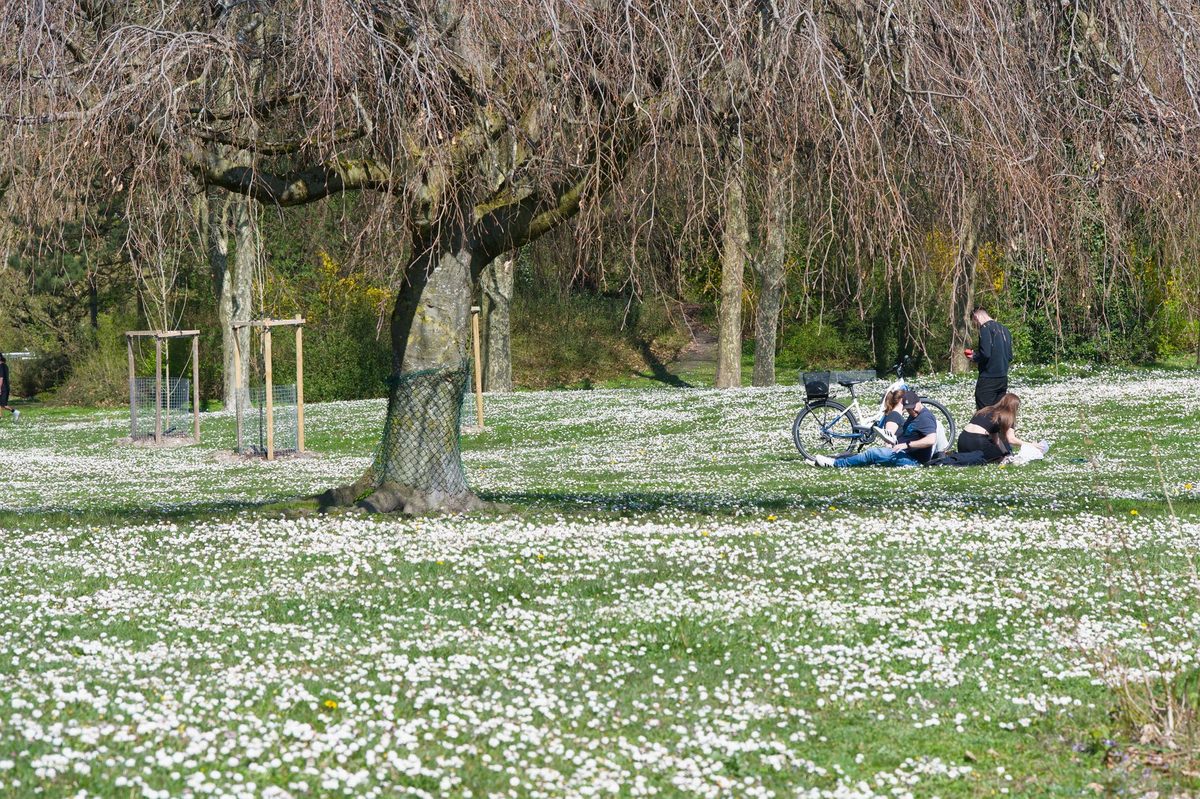
The 11.1-hectare Parc Bertrand sits at the geographic centre of Champel, one of the city’s largest urban parks, donated to Geneva by the wealthy Bertrand family in 1923 and essentially unchanged in layout for a century:
- Mature trees and lawns — popular for picnics, jogging and summer concerts.
- Children’s playground — large and well-equipped, one of the city’s best for under-eights.
- Wading pool — open in summer for small children.
- Pavillon Plantamour — the historic park pavilion, now a small day-care centre.
- Fenced dog park — a substantial off-leash area.
- Open-air concerts — the summer Musiques en ete series uses the park.
- Tennis courts and sports facilities on the western edge.
The park is free, open daily during daylight hours, and exceptionally peaceful, the kind of quiet urban green that is increasingly rare in central European cities. An afternoon here in summer, watching the local families and kids, is one of the more genuine Geneva-life experiences going. Tram 12 stops at Parc Bertrand right at the main entrance. For more green space across the city, see our Geneva outdoor activities guide.
The architecture: Belle Epoque villas
Champel’s look is its 1880-1914 Belle Epoque residential architecture. The walking version:
Detached villas
Large two- and three-storey single-family houses behind garden walls, built in the styles fashionable at the turn of the century: French Belle Epoque, mock-Tudor, Art Nouveau, the occasional neoclassical. Most are still single-family homes, since the concentration of wealth in modern Geneva keeps villa ownership feasible here.
Belle Epoque apartment buildings
Smaller four- and five-storey buildings with elaborate stone facades, iron balconies and ornate doorways. Rue Bertrand, Rue Cherbuliez and the streets around the Parc Bertrand are especially well preserved.
Art Nouveau touches
Several buildings carry classic Art Nouveau details: wrought-iron balconies, stone window mouldings, mosaic-tile entrances. Avenue de Champel and Avenue Krieg have some of the best examples.
The Champel Tower
The 1907 wooden viewing tower built for sanatorium patients, restored in the 1990s and still standing at the southern edge near the Arve. Reach it on foot for a panorama of Geneva, the lake, the Saleve and Mont Blanc on clear days.
A 60-to-90 minute loop around the Parc Bertrand and along Rue Cherbuliez, Rue Lefort and Avenue Krieg gives you the full architectural Champel.

Where to eat in Champel
Champel’s restaurants serve residents rather than tourists, which means the cooking is generally solid (the regulars would not put up with otherwise) and the prices are mid-range to high (the neighbourhood’s wealth shows up on the bill). The addresses worth knowing:
- Le Relais de Champel — a long-running neighbourhood bistro on Rue Lefort. Swiss-French classics, plat du jour CHF 22, the local benchmark.
- Le Chatelet — a touch more upscale, modern bistro cooking, CHF 30-45 mains, a small terrace.
- Le Vieux Bois — just over the border, the student-run restaurant of the Geneva Hotel School. CHF 35 lunch menu, CHF 65 evening tasting menu, booking weeks ahead. The best lunch value in central Geneva for the quality.
- Cafe Vert — a casual daytime cafe with a pleasant terrace, CHF 18-25 lunch mains.
- Sushi Hashi — a small Japanese restaurant well loved locally, CHF 25-40 mains.
- Philippe Pascoet (Champel branch) — the artisan chocolatier, CHF 28-50 for substantial boxes; see our Geneva chocolate guide.
- Coop and Migros Champel — for everyday shopping, with Coop the larger and better-stocked of the two.
Shopping and daily life
Champel is residential rather than commercial, so the shopping is functional, not touristy:
- The main commercial streets — Rue de la Roseraie and Avenue de Champel — have neighbourhood bakeries, two small supermarkets, a couple of clothing boutiques, the chocolatier, a pharmacy and several cafes.
- Saturday morning at the Coop Champel is the closest the neighbourhood gets to a market moment, with the local population stocking up for the weekend.
- A few galleries and small art shops serve the local collectors.
- The hospital brings steady daily foot traffic, and the cafes near HUG serve medical staff and visitors.
For serious shopping, head back to central Geneva. Champel is for living, not retail.
Should you stay in Champel?
Honest answer: probably not for a first trip, but worth considering for certain travellers.
| Stay in Champel if | Stay elsewhere if |
|---|---|
| You are visiting someone at HUG hospital | You are on a short visit (one to three nights) |
| You are staying seven or more nights | You want to walk to most attractions |
| You are a family with young children (Parc Bertrand) | You want dense food and bar options |
| You want a quieter, leafier base | You want to be near the train station |
| You have a car (parking is easier here) | You want maximum convenience |
On accommodation, the selection is limited. The Hotel Royal-Cherchill on Rue de la Roseraie is the main four-star (CHF 220-380 a night), with a few smaller B&Bs and serviced apartments. The Airbnb selection is decent and runs 15-25% below equivalent central-Geneva options. For families specifically, our Geneva with kids guide has more.
A half-day in Champel
If you are curious but do not want to commit to staying:
10:00 — Tram 12 to Parc Bertrand, 10 minutes from the centre.
10:15 — Walk Parc Bertrand. A full lap including the playground, the dog park and the central lawns, about 45 minutes.
11:00 — Architectural walk. Rue Cherbuliez, Rue Lefort, Avenue Krieg, then back via Rue Bertrand, around 60 minutes of Belle Epoque villas and apartment buildings.
12:00 — Lunch at Le Relais de Champel or Cafe Vert, about 75 minutes.
13:30 — Walk to the Champel Tower at the southern edge near the Arve. The tower is restored but only partly open; the trail and the river views are the point.
14:30 — Walk the Arve cliff for the panorama, then tram back from Champel-Hopital.
15:30 — Back in central Geneva.
The Champel cliff and the Arve river
One feature most write-ups miss: the dramatic drop at the southern edge, where the residential streets end abruptly at the Champel cliff above the Arve. The cliff falls about 40 metres, and a steep trail, the Sentier de Champel, descends to the river bank.
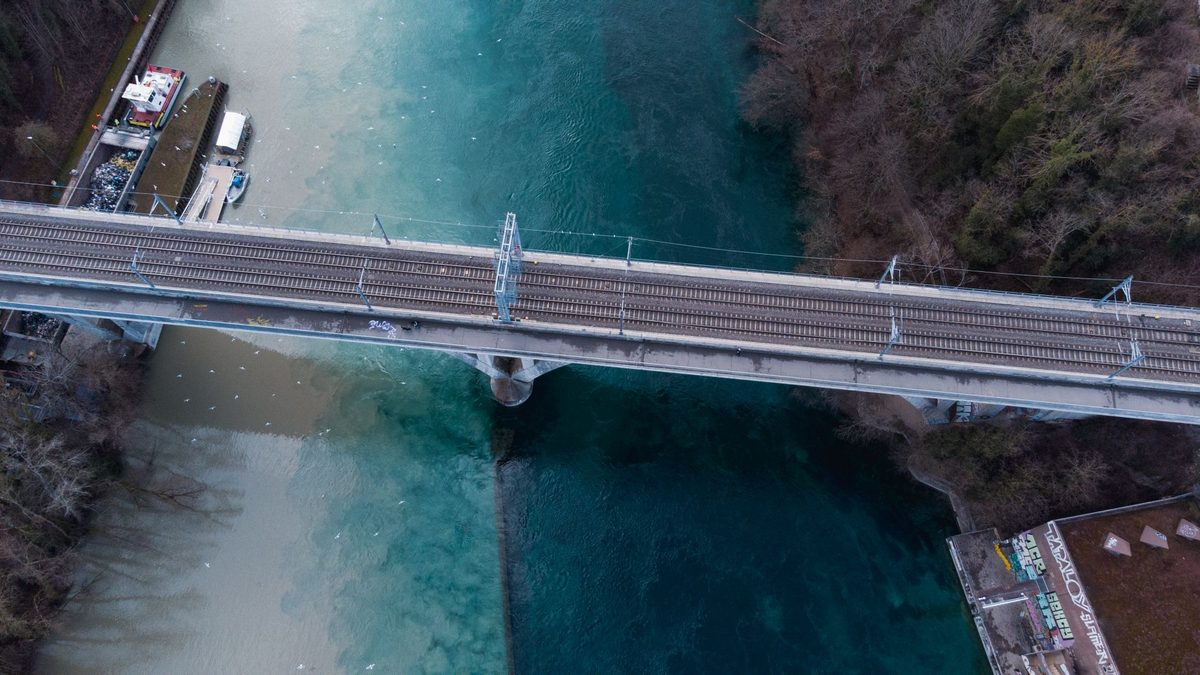
The Arve here is a fast alpine river that joins the Rhone a few kilometres downstream. The bank is lined with mature trees, has the odd small beach and swimming spot, and links by riverside trail to the Plaine de Plainpalais (about 45 minutes upstream) and Carouge (about 30 minutes downstream). For walkers and runners, the Champel cliff and Arve circuit is one of the city’s better lesser-known routes, swapping the upscale streets for what feels like a proper nature walk while staying entirely inside the city limits. The historic Bains de Cressy thermal complex sits downstream along the Arve, with hot pools, sauna, hammam and outdoor lap pools, open year-round at CHF 12-22 day entry, and pairs well with a Champel walk.
Champel after dark
Honest assessment: not much. Champel is a residential neighbourhood that mostly goes to sleep by 22:00. A handful of restaurants serve until 22:00 or 22:30, and a few small bars toward Eaux-Vives stay open later, but the scene is genuinely thin. That quiet is part of the appeal for residents, but it limits visitor options after dinner.
If you are based in Champel and want a real evening out, plan to tram back to the centre, to the Eaux-Vives bars, the Plainpalais student scene or the late Paquis kitchens. Tram 12 runs until midnight, and the Noctambus night service covers the Champel corridor on Friday and Saturday. If your idea of an evening is one good dinner and a couple of glasses of wine, Champel works fine; if you want serious bar-hopping, it is the wrong base, though bridging into the centre is easy. For ideas, see our romantic things to do in Geneva and the wider things to do in Geneva. If you only want a quick taste, hop off tram 12 at Parc Bertrand, walk the park for 30 minutes, and carry on; it is a small detour from any south-side route and a noticeably different urban texture.
Frequently asked questions about Champel Geneva
Is Champel worth visiting as a tourist?
Worth a half-day if you have the time and want to see residential Geneva. Not essential for short trips, but rewarding on a longer or return visit.
How do I get to Champel?
Take tram 12 from Place du Molard or Cornavin to Champel-Hopital or Parc Bertrand, 10-12 minutes, free with the Geneva Transport Card.
Is the Parc Bertrand free?
Yes. Entry is free and the park is open daily during daylight hours.
What is Champel known for?
Its upscale residential character, Belle Epoque architecture, the Parc Bertrand, the university hospital, and the calm relative to central Geneva.
Should I stay in Champel?
Consider it for longer stays (five nights or more), families with kids, or if you have a car. For shorter touristic visits, stay closer to the centre.
Are there museums in Champel?
No major museums; the area is residential. The hospital holds a small medical-history collection, and the big museums are a short tram ride back toward the centre.
Related Geneva guides
Keep planning with the Geneva neighborhoods guide, our where to stay in Geneva overview, the Geneva outdoor activities guide, the Geneva chocolate guide, and the wider things to do in Geneva.