Geneva Outdoor Activities & Nature Guide
Geneva Outdoor Activities & Nature Guide
This article contains advertising. Our booking links are routed through a partner that adds commission tracking automatically, so if you book through one we earn a commission from the provider, at no extra cost to you. It never affects what we recommend. Affiliate disclosure
Geneva is one of the few cities in Europe where you can swim in a clean lake before breakfast, hike a ridge with Mont Blanc on the horizon by lunch, and be back on a tram into the Old Town by dinner. The best Geneva outdoor activities all hang off that geography: the city sits at the western tip of Lake Geneva (Lac Léman), with the Jura mountains at its back and the French Alps rising less than an hour to the south. You do not need a car or a guide to start using it.
This is the practical version of what is actually worth your time outdoors here, sorted by what you came to do rather than padded with adjectives. I have flagged the free options (there are many), the ones that need decent weather, and where to go when the lake is too cold to swim. Most of these spots are reachable on public transport with the free Geneva Transport Card you get at check-in, so before anything else, read the Geneva transportation guide and skim the wider things to do in Geneva list to slot the outdoors into the rest of your trip.
01 — Outdoor activities around Geneva at a glance
If you only want the headline answer: swim off Bains des Paquis in summer, take the Saleve cable car for the view any time of year, and ski Chamonix or the Portes du Soleil in winter. Here is how the main options compare so you can match them to the season and your energy level.
| Activity | Best season | Effort / difficulty | Roughly how to get there |
|---|---|---|---|
| Lake swimming (Bains des Paquis, Geneve-Plage) | Jun–Sep | Easy | Walk or tram from the centre |
| Stand-up paddle, sailing, kayak | Jun–Sep | Easy–moderate | Lakefront rental stations |
| Mont Saleve cable car + plateau walks | Year-round | Easy (cable car) to hard (trails) | Bus 8 to the base, then cable car |
| Jura ridge hikes (La Dole, Cret de la Neige) | May–Oct | Moderate–hard | Train to Nyon, then bus/taxi |
| Lakeside cycling / Tour du Lac | Apr–Oct | Easy to very hard | Geneveroule bikes from the centre |
| Skiing & snowboarding | Dec–Apr | All levels | Direct ski bus or car, 1–1.5 hrs |
| Paragliding from the Saleve | Spring–autumn | None (tandem) | Bus 8, meet operator at base/top |
| City parks & gardens | Year-round | Easy | On foot across the centre |
02 — Swimming in Lake Geneva
From roughly mid-June to mid-September the lake warms to 20–24°C and the whole city decamps to the water after work. Lac Leman is clean enough to drink-test by Swiss standards, and almost every public swimming spot is either free or costs a couple of francs. You do not need a beach club; you need a towel and somewhere to leave your shoes.
Bains des Paquis — the one to do first
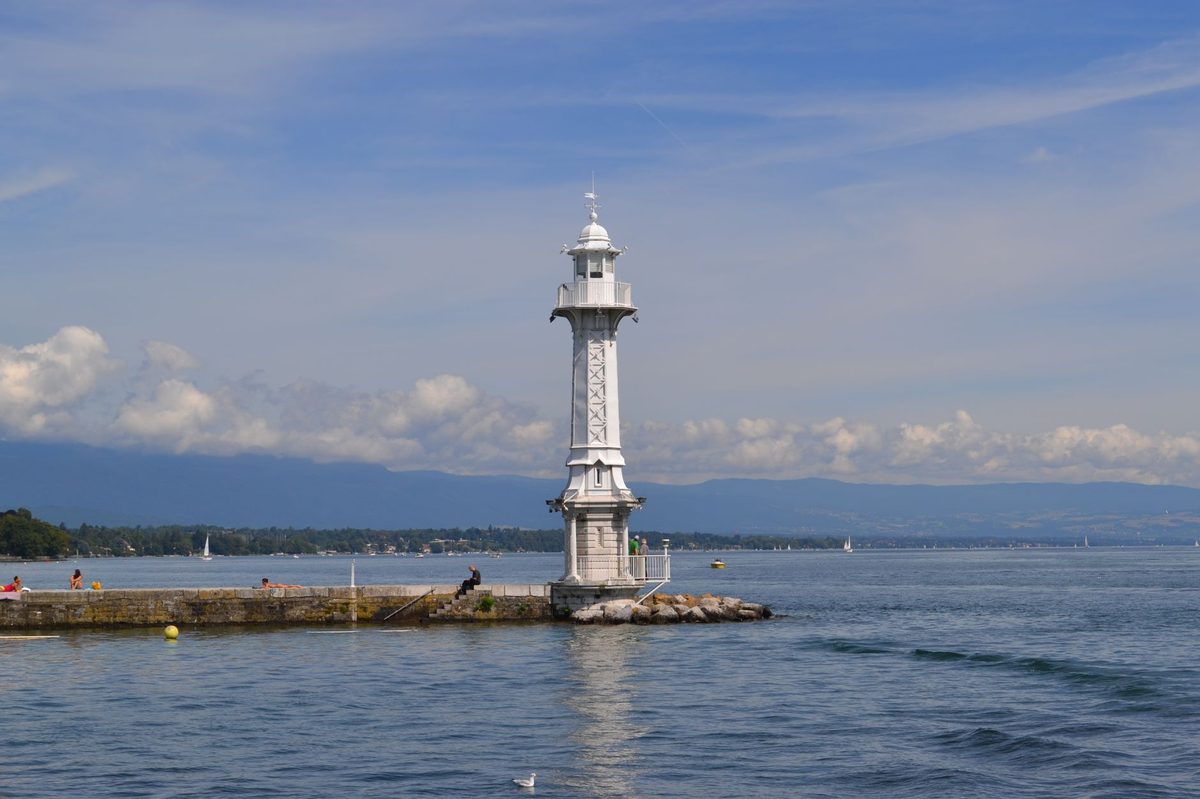
The Bains des Paquis is a public bathing pier reaching out from the right bank, and it is the single most Genevan thing you can do outdoors. Entry is about CHF 2. In summer it is the city’s communal beach: people swim laps out to the buoys, sunbathe on the concrete, and queue for the famous fondue and the cheap morning coffee. It stays open in winter too, when the sauna, hammam and Turkish baths take over and a small crowd does cold-water dips off the pier. The lighthouse at the end is the postcard shot. For hours, the sauna schedule and the fondue setup, see the dedicated Bains des Paquis guide.
Geneve-Plage, Eaux-Vives and family beaches
On the left bank, Geneve-Plage is the bigger, more organised option: an Olympic pool, water slides, diving boards, a sandy beach and lawns, for around CHF 7 (adults). The newer Plage des Eaux-Vives, opened in 2019, gave the city its first proper sand beach with a swimming harbour and a relaxed bar scene, and it is free. For families, Baby Plage beside Parc des Eaux-Vives has shallow, sheltered water and shade — the safest spot for small children. A full breakdown of access, fees and which beach suits which day is in the Lake Geneva beaches and swimming guide.
03 — Water sports on Lake Geneva
The lake is busy with sails and paddleboards all summer, and getting out on the water is easier and cheaper than most people assume. The wind here has a name — la bise from the northeast — and it is what makes Geneva a serious sailing town.
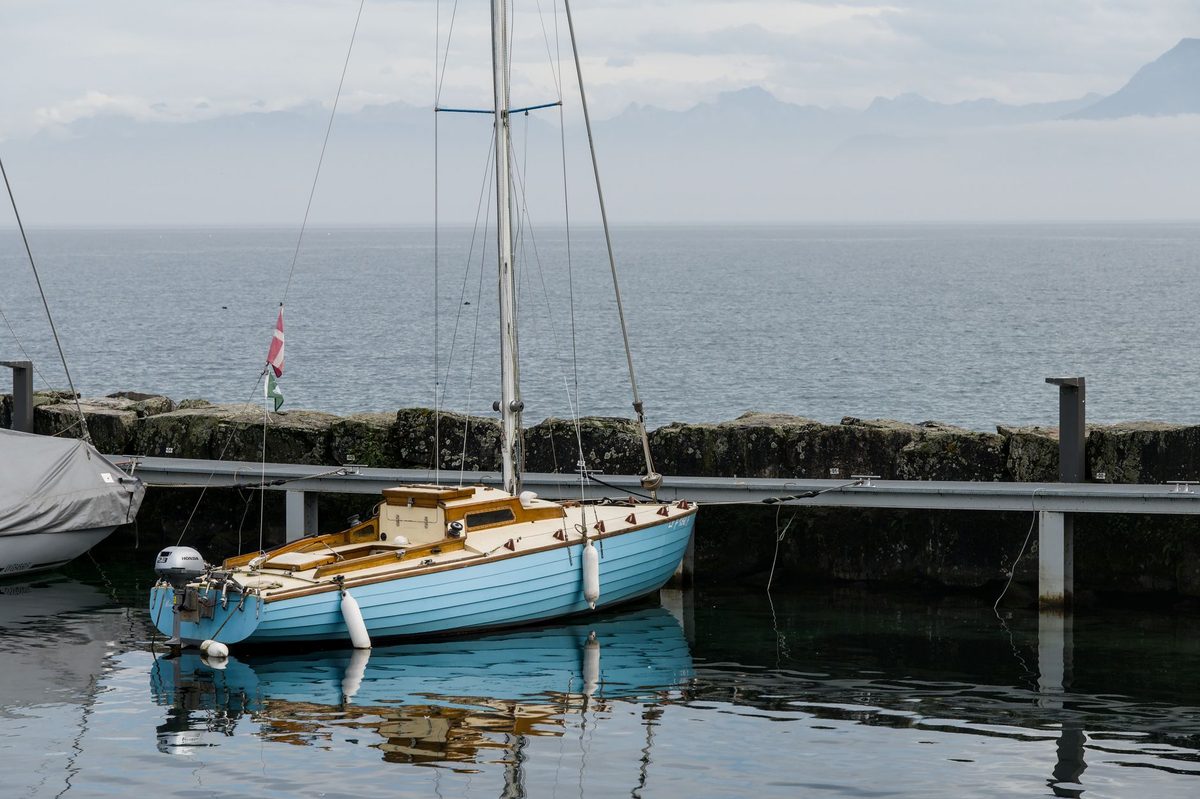
Stand-up paddleboarding is the easy entry point: rental stations near Bains des Paquis, Eaux-Vives and Geneve-Plage hand you a board for an hour with no experience needed, and a calm morning before the wind picks up is the time to go. Sailing runs deeper in the city’s blood — the Societe Nautique de Geneve runs courses and the annual Bol d’Or Mirabaud, one of the largest inland regattas in Europe, fills the lake with hundreds of boats in June. Kayaks, pedalos, wakeboarding and water-skiing are all bookable from operators along both banks. For a no-effort version, the yellow Mouettes Genevoises water taxis shuttle across the harbour and are free with your Geneva Transport Card. The full rundown of operators, prices and where to launch is in the water sports on Lake Geneva guide, and if you would rather sit back and let someone else steer, the Lake Geneva boat cruises guide covers everything from a one-hour harbour loop to the paddle-steamers that run the length of the lake.
04 — Hiking near Geneva
Geneva has hiking for every level within reach, but the terrain splits cleanly: the Saleve and the Alps to the south for big views and real climbs, the Jura to the northwest for gentler ridge walking, and flat lakeside paths in town for an easy hour. Mountain trails are reliably open and snow-free from about May to October; lower walks work year-round. A wider set of routes with maps and timings lives in the hiking trails near Geneva guide.
Mont Saleve — Geneva’s balcony
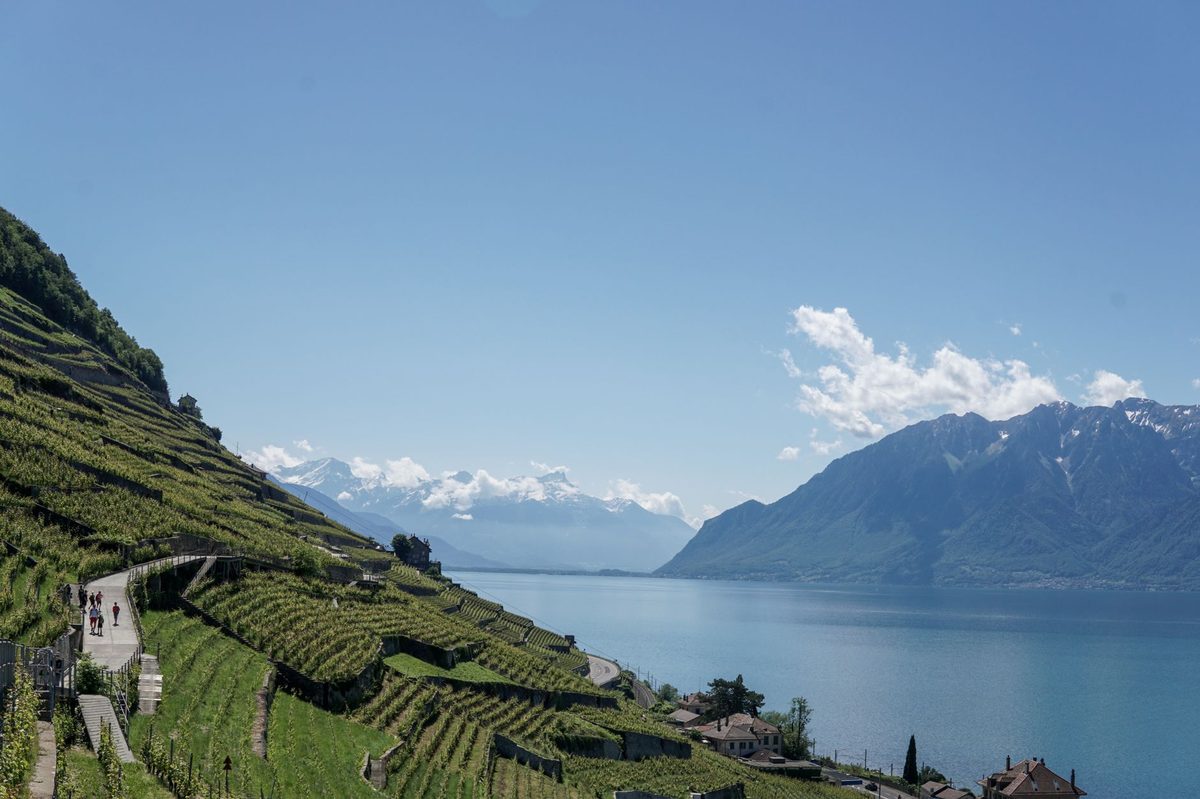
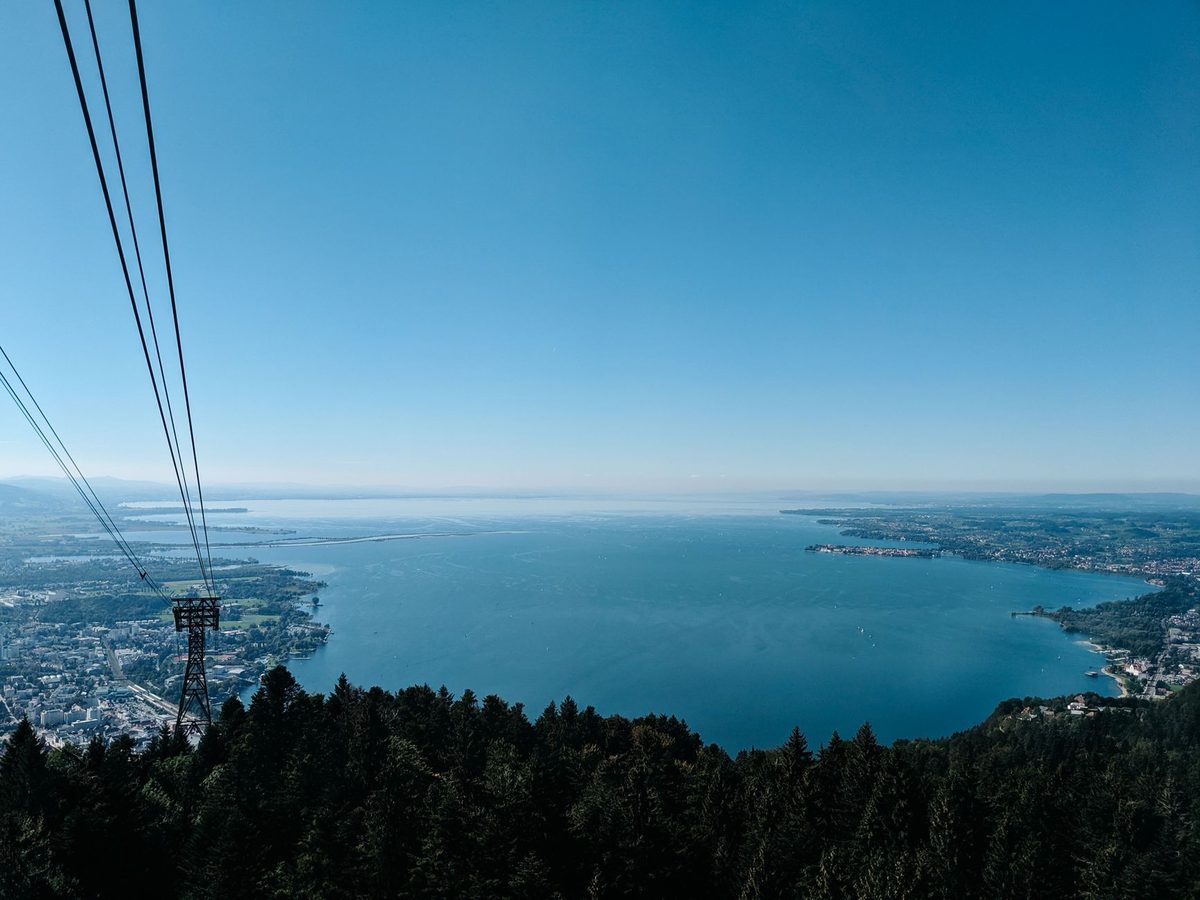
Mont Saleve rises about 900 metres straight off the southern edge of the city, just over the border in France, and it is where Geneva goes to get above itself. The lazy route is the cable car (Telepherique du Saleve): take bus 8 to the base at Veyrier, cross the border on foot, and the car climbs to the ridge in a few minutes. From the top you get the whole basin laid out — the city, the lake, the Jet d’Eau as a white thread, the Jura opposite, and on a clear day the Mont Blanc massif behind. Walkers can stay flat on the plateau for a 30-minute stroll or take the steep marked paths up and down; scramblers have rock routes on the cliffs. Bring your passport, because you are crossing into France. The full logistics — cable car times, the bus, the best short loops — are in the Mont Saleve guide.
Jura ridge walks
The Jura, northwest of the city, is the quieter, greener option: rolling pasture, beech forest and long ridgelines with the lake glinting below. La Dole (1,677m), topped by its white radar dome, is the classic — a half-day climb from the Col de la Faucille or from above Nyon, with a panorama that runs from the Alps to the Mont Blanc. The Cret de la Neige (1,720m) is the highest point in the whole range and a proper full-day outing for fit walkers. The long-distance Balcon du Leman trail follows the ridge with near-constant lake views, and you can pick off single sections as day hikes by taking the train to Nyon first.
Lakeside and city walks
When you just want a flat hour outdoors, the lakefront delivers. The left-bank promenade links Geneve-Plage through Parc de la Grange and Parc des Eaux-Vives — a 3–4 km waterfront walk past the rose garden. The right bank from Bains des Paquis out to the Jardin Botanique is just as good and quieter. For something wilder without leaving town, the Bois de la Batie reserve sits above the Arve river gorge, all forest paths and rushing water, ten minutes from the station. Stretch any of these into a full day out with the day trips from Geneva guide.
05 — Cycling around Geneva
Geneva has quietly become a good cycling city, with segregated lanes through the centre and a free bike-loan scheme, Geneveroule, that lends you a city bike for up to four hours from several stations. The flat lakeside path is the easy win for casual riders; the hills behind the city are where it gets serious.
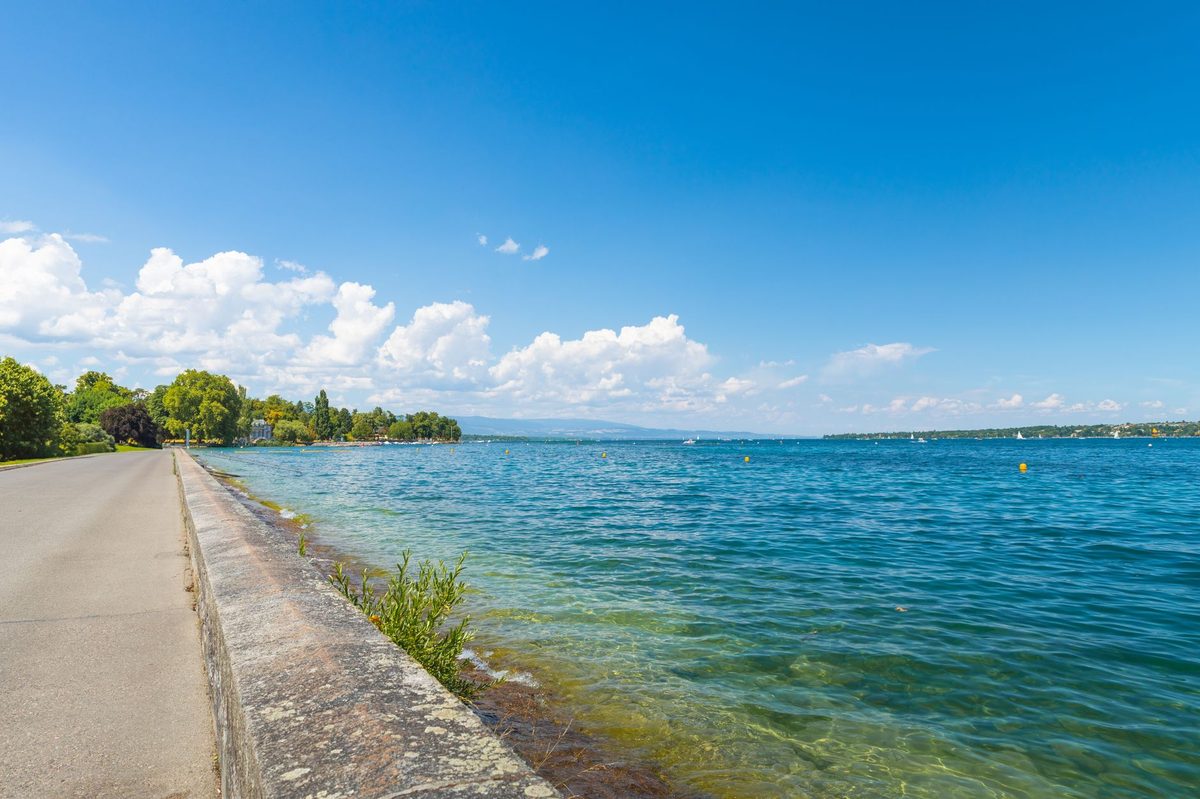
The headline ride is the Tour du Lac Leman, a roughly 200 km loop of the entire lake on mostly dedicated paths — strong riders knock it out in a long day, most people split it over two with a stop in Lausanne or Montreux. For a gentler outing, the Route Verte follows the Rhone and Arve out of the city into the countryside with barely a hill. Mountain bikers head for the Saleve and the Jura foothills, and e-bike rentals have made the climbs accessible to anyone. The full set of routes, rental details and the Geneveroule stations are in the cycling routes in Geneva guide and the broader biking in Geneva guide.
06 — Skiing and winter sports near Geneva
This is Geneva’s secret weapon: you can land at the airport and be on a chairlift in under two hours. A string of world-class resorts in the French and Swiss Alps sit within 60–90 minutes, which makes a ski day trip genuinely doable even on a city break. Airport-to-resort options for every major resort are compared in Geneva airport ski transfers. Direct ski buses run from the city in season, so you do not need to rent a car.
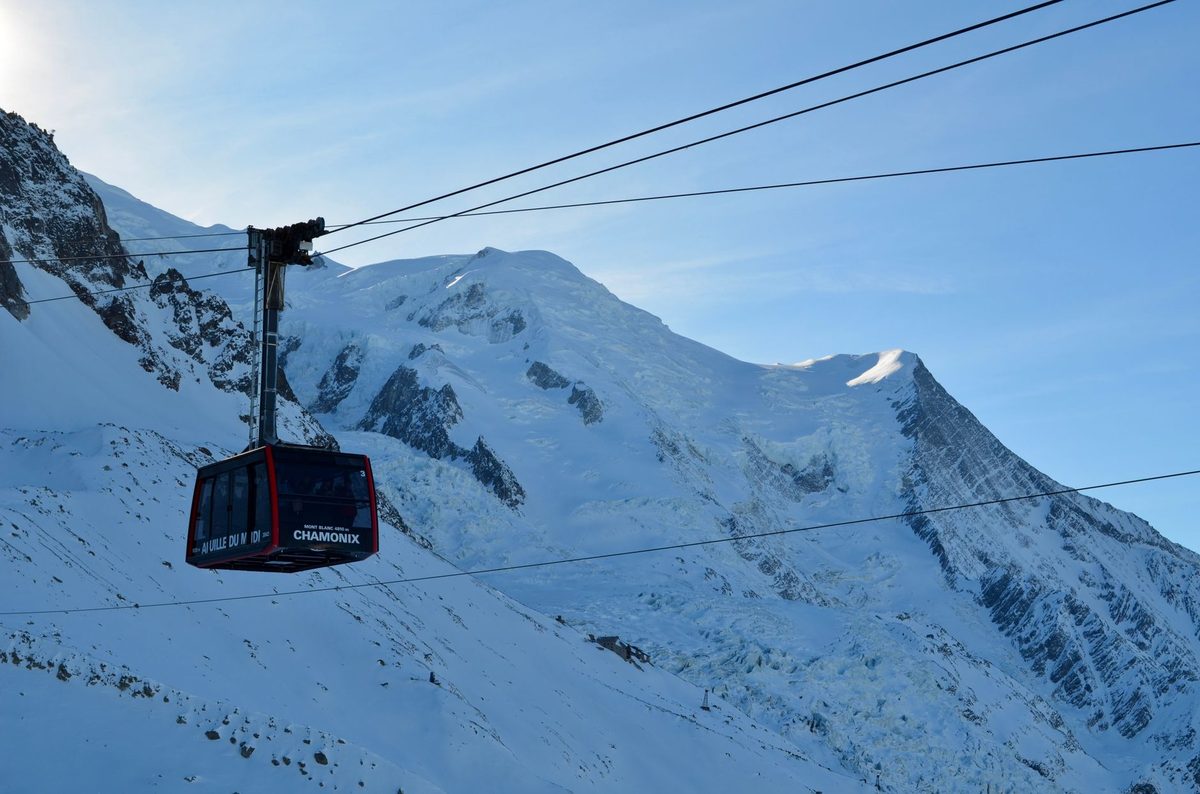
The closest ski resorts
Chamonix-Mont-Blanc, about an hour away, is the famous one — steep, serious terrain under the highest peak in the Alps and the legendary Vallee Blanche off-piste descent. It is as much a mountaineering town as a ski resort, and it makes a brilliant day out even if you do not ski; the Geneva to Chamonix day trip covers the Aiguille du Midi cable car and the train up to the Mer de Glace. The Portes du Soleil — Avoriaz, Morzine, Les Gets, 1–1.5 hours out — is one of the largest linked ski areas on earth, with over 600 km of pistes spanning the border; Les Gets and Morzine are the family-friendly ends. Flaine, in the Grand Massif, is the snow-sure choice an hour from the city, while La Clusaz and Le Grand-Bornand (under an hour) are smaller, cheaper and gentler, which makes them ideal for beginners and kids. For the full comparison and how to choose, see the skiing near Geneva guide and the wider Swiss Alps excursions from Geneva overview.
Winter without skis
You do not have to ski to enjoy a Geneva winter outdoors. Snowshoeing on the Saleve plateau and through the Jura forests is calm and beginner-friendly, the Col de la Faucille has marked cross-country tracks, and there is an outdoor ice rink in town through the festive season. The Saleve cable car runs year-round, so a winter summit visit for snow and a clear-air panorama takes barely an hour. The full cold-season menu, from sledging to fondue with a view, is in the Geneva winter outdoor activities guide.
07 — Adventure sports: paragliding and climbing
For a bigger hit of adrenaline, the Saleve again does most of the heavy lifting — it is one of the best-known paragliding launch sites in Europe, and the cliffs below it are a climbing playground.
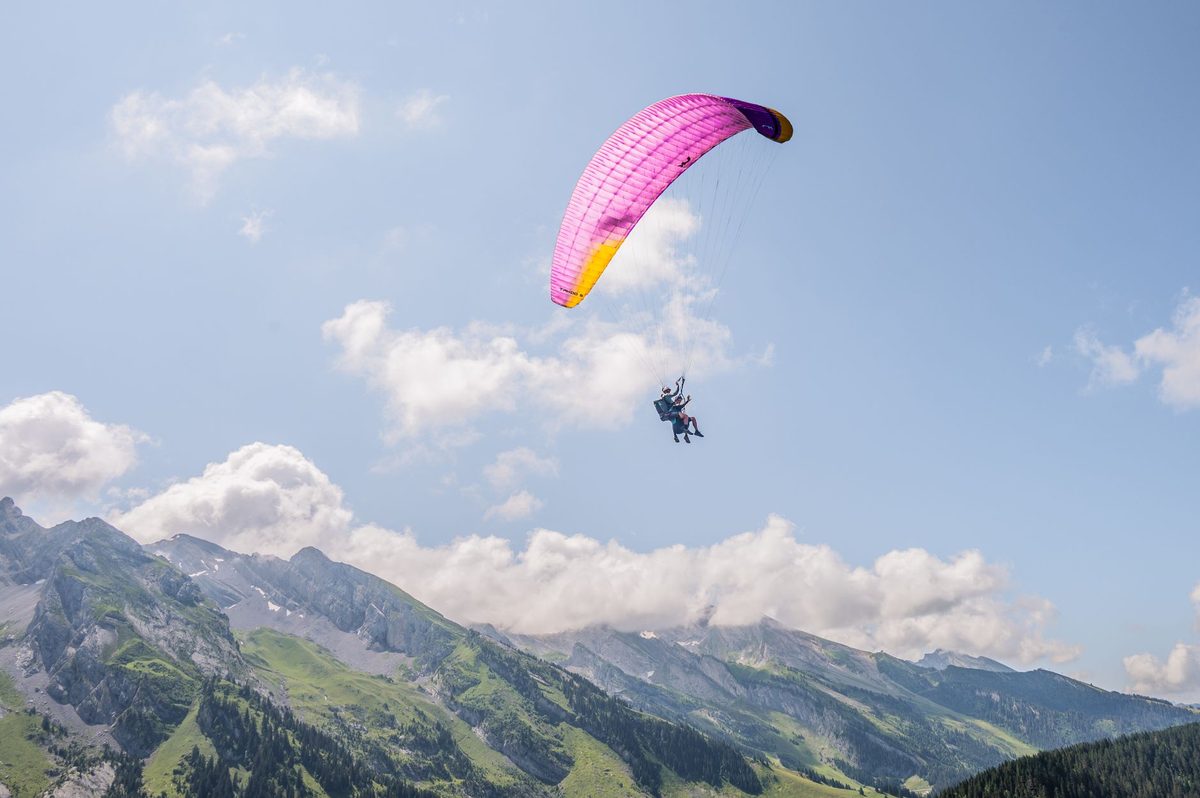
Paragliding off the Saleve
A tandem paraglide off the Saleve is the most accessible way to fly over Geneva: you are strapped to a certified pilot, you run a few steps off the ridge, and then you float over the basin with the lake, the city and the Alps spread underneath. Flights last roughly 15–25 minutes and cost about CHF 150–200. It is weather-dependent — spring through autumn gives the steadiest conditions — and several operators meet clients at the Saleve base or take you up by car. No experience is needed and the landing is gentle.
Rock climbing and via ferrata
The Saleve cliffs hold climbing routes for every grade, from friendly slabs to overhanging test-pieces, and they are popular with Geneva clubs on summer evenings. Over in the French Alps, several via ferrata routes — secured climbing paths with cables and rungs — near Thones, the Gorges du Durnand and Chamonix give you the exposure and views of a real climb without the technical skill. When it rains, Geneva’s indoor walls at Totem and Vitam keep you climbing with gear hire and lessons.
08 — Geneva’s parks and gardens
Geneva is one of the greenest cities in Europe — well over a fifth of it is parkland — and the gardens are free, central and genuinely worth an afternoon. They are also the easy-weather fallback when the lake is cold and the mountains are socked in.
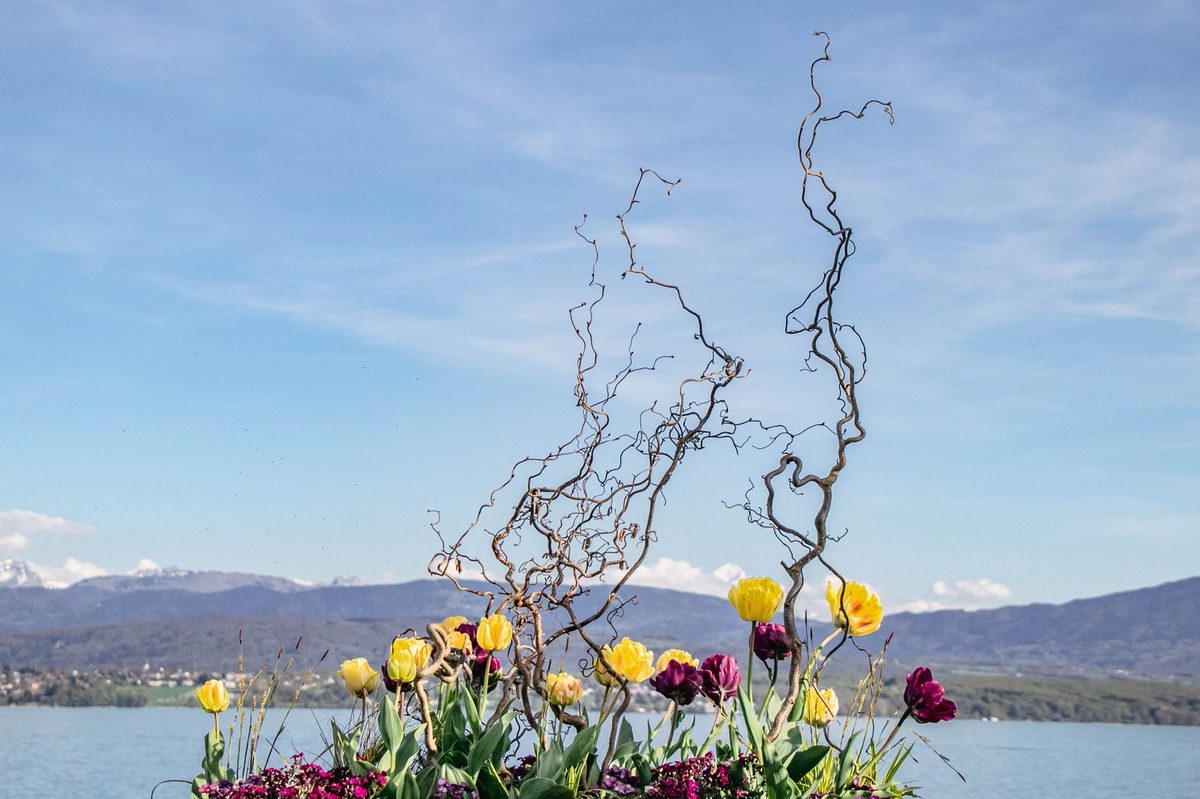
Parc de la Grange is the largest, and its rose garden of more than 200 varieties peaks from June into October. The Conservatoire et Jardin Botaniques up near the UN quarter holds some 16,000 plant species, has a small animal park, and is free to enter. Parc des Bastions, at the foot of the Old Town, is where locals play the giant outdoor chess sets beneath the Reformation Wall. On the waterfront, the Jardin Anglais is home to the Horloge Fleurie, the flower clock made of 6,500 plants that every visitor photographs. For the full map of green spaces, including the quieter ones, see the Geneva parks and gardens guide.
09 — What to do outdoors by season
Geneva is a year-round outdoor city, but what is actually good shifts hard with the calendar. Here is the honest version of when to do what.
| Season | Best outdoor activities | What stands out |
|---|---|---|
| Spring (Mar–May) | Hiking, cycling, parks, early sailing | Wildflowers on the Saleve, rose garden waking up, lake still cool |
| Summer (Jun–Aug) | Lake swimming, water sports, paragliding, hiking | Peak swimming, long daylight, the whole city outdoors |
| Autumn (Sep–Nov) | Hiking, cycling, vineyard walks, forest trails | Gold foliage, crisp clear ridge views, far fewer crowds |
| Winter (Dec–Feb) | Skiing, snowshoeing, ice skating, cable-car views | World-class slopes an hour out, snow on the Saleve, festive lakefront |
10 — Practical tips before you head out
A few things that save time and money. Your free Geneva Transport Card (handed over when you check in) covers the buses and trams to most trailheads and lakeside spots in the canton — bus 8 to the Saleve base is the one you will use most. Regional trains reach Nyon, Lausanne and the lake towns for longer hikes and rides. In ski season, direct buses run from the city to the major resorts. Always check MeteoSwiss (meteosuisse.ch) for mountain weather before going up, because conditions change fast at altitude. And carry your passport or ID for anything on the Saleve or in the Alps, because you are crossing into France. To keep costs down overall, pair this with the Geneva on a budget guide and sort your base early using where to stay in Geneva, since lakeside rooms book out in summer.
Frequently asked questions
What are the best free outdoor activities in Geneva?
Swimming at the Plage des Eaux-Vives or Baby Plage, walking the lakeside promenades and the Bois de la Batie, exploring the city’s parks and the Jardin Botanique, and using a free Geneveroule loan bike along the lake are all free. The Bains des Paquis costs about CHF 2, which is close enough.
Can you swim in Lake Geneva, and when?
Yes. The water is clean and the swimming season runs roughly mid-June to mid-September, when it reaches 20–24°C. Bains des Paquis, Geneve-Plage, Plage des Eaux-Vives and Baby Plage are the main spots, most of them free or only a couple of francs.
How do you get to Mont Saleve from Geneva?
Take bus 8 to Veyrier, walk across the French border, and ride the Telepherique du Saleve cable car to the ridge in a few minutes. You can also hike up from the base. Bring your passport, since the Saleve is in France.
Can you do a ski day trip from Geneva?
Easily. Chamonix, the Portes du Soleil resorts, Flaine, La Clusaz and Le Grand-Bornand are all 60–90 minutes away, and direct ski buses run from the city in winter, so you can ski for the day without a car.
Do I need a car for outdoor activities around Geneva?
For most of them, no. The free Geneva Transport Card covers buses and trams to the lake, the parks and the Saleve base, regional trains reach the Jura and lake towns, and ski buses run in winter. A car only helps for the smaller Alpine resorts and remote trailheads.
Is Geneva good for outdoor activities in winter?
Very. Beyond world-class skiing an hour away, you can snowshoe on the Saleve plateau, cross-country ski at the Col de la Faucille, skate outdoors in the city, and ride the Saleve cable car for snowy summit views year-round.
11 — Related Geneva guides
Keep planning the active side of your trip with the things to do in Geneva overview, the best day trips from Geneva, the Swiss Alps excursions guide, the Geneva transportation guide for reaching every trailhead, and where to stay in Geneva so you wake up close to the water.