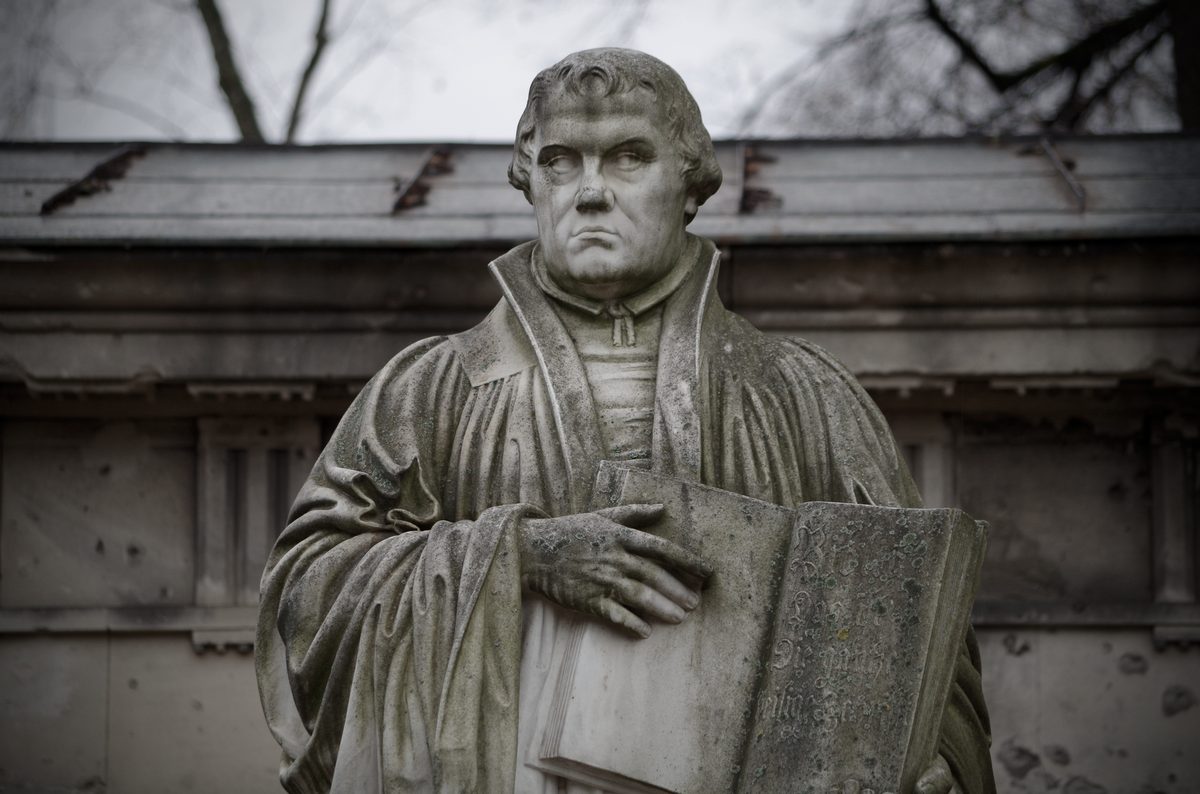
The Reformation Wall in Geneva’s Parc des Bastions is a free, outdoor, 100-metre monument to the four Protestant reformers, Calvin, Farel, Beze and Knox, who turned 16th-century Geneva into the Protestant capital of Europe for a generation. Built between 1909 and 1917 against a surviving stretch of the 16th-century city walls, it’s the most-visited free attraction in central Geneva, and the doorway to a wider Protestant-history circuit: up to Saint-Pierre Cathedral, across to the Auditoire de Calvin where John Knox preached, and into the Musee international de la Reforme that opened in 2005 to pull the whole story together. None of it needs booking. Most of it is free. All of it is walkable in a single half-day.
This is the Reformation Wall Geneva visitor guide, and a guide to Protestant Geneva more broadly: the wall itself, the four central figures and what they actually did, the surviving Reformation-era buildings around the cathedral, the small but excellent Reformation museum, and the walking route that ties them together. Even if church history isn’t your thing, the circuit tends to grab people, because underneath it is a story about a small city that made itself one of Europe’s intellectual capitals by deliberately adopting a radical new theology. For the wider cultural context, start with the Geneva museums and culture guide, and our Geneva history and heritage overview fills in the centuries.
The 60-second plan
Walk to Parc des Bastions, 5 minutes from Place de Neuve, 8 from Place du Molard. It’s free; no tickets. Give the wall itself 20 minutes. Climb uphill to Saint-Pierre Cathedral (10 minutes) for the nave (free), the optional tower climb (CHF 7) and the archaeological crypt (CHF 8). The Auditoire de Calvin (free) sits right behind the cathedral. Finish at the Musee international de la Reforme (CHF 13) on Cour Saint-Pierre. The full circuit runs 3 to 4 hours and costs CHF 13 to 28, depending on what you pay for inside the cathedral and crypt.
The Reformation Wall, explained
The Mur des Reformateurs is the 100-metre stone monument set against a surviving section of Geneva’s 16th-century city walls, in the Parc des Bastions. It was built between 1909 and 1917 by sculptors Henry Bouchard and Paul Landowski, the same Landowski who later sculpted the Christ the Redeemer statue in Rio de Janeiro.
The wall marks two anniversaries at once: the 400th birthday of John Calvin in 1909, and the 350th of the Calvinist Academy founded in 1559, now the University of Geneva. The design competition drew 71 entries; Swiss architects Charles Dubois, Alphonse Laverriere, Eugene Monod and Jean Taillens won. Construction ran eight years, with the central reformer figures finished first and the bas-reliefs and side statues added through the 1910s.
The centrepiece: four 5-metre statues of Geneva’s principal reformers, Calvin, Farel, Beze and Knox, each holding a Bible. Behind them, cut into the wall in metre-high letters, the Reformation motto “Post Tenebras Lux” (After Darkness, Light), which is also the official motto of Geneva.
The wall is freely accessible around the clock. For photos, mornings (10:00-12:00) put full sun on the statues’ faces; late afternoon gives warmer side light. The giant outdoor chess boards on the lawn in front are free to play and a genuine Geneva tradition: students and lawyers from the nearby university and law school turn up on warm afternoons.
The four reformers, and what they did
Left to right as you face the wall:
Guillaume Farel (1489-1565)
The French reformer who actually started the Geneva Reformation. Farel preached here from 1532 and led the council to adopt the Reformation by popular vote on 21 May 1536. When Calvin, a 27-year-old refugee, passed through in July 1536, Farel famously bullied him into staying to help build the new church. Calvin’s account of that confrontation, with Farel “thundering a curse” on him if he refused, is one of the founding stories of Geneva Protestantism.
Jean Calvin (1509-1564)
The central figure. Born in Noyon, France, trained in law, he published the foundational Institutes of the Christian Religion in 1536 and spent most of his career, 1541 to 1564, in Geneva, reorganising the city’s church, schools and civil governance along Reformed lines. The most influential Protestant theologian of the 16th century, and one of the most important figures in Western religious history.
Theodore de Beze (1519-1605)
Calvin’s chosen successor. A French-born scholar and Greek and Hebrew linguist, one of the great second-generation Reformed theologians. He led the Geneva church from Calvin’s death in 1564 until 1605, widening Geneva’s international reach and editing the most-used French Reformed Bible translations.
John Knox (1514-1572)
The Scottish reformer who spent his 1554 to 1559 exile in Geneva, ministering to the English-speaking refugee community at the Auditoire, then the Notre-Dame-la-Neuve chapel, right behind the cathedral. He returned to Scotland in 1559 to lead the Scottish Reformation; the church he founded became today’s Church of Scotland and, through the Scottish diaspora, the Presbyterian churches of the United States and the Commonwealth. The Geneva refugee community also produced the Geneva Bible of 1560, the most-read English Bible until the King James Version replaced it.
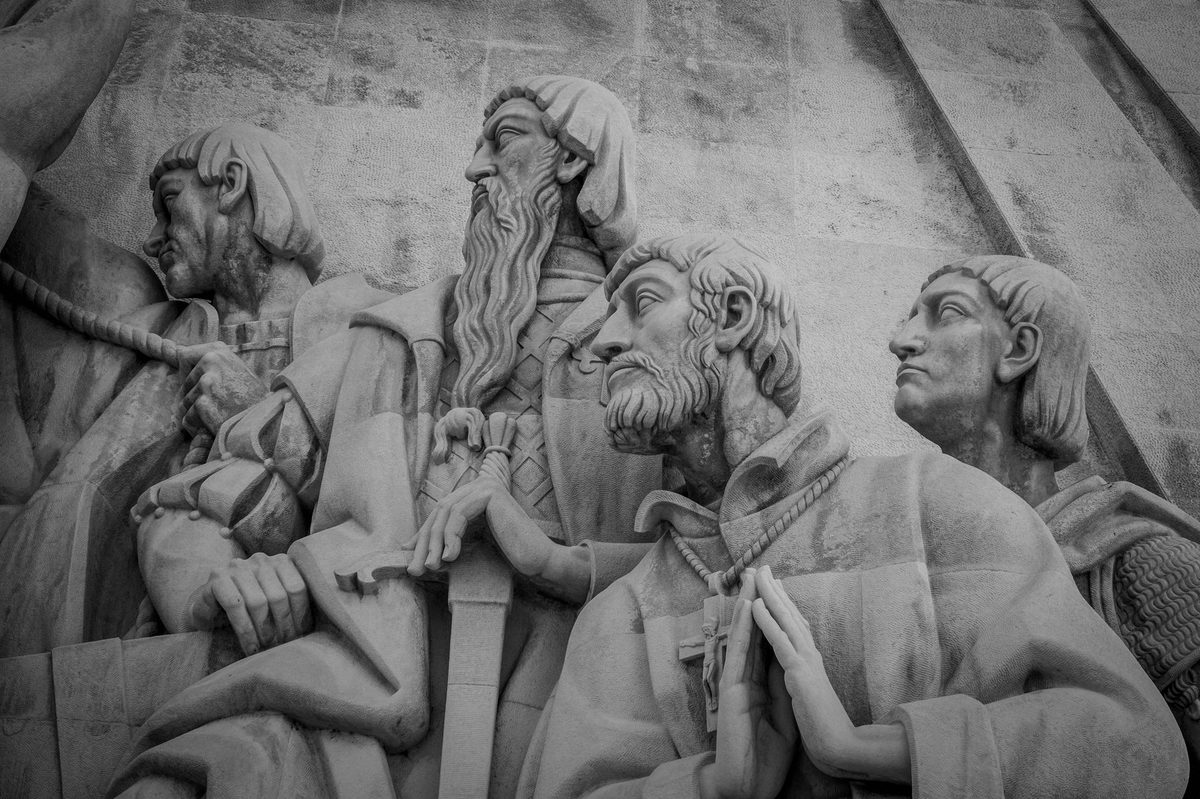
The other six figures and the bas-reliefs
Flanking the four reformers are six smaller statues, 3 metres each, of secondary Protestant figures, plus a run of bas-reliefs showing key Reformation events.
Side statues
- Roger Williams (1603-1683), English Puritan, founder of Rhode Island, early advocate of religious freedom
- Frederick William of Brandenburg (1620-1688), the Protestant German prince who took in French Huguenot refugees after the 1685 Revocation of the Edict of Nantes
- Oliver Cromwell (1599-1658), English Puritan revolutionary, Lord Protector of England 1653-1658
- Stephen Bocskai (1557-1606), Transylvanian Protestant leader and defender of religious freedom in Hungary
- Gaspard de Coligny (1519-1572), French Huguenot leader killed in the St Bartholomew’s Day Massacre
- William the Silent (1533-1584), Prince of Orange, founder of the Dutch Republic and leader of the Dutch Reformation
Bas-reliefs
Carved scenes mark major moments: the signing of the Mayflower Compact (1620), the granting of the Edict of Nantes (1598), the Magna Carta (claimed here as a Protestant inheritance), and several Reformation assemblies. They’re easy to walk past, but worth 10 minutes.
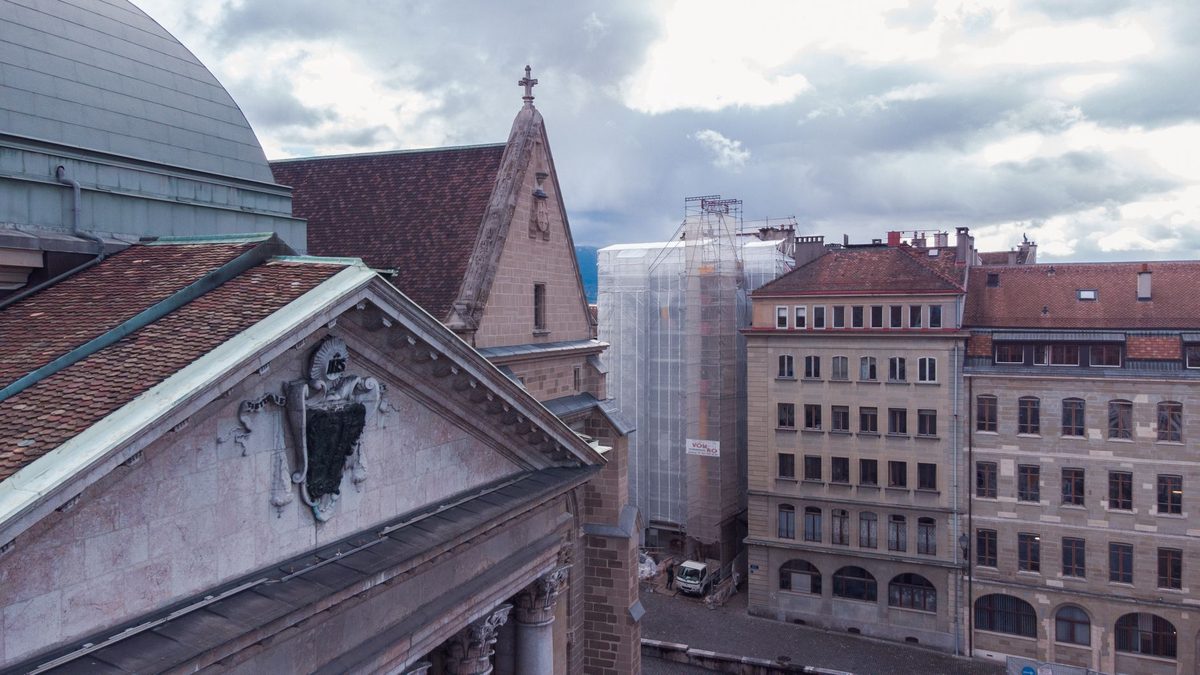
Saint-Pierre Cathedral: Calvin’s pulpit
Geneva’s medieval cathedral, built in the 12th and 13th centuries, went Protestant in 1535 when the town council voted to embrace the Reformation. The interior was stripped of Catholic decoration: the medieval frescoes, statues, painted altarpieces and rood screen all came out, leaving the vast plain space you see now. Only the stained glass survived.
Calvin’s chair
The wooden chair in the right transept is traditionally identified as Calvin’s preaching chair, used during his Geneva ministry from 1541 to 1564. The pulpit he actually used was destroyed; the current one is a 17th-century replacement.
The tower climb
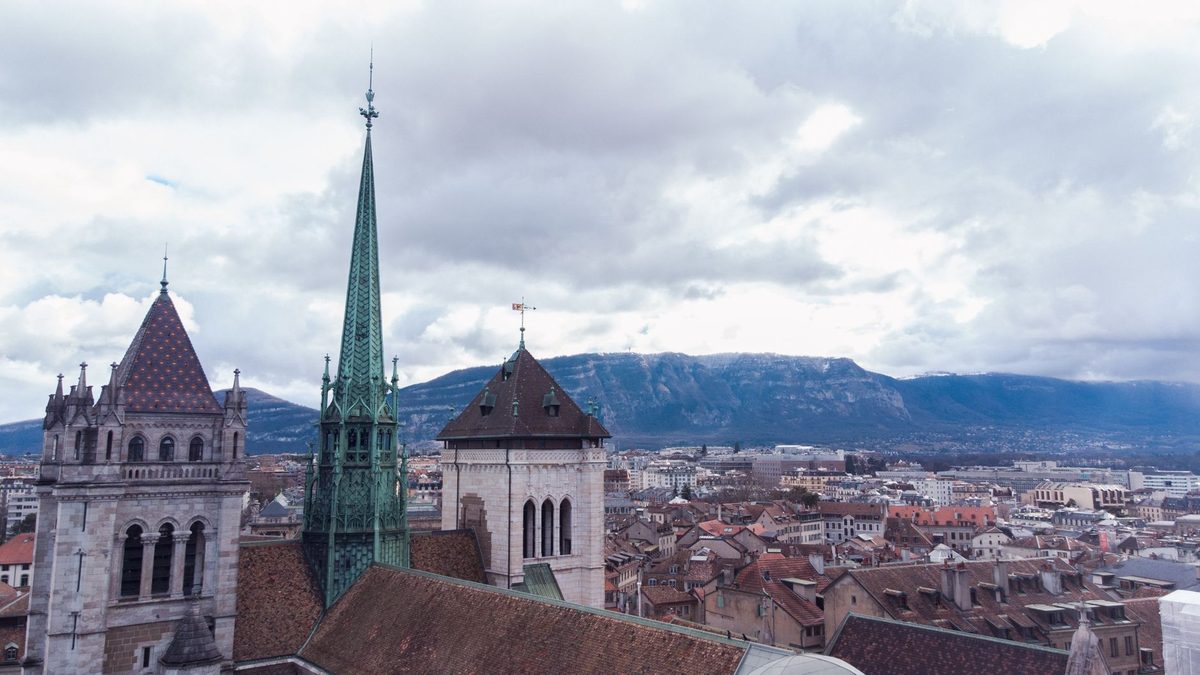
157 steps to the top (CHF 7), and the best Old Town view in Geneva. On clear days you can see Mont Blanc to the southeast. Budget 30 minutes including the queue.
The archaeological crypt
Beneath the cathedral, the excavations (CHF 8) show the layered foundations: a 4th-century Roman temple, an early Christian basilica, the Romanesque cathedral, and the present 12th-13th century structure. Genuinely important historical layering, not just a tourist stop.
The nave
Free, and worth 20 minutes. The stripped-bare Protestant aesthetic is as visually distinctive in its own way as a Catholic baroque interior, and it reads as the architecture of Reformation theology.
Auditoire de Calvin: Knox’s refuge
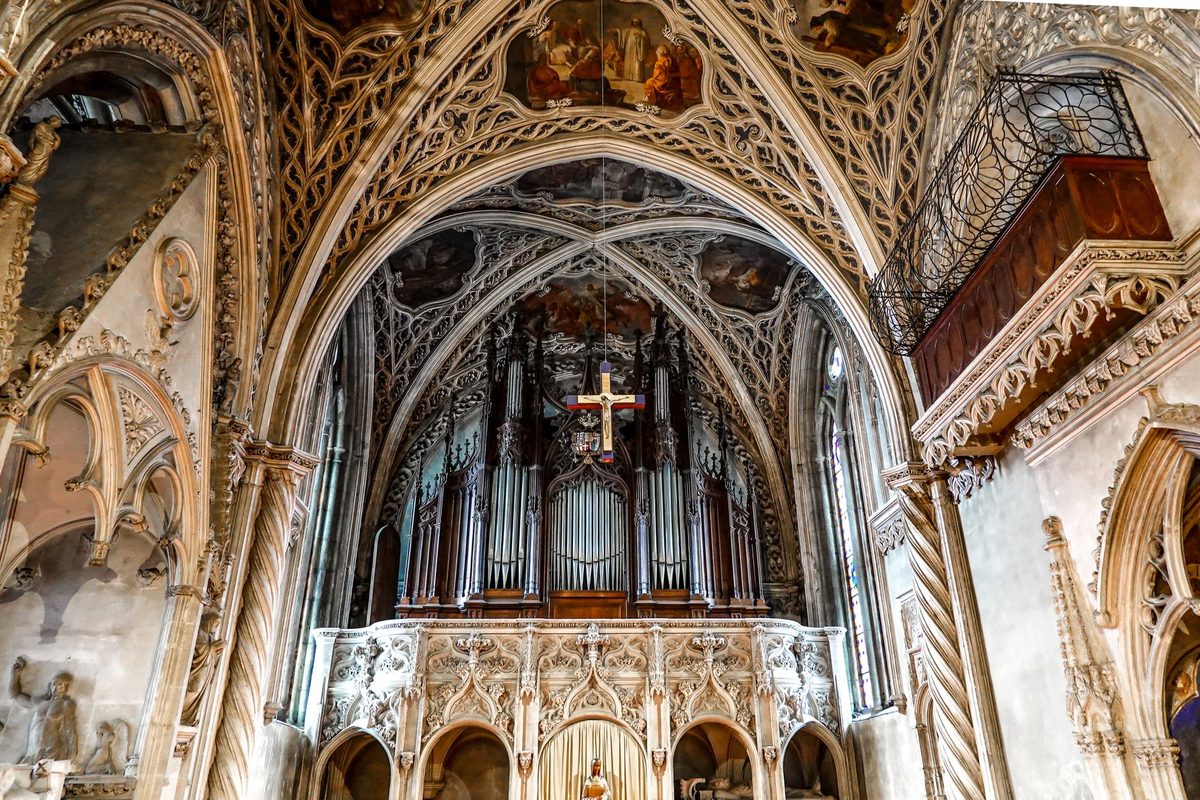
The small Gothic chapel directly behind the cathedral, reached via Cour Saint-Pierre. Built in the 15th century as Notre-Dame-la-Neuve, it served during the Reformation as the lecture hall for Calvin’s theological teaching, which is where the name “Auditoire” comes from.
Its most famous chapter: in the 1550s it was the worship space for Geneva’s English-speaking Protestant refugees, John Knox among them, before he returned to Scotland in 1559. The Geneva Bible, the most-read English Bible of its century, was translated and published by this same community.
Today the Auditoire is the parish church of the Church of Scotland in Geneva, with English-language Sunday services. It’s normally open to visitors during the day, entry free, with a small bilingual exhibition inside on the building’s history. It’s one of those modest-looking sites that matters far more than its exterior suggests. Worth 20 minutes after the cathedral.
Musee international de la Reforme
Opened in 2005, the International Museum of the Reformation occupies the historic Maison Mallet on Cour Saint-Pierre, directly across from the cathedral. It tells the story of the Protestant Reformation across Europe and its global reach, a serious, well-curated narrative across several rooms:
- The pre-Reformation context: 15th-century church abuses, Erasmus, Luther’s 95 Theses
- The Geneva Reformation specifically
- The spread of Protestantism across Germany, Switzerland, France, Scotland, England and the Netherlands
- The Reformation’s effect on art, music, education and political thought
- Its continuing influence, from the American Puritans and the Dutch Republic to modern Evangelical movements
It’s small, 90 minutes is enough, but the curation is excellent, with original 16th-century books, woodcuts, paintings and personal objects of the reformers. The displays include original Calvin manuscripts, an early printed Geneva Bible, and portraits of the reformers from life.
Tickets: CHF 13 adult, CHF 8 student, CHF 30 family, free under 12.
Hours: Tuesday to Sunday 10:00-17:00, closed Mondays.
Combined ticket: CHF 18 adds the cathedral tower and archaeological crypt, the best value if you’re doing the full circuit.
The Geneva Reformation in five minutes
Why Geneva matters in religious history, briefly:
1530s Geneva. A small Catholic city-state, nominally under the bishop but increasingly self-governing. The bishop fled in 1533 and the council took control. Guillaume Farel had started preaching Protestant theology in 1532.
The 1536 vote. On 21 May 1536, the citizens voted in popular assembly to adopt the Reformation officially. The Catholic churches were stripped, the bishop’s authority rejected, new religious laws passed.
July 1536: Calvin arrives. The 27-year-old Calvin was only passing through when Farel confronted him and pressed him to stay. His first stint (1536-1538) ended in expulsion after a clash with the council; he returned in 1541 and stayed until his death in 1564.
1541-1564: Calvin’s Geneva. Under Calvin the city became the principal centre of Reformed Protestantism worldwide. The Academy, founded in 1559, trained ministers who carried the theology to France, Scotland, the Netherlands, Hungary and eventually the American colonies. Refugees poured in, French Huguenots, English Marians fleeing Mary I, Italian Reformed, Scottish followers of Knox, and the population doubled.
The legacy. Geneva produced theological, institutional and educational templates that shaped Protestant churches everywhere. The Presbyterian and Reformed churches trace their structure to Calvin’s Geneva. The Geneva Bible of 1560 was the main English Bible for a century. The model of an independent city-state run on Reformed lines fed political thinking in the Netherlands, Scotland and the American colonies. Standing at the Reformation Wall, you’re at the symbolic centre of one of the most influential urban-religious-political experiments in European history.
A half-day Reformation walking tour
09:30 – Start at Parc des Bastions and the Reformation Wall. 30 minutes for the wall and the bas-reliefs. Squeeze in a quick game of giant chess if there’s time.
10:00 – Walk uphill to Saint-Pierre Cathedral, 10 minutes via Place de Neuve and the medieval streets.
10:15 – Cathedral nave and Calvin’s chair. 30 minutes inside.
10:45 – Tower climb (CHF 7). 30 minutes with the queue and the view.
11:15 – Archaeological crypt (CHF 8). 30 minutes.
11:45 – Auditoire de Calvin. 20 minutes.
12:00 – Lunch at Cafe de l’Eveche on the cathedral square. 75 minutes.
13:30 – Musee international de la Reforme. 90 minutes.
15:00 – Walk through the Old Town to Maison Tavel for the medieval-to-modern Geneva story. See our Maison Tavel guide.
16:30 – Coffee at La Clemence on Place du Bourg-de-Four. For more ideas nearby, see our roundup of things to do in Geneva.
FAQ: Reformation Wall and Protestant Geneva
Is the Reformation Wall free?
Yes. It sits in Parc des Bastions, freely accessible around the clock, no tickets required.
Who are the four reformers on the wall?
Guillaume Farel, Jean Calvin, Theodore de Beze and John Knox. Calvin and Beze led the Geneva Reformation, Farel started it, and Knox spent his exile here before returning to lead the Scottish Reformation.
What does “Post Tenebras Lux” mean?
“After Darkness, Light,” the motto of the Reformation and the official motto of Geneva.
Can I climb the Saint-Pierre Cathedral tower?
Yes, CHF 7 and 157 steps, for the best Old Town view in Geneva.
Is the Reformation Museum worth visiting?
Yes, for anyone with even a passing interest in religious or political history. The CHF 18 combined ticket with the cathedral tower and crypt is the best value.
How long does the full circuit take?
Three to four hours for the wall, cathedral, Auditoire and museum, or about five with lunch.
Why the wall still lands
The Reformation Wall is the entry point to one of the genuinely interesting historical circuits in central Geneva. The wall itself is free, photogenic, and oddly moving once you know what the four figures actually did. Put it together with Saint-Pierre Cathedral, the Auditoire de Calvin and the Reformation museum and you have a 4-to-5-hour walking tour that explains how a small city on a lake became one of the most influential religious centres in European history. “Post Tenebras Lux” was the slogan; the city made it real. Walk the circuit and the story clicks into place. If you’re still mapping out your days, our plan your trip to Geneva guide and our where to stay in Geneva guide cover the logistics.
Official sources and further reading
- Musee international de la Reforme (official)
- Saint-Pierre Cathedral (official)
- Church of Scotland Geneva (Auditoire)
- Geneva Tourism, Reformation Wall