The Red Cross Museum Geneva is the most emotionally affecting museum in the city, and the one I never recommend to anyone visiting in a hurry. Officially the International Red Cross and Red Crescent Museum, it is not a place you walk through so much as one that walks through you. Three architects from three continents designed three spaces around three humanitarian challenges — defending human dignity, restoring family links, reducing natural risks — and the result is that rare modern museum where the curatorial intelligence and the emotional weight pull in the same direction. The Chamber of Witnesses alone, where you place your hand against a life-size projection of someone who has lived through war to hear their story, justifies the visit. You will not regret the CHF 15.
This is my honest 2026 visitor’s guide to the Red Cross Museum Geneva: what it actually contains and how to read it, the detail that the first Saturday of each month is pay-what-you-want, the tram-15-from-Cornavin logistics, what to do with kids (ages 10 and up, with caveats), how it pairs with the UN Palais des Nations next door, and the firm advice to give it a quiet afternoon rather than squeezing it between two other museums. It is one of the standout stops in the Geneva museums and culture lineup.
The 60-second plan
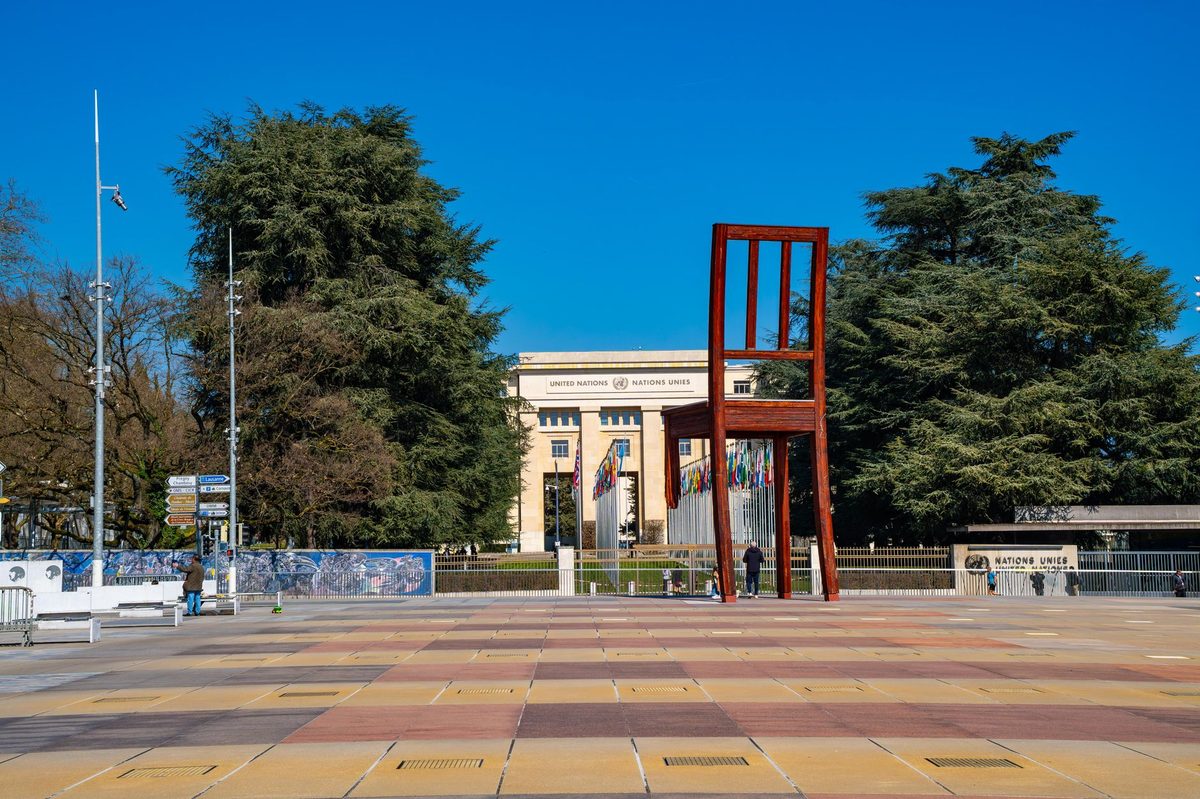
Take tram 15 from Cornavin to Place des Nations (about 10 minutes), then walk 5 minutes to the museum. Entry is CHF 15 for adults, or pay-what-you-want on the first Saturday of each month. Allow 2 hours for a proper visit, 2.5 with the temporary exhibition. The visit is emotionally heavy, so plan a quiet coffee afterwards rather than a rushed second museum. Pair it on the same day with the UN exterior — the Broken Chair on Place des Nations — for a thematic UN-quarter morning or afternoon.
Red Cross Museum at a glance
| Detail | What to know |
|---|---|
| Adult entry | CHF 15 (CHF 10 reduced, CHF 7 child, CHF 35 family). |
| Free day | Pay-what-you-want on the first Saturday of every month. |
| Hours | Tuesday-Sunday 10:00-17:00, Thursday until 20:00, closed Mondays. |
| Time needed | 2 hours, or 2.5 with the temporary exhibition. |
| Getting there | Tram 15 from Cornavin to Nations, then a 5-minute walk to Avenue de la Paix 17. |
| Best time | Weekday mornings, or Thursday evening for the quiet. |
| Good for kids? | Ages 10 and up; skip it for under-7s. |
| Pairs with | The UN Palais des Nations, a 5-minute walk away. |
A brief history: Dunant and the Geneva Convention
The Red Cross story starts with one Swiss businessman and the aftermath of one battle. In June 1859, Henry Dunant — a 31-year-old Geneva-born businessman travelling in northern Italy — came upon the aftermath of the Battle of Solferino, where 40,000 dead and wounded soldiers lay on the field with almost no medical care. Dunant organised local civilians to tend the wounded regardless of nationality, an experience that haunted him into writing the slim 1862 book A Memory of Solferino.
The book made two simple proposals: that every country should have a voluntary relief society to support military medical services in wartime, and that an international treaty should protect medical staff and the wounded. In 1863, Dunant and four fellow Genevans (Gustave Moynier, Louis Appia, Theodore Maunoir and Guillaume-Henri Dufour, the Committee of Five) founded the International Committee of the Red Cross. The following year, 12 governments signed the first Geneva Convention.
Dunant himself was financially ruined within a decade and lived in poverty for years before being awarded, jointly with the French pacifist Frederic Passy, the first Nobel Peace Prize in 1901. That medal is in this museum, which opened in 1988 and was completely redesigned in 2013 around the current Humanitarian Adventure exhibition. For more of this story, the Geneva history and heritage guide is a good companion.
Getting to the Red Cross Museum
Tram 15, the easy route
The simplest way from central Geneva. Tram 15 from Cornavin to Nations takes about 7 to 10 minutes, then it is a 5-minute walk through the UN quarter to the museum at Avenue de la Paix 17. It is free with the Geneva Transport Card, or CHF 3 for a single ticket — see the Geneva public transport guide.
Buses, walking and parking
Buses 5, 8, F and V also serve the UN quarter from various parts of the city. On foot from Place du Molard it is about 30 minutes uphill, pleasant through the diplomatic quarter on a clear day and less so in winter rain. There is only limited paid street parking and a small visitor lot, so driving is unnecessary — take public transport.
Tickets, hours and the free-Saturday trick
Adult entry is CHF 15, with CHF 10 reduced (student, senior, ISIC), CHF 7 for children 6 to 15, CHF 35 for a family of two adults and two children, and free for under-6s. The Geneva City Pass gives a discount, and the first Saturday of every month is pay-what-you-want — the museum’s accessibility-day tradition, and a lovely thing if your dates line up. Tickets cover both the permanent and any current temporary exhibition.
Hours are Tuesday to Sunday, 10:00 to 17:00, with a late opening until 20:00 on Thursdays; it is closed Mondays and on 24, 25 and 31 December and 1 January. Weekday mornings are quietest. Thursday evening is the connoisseur’s slot — far fewer people after 17:00, and the museum genuinely benefits from the hush. Avoid Saturday lunchtime, when school groups and weekend crowds arrive.
The three Humanitarian Adventures
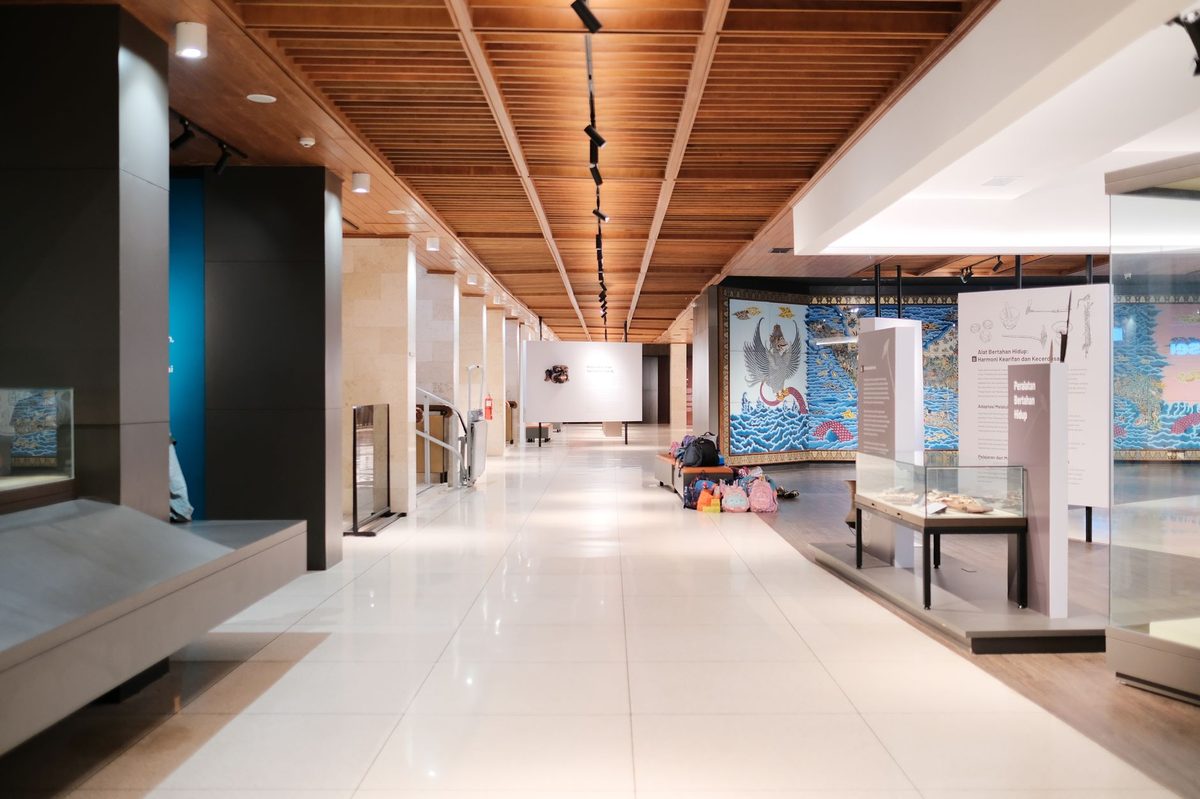
The permanent exhibition, The Humanitarian Adventure, splits into three large spaces, each designed by a different architect from a different continent. The architectural contrast is itself part of the argument: each section speaks in the visual language of a different humanitarian tradition.
1. Defending Human Dignity, by Gringo Cardia (Brazil)
The first and most historically dense space. It covers the founding of the Red Cross, the Geneva Conventions (1864, 1949 and the 1977 Additional Protocols), the growth of international humanitarian law, and the ICRC’s work in the major conflicts of the 20th and 21st centuries, from the World Wars to Vietnam, Bosnia, Syria and Ukraine. The original 1864 Geneva Convention document is here, as is the first Nobel Peace Prize medal. Allow 45 to 60 minutes, with multilingual audio captions throughout.
2. Restoring Family Links, by Diebedo Francis Kere (Burkina Faso)
The most viscerally affecting section. It traces the Red Cross’s century of work helping families separated by war, displacement and disaster find one another again — walls of personal-letter archives from the World Wars, modern digital tracing tools, and the stories of individual families reunited after years or decades apart. Kere’s curved, earth-coloured walls create intimate alcoves for the hardest content. About 30 to 45 minutes; bring tissues.
3. Reducing Natural Risks, by Shigeru Ban (Japan)
This space covers disaster preparedness and response — earthquakes, tsunamis, floods, droughts and climate-driven crises — framed by Ban’s signature paper-tube architecture, the same approach he uses for real emergency shelters. Case studies span Haiti in 2010, Japan in 2011 and Turkiye-Syria in 2023, alongside the systems being built to anticipate disasters. About 30 to 45 minutes; conceptually broad rather than gut-wrenching.
The Chamber of Witnesses
The single most powerful exhibit in the museum, and the one visitors mention months later. The Chamber of Witnesses is a small darkened room holding 12 life-size video projections of people who have lived through war, displacement and disaster — refugees, prisoners of war, survivors, medical workers in conflict zones. Each figure is projected at human scale, looking straight at you.
To start a story, you place your palm on a projected palm. The figure begins to speak in their own recorded testimony, heard through headphones or directed sound. That palm-to-palm gesture across a screen is deliberate, and it is devastating. Give the Chamber at least 20 to 30 minutes; several stories are worth hearing in full. It makes the abstract scale of humanitarian work suddenly, concretely human.
Temporary exhibitions
The museum runs roughly three temporary exhibitions a year on rotating contemporary themes — recent ones have covered climate displacement, the ethics of humanitarian photography, mental health in conflict zones, and the Red Cross’s response to specific crises in Ukraine, Gaza and Sudan. They are included in the standard ticket and are often worth planning a visit around, frequently more adventurous than the usual museum special show. Check the current programme at redcrossmuseum.ch.
Visiting with children
The museum suits children but needs parental judgement. It shows no graphic violence, yet it deals seriously with war, displacement and suffering.
- Ages 10 and up: generally fine. Older children tend to engage well with the Chamber of Witnesses and the Family Links section in particular.
- Ages 7 to 9: possible with discretion. The Family Links and Natural Risks sections are the most accessible; Defending Human Dignity is conceptually dense.
- Under 7: skip it. The Natural History Museum or the CERN Science Gateway work far better for younger kids.
The museum also runs free educational workshops for school groups (book ahead via redcrossmuseum.ch); groups tend to cluster on Tuesday to Thursday mornings in term time. For more family planning, see the Geneva with kids guide.
Pairing with the UN and nearby sights
The Red Cross Museum sits in Geneva’s UN quarter, with several other major attractions an easy walk away.
- UN Palais des Nations and the Broken Chair — a 5-minute walk. The Broken Chair on Place des Nations is the free photo stop; the UN guided tour (CHF 22) is excellent and the natural thematic pairing with a Red Cross visit.
- Musee Ariana — 10 minutes away, Switzerland’s national ceramics and glass museum, free, and a lighter counterweight to the Red Cross Museum’s emotional heft.
- Botanical Gardens — 15 minutes south, free, with greenhouses and a calm space to decompress afterwards.
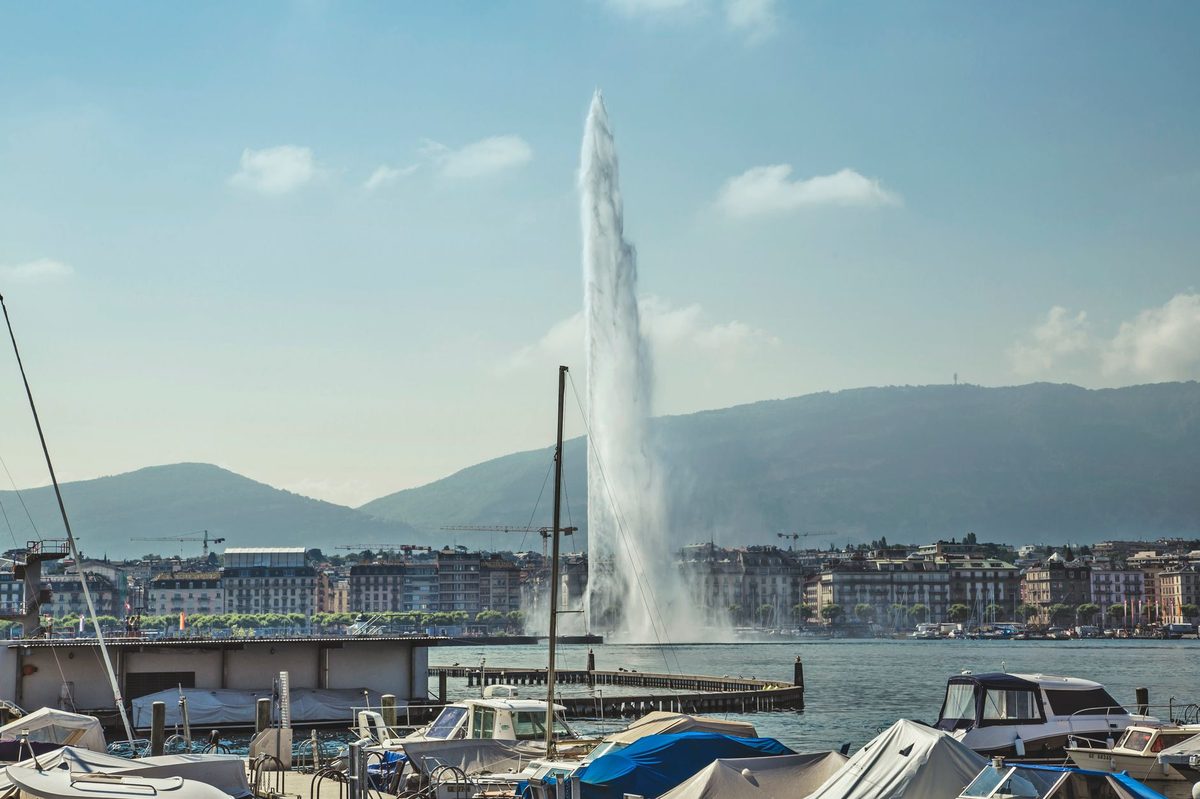
- Paquis lakefront and Bains des Paquis — 20 minutes south through the diplomatic quarter, where the Buvette des Bains makes a quiet post-museum coffee with the lake and Jet d’Eau in view.
The natural full-day plan: the Red Cross Museum in the morning, a quiet lunch, the UN guided tour in the afternoon, the Broken Chair, then a walk back along the lake. About 7 hours covering two of the most thematically important sights in Geneva. Many of these are free — the free things to do in Geneva guide rounds them up.
The architects, and why that matters
One thing worth dwelling on: commissioning three architects from three continents for the three main exhibitions is itself a humanitarian statement. The Brazilian Gringo Cardia, the Burkinabe Diebedo Francis Kere (Pritzker Prize, 2022) and the Japanese Shigeru Ban (Pritzker, 2014, known for cardboard-tube disaster shelters) bring three distinct design vocabularies, and the contrast between the rooms is not aesthetic but an argument that humanitarian work is plural, contextual and culturally rooted.
Kere’s earth-coloured curved walls in Family Links echo the architecture of his home region; Ban’s paper tubes in Natural Risks are the same material he builds emergency housing from; Cardia’s harder, more direct design for Defending Human Dignity matches the political density of that subject. Most visitors miss the architectural conversation the first time; on a second visit it becomes the dominant theme.
Practical notes from repeat visits
- Go alone or with a quiet companion. This is not a group-with-chatty-friends museum; the Chamber of Witnesses in particular needs silence.
- Plan to decompress afterwards. The on-site cafe is fine, but the emotional weight is real — walk down to the lakefront and let the visit settle by the Mouettes pier.
- Buy the catalogue. At CHF 32 it is one of the better museum books in Switzerland, substantial and well-edited.
- Check for evening events. The museum occasionally hosts lectures, screenings and discussions; see the calendar at redcrossmuseum.ch.
- Read a little first. Even 30 minutes with Dunant’s A Memory of Solferino (free online, about 90 pages) makes the Geneva Conventions documents land far harder.
Frequently asked questions
How much does the Red Cross Museum cost?
CHF 15 for adults, CHF 10 reduced, CHF 7 for children and CHF 35 for a family pass. It is pay-what-you-want on the first Saturday of every month, and free for under-6s.
How long should I spend at the Red Cross Museum?
Plan 2 hours for a focused visit, 2.5 with a temporary exhibition, or 3 hours if you want to do the Chamber of Witnesses in real depth.
What are the opening hours?
Tuesday to Sunday, 10:00 to 17:00, with a late opening until 20:00 on Thursdays. It is closed Mondays and on 24, 25 and 31 December and 1 January.
How do I get there from central Geneva?
Take tram 15 from Cornavin to Nations (about 10 minutes), then walk 5 minutes to Avenue de la Paix 17. It is free with the Geneva Transport Card.
Is the Red Cross Museum suitable for children?
It is recommended for ages 10 and up. Younger children tend to find the content too heavy; the Natural History Museum and CERN are better for under-10s.
Can I combine it with the UN guided tour?
Yes. They are a 5-minute walk apart and complement each other thematically. The Red Cross Museum is walk-in, while the UN tour should be booked ahead.
Related Geneva guides
Keep planning with the Geneva museums and culture pillar, the CERN visitor guide, the best Geneva attractions, free things to do in Geneva, the Geneva history and heritage guide, and the wider plan a trip to Geneva hub.