Geneva is one of the best science-museum cities in Europe, and most of it costs nothing. Three institutions carry the weight: CERN’s Science Gateway, the Musee d’histoire des sciences on the lakefront, and the Natural History Museum (closed for renovation until 2026-27). Add the Botanical Gardens and a couple of specialised spots, and a science-curious adult or a family with kids aged 6 to 14 has enough to fill three genuinely good days. The Geneva science museums circuit is the most reliable cultural plan in town when the weather turns, and the bill at the end is close to zero.
This isn’t accidental. Geneva runs the world’s biggest particle physics laboratory, one of Switzerland’s oldest natural history collections, and university science faculties that trace back to Calvin’s Academy of 1559. I’ve walked this circuit with and without kids in tow, and below is how I’d actually sequence it: the major institutions, the smaller ones worth a detour, what works for which age, and a three-day plan that strings them together without backtracking. If you want the wider cultural picture first, start with the Geneva museums and culture guide, then come back here for the science-specific route.
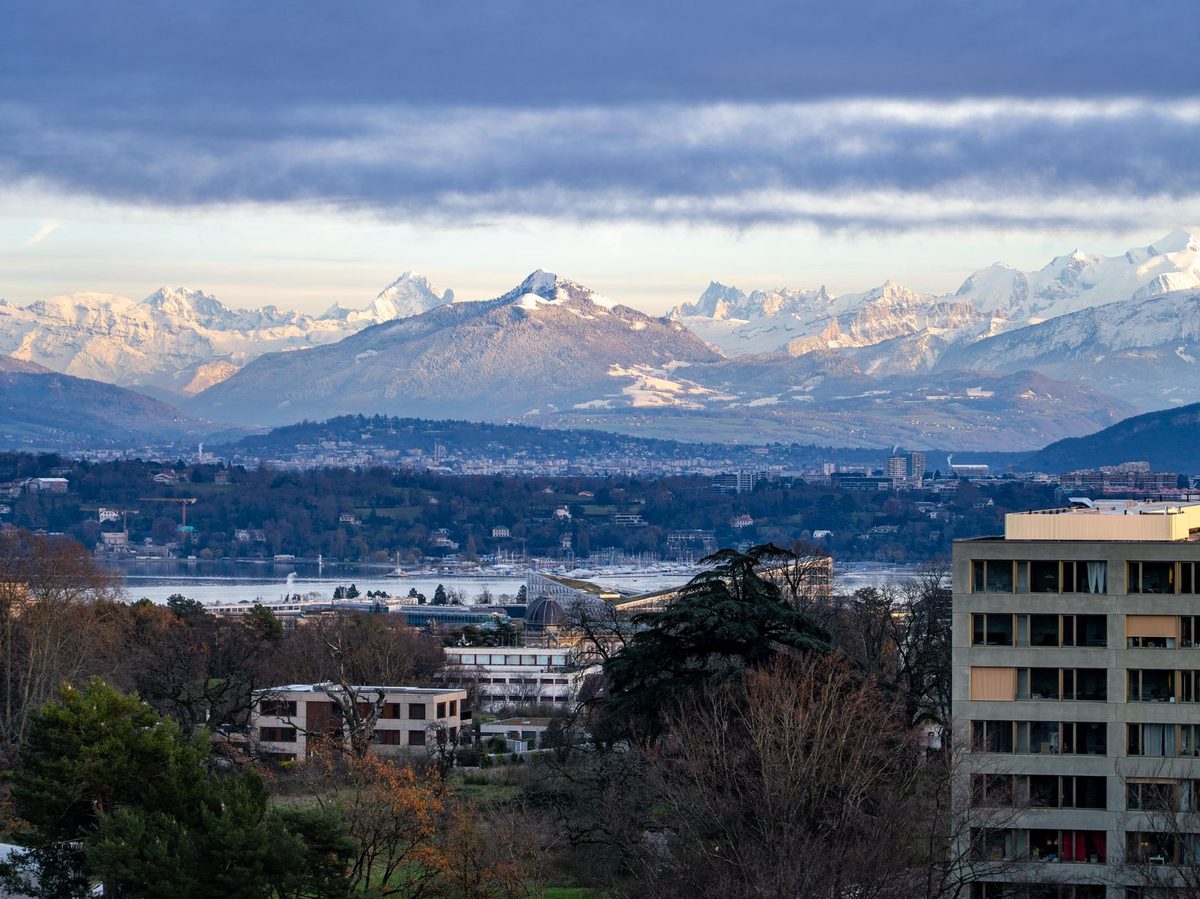
Geneva’s science museums at a glance
Five of the seven options below are free. Here’s how they stack up on cost, time and who they suit, so you can build a plan around what’s actually open right now.
| Museum | Cost | Time | Best for | Open? |
|---|---|---|---|---|
| CERN Science Gateway | Free | 3 hrs | Ages 8+ and adults | Yes |
| Musee d’histoire des sciences | Free | 1-2 hrs | Ages 6+ and adults | Yes |
| Natural History Museum (MHNG) | Free | 2-3 hrs | All ages, especially 3-12 | Closed 2024-26/27 |
| Botanical Gardens | Free | 1-2 hrs | All ages | Yes |
| Maison de l’histoire des sciences (annex) | Free | 30 min | Pairs with Hist. des Sciences | Yes |
| UN Geneva (science-policy) | CHF 22 | 2.5 hrs | Ages 12+ and adults | Yes (tours) |
| Aquatis Aquarium (Lausanne) | CHF 32 | 3 hrs | All ages | Yes |
CERN Science Gateway: the one to prioritise
If you do one science thing in Geneva, do this. The Renzo Piano-designed Science Gateway opened in 2023 with three exhibition pavilions covering particle physics, the Universe of Particles, and the Quantum World, plus a planetarium dome and an outdoor sculpture garden. It’s free, it’s serious, and it manages the rare trick of being genuinely interesting to a physicist and to a ten-year-old at the same time.
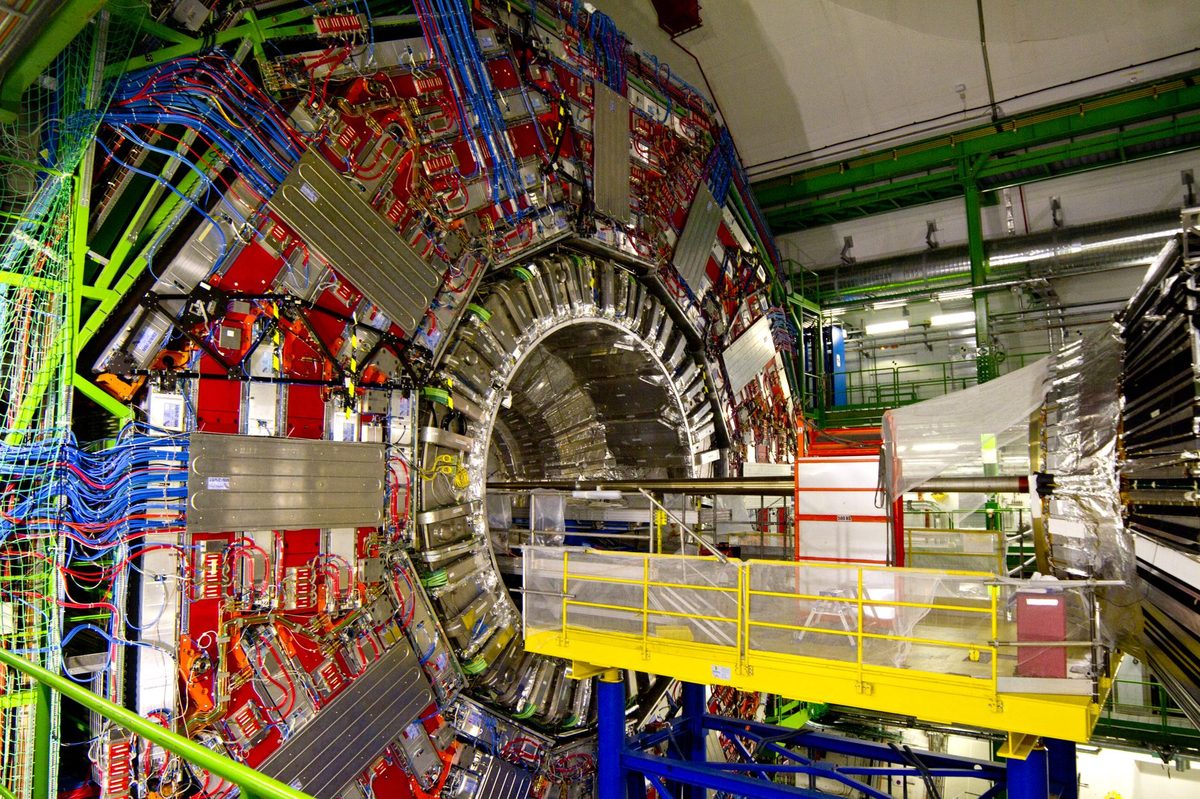
Cost: Free entry, no booking needed for self-guided visits.
Time: 3 hours minimum; 4-5 hours including the trip out from the centre.
Getting there: Tram 18 from Cornavin, about 25 minutes, free with the Geneva Transport Card.
Best for: Kids 8 and up, and any adult with a flicker of curiosity. Free guided tours and lab workshops exist but need booking 15 days ahead.
My advice: treat the self-guided pavilions as the core visit and only chase a guided tour if you’re willing to set an alarm (more on that below). Full detail in our CERN visitor guide.
Musee d’histoire des sciences: the underrated one
This is the museum locals send you to once you’ve done CERN. The Musee d’histoire des sciences sits in a 19th-century villa on the right-bank lakefront, inside the Parc de la Perle du Lac. Free entry, a beautiful setting, and a collection of historical scientific instruments that quietly outclasses what you’d expect from a small civic museum.
What’s inside
Three floors of instruments, organised by era and discipline:
- Historic microscopes from the 17th to 19th centuries
- Astronomical instruments: telescopes, astrolabes, armillary spheres
- Sundials and timekeeping devices
- Barometric and meteorological instruments
- Early electrical and physics experiments
- Anatomy and medical history exhibits
- Optical instruments and the history of glassmaking
What sets it apart: many displays are hands-on. Kids can turn handles on reconstructed historical experiments, look through working antique microscopes and telescopes, and line up sundials themselves. The under-12s love it; the historical depth keeps the adults reading the labels. It’s the rare museum where nobody in the family is bored.
The practical details
- Cost: Free permanent collection; special exhibitions CHF 5-10
- Hours: Wednesday to Monday 10:00-17:00; closed Tuesdays
- Address: Rue de Lausanne 128, in the Parc de la Perle du Lac
- Getting there: Bus 1 to Secheron then a 5-minute walk, or a 25-minute lakefront stroll from the centre
- How long: 90 minutes minimum; 2 hours for a hands-on family visit
Walk back to the centre along the water afterwards. The Perle du Lac park is one of the nicest lakeside green spaces in the city, and the route doubles as a free lake-and-Alps view.
Natural History Museum: closed, but worth knowing
The Museum d’histoire naturelle de Geneve has been shut since January 2024 for a major renovation, reopening in phases through 2026-2027. When it’s open it’s the city’s flagship family science museum and one of Switzerland’s largest natural history collections, with Janus the live two-headed turtle, a dinosaur hall, mammals, the lot. Check the current reopening status before you build a day around it. Our Natural History Museum guide tracks where things stand.
Botanical Gardens: a research institution you can picnic in
The Conservatoire et Jardin Botaniques (CJBG) on the right bank does double duty as a public park and a serious botanical science institution: 24 hectares of plant collections, three greenhouses (Mediterranean, alpine, tropical), a small free zoo with deer and ducks, a herbarium, and an arboretum. It’s free, and in winter the warm tropical house is reason enough to come.
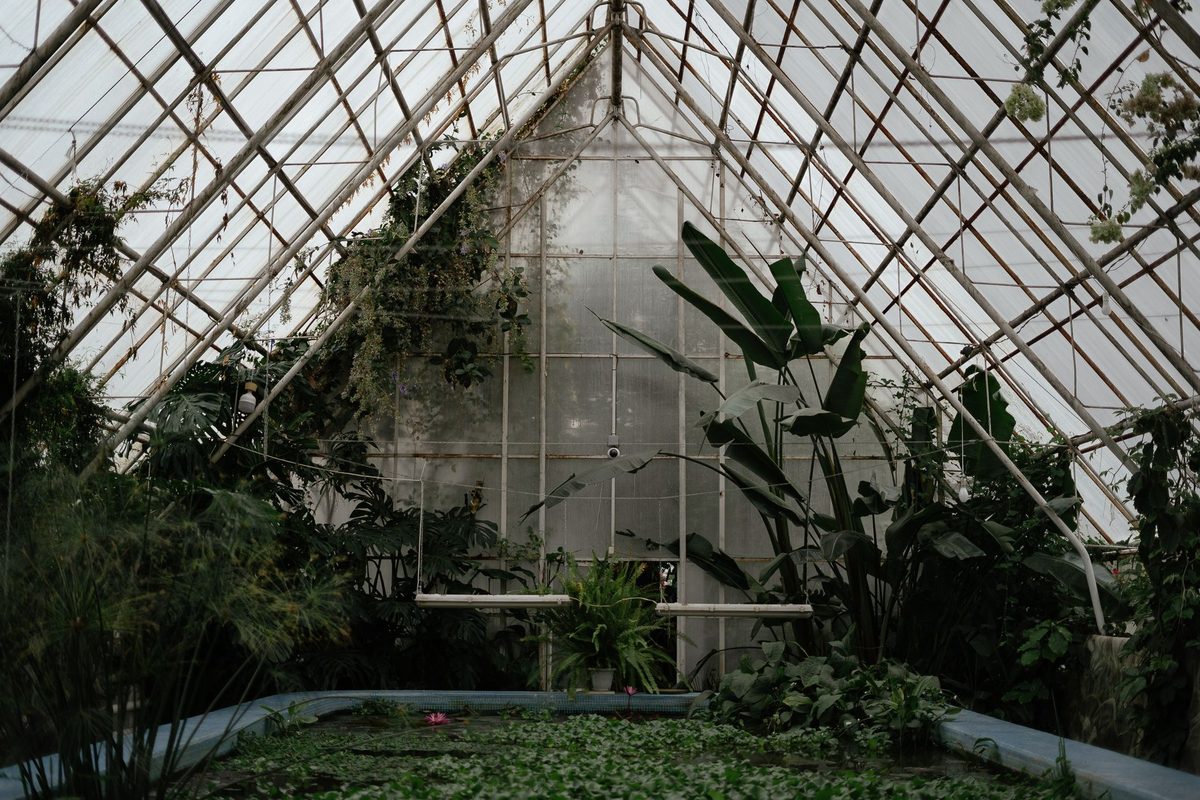
What’s there
- Three greenhouses: tropical jungle, Mediterranean herbs and trees, and alpine high-altitude flora. The tropical house, with banana and coffee plants, is the standout when it’s cold outside.
- The arboretum: tree species from around the world, arranged for study and open to wander.
- Alpine garden: Switzerland’s own alpine and rock species.
- Pond and water garden: aquatic species, and a reliable hit with small children.
- Small zoo: fallow deer, peacocks and ducks, free to view.
Cost: Free entry to the gardens and greenhouses
Hours: Gardens daily until sunset; greenhouses Tue-Sun 09:30-17:00
Getting there: Tram 1 from Cornavin to Jardin Botanique, about 12 minutes
How long: 90 minutes for a thorough visit, 60 for a focused one
This is my default recommendation for families with very young kids. The zoo, the pond and the open lawns all work for under-7s, while the botanical depth gives a science-minded adult plenty to chew on.
The smaller specialised museums
Musee international de la Croix-Rouge
Not a science museum in the usual sense, but a museum about the science of humanitarian response: disaster preparedness, displacement, medical work in conflict zones. It’s one of Geneva’s most important visits, full stop. Details in our Red Cross Museum guide.
UN Geneva (Palais des Nations)
The UN’s role in global science and health policy is real: the WHO is headquartered here, the UN climate conferences partly run through Geneva, and the humanitarian-coordination office sits in this building. Guided tours touch on how the UN system handles scientific questions. See our UN Geneva visitor guide.
Fondation Bodmer (Cologny)
Literary at heart, but the Bodmer Foundation holds original Newton, Galileo and Einstein materials alongside its manuscript collection, which makes it a quiet thrill for science-history readers. About 15 minutes from the centre by bus; CHF 15 entry.
Aquatis Aquarium (Lausanne, 40 min by train)
The largest freshwater aquarium in Europe, built around freshwater ecosystems worldwide. It’s an excellent family science outing and especially useful while Geneva’s Natural History Museum is closed. CHF 32 adult, CHF 22 child. Train to Lausanne (40 minutes from Cornavin) then metro M2 to Vennes.
For families: what works at which age
Geneva’s science museums are unusually kid-friendly. Here’s how I’d match them to ages, with the honest caveat that the Natural History Museum (the obvious family pick) is out of action for now. For the wider family plan, our Geneva with kids guide covers food, parks and downtime around these visits.
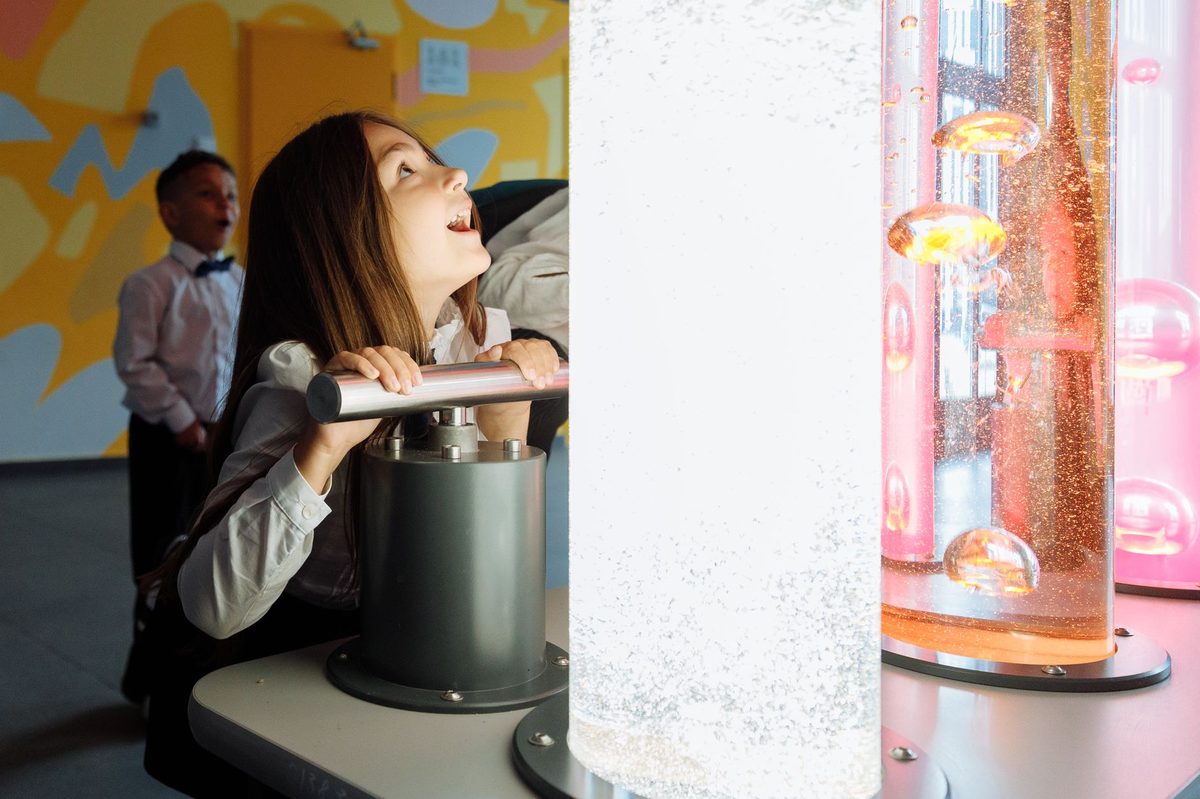
Ages 3-6
- Botanical Gardens (greenhouses, ponds, the small zoo)
- Natural History Museum’s “Atelier des Petits” (when it reopens)
- Musee d’histoire des sciences (the hands-on demos)
Ages 7-12
- CERN Science Gateway (genuinely lands for this age)
- Musee d’histoire des sciences (turn-the-handle experiments)
- Natural History Museum when it reopens (dinosaur hall plus Janus)
- Aquatis in Lausanne as a day-trip alternative
Ages 13-17
- CERN Science Gateway (the conceptual depth finally clicks)
- UN Geneva tour (where policy and science meet)
- CERN lab workshops, booked ahead, split into 7-12 and 13-18 groups
Special programmes worth catching
- CERN lab workshops: free hands-on sessions, book 15 days ahead at visit.cern
- Histoire des sciences family Sundays: occasional Sunday programmes, check museums.ville-geneve.ch
- Geneva Night of Museums (May): one free evening with kids’ programming across every city museum
A three-day science itinerary
This is the route I’d run, grouped so you’re never doubling back across town. Swap in the Natural History Museum for Aquatis once it reopens.
Day 1: CERN morning, city science afternoon
- 10:00 Tram 18 to CERN, full Science Gateway visit (3 hours)
- 14:00 Tram back to Cornavin; lunch at Birdie Plainpalais
- 15:30 Musee d’histoire des sciences (90 minutes)
- 17:30 Lakefront walk back to the centre
Day 2: natural sciences and biology
- 09:30 Coffee at Buvette des Bains
- 10:00 Botanical Gardens, greenhouses included (2 hours)
- 13:00 Lunch at the Botanical Gardens cafe
- 14:30 Natural History Museum when reopened, or the Aquatis day trip to Lausanne
Day 3: science policy and history
- 10:00 UN guided tour (book ahead)
- 12:30 Lunch in the UN quarter
- 14:00 Red Cross Museum (humanitarian science)
- 16:30 Free walk through the UN gardens
Why Geneva is a science city: the short version
The museums make more sense once you know the backstory. A few key chapters tie it together, and the Geneva history and heritage guide goes deeper if you want it.
Calvin’s Academy of 1559 became the University of Geneva. Founded to train ministers in Greek, Hebrew and theology, it grew through the 17th and 18th centuries into serious natural-science teaching. The Bernoulli mathematicians, the naturalist Charles Bonnet (who coined the word “evolution” in 1762), and Horace-Benedict de Saussure, who helped invent geology as a discipline, all came out of this tradition.
The 18th-century Geneva science circle put the city on the European map. Saussure climbed Mont Blanc with Jacques Balmat in 1787, founding modern alpinism and high-altitude science in a single expedition. The chemist Jean-Andre Deluc was part of the same generation. Enlightenment Europe was systematising natural science, and Geneva was in the thick of it.
The 19th century built the institutions. The Museum d’histoire naturelle was founded in 1820, the history of science museum later that century, and the Botanical Gardens took their current form in 1817. The University of Geneva grew into one of Europe’s notable science universities.
The 20th century went international. The League of Nations in 1919 and the UN in 1945 pulled scientific institutions to the city: the WHO (1948), CERN (1954), the International Telecommunication Union, the World Meteorological Organisation. Once CERN chose Geneva, the talent and infrastructure followed.
The 21st century kept the streak going. The Higgs boson was confirmed at CERN in 2012; the World Wide Web was invented there by Tim Berners-Lee in 1989; the WMO runs climate research here; the WHO sat at the centre of the pandemic response. When you visit any Geneva science museum, you’re standing in a city with roughly 470 years of continuous scientific work behind it, and the collections show it.
The practical tips most visitors miss
Six things I’d tell a friend before they go:
1. Book the CERN guided tour 15 days ahead at 08:30 sharp. The most common regret I hear is missing the slot. Set a calendar alarm for the exact date and time, because slots fill within minutes.
2. Visit Histoire des sciences on a Wednesday or Thursday morning. It’s small enough that weekend afternoons fill with family groups; weekday mornings are nearly private.
3. Pair the Botanical Gardens with the WHO. The World Health Organisation headquarters is a 10-minute walk away, and the building’s exterior is worth the short detour if global health institutions interest you.
4. Check the school-holiday programmes. Geneva’s municipal museums, including Histoire des sciences, run free or low-cost kids’ programmes during Swiss school holidays. Schedules live at museums.ville-geneve.ch.
5. Plan around the Geneva Night of Museums. One Saturday in May, every museum stays open to midnight, free. If your trip lands on it, build around it.
6. Treat the lakefront as a free natural-science classroom. The Bains des Paquis, the Plage des Eaux-Vives and the Versoix lakefront walks all offer water birds, fish and Alpine geology in the open. Pack binoculars for a longer lake walk; the variety of waterfowl on the lake surprises people who actually stop to look. For more ideas across the city, see our roundup of things to do in Geneva.
One last point: Geneva clusters its science sites in a way few cities manage. CERN (tram 18) and Histoire des sciences (lakefront walk or bus 1) are both under 30 minutes from the centre; the Botanical Gardens (tram 1) and the Natural History Museum (bus 1) sit on the same side of town and combine neatly. With three days you can comfortably hit five or six institutions without ever feeling rushed, and pay for almost none of them.
FAQ: Geneva science museums
What’s the best science museum in Geneva?
CERN Science Gateway, for depth and accessibility, and it’s free. The Musee d’histoire des sciences is the close runner-up for its historic collection and hands-on demos, also free.
Are Geneva’s science museums free?
CERN, the Musee d’histoire des sciences, the Botanical Gardens and the Natural History Museum (when open) are all free. The UN tour is CHF 22, and Aquatis in Lausanne is CHF 32.
Is CERN suitable for children?
Yes. Kids 8 and up engage well, and the Science Gateway is built for a range of ages with interactive exhibits and clear explanations. Lab workshops for ages 7-12 and 13-18 run with advance booking.
When does the Natural History Museum reopen?
In phases through 2026-2027, after a major renovation that began in January 2024. Check the current status at museesdegeneve.ch, and see our Natural History Museum guide before planning a visit.
How do I book the CERN guided tour?
Online at visit.cern, 15 days in advance from 08:30 CET. Slots go in minutes. The self-guided Science Gateway visit needs no booking.
Is there an aquarium near Geneva?
Aquatis in Lausanne, the largest freshwater aquarium in Europe, 40 minutes away by train plus metro. It’s a strong family day out while Geneva’s Natural History Museum is closed.
Official sources and further reading
- CERN Science Gateway (official)
- Musee d’histoire des sciences (official)
- Conservatoire et Jardin Botaniques (official)
- Natural History Museum (renovation status)
- Aquatis Lausanne (aquarium)
Related Geneva guides
- Geneva Museums and Culture (pillar)
- CERN Visitor Guide
- Geneva With Kids: Family Guide
- Plan Your Trip to Geneva
- Where to Stay in Geneva
Geneva over-delivers as a science city. CERN alone justifies the trip for a curious adult or a family; the Musee d’histoire des sciences and the Botanical Gardens round it out as free, deeply accessible stops; and the Natural History Museum’s return will complete the set. Plan around what you can reach in three or four hours a day, walk the lake between visits, and you’ll have one of the best mid-size European science experiences anywhere, without buying a single ticket.