Visiting the United Nations Geneva is one of those trips where the photo (the Broken Chair in Place des Nations) is free and outdoors, while the actual guided tour needs advance booking, a passport, a security screening, and about 90 minutes of your day, and is, honestly, worth the effort. The tour takes you through the historic Palais des Nations (built 1929-1938 as the original headquarters of the League of Nations, now the second-largest UN office in the world after New York), past the Allegory of Disarmament ceiling by Jose Maria Sert in the Council Chamber, into the Human Rights and Alliance of Civilizations Room with its Miquel Barcelo stalactite ceiling, and through the Assembly Hall where diplomats actually meet. CHF 22. About 90 minutes. Book ahead.
This is the practical 2026 guide to visiting the United Nations Geneva: how to book the tour (online, in advance, with passport details), what to expect at the security gate, what is actually on the tour, the free Broken Chair photo stop, the renovation reducing tour availability through 2028, and how to combine it with the nearby Red Cross Museum for a full diplomatic-Geneva day. It is one of the standout entries on the Geneva museums and culture circuit and a fixture on any list of things to do in Geneva.
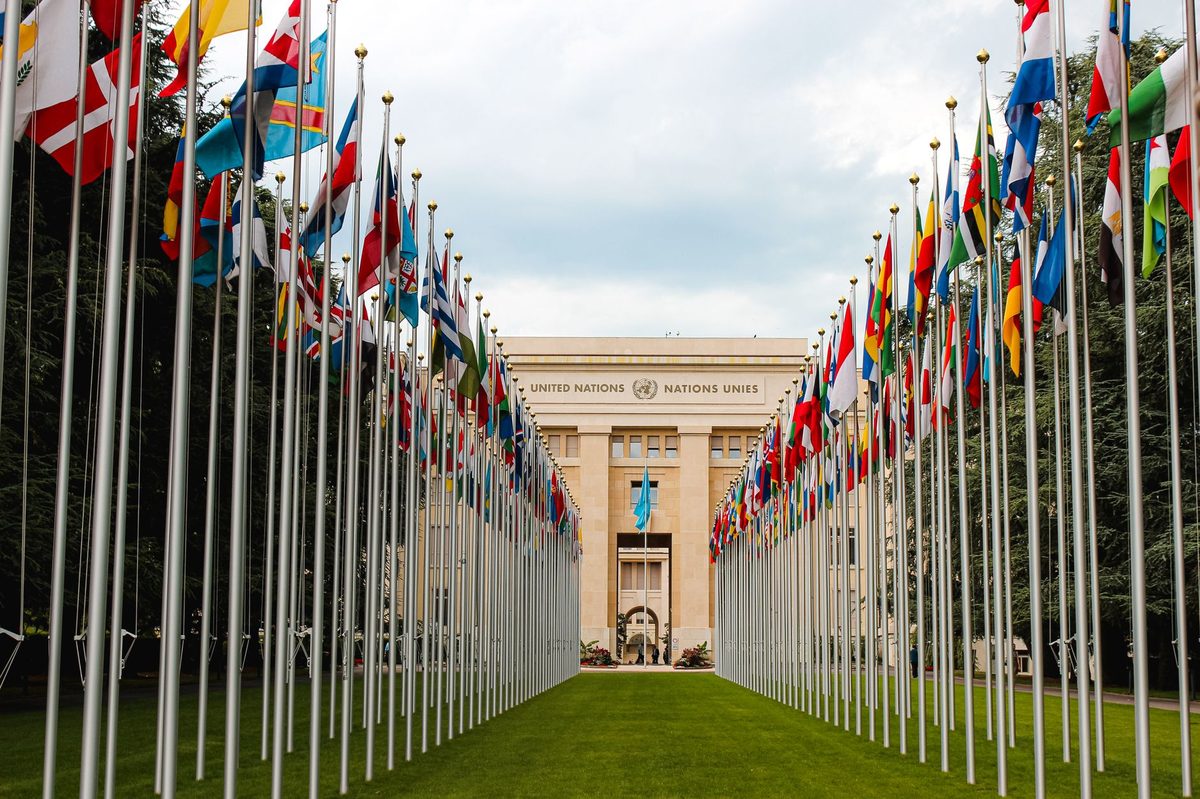
The 60-Second Plan
Book the tour online at ungeneva.org at least 2-3 weeks ahead, since slots are limited and availability is reduced through 2028 for the renovation. Bring your passport (or Schengen ID card) on the day. Take tram 15 from Cornavin to Nations (7 minutes). Arrive 45 minutes before your tour for security. CHF 22 adult, CHF 11-18 reduced. The tour runs 60-90 minutes and covers the major Palais halls. Combine it the same day with the Red Cross Museum (CHF 15, 5-minute walk) and the free Broken Chair for a thematic UN-quarter half-day.
The Guided Tour: What You Actually See
The standard tour runs 60-90 minutes and covers the main historic rooms of the Palais des Nations:
Assembly Hall
The largest meeting room, where major UN events happen, including the annual session of the UN Conference on Trade and Development and various special assemblies. Over 2,000 seats, restored late-1930s art deco interiors with the original wooden panelling. The tour spends 10-15 minutes here, including how the room is used for real diplomatic meetings.
Council Chamber (Spanish Chamber)
The most famous room in the building, built between 1933 and 1936. It holds the celebrated Allegory of Disarmament, a vast ceiling and wall fresco cycle by the Catalan-Spanish artist Jose Maria Sert. The frescoes depict humanity’s struggle for peace through symbolic figures and historical scenes, worked entirely in shades of brown and gold for a monochrome but overwhelming effect. The room still hosts high-level meetings, including the Conference on Disarmament. Guides usually allow 10 minutes here, and the visual impact earns it.
Human Rights and Alliance of Civilizations Room (Room XX)
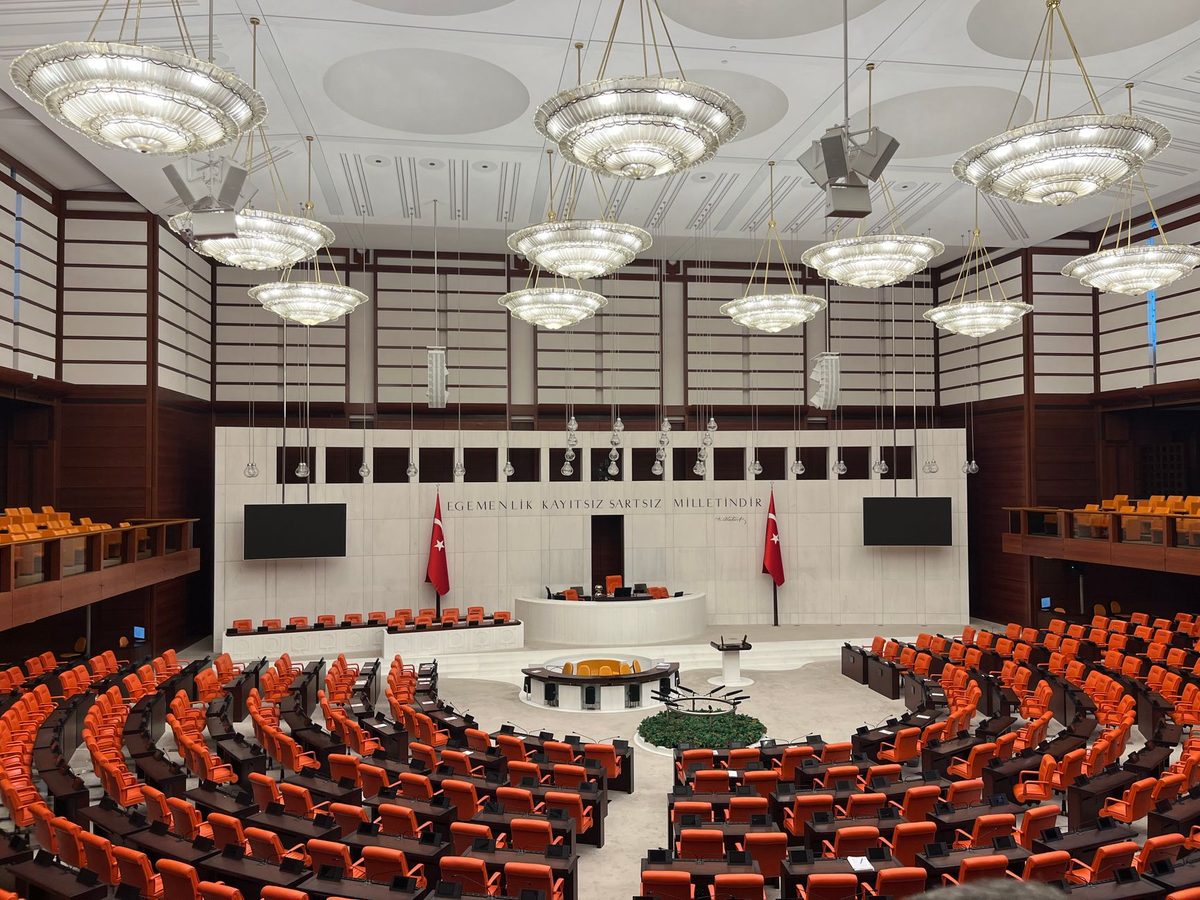
The most striking modern room, refurbished in 2008 with a dramatic ceiling by the Spanish artist Miquel Barcelo: 1,400 square metres of multicoloured stalactite-shaped panels representing the diversity of human cultures and the fluidity of dialogue. The room hosts the UN Human Rights Council, including the Universal Periodic Review of member states. The Barcelo ceiling alone justifies the tour.
Historic halls and member-state gifts
The tour passes historic corridors and waiting rooms, including the long hall lined with mosaics donated by member states (each country can donate a permanent decorative work for the Palais). You pass mosaics, paintings, sculptures, and objects given over the decades, some genuinely significant art (a Picasso ceramic, major textile works) and others charmingly representative of national craft.
Outdoor terraces and Ariana Park
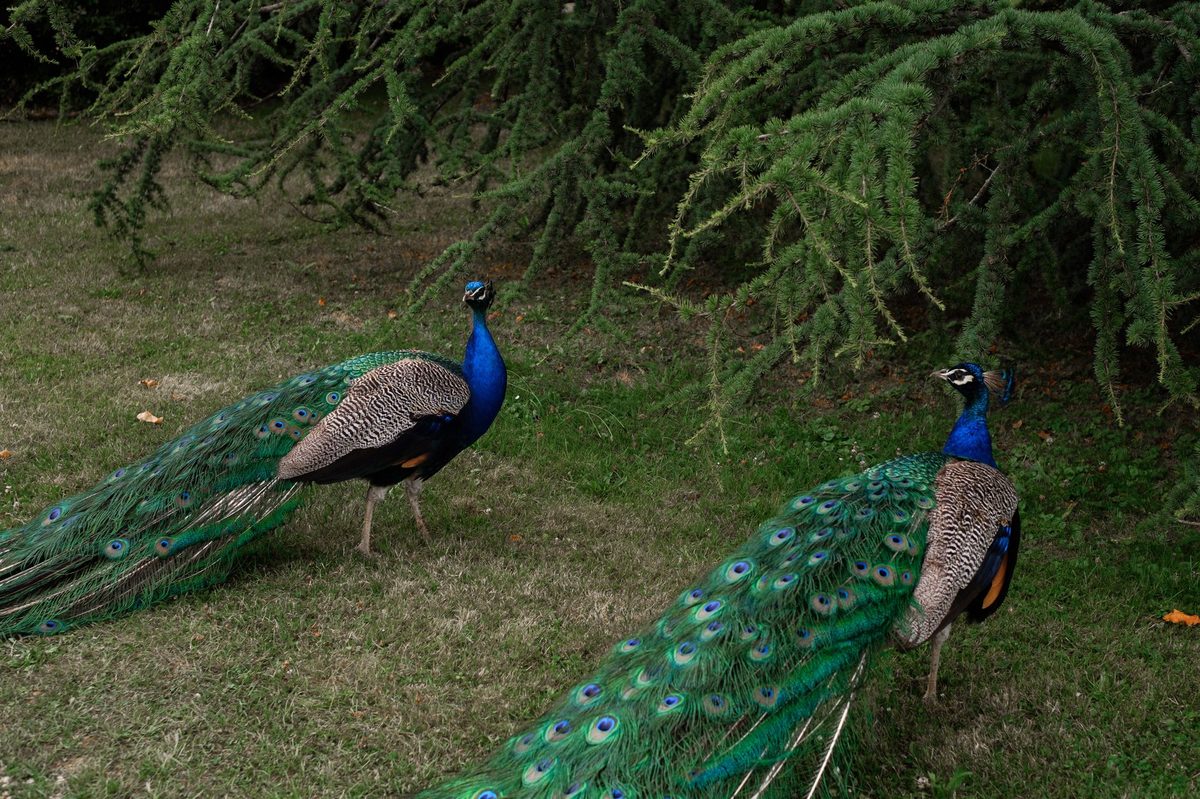
Weather permitting, the tour usually includes the terrace overlooking Ariana Park, the UN’s surrounding gardens, where peacocks roam freely. The peacocks are an unexpected highlight.
What you do not see
The tour does not include the working offices, the diplomatic dining facilities, or the secure areas where active negotiations happen. It is a historical and architectural tour, not an operational walkthrough.
Booking, Tickets, and Passport Requirements
2026 prices
- Adult: CHF 22
- Senior 65+: CHF 18
- Student/youth (14-17): CHF 12
- Child (6-13): CHF 11
- Under 6: free, but still needs ID for the security register
- Swiss Travel Pass: discounted entry, typically 50% off
How to book
Online only at ungeneva.org. The system requires each visitor’s full name as it appears on the passport or ID, date of birth, nationality, passport or Schengen ID number, and an email address for the digital badge. Bookings open up to 60 days ahead. Slots fill quickly in peak season (June to September) and during major UN events. Book 2-4 weeks ahead minimum, or 6+ weeks for high-season Saturday tours.
Required documents on the day
Every visitor must bring an original passport (for non-Schengen nationalities) or a Schengen national ID card, the digital QR code badge emailed after booking (phone or printout both work), and the booking confirmation as a backup. Photocopies of passports are not accepted, and children need valid ID too. The gate will refuse entry without the correct documents, no exceptions.
| Detail | Information |
|---|---|
| Adult ticket | CHF 22 (CHF 11-18 reduced) |
| Booking | Online only at ungeneva.org, up to 60 days ahead |
| ID required | Original passport or Schengen ID, every visitor |
| Tour length | 60-90 minutes |
| Total time | About 2.5 hours including security |
| Getting there | Tram 15 from Cornavin to Nations (7 min) |
| Free outdoor stop | Broken Chair, Place des Nations, 24/7 |
Security and Arrival
The UN is an active diplomatic site with serious security, so plan for the process:
Arrival time
Arrive 45 minutes before your tour. Security plus the walk from the gate to the visitors’ centre takes 20-40 minutes in normal times, longer during major events or high-security periods.
Where to enter
Two visitor entrances: the Pregny Gate (north side, Avenue de la Paix) and the Peace Gate (south side, Place des Nations). Your confirmation says which to use. Most general tours use the Pregny Gate; some special events use the Peace Gate.
Screening and the walk in
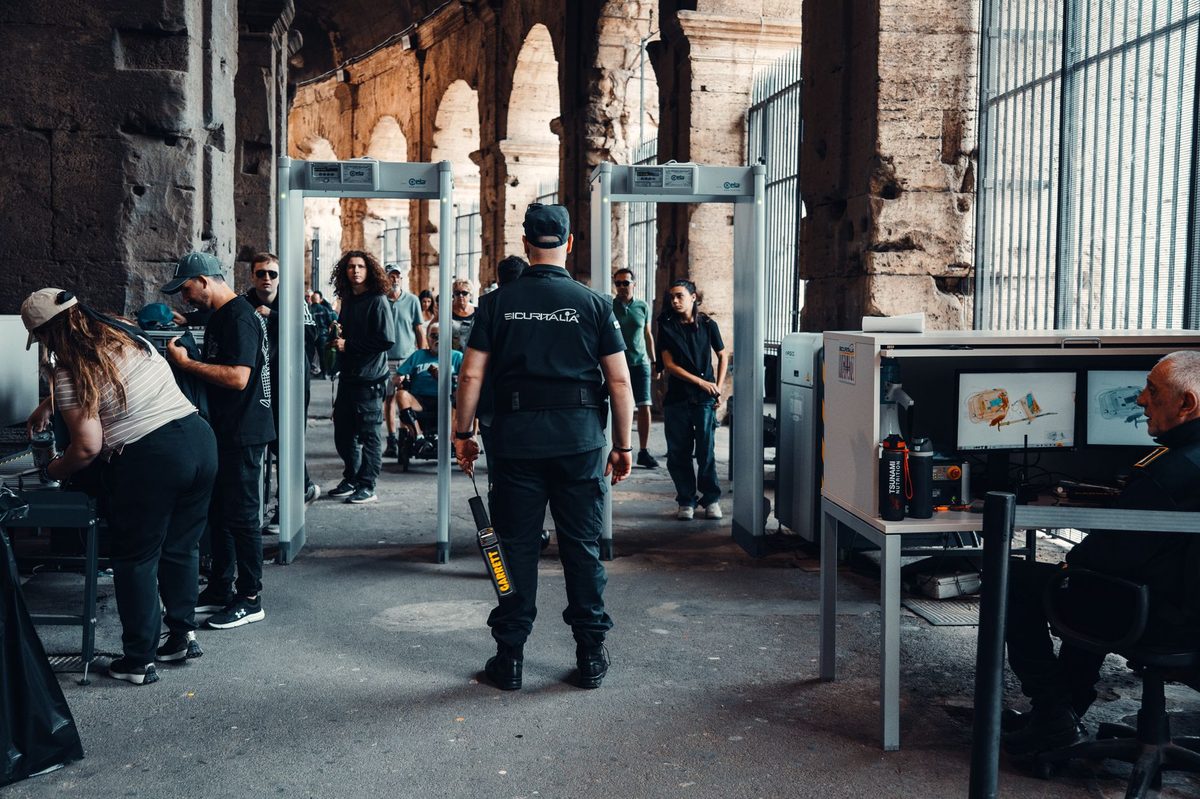
Airport-style screening: bags through X-ray, people through metal detectors. No large bags (lockers available), no liquid containers over 100ml, no sharp objects, no firearms or replicas. The screening is friendly but rigorous. Once cleared, you walk about 10 minutes through Ariana Park to the Visitor Centre, past the peacocks and the member-state garden sculptures. The walk is part of the experience.
Broken Chair and Place des Nations (Free)
If you cannot get a tour slot or do not have time for the full visit, the outdoor part of the UN experience is worth a separate trip, and it is completely free with no security or booking.
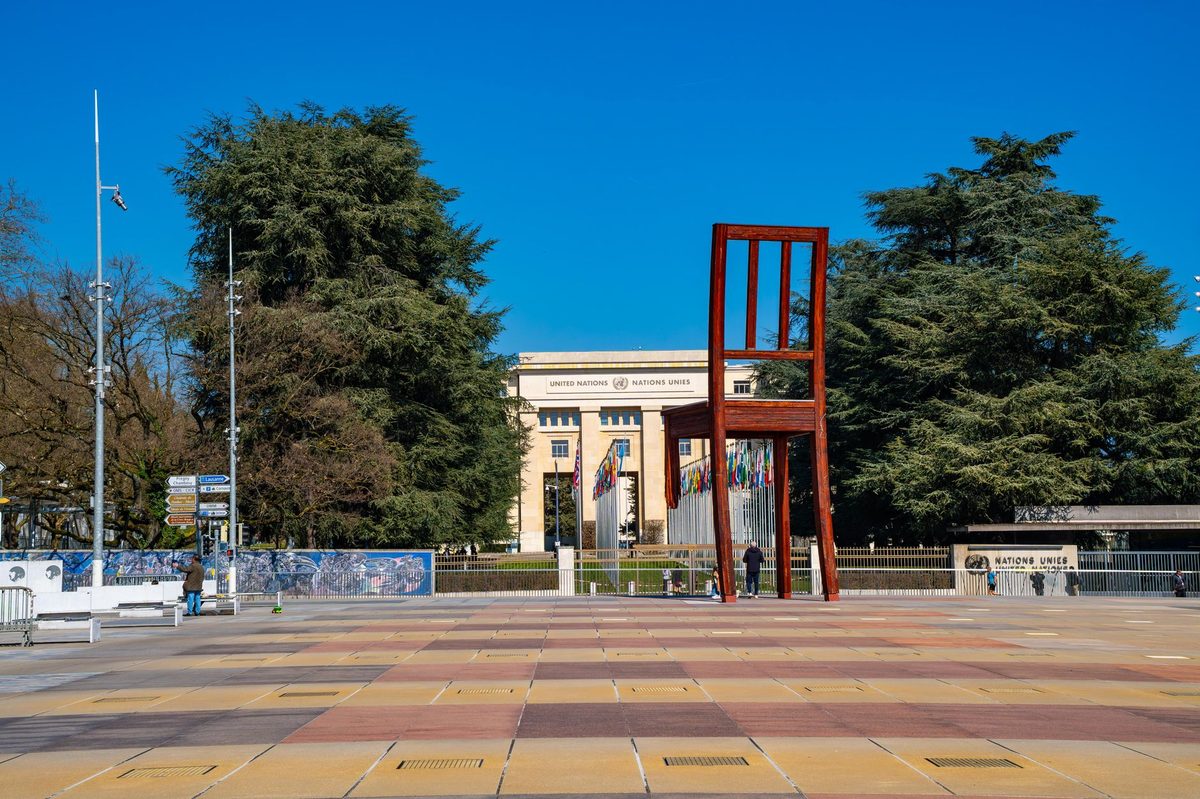
The Broken Chair
The 12-metre wooden chair with a broken leg in the centre of Place des Nations, facing the Palais entrance. Designed by the Swiss artist Daniel Berset and commissioned by Handicap International in 1997 as a memorial to landmine victims and a call to ban them. Intended as a temporary installation, it has stood permanently since 1997 and is now one of the most photographed sculptures in Switzerland. Free to view, photographs encouraged, and the square is open 24/7, though early morning is the most photogenic, when the chair catches sunlight against the Palais behind it.
Place des Nations and Avenue de la Paix
The plaza fronting the UN holds the flagpoles of member states and a central fountain (running in summer), and the broad pedestrian space is a popular spot for protests on diplomatic issues. Worth 15-20 minutes. Avenue de la Paix then leads from the square down toward the lake, lined with member-state embassies and the headquarters of various international organisations. The 25-minute walk to the lakefront gives you a good sense of the diplomatic quarter.
The History: From League of Nations to UN
The Palais has an unusual two-organisation history that the tour explains at length. Built between 1929 and 1938 to house the League of Nations (founded 1919-1920 after the First World War), it was the largest international institutional building of its era, designed by a multinational team led by the Frenchman Henri-Paul Nenot and the Swiss Carl Broggi.
The League failed to prevent the slide into the Second World War and was dissolved in 1946. The newly founded United Nations (1945) took over the Palais as its European office while basing its main headquarters in New York. Today the UN Geneva office (UNOG) is the largest UN site outside New York, hosting the Human Rights Council, the Conference on Disarmament, UNCTAD, and most of the UN’s specialised agencies working on humanitarian, health, refugee, and economic issues. For more on how the city earned this role, see our Geneva history and heritage guide.
The 2024-2028 Renovation Impact
The Palais is undergoing a major restoration and modernisation (the Strategic Heritage Plan) expected to run through 2028, covering structural restoration of the 1930s building, security upgrades, accessibility improvements, and environmental modernisation. For visitors, that means:
- Reduced tour availability at certain times, with some halls occasionally closed for restoration
- Fewer daily slots than before the renovation
- Booking 4+ weeks ahead strongly advised through 2028
- Some route variations depending on which sections are accessible on the day
Check ungeneva.org/en/visit before booking for current tour status and any temporary changes.
Pairing With the Red Cross Museum
The best pairing for the UN visit is the International Red Cross and Red Crescent Museum, a 5-minute walk down Avenue de la Paix from Place des Nations. The two are thematically linked: the founding of the Red Cross movement in 1863 directly influenced the founding of the League of Nations in 1919, and both are humanitarian institutions rooted in Geneva.
A natural full day: Red Cross Museum in the morning (2-3 hours, opens 10:00), lunch in the diplomatic quarter or back at Paquis, then the UN tour in the afternoon (book a 14:00 or 15:00 slot). Or reverse it: UN in the morning (10:30 or 11:30), lunch, Red Cross Museum after. Either can also fold in the free Musee Ariana (ceramics, 10-minute walk) for a full UN-quarter cultural day.
A Half-Day UN Quarter Itinerary
09:30: tram 15 from Cornavin to Nations, 7 minutes.
09:45: Place des Nations and Broken Chair photos, 20 minutes.
10:05: walk to the UN Pregny Gate, 5 minutes.
10:15: security screening for the 11:00 tour, allowing 30-40 minutes for screening plus the walk to the visitor centre.
11:00: guided tour begins, 60-90 minutes.
12:30: tour ends, walk back to Place des Nations.
12:45: lunch at a UN-quarter cafe. Cafe Beirut on Avenue de la Paix is a long-running favourite.
14:15: Red Cross Museum, about 2 hours.
16:30: coffee and a walk back through the quarter to the lakefront.
17:00: back at Cornavin or central Geneva. The tram is free with a Geneva Transport Card, covered in our Geneva Transport Card guide.
The UN Geneva Open Day
Worth knowing: roughly once every two years (most recently 2024, next expected 2026), the UN Geneva runs a free public Open Day with extended access to parts of the building normally closed to standard tours. It is typically a Saturday in October, free, with advance online registration but no ticket cost. The programme includes guided tours, mock UN meetings for school groups, exhibitions, performances, and food from various UN agency programmes. If your trip coincides with one, prioritise it; the access and atmosphere are exceptional. Check openday.unog.ch for the current schedule.
Why Geneva and Not Somewhere Else?
One question the tour does not always answer well: why does the UN have its second-largest office here rather than Vienna, Paris, London, or Brussels? The reasons are historical and cumulative:
- The Red Cross precedent (1863): Geneva was already a humanitarian capital before the First World War. The International Committee of the Red Cross, founded here in 1863, made the city the obvious home for the League of Nations in 1919-1920.
- Swiss neutrality: Switzerland’s neutrality (formalised in 1815) made it acceptable to all major powers as a meeting ground.
- French language: French was the diplomatic lingua franca of the early 20th century, and Geneva, a French-speaking city, was a natural fit.
- Purpose-built infrastructure: the Palais was built (1929-1938) specifically for the League, so the UN inheriting it in 1946 made Geneva an obvious continuation venue.
- Accumulated specialisation: once the UN moved in, related organisations followed (the WHO in 1948, the WTO in 1995, the ILO from 1919, UNHCR in 1950, and many more). The agglomeration is now self-perpetuating, and Geneva hosts more international organisations per square kilometre than any other city in the world.
The result: Geneva is effectively the UN’s specialised-agency headquarters while New York handles the General Assembly and Security Council. The architecture of the Palais reflects this layered history, a 1930s League of Nations vision repurposed for the UN and continuously expanded for the modern agencies. Worth understanding before you walk through the building.
FAQ: Visiting the United Nations Geneva
Can I visit the UN in Geneva?
Yes. Guided tours of the Palais des Nations run on weekdays, roughly 10:00-16:00, with advance online booking required. CHF 22 adult, and a passport or Schengen ID is mandatory.
How do I book a UN tour?
Online only at ungeneva.org. Bookings open up to 60 days ahead. Book 2-4 weeks in advance minimum, or 6+ weeks during peak season.
What ID do I need to visit the UN?
An original passport (not a photocopy) or an original Schengen national ID card, required for every visitor including children.
Is the Broken Chair free to visit?
Yes, entirely free, no booking, and accessible 24/7. It stands in Place des Nations directly opposite the UN entrance.
How long does the UN tour take?
60-90 minutes for the tour itself. Plan about 2.5 hours total, including security screening and walking time.
Can I take photos inside the UN?
Yes in most public areas of the tour, with the Council Chamber Sert frescoes and the Barcelo ceiling the standout photo spots. Some areas restrict photography, and the guide will indicate where.
Official Sources and Further Reading
- UN Geneva: Visit (official tour booking)
- United Nations Office at Geneva (UNOG)
- Geneva Tourism: Palais des Nations
- Handicap International: Broken Chair background
Related Geneva Guides
Keep planning with the Geneva museums and culture pillar, then add the best Geneva attractions, the wider things to do in Geneva list, our where to stay in Geneva breakdown, and the practical plan your trip to Geneva guide.
Visiting the United Nations Geneva is one of those rare trips where the booking complexity is real but so is the payoff. The Sert frescoes in the Council Chamber, the Barcelo stalactite ceiling, and the historic Assembly Hall are significant cultural and architectural works you cannot see anywhere else, in a building that has hosted League of Nations and UN diplomats for nearly a century. Book 4 weeks ahead, bring your passport, allow 2.5 hours including the security gate, and pair the visit with the Red Cross Museum next door. Together they tell the full story of why Geneva has been the world’s diplomatic capital since 1863.