Geneva’s art scene is bigger than its reputation, and 2026 is an odd, interesting year for it because MAMCO, the city’s largest contemporary art museum, is closed for a three-year renovation. That closure has pushed the contemporary energy out into the surrounding Quartier des Bains gallery district, which is now arguably more alive than when MAMCO was open: 12+ commercial galleries within four blocks, the Centre d’Art Contemporain still running its full programme, and the five-times-a-year Nuit des Bains evenings that turn the whole neighbourhood into a free art crawl. Add the Musee d’Art et d’Histoire’s serious historical collection a few minutes away and the rotating shows at the Musee Rath on Place Neuve, and the art museums in Geneva deliver more per square kilometre than Lausanne or Zurich.
This is my 2026 guide to the actual art museums and galleries of Geneva: what to see, when, where, and how to work around the MAMCO closure (it returns in 2028). I cover the major museums first, then the Quartier des Bains gallery scene, then the smaller institutions that round out an art weekend. It is one corner of the wider Geneva museums and culture scene, and slots neatly into a list of things to do in Geneva. If you want one major museum or three days of galleries and openings, this will point you at the right pieces.
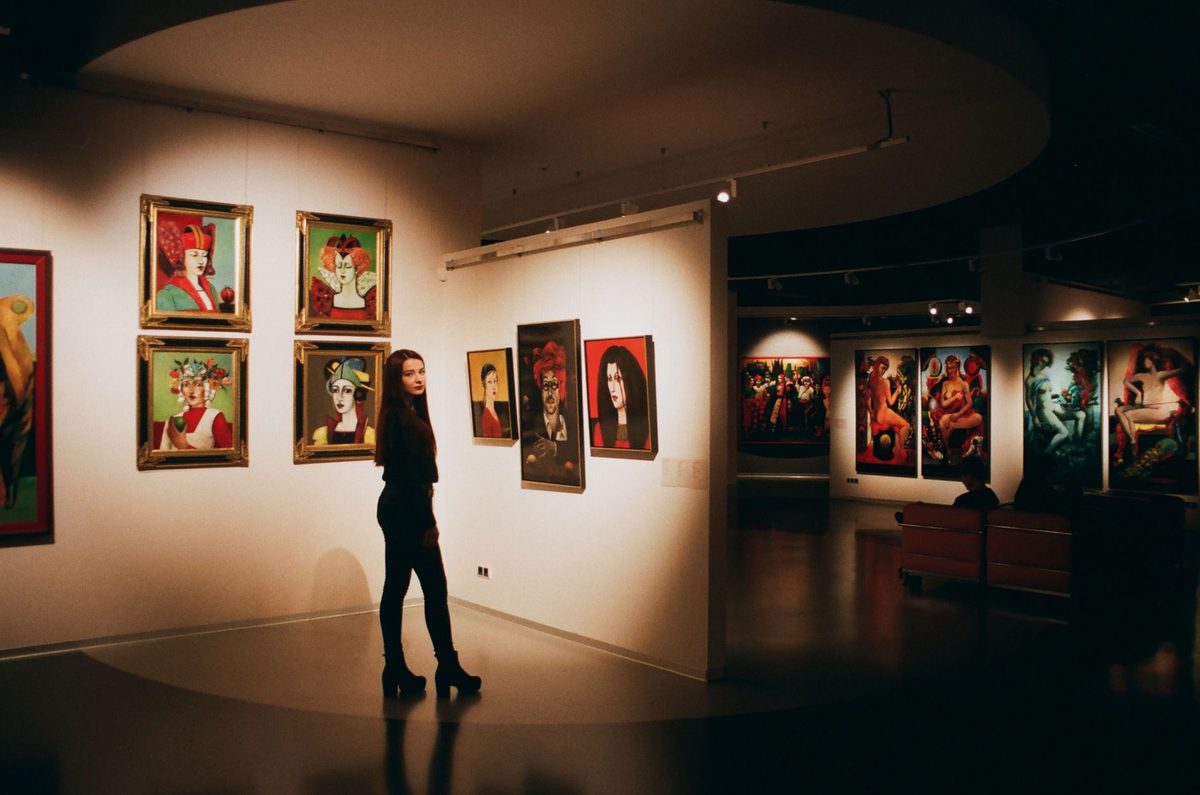
Geneva’s Art Scene at a Glance
The 2026 map of Geneva art splits into three layers:
The municipal museums (mostly free): the Musee d’Art et d’Histoire (the city’s main historic collection), Musee Rath (rotating temporary shows), Maison Tavel (urban history with art elements), and the Cabinet d’Arts Graphiques (prints and drawings). All run by the city, all with free permanent collections.
The contemporary institutions: MAMCO (closed 2025-2028 for renovation), Centre d’Art Contemporain Geneve (still running, on the same Quartier des Bains street as MAMCO), Fondation Baur (Asian art), and Musee Barbier-Mueller (non-European art and antiquities).
The commercial galleries: 12+ contemporary galleries in the Quartier des Bains, plus several in central Geneva: Galerie Skopia, Mai 36, Galerie Lange + Pult, Andata.Ritorno, and others. Most open Tuesday to Saturday afternoons, free to enter.
For a serious art weekend, build it around either the Musee d’Art et d’Histoire plus a Quartier des Bains gallery crawl, or, if your dates line up, one of the Nuit des Bains evenings (third Thursday of January, March, May, September, November).
MAMCO: Closed for Renovation 2025-2028
Switzerland’s largest contemporary art museum, opened in 1994 in a former Plainpalais industrial building, holds one of Europe’s significant modern and contemporary collections. It closed in 2025 for a complete renovation and is expected to reopen in 2028.
If you came to Geneva specifically for MAMCO, that is a real letdown, but the curators have partnered with other institutions across the city to keep parts of the collection visible during the works. Check mamco.ch for current off-site presentations and the renovation timeline.
The upside: the Quartier des Bains gallery district around MAMCO has, if anything, become more vital during the closure. The energy that used to concentrate inside the museum has spilled into the streets and galleries nearby.
Centre d’Art Contemporain
The other major contemporary institution on the Quartier des Bains street, founded in 1974 as the first dedicated contemporary art space in French-speaking Switzerland. It is still open and running its full programme through 2026 and beyond, which makes it the primary contemporary art destination in Geneva during the MAMCO closure.
The Centre runs 3-4 major shows a year, plus film and video programmes and emerging-artist commissions. The space is smaller than MAMCO (one main exhibition hall), but the programming is consistently sharp.
Tickets: CHF 5-10 depending on the exhibition; under-18s free; first Sunday of the month free.
Hours: Tuesday to Sunday 11:00-18:00; closed Mondays.
Address: Rue des Vieux-Grenadiers 10 (the same Plainpalais street as MAMCO).
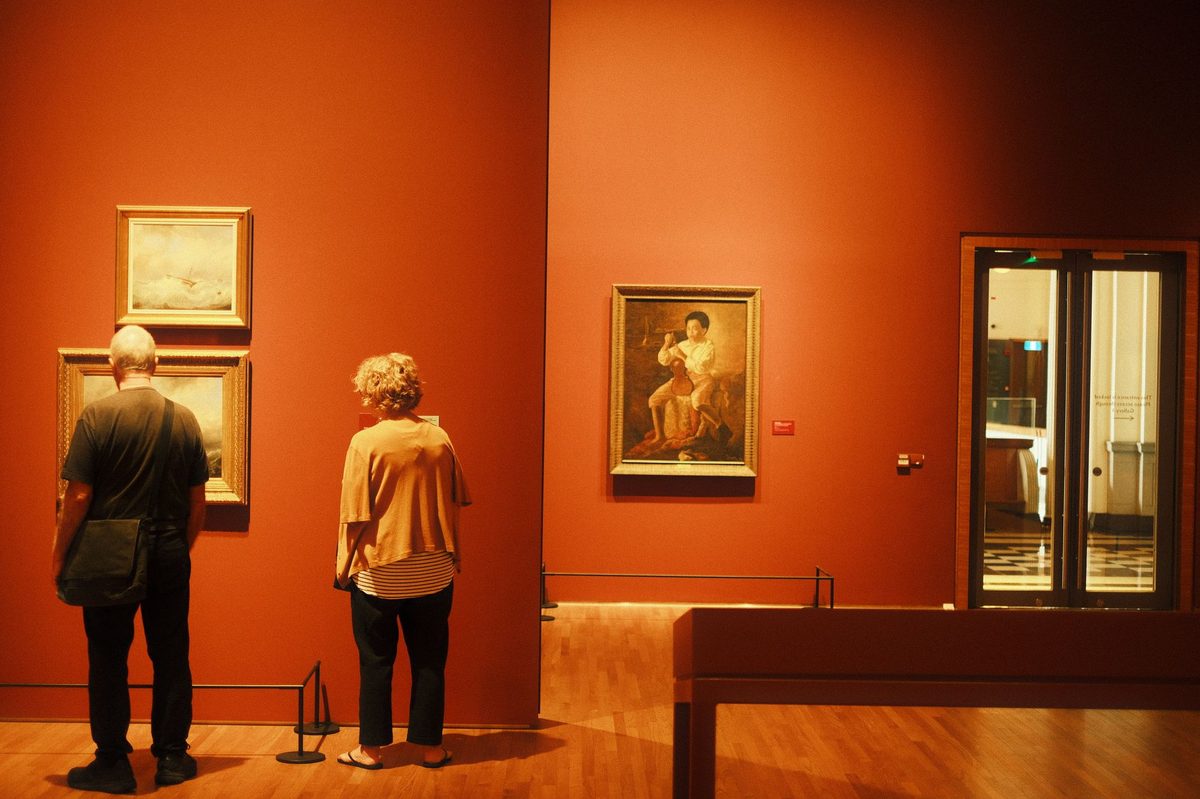
Musee d’Art et d’Histoire (Free)
The city’s main historic art collection, and the single biggest art museum in Switzerland (over a million pieces in storage, about 7,000 on display at any time). The permanent collection covers Egyptian antiquities, Greek and Roman art, medieval and Renaissance painting, Old Masters, and 19th-20th century European art, and it is entirely free year-round.
Full details in our Museum of Art and History visitor guide. Quick version: three wings (Archaeology, Fine Arts, Applied Arts), 2-3 hours minimum, and must-see pieces include the Konrad Witz altarpiece (1444), which shows the first realistic depiction of an identifiable European landscape (Lake Geneva itself), plus the Cabinet d’Arts Graphiques (Durer, Holbein, Rembrandt drawings).
Free entry to the permanent collection; special exhibitions CHF 5-15.
Musee Rath
The neoclassical 1826 building on Place Neuve, opposite the Grand Theatre, is Switzerland’s oldest purpose-built art museum. The Rath no longer has its own permanent collection (the holdings moved to the MAH decades ago); today it hosts major touring shows from international museums.
Recent exhibitions have included partnerships with the Pompidou, the V&A, and various national collections. They tend to be ambitious and well resourced. Tickets CHF 10-15 depending on the show; first Sunday of the month free.
Hours: Tuesday to Sunday 11:00-18:00; Thursday late until 21:00.
The Quartier des Bains Gallery District
The cluster of 12+ commercial contemporary galleries on and around Rue des Bains in Plainpalais is Geneva’s answer to New York’s Chelsea or London’s Mayfair gallery streets. All free to enter, all open Tuesday to Saturday afternoons (typically 14:00-18:00; some 11:00-18:00 on Saturdays).
The essential galleries
- Galerie Skopia: established Geneva gallery, international contemporary artists. Rue des Bains 9.
- Mai 36 Galerie: branch of the major Zurich gallery, museum-quality contemporary art. Rue des Bains 28.
- Galerie Lange + Pult: sister to the Zurich gallery, strong on European and international contemporary. Rue des Bains 35.
- Andata.Ritorno: Geneva gallery focused on conceptual and post-conceptual work.
- Galerie Andrea Caratsch: international contemporary, particularly American and German postwar.
- Red Zone Arts: smaller gallery, emerging Swiss and European artists.
- Galerie Joy de Rouvre: Geneva-rooted gallery, Swiss and French contemporary.
The current full map of galleries is published at quartierdesbains.ch.
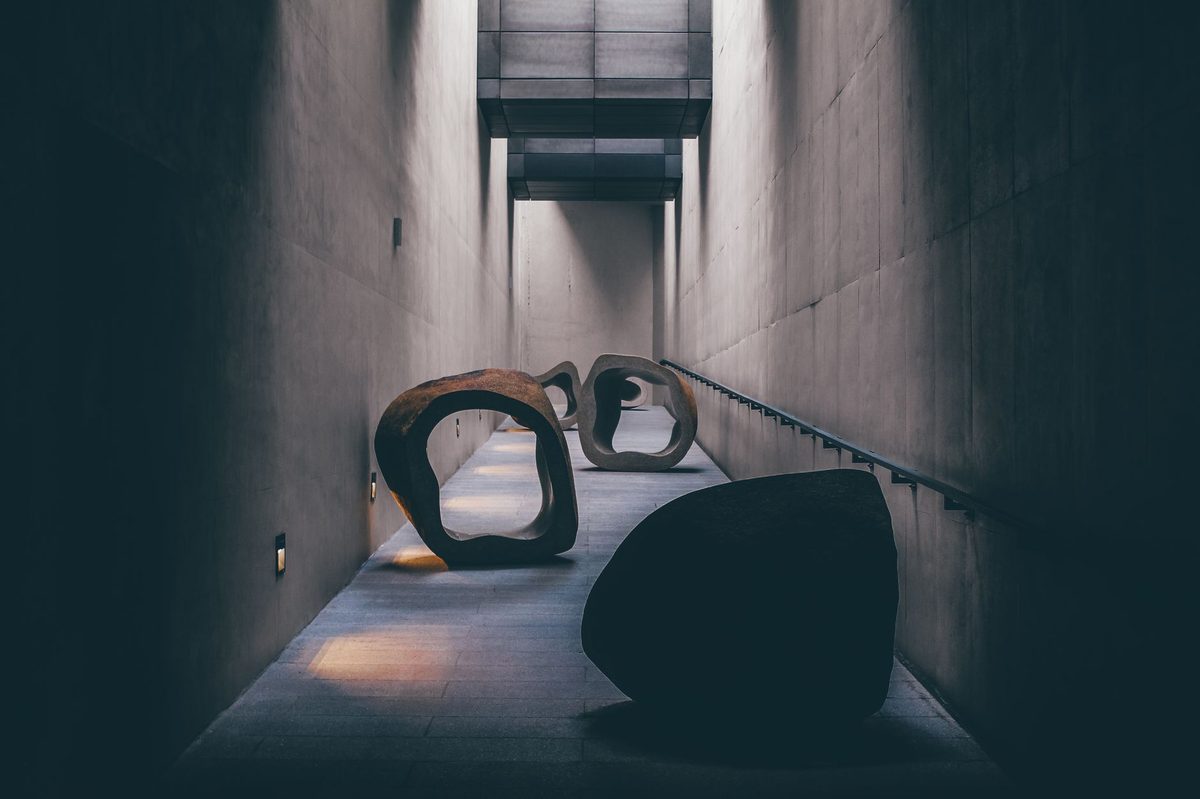
How to do a gallery walk
Plan a Saturday afternoon, when most galleries keep their longest hours. Start at the south end of Rue des Bains (number 9) and walk north, dropping into each space for 5-15 minutes. The full walk takes about 2-3 hours, longer if a current show holds you. The galleries are commercial, so the art is for sale, but visitors are welcome, browsing is encouraged, and there is no pressure to buy.
Nuit des Bains Gallery Nights
The best contemporary art event in Geneva, and it is free. The Nuit des Bains runs five times a year, on the third Thursday of January, March, May, September, and November, when all 12+ Quartier des Bains galleries open at once in the evening (usually 18:00-22:00) for new show openings. Several thousand people turn out, the streets fill, the cafes and bars on Rue des Bains buzz, and you walk gallery to gallery free of charge, meeting artists, gallerists, and the Geneva art community.
If your dates can line up with a Nuit des Bains, build around it. It is the most efficient way to see every Quartier des Bains gallery in one evening, and the crowd makes it a genuinely fun night out.
Check current dates: quartierdesbains.ch publishes the calendar 6-12 months ahead.
Fondation de l’Hermitage (Lausanne)
If your trip includes a Lausanne day, the Fondation de l’Hermitage is worth knowing: a 19th-century mansion in a hillside park north of the city hosting rotating painting and photography exhibitions, often the kind of touring shows that elsewhere would land in much bigger cities. See our Lausanne day trip guide.
CHF 20 admission; Bus 16 from central Lausanne. It combines well with the Olympic Museum and Lausanne Cathedral on a full day.
A 2-Day Art Itinerary
Day 1: historic and traditional
- 09:30 Coffee at Boreal Plainpalais
- 10:00 Musee d’Art et d’Histoire, full visit 2.5 hours (free permanent collection)
- 13:00 Lunch at Cafe de l’Eveche, Old Town
- 14:30 Maison Tavel (Geneva’s oldest house, urban history with art elements, free)
- 15:30 Cabinet d’Arts Graphiques (drawings and prints, free)
- 17:00 Coffee on Place du Bourg-de-Four (La Clemence terrace)
- 19:30 Dinner at La Bourse, Carouge
Day 2: contemporary and galleries
- 10:00 Patek Philippe Museum (start with the four-floor watch museum in Plainpalais, see our Patek Philippe Museum guide)
- 13:00 Lunch at Birdie Plainpalais
- 14:30 Centre d’Art Contemporain
- 15:30 Quartier des Bains gallery walk, 6-8 galleries in 2-3 hours
- 18:00 Apero at a Plainpalais bar
- 20:00 Dinner near the Plainpalais market square
If you are in town on a Nuit des Bains evening (third Thursday of January, March, May, September, November), shift day 2 to match: do the gallery walk during the day on Thursday, then return for the openings from 18:00.
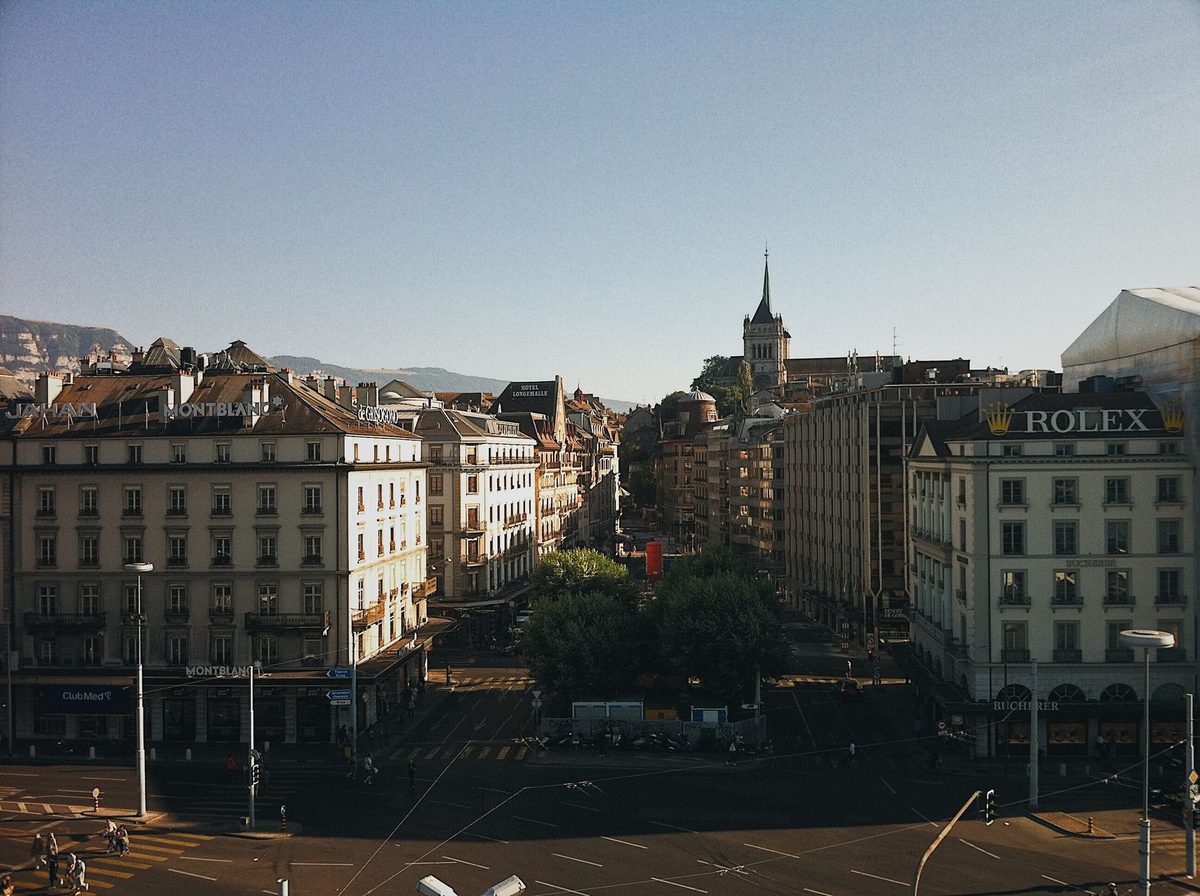
Other Specialised Art and Cultural Museums
Beyond the main institutions, Geneva has several specialised museums and foundations worth knowing for art-focused visitors:
Fondation Baur
An excellent small museum of Asian art in a 19th-century mansion near Place Neuve. Chinese ceramics from the 7th to 19th century, Japanese ceramics and lacquerware, and rotating temporary shows. CHF 10 entry, and one of the most overlooked museums in the city. Open Tuesday to Sunday 14:00-18:00.
Musee Barbier-Mueller
One of the most respected private collections of non-European art in Europe: African, Oceanian, ancient, and tribal art across many cultures. Small museum, deep collection. CHF 8 entry; free first Sunday. Open Tuesday to Sunday 11:00-17:00.
Fondation Bodmer (Cologny)
A 15-minute drive or bus from central Geneva, the Bodmer Foundation in Cologny holds an extraordinary collection of rare books and manuscripts: papyri, medieval illuminated manuscripts, early printed Bibles, original Shakespeare folios, and autograph manuscripts from major writers. CHF 15 entry, and one of the great undervalued cultural visits in the canton.
MEG (Musee d’Ethnographie de Geneve)
Ethnographic museum with one of Europe’s largest collections of objects from around the world (over 80,000 pieces). The current building (2014) won the Swiss Architecture Award. Permanent collection free, special exhibitions CHF 10. Closed Mondays.
Maison Rousseau et Litterature
The small museum in Jean-Jacques Rousseau’s birthplace in the Old Town, Geneva’s literary memorial to its most famous philosopher. CHF 7 entry, 45 minutes inside, and it combines well with an Old Town walk. For more on the city’s past, see our Geneva history and heritage guide.
How Geneva’s Art Funding Works
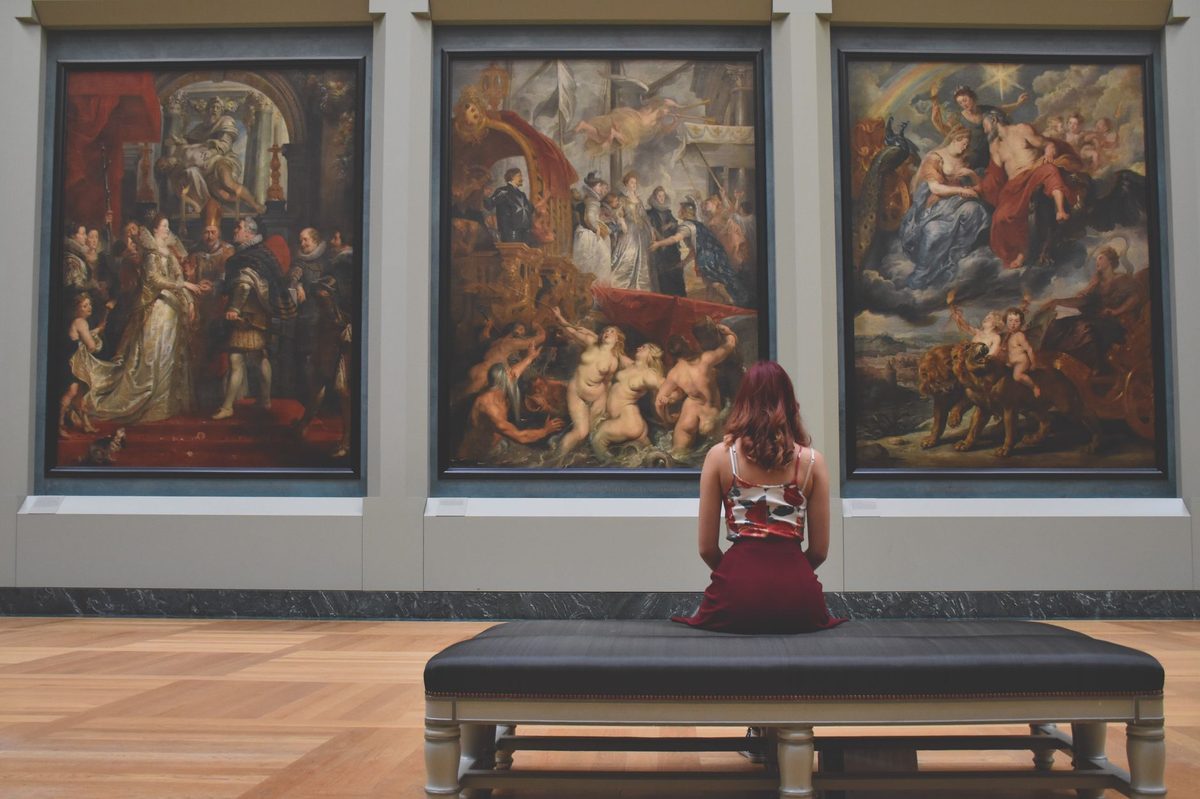
One reason Geneva’s art scene punches above its weight: a mix of public, philanthropic, and private money supports both the museums and the gallery district. The municipal museums (MAH, Musee Ariana, Musee Rath, Cabinet d’Arts Graphiques, Maison Tavel) are city-funded and offer free permanent collections as deliberate cultural policy. MAMCO runs as a foundation with mixed public and private funding. The Patek Philippe Museum is privately funded by the brand. Fondation Baur, Musee Barbier-Mueller, and Fondation Bodmer are private collections turned into public museums by family foundations.
The Quartier des Bains galleries are entirely commercial, and the Nuit des Bains walks are coordinated by the quartierdesbains.ch association. The result is a system where most visitors can see what they came for at no cost (free MAH, free first-Sunday museums, free galleries), while collectors have premium options (Patek Philippe, Bodmer, Baur). It is worth understanding, because that structure is part of why art in Geneva stays genuinely accessible.
The Last Word on Geneva Art
Geneva will never be Paris, Berlin, or London for sheer volume. But what it does deliver, the free permanent collections at the MAH, the gallery density of the Quartier des Bains, the depth of specialised collections like Patek Philippe and Bodmer, and the seasonal energy of the Nuit des Bains, is more digestible than the big capitals. A serious art visitor with 2-3 days can see almost everything that matters here, where in Paris or London they would see a fraction. The MAMCO closure through 2028 stings, but the rest of the scene more than makes up for it. If you are deciding where to base yourself for it, our where to stay in Geneva guide breaks down the neighbourhoods.
FAQ: Geneva Art Museums and Galleries
What is the best art museum in Geneva?
The Musee d’Art et d’Histoire for historic depth (free, three wings, 7,000+ pieces on display), and the Centre d’Art Contemporain for contemporary work (Quartier des Bains, CHF 5-10). MAMCO would normally lead on contemporary but is closed for renovation from 2025 to 2028.
Is MAMCO open in 2026?
No. MAMCO is closed for a complete renovation from 2025 to 2028, with reopening expected in 2028. Some pieces are visible at partner institutions; check mamco.ch.
Are Geneva art museums free?
Most city-run museums offer free permanent collections year-round, including the MAH and Maison Tavel. Several normally-paid museums (Centre d’Art Contemporain, Musee Rath, MAMCO when open) are free on the first Sunday of the month. See our free things to do in Geneva guide.
What is the Quartier des Bains?
Geneva’s contemporary gallery district: 12+ commercial galleries on and around Rue des Bains in Plainpalais. Free to enter, open Tuesday to Saturday afternoons. The Nuit des Bains evenings (five a year) open every gallery at once for a big free art walk.
When is the next Nuit des Bains?
On the third Thursday of January, March, May, September, and November. Check current dates at quartierdesbains.ch.
Is the Swiss Travel Pass worth it for art museums?
For two or more days of museum visits, yes, since the included Swiss Museum Pass covers most Geneva museums. For a single day, individual admissions are cheaper. Our Geneva Pass vs Swiss Travel Pass guide runs the numbers.
Official Sources and Further Reading
- Quartier des Bains (official gallery district)
- MAMCO (closed 2025-2028; partner institutions listed)
- Centre d’Art Contemporain Geneve
- Musee d’Art et d’Histoire (free)
- Fondation de l’Hermitage Lausanne
Related Geneva Guides
Keep planning with the Geneva museums and culture pillar, then add the Museum of Art and History, the Patek Philippe Museum, our full things to do in Geneva list, and the practical plan your trip to Geneva guide.
Geneva’s art scene is more vital than its reputation suggests, and 2026 is interesting precisely because MAMCO’s three-year closure has pushed the contemporary energy out into the surrounding galleries. Spend a Saturday wandering Rue des Bains, walking gallery to gallery for free, then drop into the Centre d’Art Contemporain for the curated show. Add a separate day for the free Musee d’Art et d’Histoire and you have one of the great mid-size European art weekends, without the queues of bigger cities and without most of the entry fees.