Visiting CERN in Geneva is one of the best free afternoons in the city, and most travellers either skip it or turn up expecting the wrong thing. The CERN Science Gateway — designed by Renzo Piano, the Pompidou Centre architect, and opened in 2023 at the end of tram line 18 in Meyrin — is three big pavilions of interactive exhibits on particle physics, the Big Bang and the discovery of the Higgs boson, plus an antimatter display and a planetarium-style dome. Entry is free, you walk straight in, and the whole thing runs two to three hours. The frustrating part nobody warns you about: the famous guided tour that gets you near the actual accelerator is brutally hard to book, and underground access is essentially never on offer outside the rare Open Days.
This is my honest 2026 guide to visiting CERN Geneva: what the Science Gateway is and is not, how to play the guided-tour booking lottery, what to do when you cannot get a guide, how it works for kids versus adults, the detail that the iconic wooden Globe across the road is also free, and the logistics of getting out to Meyrin and back in a half-day. Even if you have decided particle physics is not your thing, the architecture, the storytelling and the free entry make this one of the easiest cultural picks on a Geneva itinerary. It sits firmly in the Geneva museums and culture lineup.
The 60-second plan
Take tram 18 from Cornavin (about 25 minutes) to the CERN terminus. Walk into the Science Gateway — no ticket, no booking, free. Spend 90 minutes in the Universe of Particles exhibition (the most interactive part), 30 minutes in the Discover CERN pavilion, and 30 minutes outdoors at the Globe of Science and Innovation across the road. Grab a coffee at the on-site Big Bang Cafe, then tram back. Total, including travel, is 4 to 5 hours. If you happened to win a free guided-tour slot for that day, fit it around the Science Gateway visit rather than trying to cram in the underground too — that access is rarely granted anyway.
CERN visit at a glance
| Detail | What to know |
|---|---|
| Entry | Free, walk-in, no ticket for the Science Gateway or the Globe. |
| Time needed | 2-3 hours for the exhibitions; 4-5 hours including travel. |
| Getting there | Tram 18 from Cornavin, about 25 minutes, to the CERN terminus. |
| Cost of transport | Free with the Geneva Transport Card; otherwise CHF 3 single. |
| Guided tour | Free but scarce — booking opens 15 days ahead and sells out in minutes. |
| See the LHC? | Almost never, except at the Open Days every 4-5 years. |
| Good for kids? | Excellent for ages 7 and up. |
| Food | The Big Bang Cafe — sandwiches and hot dishes, CHF 8-18. |
What CERN actually is, and what the Gateway is not
CERN — the European Organization for Nuclear Research — is the particle physics lab that runs the Large Hadron Collider, the 27-kilometre underground ring where physicists smash protons together at near light-speed to recreate conditions a fraction of a second after the Big Bang. The Higgs boson was confirmed here in 2012, and Tim Berners-Lee invented the World Wide Web here in 1989. It is one of the most consequential scientific institutions on the planet.
The Science Gateway, opened in October 2023, is CERN’s purpose-built free visitor centre: three Renzo Piano pavilions designed to give the public a structured way into the science. It is not the lab itself — it is a museum about the lab. The accelerator is mostly underground and mostly off-limits. If you are working from an older guidebook that mentions the small Microcosm exhibition, that closed permanently in September 2022; its content was rebuilt and expanded into the Science Gateway.
Getting to CERN from central Geneva
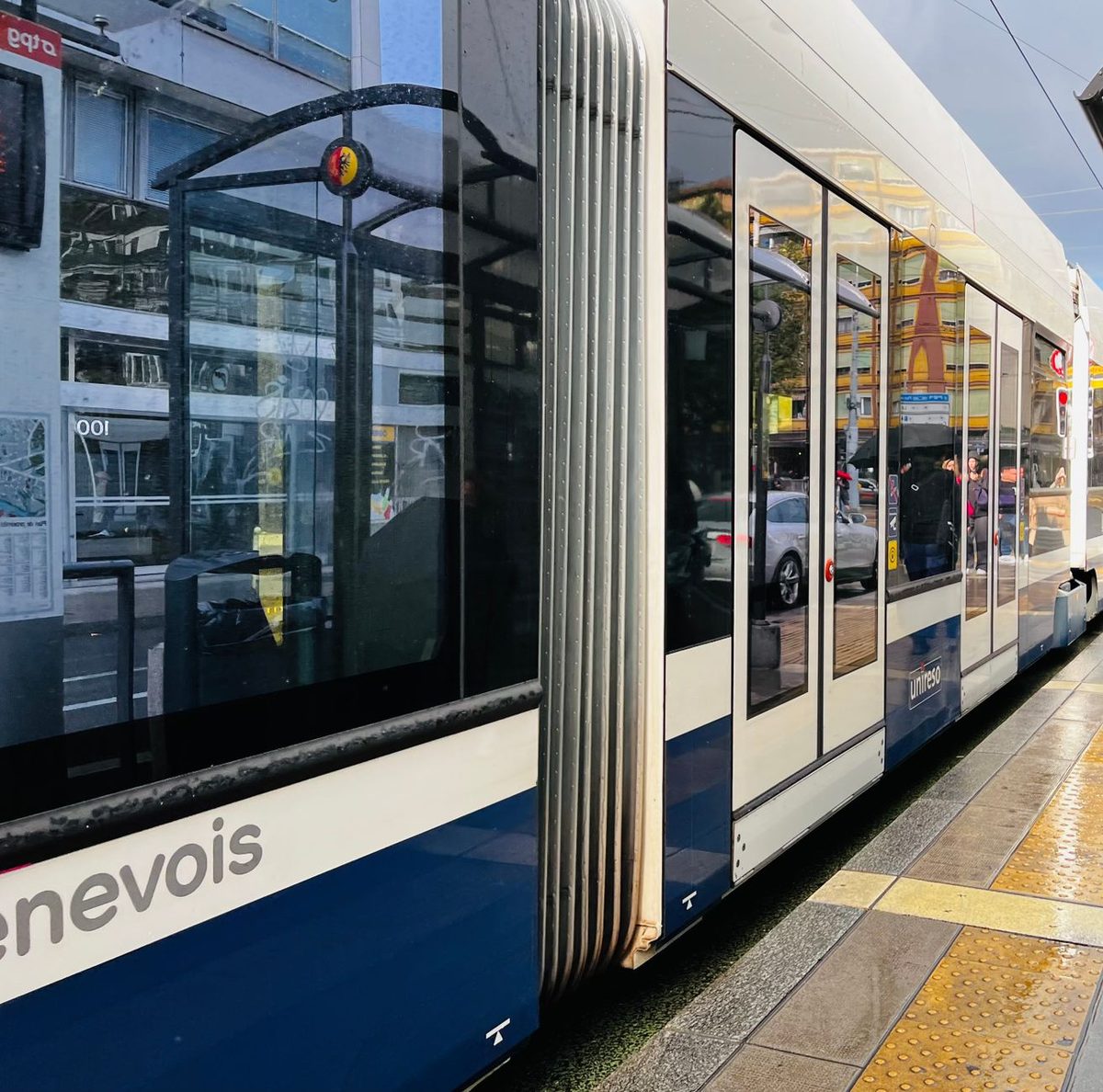
Tram 18, the only sensible option
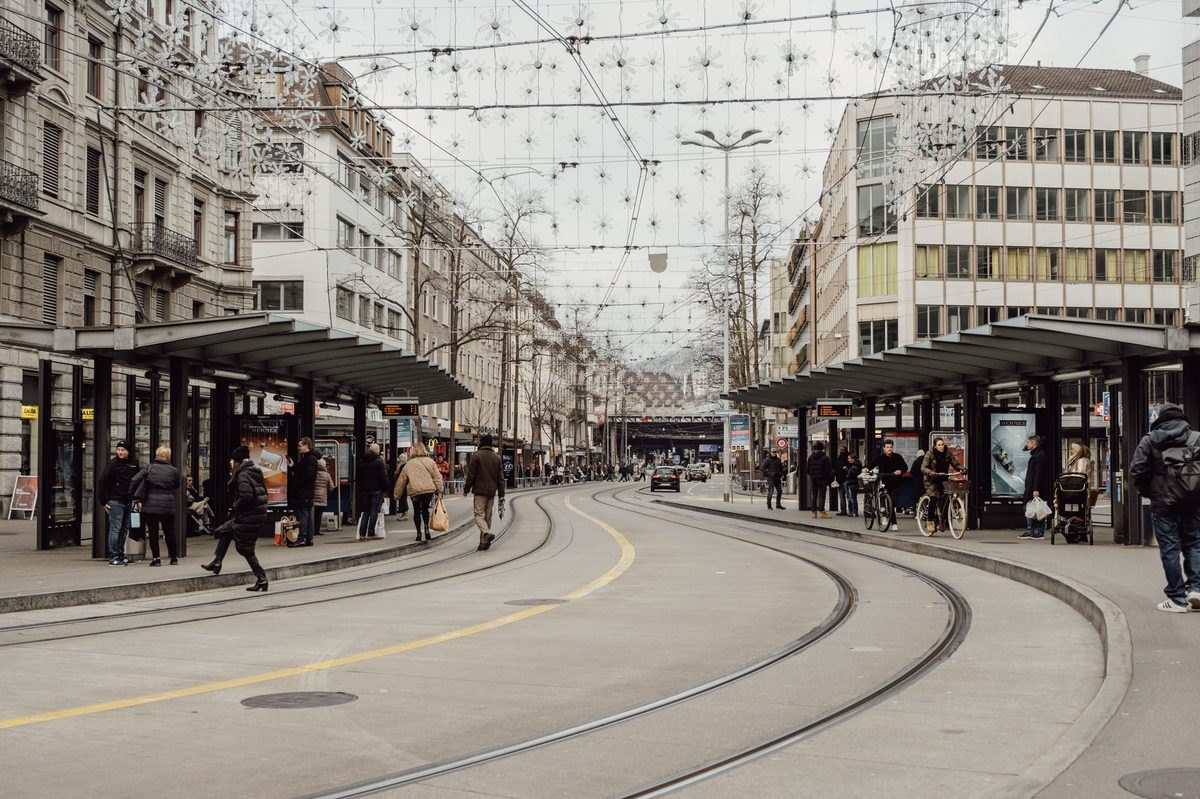
This is how essentially every visitor arrives. Tram 18 runs from Cornavin (and earlier city-centre stops) straight to the CERN terminus in about 25 minutes, every 6 to 12 minutes through the day. You step off the platform into the Science Gateway entrance area. It is free with the Geneva Transport Card, or CHF 3 for a single ticket — the Geneva public transport guide covers the card.
By bus, car or from the airport
After trams stop around 00:30, bus 18 covers the same route. Driving is possible — there is a small free visitor car park — but the tram is faster than parking and walking in, so drive only if you are heading onward out of the city afterwards. From Geneva Airport, CERN is about 15 minutes by bus 23 directly, or tram 18 with a short connection — handy on a long layover.
The three Science Gateway exhibitions
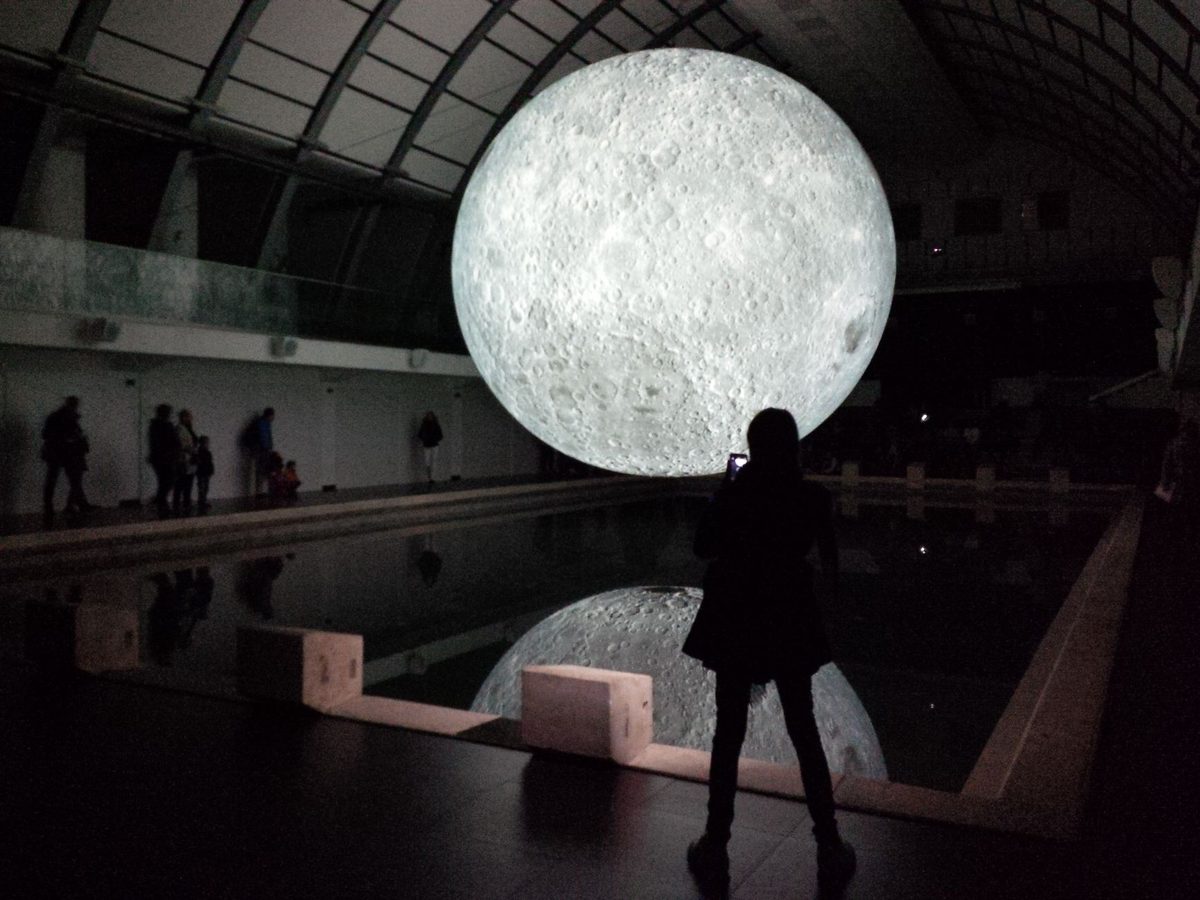
The Science Gateway spreads across three connected pavilions plus an outdoor sculpture garden. Give it 2 to 3 hours to do all three properly.
1. Discover CERN
The introduction. It covers the founding of the lab in 1954, the discovery of the W and Z bosons in the 1980s, the Higgs confirmation in 2012, and the major experiments, with a small reconstruction of the original 1989 WorldWideWeb browser — the first web browser, written here. Best as your first stop; 30 to 45 minutes.
2. Universe of Particles
The central exhibition and the visual high point: a darkened, dome-lit hall with floating spherical screens showing animated particle collisions. Touch-screens let you build particles from quarks and leptons, explore the Standard Model, and see what physicists are still chasing — dark matter, supersymmetry, the nature of antimatter. The most photogenic and the most affecting part of the visit; 60 to 90 minutes for the full set of interactions.
3. Quantum World
The smaller third pavilion digs into quantum mechanics and the genuinely strange behaviour of matter at the smallest scales, with hands-on demonstrations of quantum tunnelling, wave-particle duality and quantum computing. The most conceptually demanding room, and rewarding if you give it the time; about 45 minutes.
The sculpture garden, dome and workshops
Between the pavilions sit large outdoor sculptures, including a real decommissioned piece of CERN’s PS accelerator brought up from underground, and Gayle Hermick’s “Wandering the Immeasurable” wave. Inside, the planetarium-style dome theatre shows curated 30-minute science films, and lab rooms host hands-on workshops. The workshops are free but, like the guided tours, need advance booking through visit.cern and compete for the same scarce slots.
Guided tours: the honest truth about bookings
This is where most visitors come unstuck. CERN guided tours are free but the supply is tiny — roughly 90 percent of people who want one will not get one. Here is how it really works.
The booking process
Bookings open at 08:30 Geneva time exactly 15 days before your visit date, and slots vanish within minutes — often within 30 to 60 seconds for popular dates. To have a realistic shot: set up a visit.cern account ahead of time, work out the booking-open date for the day you want, be on the page at 08:25 refreshing, then book the instant slots appear at 08:30, with backup dates ready.
Same-day slots
A small share of tour slots is released on the day, two hours before each tour, first-come-first-served at the Science Gateway info desk — maybe 10 to 20 percent of the daily total. Turn up at the desk by 09:30 and ask to be added to the queue.
What the tour covers
If you do get on one, it is a 60 to 90 minute walking tour led by a CERN staffer or trained volunteer, visiting a surface experimental facility — recent tours have taken in the ATLAS surface site and the SM18 magnet-testing hall. Underground access is not part of a normal guided tour.
If you cannot get a tour, which is most people
The Science Gateway is a complete visit on its own — do not let the tour disappointment shadow the day. The exhibitions, the dome and the outdoor sculptures tell the same scientific story, arguably with better visuals than a walking tour.
The Globe of Science and Innovation
The iconic wooden sphere across the road is 27 metres across, built for the 2002 Swiss National Exhibition and gifted to CERN afterwards. It houses a small exhibition (also called Universe of Particles, separate from the Science Gateway one) and is likewise free. For years it was the only public CERN space, alongside Microcosm, before the Gateway opened. It is worth the 20-minute crossing to see the structure up close — built entirely from sustainable Swiss wood with no nails or screws — though the exhibition inside is smaller and covers similar ground; visit if you have a spare half-hour.
Can you see the Large Hadron Collider?
It is the question everyone wants to ask. The honest answer: probably not.
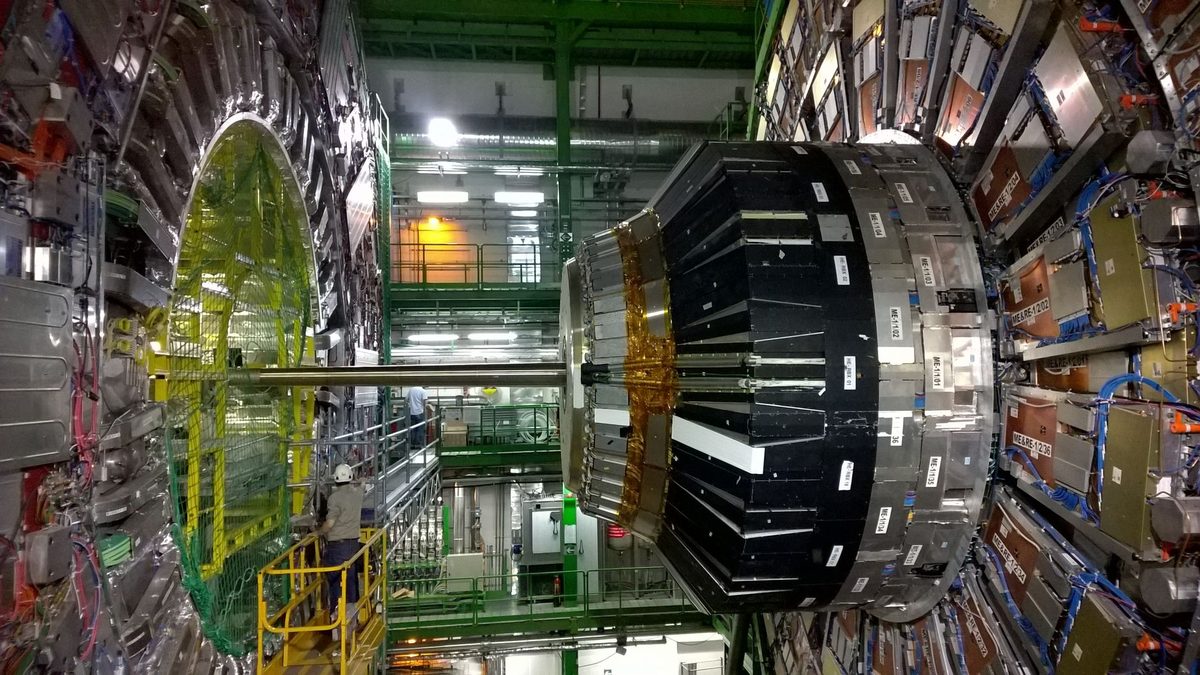
The LHC sits in a 27-kilometre tunnel 50 to 175 metres underground, crossing the Franco-Swiss border. It runs continuously when in operation (roughly March to November), and during operation underground access is restricted to CERN staff for radiation-safety reasons. During the annual winter maintenance shutdowns, and the longer Long Shutdowns every few years, some access is occasionally granted, but only to booked groups and special events.
The CERN Open Days
The only realistic public route underground is the CERN Open Days, held roughly every 4 to 5 years (most recently October 2024), when the lab opens up including underground sites at experiments like ATLAS, CMS, ALICE and LHCb. The 2024 edition drew more than 100,000 applications for 70,000 slots. The next Open Days are expected around 2028 to 2029 — check home.cern for confirmed dates.
The Antimatter Factory
One above-ground facility, the Antimatter Factory, has occasionally featured in regular guided tours and is the closest most visitors get to real CERN equipment. Even that is hit-or-miss, so ask when you book.
CERN with kids and families
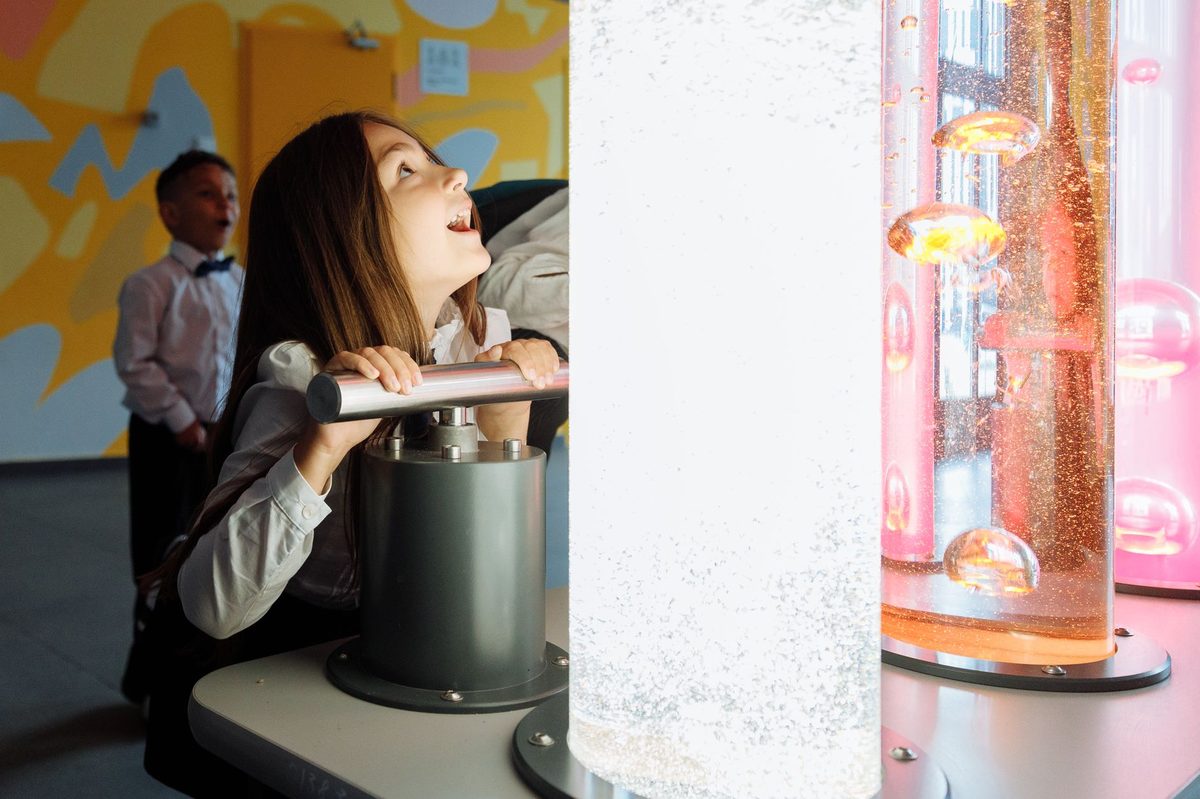
CERN is unusually well-pitched for children — more so than most science museums. The interactive exhibits across the Universe of Particles are designed for ages 8 and up but engage younger kids too, the Big Bang Cafe does kid-friendly food at fair prices, and there are children’s lab workshops for ages 7 to 12 (when booking opens) plus dome films suitable for ages 7 and up. Entry is free for everyone, children included, so there are no family-rate headaches. For a science-curious pre-teen, this is one of the best Geneva attractions — arguably more engaging than the watch or art museums for that age. If you are travelling with kids, the Geneva with kids guide has more in this vein.
My half-day CERN itinerary
This is what works for most visitors with 4 to 5 hours to spend:
- 09:30 Coffee in central Geneva before heading out.
- 10:00 Tram 18 from Cornavin, 25 minutes to the CERN terminus.
- 10:30 Arrive at the Science Gateway, ask the info desk about same-day tour slots, grab a free map.
- 10:45 Discover CERN pavilion, 45 minutes for context.
- 11:30 Universe of Particles, 75 minutes — the main event.
- 12:45 Lunch at the Big Bang Cafe (sandwiches CHF 8-12, hot dishes CHF 15-18).
- 13:30 Quantum World, 45 minutes.
- 14:15 Cross to the Globe of Science and Innovation, 30 minutes.
- 14:45 Outdoor sculptures and photos, then back to the tram.
- 15:00 Tram 18 back, at Cornavin by about 15:30 — good timing for an Old Town coffee or another sight.
With more time, a workshop slot adds 60 to 90 minutes and a dome film adds 30. Since entry is free, CERN also slots neatly into a free things to do in Geneva day.
Frequently asked questions
Is CERN free to visit?
Yes. The Science Gateway and the Globe of Science and Innovation are both entirely free, with no tickets and no booking needed for standard visits. Guided tours, when you can get one, are also free.
Do I need to book in advance?
Not for the standard Science Gateway visit — just walk in. Guided tours and lab workshops do require booking 15 days ahead through visit.cern, and the slots disappear within minutes.
How do I get to CERN from Geneva?
Take tram 18 from Cornavin, or anywhere on the line, to the CERN terminus — about 25 minutes. It is covered by the free Geneva Transport Card, or CHF 3 for a single ticket.
Can I see the Large Hadron Collider?
Almost never. The LHC is underground and access is essentially limited to CERN staff. The only realistic public chance is the CERN Open Days held every 4 to 5 years, next expected around 2028 to 2029.
How long should I plan for CERN?
Plan 3 to 4 hours for the Science Gateway exhibitions, or 4 to 5 hours including the tram out and back. Add 60 to 90 minutes if you land a guided tour or workshop slot.
Is CERN suitable for children?
It is excellent for ages 7 and up, with plenty of interactive exhibits, age-appropriate workshops and kid-friendly food, and it tends to win over even science-skeptical children.
Related Geneva guides
Keep planning with the Geneva museums and culture pillar, the Red Cross Museum guide, the best Geneva attractions, free things to do in Geneva, the public transport guide for tram 18, and the wider plan a trip to Geneva hub.