First Time in Geneva? — Complete Beginner’s Planning Guide (2026)
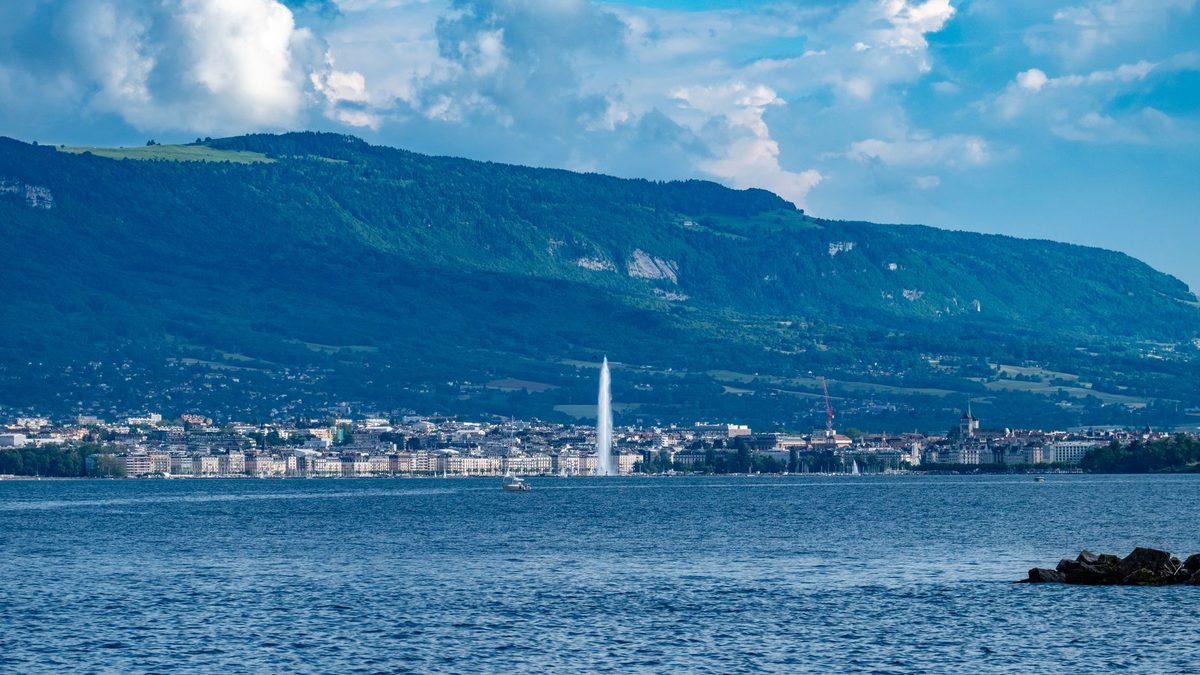
This article contains advertising. Our booking links are routed through a partner that adds commission tracking automatically, so if you book through one we earn a commission from the provider, at no extra cost to you. It never affects what we recommend. Affiliate disclosure
Geneva is one of the easiest cities in Europe to land in for the first time: small, walkable, lake-centred, French-speaking but with English everywhere a traveller needs it. The catch is a short list of local rules that nobody hands you at arrivals. There is a free Geneva Transport Card waiting at your hotel reception that covers every tram for your whole stay. The free 80-minute ticket that used to sit in a machine in the airport baggage hall is gone, so the train into town costs CHF 3 unless your hotel has emailed you that card before you land. Shops shut on Sundays. You cannot stroll into a good restaurant on a Saturday night without a booking. And tipping the American way is simply wrong here, because service is already in the price.
This is the first-time visitor guide I wish someone had given me: a pre-arrival countdown, an airport walk-through, a quick read on where to stay, an honest first-24-hours plan, the ten things actually worth your time, the etiquette and reservation rules, the Sunday workaround, and the mistakes most newcomers only learn the hard way. If you are still at the early stage, start with the main plan a trip to Geneva hub and lock your bed early via where to stay in Geneva — event weekends here sell out the good rooms first.
01 — Geneva at a glance for first-timers
The short version, before the detail. Read this once and you already know more than most arrivals.
| Thing | What to know |
|---|---|
| Size | About 200,000 in the city, 500,000 in the canton. Compact and walkable. |
| Languages | French is primary; English is universal in tourism, hotels and restaurants. |
| Currency | Swiss franc (CHF). Not the eurozone. |
| Time zone | Central European Time (UTC+1, UTC+2 in summer). |
| Plug | Swiss Type J (3-pin). Bring an adapter. |
| Transport Card | Free at every hotel. Covers the whole family for the whole stay. |
| Airport ticket | CHF 3 into town, or free with the Transport Card. The free baggage-hall ticket was withdrawn at the end of 2021. |
| Best months | June for long days; September for warm, quieter weather. |
| Tap water | Excellent. Refill at the 200-plus public fountains. |
| Tipping | Service is included by law. Round up only. |
| Sundays | Most shops shut; restaurants, museums and attractions stay open. |
02 — Pre-arrival planning timeline
Geneva rewards a little forward planning, mostly because the things first-timers most want — a UN tour, a Saturday dinner, a room during a big festival — are exactly the things that book out. Here is the countdown I run.
8 weeks out:
- Book flights into Geneva (GVA) or the train to Cornavin.
- Decide between a Swiss Travel Pass and the free Geneva Transport Card alone.
- Reserve the hotel, especially for L’Escalade in December, the Geneve Geneve festival in mid-August, the Christmas markets, or any conference week.
6 weeks out:
- Book restaurant tables for anything Michelin-starred, any Sunday brunch, or any spot you have set your heart on.
- Book specific experiences (a CGN paddle-steamer dinner cruise, paragliding off the Saleve, a chocolate workshop).
4 weeks out:
- Book the Palais des Nations UN tour — your passport is mandatory and slots are limited.
- Reserve a CERN Science Gateway workshop if you want one.
- Check your visa situation in the visa guide, and watch for ETIAS, which is not running yet and has no confirmed start date; check the EU’s official ETIAS page before you travel.
- Sort travel insurance — the insurance guide covers what you need.
2 weeks out:
- Download the apps: TPG, SBB Mobile, MeteoSwiss, Geneva Transport Card.
- Confirm any hotel requests — cribs, accessibility, late arrival.
- Sketch a first-day plan around your arrival time.
1 week out:
- Pack in layers for the season (the packing list breaks it down).
- Pack a swimsuit year-round — Bains des Paquis runs through winter.
- Comfortable shoes for the cobbles, a Type J adapter, and your passport, insurance and booking confirmations.
03 — Arriving at Geneva Airport, step by step
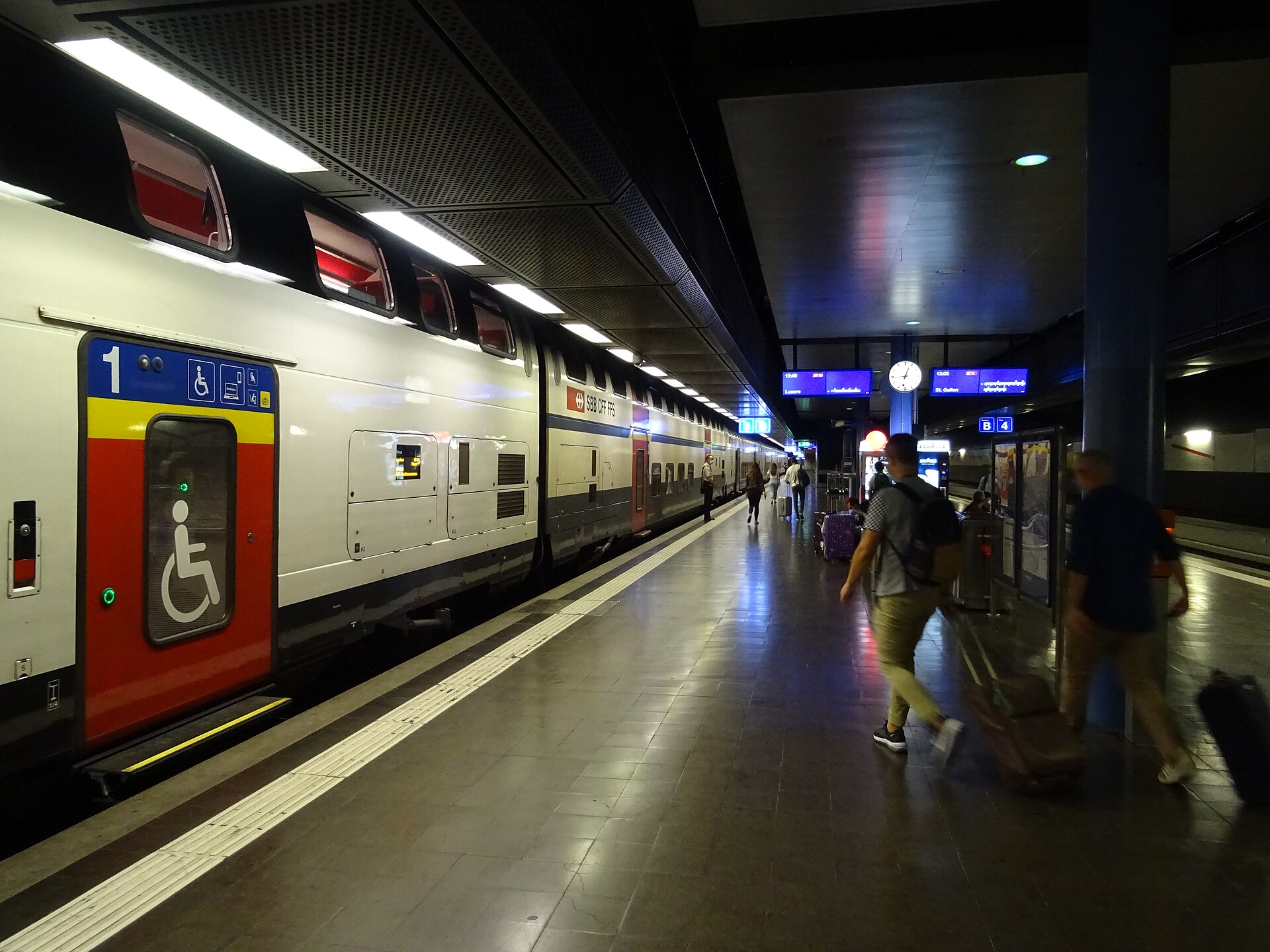
Here is the one tip that pays for itself before you have left the terminal: check your email before you fly. Geneva hotels, hostels and campsites send guests a free Geneva Transport Card, usually a few days before arrival, and once it is saved on your phone it covers the train to Cornavin and every TPG bus and tram for your whole stay. Ignore older advice about a free ticket machine in the baggage claim hall: it was withdrawn at the end of 2021. Without the card, a single into town costs CHF 3.
The arrival run, in order:
- Land at GVA. Most international flights use the main Swiss sector; some Air France connections come into the French sector.
- Clear passport control — the Swiss sector means a Swiss border officer (details in the visa guide).
- Collect your bags.
- Have the Geneva Transport Card ready on your phone, or plan to buy a CHF 3 ticket from the machine on the station platform.
- Walk out into arrivals and take the lift down to the airport train station. Trains run every 6 to 10 minutes.
- Ride to Cornavin, Geneva’s main station — about 6 minutes.
- From Cornavin, walk to your hotel (most central ones are within 15 minutes), or hop a tram, bus or taxi.
If you would rather skip the station, Bus 5 runs direct from the airport to several central stops in 25 to 30 minutes, a taxi is CHF 35 to 45, and Uber usually undercuts that at CHF 25 to 35. Arriving late and exhausted? The Movenpick airport hotel connects to the terminal by covered walkway. For the full breakdown, see Geneva Airport to the city centre.
04 — The free Geneva Transport Card, explained
This is the most undersold perk in the city. Every Swiss-side Geneva hotel hands out a free Geneva Transport Card when you arrive. It covers:
- All TPG buses and trams across the canton.
- All Mouettes water taxis.
- Regional Leman Express trains within Canton Geneva (out to Versoix, Coppet and the airport).
- The whole family, not just the guest whose name is on the booking.
- The entire length of your stay.
It comes as a digital QR code through the Geneva Transport Card app, or as a physical card at reception. The maths is simple: a family of four staying four nights saves CHF 100 to 150 in fares, given a single tram ride is CHF 3 and a day pass CHF 10. Ask for it at check-in — some desks will not mention it unless you do. For how it stacks up against the alternatives, compare the options in the Geneva public transport guide.
05 — Where to stay: a quick neighbourhood read
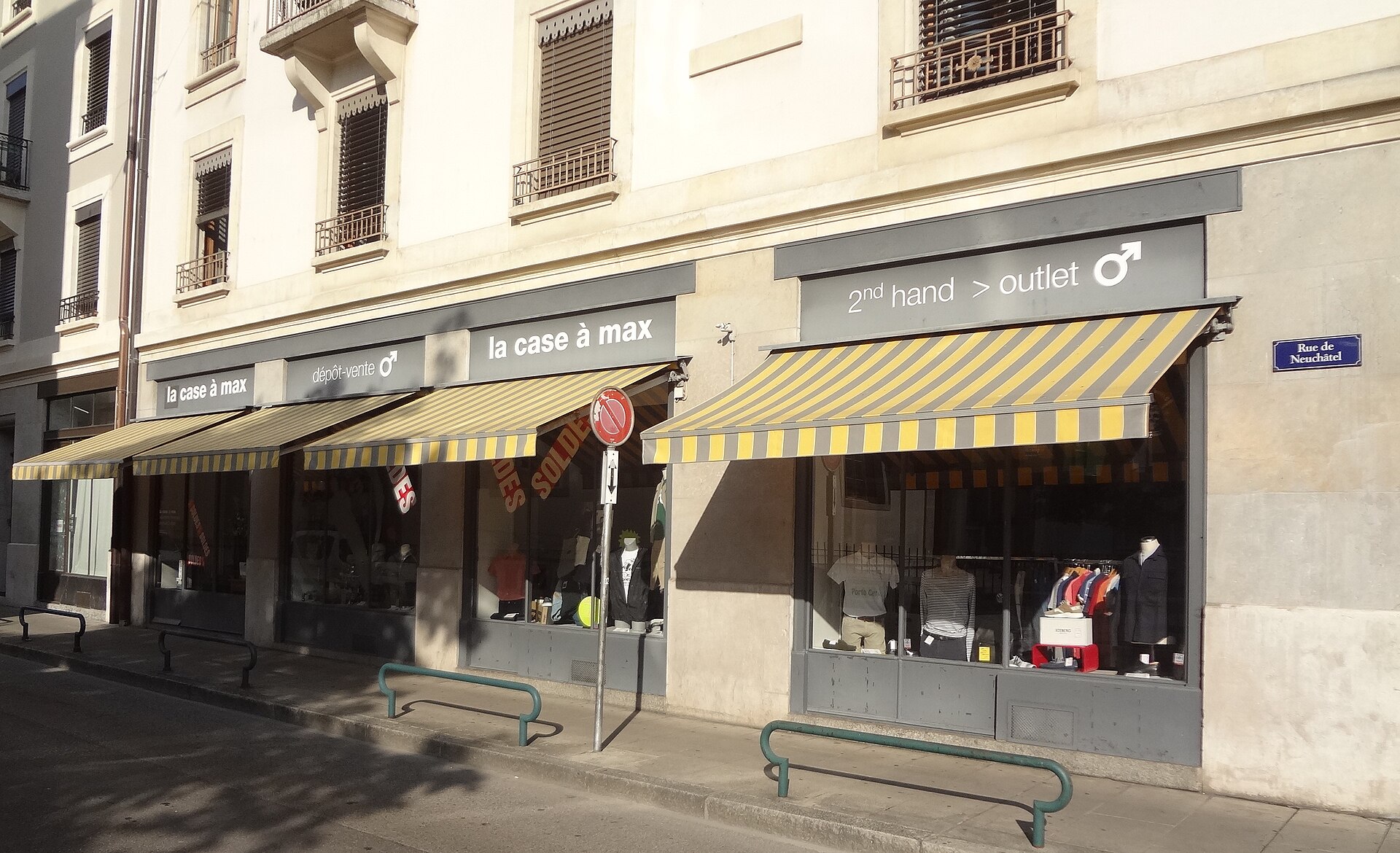
Five areas cover almost every first-time visitor. My short take on each:
Paquis (right bank, by Cornavin) is the practical pick for most people — lively, walkable, a wide spread of budgets, and steps from the station and the lakefront, with Bains des Paquis right there. There is a visible, contained and police-patrolled sex-work zone on Rue de Berne; it rarely bothers visitors (the safety guide has the honest detail).
Eaux-Vives (left bank, on the lake) is calmer and greener, near Baby Plage and Parc La Grange. Good for families and anyone who wants a slower first trip.
Old Town / Vieille-Ville is where the characterful boutique hotels live (Les Armures, de la Cigogne) inside historic buildings. Atmospheric, but the cobbles are hard work with a stroller or rolling luggage.
Carouge, the bohemian Sardinian quarter, sits 15 minutes out by tram with independent cafes and some of the best restaurants in town. See the Carouge guide.
Plainpalais / Plan-les-Ouates is closer to CERN and easier on the wallet, with Tram 12 into the centre. For the wider picture, see the where to stay pillar and the family accommodation guide.
06 — Your first 24 hours, hour by hour
A realistic plan if you land around 14:00. Do not try to cram in more — the point of day one is to land softly and adjust.
- 14:00 Arrive at GVA, with the Transport Card on your phone or a CHF 3 ticket from the platform machine.
- 14:30 Train to Cornavin, walk to the hotel (10 to 15 minutes), drop bags.
- 15:30 Coffee or an apero on the Bains des Paquis terrace, lakefront, with the Jet d’Eau across the bay.
- 16:30 Take the M2 Mouette across the lake (free with the Transport Card) — five minutes to Molard.
- 16:45 Wander the Jardin Anglais: the Flower Clock, the promenade, the kids’ play area, an ice cream from the kiosk.
- 17:30 Climb up into the Old Town past Cathedrale St-Pierre and Maison Tavel to get your bearings.
- 18:30 Apero at La Clemence on Place du Bourg-de-Four, a historic terrace that fills up fast.
- 20:00 Dinner — booked ahead. Edelweiss for theatrical fondue, Les Armures for Old Town setting, Cafe du Soleil in Petit-Saconnex for the locals’ fondue.
- 22:00 Stroll the Quai du Mont-Blanc with the lit Jet d’Eau and the city across the water.
- 23:00 Bed. Resist the urge to push through; let the time zone settle.
07 — Ten things actually worth doing first
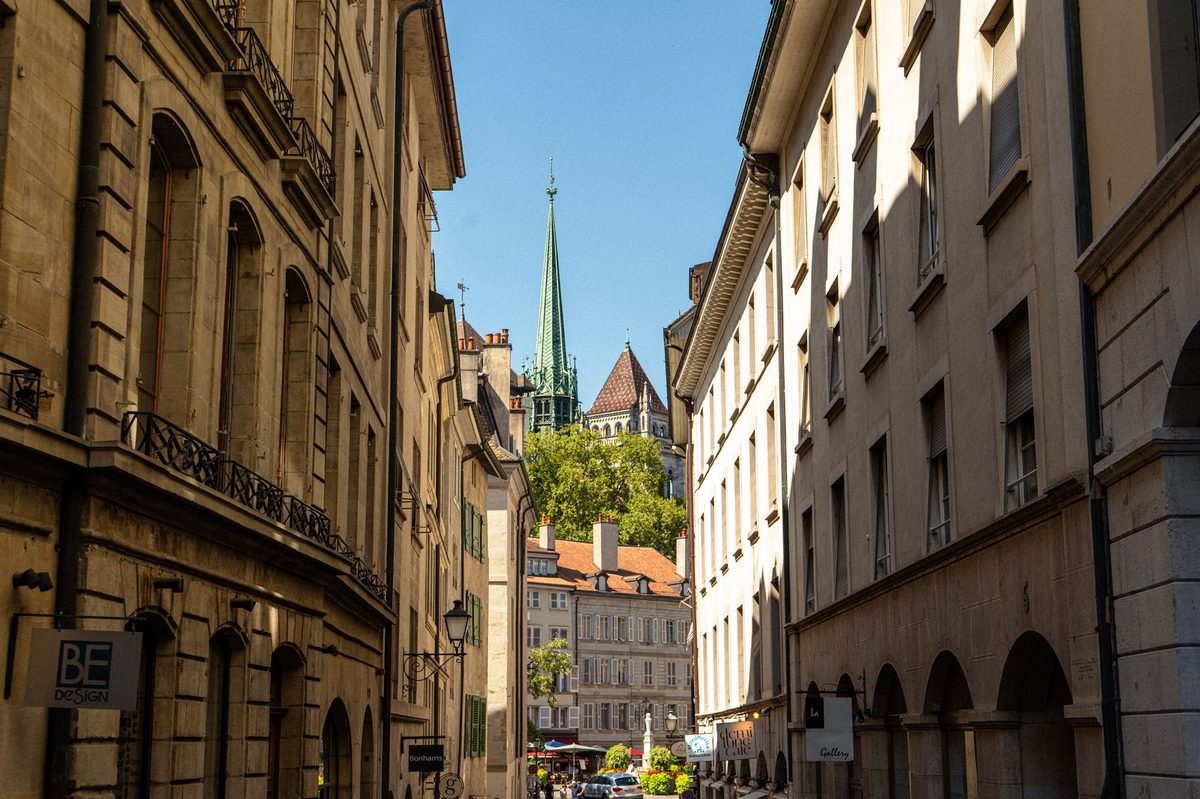
If you only have a couple of days, this is where I would spend them. More ideas live in things to do in Geneva and the best Geneva attractions guide.
- Walk the Jet d’Eau jetty — Geneva’s signature image. Go to the very end; on a windy day you will get soaked.
- Bains des Paquis — the city’s beloved public baths. CHF 2 in summer, free in winter (sauna CHF 22).
- Wander the Old Town — Place du Bourg-de-Four, Cathedrale St-Pierre, Maison Tavel, the Promenade de la Treille.
- Musee d’Art et d’Histoire (MAH) — pay-what-you-wish entry (you can pay nothing), four floors of Geneva’s story.
- Ride a Mouette — CHF 2, or free with the Transport Card. Locals use them as transport; you will use them for the view.
- Palais des Nations UN tour — book ahead, passport required. The UN’s European headquarters.
- CERN Science Gateway — free, opened in 2023, Renzo Piano architecture, at the Tram 18 terminus. See the CERN visitor guide.
- A proper fondue dinner — Edelweiss for atmosphere, Cafe du Soleil for the locals’ choice, Les Armures for the Old Town setting.
- A chocolate flight — heritage Auer and Du Rhone alongside modern makers. The chocolate shops guide maps them.
- A CGN sunset cruise — one to two hours on a Belle Epoque paddle steamer.
Best photo spots
- Pont du Mont-Blanc — the classic Jet d’Eau and Mont Blanc backdrop on a clear morning.
- Bains des Paquis pier — lighthouse, Jet d’Eau and the Saleve behind.
- Cathedrale St-Pierre tower — a 360-degree city panorama after 157 steps.
- Promenade des Bastions — the giant chess sets and the Reformation Wall.
- Carouge’s cobbled streets — Italianate facades, best on the first-Sunday market day.
- Perle du Lac at sunset — Mont Blanc and the lake in golden light.
- Mont Saleve summit — the whole Geneva basin laid out below.
08 — Money, cards and tipping
The quick version (the currency guide goes deeper):
- Currency: Swiss franc (CHF), not the euro.
- Cards: Visa and Mastercard everywhere, Amex around 80 percent of places, Apple and Google Pay universal.
- Cash: CHF 100 to 200 for the whole trip is plenty.
- ATMs (Bancomats): the best rates. Use bank-branded machines.
- Tipping: service is included by law. Round up only — no 15 to 20 percent. American tipping habits genuinely do not apply here.
- VAT: 8.1 percent, with a tax-free refund for non-EU residents on purchases over CHF 300 per shop.
If you are watching the budget, the Geneva on a budget guide is full of ways the free fountains, free baths in winter and free Transport Card add up.
09 — Language and a few useful phrases
Geneva is French-speaking, but English is the default in tourism, hotels, restaurants and museums. You do not need French. You do need to say bonjour — opening with it earns noticeably warmer service.
- Bonjour — hello, used to enter any shop or greet at a restaurant.
- Merci — thank you.
- S’il vous plait — please.
- Excusez-moi — excuse me.
- L’addition, s’il vous plait — the bill, please.
- Parlez-vous anglais? — do you speak English? (They almost always do.)
10 — The reservation rule no guide tells you
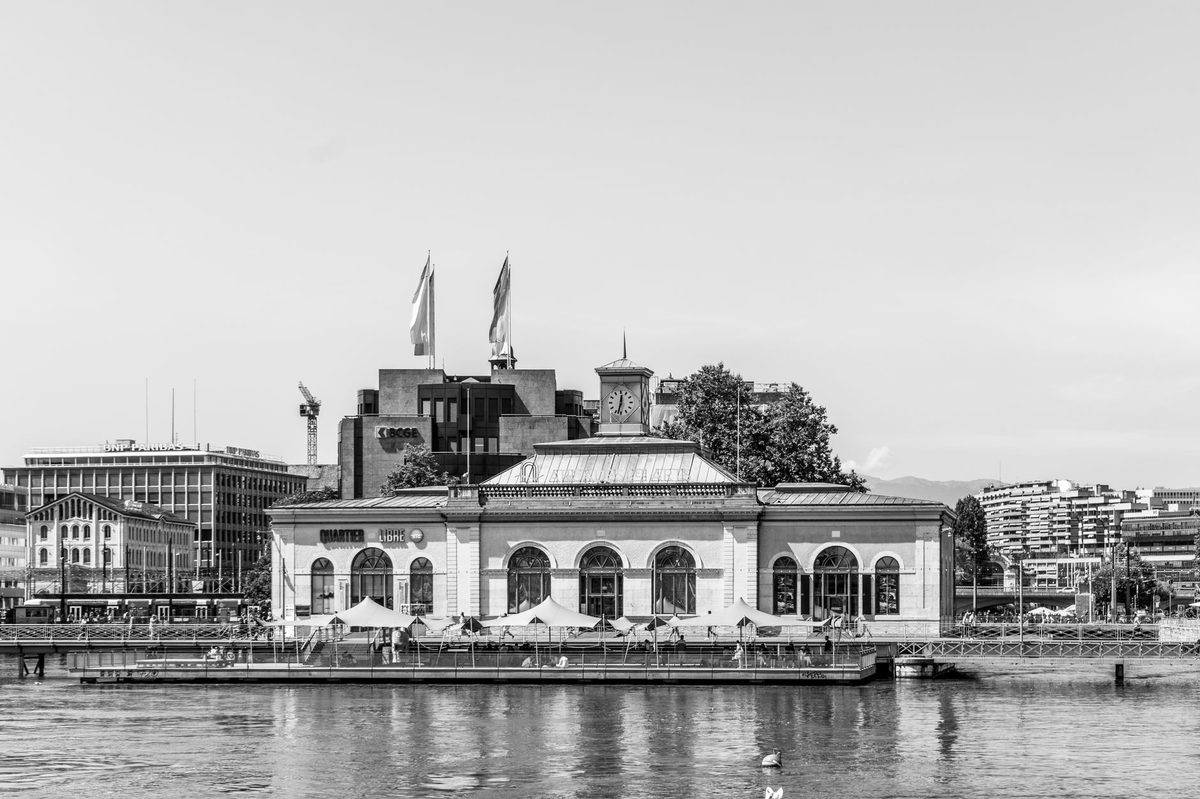
This is the single most under-explained thing about eating in Geneva. Restaurants here take reservations seriously, and the kitchen keeps strict hours.
- Lunch runs 12:00 to 14:00; kitchens close around 14:30.
- Dinner runs 19:00 to 21:30; kitchens close around 22:00 (Italian places later).
- Between services (roughly 14:30 to 18:30) the kitchen is shut. Cafes serve light food, not a full menu.
- A Saturday night anywhere good: book a week ahead, three weeks for the top tables.
- Popular Sunday brunch: book two weeks ahead.
- Be on time. Swiss punctuality is real; 10 minutes late and your table may go to a walk-in.
In practice, do not expect to walk into a notable Old Town spot at 8pm on a Saturday. Book ahead, settle for somewhere quieter, or eat early — locals dine from 19:00. Book through the hotel concierge, the restaurant’s site, TheFork, or a plain phone call.
11 — Sundays, and how to plan around them
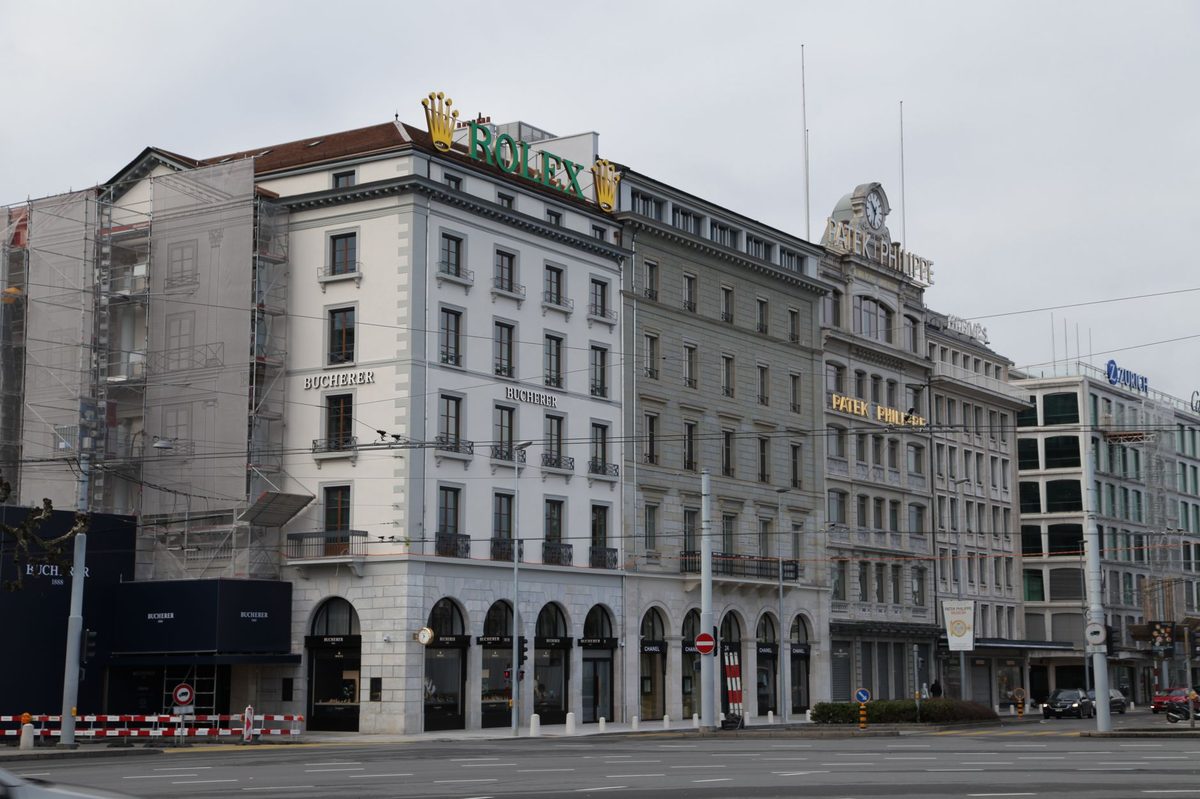
Sunday catches every first-timer once. Here is the reality so it does not catch you.
- Closed: clothing shops, supermarkets, most retail and smaller stores.
- Open: bakeries (limited hours), the Migros and Coop inside Cornavin station, Migros Pronto and Coop Pronto convenience shops, restaurants, bars, museums and attractions.
- First Sunday of the month is the exception — the Plainpalais flea market and Carouge brocante run, and many nearby shops open with them.
- Geneva Airport shops open on Sunday, handy on a departure day.
The simple workaround: do any grocery run on Saturday, then treat Sunday as a day for museums, a lake cruise, a long lunch, Carouge, or a day trip out of town. If you do need something, Cornavin station and the Pronto shops have the basics.
12 — Tap water, swimming and public etiquette
- Tap water is among Europe’s best — about 90 percent comes from Lake Geneva — and the city has 200-plus free fountains. Refill freely.
- Lake swimming is free at marked beaches: Bains des Paquis, Plage des Eaux-Vives, Baby Plage, Geneve-Plage, Vesenaz, Hermance. Bains des Paquis runs year-round for cold-water swimmers.
- Keep it quiet on public transport — low phone calls, no loud music.
- Punctuality is real. Trains, restaurants and meetings run on time; being late reads as rude.
- Quiet hours run 22:00 to 07:00 — no loud music, vacuuming or laundry in apartments.
- Greetings: bonjour on entering, three cheek kisses for friends, a handshake for new acquaintances.
13 — Is Geneva safe?
Geneva ranks among the world’s ten safest cities. The realistic risks are pickpocketing at Cornavin, on busy trams and in festival crowds. Paquis looks edgy in places but stays contained. One hard rule: never swim at the Pointe de la Jonction, where the Rhone current is dangerous. The full safety guide has the rest.
14 — Common first-timer mistakes
- Overplanning day one. Adjust to the time zone; do not chase five sights.
- Skipping the Mouettes. They look like tourist boats; they are iconic local transport and free with the card.
- Eating only on the Rue du Mont-Blanc strip. Carouge, Plainpalais and the Old Town side streets are far better.
- Trying to do CERN, the UN and the Old Town in one day. Each is a half-day minimum.
- Forgetting the Geneva Transport Card. Ask at reception; it is free.
- Never crossing to the left bank. Carouge and Plainpalais are where locals actually live.
- Arriving Sunday to shut shops. Do groceries on Saturday.
- Not booking Saturday dinner. A week ahead, minimum.
- Tipping American-style. Round up only; service is included.
- Forgetting a Type J adapter. Many EU plugs do not fit Swiss sockets.
- Underestimating the Bise wind in winter. Pack a windproof shell.
- Skipping the Saleve cable car. Fifteen minutes out, with a Mont Blanc panorama.
15 — Apps worth downloading first
- TPG — Geneva’s public transport, with live times.
- SBB Mobile — Swiss railways, for national train tickets.
- Geneva Transport Card — the digital version of your free hotel card.
- MeteoSwiss — more accurate locally than international weather apps.
- Wise or Revolut — for no-foreign-fee card payments.
- Uber — ride-hailing, usually cheaper than taxis.
- CityMapper — combines TPG routes with walking directions.
- Airalo or Holafly — eSIM apps for instant Swiss data; see the SIM card and wifi guide.
Frequently asked questions
Is Geneva worth visiting for a first trip?
Yes. It is compact, multilingual and lake-centred, with real cultural weight (the UN, CERN, watchmaking, the Old Town), strong food, and the French Alps an hour away. It is an unusually manageable yet substantial first taste of Switzerland.
What is the best area to stay in Geneva for first-time visitors?
Paquis for being central and walkable to almost everything, or Eaux-Vives for a quieter lakefront base. The Old Town suits atmospheric boutique stays, and Carouge is the bohemian alternative a short tram ride out.
Do I need cash, and how does tipping work?
Carry CHF 100 to 200 for flea markets, small cafes, the baths and public toilets; cards cover the rest. Tipping is simple — service is included by law, so you round up rather than adding a 15 to 20 percent gratuity.
Is English spoken in Geneva?
Yes, universally in tourism, hotels, restaurants and major shops. French is the primary language and English is the international working language at the UN and CERN. A simple bonjour and merci go a long way.
What is the minimum stay to make Geneva worthwhile?
Two nights is the floor; less feels rushed. Three days is the sweet spot for both breadth and a couple of half-day trips. See the how-many-days guide for help deciding.
What should I avoid as a first-timer?
Eating only on the Rue du Mont-Blanc strip, trying to cram CERN, the UN and the Old Town into one day, tipping American-style, packing only summer clothes for winter, and forgetting to ask for the free Geneva Transport Card.
Your first hour in Geneva happens at the airport, and it is a stranger building than it looks — Swiss and French sectors, a mainline station underneath, and a six-minute train into town. Start with our Geneva Airport guide.
16 — Related Geneva guides
Keep planning with the plan a trip to Geneva hub, then line up where to stay, the public transport guide, things to do in Geneva, a ready-made 3-day itinerary, and the on a budget guide for keeping costs down.