Geneva Museums & Cultural Attractions Guide
CERN Visitor Guide — Science Gateway, Tours & Tickets (2026)
This article contains advertising. Our booking links are routed through a partner that adds commission tracking automatically, so if you book through one we earn a commission from the provider, at no extra cost to you. It never affects what we recommend. Affiliate disclosure
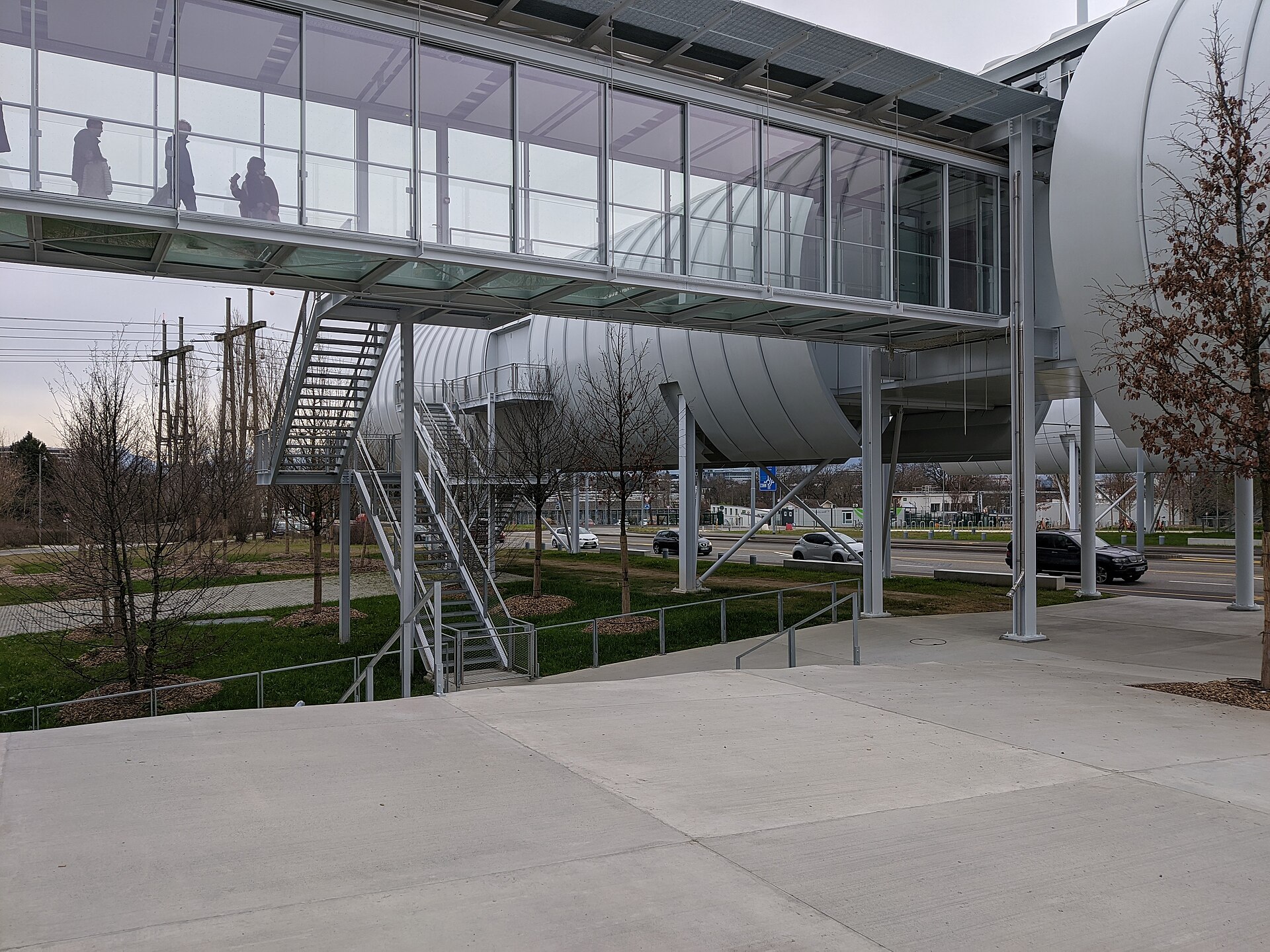
Visiting CERN in Geneva is one of the best free afternoons in the city, and most travellers either skip it or turn up expecting the wrong thing. The CERN Science Gateway — designed by Renzo Piano, the Pompidou Centre architect, and opened in October 2023 in Meyrin, on tram line 18 — spreads across five building areas: interactive exhibitions on particle physics, the Big Bang and the discovery of the Higgs boson, plus laboratories and an auditorium. Entry is free but you need to register: book online in advance to guarantee your place, or register on arrival if there is room. The frustrating part nobody warns you about: the guided tour out to real CERN facilities is brutally hard to get on, individual and family tours stay above ground, and the LHC tunnel itself cannot be visited.
This is my honest 2026 guide to visiting CERN Geneva: what the Science Gateway is and is not, how guided-tour booking works on the day, what to do when you cannot get a guide, how it works for kids versus adults, the detail that the iconic wooden Globe across the road is also free, and the logistics of getting out to Meyrin and back in a half-day. Even if you have decided particle physics is not your thing, the architecture, the storytelling and the free entry make this one of the easiest cultural picks on a Geneva itinerary. It sits firmly in the Geneva museums and culture lineup.
01 — The 60-second plan
Take tram 18 from Cornavin (about 25 minutes) to the CERN terminus. Register for the Science Gateway — it is free, and booking online ahead guarantees your entry. Spend most of your time in the Universe of Particles exhibition (the most interactive part), then see the Discover CERN pavilion and the Globe of Science and Innovation across the road. Grab a coffee at the on-site Big Bang Cafe, then tram back. Total, including travel, is 4 to 5 hours. If you manage to book a free guided tour on the day, fit it around the Science Gateway visit rather than trying to cram in the underground too — that access is rarely granted anyway.
02 — CERN visit at a glance
| Detail | What to know |
|---|---|
| Entry | Free, but register for the Science Gateway: book online in advance to guarantee entry, or register on arrival if there is room. |
| Time needed | A flexible half-day: as long as the exhibitions hold you, plus about 25 minutes each way by tram from Cornavin. |
| Getting there | Tram 18 from Cornavin, about 25 minutes, to the CERN terminus. |
| Cost of transport | Free with the Geneva Transport Card; otherwise CHF 3 single. |
| Guided tour | Free but scarce — booked on site on the day, from two hours before each tour, subject to availability. |
| See the LHC? | No: the LHC tunnel is not part of public tours. Watch CERN’s announcements for any exceptional access. |
| Good for kids? | Exhibitions are best from age eight; some workshops start at five. |
| Food | The Big Bang Cafe — sandwiches and hot dishes, CHF 8-18. |
03 — What CERN actually is, and what the Gateway is not
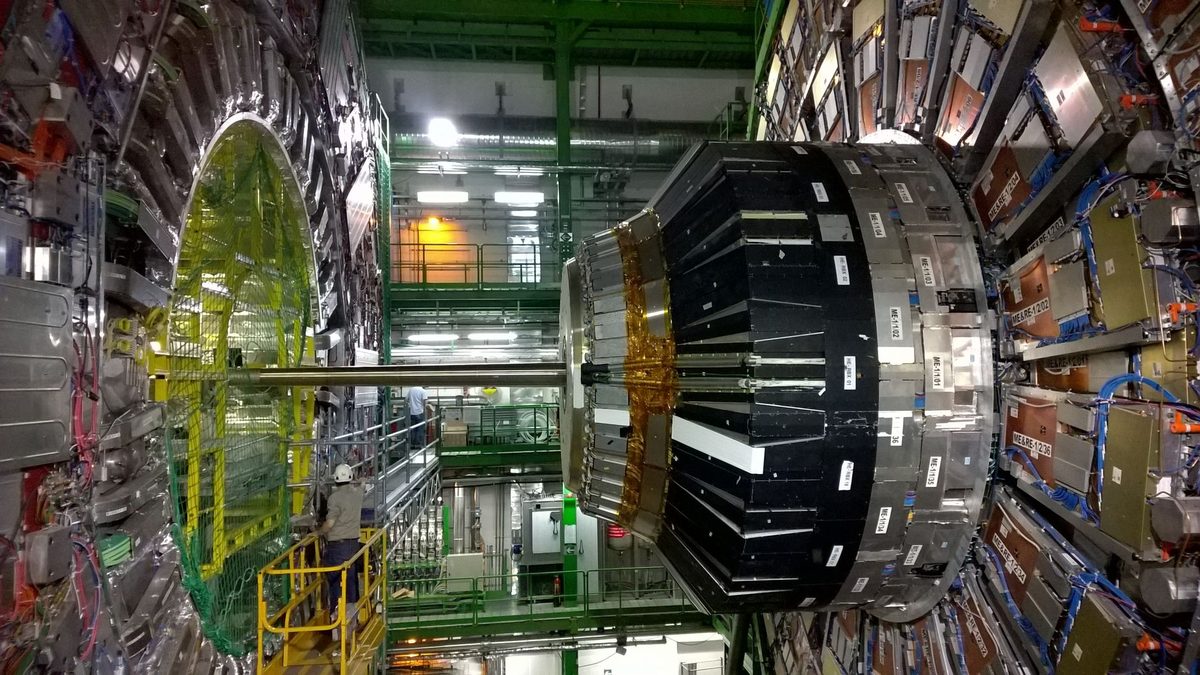
CERN — the European Organization for Nuclear Research — is the particle physics lab that runs the Large Hadron Collider, the 27-kilometre underground ring where physicists smash protons together at near light-speed to recreate conditions a fraction of a second after the Big Bang. The Higgs boson was confirmed here in 2012, and Tim Berners-Lee invented the World Wide Web here in 1989. It is one of the most consequential scientific institutions on the planet.
The Science Gateway, opened in October 2023, is CERN’s purpose-built free visitor centre: a Renzo Piano building of five areas, with exhibitions, laboratories and an auditorium, designed to give the public a structured way into the science. It is not the lab itself — it is a museum about the lab. The accelerator is mostly underground and mostly off-limits. If you are working from an older guidebook that mentions the small Microcosm exhibition, that closed permanently in September 2022; its content was rebuilt and expanded into the Science Gateway.
04 — Getting to CERN from central Geneva
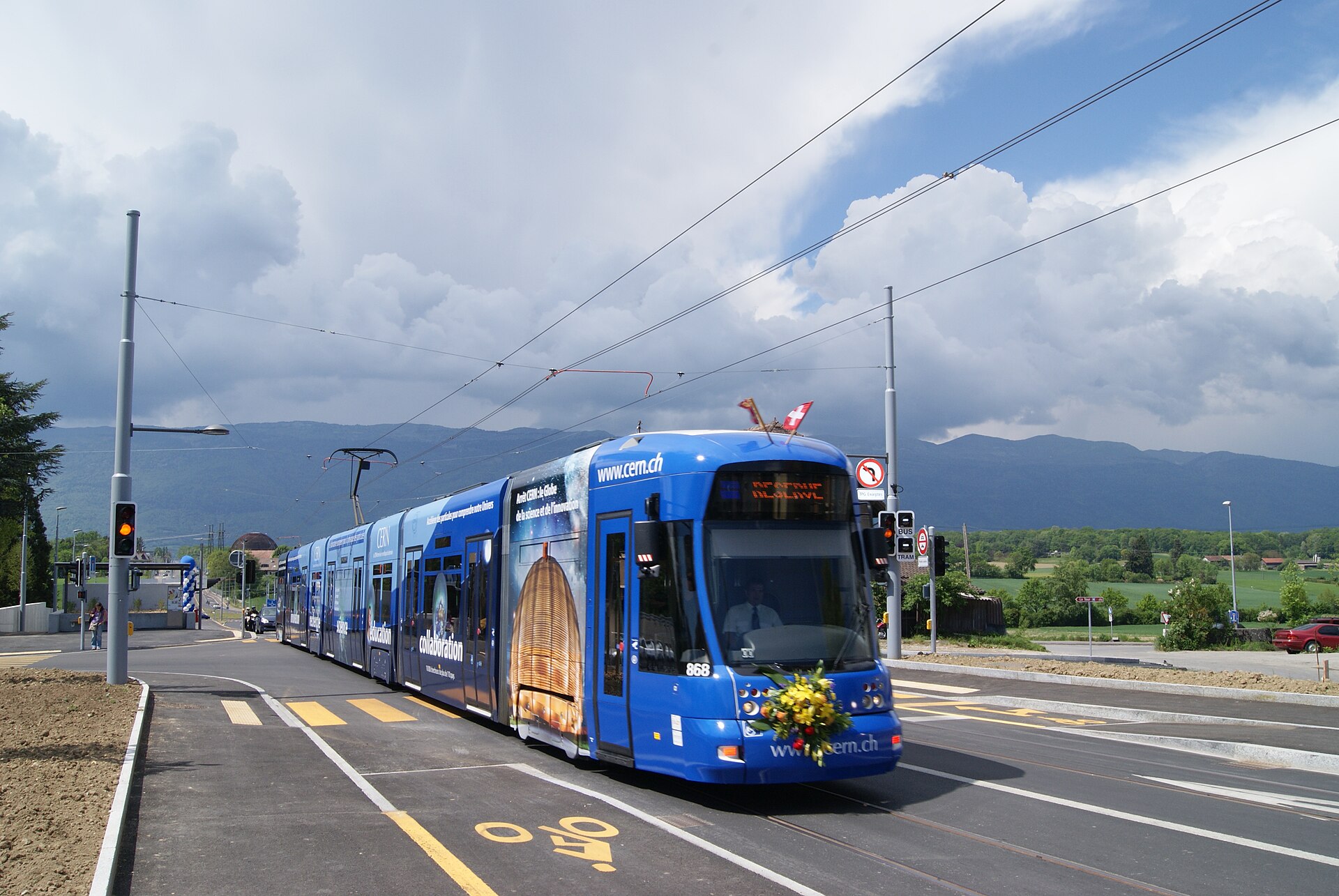
Tram 18, the only sensible option
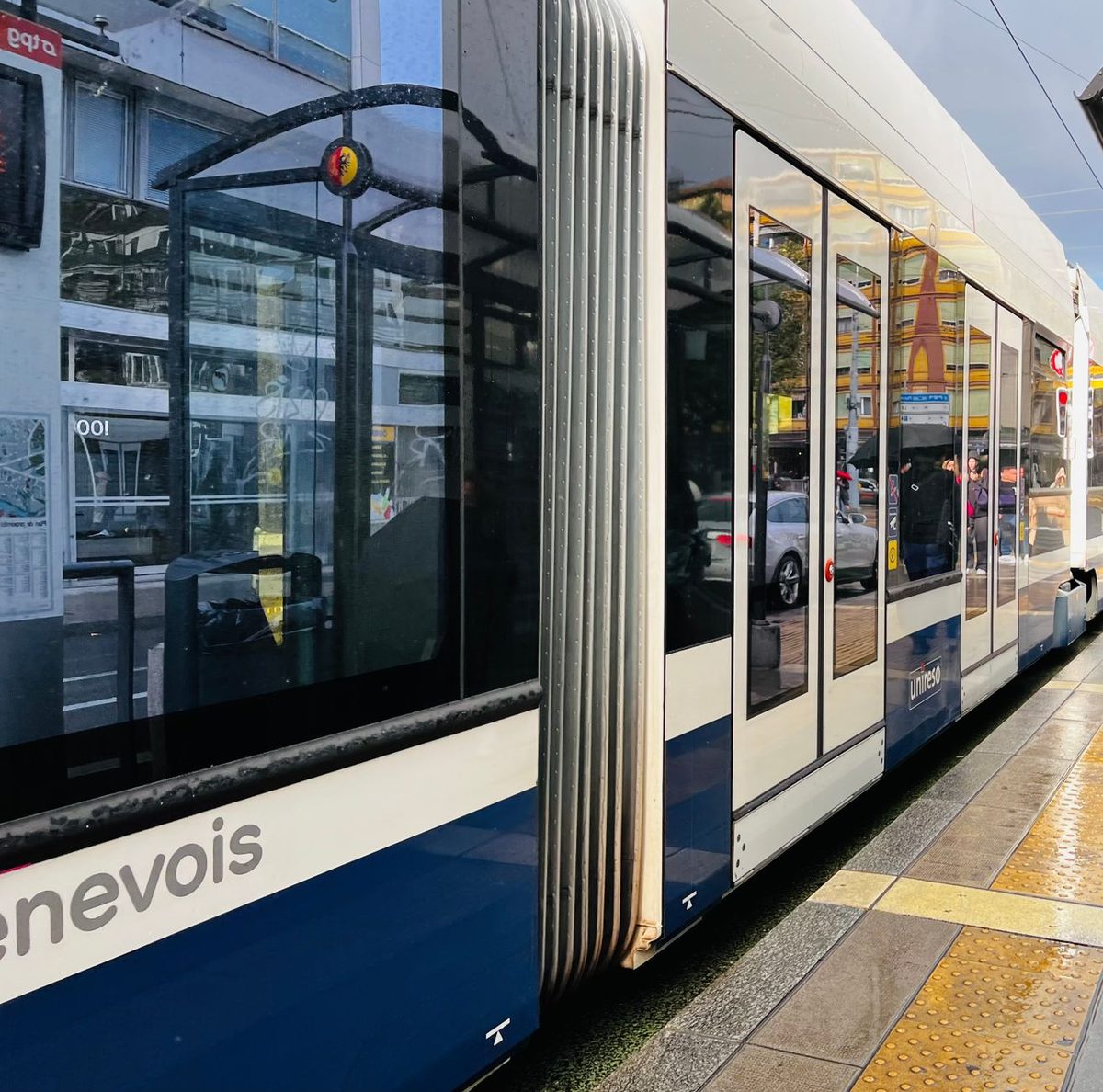
This is how essentially every visitor arrives. Tram 18 runs a frequent service from Cornavin (and earlier city-centre stops) straight to the CERN terminus in about 25 minutes. You step off the platform into the Science Gateway entrance area. It is free with the Geneva Transport Card, or CHF 3 for a single ticket — the Geneva public transport guide covers the card.
By bus, car or from the airport
Tram 18 is also part of Geneva’s weekend night network on Friday and Saturday nights, so check the timetable for your travel date. Driving is possible — there is a small free visitor car park — but the tram is faster than parking and walking in, so drive only if you are heading onward out of the city afterwards. From Geneva Airport, allow about 25 minutes: bus 23, 28 or 57 to Vernier, Blandonnet, then tram 18 to Meyrin, CERN — handy on a long layover.
05 — The three Science Gateway exhibitions
The Science Gateway has five building areas, including three permanent exhibitions and an outdoor sculpture garden.
1. Discover CERN
The introduction. It covers the founding of the lab in 1954, the discovery of the W and Z bosons in 1983, the Higgs confirmation in 2012, and the major experiments. Best as your first stop.
2. Universe of Particles
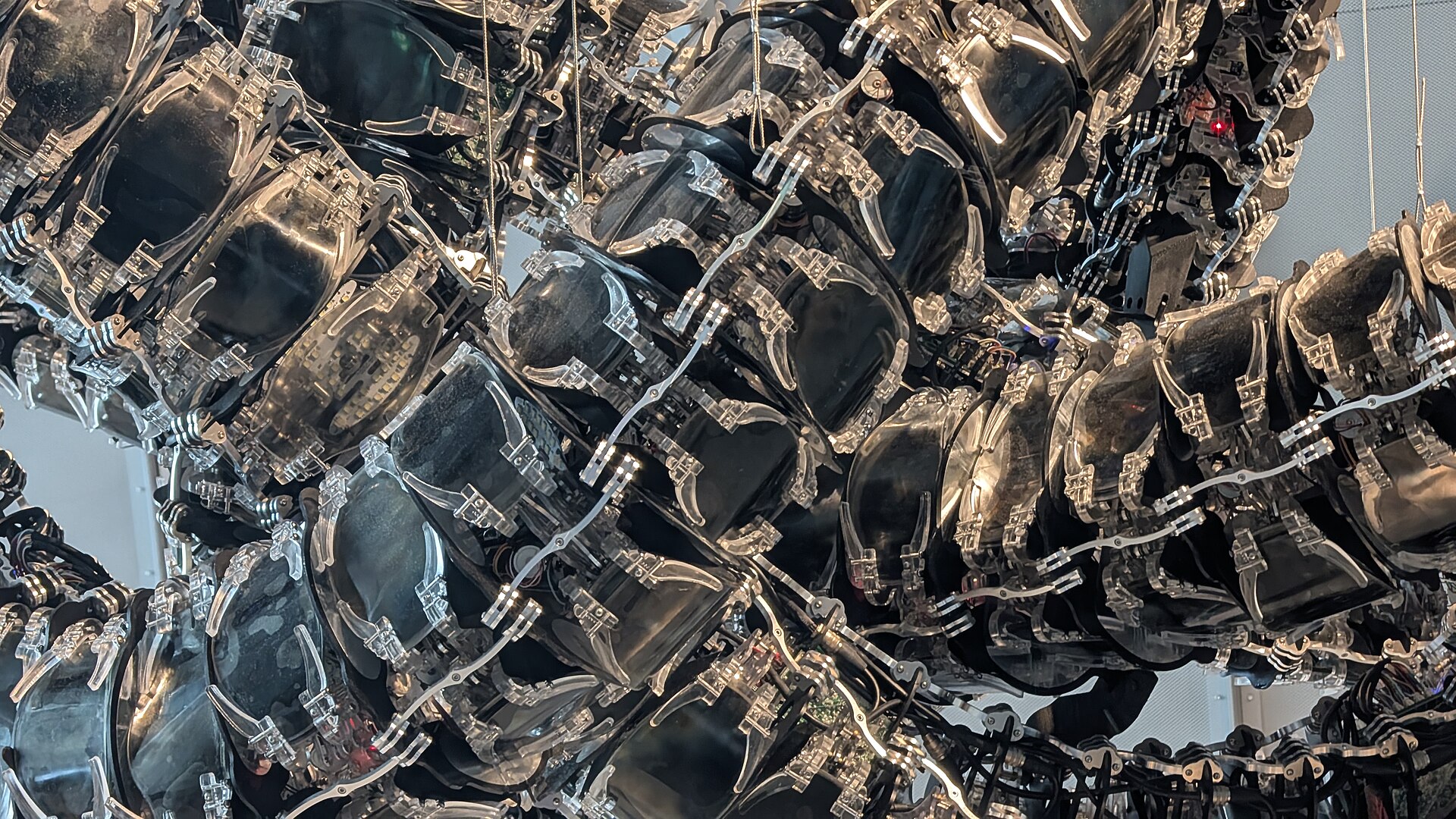
The central exhibition and the visual high point: a darkened hall with floating spherical screens showing animated particle collisions. Touch-screens let you build particles from quarks and leptons, explore the Standard Model, and see what physicists are still chasing — dark matter, supersymmetry, the nature of antimatter. The most photogenic and the most affecting part of the visit, so leave yourself time for the interactions.
3. Quantum World
Quantum World digs into quantum mechanics and the strange behaviour of matter at the smallest scales, with hands-on activities including a quantum tunnelling game, quantum karaoke, entangled particles and quantum tennis. At its heart is a 20-minute guided interactive adventure, with more exhibits around it to explore at your own pace. The most conceptually demanding room, and rewarding if you give it the time.
The sculpture garden and workshops
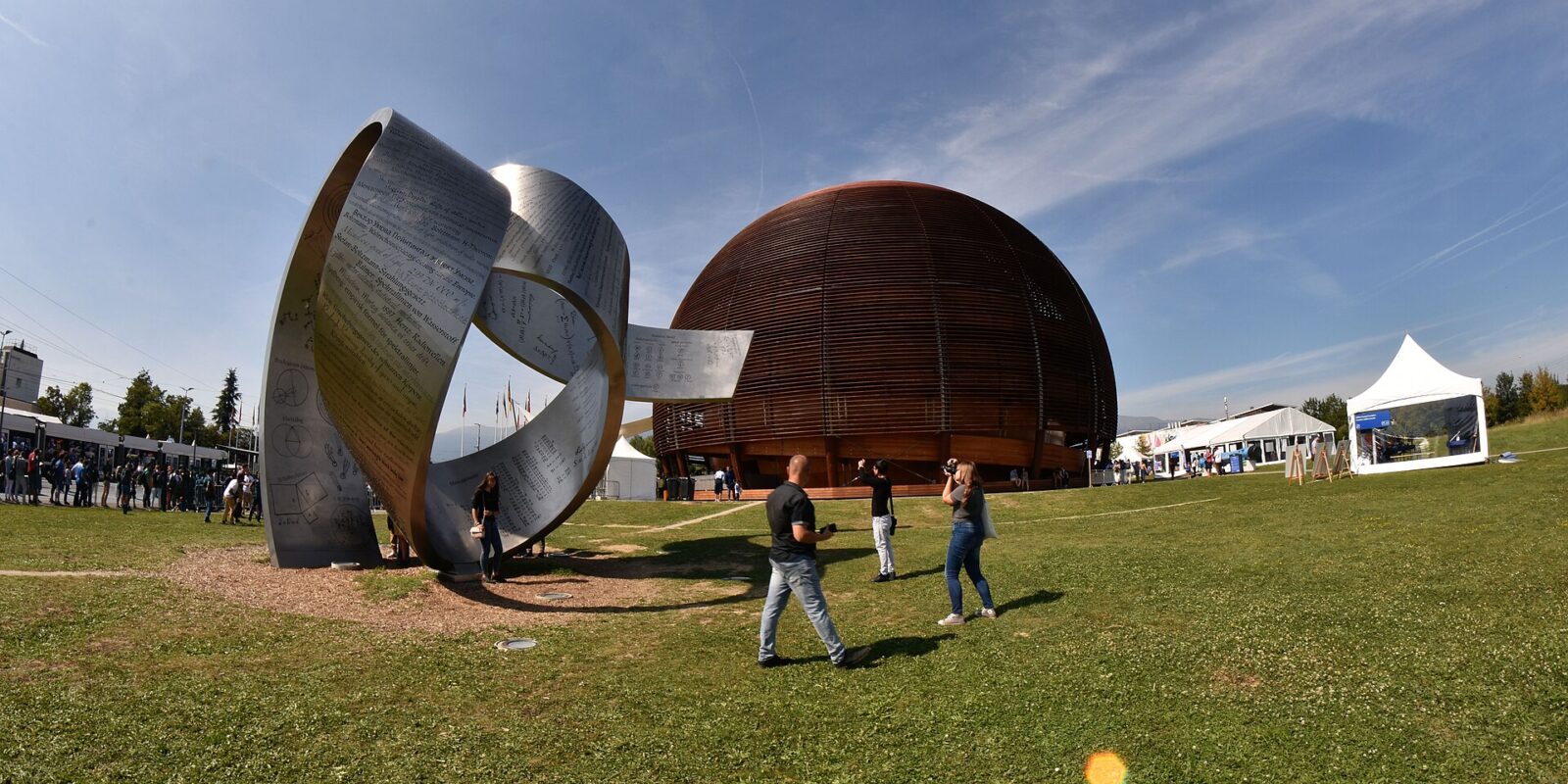
Between the pavilions sit large outdoor sculptures, including a real decommissioned piece of CERN’s PS accelerator brought up from underground, and Gayle Hermick’s “Wandering the Immeasurable” wave. Inside, laboratories host hands-on workshops, and there is a configurable auditorium. The workshops are free but, like the guided tours, are booked on site on the day and compete for the same scarce places.
06 — Guided tours: the honest truth about bookings
This is where most visitors come unstuck. CERN guided tours are free but the supply is tiny — only about one Science Gateway visitor in ten gets a place on a guided tour or lab workshop. Here is how it really works.
The booking process
You cannot book an individual guided tour or lab workshop in advance: both are booked on site, on the day of your visit, and tour bookings open two hours before each tour, subject to availability. What you can do ahead of time is register online for the Science Gateway itself, which guarantees your entry. Then arrive with a flexible plan and a couple of possible tour times in mind.
Same-day slots
Every individual tour place is booked through CERN’s web app on site, from two hours before each tour, first come, first served and subject to availability. Arrive in the morning to give yourself the most chances, connect to the app and keep an eye on which tours still have room.
What the tour covers
If you do get on one, it is a 90-minute guided walking tour; the visits currently advertised take in the synchrocyclotron and the ATLAS control centre. Underground access is not part of a normal guided tour.
If you cannot get a tour, which is most people
The Science Gateway is a complete visit on its own — do not let the tour disappointment shadow the day. The exhibitions and the outdoor sculptures tell the same scientific story, arguably with better visuals than a walking tour.
07 — The Globe of Science and Innovation
The iconic wooden sphere across the road is 40 metres in diameter and 27 metres high, built for Expo.02, the 2002 Swiss National Exhibition, and donated to CERN by Switzerland afterwards. Before the Gateway opened, the Globe and Microcosm were where CERN welcomed exhibition visitors. Today it opens to the public for temporary exhibitions and events, so check visit.cern for what is on. The structure alone is worth a look up close: it is made almost entirely of wood, five types of timber in all; visit if you have a spare half-hour.
08 — Can you see the Large Hadron Collider?
It is the question everyone wants to ask. The honest answer: probably not.
The LHC sits in a 27-kilometre tunnel 50 to 175 metres underground, crossing the Franco-Swiss border. It runs continuously when in operation (roughly March to November), and during operation underground access is restricted to CERN staff for radiation-safety reasons. During the annual winter maintenance shutdowns, and the longer Long Shutdowns every few years, some access is occasionally granted, but only to booked groups and special events.
The CERN Open Days
The big public exception is the CERN Open Days, which CERN holds roughly every four to five years during its long shutdowns; the last edition was in September 2019. Underground access is never guaranteed, even then. For the next edition, watch CERN’s official Open Days page at voisins.cern.
09 — CERN with kids and families
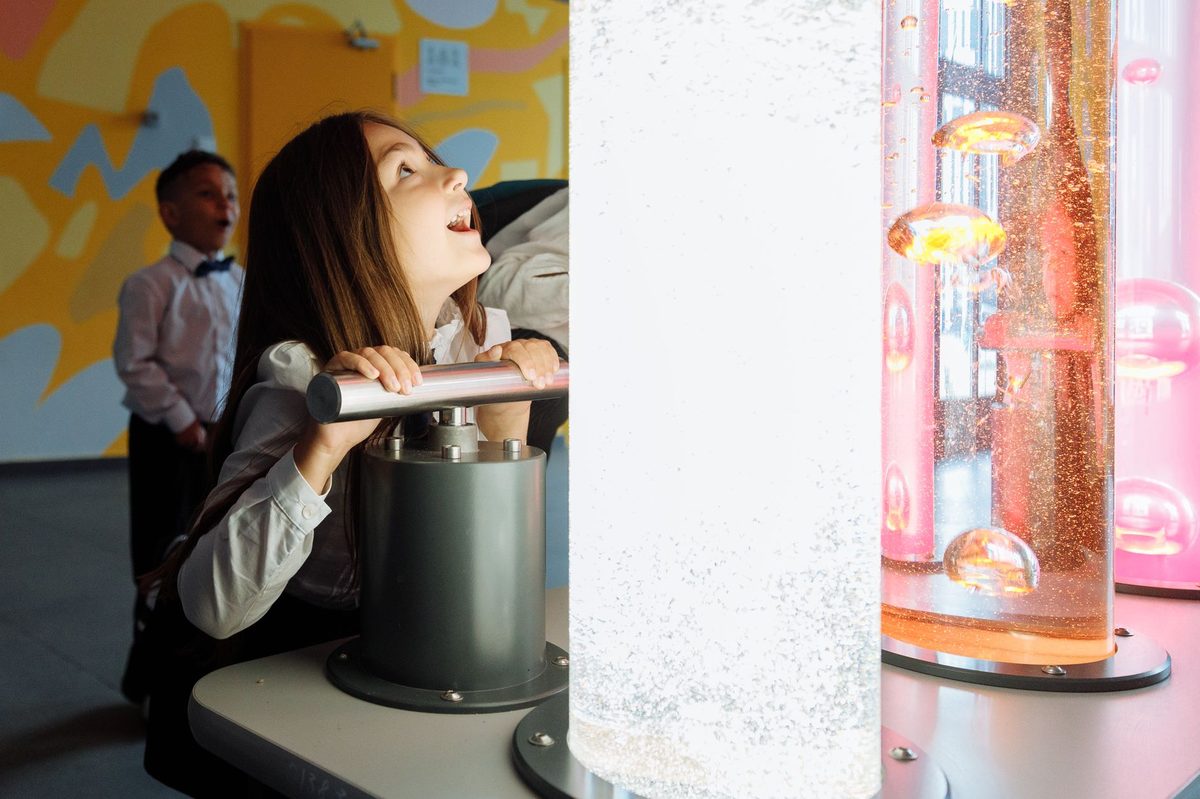
CERN is unusually well-pitched for children — more so than most science museums. The Science Gateway exhibitions welcome all ages and are best enjoyed from age eight, and the lab workshops each have their own age range, with some starting at five. Entry is free for everyone, children included, so there are no family-rate headaches. For a science-curious pre-teen, this is one of the best Geneva attractions — arguably more engaging than the watch or art museums for that age. If you are travelling with kids, the Geneva with kids guide has more in this vein.
10 — My half-day CERN itinerary
This is what works for most visitors with 4 to 5 hours to spend:
- 09:30 Coffee in central Geneva before heading out.
- 10:00 Tram 18 from Cornavin, 25 minutes to the CERN terminus.
- 10:30 Arrive at the Science Gateway, connect to CERN’s on-site web app to check and register for guided tours, grab a free map.
- 10:45 Discover CERN pavilion, for context.
- 11:30 Universe of Particles, the main event.
- 12:45 Lunch at the Big Bang Cafe (sandwiches CHF 8-12, hot dishes CHF 15-18).
- 13:30 Quantum World.
- 14:15 Cross to the Globe of Science and Innovation, 30 minutes.
- 14:45 Outdoor sculptures and photos, then back to the tram.
- 15:00 Tram 18 back, at Cornavin by about 15:30 — good timing for an Old Town coffee or another sight.
With more time, a family lab workshop adds 45 minutes and a guided tour 90. Since entry is free, CERN also slots neatly into a free things to do in Geneva day.
Frequently asked questions
Is CERN free to visit?
Yes. Entry to the Science Gateway is free, but you need to register: booking online ahead guarantees your place, and registering on arrival depends on availability. The Globe of Science and Innovation is free to enter too. Guided tours, when you can get one, are also free.
Do I need to book in advance?
For the Science Gateway itself, registering online in advance guarantees your entry; registering on the spot depends on availability. Guided tours and lab workshops cannot be booked ahead at all: you book them on site on the day, and tour bookings open two hours before each tour.
How do I get to CERN from Geneva?
Take tram 18 from Cornavin, or anywhere on the line, to the CERN terminus — about 25 minutes. It is covered by the free Geneva Transport Card, or CHF 3 for a single ticket.
Can I see the Large Hadron Collider?
Almost never. The LHC is underground and access is essentially limited to CERN staff. The tunnel is not part of public tours; for exceptional events such as the CERN Open Days, watch CERN’s official Open Days page for news of the next edition.
How long should I plan for CERN?
Treat it as a half-day: give the Science Gateway exhibitions as long as they hold your interest, and add about 25 minutes each way on tram 18 from Cornavin. An individual guided tour takes 90 minutes, and a family lab workshop 45.
Is CERN suitable for children?
The exhibitions are best enjoyed from age eight, and some lab workshops start at five. There is plenty of hands-on science to try, and it tends to win over even science-skeptical children.
The Science Gateway makes a good escape on a sweltering summer afternoon. Our guide to Geneva in August has more ideas for the hottest month in the city, from the lake to the mountains.
11 — Related Geneva guides
Keep planning with the Geneva museums and culture pillar, the Red Cross Museum guide, the best Geneva attractions, free things to do in Geneva, the public transport guide for tram 18, and the wider plan a trip to Geneva hub.