Is Geneva Safe? — Safety Guide & Tips for Tourists (2026)
This article contains advertising. Our booking links are routed through a partner that adds commission tracking automatically, so if you book through one we earn a commission from the provider, at no extra cost to you. It never affects what we recommend. Affiliate disclosure
Yes, Geneva is safe, and not just in the polite travel-brochure sense. It scores 70.6, a high rating, on Numbeo’s 2026 Safety Index, violent crime is rare, and most visitors never have a single problem. So is Geneva safe? The honest answer is yes, with a handful of specifics worth knowing: pickpockets work a few set spots, the Rhone current at La Jonction drowns swimmers every summer, the mountains carry real Alpine risk, and serious Swiss speeding fines are scaled to income and can run frighteningly high.
This is the version with the nuance left in, the stuff the generic “Geneva is safe!” piece skips. You will get an area-by-area read, the scam playbook, the lake and mountain and driving hazards nobody flags, solo and LGBTQ+ specifics, and the full list of emergency numbers (including 1414 for REGA mountain rescue, which most guides forget). For the wider trip, start with planning your Geneva trip, and since Swiss healthcare is excellent but pricey, read the Geneva travel insurance guide too.
01 — Is Geneva safe? The quick verdict
Here is the whole picture in one table before the detail.
| Question | Short answer |
|---|---|
| Overall safety | Exceptional. Numbeo Safety Index 70.6 (high, 2026); third in Mercer’s 2024 quality-of-living ranking; low violent crime nationally. |
| Main risk | Pickpockets at Cornavin station, busy trams, summer festivals and beaches. |
| Edgy but not dangerous | Paquis: visible sex work and a fringe drug scene, but contained and policed. |
| Water | Rhone current at La Jonction (annual drownings); cold shock in May and June. |
| Mountains | Off-piste avalanche risk, fast weather changes, altitude at Aiguille du Midi. |
| Driving | 0.5 limit (0.1 new drivers), winter tyres not compulsory, serious speeding fines scaled to income. |
| Emergencies | 112 general, 117 police, 144 medical, 118 fire, 1414 REGA air rescue. |
| Tap water | Excellent. Drink freely from any fountain. |
02 — What the crime numbers actually say
The data is not ambiguous. On Numbeo’s 2026 Safety Index, Geneva scores 70.6, which Numbeo rates high. The Swiss Federal Statistical Office recorded 563,633 offences nationally in 2024 (up 8 percent on 2023), and the overwhelming share is property and digital crime: violent offences numbered 48,943, about 9 percent of the total, and serious violent crime (2,456 cases) made up under 0.5 percent.
Geneva canton runs a little above the national average for property crime, which is normal for a city, and well below it for violent crime. Mercer’s 2024 Quality of Living survey ranked Geneva third in the world, though that ranking measures quality of life as a whole rather than safety. The pattern is simple: property crime exists, violent crime is rare, and statistically you are safer here than in most big European cities.
03 — Is Geneva safe at night?
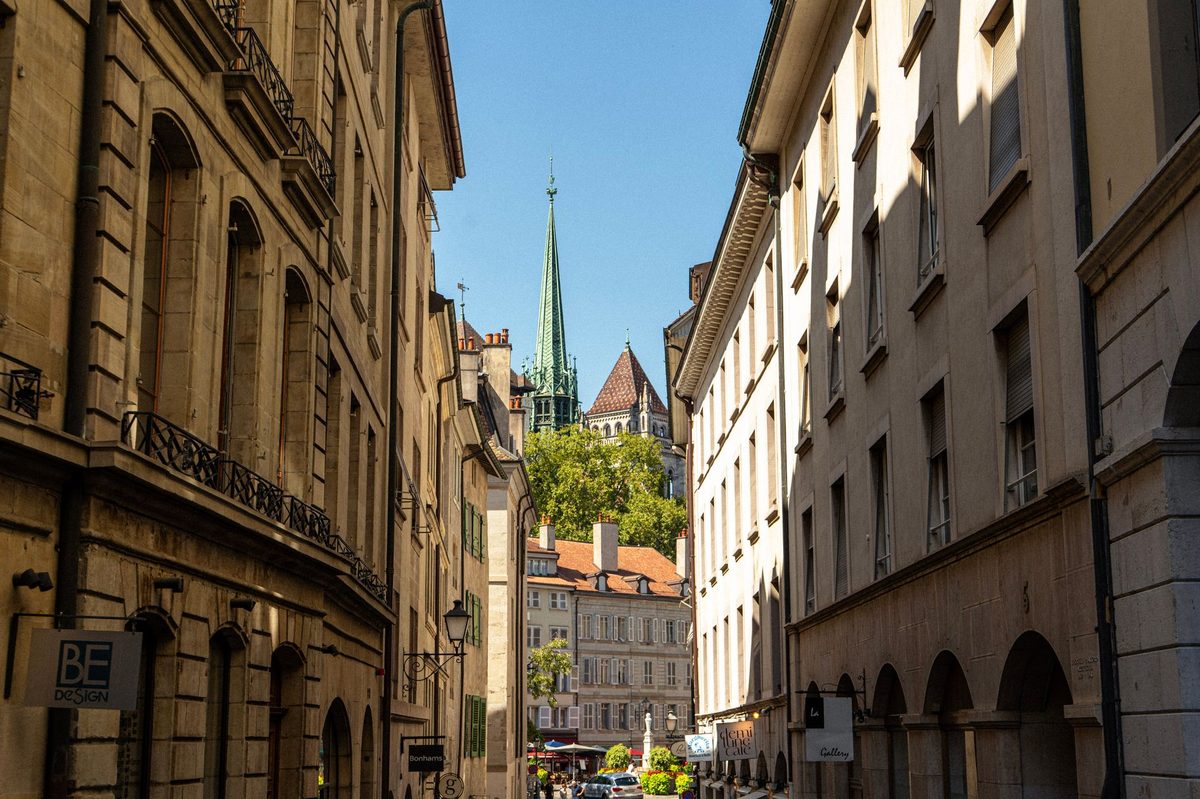
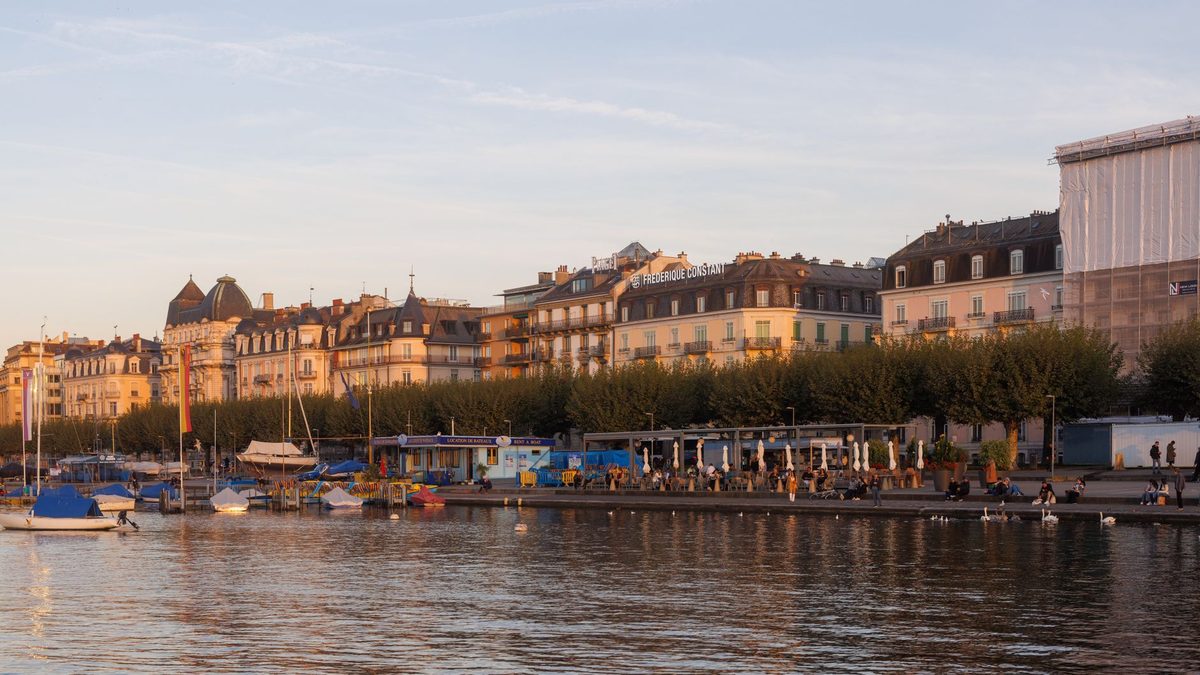
Generally yes, and it is one of the easier European cities to walk after dark. Here is the honest neighbourhood read. Safe day and night: the Old Town, Eaux-Vives, Champel, Florissant, Cologny, Genthod, the Geneve-Plage and Quai Gustave-Ador stretch, the Quai du Mont-Blanc lakefront, and Carouge (very safe, just quieter after 23:00). For a deeper look at where to base yourself, see where to stay in Geneva.
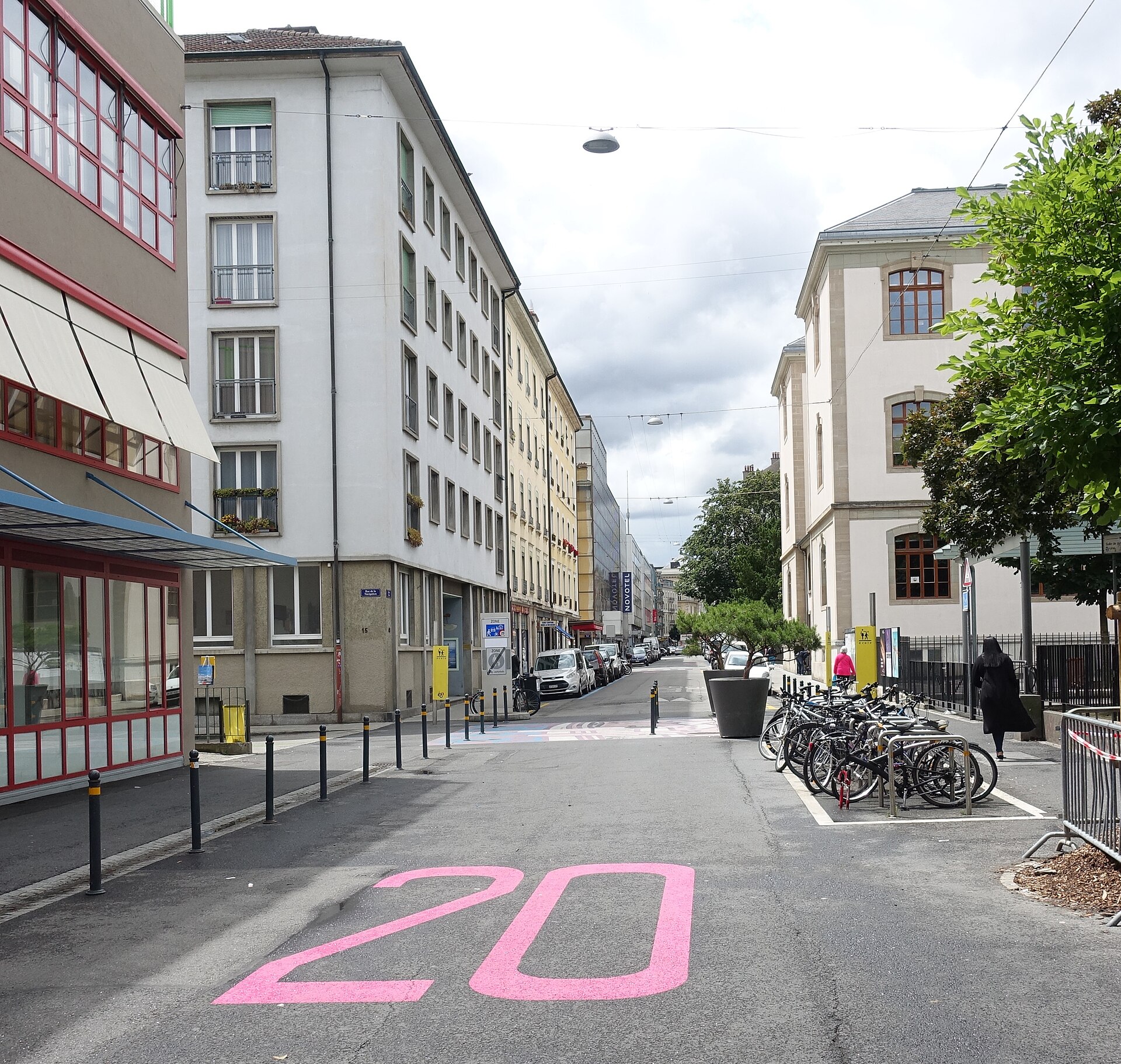
Stay a bit more aware after roughly 23:00 to midnight on the main Paquis streets (busy with bars but also the sex-work zone), around the Plainpalais skate park, behind Cornavin on Rue de la Servette and toward Secheron, and near the Mont-Blanc Bridge after 02:00. In practice the trams and buses run late, Noctambus night buses cover Friday and Saturday, and most evenings out never go near those zones.
04 — Paquis: what you will see, and why it is not what it looks like
Paquis is the neighbourhood visitors ask about most. It is the lakefront district just east of Cornavin, home to the Bains des Paquis baths, and historically Geneva’s red-light area, with legal, regulated sex work visible on Rue de Berne and the streets around it. On a normal evening you will see a tourist-friendly lakefront promenade full of families and joggers, a strong line-up of restaurants and bars (Edelweiss for fondue, a cluster of Lebanese cafes), the Bains des Paquis pier, the sex-work zone on and around Rue de Berne where workers are registered and police patrol, and a contained fringe drug scene near Cornavin’s eastern edge.
The honest read: Paquis looks edgy by Swiss standards but is not actually threatening. Sex work being legal and regulated means it happens openly, without the dangerous criminality that comes with prohibition elsewhere, and tourists pass through to dinner or the Bains every day without trouble. That said, a solo female traveller may find Rue de Berne uncomfortable very late, so stick to Rue de Lausanne or the Quai du Mont-Blanc for the walk back. The Geneva neighborhoods guide has more on the district’s food and nightlife.
05 — Cornavin station and pickpockets
Gare de Cornavin behaves like any big central station: heavy foot traffic, a mix of travellers and rough sleepers, and the occasional petty theft, though the station itself is well patrolled. Trains run from early morning until around midnight, and the concourse and forecourt are where to keep a hand on your bag. If you arrive after 23:00, take a taxi to your hotel rather than walking unfamiliar back streets.
Pickpocketing overall is present but limited and clusters in known spots: Cornavin and its concourse (worst at rush hour and platform changes), the busy 12, 14 and 18 trams when they are jammed, the summer lakefront promenade and the Flower Clock crowds in the Jardin Anglais, Geneve-Plage and the Bains on hot days when bags get left on the sand, and big festival crowds like the Geneve Geneve night shows in August, the L’Escalade procession and the Christmas markets. The fixes are dull but effective: wallet in a front pocket, cross-body bag worn in front, never hang a bag on a chair back, lock valuables at the beach, do not flash cash, and stay alert to distractions like petition clipboards or sudden helpfulness.
06 — Common scams in Geneva
Scams are rarer here than in Paris, Rome or Barcelona, but a handful do the rounds, so they are worth recognising.
Fake plain-clothes police
Someone in regular clothes claims to be police and demands to see your passport, wallet or cash. Geneva police do sometimes work in plain clothes, but officers in civilian dress identify themselves with a police card. Ask to see the card and the badge number, move to a busy public spot, and call 117 if you are unsure.
Petition signers on the Mont-Blanc Bridge
Usually cover for a pickpocket: while you focus on the clipboard, an accomplice goes for your bag. Walk past without engaging.
Three-card monte (bonneteau)
A street gambling con, illegal in Switzerland and prosecuted, that still pops up near Cornavin or in tourist areas. The “winner” you see is always a shill. Never play.
The white-van speaker deal
Someone sells supposedly pricey speakers or electronics from a van at an unbeatable price; the boxes hold bricks or broken goods. Rare in Geneva but reported. Do not engage.
ATM skimming
Less common here than elsewhere, but use bank-branded ATMs inside or attached to branches, check the card slot for anything that looks stuck on, and cover the keypad when you type your PIN.
Menu and bill tricks
Very rare given strong Swiss consumer protection, but a tourist-area cafe might occasionally run a higher-priced menu for non-French speakers or add charges for bread, water or service you did not agree to. Check the displayed prices and check the bill against the menu.
07 — Is Geneva safe for solo female travellers?
Yes, and notably so. Geneva is one of the safer European cities for solo female travel. Numbeo’s “women walking alone at night” score sits around 85 out of 100, the catcalling culture is minimal because Swiss social norms strongly disfavour street harassment, and public transport is safe at all hours with the Noctambus night service on Friday and Saturday. Reputable hotels all have security, dining alone is completely unremarkable and respected, and bars are mixed-gender with drink tampering essentially unheard of.
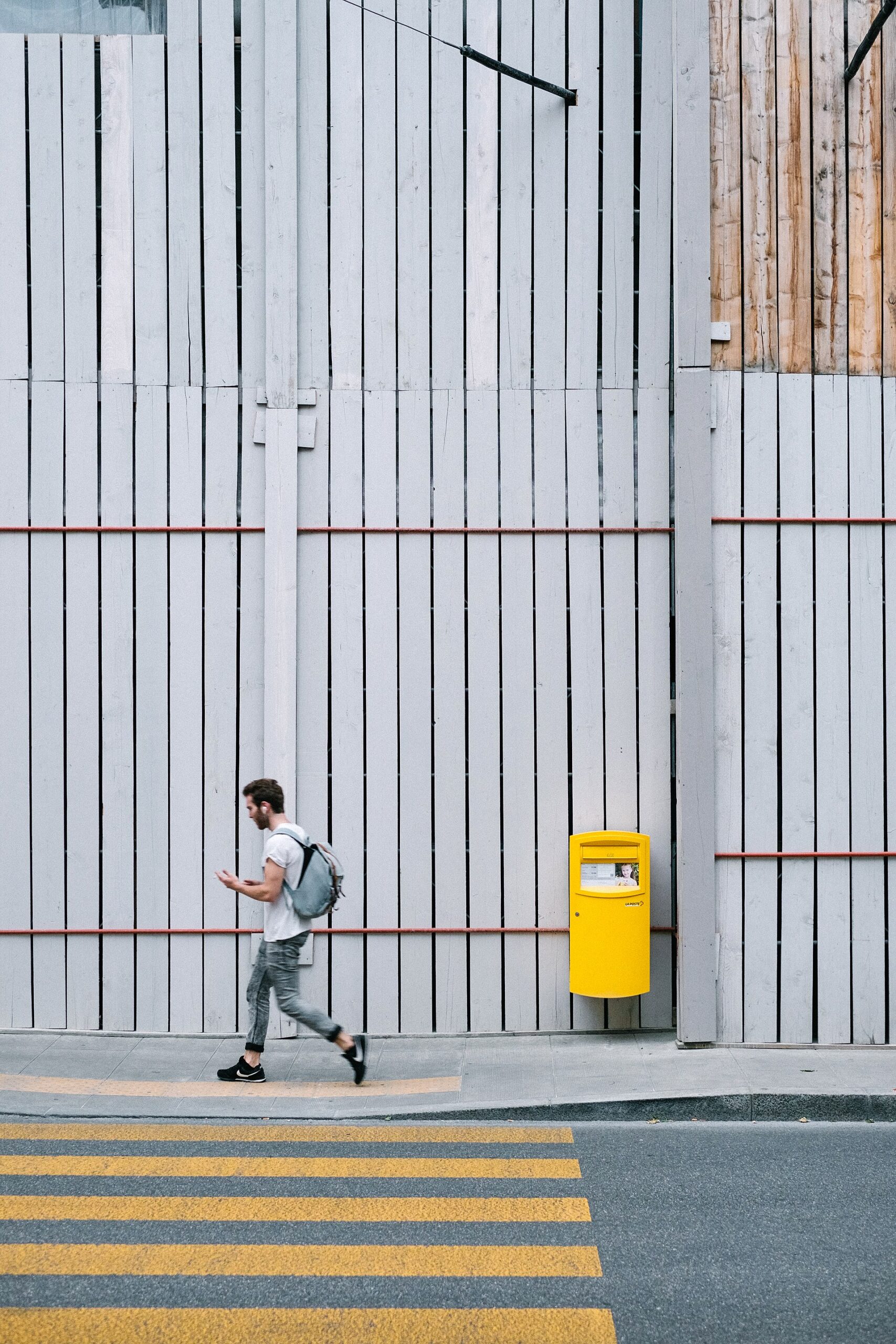
Normal precautions still apply: keep an eye on your drink, share your itinerary with someone, and secure your room. The one local note is that the Paquis sex-work stretch on Rue de Berne can feel uncomfortable late at night, so use Rue de Lausanne or the Quai du Mont-Blanc for the walk home if that bothers you. Useful numbers: 142 is the national victim-support line, including for domestic violence, and emergencies are 117.
08 — Is Geneva safe for LGBTQ+ travellers?
Yes, and Geneva is among the more LGBTQ+-friendly European cities. Switzerland legalised same-sex marriage on 1 July 2022 after a 2021 referendum, and Geneva Pride’s next edition is set for 5-10 July 2027. Le Refuge Genève offers support to LGBT young people aged 15 to 25. The scene centres on Paquis, which happens to be the same district as the Bains and the sex-work zone, with more venues over in Eaux-Vives.
09 — Is Geneva safe for families and kids?
Geneva is an easy city to bring children to. The combination of parks, playgrounds, free summer pools, family-friendly museums and a low-crime culture makes travelling with children genuinely low-stress. For the practical side, see Geneva with kids and fill the days from the things to do in Geneva guide.
10 — Transport, taxis and rideshare
All of it is safe. TPG buses and trams are fine day and night with vetted drivers and monitored vehicles, the Noctambus night buses cover Friday and Saturday, and SBB/CFF trains are staffed with conductors. Licensed taxis (Taxi-Phone, GTT) are regulated and metered with visible tax IDs, and you can book TaxiPhone on 022 331 41 33. Uber operates in Geneva; Bolt does not. The Geneva transport guide covers tickets and night service in detail.
11 — Lake and water safety
Geneva is a lake-swimming city, but the lake carries hazards visitors are not always warned about. Swim at the marked, lifeguarded beaches in summer: the Bains des Paquis, Geneve-Plage, Plage des Eaux-Vives, the sheltered Baby Plage, and Vesenaz or Hermance. The Geneva outdoor activities guide maps them out.
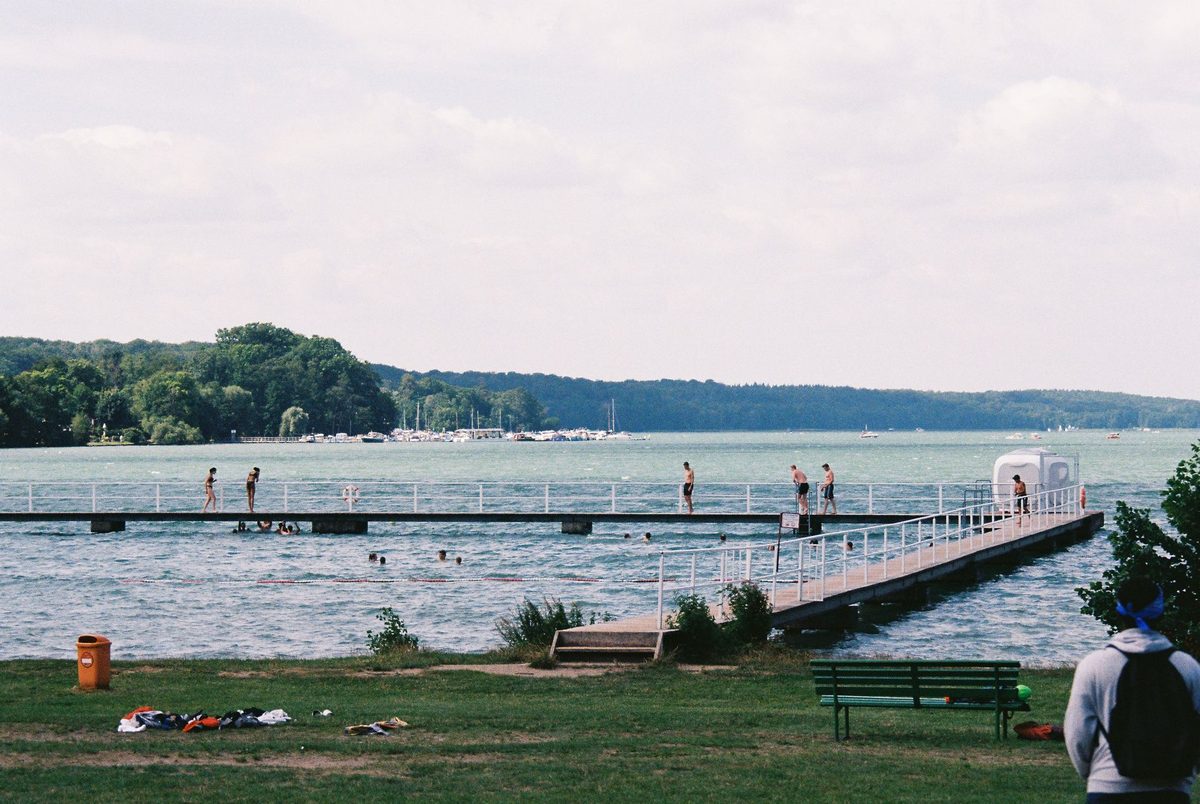
Where not to swim: the Pointe de la Jonction, where the Rhone and Arve meet and the Rhone current pulls swimmers under, with drownings every single summer; near the Mouettes ferry routes because of propeller risk; anywhere unsupervised in the cold months; and the Rhone downstream of Geneva generally. Cold shock is real even in May and June, when the lake is still cold, so go in gradually, do not dive head-first, and never enter cold water alone or after drinking. If you hire a boat, lifejackets are compulsory for children and sensible for everyone, and you should check the Bise wind forecast because the wind can get up fast.
12 — Mountain and day-trip safety
The Alps are an hour’s drive away, and mountain travel means real Alpine hazards. On Mont Saleve, the closest mountain, whose summit reaches 1,379 metres (the cable car tops out at about 1,100), bad weather can halt the cable car (check before you go), some cliff edges are unfenced so watch children, the weather turns quickly, and summer thunderstorms bring lightning, so descend before a storm arrives.
Over in Chamonix and the Mont Blanc area, about 75 minutes away, stick to marked pistes unless you have the mountaineering and glacier experience for off-piste (the tourist office strongly recommends a mountain guide for the Vallée Blanche); check Chamonix’s local avalanche and mountain-condition bulletins; pace yourself against altitude sickness at the Aiguille du Midi (3,842 metres); and stay on marked paths to avoid crevasses and ice fall. Swiss Alpine Club hiking grades run T1 (easy, no kit) and T2 (mountain trail, boots) up through T3 (surefootedness needed) to T4 to T6 (alpine experience required), so stay on T1 to T2 unless you know what you are doing. In Switzerland, mountain rescue is 1414 (Rega air rescue). Rega patronage starts at CHF 40 a year for an adult; it is not insurance, but Rega may waive or reduce uninsured rescue costs at its discretion. Plan day trips with the things to do in Geneva guide.
13 — Driving safety and fines
Swiss driving is tightly regulated, and the fines are the part that catches tourists out. The blood alcohol limit is 0.5 per mille, dropping to 0.1 for learners, new drivers and certain professional drivers. Winter tyres are not required by law, but you carry the liability if you cause an accident without them, and snow chains are needed in alpine areas. A motorway vignette costs CHF 40, as a sticker or an e-vignette.
Serious speeding fines in Switzerland are scaled to income. Minor overspeeds are settled with fixed fines of up to CHF 250; beyond that a report follows, and the penalty is usually at least CHF 400, set according to your finances. The record, reported in January 2010, was a St Gallen millionaire fined about USD 290,000: extreme but real. Phone use behind the wheel is hands-free only, and if you drive across into France you are legally required to carry a warning triangle and a hi-viz vest (a breathalyser is not compulsory).
14 — Health, medical and emergencies
The main hospital is HUG (Hopitaux Universitaires de Geneve) on Rue Gabrielle-Perret-Gentil 4. Its adult emergency department, at No. 2, takes patients over 16 around the clock, and paediatric emergency is open 24/7 from birth to 16. For urgent care outside the hospital, the canton lists the Clinique et permanence d’Onex. For the pharmacy on duty, call 0848 848 110 or check pharmageneve.swiss; 144 is for life-threatening emergencies. No vaccinations are required, though standard travel jabs are sensible, and the tap water is excellent: 90 percent of it comes from Lake Geneva and 10 percent from the canton’s groundwater.
The catch is cost. Swiss healthcare is world-class but expensive without cover: an ER consultation runs CHF 500 to 1,500, hospitalisation CHF 1,000 to 3,000 a day, and a helicopter rescue CHF 3,000 to 10,000. Travel insurance is genuinely essential here, which is why I keep pointing to the Geneva travel insurance guide.
15 — Weather, natural hazards and the law on drugs and sex work
Natural hazards are mostly mild: earthquake risk is low, flooding is rare thanks to the Verbois dam and a regulated lake level, and the main local quirk is the Bise, a cold dry north-easterly that can make a winter day feel much colder than the thermometer says. Summer brings severe Alpine thunderstorms (stay off ridges and the open lake) and heatwaves that can push past 35 degrees, so hydrate and watch the MeteoSwiss app. On the law: possessing a small quantity of cannabis for personal use is not punishable, Geneva runs its own regulated-sale pilot (La Cannabinothèque), and hard drugs are prosecuted seriously. Sex work is legal and regulated, with registered workers paying taxes and undergoing health checks in the Paquis zone.
16 — Emergency numbers cheat sheet
Save these in your phone before you travel. Dialling 112 reaches general emergency services and routes you to the right department.
| Number | Service |
|---|---|
| 112 | General European emergency |
| 117 | Police |
| 144 | Ambulance (life-threatening emergencies) |
| 0848 848 110 | Duty pharmacy in Geneva |
| 118 | Fire department |
| 1414 | REGA Swiss air rescue (mountain) |
| 143 | La Main Tendue (distress helpline) |
| 145 | Poison control |
| 147 | Child and youth helpline |
| 140 | Roadside assistance (national number; TCS direct: 0800 140 140) |
| 142 | Victim support, including domestic violence |
Frequently asked questions
Is Geneva safe for tourists?
Yes. Geneva rates high on Numbeo’s 2026 Safety Index (70.6), and Mercer placed it third worldwide for quality of living in 2024, a separate measure from safety. Violent crime is rare, and pickpocketing at a few specific spots is the main thing to watch.
Is Geneva safe at night?
Generally yes. The Old Town, Eaux-Vives, Champel, Carouge and the lakefront are safe at all hours, and the Paquis main streets stay busy. Avoid the dark riverbank below La Jonction and the back streets behind Cornavin very late at night.
Is Paquis safe in Geneva?
Yes. It looks edgy, with visible sex work and some fringe drug activity, but it is contained, regulated and police-patrolled. Tourists walk through Paquis daily to reach the Bains or the lakefront restaurants without any problem.
What areas of Geneva should I avoid?
None outright. Stay aware late at night around the Cornavin back streets and the dark Rhone banks, and stick to the main Paquis streets if you are alone very late. The vast majority of the city is safe around the clock.
Is it safe to swim in Lake Geneva?
Yes, at the marked beaches (Bains des Paquis, Geneve-Plage, Baby Plage, Plage des Eaux-Vives, Vesenaz, Hermance). Do not swim at the Pointe de la Jonction, where the Rhone current claims swimmers every summer.
Is Geneva safe for solo female travellers?
Yes, exceptionally. Numbeo’s “women walking alone at night” score is very high and street harassment is minimal. Normal precautions still apply, and the Rue de Berne stretch in Paquis can feel uncomfortable very late, so use the main streets for the walk home.
What is the emergency number in Geneva?
112 for general European emergencies. The specific lines are 117 for police, 144 for an ambulance, 118 for fire, and 1414 for REGA mountain rescue.
Is the tap water safe in Geneva?
Yes, it is excellent. Eau de Geneve comes 90 percent from Lake Geneva and 10 percent from the canton’s groundwater, and is treated to high standards.
Do I need travel insurance for Geneva?
Yes. Swiss healthcare is world-class but expensive without cover, with ER consultations at CHF 500 to 1,500 and helicopter rescue at CHF 3,000 to 10,000. See the Geneva travel insurance guide.
17 — Related Geneva guides
Keep planning with the complete Geneva trip planner, cover yourself with the travel insurance guide, get around safely via the transport guide, find the right base in where to stay, plan lake and mountain days with outdoor activities, and fill the rest with things to do in Geneva.