Geneva Attractions & Tickets: The Complete Guide
This article contains advertising. Our booking links are routed through a partner that adds commission tracking automatically, so if you book through one we earn a commission from the provider, at no extra cost to you. It never affects what we recommend. Affiliate disclosure
Geneva has a reputation as one of the most expensive cities in the world, and at dinner time it earns it. Sightseeing is a different story. The Jet d’Eau costs nothing to see. Neither does the cathedral, the oldest house in the Old Town, the city’s biggest art museum or CERN. You can spend three full days on Geneva’s headline sights and pay for only a handful of tickets, most of them under CHF 20. The money tends to go on a few extras that are genuinely worth it, like the tour of the Palais des Nations and the climb up the cathedral towers, and on things nobody needed, like a City Pass with transport bought by someone whose hotel had already handed them free buses and trams. This guide sorts one from the other.
Most Geneva attractions tickets are cheaper than you’d expect, because the best sights are free: the Jet d’Eau, St Pierre Cathedral, Maison Tavel, the Musée Ariana, the botanical garden and CERN’s Science Gateway cost nothing, and the Musée d’Art et d’Histoire lets you pay what you wish. The main paid tickets are the Palais des Nations tour (CHF 25 for adults), the Red Cross and Red Crescent Museum (CHF 15), the Patek Philippe Museum (CHF 10), the cathedral towers (CHF 7), the cathedral’s archaeological site (CHF 8) and the Salève cable car, which is in France and priced in euros. The Geneva City Pass costs from CHF 30 for 24 hours and only pays off if you pack in several paid sights.
01 — Geneva’s main attractions at a glance
Here’s every major sight in the city with its adult ticket price, the time it deserves and our honest verdict. The detail, area by area, follows below.
| Attraction | Where | Adult ticket | Time | Our verdict |
|---|---|---|---|---|
| Jet d’Eau | Lakefront, left bank | Free | 20–30 min | Unmissable, and best enjoyed from a distance |
| Jardin Anglais and the Flower Clock | Lakefront, left bank | Free | 10 min | A photo stop, not a destination |
| Bains des Pâquis | Lakefront, right bank | CHF 2 for adults, summer and winter | 1–3 hours | The most Genevan place in Geneva |
| St Pierre Cathedral | Old Town | Free; towers CHF 7; archaeological site CHF 8 | 1–2 hours | Climb the towers; add the site if you like history |
| Maison Tavel | Old Town | Free | 1 hour | The best free hour in the city |
| Musée d’Art et d’Histoire | Edge of the Old Town | Pay what you wish; some temporary shows extra | 2 hours or more | Underrated, with pay-what-you-wish entry |
| Reformation Wall and Parc des Bastions | Below the Old Town | Free | 30 min | Worth the short detour |
| Palais des Nations tour | International district | CHF 25 | About 1 hour, plus security | Worth it; book ahead and bring a passport |
| Broken Chair | Place des Nations | Free | 5 min | Pair it with the UN; don’t make a trip of it |
| Red Cross and Red Crescent Museum | International district | CHF 15 | 2 hours | The most moving museum in Geneva |
| Musée Ariana | International district | Free permanent collection | 1 hour | Ceramics and glass in a lovely building |
| Botanical garden | International district | Free | 1–2 hours | At its best from spring to autumn |
| Patek Philippe Museum | Plainpalais | CHF 10 | 2 hours | A treasure house; weekday afternoons only |
| CERN Science Gateway | Meyrin, by tram | Free | 2–3 hours | Free, fascinating and easy to reach |
| Natural History Museum | Malagnou | Free when open | 2 hours | Closed for renovation; reopening planned for 2028 |
| Salève cable car | Just over the border in France | €13 one way, €18 return | Half a day | The best view of Geneva, priced in euros |
Prices are for adults and were checked in autumn 2026. Children, students and seniors usually pay less, and some museums are free for under-18s. Prices change, so check the operator’s own site before you go.
02 — What’s free in Geneva (most of it)
The single most useful thing to know about sightseeing in Geneva is how much of it costs nothing. The city runs its main museums as public institutions with free or pay-what-you-wish permanent collections, the great outdoor sights are open to everyone, and even the region’s biggest scientific attraction, CERN, charges nothing to get in. Here’s the free list:
- The Jet d’Eau and the jetty that leads out towards it.
- St Pierre Cathedral, though the towers and the archaeological site are paid.
- Maison Tavel, the oldest house in the city, with its huge model of Geneva as it was before the walls came down.
- The Musée d’Art et d’Histoire, Geneva’s biggest museum, pay what you wish for its permanent collection.
- The Musée Ariana, the Swiss museum of ceramics and glass, for its permanent collection.
- The Natural History Museum, one of the best-loved museums in the city, once it reopens after its renovation, now planned for 2028.
- The CERN Science Gateway, the laboratory’s visitor centre, at the end of tram 18.
- The botanical garden, beside the lake near the UN.
- The parks: the Bastions and the Reformation Wall, the Perle du Lac, Parc La Grange and its rose garden, and the Parc des Eaux-Vives.
- The Broken Chair, the Flower Clock and the Old Town itself, from the Place du Bourg-de-Four to the Cimetière des Rois.
Our guide to free things to do in Geneva has dozens more, and our guide to Geneva’s museums and culture covers the whole museum scene.
03 — What’s worth paying for
A few tickets are worth every franc:
- The Palais des Nations tour (CHF 25). The only way to see inside the UN’s European headquarters, including the Assembly Hall and the Human Rights and Alliance of Civilizations Room with its dripping, multicoloured ceiling. It takes some organising, but it’s the defining Geneva experience.
- The Red Cross and Red Crescent Museum (CHF 15). A powerful, beautifully designed museum about humanitarian action, and the one most visitors remember long after the trip.
- The cathedral towers (CHF 7). 157 steps to the best view of the Old Town, the lake and, on a clear day, the Alps.
- The Patek Philippe Museum (CHF 10). Five centuries of watchmaking, from enamelled pocket watches to astonishing automata. Even if you don’t care about watches, you’ll be surprised.
- The cathedral’s archaeological site (CHF 8). A walk through two thousand years of Geneva beneath the cathedral floor, with an audio guide included.
- The Salève cable car (€18 return). A five-minute ride to the best view of Geneva, the lake and Mont Blanc, from a mountain that’s technically in France.
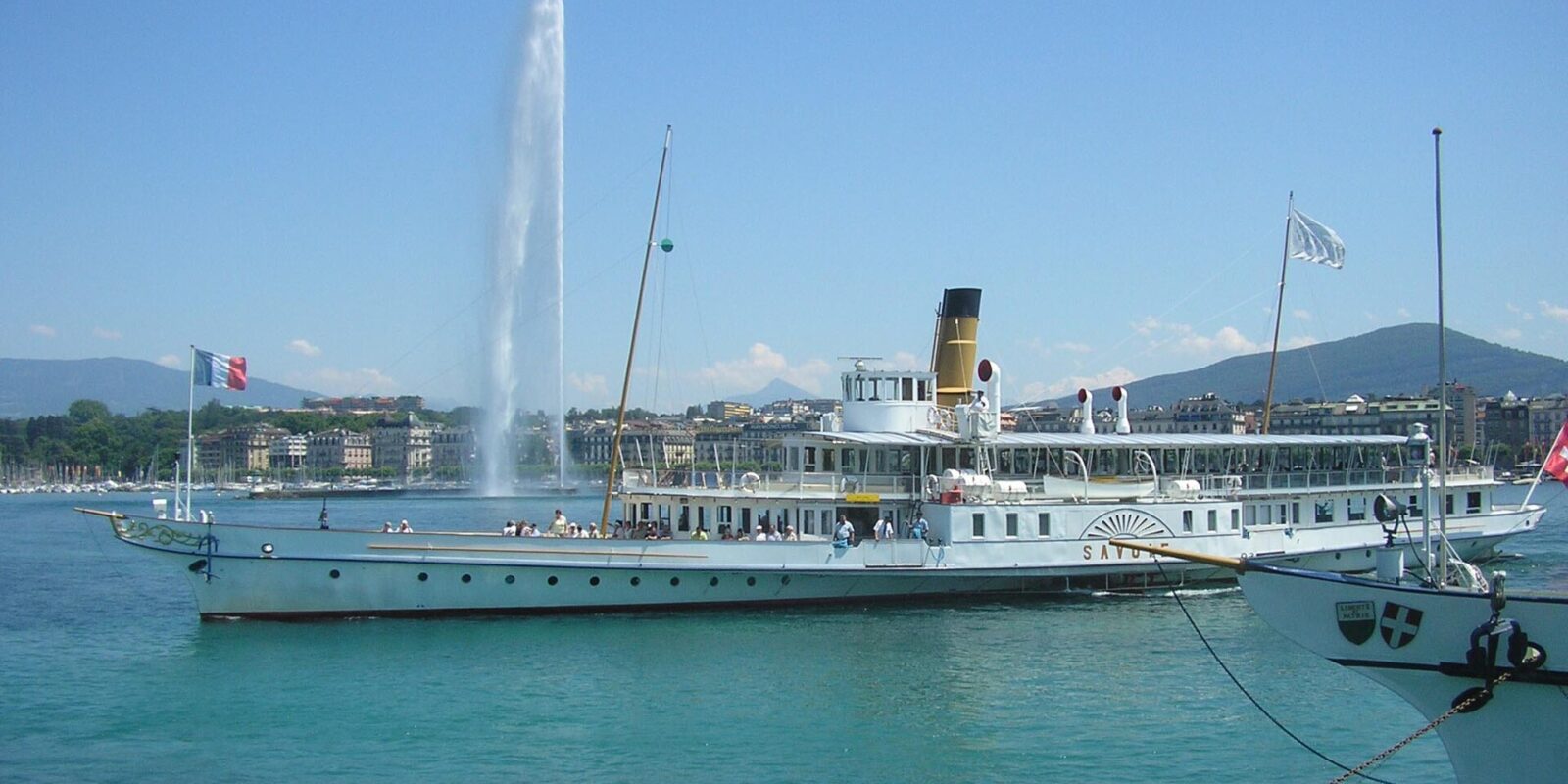
- A boat on the lake. A proper trip on one of the CGN’s Belle Époque paddle steamers, in season, is one of the great pleasures of the region.
04 — What to skip, or at least not to plan around
No sight in Geneva is a con, but a few are oversold, and a few common purchases are a waste of money.
- The Flower Clock as a destination. It’s pretty, it’s free and it’s on the lakefront anyway, so you’ll walk past it. Ten minutes is plenty; don’t cross town for it.
- The Broken Chair as a separate trip. It’s a striking monument, but it’s a five-minute stop. See it on the way to the UN tour, the Red Cross Museum or the Ariana, which are all next door.
- A City Pass with transport, if you’re staying in a hotel. Your accommodation gives you a free Geneva Transport Card, which already covers public transport in the city. If you buy the pass, buy the cheaper version without transport.
- A short harbour cruise, if you just want to be on the water. The yellow Mouettes cross the harbour for the price of a bus ticket, and they’re free with the Transport Card. Save the money for a proper paddle-steamer trip.
- The tourist mini-train, unless you have small children who’ll love it. Everything it shows you is within an easy walk.
- Hoping to see CERN’s underground experiments. They’re almost never open to the public. The free Science Gateway is the realistic visit, and a very good one.
- The jetty out to the Jet d’Eau on a windy day. The spray drifts with the wind, and you’ll get soaked. The best views of the fountain are from the quays and the Bains des Pâquis anyway.
05 — The lakefront
Geneva’s lakefront is where most visitors start, and most of what’s here is free. The left bank has the Jet d’Eau, the Jardin Anglais and the Flower Clock; the right bank has the Pâquis, its famous public baths and the grand hotels along the Quai du Mont-Blanc. The two are linked by the Pont du Mont-Blanc and by the little yellow boats that shuttle across the harbour.
The Jet d’Eau
Geneva’s great fountain sends 500 litres of lake water a second about 140 metres into the air, at some 200 km/h. It began in 1886 as a safety valve on the city’s hydraulic network, became a decorative fountain at its present spot at the end of the Jetée des Eaux-Vives in 1891, and reached its height of 140 metres in 1951, when a new pumping station was built. It’s free, and you can walk out along the jetty almost to its base.
It doesn’t run all the time. It’s switched off in strong winds and in frost, its hours are shorter in winter, and each autumn it’s turned off for several weeks of maintenance. If seeing it matters to you, check before you travel, and don’t plan a Geneva trip around it in November.
Our complete Jet d’Eau visitor guide covers the hours, the jetty, the lighting and the best photo spots.
The Jardin Anglais and the Flower Clock
The Jardin Anglais is a small, pretty park at the foot of the Old Town, where the lake narrows into the Rhône. Its most famous feature is the Flower Clock, a working clock face planted with thousands of flowers, a nod to Geneva’s watchmaking. It’s free, it’s charming and it takes about ten minutes. Enjoy it on your way along the lake, then move on.
Our guide to the Flower Clock and the Jardin Anglais has the history and the honest verdict.
The Bains des Pâquis
The Bains des Pâquis, the public baths on a jetty off the right bank, are one of the most loved places in the city: a beach in summer, a sauna in winter, and a cheap café all year. In the summer season, from mid-May to mid-September, entry is CHF 2 for adults and CHF 1 for children; adults pay CHF 2 in the winter-bathing season too, when the sauna and hammam take over. The view of the Jet d’Eau from the end of the jetty is one of the best in Geneva. See our Bains des Pâquis guide.
On the water
The yellow Mouettes are part of Geneva’s public transport network, so they’re covered by the free Transport Card that hotels, hostels and campsites give their guests, and otherwise cost the price of an ordinary ticket. They make a lovely, cheap mini-cruise across the harbour. For something bigger, the CGN runs cruises and scheduled sailings on the lake, including its famous Belle Époque paddle steamers, with the fullest timetable from June to September and daily cruises from Geneva running into mid-October. Our guide to Lake Geneva boat cruises compares the options.
06 — The Old Town
Geneva’s Old Town sits on a hill above the lake, a compact tangle of cobbled lanes, fountains and grand houses crowned by the cathedral. It’s the city’s richest area for sightseeing, and almost all of it is free. Allow at least half a day, and a full one if you want to do the museums properly. Our Old Town guide has a walking route.
St Pierre Cathedral
The cathedral of St Pierre, begun in the twelfth century and given its classical portico in the eighteenth, was John Calvin’s church during the Reformation, and his chair still stands inside. Entry to the cathedral is free. Two parts of the visit are ticketed, and most visitors miss at least one of them:
- The towers (CHF 7): 157 steps up to a 360-degree view over the rooftops, the lake and the mountains.
- The archaeological site (CHF 8): an underground walk through the remains of the earlier churches and buildings on the site, going back to Roman times, with an audio guide included. It’s open daily from 10:00 to 17:00, with last entry at 16:30.
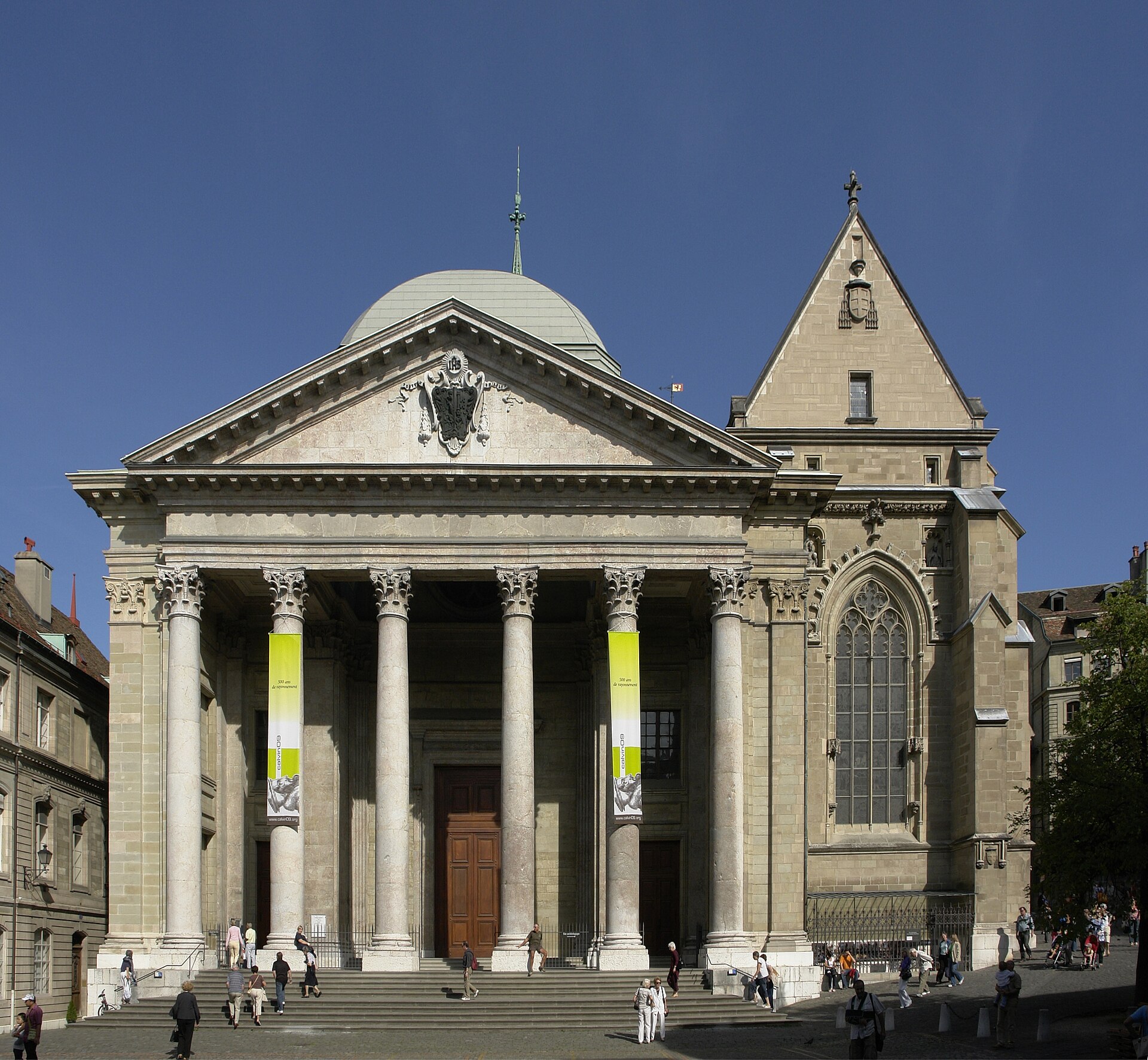
Our guide to St Pierre Cathedral, its towers and its crypt has the opening times and tips for both tickets.
Maison Tavel
Maison Tavel, the oldest private house in Geneva, is now a free museum of the city’s history, and it’s one of the best hours you can spend in the Old Town. Its highlight is the Magnin relief, a vast model of Geneva as it was in the mid-nineteenth century, before its fortifications were torn down. It’s open from Tuesday to Sunday. See our Maison Tavel guide.
The Musée d’Art et d’Histoire
The MAH, Geneva’s biggest museum, sits just below the Old Town, and entry is pay what you wish (you can pay nothing). The permanent collection covers archaeology, decorative arts, arms and armour, and fine art from the Middle Ages to the twentieth century, including Konrad Witz’s famous altarpiece of the Miraculous Draught of Fishes, with Lake Geneva as its backdrop. Some temporary exhibitions are paid. It’s closed on Mondays. See our guide to the Musée d’Art et d’Histoire.
The Parc des Bastions and the Reformation Wall
Below the Old Town’s ramparts, the Parc des Bastions is home to the Reformation Wall, a monumental frieze of the leaders of the Protestant Reformation, with Calvin, Farel, Beza and Knox at its centre. It’s free, it’s impressive and it takes half an hour, longer if you stop to watch the games on the giant chessboards nearby. See our Reformation Wall guide.
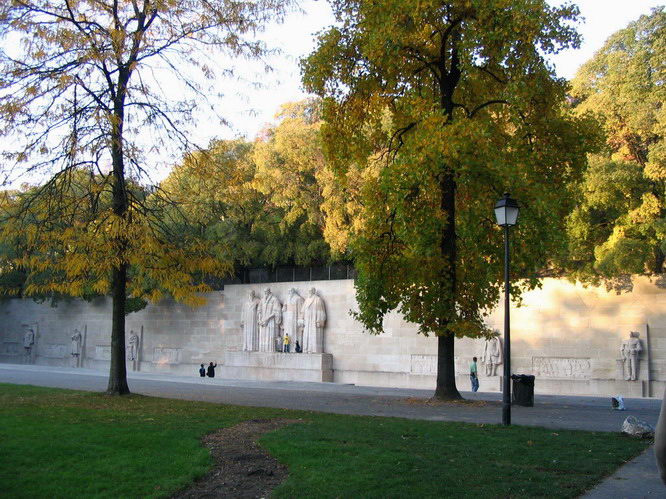
Our guide to the Parc des Bastions covers the park, the chess players and the university buildings around it.
07 — International Geneva
The international district, on the right bank north of the station, is home to the UN, the Red Cross and dozens of other organisations. It’s also home to some of the city’s best sights, and they’re close together, so it makes sense to see them on the same day. Trams from Cornavin take you to the Place des Nations in a few minutes.
The Palais des Nations
The Palais des Nations was built in the 1930s for the League of Nations and is now the UN’s largest office outside New York. Guided tours take you through its grand halls and meeting rooms, including the Assembly Hall and the Human Rights and Alliance of Civilizations Room. Tickets cost CHF 25 for adults, CHF 22 for students, seniors and disabled visitors, CHF 14 for 14- to 17-year-olds and CHF 13 for children aged 6 to 13, plus a fee for the online booking platform.
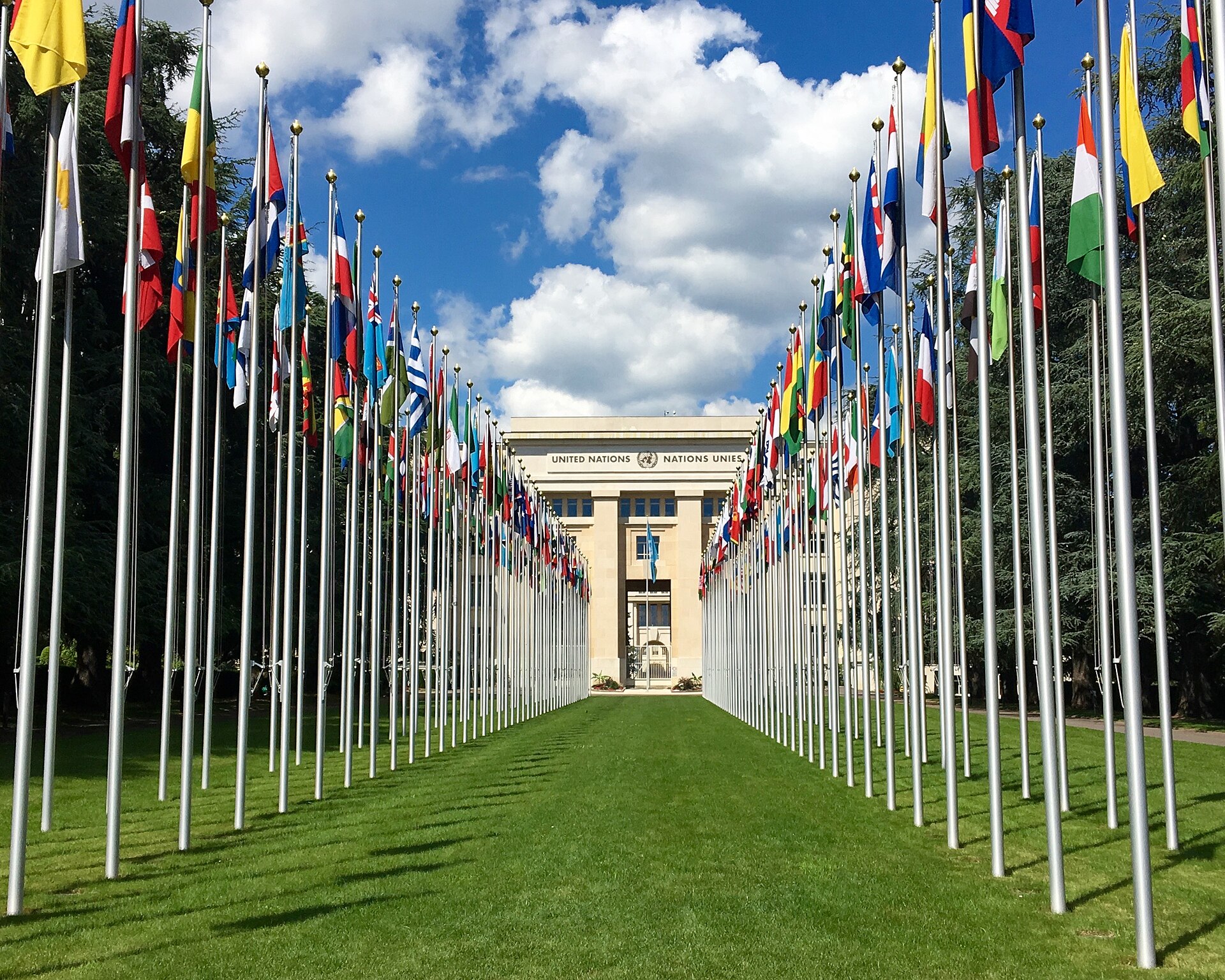
You must book online in advance, with passport details, and bring the same passport or ID on the day for a security check, so arrive in good time. Slots are limited, especially in summer, so book weeks ahead. Our guide to visiting the United Nations in Geneva explains the booking process step by step.
The Broken Chair
Across the road from the UN, on the Place des Nations, stands the Broken Chair, a giant wooden chair with one shattered leg, created by the artist Daniel Berset and installed in 1997 for Handicap International as a protest against landmines and cluster bombs. It’s free, it’s powerful and it makes a good photograph, and that’s the whole visit.
Our guide to the Broken Chair tells the story behind the sculpture.
The Red Cross and Red Crescent Museum
A short walk up the Avenue de la Paix, the International Red Cross and Red Crescent Museum tells the story of humanitarian action through three themes: defending human dignity, restoring family links and reducing natural risks. It’s thoughtfully designed, often moving and never preachy, and it’s the one museum in Geneva we’d urge almost everyone to see. Adult entry is CHF 15, and it’s closed on Mondays.
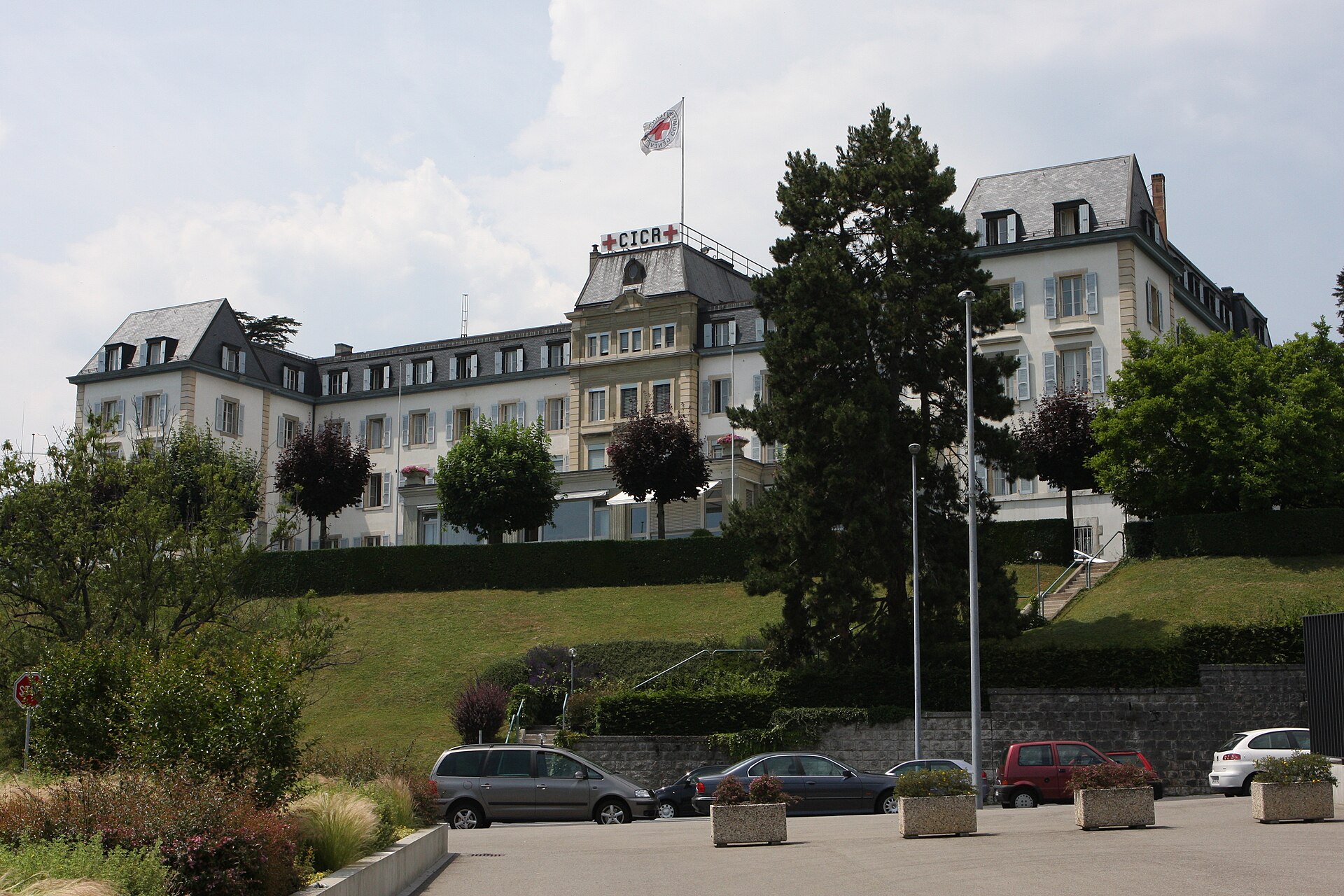
See our Red Cross Museum guide for opening times and what to see.
The Musée Ariana and the botanical garden
Next to the UN, in its own park, the Musée Ariana is Switzerland’s museum of ceramics and glass, housed in a grand nineteenth-century building, and its permanent collection is free. Down the hill towards the lake, the Conservatoire et Jardin botaniques, the city’s botanical garden, is free and lovely from spring to autumn, with greenhouses for a rainy day.
Our guide to the Musée Ariana covers the collection and the building.
Our guide to Geneva’s botanical garden has the highlights season by season.
08 — Museums beyond the centre
A few of Geneva’s best museums are a short tram or bus ride from the lake.
The Patek Philippe Museum
In Plainpalais, the Patek Philippe Museum holds one of the world’s great collections of watches, automata and enamels, from the sixteenth century to the present day. Even if watches leave you cold, the craftsmanship is astonishing. Adult entry is CHF 10, and under-18s go free. Note the unusual hours: on weekdays it opens only in the afternoon, from 14:00 to 18:00, on Saturdays from 10:00 to 18:00, and it’s closed on Sundays and Mondays.
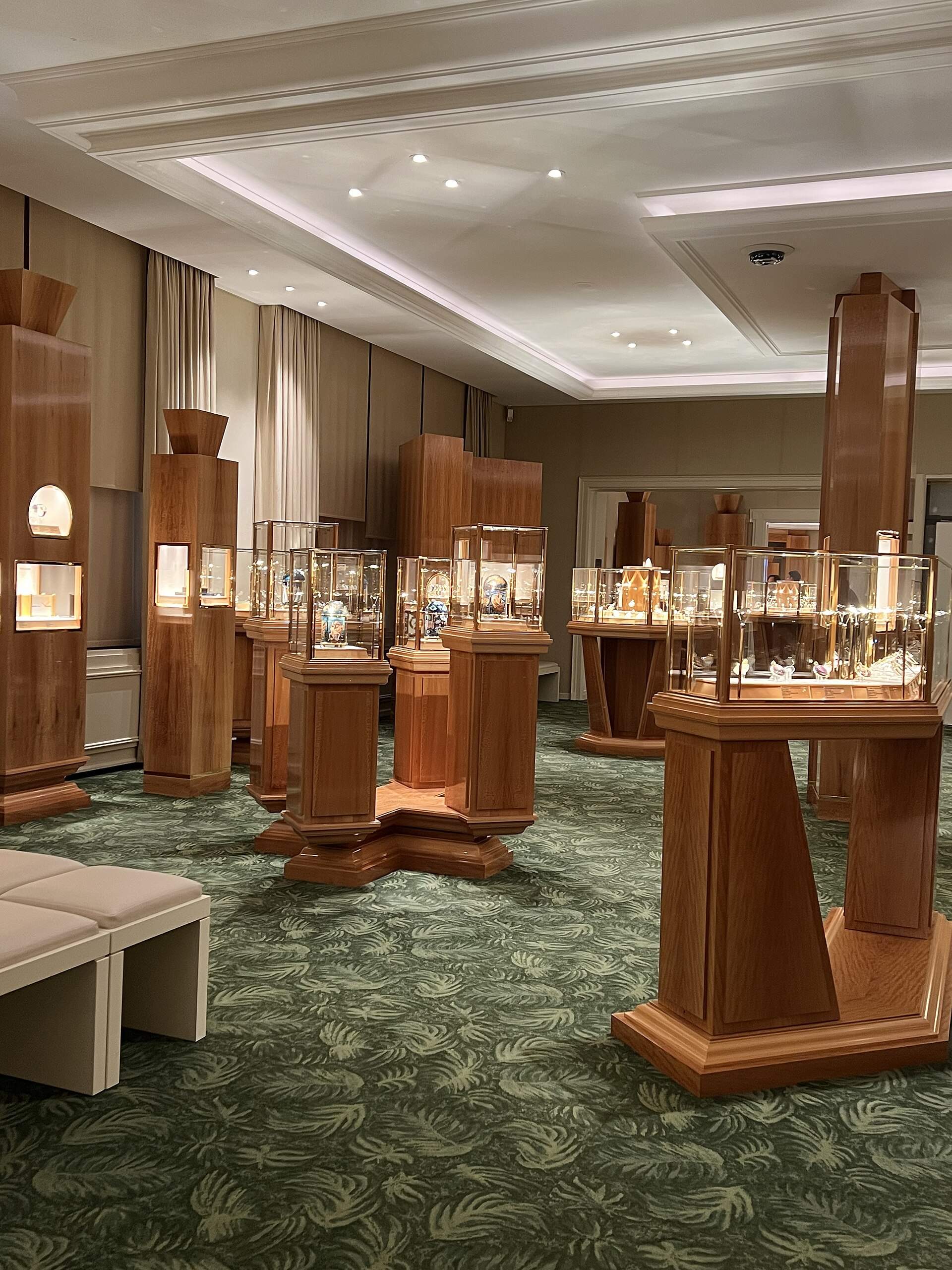
See our Patek Philippe Museum guide.
MAMCO and the private collections
Geneva has several smaller museums that reward a special interest. MAMCO, the museum of modern and contemporary art, is closed for renovation in its former factory near Plainpalais, with reopening envisaged for 2028, and its programme continues off-site. In Champel, the Fondation Baur shows fine Asian ceramics and art in a private house, and in the Old Town the Barbier-Mueller Museum displays a celebrated collection of art from Africa, Oceania and beyond. The other two charge for entry, so check prices before you go; the Barbier-Mueller is among the museums covered by the City Pass. Our guide to art museums and galleries in Geneva has more.
Our MAMCO guide covers what’s on and how to visit.
Our guide to the Barbier-Mueller Museum and the Fondation Baur has the details of both collections.
The Natural History Museum
Geneva’s Natural History Museum is free, huge and much loved, with floor after floor of animals from Switzerland and around the world, displayed in its famous dioramas, and a fine geology section. The catch is that it has been closed since January 2024 for a major renovation and extension, and after several delays, most recently a beetle infestation in the collections, its reopening is now planned for 2028. Check its status before you plan around it. See our Natural History Museum guide.
The Cimetière des Rois
In Plainpalais, the Cimetière des Rois is Geneva’s most distinguished burial ground and a quiet, leafy place for a walk. The Argentine writer Jorge Luis Borges is buried here, and a simple stone marks what is traditionally said to be John Calvin’s grave. It’s free.
Our guide to the Cimetière des Rois lists the famous graves and how to find them.
09 — Parks and neighbourhoods
Some of Geneva’s best sights aren’t attractions at all. Parc La Grange, on the left bank, has one of the finest rose gardens in Switzerland, at its peak in June, and the neighbouring Parc des Eaux-Vives has a terrace restaurant with a view. Carouge, south of the centre, is an eighteenth-century town of low houses, courtyards and artisans’ workshops, built by the kings of Sardinia as a rival to Geneva, and it’s free to wander. Plainpalais has the city’s big flea market, and the Pâquis its bars and street life.
Our guide to Parc La Grange covers the rose garden, the villa and the summer concerts.
See our guides to Carouge, Geneva’s parks and gardens and Geneva’s neighbourhoods.
10 — Further out: CERN and the Salève
CERN
CERN, the European laboratory for particle physics, sits on the French border at Meyrin, about 25 minutes from Cornavin on tram 18. Its Science Gateway, designed by Renzo Piano and opened in 2023, is a free visitor centre with interactive exhibits on particle physics and the origins of the universe; registration is required, and registering online in advance guarantees entry, while on-site registration depends on availability. Across the road, the great wooden Globe of Science and Innovation is CERN’s best-known landmark. Guided tours are much harder to book, and the underground experiments are almost never open to visitors.
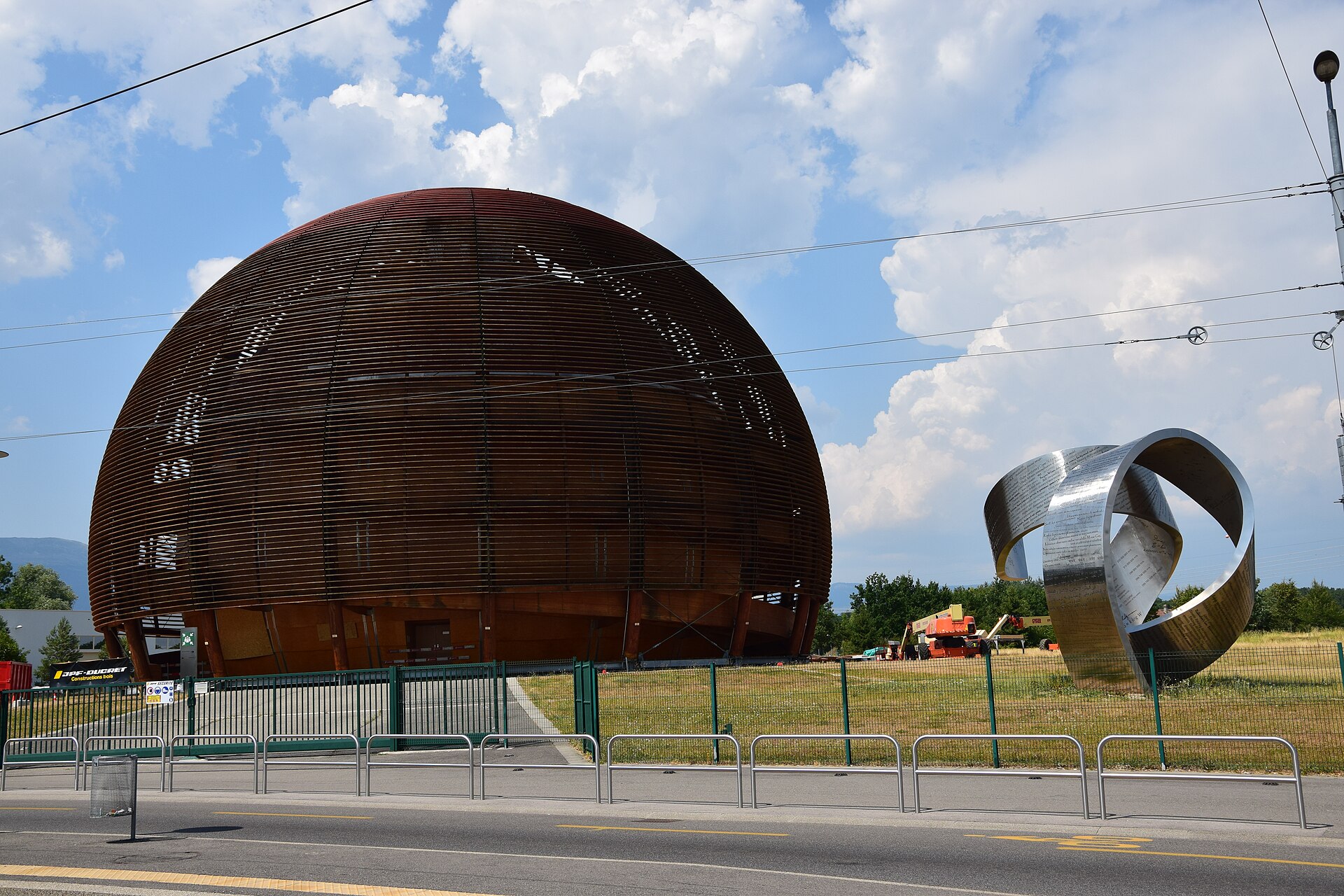
See our CERN visitor guide.
The Salève
Mont Salève, the long limestone ridge that rises behind the city, is technically in France, which is why its cable car is priced in euros: at 2026 prices, about €13 one way and €18 return for adults, with reduced fares for children. From the top, the view takes in the whole of Geneva, the lake, the Jura and, on a clear day, Mont Blanc. Take tpg bus 8 to Veyrier-Douane and walk across the border to the lower station, and carry your passport or ID. The main season runs from April to the start of November, so check the timetable if you’re going at another time of year.
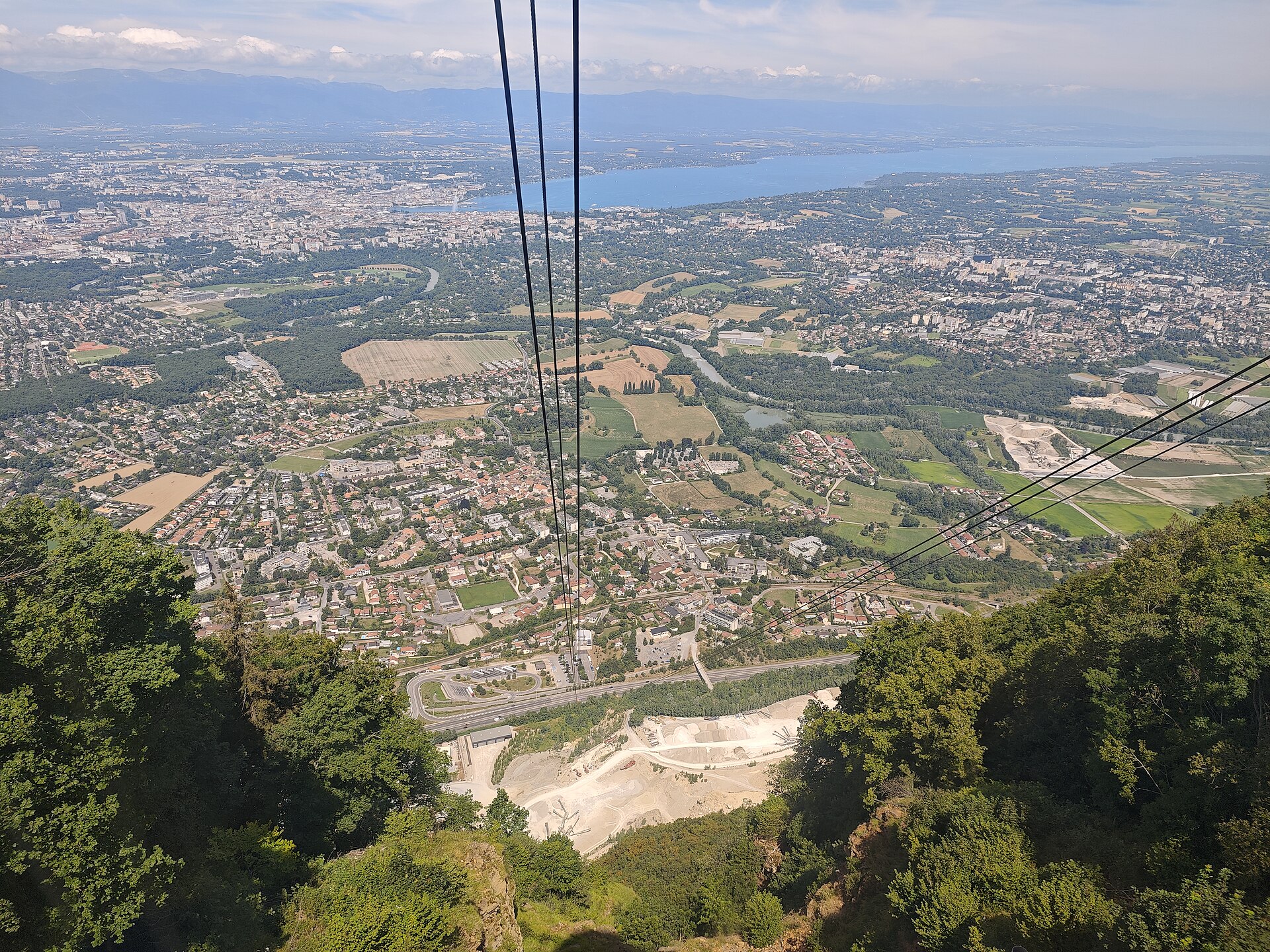
The two currencies are worth thinking about. Prices on the French side are in euros, prices in Geneva in Swiss francs, and while many places in Geneva will take euros, they’ll give you change in francs at their own rate. Pay by card where you can. See our Mont Salève guide and our Geneva currency and money tips.
11 — What opens and closes with the seasons
Several of Geneva’s sights change with the time of year, and it’s worth knowing before you plan around them.
- The Jet d’Eau runs shorter hours in winter and is switched off for several weeks of maintenance each autumn, usually from late October or early November into late November or early December.
- The Bains des Pâquis charge CHF 2 for adults in the summer season, from mid-May to mid-September, and in the winter-bathing season too, when the sauna takes over.
- The paddle steamers run their fullest timetable from June to September, and the daily cruises from Geneva continue into mid-October before a much thinner winter service.
- The Salève cable car’s main season runs from April to the start of November.
- The rose garden at Parc La Grange is at its peak in June, and the botanical garden is at its best from spring to autumn.
- The Christmas market on the Quai du Mont-Blanc runs from mid-November to Christmas Eve.
Our month-by-month guides, from Geneva in January to Geneva in December, have the detail for every season.
12 — The Geneva City Pass: is it worth it?
The Geneva City Pass, sold by Geneva Tourism, gives free or discounted entry to around 60 attractions, museums, tours and activities, with or without public transport included. These were the regular prices in 2026; Geneva Tourism has also run seasonal discounts.
| Duration | Without transport | With transport |
|---|---|---|
| 24 hours | CHF 30 | CHF 35 |
| 48 hours | CHF 40 | CHF 50 |
| 72 hours | CHF 50 | CHF 65 |
The attractions Geneva Tourism lists as included range from museums, such as the Musée d’Art et d’Histoire, the Patek Philippe Museum, the Red Cross and Red Crescent Museum and the Barbier-Mueller Museum, to St Pierre Cathedral, Maison Tavel and the Maison de Rousseau, as well as places outside the city such as the Château de Prangins, the Château de Voltaire at Ferney and La Maison du Salève. It also covers several guided experiences: walking tours of the Old Town and Carouge, the tourist mini-train and an open-top bus tour of International Geneva.
Doing the maths
The pass pays off only if you use it hard. Take a busy single day: the cathedral towers (CHF 7), the archaeological site (CHF 8), the Red Cross Museum (CHF 15) and the Patek Philippe Museum (CHF 10). Bought separately, that’s CHF 40, against CHF 30 for the 24-hour pass without transport, a saving of CHF 10, provided the pass covers everything you plan to see. It’s a tight day, though, because the Patek Philippe Museum opens only in the afternoon on weekdays and most museums close on Mondays. Add one of the included guided tours and the saving grows; spend the day on the free sights and the pass is pointless.
Two catches. First, if you’re staying in a hotel, hostel or campsite, you already get the free Geneva Transport Card, so buy the pass without transport. Second, the pass doesn’t make free museums any freer, and many of Geneva’s best are free anyway. Check the current list of what’s included, and whether it means free entry or a discount, before you buy.
If you’re travelling around Switzerland, compare it with the Swiss Travel Pass, which includes free entry to hundreds of museums across the country as well as the trains. See our guides to the Geneva City Pass and the Swiss Travel Pass, the Swiss Travel Pass in Geneva and the Geneva Transport Card.
Our full Geneva City Pass guide has the complete list of inclusions and sample itineraries.
13 — Opening days: the Monday problem
Plan your week around Mondays. Most of Geneva’s museums close on Mondays, including the Musée d’Art et d’Histoire, Maison Tavel and the Red Cross and Red Crescent Museum, and the Patek Philippe Museum closes on Sundays as well. On a Monday, do the outdoor sights, the lake, the cathedral and the parks, and save the museums for the rest of the week. Public holidays bring their own closures, so check opening times around them.
| Attraction | Usually closed | Worth knowing |
|---|---|---|
| Musée d’Art et d’Histoire | Monday | Pay-what-you-wish entry |
| Maison Tavel | Monday | Free |
| Red Cross and Red Crescent Museum | Monday | CHF 15 |
| Patek Philippe Museum | Sunday and Monday | Weekday afternoons only |
| Cathedral archaeological site | Open daily | 10:00–17:00, last entry 16:30 |
| Palais des Nations tours | Depends on the meeting schedule | Book online in advance |
14 — Do you need to book?
For most of Geneva’s sights, no: you can walk in. The exceptions are worth knowing:
- The Palais des Nations tour: always book online in advance, with passport details, and as early as you can.
- CERN’s guided tours: released in limited numbers and snapped up fast. The Science Gateway needs no booking.
- Fondue at the Bains des Pâquis in winter: not an attraction, strictly, but it books up weeks ahead.
- Guided walking tours and some boat trips: book ahead in summer.
15 — How to see the main sights
Geneva’s attractions fall into neat clusters, and planning by area saves a lot of time. A sensible plan for two or three days:
- The lakefront (2–3 hours): the Jet d’Eau, the Jardin Anglais and the Flower Clock, a Mouette across the harbour and the Bains des Pâquis.
- The Old Town (half a day to a day): the cathedral, its towers and its archaeological site, Maison Tavel, the Place du Bourg-de-Four, the Bastions and the Reformation Wall, and the MAH.
- International Geneva (a day): the Palais des Nations tour, the Broken Chair, the Red Cross Museum, the Ariana and the botanical garden.
- CERN (half a day): tram 18 from Cornavin to the Science Gateway and the Globe.
- The Salève (half a day): bus 8 to the border and the cable car to the top.
- Plainpalais and Carouge (half a day): the Patek Philippe Museum, the Cimetière des Rois and the streets of Carouge.
Our itineraries for one day in Geneva and three days in Geneva put it all together, and our main guide to things to do in Geneva covers everything else.
If you’d rather have a guide, our guide to the best Geneva tours compares walking tours, food tours and trips into the mountains.
16 — Geneva attractions with children
Geneva is an easy, affordable city to sightsee with children, because so many of the best things are free. Sadly, the Natural History Museum, usually the obvious first stop, is closed for renovation until 2028. The Mouettes make a cheap boat trip across the harbour, the Jet d’Eau never fails to impress, and the playgrounds and summer paddling pools in the parks are free. Older children tend to love CERN’s Science Gateway, with its hands-on exhibits, and the climb up the cathedral towers.
Of the paid attractions, the Patek Philippe Museum is free for under-18s, and the Palais des Nations tour and the Red Cross Museum offer reduced prices for children. The tourist mini-train, which is included in the City Pass, is a hit with small children and pointless for anyone else. Our guides to things to do in Geneva with kids and kid-friendly museums have much more.
17 — Ten ways to save money on sightseeing
- Use your Transport Card. It’s free from your accommodation and covers the buses, trams, trains within the city and the Mouettes.
- Start with the free museums. Maison Tavel, the Ariana and CERN are free, and the MAH is pay what you wish.
- Take a Mouette instead of a harbour cruise. Same water, a fraction of the price.
- Do the cathedral towers, skip a paid viewpoint. CHF 7 buys you the best view in the city.
- Bring the children to Patek Philippe. Under-18s go free.
- Do the City Pass maths before you buy. It only pays off on busy days with several paid sights.
- Use a Swiss Travel Pass if you have one. It includes free entry to many museums.
- Look out for free and reduced days. Some museums, the Red Cross Museum among them, have run pay-what-you-wish days; check their websites.
- Picnic in the parks. The Bastions, the Perle du Lac and Parc La Grange are all perfect for it.
- Pay in francs, by card. Paying in euros in Geneva usually means a poor exchange rate.
Our guides to Geneva on a budget and money-saving tips for Geneva have plenty more.
Weighing up Geneva against another Swiss city? Our guide comparing Geneva with Zurich, Lausanne and other destinations sets them side by side.
Frequently asked questions
What are the best free attractions in Geneva?
The Jet d’Eau, St Pierre Cathedral, Maison Tavel, the Musée Ariana, the botanical garden, the Reformation Wall, the Broken Chair and CERN’s Science Gateway are all free, and the Musée d’Art et d’Histoire is pay what you wish. Only the cathedral towers and archaeological site cost extra.
How much does the UN tour in Geneva cost?
A guided tour of the Palais des Nations costs CHF 25 for adults, CHF 22 for students, seniors and disabled visitors, CHF 14 for ages 14 to 17 and CHF 13 for ages 6 to 13, plus a booking fee. Book online in advance and bring your passport.
Is the Geneva City Pass worth it?
Only if you plan to see several paid attractions or take one of the included tours. It costs from CHF 30 for 24 hours without transport. If you’re staying in a hotel, buy the version without transport, because the free Geneva Transport Card already covers public transport.
Is St Pierre Cathedral free?
Yes, the cathedral itself is free. The towers cost CHF 7 and the archaeological site beneath the cathedral CHF 8 for adults, with an audio guide included.
Can you get close to the Jet d’Eau?
Yes. You can walk out along the Jetée des Eaux-Vives almost to its base for free, but you’ll get wet if the wind blows the spray your way. It’s switched off in strong winds and frost, and for several weeks of maintenance in the autumn.
Which Geneva museums are closed on Mondays?
Most of them, including the Musée d’Art et d’Histoire, Maison Tavel and the Red Cross and Red Crescent Museum. The Patek Philippe Museum is closed on Sundays and Mondays.
Do I need to book Geneva attractions in advance?
Mostly not. The big exception is the Palais des Nations tour, which must be booked online in advance with passport details. CERN’s guided tours also need booking, but the free Science Gateway doesn’t.
Why is the Salève cable car priced in euros?
Because it’s in France. The Salève rises just across the border from Geneva, and its cable car costs €13 one way and €18 return for adults. Take your passport or ID.