St. Pierre Cathedral Geneva: Towers, Crypt & Tickets
This article contains advertising. Our booking links are routed through a partner that adds commission tracking automatically, so if you book through one we earn a commission from the provider, at no extra cost to you. It never affects what we recommend. Affiliate disclosure
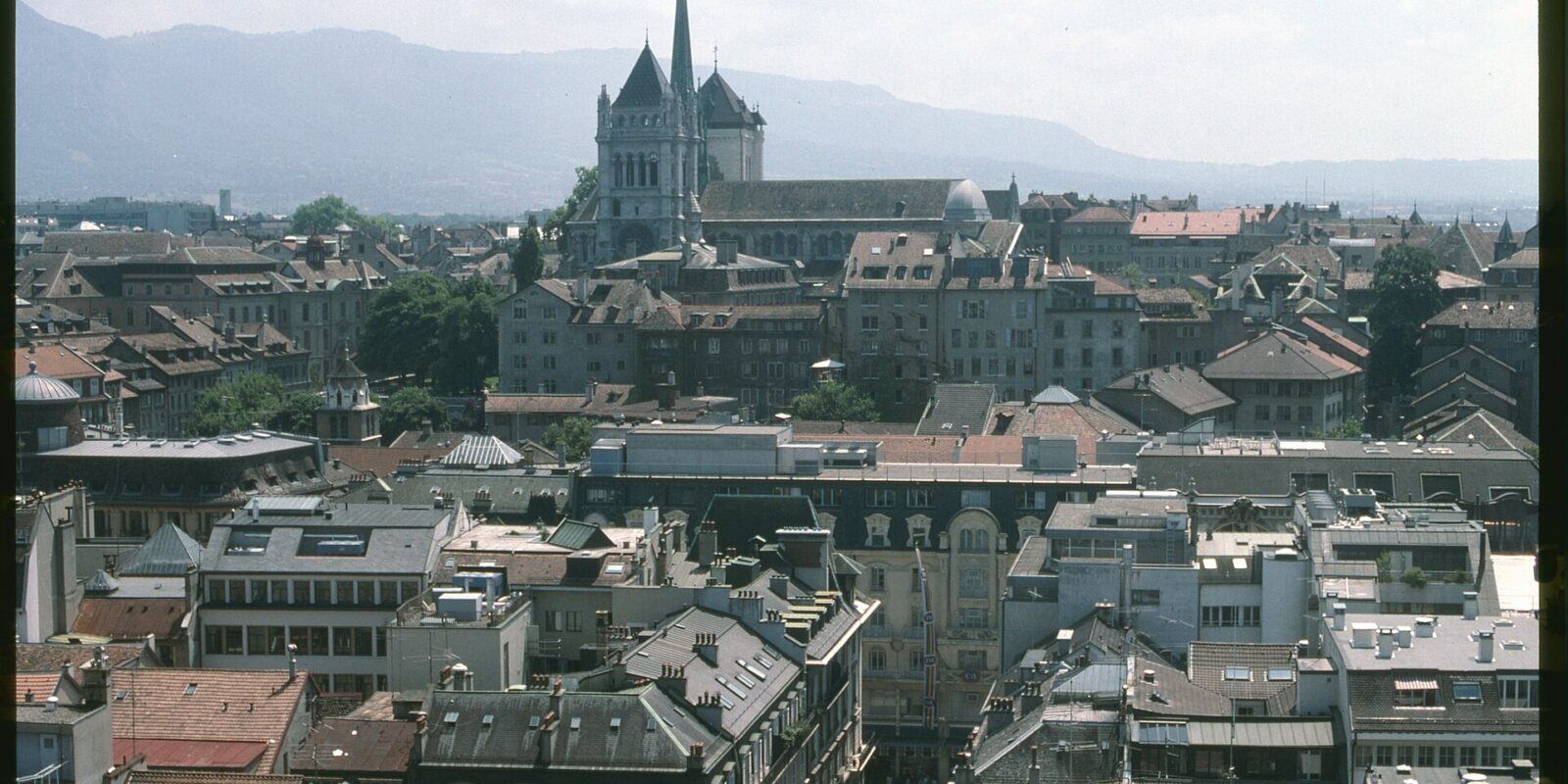
St Pierre is free, and that’s exactly why most visitors see only half of it. They climb the hill, step into a vast, bare, strikingly plain interior, look at the chair that’s said to have been Calvin’s, and leave after ten minutes. Meanwhile, two of the best things in Geneva are a few steps away, each with its own ticket desk: 157 steps up the towers to a panorama of the city and the lake, and, under the floor, a walk through the remains of the people who worshipped, traded and were buried on this hill, from the Celtic period to the Middle Ages. Neither is expensive. Both are easy to miss if nobody tells you they’re there.
St Pierre Cathedral Geneva is free to enter, but its two best experiences are ticketed separately: the towers (CHF 7 for adults, 157 steps, with a 360-degree view over the city and the lake) and the archaeological site beneath the cathedral (CHF 8, daily from 10:00 to 17:00, with a free audio guide). A combined Espace Saint-Pierre ticket at CHF 18 covers both plus the International Museum of the Reformation next door. The cathedral opens from 9:30 on weekdays in summer and from 10:00 in winter, and only from noon on Sundays, after the morning service. Allow two hours to do it all properly.
01 — St Pierre Cathedral at a glance
| Detail | What to know |
|---|---|
| Cathedral | Free |
| Summer hours (1 June to 30 September) | Monday to Friday 9:30–18:30; Saturday 9:30–16:30; Sunday 12:00–18:30 |
| Winter hours (1 October to 30 May) | Monday to Saturday 10:00–17:30; Sunday 12:00–17:30 |
| Towers | Adults CHF 7, seniors CHF 5, young people CHF 4; 157 steps; last entry 30 minutes before the cathedral closes |
| Archaeological site | Adults CHF 8, children and seniors CHF 4; daily 10:00–17:00, last entry 16:30; free audio guide in English, French and German |
| Combined ticket | Espace Saint-Pierre: towers, archaeological site and the International Museum of the Reformation, adults CHF 18 |
| Carillon | A carillon hour at 17:00 in July and August |
| Where | Cour de Saint-Pierre, at the top of the Old Town |
| Time needed | A short stop for the cathedral alone; allow longer with the towers and the site |
Hours and prices were checked in autumn 2026. Services, concerts and special events can change opening times, so check on the day.
02 — Getting there
St Pierre crowns the hill of the Old Town, and every route to it ends with a climb up cobbled lanes or steps. From Cornavin station, it’s a walk of under half an hour: down to the Rhône, across the Pont de l’Île or the Pont du Mont-Blanc, and up through the narrow streets of the Old Town. If you’d rather save your legs for the towers, several bus and tram lines stop at Rive, the Molard and the Place de Neuve, each a short uphill walk from the Cour de Saint-Pierre. The free Geneva Transport Card from your hotel covers them all. See our guides to Geneva public transport and the Transport Card.
03 — Three tickets, one hill: how the visit works
The confusing thing about St Pierre is that it isn’t one visit but three, or four if you count the museum next door, each with its own entrance and its own ticket.
- The cathedral itself is free. Walk in through the classical portico on the Cour de Saint-Pierre.
- The towers are entered from inside the cathedral, and you buy your ticket there. Access closes half an hour before the cathedral does.
- The archaeological site has its own entrance on the Cour de Saint-Pierre, at number 6, and runs on its own hours, from 10:00 to 17:00 every day.
- The International Museum of the Reformation is in the Maison Mallet, the elegant eighteenth-century house on the same square, open from Tuesday to Sunday.
If you’re doing both the towers and the archaeological site, the two-site combined ticket is CHF 12 for an adult (CHF 15 if you buy them separately), and the Espace Saint-Pierre combined ticket adds the Reformation museum for CHF 6 more, at CHF 18. On that ticket, young people aged 7 to 16 pay CHF 10, and the reduced rate of CHF 12 covers eligible students and apprentices aged 17 to 25. The archaeological site is also free with the Geneva City Pass.
Our guide to the Geneva City Pass explains which other sights it covers and when it pays off.
04 — Inside the cathedral
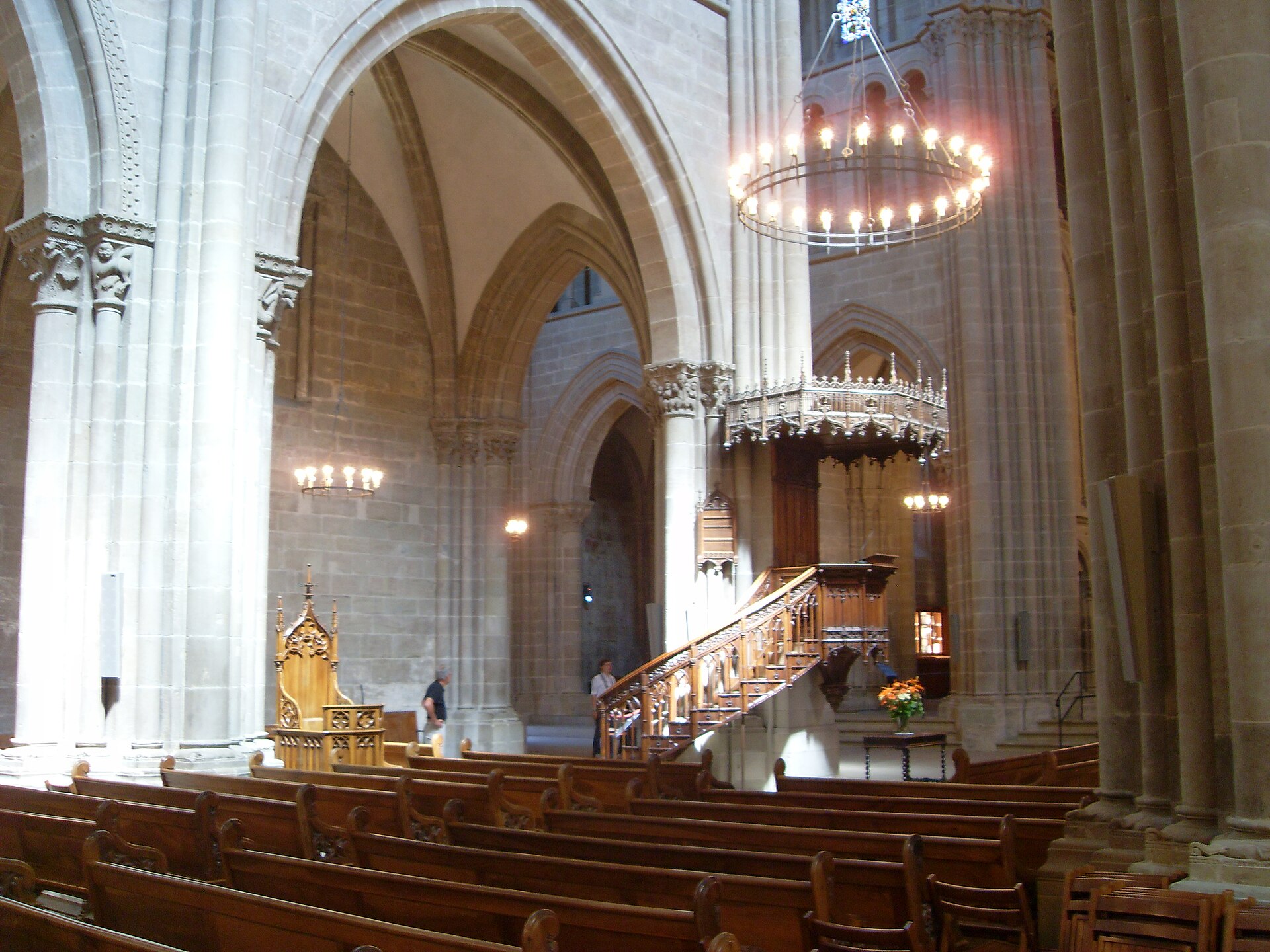
Step inside and the first thing you notice is what isn’t there. Geneva turned Protestant in the 1530s: the cathedral’s altars, statues and paintings were removed in 1535, and the city formally adopted the Reformation in 1536. What remains is a great, light-filled Romanesque and Gothic nave with almost no decoration at all. It’s an austere space, and a powerful one, and it tells you more about Calvin’s Geneva than any museum.
A few things are worth looking for:
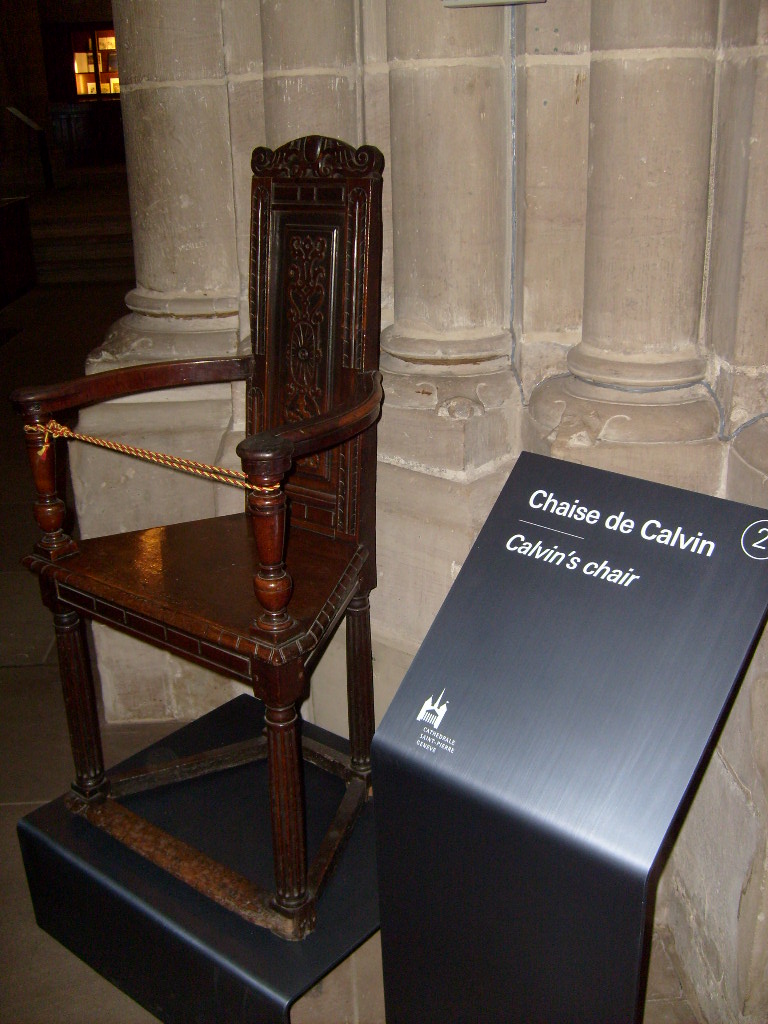
- Calvin’s chair. A simple, high-backed wooden chair in the nave, traditionally said to have been used by John Calvin, who preached in the cathedral from 1536, apart from his exile in Strasbourg from 1538 to 1541. Whether he actually sat in it is open to question; it’s the city’s favourite relic all the same.
- The pulpit. The carved wooden pulpit, with its canopy and spiral stair, is the focal point of a church built for preaching rather than ritual.
- The Chapel of the Maccabees. Off the south side of the nave, this early fifteenth-century Gothic chapel, built for Cardinal Jean de Brogny, is the one part of the cathedral that still dazzles, with its richly painted vaults restored in the nineteenth century. The contrast with the bare nave is the point.
- The capitals. Look up at the carved capitals of the columns, with their monsters, angels and foliage, some of the few medieval carvings to survive.
- The tomb of the Duke of Rohan, the seventeenth-century French Protestant leader, a grand monument in a church that otherwise has very few.
St Pierre is a working Protestant church, and Sunday mornings are reserved for worship, which is why the cathedral opens to visitors only from noon on Sundays. You’re welcome to attend a service if you’d like to see the cathedral in use; otherwise, plan your visit for another time. At any time, keep your voice down and your phone on silent.
05 — Climbing the towers
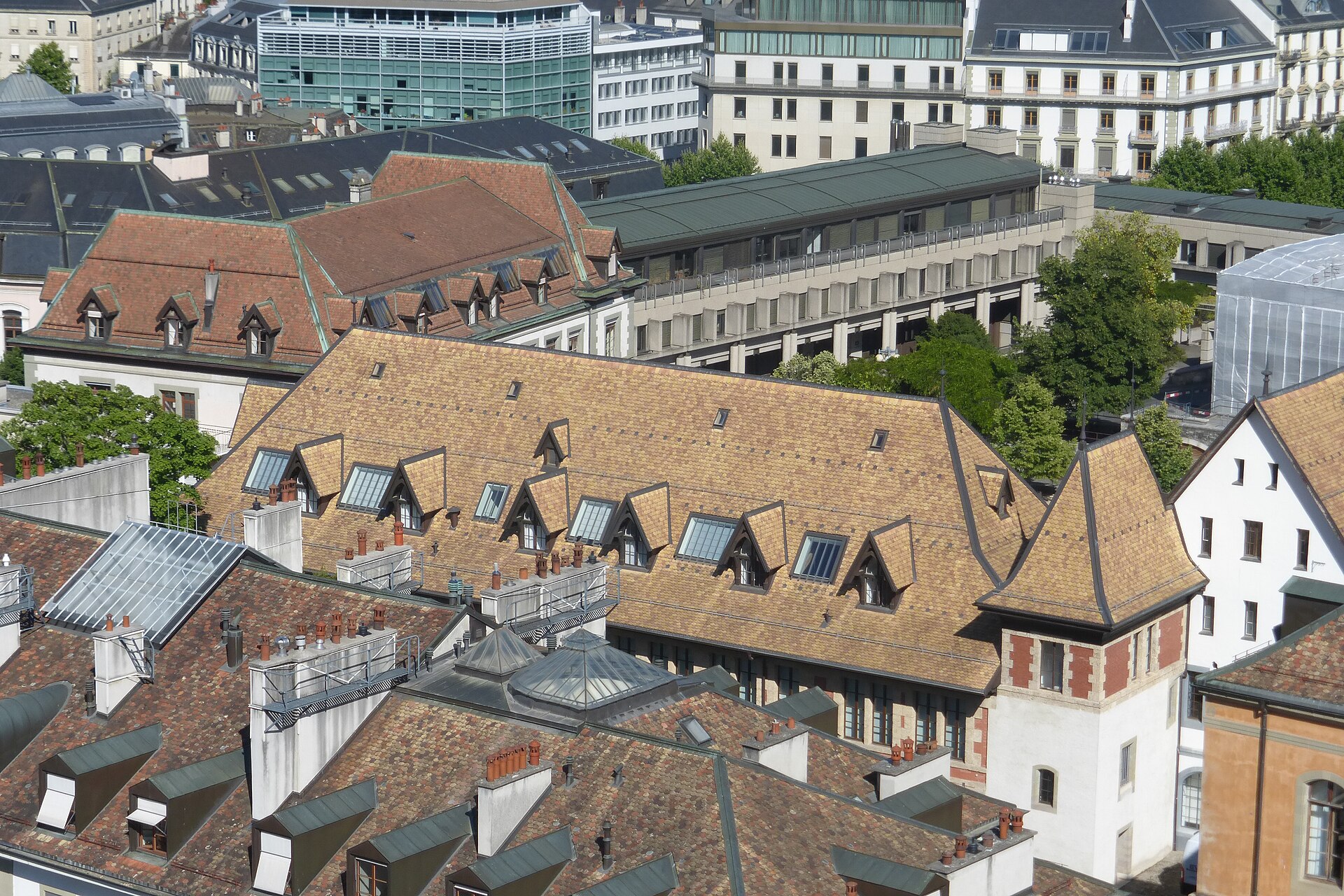
For CHF 7, the towers are the best-value view in Geneva. It’s 157 steps to the top, up steep stairs that pass close to the bells, and the reward is a 360-degree panorama over the roofs and courtyards of the Old Town, the city and the lake.
Some tips for the climb:
- Pick a clear day. On a grey or hazy day, you’ll lose the mountains, which are half the point.
- Watch the time. Access to the towers closes 30 minutes before the cathedral, so on a winter afternoon the last climb is at 17:00, and on a summer Saturday at 16:00.
- Be ready for the stairs. The climb is steep in places, so it’s not for anyone with mobility problems or a strong dislike of heights.
- Listen for the bells. The cathedral’s bells include La Clémence, the great bell, which is a recasting: the medieval original was recast twice. In July and August, there’s a carillon hour at 17:00, when the bells are played as an instrument.
- Bring your camera. The view of the Jet d’Eau over the Old Town roofs is one of the best photographs in the city.
Our Jet d’Eau visitor guide lists the other great viewpoints over the harbour.
06 — Music at St Pierre
The cathedral is a concert venue as well as a church, with organ recitals and choral and classical concerts through the year, and a busier programme in summer. Sunday-morning services are accompanied by the organ, and you’re welcome to attend. The most distinctive sound, though, comes from the towers: in July and August, there’s a carillon hour at 17:00, when the bells are played as a musical instrument, and the best place to hear it is the Cour de Saint-Pierre below. Check the cathedral’s programme before your visit, as concerts can change the opening hours.
07 — The archaeological site
Beneath the cathedral lies one of the most important archaeological sites in Switzerland, and the one part of the visit most people skip. Excavations under the building and the square have uncovered history from the Celtic period to the Middle Ages, and the remains are laid out along a walkway under the cathedral floor, cleverly lit and explained by a free audio guide in English, French or German.
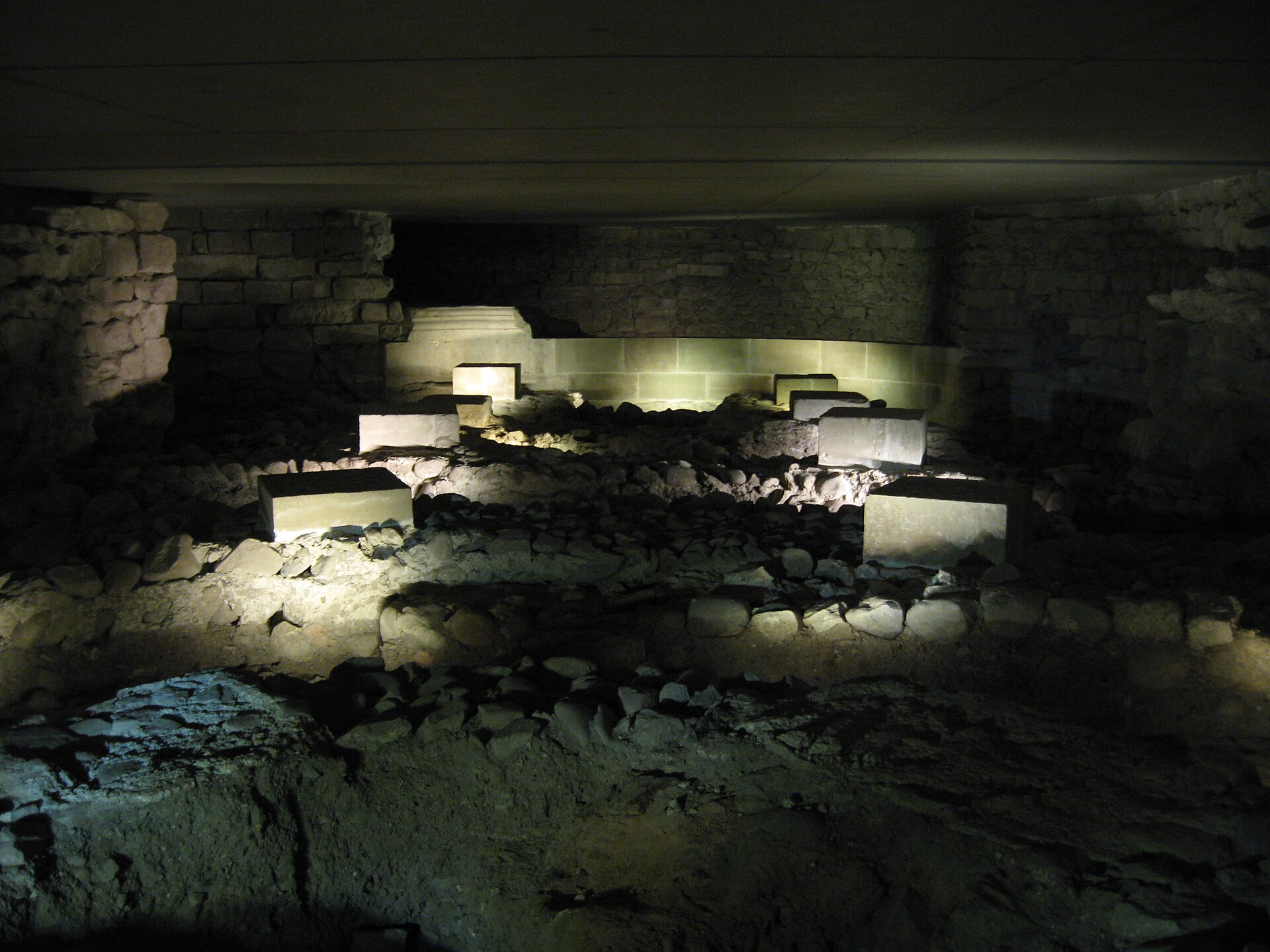
What you’ll see:
- Before the Romans. Wells, a grain-processing area and the tomb of an Allobrogian chieftain, from the Celtic people who lived here before the Roman conquest.
- The first churches. From the late fourth century onwards, a succession of churches stood on this spot, and the site shows how they grew, were rebuilt and gave way to one another over the centuries before today’s cathedral.
- The medieval cathedral. The foundations of the earlier buildings that the present cathedral, begun in the twelfth century, replaced.
Allow about an hour. Adults pay CHF 8, and children and seniors CHF 4, and it’s open every day from 10:00 to 17:00, with last entry at 16:30. It’s a cool, quiet escape on a hot day, and a good one for older children with an interest in history.
08 — The International Museum of the Reformation
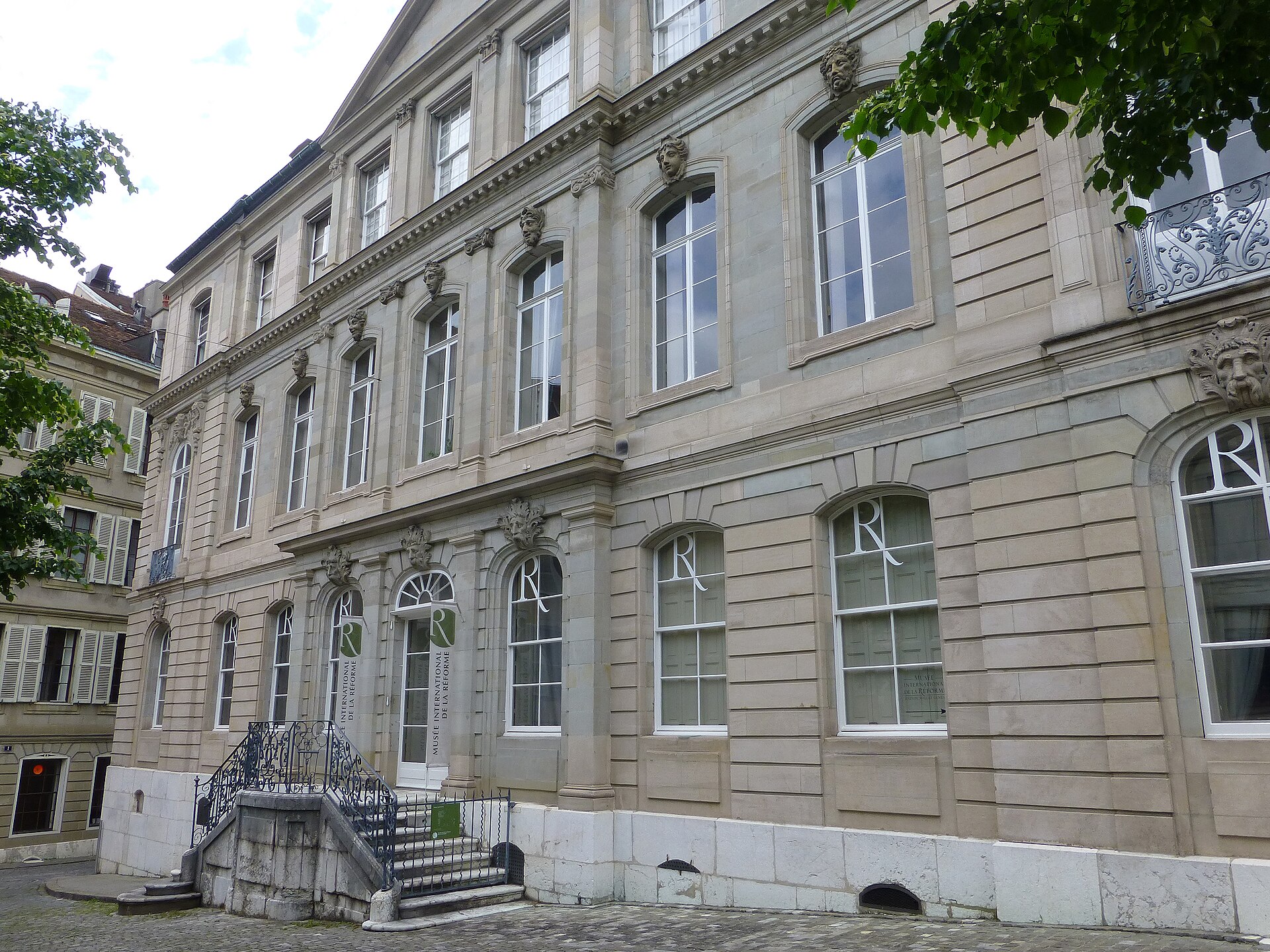
On the same square, the International Museum of the Reformation tells the story of the movement that made Geneva the “Protestant Rome”: Calvin, his followers and the ideas that spread from here across Europe and beyond, through books, portraits, objects and multimedia displays. It’s housed in the Maison Mallet, an eighteenth-century mansion built on the site of the cathedral’s old cloister, where the citizens of Geneva voted to adopt the Reformation in 1536. It’s open from Tuesday to Sunday, from 10:00 to 17:00, and it’s included in the Espace Saint-Pierre combined ticket.
Our guide to Geneva’s Reformation and Protestant history puts it all in context.
09 — Photographing the cathedral
St Pierre is easier to photograph from a distance than up close, because the Old Town’s lanes crowd right up to it. A few ideas:
- From the towers, for the classic shot of the Jet d’Eau over the Old Town roofs.
- From the Cour de Saint-Pierre, for the portico, ideally in the softer light of late afternoon.
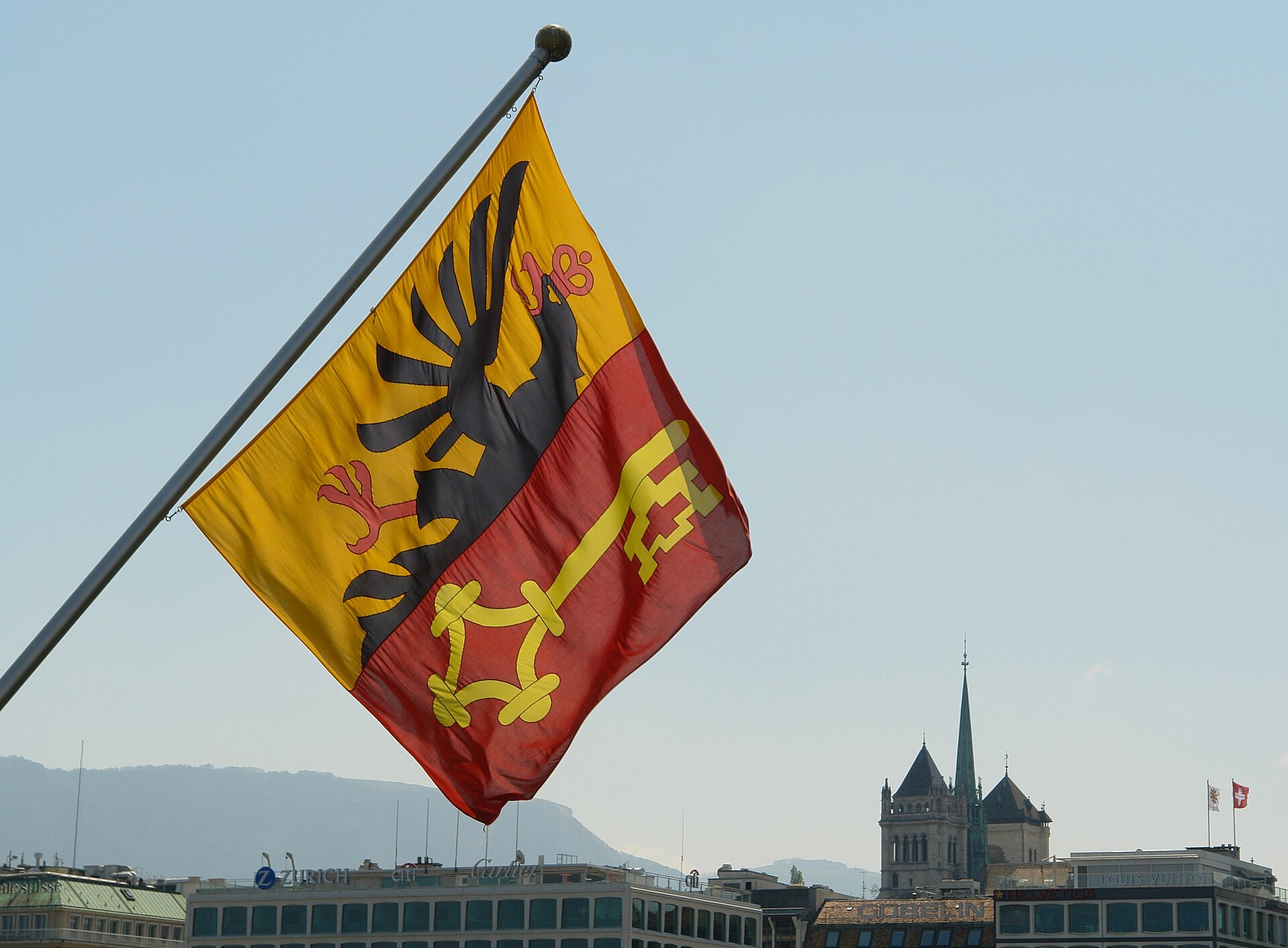
- From the lake and the Pont du Mont-Blanc, where the cathedral’s towers and green spire crown the skyline of the Old Town.
- From the Salève, on a clear day, when the whole Old Town hill stands out above the city.
- Inside, be discreet: no flash, and no photos during services.
Our guide to the most photogenic places in Geneva has more viewpoints.
10 — A short history of St Pierre
- Before Christianity: the hilltop is a settlement of the Allobroges, the Celtic people of the region.
- Late fourth century: the first churches are built on the site, the beginning of a long succession of religious buildings.
- Around 1160: work begins on the present cathedral, in a style that moves from Romanesque to Gothic as it rises over the following century.
- Around 1400: the Chapel of the Maccabees is built (1397 to 1405), and the great bell, La Clémence, is cast in 1407.
- 1536: Geneva adopts the Reformation. The cathedral becomes a Protestant church, stripped of its images, and John Calvin preaches here until his death in 1564.
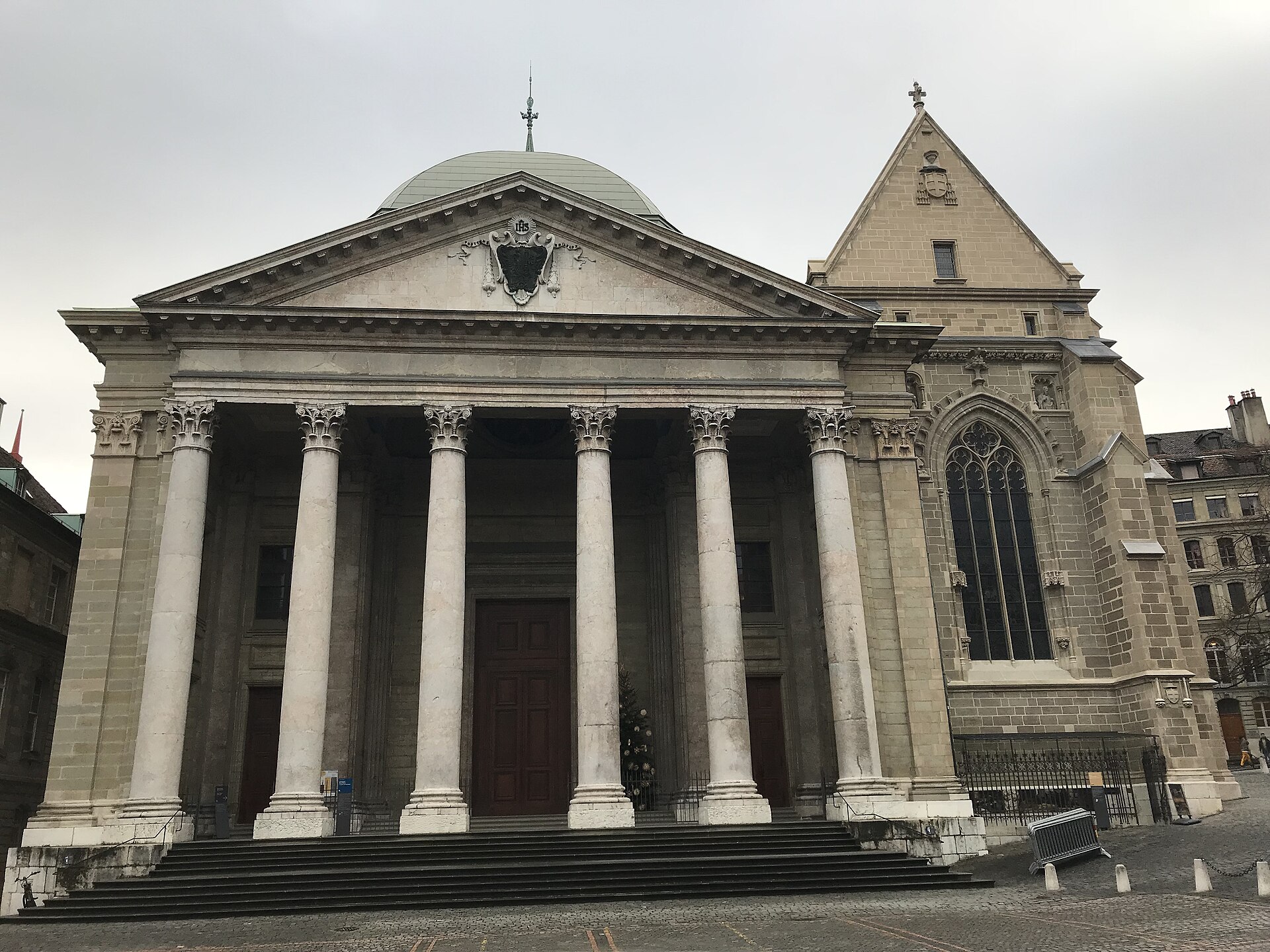
- 1750s: the crumbling west front is replaced by the neoclassical portico you see today.
- Late nineteenth century: the slender green spire between the towers is added, and the Chapel of the Maccabees is restored.
- Late twentieth century: major excavations beneath the cathedral reveal the remains now shown in the archaeological site.
Our guides to the history of Geneva and Geneva’s history and heritage tell the wider story.
11 — Around the cathedral
St Pierre stands at the heart of the Old Town, and there’s plenty to see within a few minutes’ walk:
- The Auditoire de Calvin, the small Gothic church beside the cathedral where Calvin taught and where John Knox preached to English Protestant refugees.
- Maison Tavel, a museum of the city’s history with pay-what-you-wish entry, and its vast model of nineteenth-century Geneva. See our Maison Tavel guide.
- The Place du Bourg-de-Four, the Old Town’s lively main square, lined with cafés, a few steps downhill.
- The Promenade de la Treille, a shaded terrace below the Old Town walls with a famously long wooden bench and a view to the Salève.
- The Reformation Wall, in the Parc des Bastions just below, with Calvin at the centre of the great stone frieze. See our Reformation Wall guide.
Our Old Town guide has a walking route that links them all.
12 — With children
The towers are the hit with children: counting the 157 steps, seeing the bells up close and looking out over the city and the lake from the top. Young people pay CHF 4 for the towers, and on the Espace Saint-Pierre combined ticket 7- to 16-year-olds pay CHF 10. The archaeological site, with its audio guide and its tomb of a Celtic chieftain, works well for older children with an interest in history; younger ones may find it dark and slow. Hold small hands on the tower stairs. Our guides to things to do in Geneva with kids and rainy-day activities for families have more ideas.
13 — Tips for visiting
- Avoid Sunday mornings. The cathedral opens to visitors only from noon on Sundays, after the service.
- Check Saturday hours in summer. The cathedral closes at 16:30 on summer Saturdays, earlier than on weekdays.
- Do the towers first on a clear morning. The light and the views of the Alps are usually best early in the day.
- Save the archaeological site for a hot or rainy afternoon. It’s underground, cool and dry.
- Buy the combined ticket if you’re doing two or more. The towers and the site cost CHF 15 bought separately or CHF 12 on their combined ticket, and the Espace Saint-Pierre ticket adds the Reformation museum for CHF 6 more, at CHF 18.
- Time it for the carillon. In July and August, be in the Cour de Saint-Pierre at 17:00 for the carillon hour.
- Combine it with Maison Tavel and the Bourg-de-Four. All three are in the Old Town, close to the cathedral.
For ticket prices and opening days for every major sight in the city, see our guide to Geneva attractions and tickets.
14 — A half-day in the Old Town, starting at the cathedral
- 10:00: climb the towers while the morning light is clear, then walk across the Cour de Saint-Pierre to the archaeological site.
- 11:30: the International Museum of the Reformation, if it’s open (Tuesday to Sunday), or a look inside the Auditoire de Calvin.
- 12:30: lunch on a terrace on the Place du Bourg-de-Four. Our guide to where to eat in Geneva has ideas.
- 14:00: Maison Tavel, pay what you wish, for the city’s history and the great model of nineteenth-century Geneva.
- 15:00: down to the Promenade de la Treille and the Parc des Bastions for the Reformation Wall.
- 16:00: the Musée d’Art et d’Histoire, pay what you wish (you can pay nothing), for an hour among the treasures. See our guide to the Musée d’Art et d’Histoire.
15 — What other guides get wrong
- “The cathedral costs CHF 7.” It doesn’t. The cathedral is free; the CHF 7 is for the towers.
- “The crypt is part of the cathedral visit.” The archaeological site under the cathedral has its own entrance, at 6 Cour de Saint-Pierre, its own ticket and its own hours.
- “The towers are open whenever the cathedral is.” Access to the towers closes half an hour before the building.
- “You can visit on Sunday morning.” Sunday mornings are for worship; visitors are welcome from noon.
- “Calvin is buried here.” He isn’t. He asked for an unmarked grave, and the stone traditionally said to be his is in the Cimetière des Rois in Plainpalais.
16 — Is it worth it?
The cathedral itself is free and absolutely worth twenty minutes of anyone’s time, if only for the strange power of that bare Protestant nave. The towers are the best CHF 7 you’ll spend in Geneva, as long as the weather is clear. The archaeological site is excellent if you have any interest in history, and the combined ticket is good value if you want to see the Reformation museum too. If you’re short of time, skip the museum and the site and climb the towers; if it’s raining, do the opposite.
Frequently asked questions
Is St Pierre Cathedral free?
Yes, entry to the cathedral is free. The towers cost CHF 7 for adults and the archaeological site beneath the cathedral costs CHF 8.
How many steps are there up the towers?
157. The climb is steep in places, but the 360-degree view over the city, the lake and the mountains is worth it. Access closes 30 minutes before the cathedral.
What are the opening hours of St Pierre Cathedral?
From 1 June to 30 September, Monday to Friday 9:30–18:30, Saturday 9:30–16:30 and Sunday 12:00–18:30. From 1 October to 30 May, Monday to Saturday 10:00–17:30 and Sunday 12:00–17:30.
Is there a combined ticket?
Yes. The Espace Saint-Pierre ticket covers the towers, the archaeological site and the International Museum of the Reformation for CHF 18 for adults and CHF 10 for ages 7 to 16, with free entry for under-7s.
Is Calvin buried in the cathedral?
No. Calvin asked to be buried in an unmarked grave, and a simple stone in the Cimetière des Rois in Plainpalais is traditionally said to mark it. The cathedral has his chair.
When does the carillon play?
There’s a carillon hour at 17:00 in July and August, when the cathedral’s bells are played as an instrument.
How long does a visit take?
The cathedral alone is a short stop. Allow longer if you add the towers and the archaeological site, and more again for the Reformation museum.