24 Money-Saving Tips for Visiting Geneva (2026 Insider Guide)
This article contains advertising. Our booking links are routed through a partner that adds commission tracking automatically, so if you book through one we earn a commission from the provider, at no extra cost to you. It never affects what we recommend. Affiliate disclosure
Geneva really is expensive, but the price tag is softer than its reputation once you know which moves matter. The money-saving tips that actually work here are a short list: drink the tap water (free, and it comes off the lake), ride the Mouettes water taxis (free with your Transport Card), eat lunch at the university cafeteria (CHF 9-13), book SBB Saver fares early (up to 50% off), and take the weekday lunch menu at a fine-dining room instead of dinner (roughly 40% cheaper). Each of those saves CHF 20-50 a day for travelers who actually use them.
What follows is my working list of 24 money-saving tips for Geneva in 2026, sorted by category and ranked by how much they save in practice. I have cut the filler advice (“walk instead of taking a taxi”) that pads out most budget posts. A few of these are big structural decisions, like sleeping on the France side, which can shave CHF 400+ off a five-day trip. Others are small daily habits that quietly add up. Start with the pillar, our Geneva on a budget guide, then layer in the tips below that fit how you travel.
01 — The big-win strategies (CHF 100+ saved per trip)
These five each save CHF 100 or more on a typical four-to-five-day trip. If you only adopt a handful of habits from this page, make it these.
1. Use the free Geneva Transport Card (your hotel hands it over automatically)
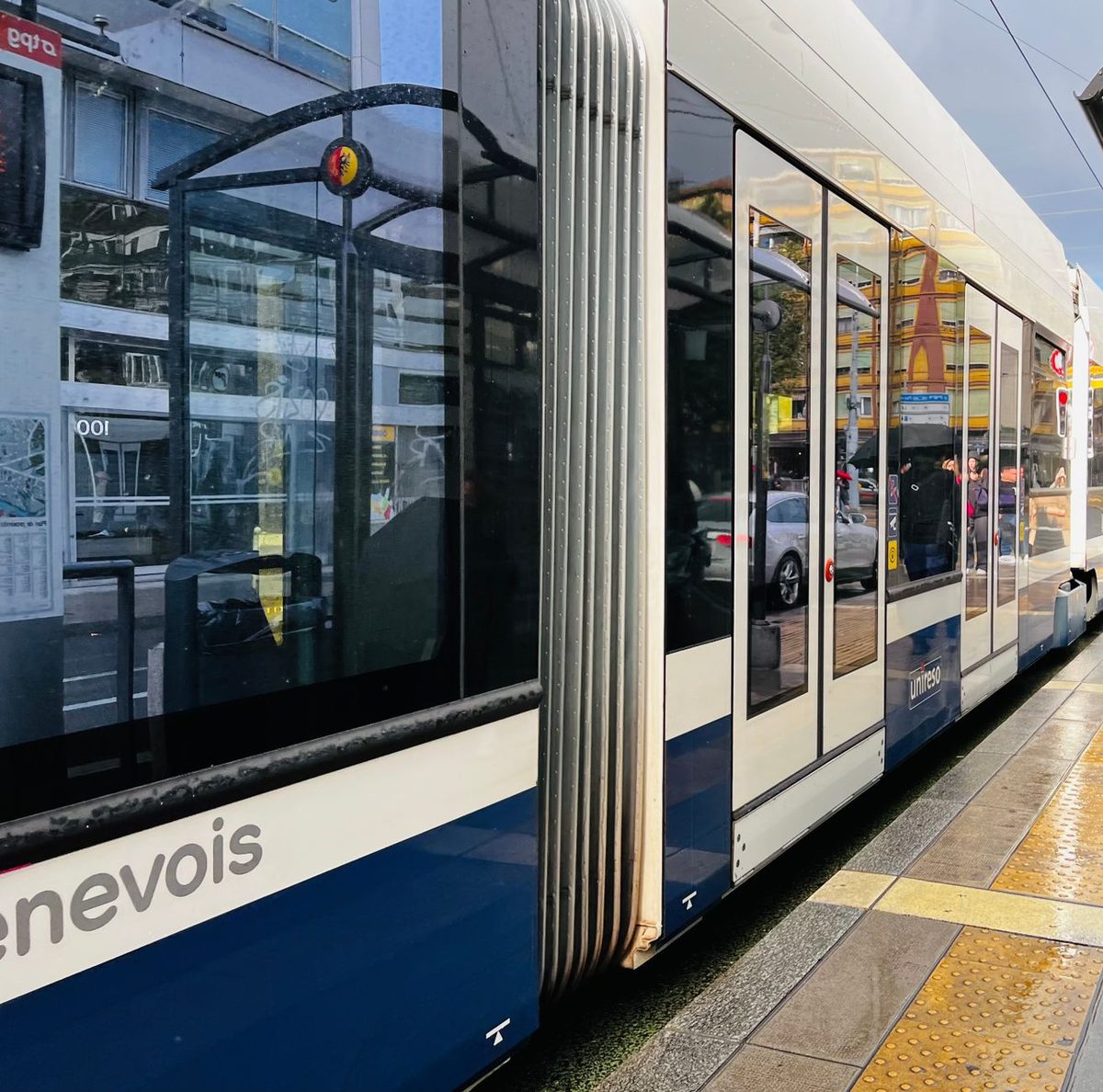
Saves: CHF 30-100+ per trip. Every overnight guest at a registered Geneva hotel, hostel, or Airbnb gets the free Geneva Transport Card, and it covers all trams, buses, the Mouettes water taxis, and the airport train. Check the EasyCheckin email about three days before you arrive; if it never shows up, ask for the card at check-in. Our Geneva Transport Card guide walks through the details.
2. Sleep in France (Annemasse or Ferney-Voltaire)
Saves: CHF 200-700 per couple per trip. Hotels in the French border towns run 30-50% below their Geneva equivalents. Tram 17 or the Leman Express puts you back in the city center in 15-25 minutes, so you are not trading much. The full play is in our budget accommodation in Geneva and France guide.
3. Book SBB Saver fares early
Saves: CHF 60-150+ on inter-city trains. SBB Supersaver tickets (Sparbillett) take up to 50% off the full or Half Fare price, subject to availability, and are tied to one specific train. See our Geneva to Zurich guide for how the Saver pricing works in practice.
4. Eat lunch, not dinner, at the Michelin rooms
Saves: CHF 80-200 per person per meal. Most of Geneva’s fine-dining kitchens run a weekday lunch menu at 40-50% of the dinner price. Domaine de Chateauvieux Fin Bec is CHF 96 at lunch versus CHF 290 at dinner; L’Atelier Robuchon is CHF 95 versus CHF 285. Same kitchen, same chef, half the bill. Our fine dining in Geneva guide has the rooms worth booking.
5. Shop Migros and Coop for breakfast and lunch
Saves: CHF 15-25 per person per day. A self-catered breakfast runs CHF 8-12 and a takeaway lunch the same, against CHF 25 for a hotel breakfast and another CHF 25 for a cafe lunch. Over five days that is CHF 75-125 saved per person, and you eat better than you’d expect.
02 — Accommodation savings
6. Book four to eight weeks ahead in peak season
Geneva summer and December rates climb hard as travel dates approach. Four to six weeks out has consistently landed me the best price.
7. Check Booking.com and the hotel’s own site
Direct rates often run 5-10% under Booking.com for the identical room, especially at smaller independent hotels and hostels. Two minutes of cross-checking pays for itself.
8. Look at Petit-Saconnex and Paquis for budget rooms
The Ibis hotels around Petit-Saconnex and the budget addresses in Paquis run 25-40% below comparable central rooms, and the location penalty is small. For the full map, see where to stay in Geneva.
9. Book a hostel even as an adult traveler
City Hostel Geneva private rooms (CHF 130-170) give you hotel-grade quality at 30-50% off, and the place is nothing like the “youth hostel” stereotype.
10. Use a long-stay aparthotel for seven nights or more
Adagio, Citadines, and Sunstar all drop their weekly rates 20-30% below the nightly equivalent, which beats most Airbnb pricing for the same level of service.
03 — Transport savings
11. Skip the Geneva day pass if you have the Transport Card
Hotel guests already ride free, so the CHF 10 day pass is dead weight unless you are staying outside the canton.
12. Buy the short-trip ticket (CHF 2) for quick hops
If you do not hold a Transport Card, the CHF 2 short-trip ticket covers up to three stops on the tpg network or one Mouettes crossing, completed within 10 minutes. That saves CHF 1 per ride over the CHF 3 single on a short hop.
13. Consider the Half-Fare Card for a mountain-heavy week
CHF 150 for one month buys up to 50% off eligible trains, buses, boats and mountain transport, with the reduction varying by ticket. It often beats the Swiss Travel Pass for itineraries built around the Alps. We compare them in our Swiss Travel Pass guide.
14. Take FlixBus to Annecy or Chamonix instead of a tour
Direct shuttles run to Chamonix from EUR 10 (against CHF 150 for an organized tour) and to Annecy from EUR 8. More options live in our day trips from Geneva guide.
15. Walk the lakefront instead of riding past it
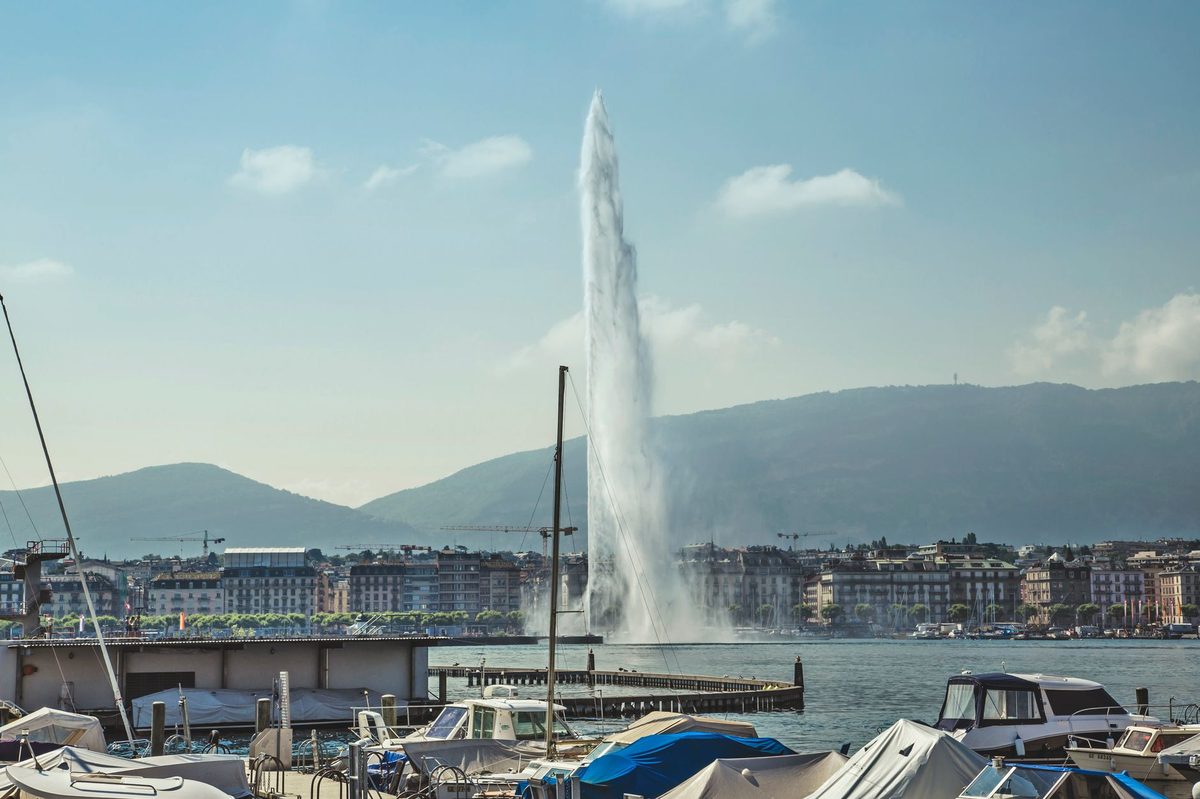
The Quai du Mont-Blanc promenade past the Jet d’Eau is one of the best free things you can do in Geneva. Riding the bus past it defeats the purpose.
04 — Food and drink savings
16. Drink the tap water everywhere
Geneva’s tap water comes straight from the lake and the Alps. It is excellent and it is free. Public fountains in every neighborhood are marked “eau potable.” At restaurants, ask for “une carafe d’eau” instead of the CHF 6 bottle.
17. Buy the Migros and Coop budget lines
M-Budget at Migros and Prix Garantie at Coop run 20-30% under the mainstream products, same quality, easy to spot by the orange and red packaging.
18. Buy your bottle of Swiss wine at the market
Producers at the Plainpalais market sell direct, so a solid Vaud or Geneva bottle runs CHF 12-18 instead of the CHF 35-50 you’d pay in a restaurant.
19. Order the plat du jour at lunch (CHF 18-25)
A sit-down two or three-course lunch at a local brasserie runs CHF 18-25 against CHF 45-65 for the same kitchen at dinner. Our cheap places to eat in Geneva guide names the ones I go back to.
20. Get CHF 27 fondue at the Buvette des Bains
Fondue au Crémant with fruit is CHF 27 per person, served on the Bains des Paquis jetty. Entry to the baths is CHF 2 for adults and you pay separately for what you eat. More picks in our best fondue in Geneva guide.
05 — Attractions and activities savings
21. Visit the free permanent collections
Most municipal museums keep their permanent collections free or pay-what-you-wish all year. The Musee d’Art et d’Histoire and Maison Tavel are pay what you wish (you can pay nothing), the Musee Ariana is free, and the Museum d’Histoire Naturelle should follow once it reopens, which is envisaged for 2028. The full list is in our free things to do in Geneva guide.
22. Grab a free four-hour bike from Geneve Roule
Bring passport ID and a CHF 20 deposit and you get a city bike free for four hours, then CHF 2 an hour after that. It is one of the best free urban services I have used anywhere in Europe.
23. Spend an afternoon at the CERN Science Gateway (free)
The CERN visitor center, opened in 2023, is entirely free and good for two or three hours of serious science. Take tram 18 from Cornavin. More ideas in our things to do in Geneva guide.
24. Join a free Geneva Tourism walking tour in summer
Geneva Tourism runs free themed walking tours from May through October. Book ahead at geneve.com.
06 — Currency and money tips
Pay with a no-foreign-fee credit card. Visa and Mastercard give you the best exchange rate. When a Swiss merchant offers to charge you in your home currency, that is Dynamic Currency Conversion, and you should always decline it and pay in CHF.
Withdraw cash in bigger chunks. Use a card with no foreign ATM fees (Revolut, Wise, Chase Sapphire) and pull CHF 100-200 at a time so you pay fewer transaction fees.
Do not change cash at the airport. The exchange counters mark up 5-12%. Use an ATM in the terminal instead; CHF 200-300 covers a few days of cash needs.
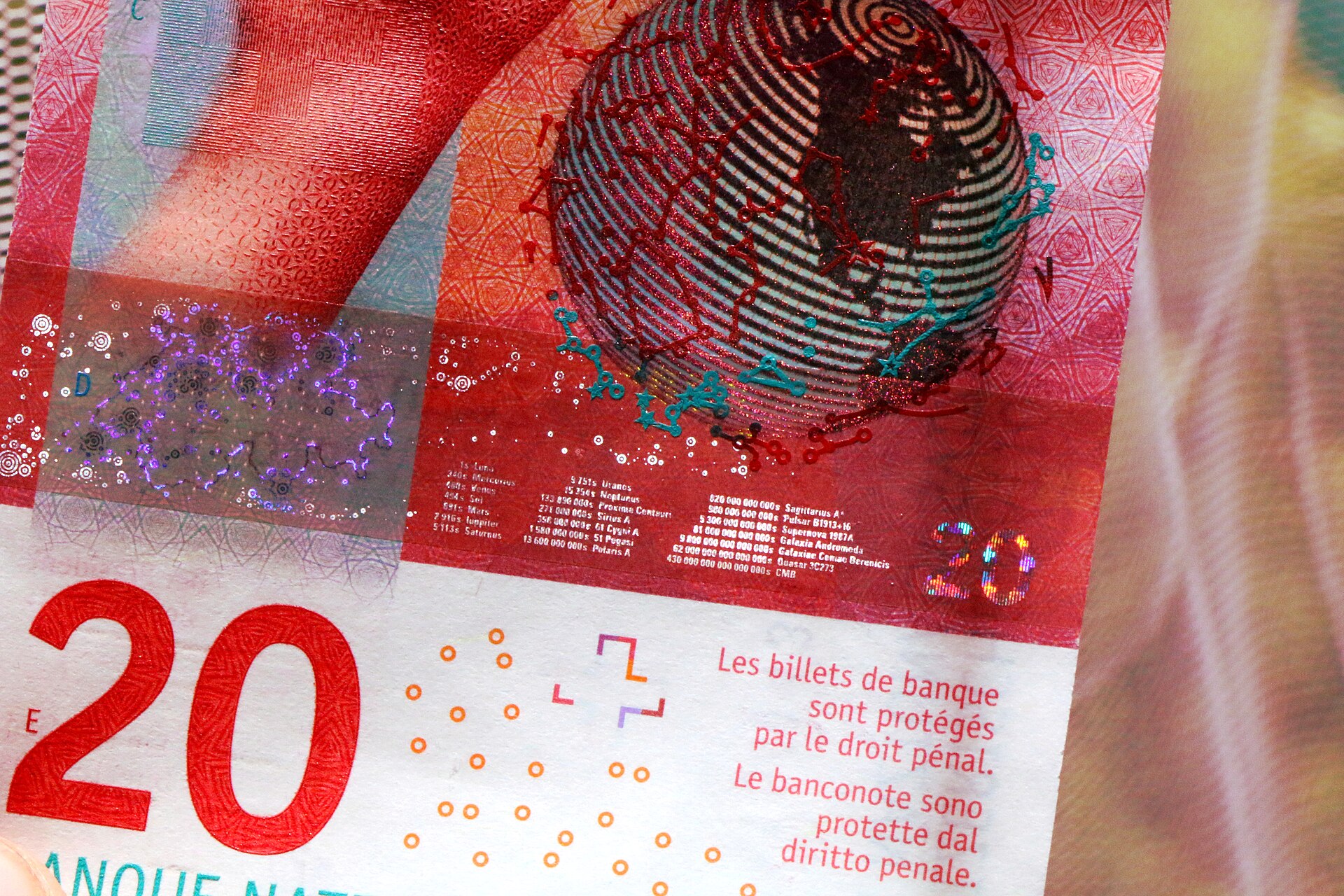
Carry small notes. Bring CHF 10, 20, and 50 notes for market vendors, tip jars, and small shops. The CHF 1,000 note exists, but hand one over for a CHF 30 lunch and you will get a sigh and a long hunt for change.
Tipping is rounding up, not 18%. Service is included by Swiss law. Rounding to the nearest 5 CHF or leaving the coins on the saucer is the local habit. Skip the US-style percentage.
07 — Seasonal and timing tips
Come November through February (skip Christmas week). Hotel rates run 30-50% below peak, restaurant prices are flat year-round, and the attractions stay open. The Escalade festival on December 11-12 is one of the best things on the city’s calendar.
Avoid Easter weekend and the August 1 weekend. Hotel rates jump 30-40% for those specific dates.
Target the shoulder months. April-May and September-October are the sweet spot: decent weather, thinner crowds, hotel rates 15-25% under peak.
Day-trip midweek. The CGN paddle-steamers, the Chamonix shuttles, and the Lavaux walks are quieter and sometimes a touch cheaper Tuesday through Thursday.
Eat early. Plenty of restaurants run the same menu cheaper for the 17:30-19:00 sitting or post a specific off-peak deal.
08 — Money-saving myths that do not work
A few tips get repeated everywhere that, in my experience, just do not save money in Geneva:
“Get a Swiss Travel Pass to save on Geneva transport.” Your hotel’s Transport Card is already free. The Swiss Travel Pass only earns its keep if you are doing real travel beyond Geneva.
“Couchsurfing is the cheapest bed.” True on paper, false in 2026. Geneva’s Couchsurfing community is small, hosts are slow to reply, and the time you spend arranging it costs more than the CHF 50 you’d save over a hostel.
“Eat at McDonald’s to save money.” A meal runs CHF 14-18, barely under the supermarket takeaway and worse than Holy Cow’s CHF 14.90 student menu, which is an actual burger.
“Walk from the airport to dodge the CHF 3 train.” The walk is 90 minutes through industrial blocks. You lose more in time than you save in cash. Take the CHF 3 train.
“Pack a water bottle from home.” Any cheap reusable bottle from a Geneva supermarket runs CHF 4-8 and works fine. No need to carry one across a border.
09 — A worked example: how the savings compound
To show how this stacks up, here is a four-day trip for a couple, the same itinerary run two ways, without the tips and with them.
Without the tips, couple, four days
- Hotel, four nights, central 3-star walk-up rate: CHF 1,000
- Hotel breakfast (4 x 2 x CHF 25): CHF 200
- Sit-down restaurant lunches: CHF 280
- Restaurant dinners: CHF 480
- Bottled water at meals: CHF 50
- SBB return Geneva-Lausanne, walk-up: CHF 96
- Three paid museum entries: CHF 45
- Two taxi rides: CHF 90
- Total: CHF 2,241
With the tips applied, couple, four days
- Annemasse 3-star hotel, four nights: CHF 480
- Migros breakfasts (4 x 2 x CHF 12): CHF 96
- Plat du jour lunches plus one supermarket lunch: CHF 180
- Two restaurant dinners plus two supermarket dinners: CHF 280
- Tap water at all meals: CHF 0
- SBB Saver Geneva-Lausanne, booked early: CHF 36
- Maison Tavel (pay what you wish) plus a second museum visit: CHF 10
- Day pass for cross-border transit (4 x CHF 10): CHF 40
- Total: CHF 1,122
Net savings: CHF 1,119 across four days for a couple. The accommodation switch does the heaviest lifting (CHF 520), then the food strategy (CHF 254), and the smaller habits fill in the rest. None of these wreck the trip. They just buy you a budget you can actually sustain. For the full picture, see our Geneva trip cost breakdown.
10 — The 80/20 of saving money in Geneva
If you only have room for three tips, make them these:
- Get the free Geneva Transport Card from your hotel. Zero effort, CHF 30-100 saved.
- Do breakfast and lunch from Migros or Coop or a plat du jour. CHF 75-125 saved per person over five days.
- Book SBB inter-city trains early as Saver fares. CHF 60-150 saved on any onward Swiss travel.
Those three cover most of the savings on this page without forcing any itinerary changes. If you are comfortable sleeping on the France side, that single move often beats all the others combined.
11 — What I would cut first on a really tight budget
If I had to rank what goes first on a genuinely lean Geneva budget, it would be this order:
- Bottled water. Free tap water is the painless cut. CHF 5-15 a day.
- Hotel breakfast. Migros breakfast for two is CHF 12 against CHF 50 at the hotel, and the hotel spread is rarely worth the markup unless it is a serious 5-star buffet.
- A restaurant dinner or two. Swap in a supermarket dinner on a lakeside bench at sunset. CHF 70 saved per swap for two.
- Taxis and Uber. The tram is free with the Transport Card. Walk or ride.
- Paid attractions you are lukewarm on. Geneva has enough free things to fill a week, so skip the paid ones you are not excited for.
- Souvenirs. A bar of M-Budget chocolate (CHF 2) tastes like the CHF 30 boutique tin, minus the packaging.
What I would not cut: travel insurance (cheap, and Swiss healthcare is brutal without it), one proper sit-down Swiss meal (fondue or raclette at CHF 25-35 is worth the memory), and the airport train (CHF 3 beats the 90-minute walk or a CHF 45 taxi). Spend on what you will remember; trim everything else.
12 — Official sources and further reading
- Free Geneva Transport Card (official)
- Migros (find locations)
- SBB Saver Day Pass
- Geneve Roule, free bike rental
Frequently asked questions
What is the single biggest way to save money in Geneva?
Sleep in France, in Annemasse or Ferney-Voltaire. That one move saves a couple CHF 200-700 a trip through accommodation rates that run 30-50% below Geneva, and the tram or Leman Express gets you back into the city in under half an hour.
Is Geneva worth visiting on a tight budget?
Yes. Backpacker daily costs can stay under CHF 100 with the free Transport Card, free museums, supermarket meals, and budget beds. The “expensive city” label has real exceptions once you know the moves.
How do I save money on food in Geneva?
Migros and Coop takeaway counters run CHF 6-10 a meal, tap water is free, plat du jour lunches are CHF 18-25, and the university cafeteria is CHF 9-13. The sit-down end of that is mapped in cheap places to eat in Geneva. Our cheap places to eat in Geneva guide has the rest.
Is tap water safe to drink in Geneva?
Yes, and it is excellent. Drink it from any public fountain marked “eau potable.” Doing so saves CHF 5-15 a day in bottled water.
Do I need to tip in Geneva?
Service is included by Swiss law. Rounding up the bill is the norm, and there is no percentage tip expected.
When is the cheapest time to visit Geneva?
November through February, skipping Christmas and Easter weeks. Hotel rates run 30-50% below peak summer and the attractions all stay open.
The biggest single saving is timing: Geneva’s hotel rates hit their lowest from the first week of January to the end of the month. Our guide to Geneva in January explains what’s on in the cheapest month.
13 — Related Geneva guides
Keep planning with our Geneva on a budget pillar, the Geneva trip cost breakdown, budget accommodation in Geneva and France, free things to do in Geneva, and our roundup of cheap places to eat.