Geneva to Zurich — Best Ways to Travel (Train, Car, Flight) 2026
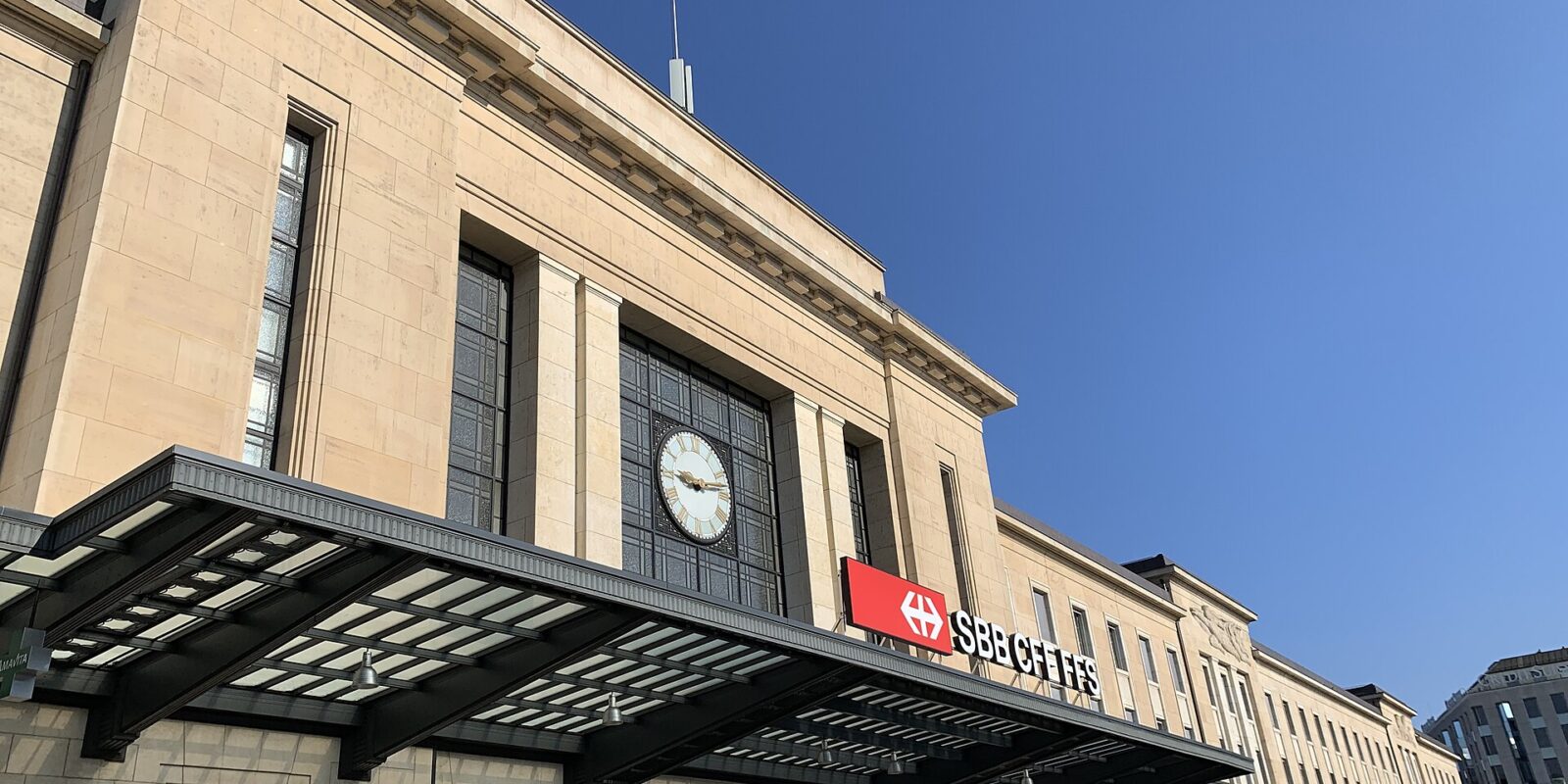
This article contains advertising. Our booking links are routed through a partner that adds commission tracking automatically, so if you book through one we earn a commission from the provider, at no extra cost to you. It never affects what we recommend. Affiliate disclosure
Geneva to Zurich is the busiest inter-city route in Switzerland, and the train is almost always the right call: 2h45 to 3h00 city-centre to city-centre, two direct InterCity departures every hour, and Supersaver fares of up to 50% off for the right train. The alternatives exist — a 50-minute flight, a 3-hour drive, a cheap FlixBus — but once you add airport time, parking, or traffic in the Bern-Olten corridor, none of them beat the SBB IC1 gliding quietly into Zurich Hauptbahnhof on time. Even with the 2026 fare tweaks, the train wins on price, door-to-door speed, comfort and reliability.
Here is the honest 2026 rundown of every way to get from Geneva to Zurich: the train (including when to take the IC1 via Bern versus the IC5 via Biel, how to land a cheap Saver fare, and why the dining car is half the point), driving the A1, flying SWISS, and the FlixBus budget play. I have done this trip dozens of times, and by the end you will know exactly which to book for your day, your luggage and your budget. For the bigger picture, start with our getting around Geneva guide.
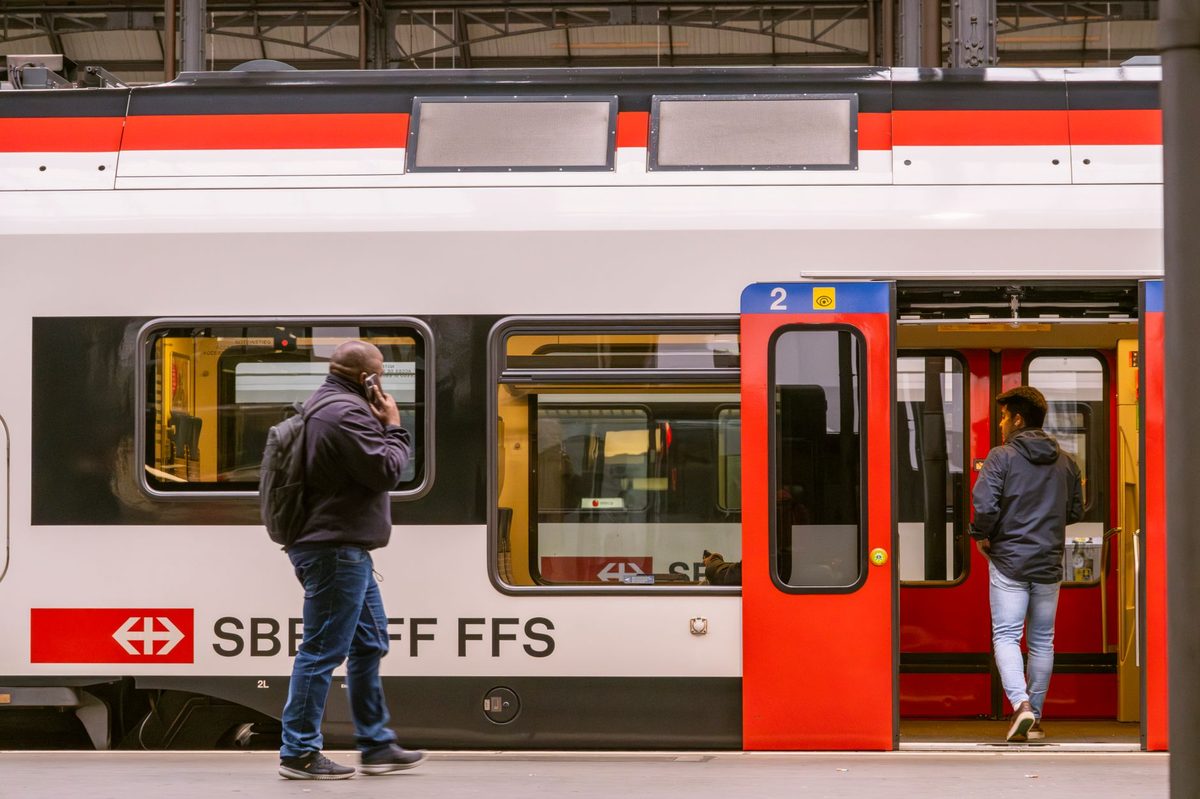
01 — Geneva to Zurich at a glance
| Option | Time | Cost (one-way) | Best for |
|---|---|---|---|
| SBB train (IC1 / IC5) | 2h45–3h00 | CHF 92 walk-up; Supersaver up to 50% off | Almost everyone |
| Drive (A1 motorway) | 3h15 (no traffic) | ~CHF 80 fuel + parking | Onward driving plans |
| Fly (SWISS) | 50 min air, ~3h door-to-door | CHF 90–180 | Tight onward connections only |
| FlixBus | 3h30–4h00 | CHF 12–35 | Budget travellers, students |
| BlaBlaCar (ride-share) | 3h–3h30 | CHF 20–35 | Flexible timing, low budget |
My 30-second answer: book the IC1 (via Bern) or IC5 (via Biel/Bienne) on a Saver fare, sit in 2nd class, have lunch in the dining car, and walk out of Zurich Hauptbahnhof into the middle of the city. That is the whole trip.
02 — The train: your default answer
SBB, the national railway, runs two direct InterCity trains every hour between Geneva (Genève-Cornavin or Geneva Airport) and Zurich Hauptbahnhof. They leave roughly at :02 and :32 past the hour from 05:00 until past midnight, and the timekeeping is the stuff of legend: SBB reported 92% of trains arriving within three minutes of schedule across 2025.
Journey time and stops
Both direct routes take 2h45 to 3h00:
- IC1 via Bern. Geneva-Cornavin to Lausanne, Fribourg, Bern, Olten, then Zürich HB. About 2h51.
- IC5 via Biel/Bienne. Geneva-Cornavin to Lausanne, Neuchâtel, Biel/Bienne, then Zürich HB. About 3h00.
You can board at Geneva-Cornavin (the main station, walking distance from most hotels) or directly under the terminal at Geneva Airport. From the airport the train adds about 7 minutes to Cornavin, and some IC services start at the airport and call at Cornavin a few minutes later.
Where to buy tickets
- SBB Mobile app (iOS/Android, free): the best price (Saver fares), a digital ticket, and live updates. This is what I use.
- SBB.ch website: identical fares to the app.
- SBB counters or machines at Cornavin/Airport: walk-up fare only, no Saver discount.
- Resellers (Trainline, Omio, Rail Europe): usually a small booking fee on top.
03 — IC1 vs IC5: the two direct routes, compared
Both reach Zurich in roughly the same time, but the two routes have different personalities, and the choice is genuinely worth a moment’s thought.
IC1 via Bern (slightly faster, more business-leaning)
This one runs through the Swiss capital. Take it if you want to combine a stop in Bern (1h45 from Geneva), if you care about the busier dining car, or if you want the family/business coach. The route hugs the Mittelland flatlands — pleasant Swiss countryside rather than drama.
IC5 via Biel/Bienne (the prettier window seat)
This one threads the Jura foothills and skirts the lakes of Neuchâtel and Biel. Take it for the better views, the quieter weekday departures, and a possible stop in Neuchâtel. It runs about 10 minutes slower than the IC1, but the Neuchâtel-to-Biel lake stretch earns those minutes back, especially on a first visit.
My rule of thumb: IC1 if you want speed and a proper lunch; IC5 if you have the time and want the window seat. Booking either is the same in SBB Mobile, so you lose nothing by picking the scenic one.

04 — Fares and how to cut the price by up to 50%
Walk-up fares (2026)
| Class | One-way | Return |
|---|---|---|
| 2nd class | CHF 92 | CHF 184 |
| 1st class | CHF 158 | CHF 316 |
Saver fares (book ahead)
SBB sells “Sparbillett” (Supersaver) tickets up to 60 days out, at up to 50% off the full or Half Fare price, subject to availability. Check the fare for your date on SBB. The catch: it ties you to one specific train and is non-refundable. Perfect for a fixed plan, risky if your day is loose.
Half Fare Card
At CHF 150 for a month, this halves every walk-up fare — so Geneva-Zurich becomes CHF 46 one-way in 2nd class. It pays for itself in about three long-distance round trips. If you are doing several inter-city hops, run the numbers against the pass in our Swiss Travel Pass guide.
Swiss Travel Pass and Saver Day Pass
The Swiss Travel Pass covers Geneva-Zurich and basically everything else in the country — the smart buy if you are taking several inter-city trains over four or more days. For a single busy day, the Saver Day Pass gives unlimited Swiss travel from around CHF 52 (advance) up to CHF 75 close to departure, which beats a single Saver ticket the moment you add a second trip.
Booking strategy that actually works
- Book Saver fares about 60 days ahead for the lowest price.
- Dodge Friday evening and Sunday afternoon — Saver inventory vanishes first on those slots.
- Aim for a weekday mid-morning (Tuesday to Thursday, 10:00–14:00), which holds the most Saver seats.
- Children under 6 travel free; ages 6–16 are free with a Junior Card (CHF 30/year, free for Half Fare Card holders).
05 — What it is like onboard: classes, dining and WiFi
The IC1 and IC5 are double-deck InterCity trains, and the onboard experience is a big part of why I keep choosing the train over the plane.
- 2nd class: comfortable 2+2 seating, decent legroom, no reservations on most IC services. Plenty of seats outside the Sunday-afternoon rush.
- 1st class: wider 2+1 seats, more legroom, a quiet coach and the odd refreshment. Worth it for long trips with luggage or busy peak departures.
- Family coach: a dedicated carriage with a small play area and a slide. Look for the family symbol; no reservation needed.
- Business coach: 1st-class only, with individual workstation tables and power at every seat.
The dining car is the bit people miss. Most IC1 and IC5 trains carry a full restaurant car serving breakfast, lunch and dinner — Swiss classics like cordon bleu, rösti and fondue, plus salads, sandwiches and a short wine list. Hot dishes run CHF 22–30, sandwiches CHF 8–12, coffee CHF 4, cash or card. My move: a coffee at boarding, then a rösti and a glass of Valais red around noon.
WiFi and luggage: SBB FreeSurf is free on most IC trains via your Swiss mobile network — fine for email, occasionally choppy in tunnels. Luggage is free, with racks at the end of each coach, and bikes are allowed for a CHF 19 supplement.


06 — Driving the A1: when the car makes sense
The drive runs the full length of the A1 motorway across the Swiss Mittelland: 282 km, an optimistic 3h15 with no traffic, realistically 3h30–4h in any rush hour. The route is dead simple — Geneva to Lausanne, Bern, Olten, Zurich, all on the A1, no turn-offs. The motorway limit is 120 km/h and it is strictly enforced.
What it costs: a compact car burns roughly 6L/100 km, so about CHF 31 of fuel one-way (CHF 63 return). Add the CHF 40 annual motorway vignette (already fitted on Swiss rental cars; visitor cars must declare it), no tolls beyond that, and CHF 30–60 a day to park in central Zurich.
Drive if: you are continuing from Zurich somewhere the train does not reach easily (Liechtenstein, smaller Alpine valleys); you have three or more adults plus luggage, so the per-head fuel cost undercuts rail fares; or you want to stop in Bern, Murten or Aarau on the way. If you need wheels, our Geneva car rental guide covers the pickup logistics.
Skip the car if: it is Friday evening or Sunday afternoon (the Bern-Olten corridor clogs badly); it is winter (black ice on the A1 adds risk and time); you are solo or a couple (the train is faster, cheaper and far less stressful); or anyone plans to drink even a glass of wine at lunch, because Switzerland’s 0.5‰ limit is taken seriously.
07 — Flying: why you probably shouldn’t
SWISS runs around seven daily Geneva-Zurich flights at 50 minutes of air time, CHF 90–180 one-way. On paper that looks fast. In practice it is not: 60 minutes at the airport before a domestic departure, 20 minutes for security and the walk to the gate, 20 for boarding and taxi, the 50-minute flight, 20–30 minutes to deplane and collect any checked bag, then 15 minutes on the train from Zurich Airport to the Hauptbahnhof.
That totals roughly three hours door-to-door — the same as the train, but more stressful, more expensive and vastly more carbon. The one good reason to fly is a tight onward international connection out of Zurich Airport. Even then, the direct SBB InterCity from Geneva Airport’s underground station to Zurich Airport often matches or beats the plane on door-to-door time.
08 — FlixBus and the budget option
FlixBus, OuiBus and BlaBlaCar Bus run several daily Geneva-Zurich coaches: 3h30–4h, CHF 12–35 one-way, leaving from the long-distance bus terminal at Geneva Airport and from Cornavin. Booked a couple of weeks out, it is comfortably the cheapest way for a single traveller. Best for students, budget travellers and anyone not in a hurry; skip it if you value time, need reliable WiFi, or have serious luggage.

09 — Going to Zurich Airport, not the city?
The direct SBB InterCity trains carry on past Zurich HB to Zurich Airport as the next stop, about 3h10 from Geneva, every 30 minutes, on the same Saver fares. If you are connecting onward through Zurich for an international flight, taking the train from Geneva Airport straight to Zurich Airport is the cleanest option — no second check-in for the rail leg, no separate airport transfer at the Zurich end.
10 — Turn the journey into a sightseeing day
The real magic of this corridor is the cities it strings together. With a Saver Day Pass (CHF 52–75) instead of a single ticket, you get unlimited Swiss travel for the day — hop off, look around, hop back on, no fresh tickets needed. Three stops are worth building a day around:
Lausanne (35 min from Geneva)
Switzerland’s Olympic capital. Give 90 minutes to the Olympic Museum (CHF 24, or free with Swiss Travel Pass), wander the medieval centre, and grab a terrace seat on Place de la Palud. Drop down to Ouchy on the lakefront for a CGN paddle-steamer photo, then carry on to Zurich in the late afternoon. Adds about three hours and turns a transit day into a proper outing.

Bern (1h45 from Geneva on IC1)
The Swiss capital and a UNESCO World Heritage Old Town. Four kilometres of arcades shelter the shopping streets, the Federal Palace faces the Bundesplatz fountains, and the Zentrum Paul Klee or the Einstein House each fill a worthwhile hour. Lunch near the bear pits, then catch the next IC1 onward. Adds about four hours.
Neuchâtel (1h15 on IC5)
The smallest of the three and the one I would not skip. A lakefront medieval town in yellow stone that Alexandre Dumas once said looked carved from a giant block of butter. A quick coffee on the waterfront, a walk through the Collégiale, and the next IC5 has you moving again. Adds about 90 minutes.
11 — The carbon case for the train
If your footprint matters — or your employer’s travel policy does — the train is the obvious choice. SBB runs on 100% hydroelectric power, and the per-passenger maths is stark: roughly 1.4 kg of CO2 by train, around 38 kg driving solo, and about 110 kg flying one-way. That makes the train roughly 80 times more efficient than the flight per passenger, and the SBB Mobile receipt includes a CO2 figure you can file straight into an expense system.
12 — Practical tips before you go
- Respect the Saver trap. A Saver ticket is void if you miss its train, so leave a 30-minute buffer if your day is at all uncertain.
- Reserve a 1st-class seat if it matters (CHF 5). Worth it on a busy Friday or Sunday train.
- Use SBB Mobile for everything — tickets, live platforms, station maps, even the dining-car menu. Install it before you arrive.
- Groups of four or more should price a Saver Day Pass each, which often beats four individual Saver tickets.
- Open boarding is the norm. No platform gates, no scan until the conductor comes round; just be on the platform five minutes before departure.
Frequently asked questions
How long does Geneva to Zurich take by train?
2h45 to 3h00 on the direct InterCity services — the IC1 via Bern (about 2h51) or the IC5 via Biel/Bienne (about 3h00). There are two direct trains every hour.
How much is a Geneva to Zurich train ticket?
CHF 92 in 2nd class or CHF 158 in 1st at the walk-up rate. Supersaver fares can take up to 50% off if you book ahead, and the trip is free with a Swiss Travel Pass.
Is there a direct train from Geneva to Zurich?
Yes — two per hour, both direct: the IC1 via Bern and the IC5 via Biel/Bienne. No changes are needed on either.
Is it faster to fly or take the train?
Door-to-door they are about equal at roughly three hours, but the train is cheaper, more comfortable, and runs on a far more reliable schedule than the flight.
Is the Geneva to Zurich train scenic?
Pleasant rather than dramatic — Mittelland farmland and lakes. The IC5 via the Jura and Lake Neuchâtel is the prettier of the two. For real Alpine drama, look at the Bernese Oberland or Glacier Express routes instead.
Should I drive from Geneva to Zurich instead?
Only if you have onward driving plans beyond Zurich, three or more travellers, or specific stops to make en route. For a solo traveller or a couple, the train wins on cost, speed and stress.
13 — Related Geneva guides
Keep planning with our getting to and around Geneva guide, the Swiss Travel Pass breakdown, the airport to city centre options, the Geneva to Chamonix transfer, and renting a car in Geneva.