Geneva to Chamonix — All Transport Options (Bus, Car, Train, Tour) 2026
This article contains advertising. Our booking links are routed through a partner that adds commission tracking automatically, so if you book through one we earn a commission from the provider, at no extra cost to you. It never affects what we recommend. Affiliate disclosure
Geneva to Chamonix is the easiest international ski-resort transfer in the Alps: under 90 km, about 1h15 by direct shuttle, on a route served by several transfer operators that also run to other Alpine resorts. For most people the decision comes down to four options — a shared shuttle (AlpyBus from €19.50, or Mountain Drop-offs’ €50 interseason Super Saver fare where available), a private transfer (quoted by vehicle and date), a rental car (the right answer only if you will drive on to other resorts), or the slow, scenic train via St-Gervais and the Mont-Blanc Express. Which one wins depends on your group size, arrival time, season and how much ski luggage you are hauling.
This is the honest 2026 guide to every Geneva to Chamonix transport option, with prices and journey times: how the shared shuttles from Mountain Drop-offs and AlpyBus actually work, the Mont-Blanc Express scenic alternative, driving the A40, and the return-trip timing that catches people out. Arriving for a long ski weekend or a week on the lifts with kids and ski bags, you will find the right transfer below. First, see how Chamonix fits with everything else in our getting around Geneva guide.
01 — Geneva to Chamonix at a glance
| Option | Time | Cost (per person, one-way) | Best for |
|---|---|---|---|
| Shared shuttle (Mountain Drop-offs, AlpyBus) | 1h15–1h30 | From €19.50 (AlpyBus) | Most travellers |
| Private transfer (4–8 people) | 1h–1h15 | €200–350 total | Groups, late arrivals |
| FlixBus | 1h10–1h25 | €10–25 | Solo, budget, booked ahead |
| Train + Mont-Blanc Express | About 2h40, varies with connections | ~€30 | Scenic route, light luggage |
| Rental car | 1h15 | ~€50–80 + fuel | Onward Alpine touring |
| Taxi | 1h15 | €250–350 | Last resort |
| Helicopter | 15–20 min | €2,500–3,500 | Premium only |
My 30-second answer: if you are one or two people, book FlixBus or a shared shuttle. From three people up, or with serious ski luggage, the per-head cost of a shared shuttle (or even a six-seat private transfer) drops below the bus and the door-to-door drop-off is worth it. Couples on a quick trip: FlixBus is the value play. Families and groups: a shared shuttle from Mountain Drop-offs or AlpyBus hits the sweet spot.
02 — Shared airport shuttles
Several specialist operators run shared transfers from Geneva Airport to the Chamonix valley, and how often they leave depends on the operator and the season.
Mountain Drop-offs
- Shared: fares change with season and date, and include a €50 interseason Super Saver fare where available.
- Private: €280–350 for up to four, more for a seven-seat minivan.
- Drop-off: door-to-door at any valley address (Chamonix, Argentière, Les Houches, Vallorcine).
- Departures: over 20 a day scheduled in high season. Book at mountaindropoffs.com or via Chamonix.net.
AlpyBus
- Shared: from €19.50 per person, with an Express line that is the cheapest service at peak times; the price depends on the service and date.
- Private: €240–320 for up to four.
- Drop-off: door-to-door at valley addresses. Book at alpybus.com.
How the shared shuttles work in practice
Book online, pick a departure, and the operator confirms your pickup details before you travel. On arrival, find their check-in desk in the arrivals hall, confirm your booking, and board the next minibus. Drop-off is at your front door, but a shared run makes several stops, so the journey time depends on traffic, weather and where you are staying. Ask at booking whether you will be early or late on the route — it makes a real difference after a long flight.
03 — Private transfers
A private transfer is one vehicle for your group, straight from Geneva Airport to your door, no other passengers. It earns its keep when:
- You are four or more, so the per-head price dips below a shared shuttle.
- You land late, after the last shared shuttle of the day.
- You want an early departure to grab a full first day on the slopes.
- You are travelling with small children or anyone who would rather skip a 90-minute shared minibus.
Mountain Drop-offs Private and AlpyBus Private both cover this at €240–350 for a four-seat sedan or €320–450 for a six- to eight-seat minivan. Premium operators (Blacklane, Alpine Fleet) charge €400–650 for a Mercedes V-Class or similar.
04 — FlixBus and public coaches
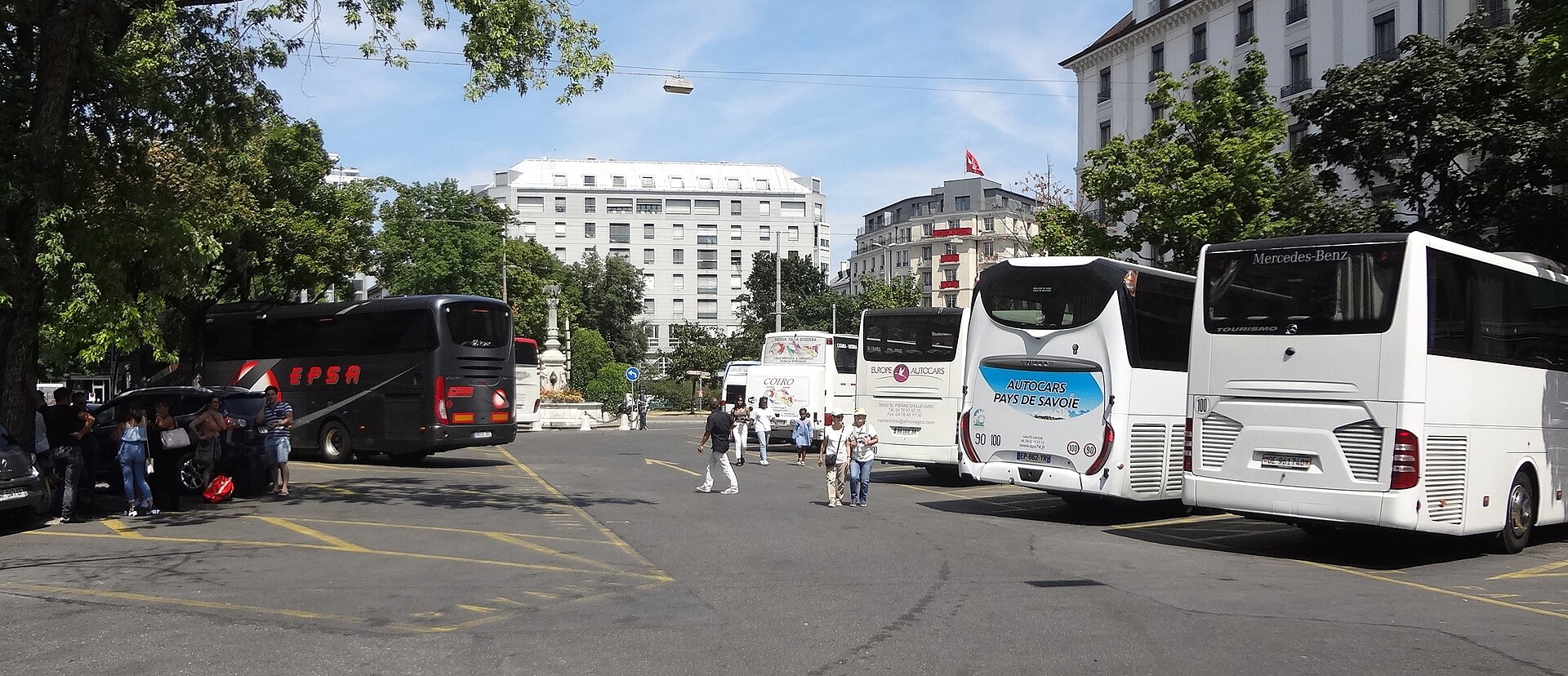
FlixBus runs 11 daily Geneva Airport to Chamonix-Mont-Blanc coaches in season, from €10 rising toward €25 close to travel. The airport run generally takes about 1h25, and the coach stops at Chamonix bus station rather than at your door, so check how far your accommodation is from the stop before you book.
Best for: solo budget travellers, students, anyone staying in Chamonix town, and bookings made a couple of weeks ahead. Skip it if: you have heavy luggage (ski bags are accepted but add charges; oversized cases may be refused), you need door-to-door drop-off, or your timing falls outside the FlixBus schedule. Swisstours, OuiBus and BlaBlaCar Bus run similar direct services; CheckMyBus aggregates them.
05 — Train and Mont-Blanc Express: the scenic route
This is the slowest and most charming way in. The route runs in three legs:
- SBB train from Geneva-Cornavin via Annemasse to Bellegarde or St-Gervais-Le Fayet, depending on the routing.
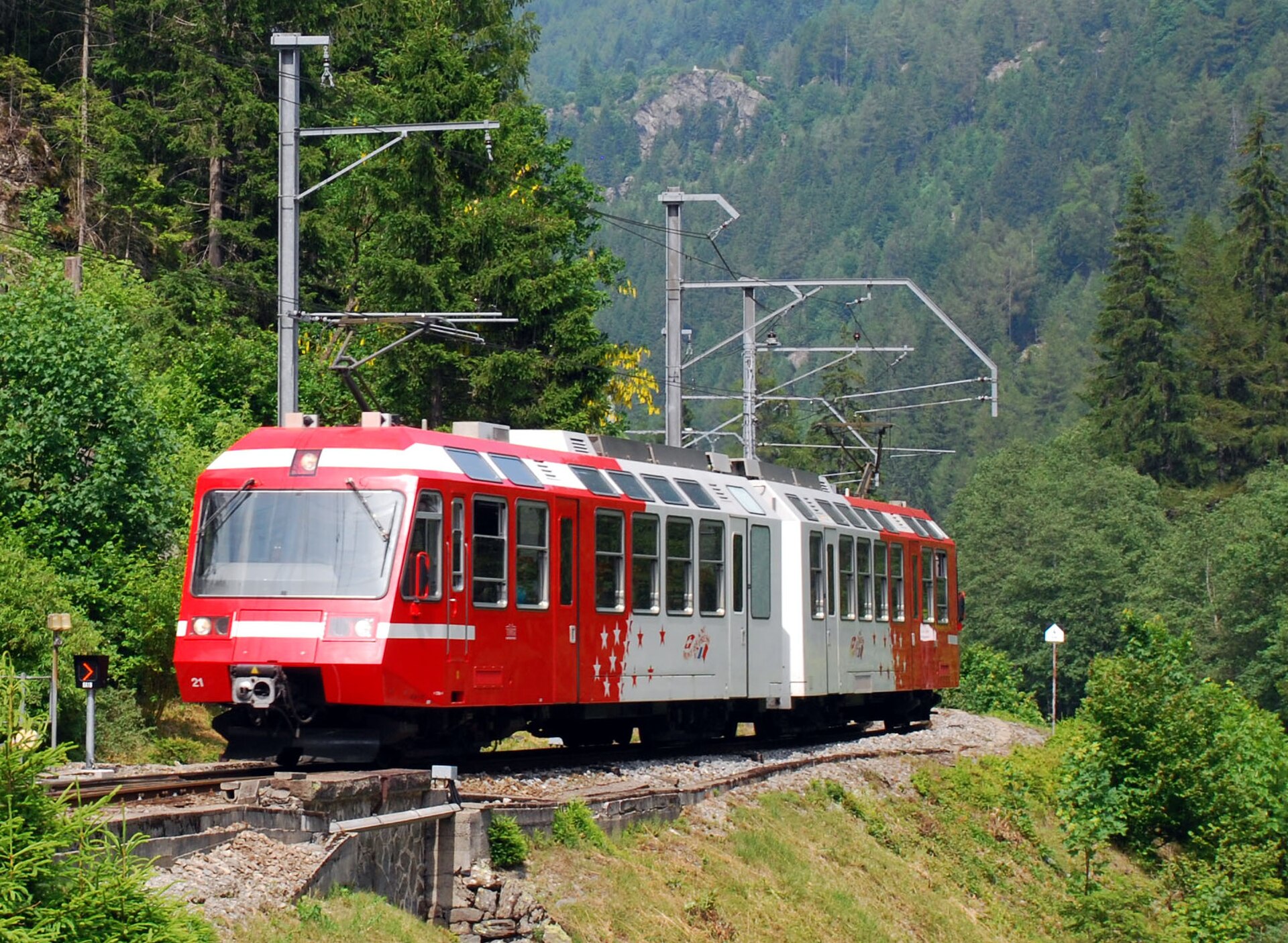
- Change at St-Gervais to the historic Mont-Blanc Express, the narrow-gauge cogwheel railway through the Chamonix valley.
- Mont-Blanc Express stops include Les Houches, Chamonix-Mont-Blanc, Argentière and Vallorcine, the terminus near the Swiss border.
Total time: about 2h40 from Geneva Cornavin, varying with connections. Cost: €30–45 one-way (CHF 35–50 for the SBB leg plus €15–20 for the Mont-Blanc Express). Frequency: hourly in season, reduced off-season. The Mont-Blanc Express leg alone is worth doing — a slow climb through pine forest with Mont Blanc filling the view to the south. Skip it if you have heavy luggage or a tight schedule, and check the timetable before you count on it for an early or late arrival.

06 — Driving the A40 motorway
By rental car it is under 90 km from Geneva Airport along the A40 through Annemasse and Sallanches, and the drive time depends on traffic: allow extra on a busy February Saturday. The route is straightforward — Geneva Airport, A40 east signed “Italy / Chamonix”, then the Route Blanche (RN205) from Passy into Chamonix.
What it costs
- Rental car: €50–80/day for an economy car, more for an SUV.
- Fuel: €15–25 round trip.
- French toll (péage): €15 each way on the A40.
- Swiss vignette: not needed — the A40 is entirely in France.
- Parking in Chamonix: €15–30/day at central garages.
A useful trick: if you are driving to Chamonix and not entering Switzerland, rent on the French side of Geneva Airport (Avis France, Sixt France and others). Compare quotes from both sides before you book; whether you need the Swiss motorway vignette depends on your route, not on where you collect the car. Our car rental guide has the details. Drive if you are continuing beyond Chamonix (Mégève, Saint-Gervais, Italy via the Mont-Blanc Tunnel), if you are a group of four or five where rental plus fuel beats per-head shuttles, or if you want daily flexibility for off-piste excursions. In heavy weather, snow chains are sometimes required on the RN205 access road, so check your rental includes them.
07 — Taxi and helicopter
The Geneva Airport taxi rank runs 24/7 and will take you to Chamonix on the meter, usually €250–350 one-way for the cross-border run. A pre-booked private transfer at €240–280 almost always undercuts it, so the taxi really only makes sense for a 02:00–05:00 arrival with no booking.
At the other end of the scale, you can charter a helicopter from Geneva Airport to Chamonix for €2,500–3,500 (four passengers); flight time comes with the operator’s quote. It is for VIPs and very tight schedules, but the ride past Mont Blanc, the Bossons glacier and the Aiguille du Midi is one of Europe’s great helicopter flights.
08 — Winter vs summer, and shoulder season
Winter (December–April, ski season): shuttle prices peak, so book four or more weeks ahead; schedules are at their densest, with Mountain Drop-offs alone running over 20 shared departures a day in high season; Saturday is the changeover day, so book early and budget extra journey time; snow chains may be needed on the Route Blanche in heavy storms.
Summer (June–September, hiking and climbing season): the train plus Mont-Blanc Express combination is at its prettiest, and Tour du Mont Blanc hikers lean on the shuttle. Shoulder seasons (May, October–November): lowest prices and most flexibility, but some lifts and attractions close for maintenance and shuttle frequency thins out, so confirm before you travel.

Chamonix is one of the two routes where the train genuinely beats a road transfer, which is the sort of thing an operator quote will never tell you — our comparison of shared, private, coach and rail transfers from Geneva sets out where each one wins.
09 — Planning the return transfer
The return is the more time-sensitive booking — missing a Geneva flight because the shuttle was overbooked is the classic Chamonix mistake. A few rules keep it clean:
- Allow three hours total. 1h15 shuttle plus 1h45 for airport and security, before scheduled departure.
- Book the return with the outbound. Most operators give a small round-trip discount (€5–10 per person).
- Watch the pickup time. The operator confirms it before you travel, so read the message and be at the pickup point early.
- End-of-season service thins. Skiing in late April or early May? Confirm the late shuttle is still running before you book your flight.
- Last sensible shuttle from Chamonix to Geneva varies by operator, so check it and the day’s lift closing times before you plan a final run.
10 — What to ride first once you arrive
Chamonix is not one resort but a string of lift-served domains. The five excursions worth a first-timer’s time:

Aiguille du Midi (3,842 m)
The unmissable one. Two cable cars from central Chamonix climb to 3,842 m in 20–40 minutes, depending on crowds — one of the highest points you can reach in the Alps without climbing gear. The summit terrace gives 360-degree views of Mont Blanc, the Italian Alps and the Valais, and the “Step into the Void” glass box (free with the cable-car ticket) is one of the great Alpine photos. Adult returns cost €60.20–€83 from 1 June to 30 November 2026, and every ticket needs a departure reservation, so book on the Aiguille du Midi pages of montblancnaturalresort.com.
Montenvers and the Mer de Glace (1,913 m)
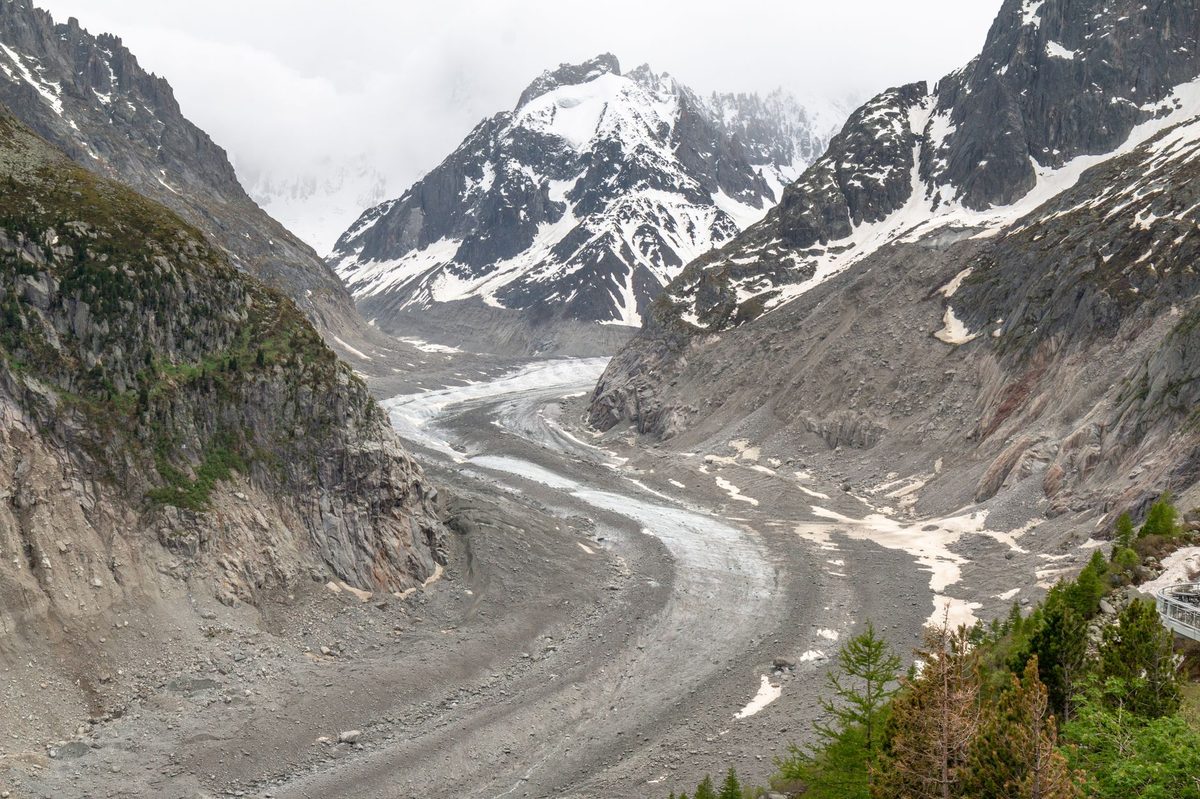
A historic rack railway climbs 20 minutes from town to the Mer de Glace glacier viewpoint. The glacier has retreated sharply in recent decades; the ice cave at the bottom (reached by cable car and stairs) is the highlight, but it is closed from 28 September to 1 November 2026. The train alone costs €31.50 return for adults (the glacier gondola and ice cave need a different ticket), and it makes a natural pairing with the Aiguille du Midi for a full day.
Brévent and Flégère (2,500 m)
The sunny side of the valley, with the best head-on Mont Blanc panoramas and gentler, family-friendly hiking. An adult return to the Brévent summit is €43 (€25 as far as Planpraz); Flégère costs €25, or €43 including the Index chairlift.
11 — Where to stay in the valley
Chamonix town centre puts you within walking distance of the Aiguille du Midi cable car and the Montenvers train. Argentière (8 km up-valley) sits closer to the Grands Montets lifts and is quieter at night. Les Houches (8 km down-valley) is the cheaper, family-friendly option with its own ski domain, and Vallorcine, on the Swiss border, is the smallest and a favourite of cross-country skiers. Not every shuttle is door-to-door, so check the product you book and confirm your address with the operator. For the Geneva-side comparison, see our where to stay near Geneva for skiing guide.
Frequently asked questions
How long does Geneva to Chamonix take?
About 1h15 from Geneva Airport by shuttle, depending on traffic, weather and where you are staying; about 1h25 by FlixBus; and about 2h40 from Geneva Cornavin by train plus the Mont-Blanc Express, depending on connections.
What is the cheapest way to get from Geneva to Chamonix?
FlixBus from €10 if booked a couple of weeks ahead, or AlpyBus shared shuttles from €19.50. For groups of four or more, a per-head private transfer often beats both.
Do the shuttles run year-round?
Yes — Mountain Drop-offs runs all year, and winter brings the most departures across the operators. Some smaller operators reduce or pause service in the shoulder months.
Can I take a ski bag on the shuttle?
Yes, but the rules vary by operator. AlpyBus charges for ski and snowboard bags, so declare them when you book and check the fee in your quote. FlixBus may charge a small fee for oversized luggage.
Is there a direct train from Geneva to Chamonix?
Not direct — you change at St-Gervais-Le Fayet onto the Mont-Blanc Express. The route is scenic but slow, about 2h40 in total from Geneva Cornavin.
Is the Geneva to Chamonix transfer covered by the Swiss Travel Pass?
No — Chamonix is in France and sits outside the Swiss Travel Pass coverage area. You will pay separately for any transfer.
12 — Related Geneva guides
Keep planning with our getting to and around Geneva guide, the airport to city centre options, renting a car in Geneva, the best day trips from Geneva, and where to stay near Geneva for skiing.
Chamonix is one of sixteen resorts covered in our Geneva Airport ski transfer guide, which compares the same options for Verbier, Morzine, Val Thorens and the rest of the Alps.