Renting a Car in Geneva — Tips, Rules & Best Scenic Routes (2026)
This article contains advertising. Our booking links are routed through a partner that adds commission tracking automatically, so if you book through one we earn a commission from the provider, at no extra cost to you. It never affects what we recommend. Affiliate disclosure
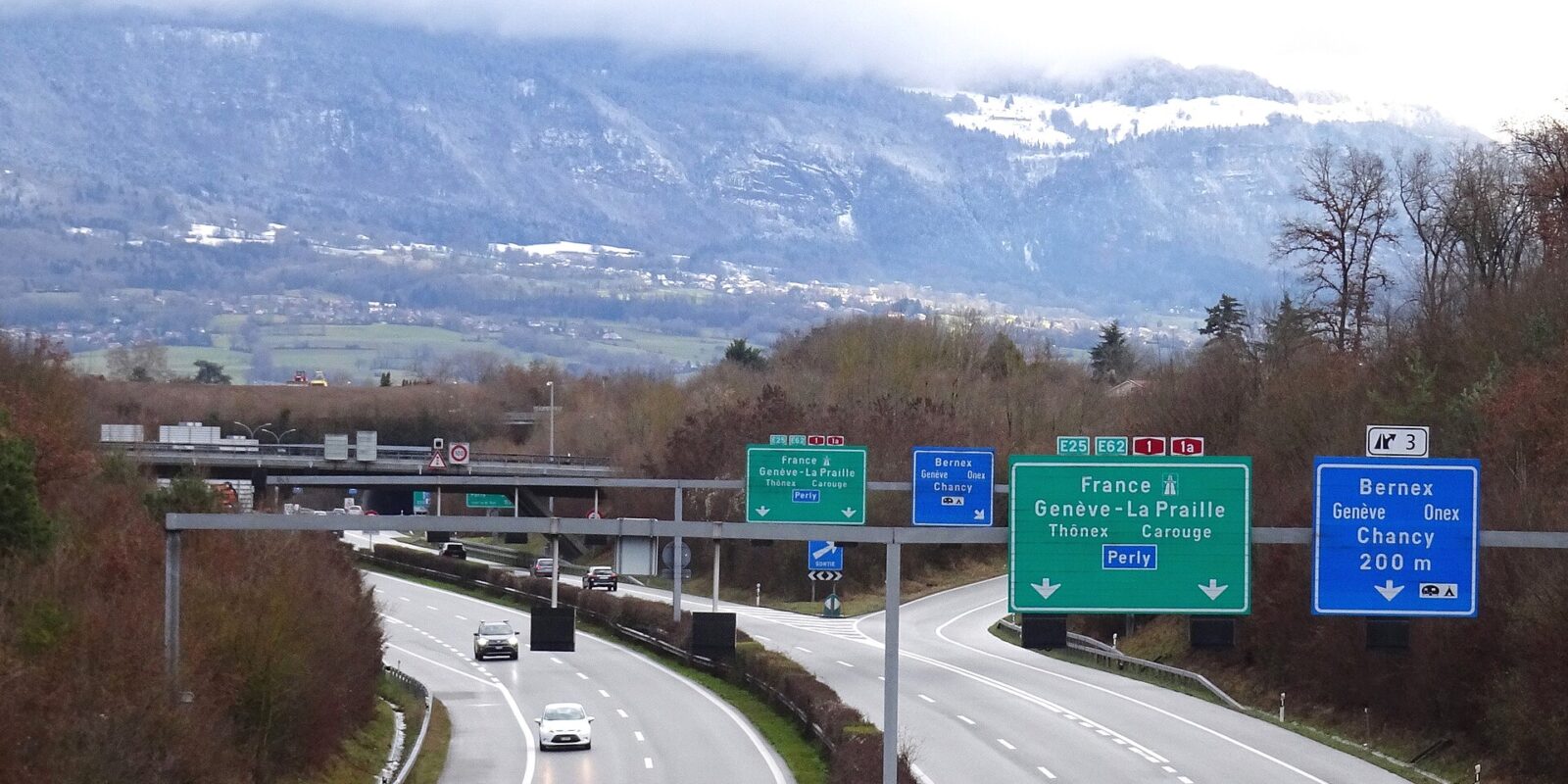
Renting a car in Geneva is almost never the right move for seeing Geneva itself: the centre is heavily restricted, parking is punishing, and public transport is free for hotel guests. Rent for what lies beyond the city instead: the Alps within an hour, the lake circuit, the Mont-Blanc corridor, Annecy, the Jura, the Valais wine villages. Geneva Airport is one of Europe’s best rental hubs (12 brands, two countries, a deep fleet), and one smart choice, which side of the airport border, which company, which insurance, which vignette, can save you CHF 200 and a lot of friction.
This is our 2026 guide to renting a car in Geneva: the French-side versus Swiss-side decision unique to GVA, the mandatory CHF 40 Swiss motorway vignette, the parking-zone colour code that catches every visitor on day one, the cross-border rules into France and Italy, the winter-tyre season from October to April, the four best driving routes from the airport, and a short list of the rental insurances actually worth buying. Picking up at GVA for a ski week, a Lake Geneva loop, or a longer run to Provence? Every call is covered here. If you are still deciding, weigh it against the free Geneva public transport and the Geneva Transport Card.
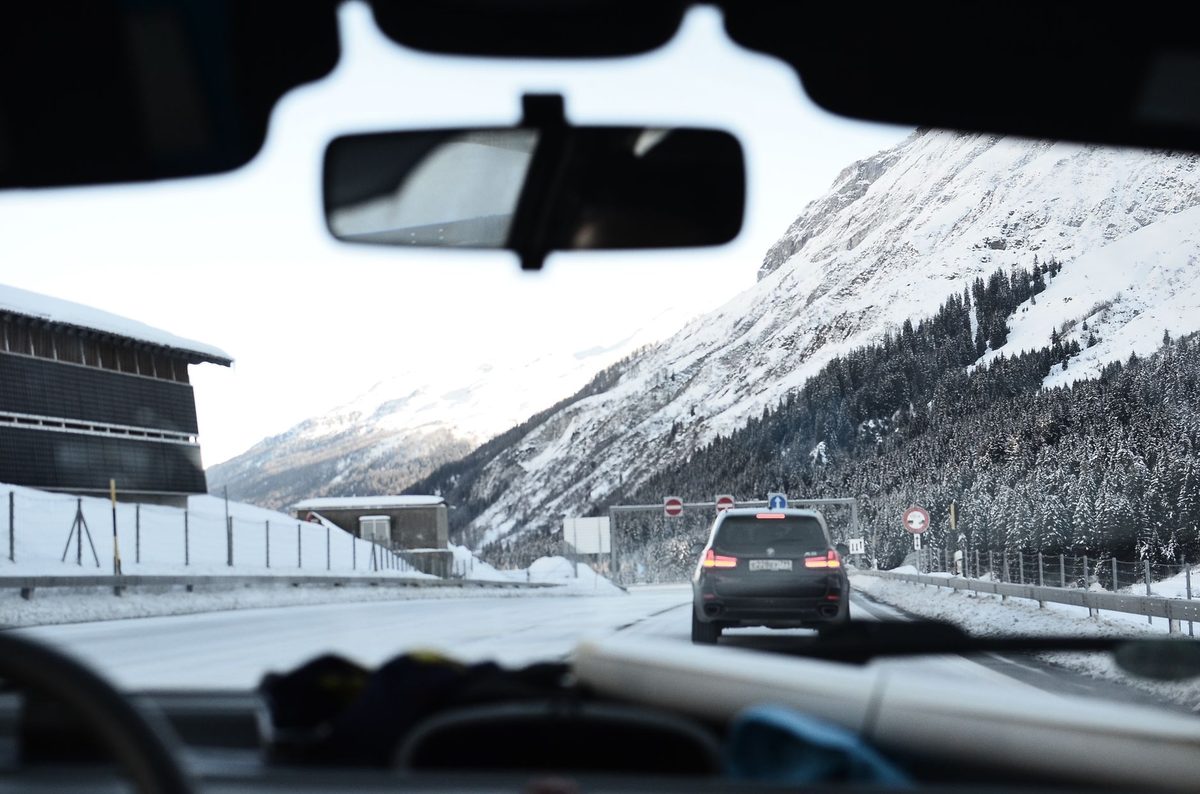
Table of Contents
01 — Should You Even Rent a Car?
The honest answer for most visitors: probably not for the Geneva-only days, definitely yes for the Alpine-and-beyond days. Geneva runs on public transport, taxis, and walking. Renting for a 4-day Geneva-only trip is a CHF 250-plus mistake, since parking alone eats the savings.
Rent if you are doing any of these:
- Driving onward to Chamonix, Annecy, Val d’Isere, or other French Alpine resorts.
- Looping the Lake Geneva shore (Lausanne, Vevey, Montreux, Evian, Yvoire).
- Heading into Valais (Verbier, Crans-Montana, Saas-Fee, the Zermatt approach).
- Combining Geneva with Burgundy, Provence, or northern Italy.
- A ski trip with kids and gear, where the luggage makes a car easier than trains.
Do not rent if you are doing any of these:
- A pure city break; central Geneva is largely pedestrianised and parking is expensive.
- Geneva plus Zermatt, Lucerne, or Zurich; trains are faster, easier, and often cheaper than driving.
- A solo or couple trip with no luggage; taxis and public transport handle every scenario.
02 — Where to Rent: Airport, City, French Side?
Geneva Airport, Swiss side (best for most)
Eight companies (Avis, Budget, Enterprise, Europcar, Hertz, National/Alamo, Sixt, Thrifty) have desks in the rental hall on the Swiss arrivals level. Walk through baggage claim, follow the “Car Rental” signs, about 4 minutes from your luggage. Swiss-side cars come with the motorway vignette, winter tyres in season, and are pre-registered for Swiss customs. The default, and the right answer for 90% of visitors heading into Switzerland.
Geneva Airport, French side
Smaller selection (Avis France, Sixt, Enterprise, Alamo, a few others) in the dedicated French sector, reached via the airport’s easy-to-miss “France” exit. The cars are French-registered, do not include the Swiss vignette by default, and need declaring at Swiss customs if you will use Swiss motorways. Generally 10-25% cheaper than the Swiss side. Best for trips that begin and end in France (Chamonix, Annecy, Provence) where skipping the Swiss vignette and insurance markup saves money.
Geneva city centre
Several branches on the right bank (Paquis, Cornavin area) and the left bank (Eaux-Vives). The selection is smaller than at the airport, prices similar or a touch higher, and an in-city pickup spares you the train back to your hotel after collection. Best for visitors who arrive by train rather than plane.
Annemasse / Ferney-Voltaire (France-side suburb pickup)
Several agencies operate in Annemasse, just over the French border on tram 17 from central Geneva, often 20-35% cheaper than even the French side of GVA. Budget a 15-30 minute trip to collect the car. Best for budget-minded cross-border trippers.
03 — French Side vs Swiss Side, the Real Differences
This decision matters more than any other. Here it is, broken down:
| Swiss Side | French Side | |
|---|---|---|
| Price | Higher (CHF 75-120/day economy) | 10-25% lower |
| Vignette (CHF 40) | Included | Not included, add it yourself |
| Insurance | Swiss/EU broad | French/EU broad |
| Winter tyres | Auto in season | Often not, request them |
| Return location | Swiss side (or one-way fee) | French side (or one-way fee) |
| Cross-border | EU + Switzerland | EU + Switzerland (declare at customs) |
| Best for | Switzerland tours, ski to Verbier/Zermatt | Chamonix, Annecy, Provence, Italy via France |
One-way returns (pick up Swiss, drop off French) usually run CHF 50-150 extra. Cross-country returns (Geneva pickup, Zurich drop-off) run CHF 150-300 extra.
04 — What It Actually Costs in 2026
Typical 2026 daily rates at GVA, Swiss side, economy class (Renault Clio, VW Polo, and similar):
- Economy car (manual): CHF 65-110/day
- Compact (Golf, Astra): CHF 85-140/day
- SUV (Tiguan, X-Trail): CHF 120-200/day
- Premium (BMW 3-series, Mercedes C): CHF 160-280/day
- 7-seater minivan: CHF 180-280/day
Extra costs to budget:
- Young-driver surcharge (under 25): CHF 25-40/day
- Additional driver: CHF 5-15/day
- Snow chains: CHF 15-25/day (winter)
- GPS: CHF 10-20/day (skip it, use your phone)
- Child seat: CHF 5-10/day per seat
- Fuel: petrol around CHF 1.85/litre, diesel around CHF 1.95/litre
- Swiss tolls: just the CHF 40 annual vignette, no individual tolls.
Rule of thumb: a 4-day Geneva-to-Zermatt round trip in an economy car runs roughly CHF 450 all-in (rental, fuel, Swiss tolls), about the same as two adult Swiss Travel Passes but with the freedom to pick your own route. The Swiss Travel Pass guide runs that comparison in detail.

05 — The CHF 40 Swiss Vignette
The Swiss motorway vignette is the small sticker that lets your car onto any Swiss motorway. It costs CHF 40, is valid for 14 months, from 1 December of the year before to 31 January of the year after (so the 2027 vignette, on sale from 1 December 2026, runs until 31 January 2028), and is required on any Swiss motorway. Driving without it on a motorway means a CHF 200 fine plus the cost of the vignette.
Where you need it: every Swiss motorway (the A1, A2, A3 and so on, the green-signposted high-speed roads). You do not need it on non-motorway routes, but in practice any drive of length within Switzerland will touch a motorway.
How to get it:
- Swiss-side rentals: pre-fitted with the annual vignette. Check the windshield sticker when you collect.
- French-side rentals: not pre-fitted. Buy one at a Swiss border post, any Swiss petrol station, or the Geneva tourist office, and stick it on before joining a motorway.
- Since August 2023 there has also been an e-vignette (CHF 40, digital, tied to your number plate), sold at the official site, e-vignette.ch. Handy for short stays with no physical sticker.
06 — Insurance, What’s Worth Buying
Standard contracts include third-party liability and basic collision and theft cover with a high CDW deductible (typically CHF 1,500-3,000). The four upgrades worth weighing:
Super Collision Damage Waiver (Super CDW)
Cuts or removes the deductible. CHF 12-25/day. Worth it for unfamiliar mountain roads, snow, or valuable cargo. Often free with premium credit cards (Amex Platinum, Chase Sapphire), so check before paying at the counter.
Theft protection
Usually included in Swiss rentals. Verify in your contract.
Tyre and glass coverage
Recommended for mountain driving, where small rock chips are common. CHF 5-10/day. Often the most-claimed cover and the cheapest to add.
Personal accident insurance
Almost always duplicates your health or travel insurance. Skip it.
Smart play: check what your credit card and travel insurance already cover before you arrive, and bring printouts. At the counter, decline the duplicates and add tyre and glass cover specifically.

07 — Swiss Driving Rules & Speed Limits
- Drive on the right.
- Speed limits: 50 km/h urban, 80 km/h rural, 100 km/h non-motorway expressways, 120 km/h motorways.
- Speed cameras: everywhere and unforgiving. 10 km/h over on a motorway is CHF 120; 26 km/h over is CHF 600-plus and a court summons; 40-plus over costs your licence on the spot. The Swiss take speed enforcement seriously.
- Alcohol limit: 0.5 per mille for experienced drivers, 0.1 per mille for new drivers (3-year licence) and professionals. In practice the enforcement is zero-tolerance, so do not drink and drive.
- Phone: hands-free only. Texting or holding a phone is a CHF 100 minimum and possible licence suspension.
- Headlights: daytime running lights are mandatory at all times since 2014.
- Children: under 12 or under 150cm must use an approved child seat or booster.
- Roundabouts: traffic already in the roundabout has right of way.
- Tunnels: many Swiss Alpine tunnels are toll-free (covered by the vignette); some private ones (such as the Great St. Bernard) have separate tolls.
08 — Geneva Parking: Blue, White & Yellow Zones
Geneva’s three-colour parking system trips up every visitor on day one. Commit this to memory:
White zones, paid public parking
The most common in the city centre. Pay at the meter or via the PayByPhone app, CHF 1-4 an hour depending on zone, usually a 4-hour max. Display the ticket on the dashboard.
Blue zones, free with a disc
Free for residents and visitors alike up to 1 hour during working hours (Mon-Fri 08:00-11:30 and 13:30-19:00). Outside those hours and on Sundays, parking is free with no limit. You need a parking disc showing your arrival time, free at any tourist office or petrol station and included with rental cars by default.
Yellow zones, residents only
Strictly residents with a macaron permit. Do not park here as a visitor; tickets are issued reliably.
Underground & public garages
Park-and-ride lots near transit hubs and underground garages in the centre (Parking de Plainpalais, Parking de Saint-Antoine, Parking du Mont-Blanc). CHF 20-40 a day, the best option for any 8-hour-plus city stop.
Geneva parking fines: CHF 40 (basic), CHF 80 (zone violation), CHF 120 (no ticket displayed), CHF 250-plus (residents-only or no-stop zones). Always display your ticket or disc, because the wardens patrol hard.
09 — Crossing Borders: France, Italy, Germany
To France (Annecy, Chamonix, Lyon, Provence)
Routine. Usually no border control, with light random checks. Insurance: Swiss rentals always include EU cover, but declare it at pickup if you will cross. The Swiss vignette is irrelevant on French autoroutes; French tolls (peages) charge per km, payable by cash or card at the plazas.
To Italy (Aosta valley, Milan, Lake Como)
The Great St. Bernard Tunnel (CHF 32) or the Mont Blanc Tunnel (CHF 50, reached from Chamonix) are the two main entry points from Switzerland. Italian autostrade charge per km via Telepass. Declare Italy cover at pickup; some companies add a CHF 15-25 supplement.
To Germany (Black Forest, Stuttgart)
Via Basel. No German autobahn toll for cars (only trucks), and speed limits are often unrestricted.
One-way returns
Most major rentals allow drop-off in other Swiss cities (CHF 100-200 surcharge) and in major EU cities (CHF 250-500). Confirm at booking.
10 — Winter Driving & Tyre Rules
Switzerland has no nationwide winter-tyre law (unlike Germany or Austria), but liability for winter-condition accidents falls on the driver, and rental contracts assume you have suitable tyres. From November to April, Swiss-side rentals come with winter tyres by default. French-side rentals: confirm at pickup, since they do not always include them and you may need to ask.
Snow chains: required on certain Alpine pass roads marked with the chain symbol. Most modern Alpine main roads (motorways, ski-resort access roads) are kept clear. Renting chains (CHF 15-25/day) is wise for high-altitude resorts in heavy weather, though many drivers never use them.
Studded tyres: legal 1 November to 30 April with restrictions, and not generally needed for visitor rentals.
Mountain pass conditions: check tcs.ch or the cantonal site before any high-altitude winter drive. Several passes (Furka, Susten, Grimsel) close November to May. For skiing logistics, see where to stay near Geneva for skiing.

11 — Best Scenic Routes from Geneva

Route 1: The Lake Geneva loop (4-6 hours)
Geneva to Nyon to Lausanne to Vevey to Montreux to Evian (France) and back via Yvoire. 180 km, all lakefront. Lunch in one of the Vaud vineyard villages on the UNESCO-listed Lavaux terraces. Best on a clear day for Mont Blanc views from Lavaux. See the Lavaux day trip and Yvoire day trip.
Route 2: Geneva to Chamonix and Mont-Blanc (2-3 hours one way)
Geneva to the A40 motorway through Annemasse to Chamonix. 90 km, 1h15 of driving. See our Geneva to Chamonix guide for the full picture.
Route 3: Geneva to Verbier ski (1h45 one way)
Geneva to Martigny to Le Chable to Verbier. 130 km. The Valais valley drive past Aigle is one of the prettiest, and snow chains may be needed on the Verbier access road in heavy weather. If you would rather not drive it, Geneva to Verbier compares the train via Le Châble against buses and private transfers.
Route 4: Geneva to Gruyere (1h drive)
Geneva toward Fribourg to Gruyeres. 70 km. Visit La Maison du Gruyere cheese factory, the Cailler chocolate factory in Broc (15 minutes further), and the medieval Gruyeres village. An easy half-day or full day, and the Gruyeres day trip has the details.
Route 5: Geneva to Annecy (1h drive)
Geneva to the A41 motorway south to Annecy. 45 km. Lake Annecy is one of Europe’s prettiest, and the town has a distinctive medieval old town. French tolls are minimal (about 3 euros). More in the Annecy day trip.
12 — FAQ: Renting a Car in Geneva

Is it cheaper to rent on the French side of Geneva Airport?
Usually 10-25% cheaper, but you will need to buy the CHF 40 Swiss vignette separately for Swiss motorways. Best for trips that stay in France (Chamonix, Annecy, Provence).
What is the cheapest car rental in Geneva?
Economy cars on the French side of the airport or in Annemasse start around CHF 50 a day; Swiss side from CHF 65. Book 3 to 4 weeks ahead for the best rates.
Do I need an international driving permit in Switzerland?
For visitors from the EU, UK, US, Canada, Australia, and Japan, no: your national licence is valid for 12 months. Some other countries need an IDP, so confirm with the embassy.
What age do I need to be to rent a car in Geneva?
Usually 21 (sometimes 23), with a young-driver surcharge under 25 of CHF 25-40 a day. Some premium categories require 25 or 30.
Do rental cars in Geneva come with the Swiss vignette?
Swiss-side rentals: yes, pre-fitted. French side: usually not, so buy one at any border post or petrol station for CHF 40.
Are winter tyres required in Switzerland?
Not by law, but rental contracts assume you have them in winter and you are liable for any winter-condition accident without them. Swiss-side rentals from November to April include winter tyres by default.
13 — Official Sources & Further Reading
- Geneva Airport, Car Rental Companies
- Swiss Customs, Vignette Information
- TCS, Swiss Touring Club (road & pass info)
- Ville de Geneve, Parking Information
- Buy E-Vignette (official)
Collecting the car at the airport is a decision of its own, with two desks for most brands and quite different terms on each side of the building. Our guide to Geneva Airport car rental works through which desk suits which trip.
14 — Related Geneva Guides
Keep planning with the getting to and around Geneva pillar, Geneva to Chamonix transport, Geneva to Zurich travel, the best day trips from Geneva, and things to do in Geneva. Arriving by air first? See the Geneva airport to city center guide.
Renting a car in Geneva is a tool, not a default. Book it for the days you will actually drive (Alpine excursions, lake loops, France or Italy) and skip the city days. Choose the Swiss side for Swiss-leaning trips and the French side for France-leaning ones, and always factor in the CHF 40 vignette, the winter-tyre season, and Geneva’s three-colour parking. Make those calls before you book and the rest of the trip drives itself.