Shared vs Private vs Bus vs Train: Choosing a Ski Transfer
This article contains advertising. Our booking links are routed through a partner that adds commission tracking automatically, so if you book through one we earn a commission from the provider, at no extra cost to you. It never affects what we recommend. Affiliate disclosure
Most people choose their airport transfer the way they choose a plug adapter: last, quickly, and by price alone. Which is odd, because the transfer is the single decision most likely to ruin the first day of a ski holiday. It is the leg with no timetable guarantee, no compensation scheme and no alternative if it goes wrong, and it is the only part of the journey where the difference between a good choice and a bad one is measured in hours rather than pounds.
Whether you should book a Geneva ski transfer shared or private comes down to arithmetic rather than luxury: shared shuttles cost €35–85 per person each way and win for one to three travellers, while a private vehicle at €150–550 flat wins from roughly four or five people upwards. Scheduled coaches are the cheapest reliable option on a weekend, the train beats everything for Chamonix and Verbier, and a hire car only pays off if you intend to ski more than one valley.
01 — Five ways out of the airport, honestly ranked
There are exactly five, and the marketing around them is not evenly distributed. Shared and private transfers have affiliate programmes and therefore have websites. The train has SBB, which does not care whether you use it. That imbalance is why almost every “Geneva transfer” page you will read forgets to mention that a train to Chamonix exists.
| Option | Typical cost | Door to door? | Works best for |
|---|---|---|---|
| Shared shuttle | €35–85 per person each way | Usually yes | 1–3 people, most resorts |
| Private transfer | €150–550 per vehicle each way | Yes | 4+ people, families, awkward flights |
| Scheduled coach | Ben’s Bus single fares: £36.50 to Flaine and Les Carroz, £49 to Val Thorens, Les Menuires and St Martin, £51.50 to Tignes, Val d’Isère, La Plagne, Les Arcs and Méribel (Sunday surcharges apply) | Fixed drop-off points: check the route’s list | Arrivals on a budget |
| Train | CHF 40–80 per person each way | No — station to station | Chamonix, Verbier, Tarentaise railheads |
| Hire car | €250–450 per week plus fuel and tolls | Yes | Touring several resorts, or very flexible trips |
Prices are in euros for French resorts and Swiss francs for Swiss ones because that is how they are actually charged. If you are going to Verbier your transfer is priced in CHF; if you are going to Morzine it is priced in EUR; and if you compare them without converting, you will make a bad decision. It is the single most common error on this route and it is entirely the industry’s fault for pretending the Alps are one country.
02 — Shared shuttles: what you are actually buying
A shared transfer is a seat in a minibus that collects several bookings and drops them in sequence. That is the whole product. It is not a scheduled service, it is a semi-private vehicle sold by the seat.

The good
- Cheapest way to get door-to-door for one or two people, by a wide margin.
- Runs to almost every resort in the catchment, not just the big ones.
- Drivers know the roads, carry chains and fit them without stopping the clock.
- Luggage and ski carriage is normally included rather than charged as an extra.
The bad
- You wait at the airport for the vehicle to fill. An hour is common at busy times; two happens.
- You stop at other resorts or other chalets. The drive to Morzine, about 1h15 direct, stretches with every extra drop-off.
- If your flight is delayed, you may be rebooked onto a later vehicle rather than waited for.
- Departure times are fixed by the operator, so a late flight may not match any service on your day. Check the timetable for your route and date before you book.
The honest summary: a shared shuttle is excellent value and a poor experience. For two adults with normal luggage on a Wednesday, that trade is clearly worth it. For a family with small children after a delayed flight, it is not.
03 — Private transfers: when the maths flips
A private transfer is a vehicle, not a seat. The price is the same whether one person or seven travel in it, which is what makes the comparison a straightforward calculation rather than a matter of taste.
| Group | Shared, return (at €65 pp each way) | Private, return (at €400 per leg) | Better value |
|---|---|---|---|
| 2 people | €260 | €800 | Shared, comfortably |
| 3 people | €390 | €800 | Shared |
| 4 people | €520 | €800 | Shared, but closing |
| 5 people | €650 | €800 | Close — private if flights are awkward |
| 6 people | €780 | €800 | Effectively level |
| 7–8 people | €910–1,040 | €800–900 | Private, clearly |
Compare the total shared fare for your whole group (per person, the near resorts run €35–55 and the Tarentaise €55–85) with a private quote for the same route and date, because fares vary by resort, travel day and group size, and the break-even moves with them. Where the private total is lower, book private, and you get the better experience thrown in. Where it is higher, shared.
Two situations override the arithmetic entirely. The first is a late arrival: shared timetables vary by route and date, so if your flight lands late and no departure fits, ask a private operator whether it can cover the transfer. The second is small children, where “we leave when you are ready and stop when you need to” is worth more than any spreadsheet says.
04 — Scheduled coaches: the underrated middle
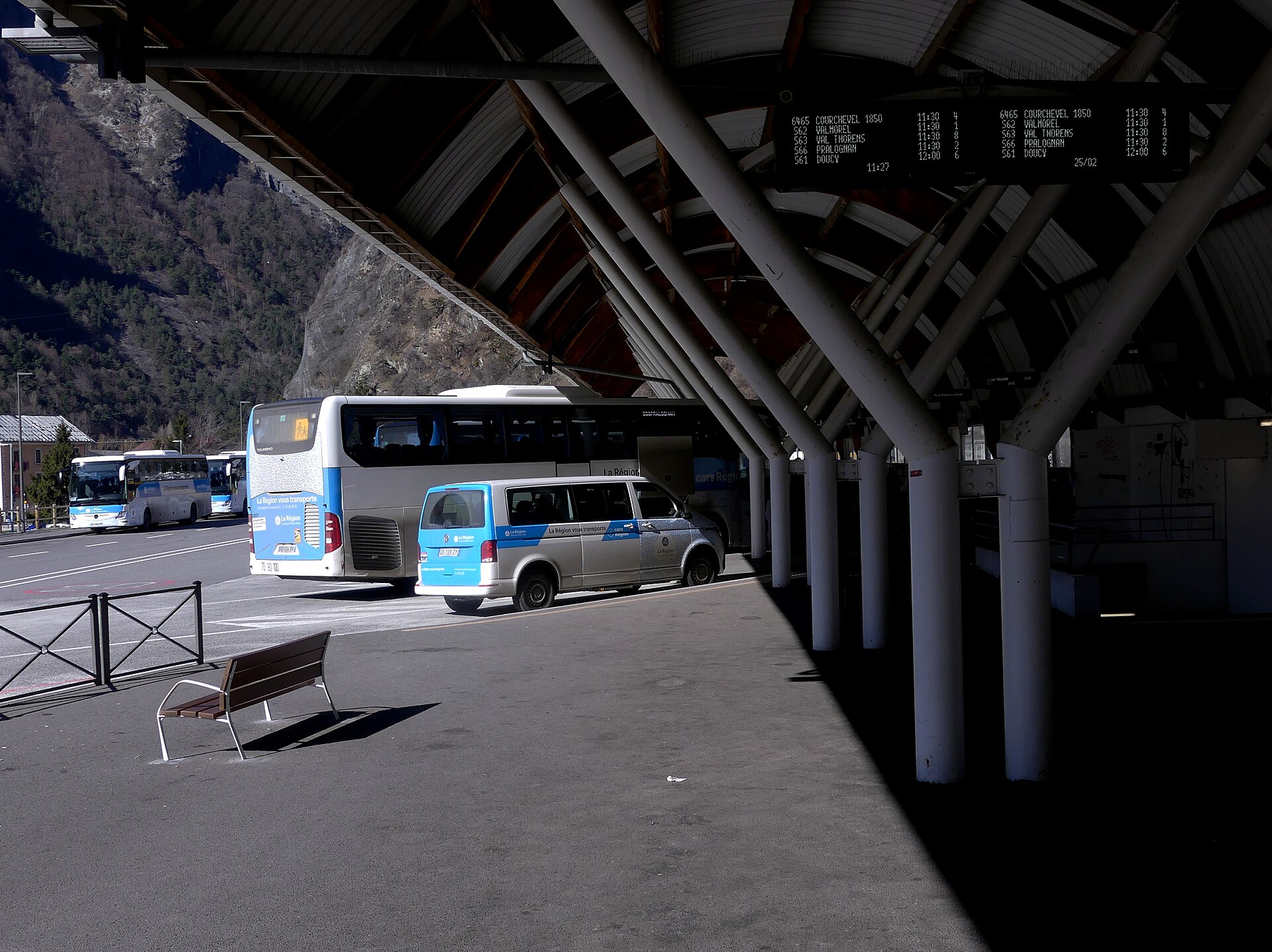
Several operators run fixed-timetable coaches from Geneva Airport to resort centres on winter weekends. They are not the same product as a shuttle: you buy a seat on a departure at a stated time, and the coach leaves at that time whether your flight has landed or not.
- Cheapest reliable option for a solo traveller or a couple, often half the shared-shuttle fare.
- Weekends only, and typically only from around mid-December to mid-April.
- Fixed departure times, so you match your flight to the coach rather than the other way round. Landing after the last departure means a night in Geneva.
- Resort centre drop-off, not your accommodation. In a resort like Morzine that is a short walk; in La Plagne it can mean another bus.
- Book early. The Saturday services to the popular resorts sell out.
If your flight lands mid-morning on a Saturday and you are going to a resort the coaches serve, this is very often the right answer and hardly anybody considers it.
05 — The train, and the two routes where it wins outright
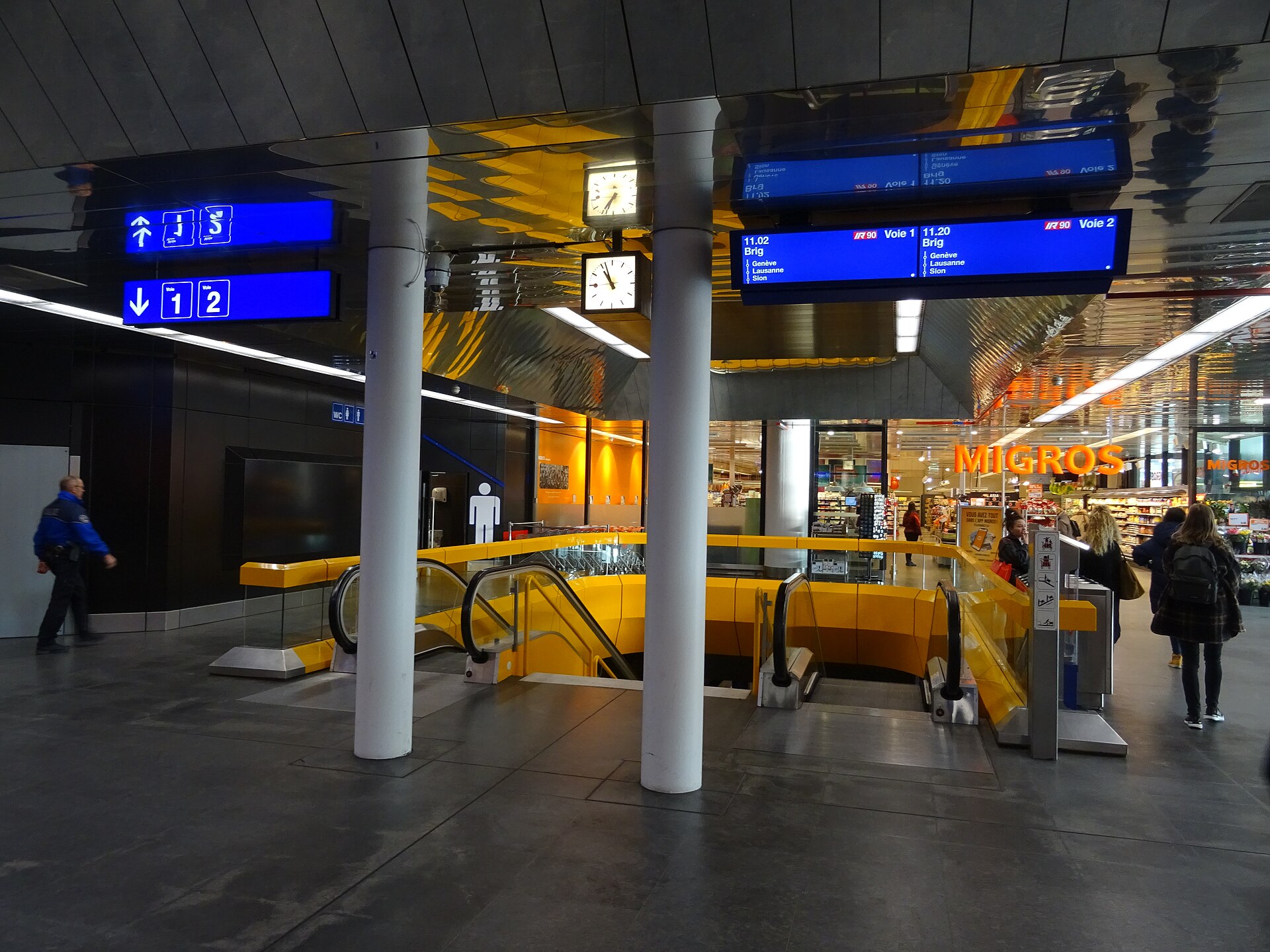
Geneva Airport has a mainline station beneath the terminal. That single fact makes the train a real option here in a way it is not at most Alpine gateways, and on two routes it beats every road transfer on the market.
Chamonix
Around an hour and a half via Martigny and the Mont Blanc Express, or via Saint-Gervais on the French side. Scenic, reliable, unaffected by Saturday road traffic, and it drops you in the middle of town rather than at a car park. If you are two people going to Chamonix, the train is not the budget option — it is the good option.
Verbier

Genève-Aéroport to Martigny is a straightforward SBB run of roughly an hour and three quarters, then the branch line to Le Châble, then a nine-minute gondola into the resort. Total around two hours twenty, which is on par with a road transfer and immune to the weekend gridlock. Advance Supersaver fares can undercut a shared shuttle outright.
Everywhere else
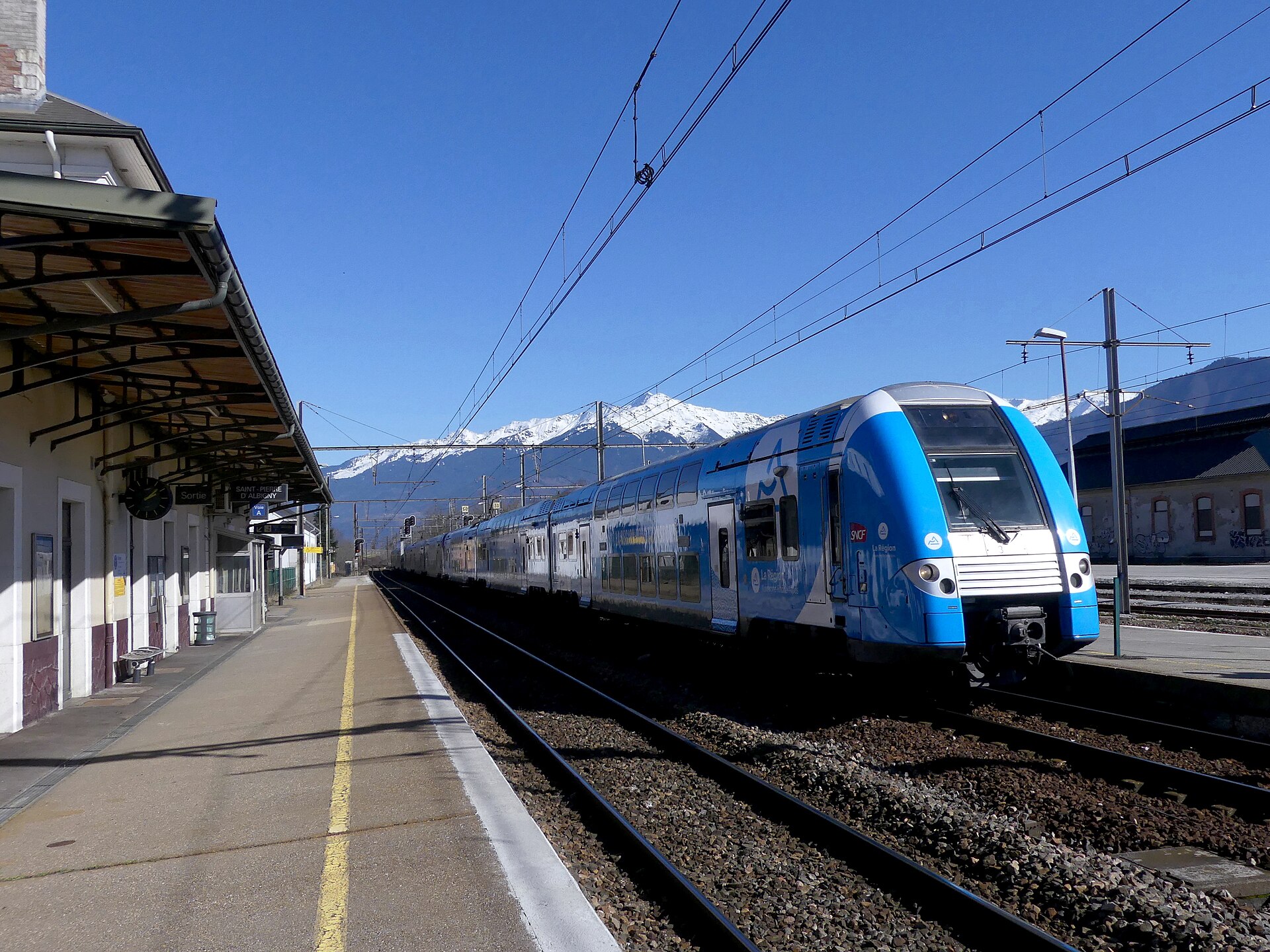
The French Tarentaise resorts — Courchevel, Méribel, Val Thorens, Les Arcs, Tignes — are technically reachable by rail, and in practice it is a bad idea from Geneva. Services leave from Cornavin in the city centre rather than the airport, change at Chambéry via Bellegarde, and total five hours or more with the connections. The exception is Les Arcs, where the funicular from Bourg-Saint-Maurice makes a car-free arrival genuinely elegant — but only if you are coming from Paris or London by direct train rather than flying into Geneva.
One practical note that applies to all of it: you carry your own skis, up and down platform stairs, through changes, in a hurry. Some people find that trivial and some find it miserable. Be honest with yourself about which you are.
06 — Hire car: rarely the answer, occasionally the only one

Renting looks cheap until you add it up. A week’s small car from Geneva Airport plus fuel, French motorway tolls, resort parking at €60–120 for the week, and the winter equipment requirements will land you well past what a shared transfer costs for two.
- From 1 November to 31 March, cars in the designated mountain communes of the Savoie and Haute-Savoie must have four winter tyres marked 3PMSF, or carry chains or snow socks for at least two driven wheels. Confirm the car has one or the other; some Geneva rentals do not by default.
- Carry chains as well and know how to fit them. Nobody wants to learn on a hairpin in the dark.
- A Swiss motorway vignette is needed for Swiss motorways and is normally already on a Swiss-registered hire car — check before you assume.
- Picking up on the French side of Geneva Airport rather than the Swiss side can be significantly cheaper. It is the same terminal, a different sector, and a different rental desk.
- Most high resorts are pedestrianised or awkward for cars, and some, like Avoriaz, ban them entirely.
Where it genuinely wins: a fortnight, or a trip where you intend to ski Chamonix on Monday, Megève on Wednesday and Verbier on Friday. If you are staying in one resort for a week and skiing its lift system, a car will sit under snow costing you money.
07 — What the quoted price does and does not include
Transfer quotes are not standardised, and the gap between the headline figure and the amount that leaves your account is where operators compete quietly.
- Skis and boards. Usually included by the reputable operators, occasionally €5–10 per item with the cheap ones. If it is not stated on the booking page, ask.
- Child seats. French law requires children under 10 to ride in an approved restraint suited to their size and weight, and generally in the back seat. Most private operators supply them free on request; shared shuttles often cannot, which quietly rules them out for some families.
- Waiting time. Many private transfers include some free waiting after your scheduled landing, then charge for extra time. Ask what the allowance is and how the extra time is charged: that is the clause that bites after a delay.
- Night supplements. Some operators add a surcharge for late-night or very early pickups. Check the supplement on your operator’s quote.
- Tolls and fuel. Included in every legitimate transfer quote. If a marketplace price looks improbably low, this is one of the places the difference is hiding.
- The last kilometre. Some resorts have vehicle restrictions, so the drop-off is a car park rather than your door. Avoriaz is the extreme case — no vehicles at all, and you finish by cable car.
Book direct with an operator based in the valley you are travelling to rather than through an aggregator where you can. The price is usually the same or better, the cancellation terms are clearer, and when it snows you are talking to the people driving rather than to a call centre in another country.
08 — Match the option to the trip
| Your trip | Book this | Why |
|---|---|---|
| Couple, midweek flight, French resort | Shared shuttle | Half the cost of private, and midweek roads are quiet |
| Couple, Chamonix or Verbier | Train | Comparable time, lower cost, no traffic risk |
| Family of four with children | Private | Marginal on cost, decisive on sanity |
| Group of six or more | Private | Cheaper per head and door to door |
| Solo, Saturday, budget | Scheduled coach | Cheapest seat that will actually turn up |
| Late-evening arrival | Private, or a night in the valley | Check the last shared departure for your route and date; taxis are eye-watering |
| Multi-resort fortnight | Hire car | The only option that gives you the days back |
09 — The return leg, which nobody plans
Every guide to Geneva transfers is written about getting to the mountain. The journey back is the one that makes people miss flights, and it is a different problem: instead of one vehicle waiting for one flight, an operator is collecting a dozen bookings across a valley and delivering them all to a check-in deadline.
- Pickups on a Saturday morning can be early, because the operator has to get you to the airport well ahead of an afternoon flight, and that is deliberate, not laziness.
- Allow three hours at the airport on a peak Saturday. Geneva’s check-in halls in February are genuinely chaotic, and ski bags have to go to oversize.
- If you are on the train, check the last useful connection the night before. Alpine branch lines stop early and a missed link can cost you the flight.
- Self-drivers should factor in refuelling and the rental return queue, both of which take longer than expected on a changeover Saturday.
- Confirm the return pickup with your operator 24 hours ahead. Times move when snow moves, and the message does not always reach you.
The cheapest insurance on the whole trip is a departure flight on a Sunday or a weekday. It costs less, the roads are clear, the airport is calm, and you get most of another morning on the snow instead of sitting in a minibus at dawn.
10 — The booking mistakes that cost real money
- Cutting the buffer after landing. Allow at least 90 minutes from touchdown to transfer departure with hold luggage, and two hours on a peak Saturday. Oversize baggage at Geneva comes out at a separate belt and can be slow.
- Booking the resort, not the address. “La Plagne” and “Les Arcs” are collections of villages. Courchevel has four. Méribel has four. Give the exact accommodation name.
- Assuming a delayed flight is covered. Some operators track your flight number and wait; others rebook you and charge. Check which before you pay, and give them the flight number either way.
- Comparing CHF and EUR prices as if they were the same. They are close but not identical, and quotes deliberately blur it.
- Booking the return for the same clock time as the outbound. Sunday departures back to the airport need a much bigger margin than a Wednesday one.
- Ignoring the Saturday changeover. Almost every French chalet changes over on Saturday. A Sunday flight is usually cheaper, quieter and two hours faster on the road.
Frequently asked questions
How long does a Geneva ski transfer take?
Between an hour and three and a half hours of driving, depending on the resort: Morzine, Les Gets and Chamonix are around an hour to an hour and a quarter, the Three Valleys two and a half to three, and Tignes and Val d’Isere three to three and a half. A shared shuttle adds waiting and other drop-offs on top, so allow extra time before you plan your first evening.
Is a private transfer worth it for four people?
It is close. Four adults at €65 each way is €520 return against roughly €800 for a private vehicle both ways. Shared still wins on price, but if you are landing late, travelling with children, or heading somewhere the shared network serves badly, the €280 difference buys a materially better arrival.
How far ahead should I book?
For February half-term and the Christmas and New Year weeks, as soon as your flights are confirmed. For a quiet January midweek, a fortnight is usually fine. The thing that sells out first is not the vehicles, it is the convenient departure slots on Saturdays.
Do transfers run in bad weather?
Yes, and the drivers are far better at it than you would be. What changes is the timing: heavy snowfall can slow the journey, and where conditions are unsafe an operator may not be able to reach your accommodation. This is another argument for a buffer.
Can I take skis and a snowboard on the train?
Yes, on Swiss and French regional services alike, at no extra charge. There is no reservation for them and no dedicated ski van — you stand your skis in the luggage area or the vestibule and keep an eye on them. Bags with wheels are your friend at the changes.
What about taxis from Geneva Airport?
Available and extremely expensive. A metered taxi to a Tarentaise resort will comfortably exceed a private transfer booked in advance, because the private operator has priced a known route and the taxi has not. Use one to get to a Geneva hotel, not to get to the Alps.
Which side of the airport should I be picked up from?
Almost all resort transfers use the Swiss sector arrivals, which is the default exit unless you have deliberately chosen the French sector. If you have booked a French-sector arrival, tell your operator, because the two exits are on opposite sides of the building and a driver waiting at the wrong one has no way to reach you quickly.
One thing will undo the best-planned transfer, and it happens before you leave the building: skis do not come out on the normal carousels at Geneva. See flying to Geneva with skis for how much time to leave.
Whichever option you choose, February Saturdays in the school holidays can double a transfer time. Our guide to Geneva in February lists the 2027 holiday dates and the heaviest travel days.
11 — Related Geneva guides
- Geneva ski transfers — the pillar guide, every resort and every mode.
- Geneva to Chamonix — the route where the train wins outright.
- Geneva to Verbier — the Swiss side, in francs, with the Le Châble gondola.
- Geneva to Les Arcs and La Plagne — Paradiski and the Bourg-Saint-Maurice funicular.
- Geneva to Morzine and Avoriaz — the closest big resorts, and the car-free one.
- Skiing near Geneva — choosing the resort before you choose the transfer.
- Geneva transport guide — the free travel card and the airport station.
- Where to stay near Geneva for skiing — for trips where the transfer is the problem.