Flying to Geneva with Skis: Baggage, Hire & Timing
This article contains advertising. Our booking links are routed through a partner that adds commission tracking automatically, so if you book through one we earn a commission from the provider, at no extra cost to you. It never affects what we recommend. Affiliate disclosure
The question everybody asks is which airline charges least for a ski bag. The question that actually decides the holiday is whether you should be checking one at all — because once you add both directions, the carriage fee for your own skis is remarkably close to the cost of hiring a decent pair in resort for the week, and hiring does not involve dragging a two-metre bag through an airport twice.
Flying to Geneva with skis can cost roughly £35–60 per bag each way when you add it online, and considerably more at the airport, so check your own airline’s price before you book. Skis and boards are collected at the special baggage carousel rather than the normal ones, so allow time to reclaim them before a booked shared transfer.
01 — What the airlines actually charge
Ski carriage is priced in one of two ways, and knowing which model your airline uses matters more than the headline number.
- Add-on model. The low-cost carriers treat ski equipment as a separate item you buy on top of your hold bag, at a per-item, per-flight price. easyJet is the archetype: one item per passenger, up to 32 kg, bought online for somewhere in the region of £37–52 depending on route, and appreciably more if you leave it until the airport.
- Allowance model. Most full-service airlines let a ski bag count as one of your checked pieces rather than charging separately, so if you have a hold allowance you have already paid for it. That can make a flag carrier cheaper overall than a budget fare once bags are added.
| Thing to check | Why it matters |
|---|---|
| Online price versus airport price | The airport premium is typically £10–20 per item per flight. Never turn up hoping to sort it there. |
| Whether boots count separately | Some airlines allow skis plus a boot bag as one item. Others count them as two. This is the detail that catches people. |
| Weight limit on the ski item | Varies by airline, so check it when you book. A ski bag with two pairs and boots in it gets heavy quickly. |
| Whether it replaces or supplements the hold bag | On allowance-model airlines you may be giving up your suitcase to carry skis. |
| Number of items per booking | Low-cost carriers cap sports items per booking, which matters for a group of eight. |
Prices move every season and vary by route, so treat those figures as the shape of the market rather than a quote. Price it properly at the moment of booking, with the bags added, and compare the total — a £39 fare with £110 of ski carriage is not cheaper than an £89 fare that includes it.
02 — Bring them or hire them?
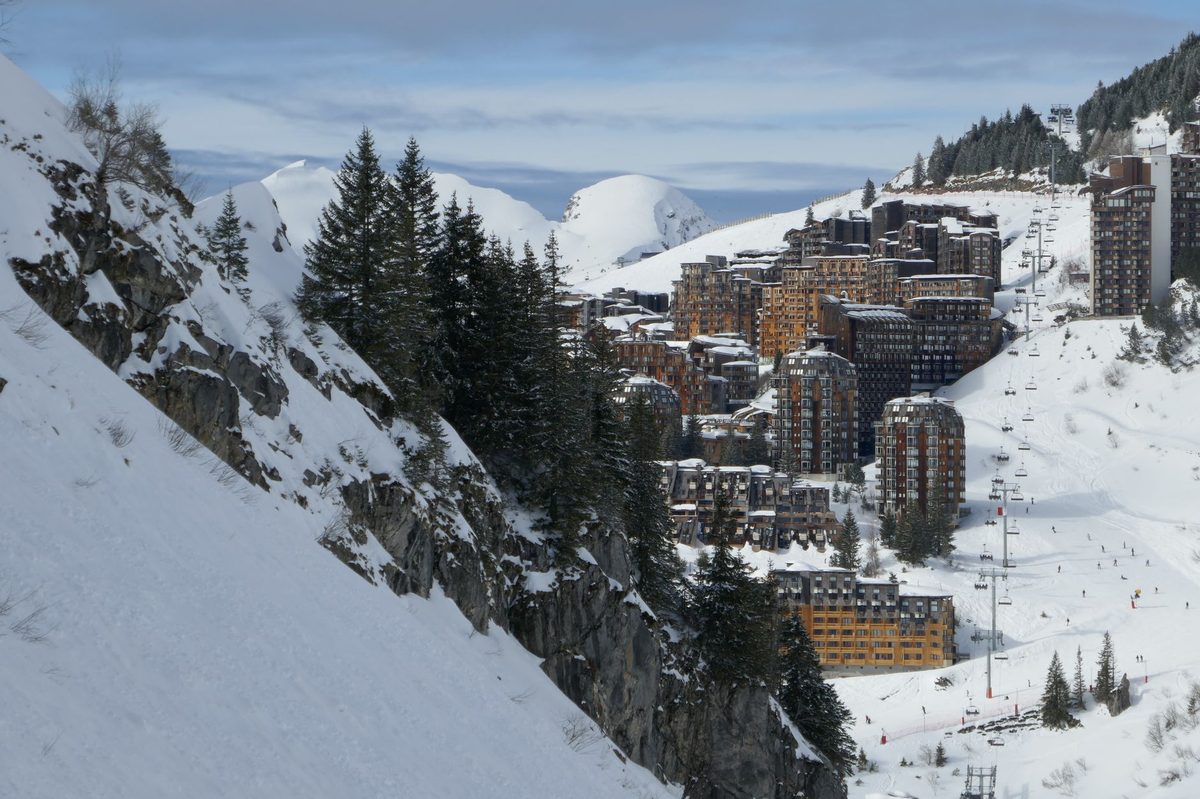
Here is the arithmetic nobody does. Two return ski-bag fees at £45 each way is £180 for a couple. Mid-range ski and boot hire in a French resort runs roughly €130–200 per person per week, sometimes less booked ahead online. The numbers are close enough that the decision is not really financial.
Bring your own if:
- You ski more than one week a season, so the fee is spread across trips.
- Your boots are fitted and you actually notice the difference. Most people who have had boots properly fitted do.
- You ski something specific — touring bindings, a particular powder ski, a race carver — that resort hire shops stock badly or not at all.
- You are driving or taking the train, in which case carriage is free and this whole section is moot.
Hire in resort if:
- This is your first or second ski trip. Hire is genuinely good now, and you learn what you like.
- You are travelling with children, whose skis change length every season anyway.
- Your flight involves a connection. Every extra sector is another chance for a two-metre bag to go somewhere you are not.
- You want conditions-appropriate kit — a wide ski in a powder week, something narrower on hard snow.
The honest middle path, and the one most experienced skiers land on: bring your boots, hire the skis. Boots are the part that matters, they fit in a normal hold bag or even a large cabin bag on some airlines, and hiring skis alone is meaningfully cheaper than hiring the pair with boots.
03 — If you are hiring, book it before you fly
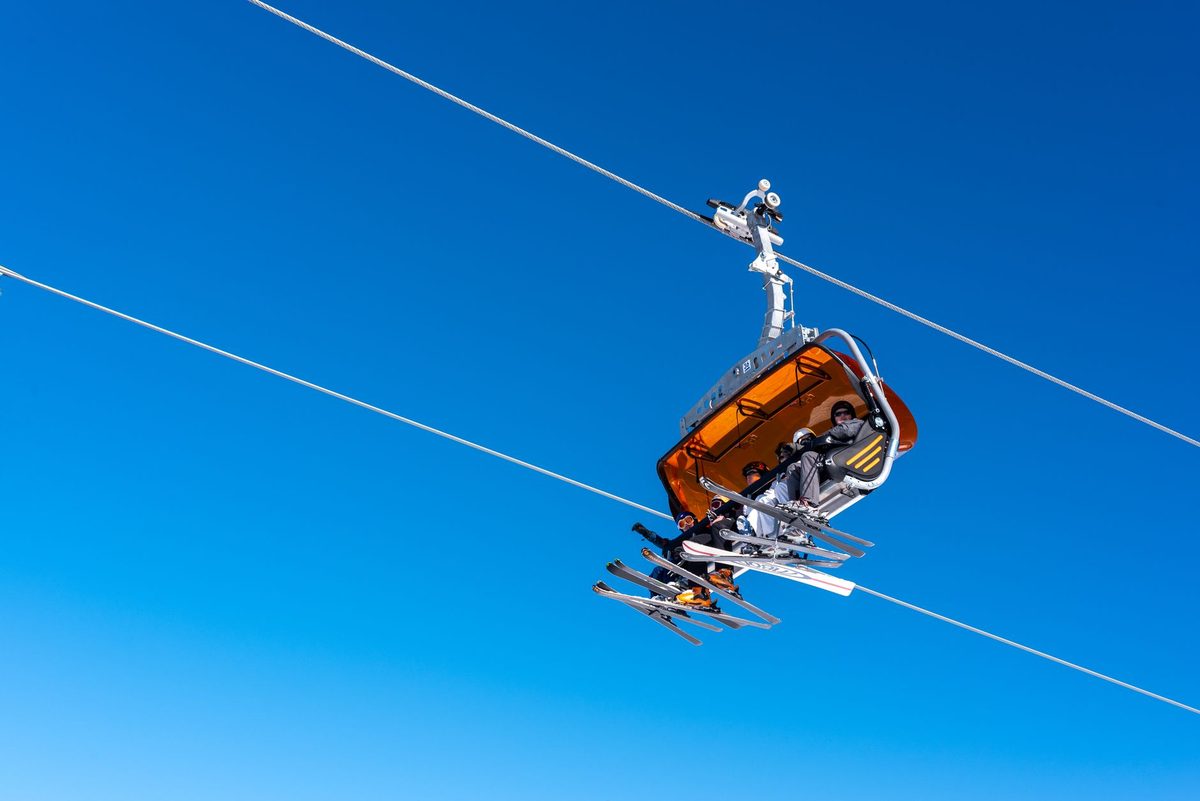
Deciding to hire is the easy part. Turning up on a Saturday evening in February and walking into the first shop you see leaves you little room to compare fittings or quotes.
- Book online in advance. Advance offers vary by shop, dates and equipment category, so compare quotes before you fly.
- Pick a shop at the lift base, not in the village centre. Carrying skis through a resort in ski boots is a minor misery you can design out.
- Ask about overnight storage. Most hire shops include a locker at the lift base. That single detail is worth more than a small price difference.
- Give your real height, weight and ability. Bindings are set from those numbers and a fitter working from an optimistic self-assessment sets you up badly.
- Collect on arrival evening if you can. Saturday evening is busy but Sunday morning is worse, and an hour queuing is an hour not skiing.
- Check the upgrade tiers. The jump from the basic ski to the mid tier is usually small money and a large difference; the jump to the top tier rarely is unless you ski hard.
If you have brought your own boots, say so when you book — you want a skis-only rate, and some booking engines bury it.
04 — Packing a ski bag that arrives intact

- A padded bag is worth the money. Baggage handling at a busy ski-season airport is not gentle, and tips are the first casualty.
- Bind the skis together with the brakes interlocked or use ski straps, so they cannot scissor inside the bag.
- Pad the tips and tails with clothing. Soft layers you were going to pack anyway do the job, and they use space you have already paid for.
- Do not exceed the stated weight. Airlines weigh oversize items, and the excess charge on a sports item is punitive.
- Put a name and phone number inside the bag as well as on it. Outside labels come off.
- Take a photo of the packed bag at check-in. If it is damaged or delayed, that photo is what settles the claim.
- Never put anything valuable or essential in the ski bag. Passports, medication, phone chargers and lift-pass vouchers travel on you.
One under-rated tip: a wheeled ski bag costs a little more and saves a great deal of misery, because you will be moving it across concourses, along station platforms and through snow. Skis are not heavy; skis in a bag at the end of one arm for four hundred metres are.
05 — Snowboards, and the things that are not skis
Boards travel under the same sports-equipment rules as skis and cost the same, but a few details differ enough to be worth stating.
- A board bag is shorter and fatter than a ski bag, which makes it easier to carry and no easier to fit into a small hire car. If you are collecting a rental at Geneva, check the boot space before you book a supermini.
- Most airlines treat a board plus bindings plus boots as one item, but again, confirm rather than assume.
- Boards come out at the same oversized baggage point as skis in Geneva, so allow the same time for them.
- Splitboards and touring setups with sharp edges and heavy hardware push a bag towards the weight limit faster than you expect.
Helmets, poles and avalanche kit raise their own questions. A helmet packs safely inside a ski bag or a hold suitcase. Poles go inside the ski bag. Transceivers travel fine, but an avalanche airbag cartridge is a different matter entirely — compressed gas cartridges are restricted by every airline, some refuse them outright, and the rules differ between carriers and between countries. If you tour, check the specific policy of the specific airline weeks in advance, and be prepared to hire a cartridge in resort.
06 — The Geneva oversize baggage trap

This is the part that catches people out every single winter, and it deserves its own section because it is the direct cause of missed transfers.
At Geneva in ski season, skis and snowboards do not appear on the ordinary baggage carousels. They are delivered to a separate large-baggage point in the reclaim hall, signposted, and typically off to one side as you come through from passport control. That means two things:
- You wait for your suitcase at the carousel, then wait again at the oversize point, and the two may not arrive at the same time.
- On a peak Saturday, with several ski-heavy flights landing together, the queue at that point can be substantial.
Add passport control, and the gap between wheels-down and standing outside the terminal can run well past what you expect on a busy day. Almost nobody budgets for that when they book a transfer at “landing time plus one hour”.
What to do about it
- Book your transfer with at least 90 minutes after scheduled landing, and two hours on a Saturday in February.
- Split the group: send one person to the carousel for the suitcases and one to the oversize point for the skis. It genuinely halves the wait.
- Give your transfer operator your flight number, not just a time. The good ones track it.
- If you are on a scheduled coach with a fixed departure, be realistic about whether you can make it. Coaches do not wait.
- If you land and your skis have not, do not leave the airport without filing the report. The claim depends on it, and the desk is inside the reclaim hall.
07 — Leaving: the same problem, backwards

The return leg has a matching trap. Oversize items are checked in at the airline counter, and the agent will send you to the separate drop-off rather than the normal belt. Leave extra time on a Saturday in high season.
- Allow three hours at Geneva on a peak Saturday if you are checking skis. That is not padding, it is the realistic figure.
- Check in online and drop bags early if your airline allows it.
- Ski bags do not fold. If you hired skis and are flying home with only boots, you have made your own life much easier.
- The airport has left-luggage at the railway station if you land early and want a day in the city before flying — it takes skis.
08 — Which sector are you flying from?
Geneva Airport has a Swiss sector and a French sector, and while almost all ski traffic uses the Swiss side, it is worth knowing which one your booking puts you in — the two have separate arrivals, separate baggage halls and separate exits, and a transfer driver waiting on the wrong side cannot simply walk round. If you have deliberately booked a French-sector flight, tell your transfer operator when you book, not when you land.
09 — When it is worth paying for a better flight
A ski trip is one of the few holidays where the cheapest flight is regularly the wrong choice, because the cost of arriving badly is so high.
- Landing time beats fare price. A flight that lands at 11:00 gives you a transfer window, a resort arrival in daylight and an evening. A flight that lands at 21:30 costs you a transfer premium, a night rate and the first morning.
- Direct beats connecting when you are carrying skis. Each connection is another handling operation and another chance for a two-metre bag to be left behind.
- An included bag allowance often makes a flag carrier cheaper than a budget fare once ski carriage and hold luggage are added for a family.
- A Sunday or midweek departure is cheaper, quieter and hours faster on the road than the Saturday everybody else flies on.
Price the whole trip, not the fare: flight plus bags plus ski carriage plus transfer plus the value of the day you lose. On that basis the £60 more expensive flight frequently wins.
Frequently asked questions
Do skis count as one item with boots?
It depends on the airline and it is the detail worth checking twice. Several carriers allow a ski bag plus a boot bag as a single sports item; others count them as two and charge accordingly. Read the sports-equipment page, not the general baggage page.
Can I take ski boots as hand luggage?
Usually yes on airlines with a generous cabin allowance, and it is a good trick — boots are the heavy, awkward, fit-critical part, and carrying them means a delayed hold bag does not end your holiday. Check the dimensions against the cabin bag limit, because boot bags are bulky.
What happens if my skis do not arrive?
File the report at the baggage desk in the reclaim hall before you leave the airport. Most resorts have hire shops that will kit you out the same day, and a decent travel insurance policy or the airline itself will normally cover the hire cost while your bag is missing. Keep every receipt.
Is it cheaper to fly to Geneva or drive with my own skis?
For two people from the UK, flying is almost always cheaper and much faster once you count fuel, tolls, a Channel crossing and an overnight stop. For four or more travelling together with their own equipment, driving becomes genuinely competitive, and carriage is free.
Do I need insurance for my own skis?
Standard travel insurance often covers ski equipment only up to a low limit, and winter sports cover is frequently a paid add-on. If you are carrying a pair worth more than a few hundred pounds, check the single-item limit specifically rather than the total baggage figure.
Can I send my skis ahead instead?
Specialist courier services will ship equipment to a resort address and back. It is more expensive than airline carriage in most cases, but for a long trip, an awkward connection or a group with a lot of kit it removes the entire airport problem. Book it well in advance and confirm the resort address can receive it.
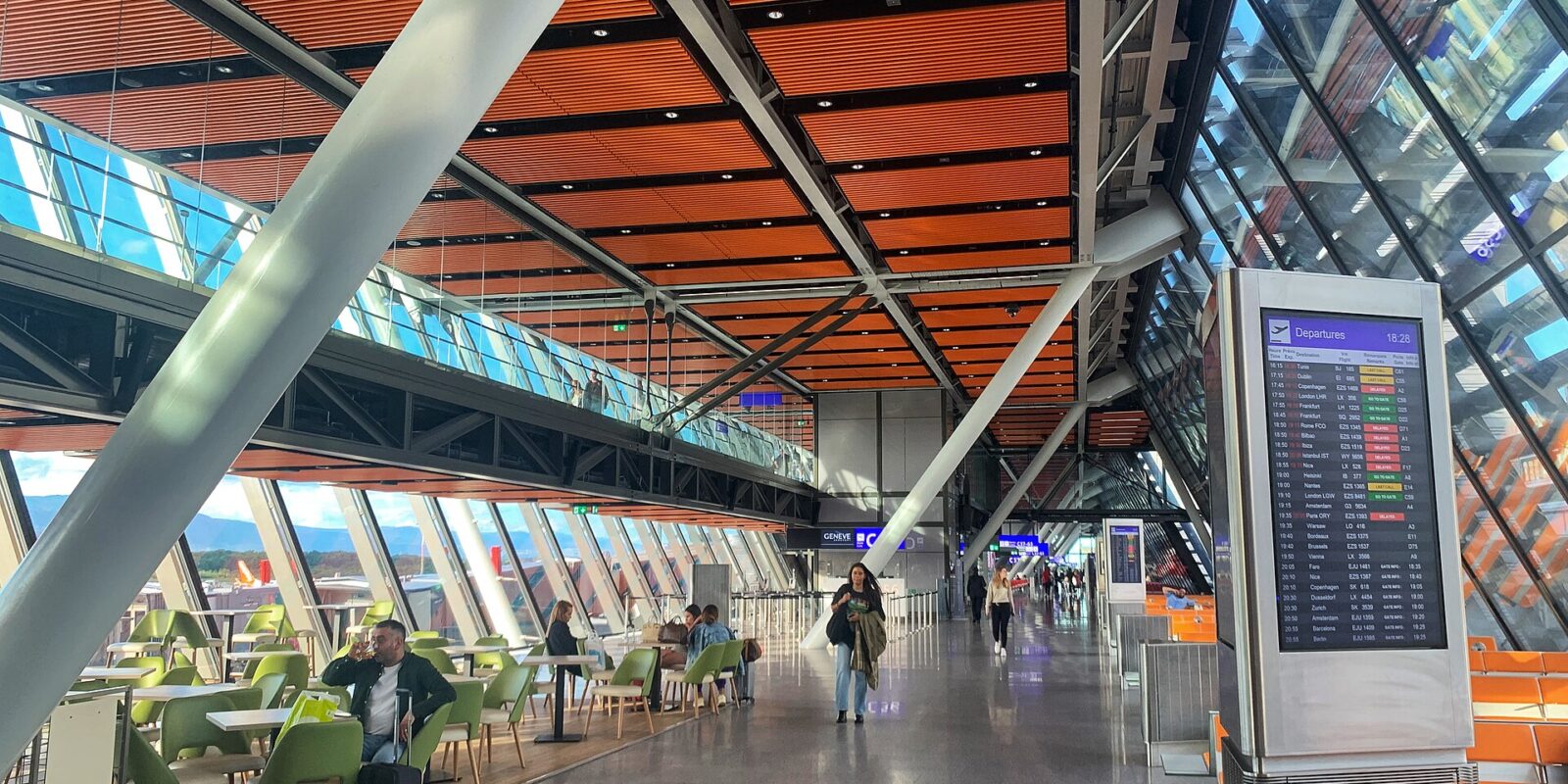
The oversize drop-off and the reclaim point both sit in specific parts of the building, and finding them early saves a great deal of standing about: see our Geneva Airport terminals guide for the layout.
If your skis don’t come off the oversize belt, or you need somewhere to leave them on the way home, our Geneva Airport luggage storage and lost baggage guide takes you through both.
Before you pay for ski carriage, check whether a Sunday or midweek flight would be cheaper overall. Our guide to flights to Geneva explains the winter fare pattern and the airlines that fly the ski routes.
10 — Related Geneva guides
- Geneva ski transfers — every resort and every way of reaching it.
- Shared, private, coach or train? — choosing the mode once you know the resort.
- Geneva Airport to the city centre — the six-minute train and what it costs.
- Hotels near Geneva Airport — for late arrivals and early departures.
- Skiing near Geneva — picking the resort in the first place.
- Geneva packing list by season — what else to put in the bag.
- Geneva in winter — the city end of a ski trip.