Flying to Geneva: Airlines, Routes & Cheap Fares
This article contains advertising. Our booking links are routed through a partner that adds commission tracking automatically, so if you book through one we earn a commission from the provider, at no extra cost to you. It never affects what we recommend. Affiliate disclosure
Geneva Airport’s worst days aren’t in August. They’re Saturdays in February, when the charter flights, the ski weeks and the school holidays of three countries all land on the same few hours, and a seat that was a bargain in November costs several times as much. Almost everything about finding a cheap flight to Geneva follows from that one fact. The city has a business calendar, the mountains have a holiday calendar, and the fares follow whichever one is busier that week.
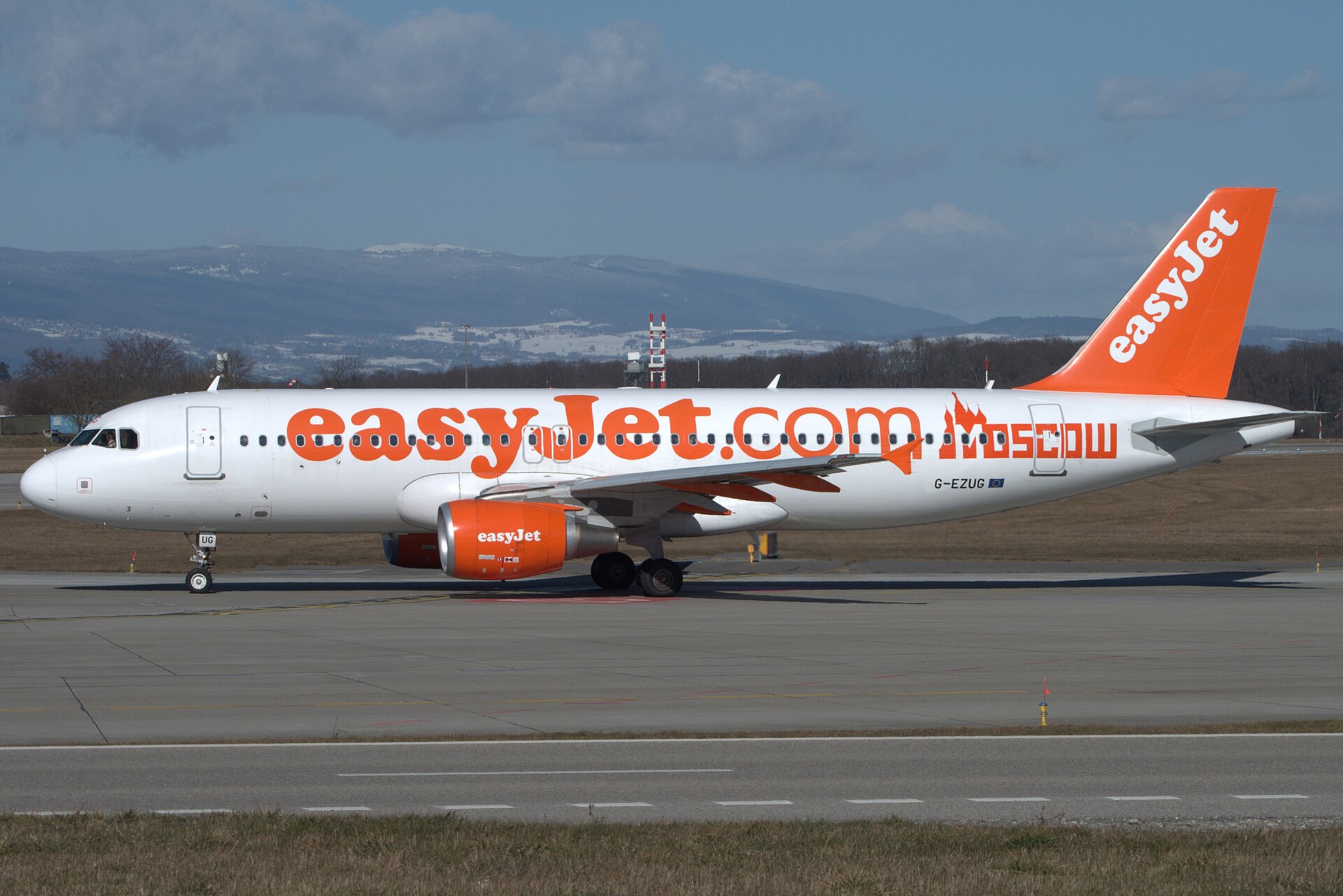
Flights to Geneva come mainly from easyJet, which has a base here, and SWISS, with British Airways, Air France, KLM, Lufthansa, the Gulf carriers and a long list of European airlines adding the rest. London is by far the busiest route. Fares are lowest midweek and outside school holidays, particularly in November, early December, mid-January and late spring. They’re highest on ski-season weekends, at Christmas and in February. Zurich is worth pricing for long-haul trips, and Lyon for some French Alpine ones, but for most visitors Geneva is the right airport.
01 — Who flies to Geneva
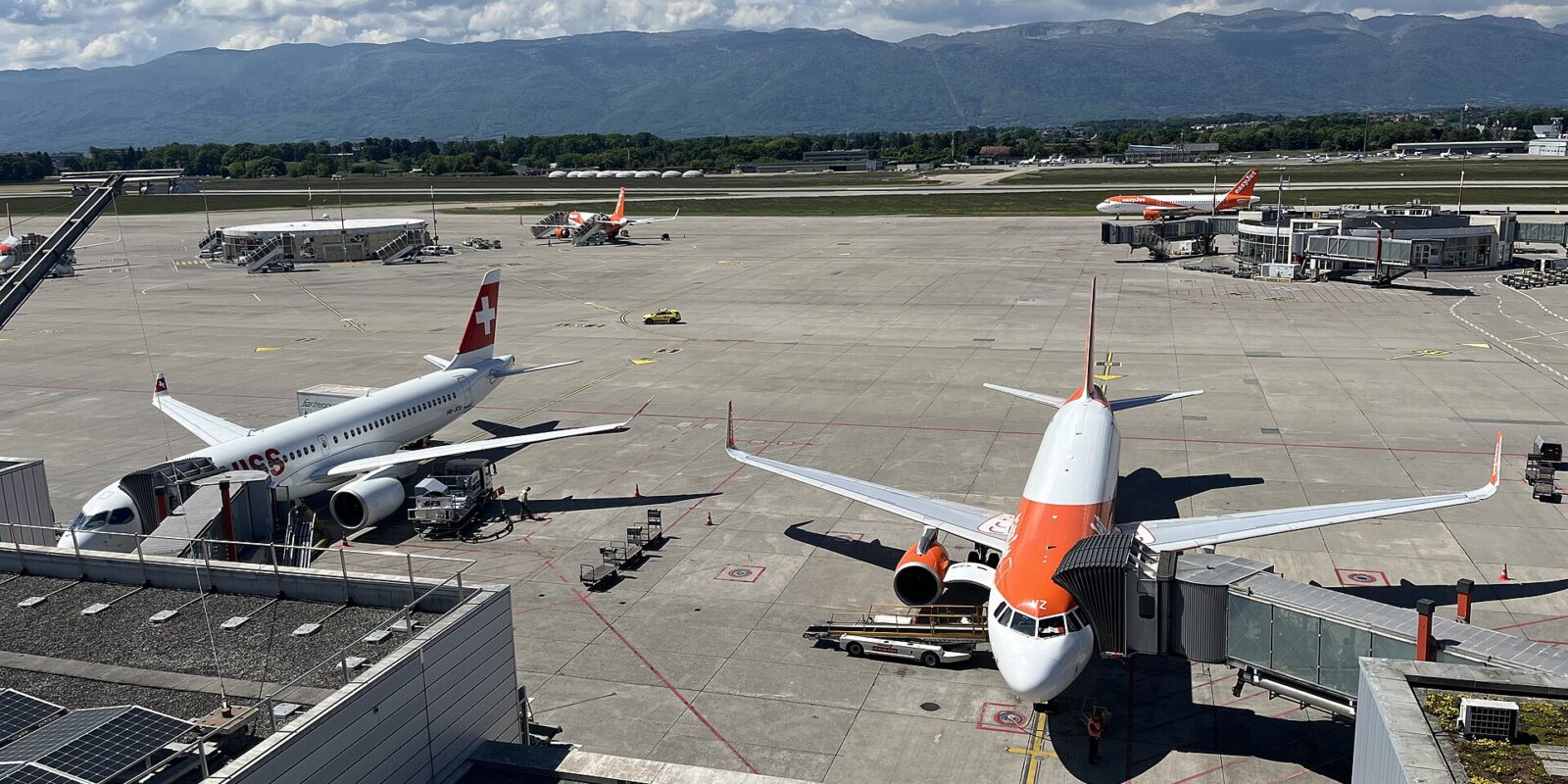
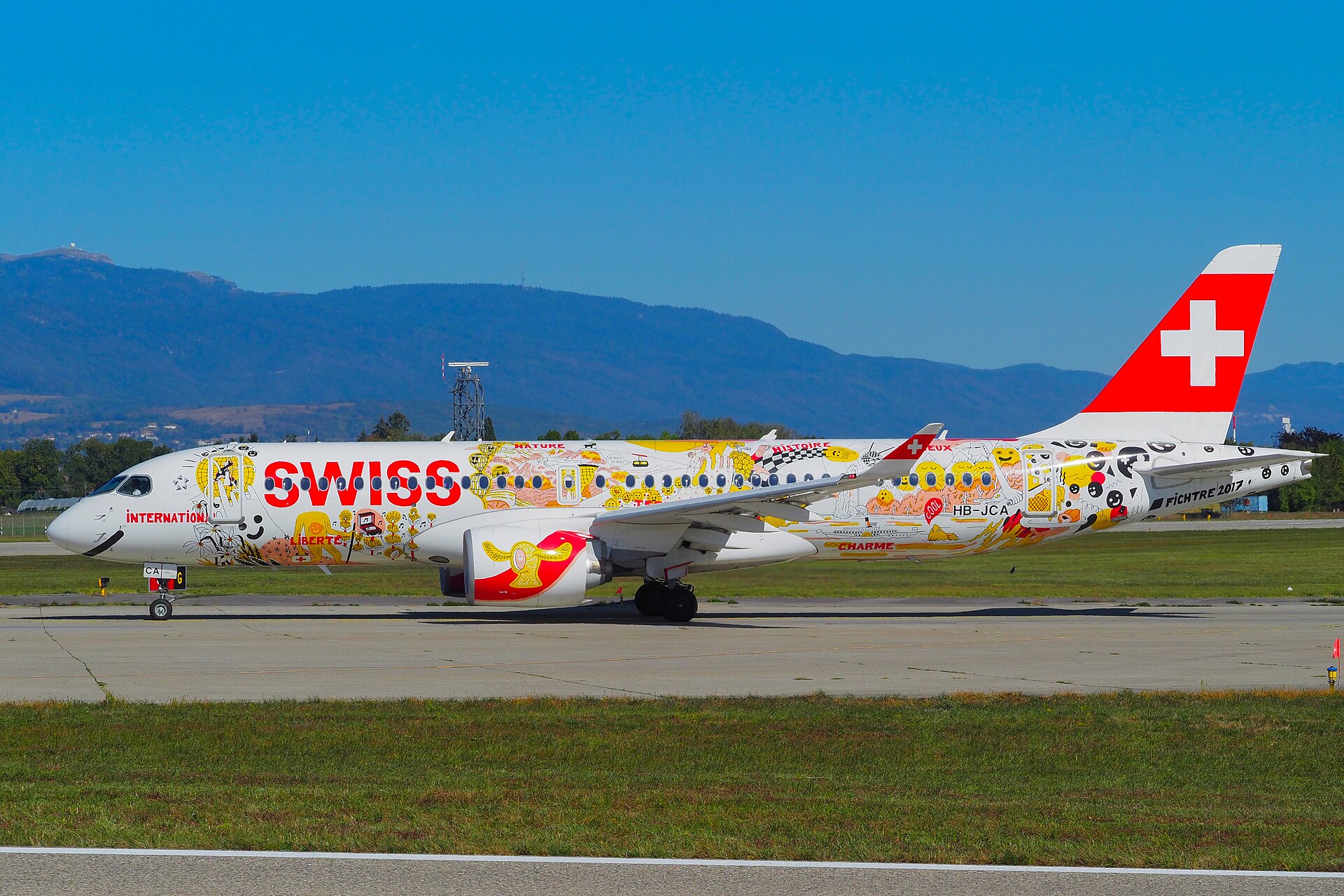
Geneva handled just under 17.8 million passengers in 2024, which makes it a mid-sized European airport with an unusually international mix. Two airlines dominate. easyJet runs a base here and flies to more than 80 destinations, which is why the apron looks so orange. SWISS, the national airline, links Geneva to its Zurich hub, flies a year-round European network plus a summer programme of Mediterranean routes, and flies Geneva’s one SWISS long-haul route, to New York JFK.
Around them sits a long list of European carriers: British Airways, Air France, KLM, Lufthansa, Iberia, SAS, Norwegian and many more. There are also the Gulf airlines, which make Geneva a one-stop trip from most of Asia and Australia. The route map has one quirk that surprises people. After London, the busiest destinations in 2025 were Porto and Lisbon, ahead of Paris and Amsterdam. That says more about Geneva’s large Portuguese community than about its tourists.
| Flying from | Main airlines | Worth knowing |
|---|---|---|
| London | easyJet, British Airways, SWISS | The busiest route by far, about 2.15 million passengers in 2025, across several London airports |
| Rest of the UK | easyJet, plus Jet2 and TUI in winter | Many regional routes run only in the ski season |
| Ireland | Aer Lingus, SWISS | Dublin year-round, Cork in season |
| Western Europe | easyJet, SWISS, Air France, KLM, Lufthansa, Iberia, SAS, Norwegian | Paris is often quicker by train |
| North America | SWISS, United, Air Canada | Direct to New York JFK, Newark, Washington Dulles and Montreal |
| Middle East and Asia | Emirates, Qatar Airways, Etihad and others | One stop from most of Asia and Australia |
| Africa | Ethiopian, EgyptAir, Royal Air Maroc, Air Algérie | Direct to Addis Ababa, Cairo, Casablanca and Algiers |
Routes come and go, and seasonal ones switch on and off with the ski calendar, so treat the table as the shape of the network rather than a timetable. Check the airline’s own schedule for your dates before you plan around a particular route.
02 — From the UK and Ireland
Britain is Geneva’s biggest market, and the choice is wide. The flight from London takes about an hour and a half, and you land close enough to town to be in a city-centre café within the hour.
- easyJet flies from most of the big UK airports: London Gatwick, Luton, Stansted and Southend, Manchester, Birmingham, Bristol, Edinburgh, Glasgow, Liverpool, Newcastle, Belfast and more. Several of these run only in the ski season.
- British Airways flies from Heathrow all year and adds seasonal flights from London City and Gatwick for the ski months.
- SWISS flies from Heathrow, which is useful if you want a full-service fare with a bag included, plus seasonal Gatwick flights.
- Jet2 and TUI fly winter-only routes from UK regional airports, mainly for ski holidays. Jet2’s list runs from Birmingham and Bristol to Edinburgh, Glasgow, Leeds Bradford and Newcastle. They’re often sold as package holidays, but seat-only fares exist too.
- From Ireland, Aer Lingus flies from Dublin all year and from Cork in season, and SWISS serves Dublin too.
The practical difference between the airlines is mostly baggage. Low-cost fares look cheap until you add a hold bag and, in winter, skis. SWISS and British Airways fares sometimes include a bag. Compare the price with the bags you’ll actually take, not the headline fare. For ski trips, our guide to flying to Geneva with skis compares what the airlines charge for equipment.
03 — From North America
There are direct flights, just not many. SWISS flies Geneva to New York JFK, United flies to Newark and Washington Dulles, and Air Canada flies to Montreal. From anywhere else in the US or Canada, you’re connecting, and the choice of connection matters more than the choice of airline.
- Through a European hub. Zurich, Frankfurt, Munich, Paris, Amsterdam, London and Lisbon all have frequent short hops to Geneva. A connection in Zurich keeps you in Switzerland and on one airline.
- Through Dublin. On the way home, Dublin’s US preclearance means you clear American immigration before you board and land in the US as a domestic arrival. After a long trip, that’s a genuine pleasure.
- Into Zurich, then the train. Zurich has far more transatlantic flights than Geneva. With a direct train between the two airports, flying into Zurich and out of Geneva, or the reverse, is often the smartest itinerary for a longer Swiss trip. More on that below.
Geneva is six hours ahead of the US East Coast for most of the year. The overnight eastbound flights land in the morning, which suits the city well: drop your bags, walk the lakefront, and keep yourself awake until a reasonable bedtime.
04 — From further afield
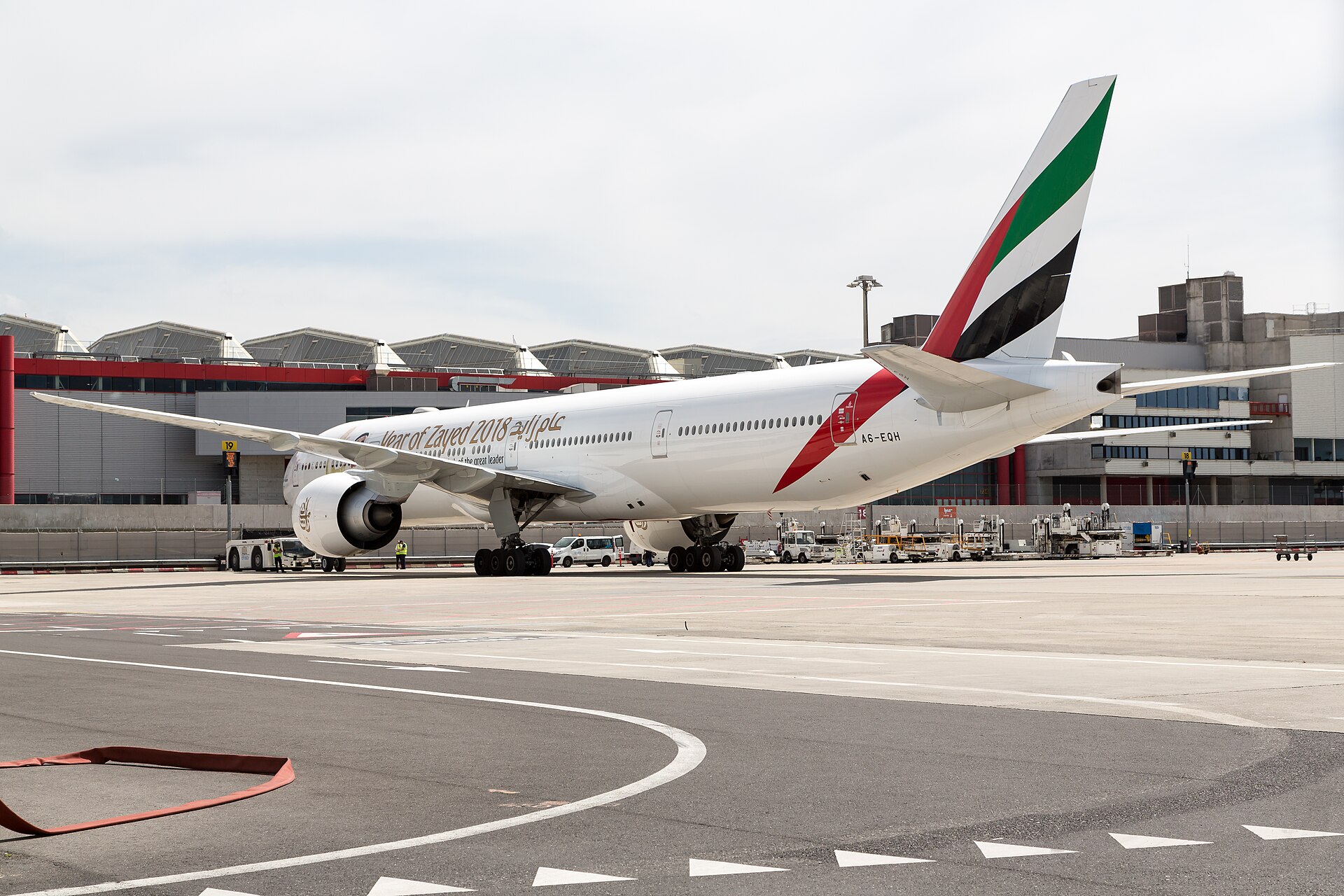
Emirates, Qatar Airways and Etihad all fly to Geneva, which puts the city one stop from most of Asia, Australia and New Zealand via Dubai, Doha or Abu Dhabi. Saudia, Kuwait Airways and Middle East Airlines add more Gulf and Levant links. Beijing and Shanghai have had direct Chinese flights too, and Turkish Airlines connects through Istanbul to much of the world. Long-haul routes are the most likely to change, so check the current schedule for your dates before relying on one.
05 — When flights to Geneva are cheapest
Geneva’s fares follow two overlapping calendars. The ski season drives the weekend leisure market from Christmas to Easter. The city’s conferences, trade fairs and diplomatic sessions drive the midweek business market for most of the rest of the year. The cheapest seats are in the gaps between them.
| Month | Fares | Why |
|---|---|---|
| January | Low midweek, high at weekends | After the New Year rush the city is quiet, but ski Saturdays stay busy |
| February | Highest of the winter | UK half-term and the French and Swiss school holidays all fall in ski season |
| March | High at weekends, fair midweek | Spring skiing, plus the city’s spring trade fairs |
| April | Mixed | Easter is expensive; the weeks either side are good value |
| May and June | Moderate | Pleasant weather, busy conference season, bank-holiday spikes |
| July and August | High for holiday dates | Summer holidays, although the city’s business traffic eases off |
| September and October | Moderate | Conference season returns; late October half-term adds a bump |
| November | Lowest of the year | Between seasons: no skiing, no summer, few holidays |
| Early December | Low | Christmas markets and the Escalade weekend, before the ski charters start |
| Late December | Very high | Christmas and New Year ski weeks |
The rules that save the most money
- Fly midweek. Tuesday, Wednesday and often Thursday are cheaper than Friday to Monday almost all year, and in the ski season the gap is enormous.
- Avoid the calendar’s pinch points if you can: February half-term, Easter, the two weeks around Christmas, and the start and end of the summer holidays.
- Book ski weekends early. Saturday seats between Christmas and Easter fill up first and rarely get cheaper as the date approaches. City breaks outside the pinch points are more forgiving.
- Price the whole trip. A cheap Friday-night fare that lands after the last train costs a taxi. A cheap 06:00 departure may need an airport hotel, because the terminal closes overnight.
- Check both London airports you can reach. Several airlines fly from several London airports, and the cheapest one changes from week to week.
Searching smarter
The fastest way to see Geneva’s weekly rhythm for yourself is a search that shows a whole month of fares at once, such as a date grid or a “whole month” view. In the ski season you’ll often see a Saturday priced at double the Tuesday either side of it. A few habits pay off:
- Mix airlines. If the cheapest outbound and the cheapest return are on different carriers, book two one-way tickets. On European routes there’s rarely a penalty for doing so.
- Set a fare alert rather than refreshing the same search every morning. Popular winter weekends seldom get cheaper, but city-break dates do move.
- Price the extras before you commit. A hold bag, a seat and a pair of skis can turn the cheapest headline fare into the most expensive trip.
- Book direct when flexibility matters. Changing or refunding a ticket is simpler when there’s no agent between you and the airline.
For what’s happening in the city itself in any given month, our guide to the best time to visit Geneva covers the weather, the events and the hotel prices.
06 — The ski-season squeeze
From late December to April, Geneva becomes the main gateway to the French and Swiss Alps. Chamonix, Morzine, Verbier, Val Thorens and dozens of other resorts are a two- or three-hour drive away. Most chalets and package holidays run Saturday to Saturday, so the traffic doesn’t spread across the week. It lands on one day. On winter weekends the airport opens its seasonal Terminal 2 for charter and low-cost flights. The oversize baggage belts run all day, and the transfer desks in arrivals turn into a small city of their own.
That has three consequences for you:
- Weekend fares climb through the season, and February weekends are the most expensive of all.
- Weekend journeys take longer. Queues at check-in and security, a longer wait for skis, and changeover-day traffic on the roads to the resorts. Budget for all of it.
- Sunday is the secret. If your accommodation allows a Sunday-to-Sunday week, you’ll often pay less for flights and transfers and share the roads with fewer people.
If the trip is about the mountains, the flight is only half the journey. Our Geneva ski transfers guide compares shuttles, private transfers, trains and hire cars for every major resort.
07 — Flying in on business
Geneva is a working city before it’s a tourist one. The UN’s European headquarters, dozens of international organisations, the private banks and the commodity traders keep the business routes busy: London, Paris, Brussels and Zurich above all, early on Monday mornings and on Thursday and Friday evenings. On those flights the full-service airlines hold their own against easyJet, because a flexible fare with a bag included is worth more to a company than a cheap one.
For business trips the weeks to watch are more about hotels than planes. The UN Human Rights Council meets in three regular sessions a year, running from late winter into spring, in early summer and in the autumn, and they fill rooms around the Palais des Nations. The big spring watch fair, Watches and Wonders at Palexpo, pushes hotel prices up across the city for a week. If your dates are flexible, check the conference calendar before the fare calendar. Our guide to the United Nations in Geneva explains the institutions behind the traffic.
08 — When Zurich is genuinely cheaper
Zurich is Switzerland’s hub. It has far more long-haul flights than Geneva, more competition on many European routes, and SWISS’s full network. For some trips it’s the better airport even if Geneva is your destination, because the two are linked by a direct train. InterCity trains run from Zurich Airport’s station straight to Genève-Aéroport, via Zurich, Bern and Lausanne, in a little over three hours.
Zurich makes sense when:
- You’re flying long-haul and Zurich has a nonstop that Geneva doesn’t, or a much cheaper fare. From many North American and Asian cities, it does.
- You want to see more of Switzerland. Fly into Zurich, travel west through Lucerne or Bern, and fly home from Geneva. An open-jaw ticket usually costs little more than a return.
- The saving is large. The train costs time and money. Swiss saver fares on the Zurich to Geneva route can start below CHF 30 if you book ahead, but a walk-up second-class ticket from Zurich city costs about CHF 92. Unless the flight saving clearly beats that, and three hours, fly to Geneva.
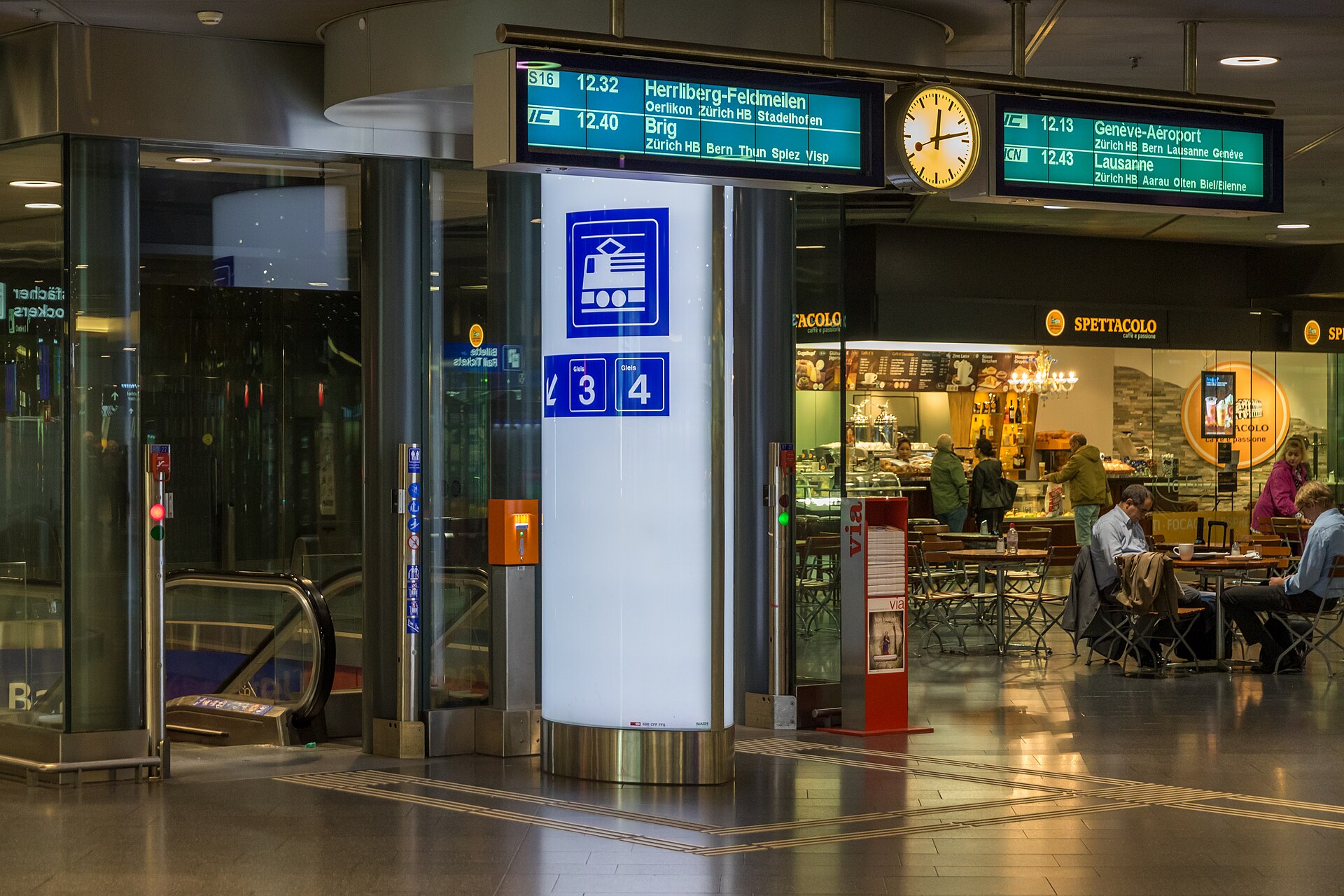
Our guide to getting from Geneva to Zurich has the full fares and the booking tricks for the saver tickets.
09 — When Lyon makes sense
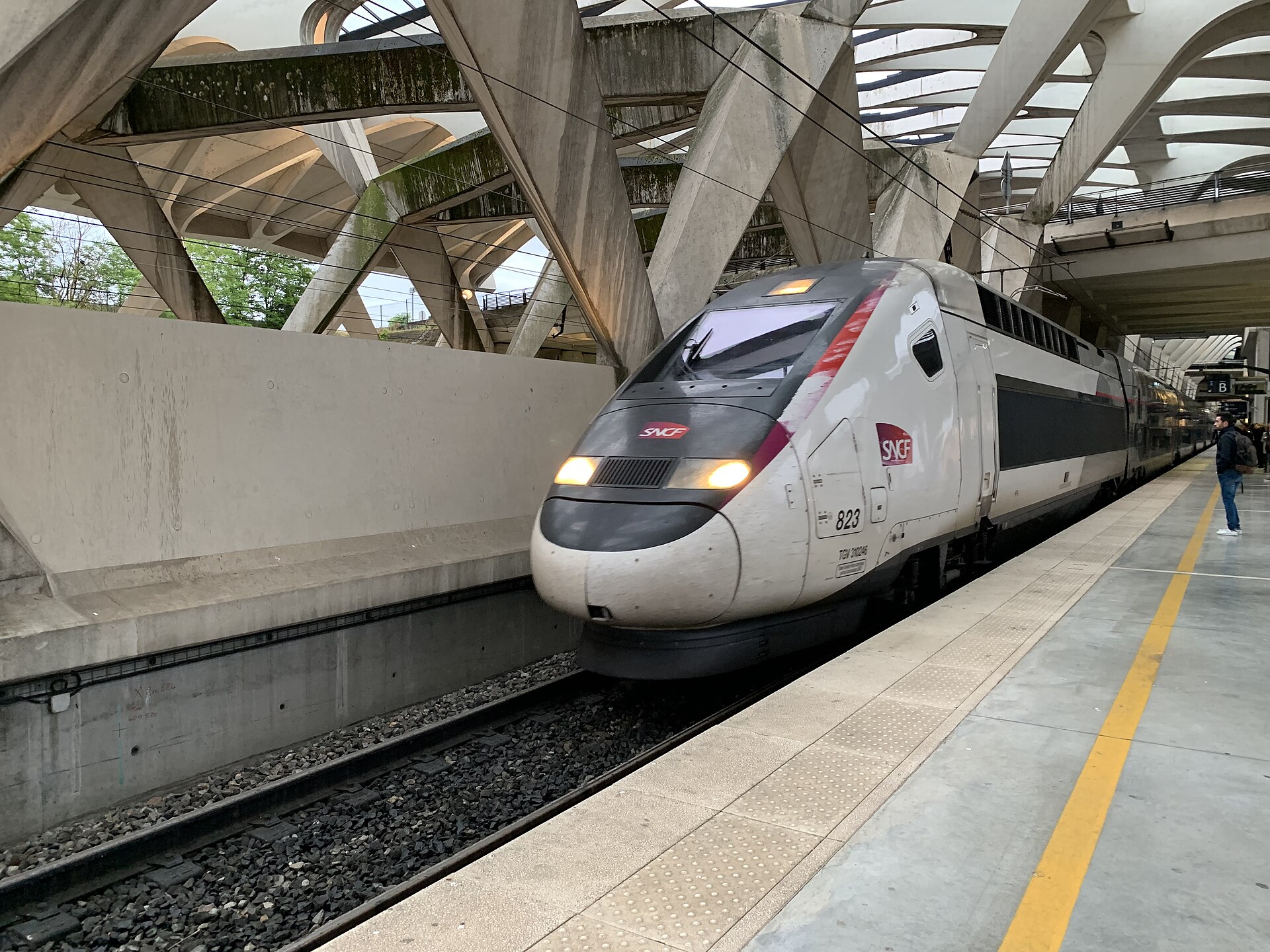
Lyon Saint-Exupéry is the other airport people mention, and it’s a real option in two situations. The first is when flights there are dramatically cheaper from your home airport. The second is when you’re heading to the French Alps, particularly the Tarentaise resorts such as Val Thorens, Méribel, Courchevel, Les Arcs and Tignes, which are no further from Lyon than from Geneva by road.
For Geneva itself, the sums rarely work. There’s no direct train from Lyon’s airport to Geneva, and the rail route via Lyon Part-Dieu takes around three and three-quarter hours. The better link is the direct coach, run by BlaBlaCar Bus and FlixBus, which takes roughly two and a quarter to two and a half hours and can cost from about €10 if you book ahead. Add that time to the flight and Lyon only wins if the fare saving is substantial, or if the Alps rather than the city are the point of the trip.
10 — Basel, Paris and when the train wins
Two more alternatives come up often enough to deal with.
- Basel-Mulhouse (EuroAirport) has its own easyJet base and sometimes undercuts Geneva on fares. Getting from there to Geneva means a bus to Basel station and then a train across Switzerland, three hours or more in all. It’s worth it only for a big saving, or if Basel is part of the trip.
- Paris by TGV Lyria. The high-speed trains from Paris Gare de Lyon reach Geneva-Cornavin in a little over three hours, city centre to city centre. From Paris itself, that beats flying once you count the airports. From London, Eurostar to Paris and a Lyria onwards makes a comfortable day’s journey and a very low-carbon one.
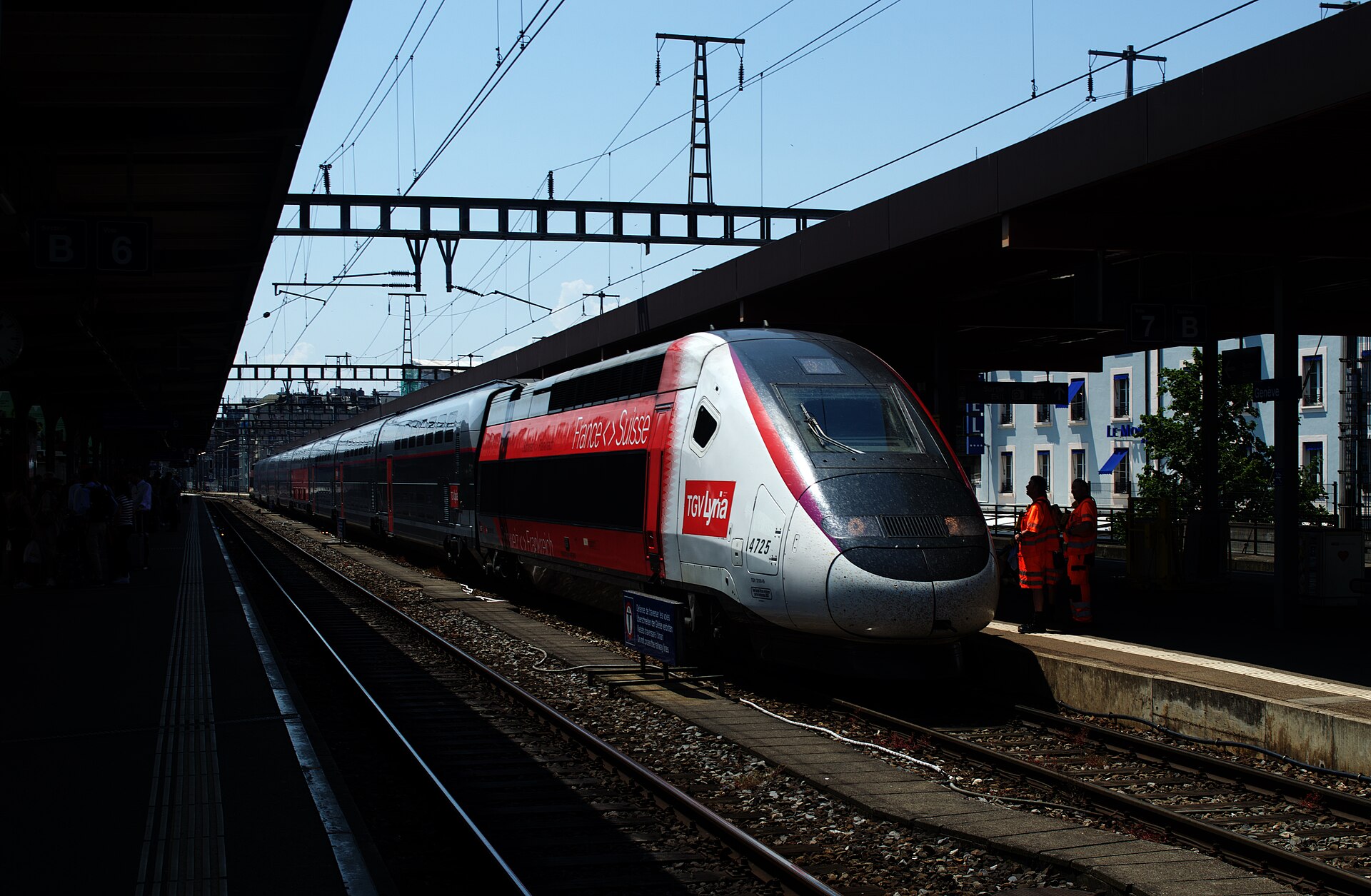
Geneva sits at the meeting point of the Swiss, French and Italian rail networks, and from a surprising number of European cities the train is the better way in. Planes win on speed in the air and lose it at both ends: the trip to the airport, security, boarding, baggage reclaim. A train arrives in the middle of the city, with no liquids rule and no bag fee.
| From | By train to Geneva | Verdict |
|---|---|---|
| Lausanne | About 35 minutes | Never fly |
| Bern | About 1h45 | Never fly |
| Lyon (city) | About 2 hours from Part-Dieu | Train |
| Zurich | 2h45–3h, direct | Train, unless you’re connecting at Zurich Airport |
| Basel | About 2h40 | Train |
| Paris | A little over 3 hours by TGV Lyria | Train, city centre to city centre |
| Milan | About 4 hours through the Simplon | Close; the train is the prettier choice |
| London | A long day via Paris | Fly, unless you want the journey itself |
Timings are typical direct or best connections. Book ahead on both SNCF and SBB, where advance fares are far cheaper than walk-up ones. There’s a carbon argument too, and on these routes it costs you nothing to act on it.
11 — Which terminal, which sector
Geneva Airport is simpler than its reputation suggests. Nearly all flights use the main terminal and its Swiss sector. On winter weekends, some charter and low-cost flights use the seasonal Terminal 2, a few minutes’ walk away. A small number of domestic French flights use the French sector, which has its own access road from Ferney-Voltaire. Your booking and the departure boards will tell you which applies. Our guides to Geneva Airport’s terminals and the French sector explain both.
12 — Very early and very late flights
Geneva’s day has firm edges, and the cheapest fares are often the ones that land or leave at the awkward end of it. The terminal closes overnight, roughly from midnight to 04:00, and trains into the city run from about 05:00 until shortly after midnight. That has consequences:
- A late arrival that lands after the last train needs a taxi or a pre-booked transfer, which can wipe out the saving on a Friday-night bargain.
- An early departure is easier than it looks if you’re staying in town. The free tpgAérobus runs six routes, A1 to A6, for passengers reaching the airport between 03:30 and 06:00 with a same-day flight ticket.
- Waiting in the terminal overnight isn’t an option. Our guide to sleeping at Geneva Airport covers the closure and the hotels a short walk or shuttle away.
13 — Passports and border checks
Switzerland is in the Schengen area but not in the EU. Arriving from another Schengen country, there’s no passport check. Arriving from the UK, Ireland or outside Europe, there is. Non-EU travellers now meet the Schengen Entry/Exit System, phased in from October 2025 and fully in place since April 2026, which takes fingerprints and a photograph on your first visit instead of stamping your passport. The ETIAS travel authorisation for visa-exempt nationalities is due to follow. Allow a little extra time at passport control on a first trip, and check the current rules before you fly. Our guide to Geneva visa and entry requirements goes through them by nationality.
14 — After you land
- Into the city: the train from the station beneath the terminal reaches Genève-Cornavin in about six minutes. Guests at Geneva hotels ride free with the Geneva Transport Card. The old free ticket machine in the baggage hall is gone; see what happened to the airport’s free transport ticket.
- To the mountains: shared shuttles, private transfers, trains and hire cars all leave from the airport. See our ski transfers guide.
- By car: the rental desks are split between the Swiss and French sectors, with different prices and rules. See renting a car at Geneva Airport.
- Everything else: our complete Geneva Airport guide covers the terminal, security, lounges and the rest.
Frequently asked questions
How long is the flight from London to Geneva?
About an hour and a half in the air. Allow a little more from Scotland or the north of England. Geneva’s airport is six minutes from the city centre by train, so little time is lost at this end.
Are there direct flights to Geneva from the US?
Yes, a few. SWISS flies from New York JFK, United from Newark and Washington Dulles, and Air Canada from Montreal. From elsewhere you’ll connect in Europe, or fly into Zurich, which has far more transatlantic flights, and take the direct train.
When are flights to Geneva cheapest?
Midweek, and outside school holidays and the ski season’s weekends. November, early December, mid-January and the weeks either side of Easter are usually the best value. February weekends and the Christmas period are the most expensive.
Is it cheaper to fly into Zurich or Lyon?
Sometimes. Zurich often wins for long-haul flights and has a direct train to Geneva in a little over three hours. Lyon can suit the French Alps, but it’s around two and a quarter hours from Geneva by coach. Unless the saving is large, Geneva is the easier choice.
Which airlines fly to Geneva?
easyJet and SWISS carry most passengers, alongside British Airways, Air France, KLM, Lufthansa, Iberia, Aer Lingus, SAS and many others. Emirates, Qatar Airways and Etihad fly in from the Gulf, and Jet2 and TUI add ski-season flights from the UK.
Is Geneva Airport in Switzerland or France?
Switzerland, on the border with France. Most passengers use the Swiss sector. A French sector serves some domestic French flights and has its own road access from Ferney-Voltaire.