Geneva's History, Heritage & International Importance
Famous People from Geneva — Calvin, Rousseau, Dunant and a Surprising Cast
This article contains advertising. Our booking links are routed through a partner that adds commission tracking automatically, so if you book through one we earn a commission from the provider, at no extra cost to you. It never affects what we recommend. Affiliate disclosure
A city of 200,000 people should not punch above its weight this consistently. Geneva produced the most-read English Bible. It hosted the conversations that produced Frankenstein, the Social Contract, the Red Cross, the League of Nations, the UN, and the web. The list of famous people from Geneva (born there, or who did their most important work there) is so dense that you can roughly retell the history of Western thought by walking from Place du Bourg-de-Four to Place des Nations.
This is a guided tour of the twenty-five names that matter most: theologians, philosophers, writers, scientists, humanitarians, and a couple of magnificent oddities, with the addresses, plaques, and museums where you can still find them. For the wider story start at the Geneva history and heritage pillar, and to build a visit around it, see things to do in Geneva and the trip planner.
01 — The Reformers: Calvin, Farel, Beza, Knox
The four men carved into the central panel of the Reformation Wall in Parc des Bastions are not all Genevan by birth (none of them, actually) but they all did their most consequential work in the city.
Jean Calvin (1509 to 1564). Born in Noyon, France. Trained as a lawyer. Arrived in Geneva in 1536 intending to stay one night, and stayed almost 30 years. The author of the Institutes of the Christian Religion, the most systematic Protestant theology ever written. The architect of the Genevan church order and the Ecclesiastical Ordinances of 1541. Founder of the Geneva Academy with Beza in 1559. Buried in an unmarked grave at Plainpalais cemetery. Statue at the Reformation Wall, plaque at Saint-Pierre Cathedral. For the full Calvin story see our Reformation in Geneva guide.
Guillaume Farel (1489 to 1565). Born in the French Dauphine. The fiery French preacher who convinced Geneva to embrace the Reformation in 1535 and 1536 and then dramatically bullied Calvin into staying. A smaller figure historically than Calvin but indispensable to the founding moment. Statue at the Reformation Wall.
Theodore Beza (Theodore de Beze) (1519 to 1605). Born in Burgundy, French nobility, a classical scholar of the first rank. Calvin’s chosen successor and the leader of Genevan Reformed Protestantism from 1564 to 1605. First rector of the Geneva Academy. Buried in Saint-Pierre. Statue at the Reformation Wall.
John Knox (c. 1514 to 1572). Scottish. Lived in Geneva from 1554 to 1559 as the pastor of the English-speaking refugee congregation at the Auditoire de Calvin. Took the Genevan model home to Scotland and founded the Presbyterian Church of Scotland. Statue at the Reformation Wall. The Auditoire de Calvin, just south of Saint-Pierre, is where he preached and is still in use as a place of worship for the English-speaking Reformed community.
02 — The Genevan Enlightenment: Rousseau, Saussure, Necker
The eighteenth century is Geneva’s other great period. The republic was small but unusually well educated, and produced a constellation of thinkers who shaped European intellectual life out of all proportion to the city’s size.
Jean-Jacques Rousseau (1712 to 1778). Born in Geneva at 40 Grand-Rue (the building still stands, marked with a plaque, and houses an excellent small museum called the Espace Rousseau). The author of The Social Contract (1762), which opens with the sentence “Man is born free, and everywhere he is in chains.” Also of Emile, The Confessions, and La Nouvelle Heloise. A genuinely complicated figure (he abandoned five children to the Paris foundling hospital while writing a treatise on education) and one whose relationship with his native city was a lifelong wrestle. The Genevan authorities ordered his books burned in 1762 and he renounced his Genevan citizenship in response. The city erected a statue to him in 1838 on what is now Ile Rousseau, the small island in the Rhone just downstream of the lake. The Espace Rousseau on Grand-Rue (free entry) tells the story from birth to last exile.
Horace-Benedict de Saussure (1740 to 1799). Genevan aristocrat, naturalist, and geologist who essentially invented the sport of alpinism. He offered a prize in 1760 for anyone who could climb Mont Blanc and finally summited it himself in 1787 (the year after Balmat and Paccard’s first ascent). His book Voyages dans les Alpes founded modern Alpine science. The Saussure family town house is now part of the Maison Tavel complex.
Jacques Necker (1732 to 1804). Genevan-born banker and statesman who became Director-General of Finance for Louis XVI of France. His dismissal in July 1789 was one of the immediate triggers of the storming of the Bastille and the French Revolution. Father of Germaine de Stael (1766 to 1817), the formidable writer and salon hostess who turned the family chateau at Coppet (a short train ride from Geneva, and open to visitors) into one of the most important intellectual gathering points of the Romantic era.
Albrecht von Haller, though Bernese by birth, taught at the Geneva Academy in his late years. Pierre Prevost, the physicist who described what is now called Prevost’s theory of radiant heat, was Genevan.
03 — Famous guests: Voltaire, Mary Shelley, Byron, the Frankenstein summer
Geneva’s guest list is almost as remarkable as its native sons. The city’s combination of cultural sophistication, religious tolerance (well, relative to most places in Europe), and lakefront real estate drew a steady flow of intellectual refugees and tourists.
Voltaire (1694 to 1778) settled at Les Delices, on what is now Rue des Delices in the Plainpalais district, in 1755. The house is still there and is now the Voltaire Institute and Museum (free entry, beautiful gardens). He moved across the French border to Ferney in 1758 specifically to be near Genevan printers and salons without being subject to Genevan censorship. He lived there for the next twenty years and made the village into a cosmopolitan intellectual capital that drew visitors from all over Europe.
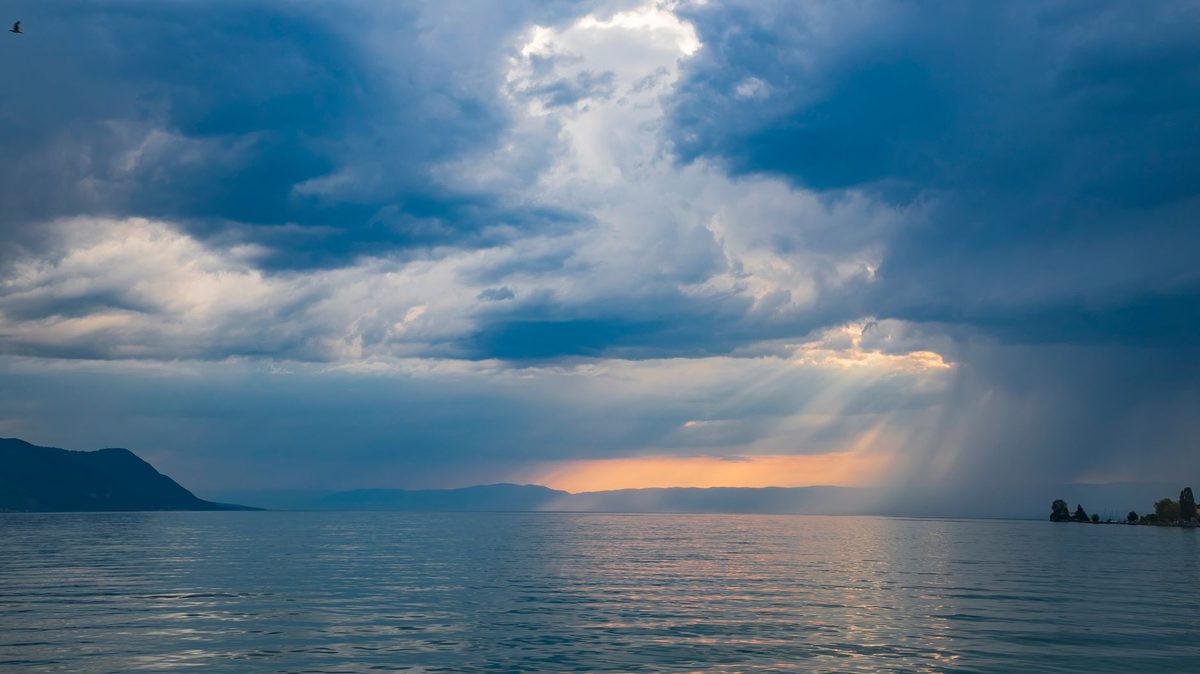
The Frankenstein summer of 1816. This is the single most famous literary chapter in Geneva’s history. In June 1816, Lord Byron rented the Villa Diodati on the Cologny hillside above Lake Geneva. His guests included the 18-year-old Mary Godwin (later Mary Shelley), her future husband Percy Bysshe Shelley, Mary’s stepsister Claire Clairmont, and Byron’s young physician John Polidori. The summer was meteorologically catastrophic; the eruption of Mount Tambora in Indonesia the previous year had filled the global atmosphere with ash, producing the “Year Without a Summer.” Trapped indoors by relentless rain and thunderstorms, Byron proposed that each guest write a ghost story.
Two of the works produced that summer changed Western literature. Mary Shelley began drafting Frankenstein; or, the Modern Prometheus, published 1818, the founding novel of science fiction. John Polidori wrote The Vampyre, published 1819, the first vampire novel in English and the template for everything from Dracula to Twilight. Both stories were inspired by ghost-story readings around the Diodati fireplace, lightning over Lake Geneva, and Byron and Percy Shelley’s increasingly intoxicated metaphysical conversations.
The Villa Diodati is still standing in Cologny, on Chemin de Ruth. It is a private residence and not open to visitors, but it is visible from the road and there is a plaque. The lakefront walking path below it is one of the loveliest in the canton, and the lake views (especially in stormy weather) are genuinely Shelleyan. Geneva celebrates the bicentenaries, and the connection has been the subject of multiple recent films and exhibitions.
Lord Byron went on to write much of Manfred and parts of Childe Harold’s Pilgrimage (Canto III) at the Villa Diodati that same summer. The Chateau de Chillon further along the lake (visit it as a day trip from Geneva) features in his famous narrative poem The Prisoner of Chillon, written after a visit in late June 1816.
04 — 19th-century giants: Henry Dunant, the Pictet dynasty, Frederic-Cesar de La Harpe
Henry Dunant (1828 to 1910). Born in Geneva on Rue Verdaine 12 (the house is marked with a plaque). Founded the International Committee of the Red Cross in 1863, instigated the First Geneva Convention in 1864, and was awarded the first Nobel Peace Prize in 1901. Died nearly forgotten in an old people’s home in Heiden, Appenzell. Statue and museum at the International Museum of the Red Cross and Red Crescent on Avenue de la Paix. For the full Dunant story see our Red Cross in Geneva guide.
The Pictet dynasty. Pictet et Cie, founded in 1805 and still going as Pictet Group, is one of the oldest private banks in Switzerland. Marc-Auguste Pictet (1752 to 1825), one of the family’s founders, was also a scientist who edited the influential Bibliotheque britannique journal and helped found the Societe Helvetique des Sciences Naturelles. The family produced bankers, scientists, and naturalists across multiple generations and is still influential in the city today.
Frederic-Cesar de La Harpe (1754 to 1838). Born in Rolle on Lake Geneva, lived much of his life in Geneva. Tutor to the future Tsar Alexander I of Russia, leader of the Vaudois revolution that helped break Bernese rule, and a key figure in the 1815 Congress of Vienna negotiations that brought Geneva and Vaud into the Swiss Confederation.
Marc Antoine Jullien, Ernest Naville, and a half-dozen other Genevan intellectuals filled out a productive nineteenth century. The city’s role as a refuge for political exiles (Italian republicans, Polish revolutionaries, Russian anarchists) meant that the cafes and reading rooms of the era hosted an extraordinarily international clientele.
05 — Scientists: Charles Bonnet, Jean Piaget, modern CERN figures
Geneva’s scientific tradition stretches from the eighteenth-century natural philosophers through the modern physics establishment at CERN.
Charles Bonnet (1720 to 1793). Genevan naturalist who described parthenogenesis in aphids and gave his name to Charles Bonnet syndrome, the visual hallucinations sometimes experienced by people with significant sight loss.
Jean Piaget (1896 to 1980). Born in Neuchatel but spent most of his career at the University of Geneva, where he founded the International Centre for Genetic Epistemology in 1955. The most influential child psychologist of the twentieth century and the founder of constructivist developmental theory. The Archives Jean Piaget at the University of Geneva preserves his papers and is open to researchers.
Carl Gustav Jung spent significant time in Geneva and presented at conferences here. The Genevan-born psychiatrist Edouard Claparede was a pioneer of educational psychology and one of Piaget’s mentors.
CERN figures. The Geneva region’s modern scientific identity is dominated by the European Organization for Nuclear Research, founded 1954, headquartered on the Swiss-French border in Meyrin. CERN scientists who lived in or near Geneva and won the Nobel Prize in Physics include Carlo Rubbia (1984), Simon van der Meer (1984), Georges Charpak (1992), and the leaders of the Higgs boson discovery teams of 2012, whose work led to the Nobel Prizes for Peter Higgs and Francois Englert in 2013.
06 — Twentieth-century writers: Borges, Cendrars, Cingria
Geneva’s twentieth-century literary scene is dominated by exiles and refugees.
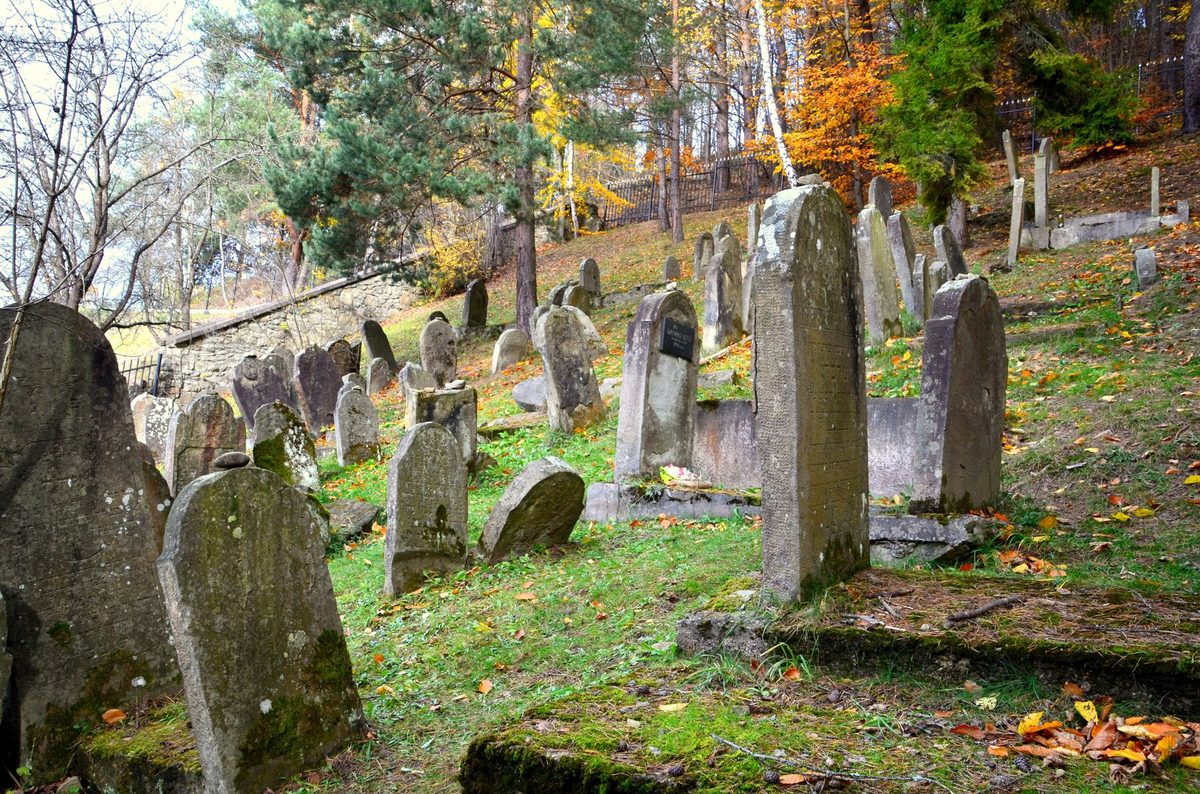
Jorge Luis Borges (1899 to 1986). The Argentine writer spent his teenage years at the College Calvin during the First World War (his family had moved to Europe in 1914 and got stranded by the war). He moved back to Geneva permanently in 1985 and died there in June 1986. He is buried in the Cimetiere des Rois at Plainpalais, within walking distance of Calvin’s symbolic marker. His grave, marked with a Saxon warrior carved in stone, is one of the literary pilgrimage sites in Geneva.
Blaise Cendrars (1887 to 1961). Born Frederic Sauser in La Chaux-de-Fonds, lived in Geneva at various points. A major twentieth-century French-language poet and novelist; lost his right arm in the First World War and wrote some of his best work afterwards.
Charles-Albert Cingria (1883 to 1954). Genevan-born French-language writer, friend of Stravinsky, esteemed by contemporaries far more than he is now read. Robert Walser (1878 to 1956), a Swiss German-language writer of the highest rank, lived in Geneva for periods. Jean Starobinski (1920 to 2019), the great literary critic and historian of ideas, was Genevan-born and spent his career at the University of Geneva.
07 — Modern figures: Tim Berners-Lee, Carla Del Ponte, Martin Suter
The modern Geneva-connected list includes:
Tim Berners-Lee (born 1955). English computer scientist who invented the World Wide Web while working at CERN, just outside Geneva, between 1989 and 1991. He proposed the WWW in a memo dated 12 March 1989, built the first web browser, web server, and web pages in 1990, and CERN placed the technology in the public domain in 1993. He has never lived in Geneva permanently but his most consequential work was done there. The original NeXT computer on which the first web server ran is on display at the CERN Science Gateway, opened in 2023.
Carla Del Ponte (born 1947). Swiss prosecutor, born in Lugano, who served as Attorney General of Switzerland and then as Chief Prosecutor of the UN International Criminal Tribunals for the former Yugoslavia (1999 to 2007) and Rwanda. Lived and worked in Geneva for much of her career.
Martin Suter (born 1948). Swiss novelist, one of the best-selling German-language writers of recent decades, lived in Geneva for a period. Patrick Aebischer, founding president of EPFL Lausanne; Joseph Stiglitz, the Nobel-winning American economist who spent extended periods at the Graduate Institute in Geneva; and a long list of contemporary diplomats, scientists, and intellectuals who have made Geneva their working home complete the modern picture.
08 — A “famous Genevans” walking route
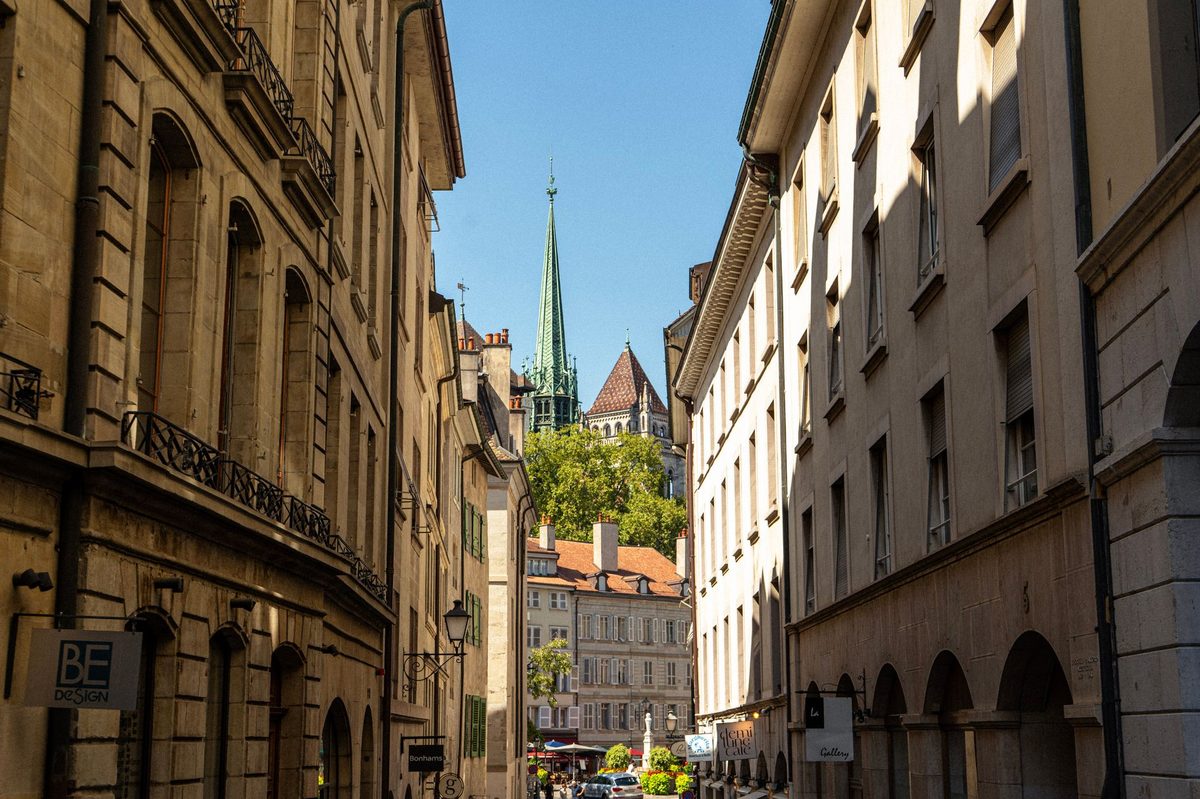
Half a day, no taxis, twenty-five centuries of biography. Start at Place du Bourg-de-Four, the medieval marketplace, and walk uphill to Saint-Pierre Cathedral: Calvin’s pulpit, with his wooden chair in the nave and Beza’s tomb in the cathedral itself.
Walk west along Rue Calvin and Rue de la Cite to 40 Grand-Rue, Rousseau’s birthplace, now the free Espace Rousseau. Continue down Grand-Rue to Rue Verdaine 12, Henry Dunant’s birthplace, marked with a plaque.
Drop down the hill to Place du Molard and walk across the Pont du Mont-Blanc to Ile Rousseau, the island with the 1838 bronze statue of Rousseau seated and writing. Cross back to the south bank and walk west to Parc des Bastions and the Reformation Wall, where Calvin, Farel, Beza, and Knox stand 4.5 metres tall.
If you have energy, continue west to Les Delices (Rue des Delices 25), Voltaire’s house, now the Voltaire Institute, free, with beautiful gardens. From here, hop on tram 14 or 18 across town to the Cimetiere des Rois at Plainpalais: Borges’s grave is signposted, Calvin’s symbolic marker is nearby.
For literary obsessives, take Bus E or G out to Cologny and walk past the Villa Diodati on Chemin de Ruth. The lake views from the Cologny hillside are the same ones that filled Mary Shelley’s notebook in the summer of 1816. Allow four hours minimum; the more interested you are, the longer it gets.
For deeper context see our history of Geneva, the Reformation guide, the Red Cross guide, and things to do in Geneva. To plan the trip itself, see the trip planner and where to stay in Geneva.
Frequently asked questions
Who was Geneva’s most famous citizen?
Three plausible answers: Jean Calvin (the most theologically and politically influential), Jean-Jacques Rousseau (the most read), and Henry Dunant (the most consequential humanitarian). Of the three, only Rousseau and Dunant were actually born in Geneva; Calvin was a French refugee who became a citizen late in life.
Was Rousseau born in Geneva?
Yes. Jean-Jacques Rousseau was born on 28 June 1712 at what is now 40 Grand-Rue in the Old Town. The house still stands and contains the small Espace Rousseau museum, which is free and well worth a visit.
Where can I see Frankenstein-related sites in Geneva?
The Villa Diodati in Cologny is visible from Chemin de Ruth but is a private residence. The Bibliotheque de Geneve occasionally puts on Shelley-related exhibitions. The shores of the lake, particularly around Cologny and toward Hermance, provide the landscapes that inspired the novel. The Bodmer Foundation in Cologny holds Shelley-related material.
Was Jorge Luis Borges Genevan?
Argentine by birth and citizenship, but with deep Genevan connections. He attended the College Calvin during the First World War as a teenager, and he chose to spend his final months in Geneva, dying in the city on 14 June 1986. He is buried in the Cimetiere des Rois at Plainpalais, his grave marked with a Saxon warrior carved in stone, one of the most-visited literary tombs in Switzerland.
Who invented the World Wide Web?
Tim Berners-Lee, an English computer scientist working at CERN on the Geneva-French border. His March 1989 proposal “Information Management: A Proposal” outlined the basic concept; he built the first browser, server, and web pages in 1990; and CERN released the technology into the public domain in 1993. The original NeXT computer on which the first web server ran is on permanent display at the CERN Science Gateway, opened in 2023.
Where can I see famous people’s graves in Geneva?
The Cimetiere des Rois at Plainpalais is the city’s most famous cemetery and contains the symbolic marker for Calvin (1564) and the graves of Jorge Luis Borges (1986), Jean Piaget (1980), and many other notable Genevans. It is open to the public during cemetery hours and is free. A small free leaflet at the entrance identifies notable graves.
09 — Related Geneva guides
Keep going with the Geneva history and heritage pillar, the full history of Geneva, the Reformation guide, our museums and culture picks, the things to do in Geneva overview, and the practical trip planner and where to stay guides.