Geneva's History, Heritage & International Importance
The Red Cross and Geneva — Henry Dunant, the ICRC, and the Birth of Modern Humanitarianism
This article contains advertising. Our booking links are routed through a partner that adds commission tracking automatically, so if you book through one we earn a commission from the provider, at no extra cost to you. It never affects what we recommend. Affiliate disclosure
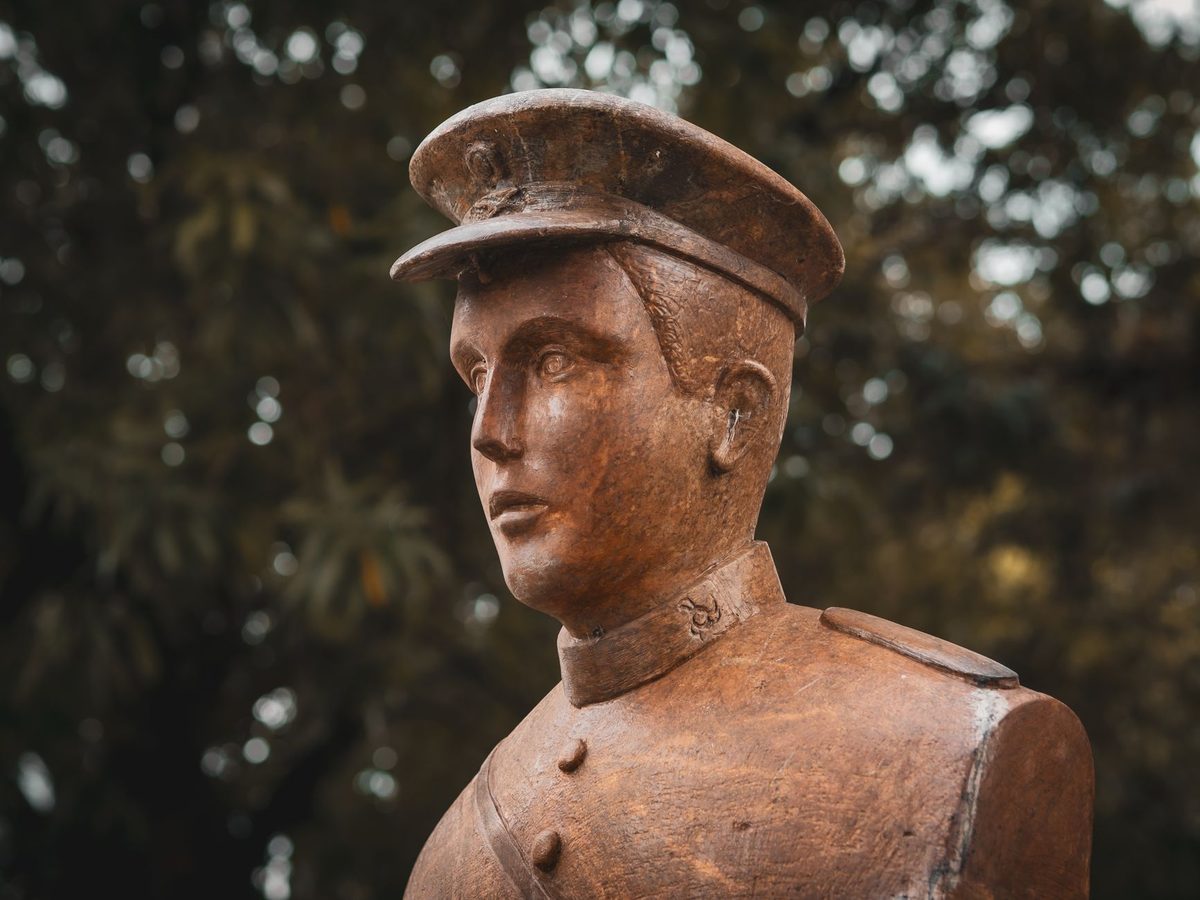
On the night of 24 June 1859 a 31-year-old Genevan businessman named Henry Dunant rode into the village of Castiglione delle Stiviere in northern Italy and spent the next three days organising local women to bring water and bandages to nearly 9,000 wounded soldiers crammed into the church. He had blundered into the aftermath of the Battle of Solferino: 40,000 dead and wounded in a single day, almost no medical service, men dying of thirst and untreated wounds in open fields. He went home shaken, and three years later published a book that changed the world.
That is the short version of how the Red Cross in Geneva began. Four years after the book, the movement was operational; the treaty that became the First Geneva Convention was signed in the city’s Hotel de Ville. This guide tells the full story, shows what Geneva’s Red Cross looks like today, and lays out exactly how to see it as a visitor. For the wider picture, start with our Geneva history and heritage pillar and the Geneva museums guide.
01 — Henry Dunant, the unlikely founder
Jean-Henri Dunant was born on 8 May 1828 at Rue Verdaine 12 in Geneva’s old town. The house still stands, with a plaque. His family was prosperous, Reformed Christian and civically active; his father served in the Society for the Welfare of the Poor and other Genevan philanthropic bodies. The young Dunant inherited his parents’ religious seriousness and added an entrepreneurial restlessness that would dog him for the rest of his life.
After a half-finished business apprenticeship, Dunant founded the Geneva YMCA in 1852, one of the first on the European continent, and effectively launched the YMCA’s international federation at a conference he organised in 1855. In the late 1850s he set up a colonial milling venture in Algeria, where French authorities kept blocking his water rights. By spring 1859 he had decided the only man who could untangle it was Napoleon III himself, and he set off to find him. Napoleon happened to be fighting the Austrians in northern Italy, so Dunant followed.
02 — Solferino, the day that changed everything
On 24 June 1859 a French-Sardinian army under Napoleon III and a slightly larger Austrian army under Emperor Franz Joseph fought one of the largest land battles of the nineteenth century around the Lombard towns of Solferino, San Martino and Cavriana. The fighting ran from dawn to late evening across some 20 kilometres of front, and the total casualties topped 40,000 men. Both armies had wholly inadequate medical services; the wounded were left where they fell or carried to improvised hospitals in nearby villages.
Dunant reached Castiglione delle Stiviere, six kilometres behind the French lines, on the evening of 24 June. The main church held about 1,500 wounded, with thousands more in the surrounding streets and houses, tended by a handful of overwhelmed military doctors. Still wearing the white suit he had packed for his meeting with Napoleon, he stayed three days, organising the village women to bring water, change dressings and care for the wounded regardless of which army they had fought for. The phrase that emerged, Tutti fratelli, all brothers, became one of the movement’s founding ideas. Solferino destroyed Dunant’s old certainties and crystallised a new one: this was a problem no single army could solve, and it needed a permanent, international, neutral answer.
03 — A Memory of Solferino, the book that founded the movement
Back in Geneva, Dunant spent three years writing. In November 1862 he privately published Un souvenir de Solferino, A Memory of Solferino, at his own expense in a first run of 1,600 copies, and posted it to every major European political figure he could think of. The book splits in two. The first hundred pages are a graphic, almost cinematic account of what he saw at Solferino and Castiglione: body counts, sights, smells, individual portraits of dying men. The second part is a set of proposals.
Two of those proposals changed history. First, that every country should set up a national society of volunteer nurses, trained in peacetime, deployable in wartime, neutral as to combatant status and recognised as non-combatants under international law. Second, that an international treaty should bind armies to respect medical personnel, the wounded and medical facilities. The book was an overnight sensation in European elite circles, and within weeks Dunant was fielding letters from kings, generals and humanitarians. Florence Nightingale’s Crimean War work (1854 to 1856) had been part of the same broad awakening, but Dunant’s mix of vivid reportage and concrete proposals turned a vague sense of inadequacy into a programme.
04 — The 1863 founding and the Committee of Five
By early 1863 Dunant had local backing. The Societe Genevoise d’Utilite Publique appointed a committee of five to carry his proposals forward: Gustave Moynier, the Genevan lawyer who became the movement’s administrative architect; General Guillaume-Henri Dufour, the elderly Swiss commander and topographer who had led the federal forces in the 1847 Sonderbund War; Dr Louis Appia, a Swiss-French military surgeon; Dr Theodore Maunoir, a Genevan surgeon; and Dunant himself.
This committee, soon styled the International Committee for the Relief of the Wounded and from 1875 the International Committee of the Red Cross, held its first meeting on 17 February 1863. It promptly organised an international conference, which met in Geneva from 26 to 29 October 1863 with 36 delegates from 14 states. The conference adopted ten resolutions formalising Dunant’s plan: every country should set up a national relief society, volunteer nurses should be recognised as neutral non-combatants, and a single emblem, a red cross on white in tribute to the host country, should identify them.
05 — The First Geneva Convention (1864)
An intergovernmental conference followed in August 1864. Twelve states sent plenipotentiaries to Geneva’s Hotel de Ville, the old city hall in the heart of the old town, to negotiate a binding treaty. The result, signed on 22 August 1864, was the Convention for the Amelioration of the Condition of the Wounded in Armies in the Field, now usually called the First Geneva Convention.
Its ten articles declared military hospitals and ambulances neutral, protected medical personnel from capture, required armies to care for the wounded regardless of nationality, and prescribed the red cross on white to mark medical staff and facilities. It was the first universal treaty of modern international humanitarian law, and within a decade most major European powers had ratified. It has been expanded since: revised in 1906, extended in 1929 to cover prisoners of war, and above all the four 1949 Geneva Conventions, which with their Additional Protocols of 1977 and 2005 form the core of modern humanitarian law. The 1949 Conventions are the most widely ratified treaties in history, with every state on earth a party, and the ICRC is their official guardian.
06 — Dunant’s fall, exile and Nobel Prize
The next chapter is the cruel one. While Dunant built the Red Cross in his spare time, his Algerian venture, the Credit Genevois, collapsed badly. He was personally bankrupt by 1867, and a Geneva civil court found him liable for fraudulent management. He left the city in disgrace, and Gustave Moynier, by then the movement’s day-to-day leader, refused him any continuing role. Dunant drifted to Paris and other European cities and slid into poverty.
For roughly twenty years he was effectively forgotten, living in cheap rooms in Paris, London and Stuttgart on small charitable handouts. In 1887 he washed up in the Appenzell village of Heiden, where the parish doctor Hermann Altherr took him in. From 1892 he lived in the local hospital, essentially an almshouse for the elderly, in a small upper-floor room, still writing and corresponding while the public assumed he was dead. In 1895 a Swiss journalist, Georg Baumberger, tracked him down and wrote an article that reintroduced him to Europe. Honours and donations poured in, and in 1901 the first-ever Nobel Peace Prize went jointly to Dunant and the French peace campaigner Frederic Passy. He gave most of the money away and died at Heiden on 30 October 1910, aged 82. The Henri-Dunant-Museum in Heiden preserves his room, and his grave in Zurich’s Sihlfeld cemetery, marked with a red cross, is a quiet pilgrimage site.
07 — From a committee of five to the World Wars
The movement grew at extraordinary speed. By 1900 there were national societies in nearly forty countries, and by 1925 in almost every independent state on earth. The ICRC itself stayed a private Genevan committee, originally made up entirely of Geneva citizens; its statutes still require it to be composed of Swiss nationals, a deliberate continuing tribute to Swiss neutrality.
The Franco-Prussian War of 1870 to 1871 was the first big test, with the ICRC running a Basel information office to trace prisoners and reconnect families. By the First World War this had become the International Prisoners of War Agency in Geneva, which handled roughly seven million inquiries about missing soldiers and exchanged millions of cards and letters; its archive is now a UNESCO Memory of the World record. The Second World War was harder. The ICRC’s work on prisoners of war, medical relief and Allied airdrops to occupied Europe saved many lives, but its failure to publicly condemn the Holocaust, driven by access concerns and a rigid reading of neutrality, was a genuine moral failure the institution has since acknowledged and tries to learn from. The ICRC has won the Nobel Peace Prize three times: 1917, 1944 and 1963 (the movement’s centenary, shared with the IFRC).

08 — The Red Cross today: ICRC, IFRC and national societies
The modern movement has three parts. The International Committee of the Red Cross (ICRC) is a private Swiss institution with a unique international legal status, governed by an Assembly of up to 25 Swiss nationals. Its mandate, conferred by the 1949 Geneva Conventions, is to act in armed conflict: visiting prisoners of war, protecting civilians, tracing the missing, providing medical and material relief, and reminding combatants of their obligations under humanitarian law. It works in more than 90 countries, employs about 20,000 staff and runs on roughly CHF 2.7 billion a year. Headquarters: Avenue de la Paix 19.
The International Federation of Red Cross and Red Crescent Societies (IFRC) is the umbrella body for the 191 national societies, coordinating work on natural disasters, public health and migration outside armed conflict. Founded in 1919 as the League of Red Cross Societies, it took its current name in 1991. Headquarters: Chemin des Crets 17 in Petit-Saconnex, a short walk from the ICRC. The 191 national societies are the largest part of the movement, with around 16 million volunteers and 450,000 staff worldwide running most of the day-to-day first aid and relief work the public associates with the Red Cross. The seven Fundamental Principles, proclaimed in Vienna in 1965, are humanity, impartiality, neutrality, independence, voluntary service, unity and universality.
09 — The International Red Cross and Red Crescent Museum
The single best place to understand all of this is the Musee International de la Croix-Rouge et du Croissant-Rouge on Avenue de la Paix 17, right beside the ICRC headquarters. Opened in 1988 and fully renovated in 2013, it is one of the most thoughtful humanitarian museums anywhere, built around three themes in three galleries.
| Gallery | Focus | Stand-out exhibits |
|---|---|---|
| Defending Human Dignity | Red Cross work in armed conflict | Former-prisoner video testimony; the Rwandan genocide section |
| Restoring Family Links | Reconnecting families split by war and disaster | Spanish Civil War card index; the IPWA registers |
| Reducing Natural Risks | Disaster preparedness and response | The 2004 tsunami; the 2010 Haiti earthquake |
The museum opens Tuesday to Sunday (closed Mondays). Adult admission is around CHF 15, with reductions for students and free entry under 12. Give it two to three hours; it rewards a careful visit, the free multilingual audio guide is excellent, and there is a small cafe and a very good bookshop. It is comfortably in my top five recommendations for any first-time Geneva visit.
10 — Visiting the Red Cross headquarters
The ICRC headquarters on Avenue de la Paix 19 is not generally open to the public; it is a working operational base with appropriate security. The exterior is still worth a look, an understated 1933 building (extended and modernised since) that signals seriousness rather than show, and the gardens between the museum and the HQ are open. Two annual events open parts of it: the Geneva Open Doors weekend in spring, which lets the public into many international organisations in the diplomatic quarter, and World Red Cross and Red Crescent Day on 8 May (Dunant’s birthday), marked with special events at the museum and around the quarter.
11 — A Red Cross walking route in Geneva
You can do a thorough Red Cross walk in about three hours. Start at Rue Verdaine 12 in the old town, Dunant’s birthplace, marked with a plaque, then walk a few minutes to the Hotel de Ville on Rue du Puits-Saint-Pierre, where the First Geneva Convention was signed on 22 August 1864; the public courtyard carries historical signage year-round.
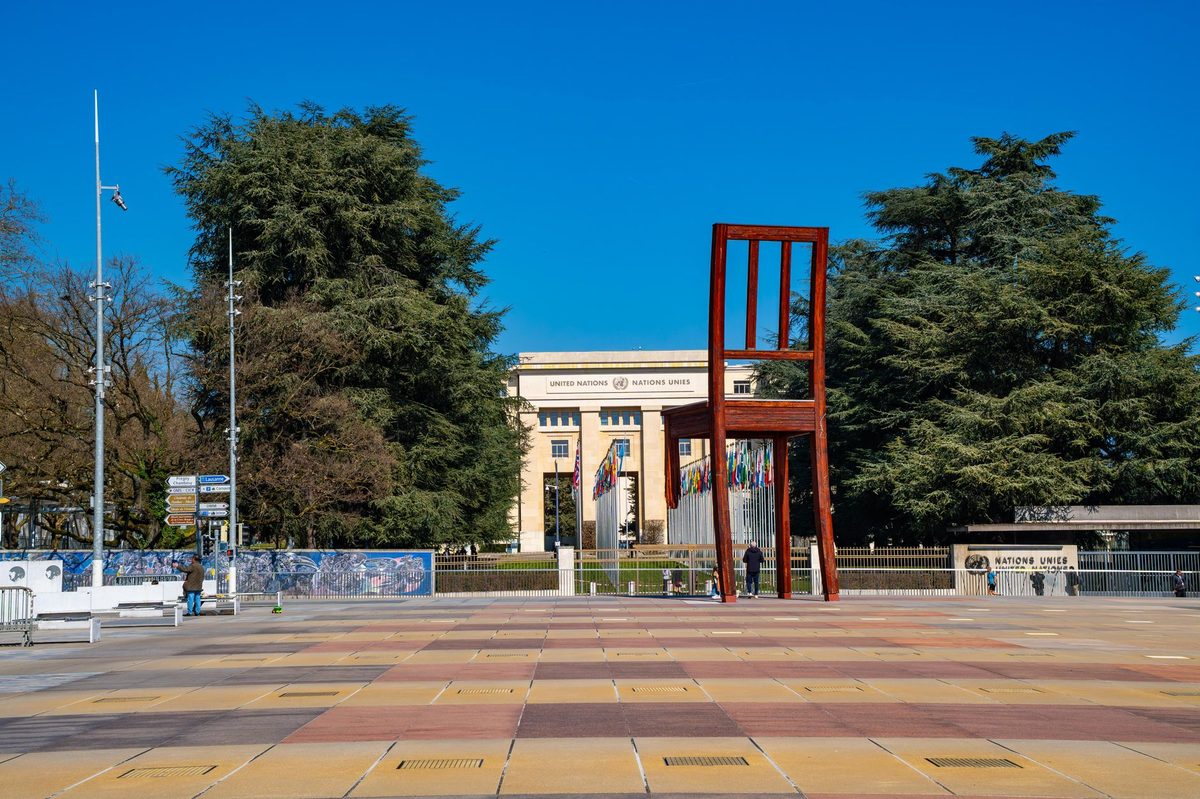
Head down to the lakefront and take Tram 15 north to Place des Nations. Pass the Broken Chair, Daniel Berset’s 12-metre sculpture against anti-personnel landmines, then walk up Avenue de la Paix to the Red Cross and Red Crescent Museum. After two to three hours inside, step the few metres further to view the ICRC headquarters, and if you still have energy, continue uphill to Chemin des Crets 17 for the IFRC headquarters (exterior only). For the full pilgrimage, the train to Heiden in Appenzell (about four hours via Zurich and St. Gallen) reaches the small Henri-Dunant-Museum at the hospital where Dunant spent his last 18 years; most people fold that into a wider trip rather than a Geneva day-trip. To slot this walk into a wider plan, see our two-day Geneva itinerary, the best Geneva attractions roundup and the Geneva public transport guide for the tram details.
For broader context see our humanitarian capital guide, the United Nations in Geneva guide, the history of Geneva and the Geneva museums guide.
Frequently asked questions
Who founded the Red Cross?
Henry Dunant, a Genevan businessman, after witnessing the aftermath of the Battle of Solferino in June 1859. He set out the idea in his 1862 book A Memory of Solferino, and the International Committee for the Relief of the Wounded, soon renamed the International Committee of the Red Cross, was founded in Geneva in February 1863 by Dunant and four other Genevans: Gustave Moynier, General Dufour, Dr Louis Appia and Dr Theodore Maunoir.
When was the Red Cross founded?
The International Committee of the Red Cross was founded in Geneva on 17 February 1863. The First Geneva Convention, the binding treaty that gave the movement its legal basis, was signed in Geneva’s Hotel de Ville on 22 August 1864.
Why is the Red Cross emblem a red cross?
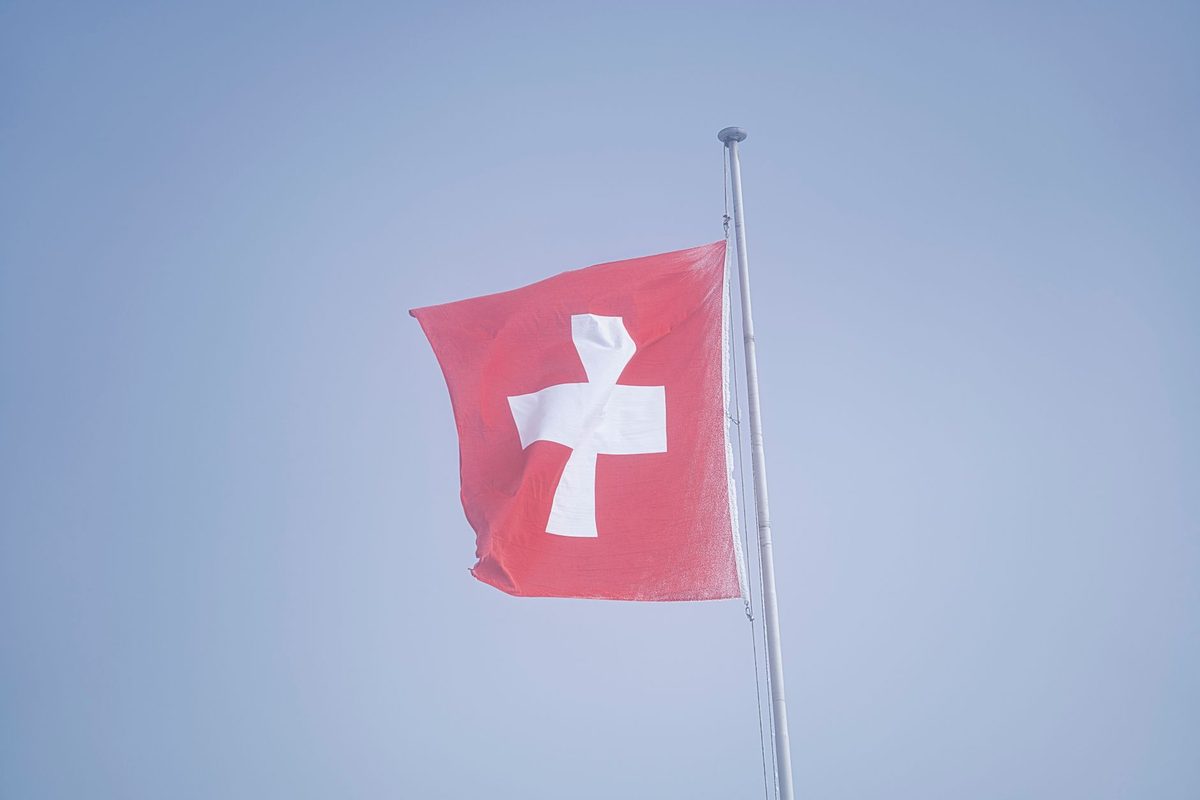
The 1863 conference chose the red cross on white as a tribute to Switzerland, where the movement was founded. The Swiss flag is a white cross on red, and the emblem is its inverse. It has no religious meaning. The Red Crescent (used in most Muslim-majority countries since 1876) and the Red Crystal (adopted in 2005) are recognised alongside it under humanitarian law.
What is the difference between the ICRC and the IFRC?
The ICRC is a private Swiss institution with a specific mandate in armed conflict, conferred by the Geneva Conventions. The IFRC is the umbrella body that coordinates the 191 national societies, focused on natural disasters, public health and capacity building outside armed conflict. Both are headquartered in Geneva, a few minutes’ walk apart.
Can I visit the Red Cross museum in Geneva?
Yes. The International Museum of the Red Cross and Red Crescent on Avenue de la Paix 17 opens Tuesday to Sunday. Adult admission is around CHF 15, with free entry under 12. Allow two to three hours. The ICRC headquarters next door is generally closed to the public except during the Geneva Open Doors weekend in spring and World Red Cross Day on 8 May.
What are the Geneva Conventions?
The four treaties signed in Geneva in 1949, with their Additional Protocols of 1977 and 2005, that codify international humanitarian law in armed conflict. They are the universally ratified successors to the original 1864 First Geneva Convention, covering the wounded and sick on land and at sea, prisoners of war, and civilians. The ICRC is their official guardian, and Switzerland is the depositary state.
12 — Related Geneva guides
Carry on through the city’s past and its institutions with the Geneva history and heritage pillar, the Geneva museums and culture guide, the best Geneva attractions roundup, a practical two-day Geneva itinerary, and the Geneva public transport guide for getting up to Place des Nations.