Geneva's History, Heritage & International Importance
Geneva Watchmaking Heritage — 500 Years of the World’s Greatest Watches
This article contains advertising. Our booking links are routed through a partner that adds commission tracking automatically, so if you book through one we earn a commission from the provider, at no extra cost to you. It never affects what we recommend. Affiliate disclosure
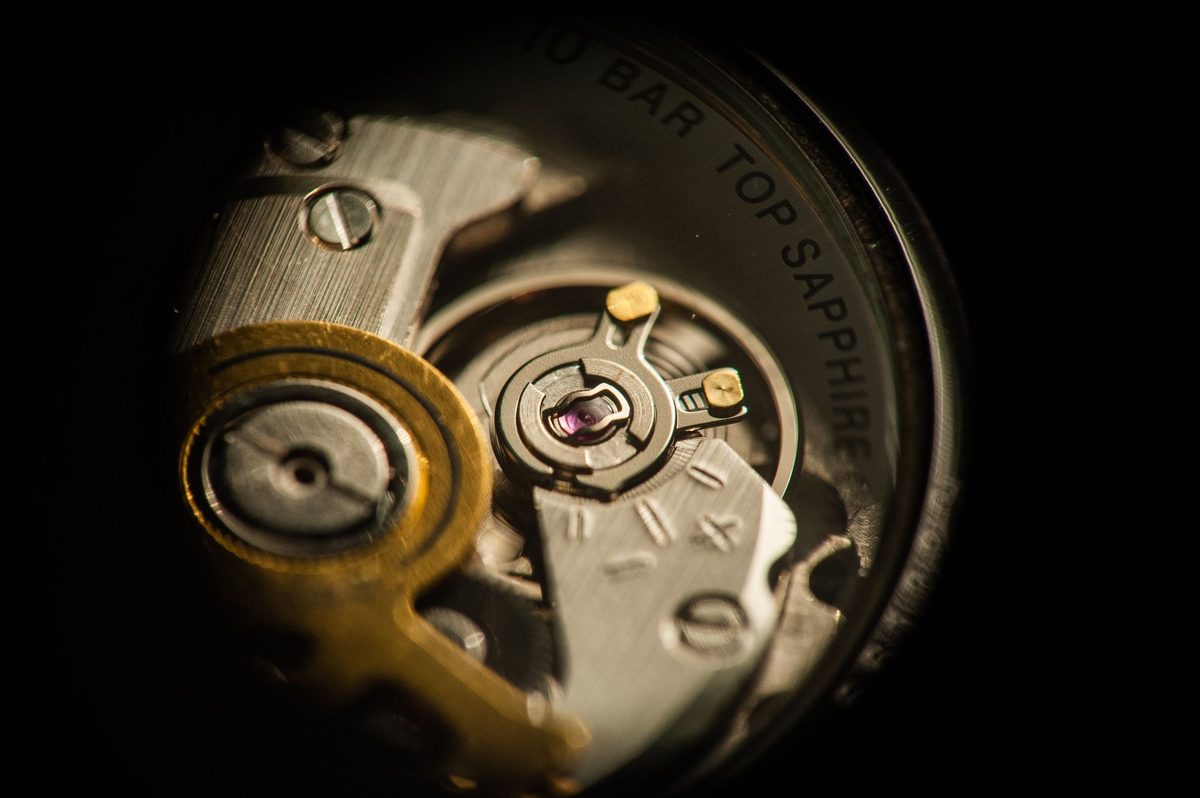
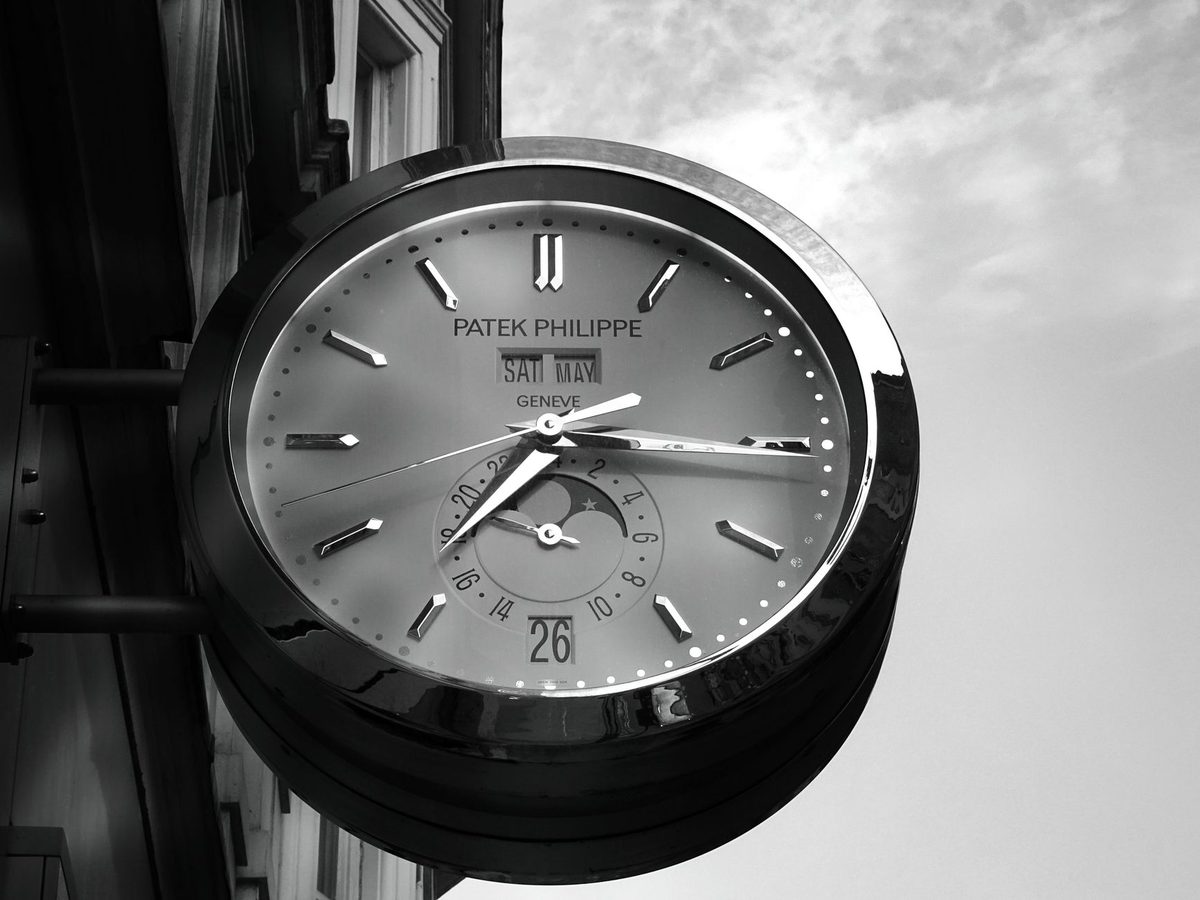
Walk one fifteen-minute stretch of Rue du Rhone and you pass the boutiques of Patek Philippe, Rolex, Vacheron Constantin, Piaget, Chopard, Hublot, Audemars Piguet, Breguet and a dozen smaller maisons. It is the densest concentration of luxury watch retail anywhere on earth, and none of it is an accident. Geneva watchmaking heritage runs in an unbroken line from 1541, when refugee Huguenot craftsmen arrived in Calvin’s city and pivoted from forbidden jewellery to permitted timepieces, through five centuries of guilds, breakthroughs and near-collapses to the manufactures still cutting movements in Plan-les-Ouates today.
This is the long version of how a small Calvinist republic became the capital of high horology, what to actually look at when you visit, and where the museums and boutiques are. If you want the wider context, start with our Geneva history and heritage guide, and pair this with the Geneva museums guide for opening hours and ticketing.
01 — How Calvin’s jewellery ban created the watch industry
The origin story is tidy enough to sound invented, but it holds up. When the Reformation reached Geneva in 1536, Calvin’s church discouraged ornamental jewellery as a vanity at odds with Protestant piety. The city already had a deep goldsmithing and enamelling tradition serving the Catholic religious-art market and the European aristocracy. With that market gone overnight, Geneva’s goldsmiths needed a new product.
Watches fit the brief exactly. A pocket timepiece with a single hour hand was functional rather than decorative, and it called for precisely the skills the local goldsmiths and enamellers already had: fine engraving, decorative case-making, gem-setting at a tiny scale and, increasingly, the mechanical complexity of the movement itself. By the 1550s the first watchmakers were working in Geneva, often alongside or for the existing goldsmiths.
The other half of the story is the refugees. Calvin’s Geneva had become a magnet for French and Italian Protestants fleeing the closed Catholic guilds back home, many of them skilled urban craftspeople. The first verifiable French Huguenot watchmaker to settle here was Charles Cusin of Autun, who arrived in 1574. Hundreds followed. By 1600 the city held the most concentrated pool of watchmaking expertise in Europe.
02 — The 1601 guild that wrote the rulebook
In 1601 the Genevan watchmakers organised into the Maitrise des Horlogers, the first independent watchmakers’ guild in the world. It set apprenticeship terms (usually five years), policed quality and represented its members to the city. Within a few decades Geneva was turning out several thousand watches a year, almost all of them for export to royal and noble buyers across Europe.
The seventeenth century stacked up the firsts: enamel-painted watch cases (a Genevan specialty from about 1635), minute hands (around 1670, though the credit is argued over) and repeater mechanisms that struck the hours at the press of a button, handy in the dark. By 1700 Geneva’s reputation was settled and unrivalled.
03 — The eighteenth-century golden age
The 1700s were Geneva’s first golden age of watchmaking. The population around 1750 was roughly 25,000, and about a third of them worked in some part of the trade: case makers, dial makers, hand makers, movement makers, enamellers, gem setters, polishers, monteurs de boites. Workshops stayed small, typically a master with three or four apprentices and journeymen, and the work clustered in the upper city around Saint-Gervais, which became known as the quartier des horlogers.
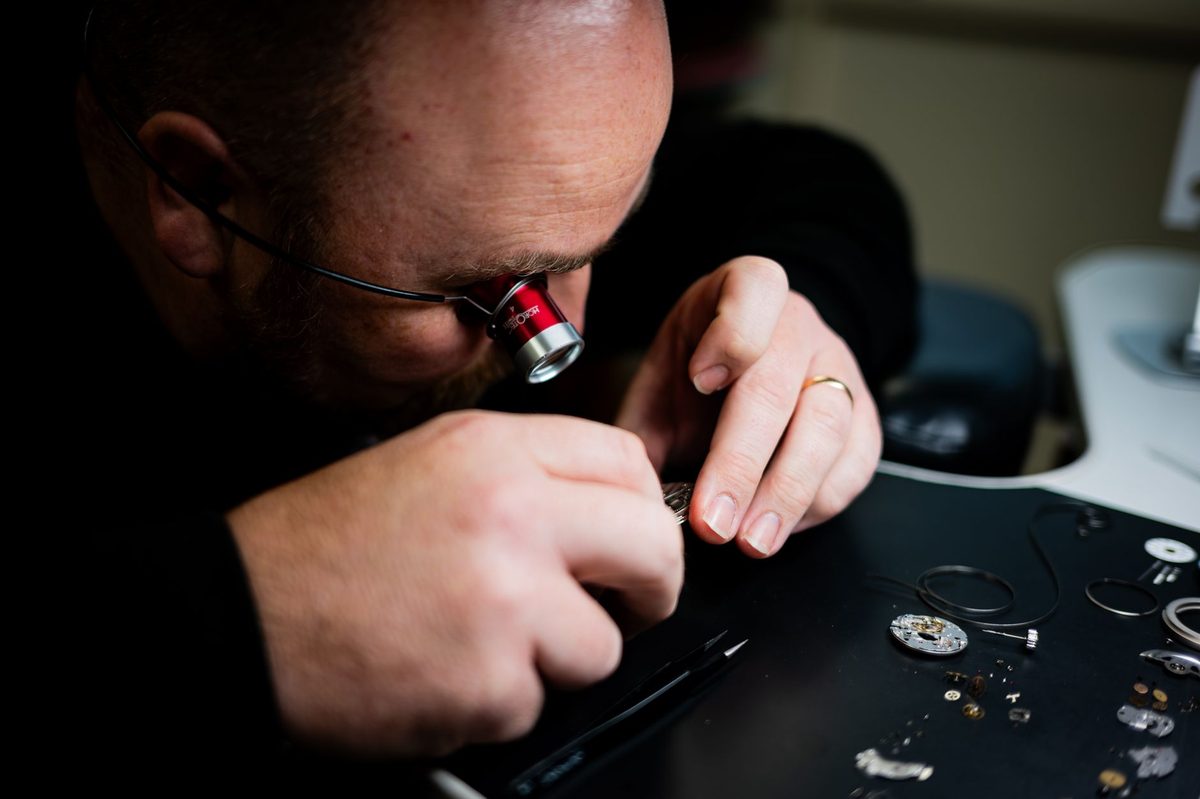
Several of the great houses still running today trace their roots to this stretch. Vacheron Constantin was founded in 1755 by Jean-Marc Vacheron in Saint-Gervais, which makes it the oldest continuously operating watchmaker in the world. It is still headquartered in Geneva, with its manufacture in Plan-les-Ouates. Patek Philippe came slightly later, in 1839, when the Polish emigre Antoine Norbert de Patek partnered with the French watchmaker Adrien Philippe. Breguet, founded in Paris in 1775 by the Swiss-born Abraham-Louis Breguet, is now a Swiss firm based in the Vallee de Joux but commercially anchored in Geneva.
The etablissage system, taking shape from 1701, was the big organisational leap. Like the putting-out model in the English textile trade, independent specialist workshops in the countryside around Geneva and up in the Jura supplied raw movements and parts to assembler firms in the city. The assemblers cased, decorated and signed the watches for export. By 1800 this network handled the bulk of Genevan output and supported a whole ecosystem of specialist trades: escapement makers in Le Locle, case makers in Geneva, dial makers in Saint-Imier, enamellers back in Geneva again.
04 — Abraham-Louis Breguet, Geneva’s most influential maker
Abraham-Louis Breguet (1747 to 1823) was born in Neuchatel and worked mainly in Paris, but his training and design vocabulary were resolutely Genevan, and his mark on the whole industry is hard to overstate. Over fifty years he invented or perfected nearly every major refinement of the mechanical watch as we know it: the tourbillon escapement (patented 1801, built to average out gravity’s pull on timekeeping), the mechanical perpetual calendar, the self-winding perpetuelle watch, the shock-resistant pare-chute, the Breguet hairspring, and the Breguet hands and numerals that are still industry shorthand for elegance.
His client list reads like a directory of late-eighteenth-century power: Marie-Antoinette (whose famous Breguet No. 160 was finally finished in 1827, forty-four years after she ordered it), Napoleon, Talleyrand, Tsar Alexander I, the Duke of Wellington. Many of those original pieces survive in museum collections, including the Patek Philippe Museum here in Geneva.
05 — Industrialisation and the great maisons
The nineteenth century brought industrialisation, mass production and the consolidation of Genevan watchmaking into fewer, larger firms. The old cabinotier workshops of Saint-Gervais, single upper-floor rooms called cabinets for their skylights, gradually gave way to factory production, though the high-end finishing stayed largely by hand.
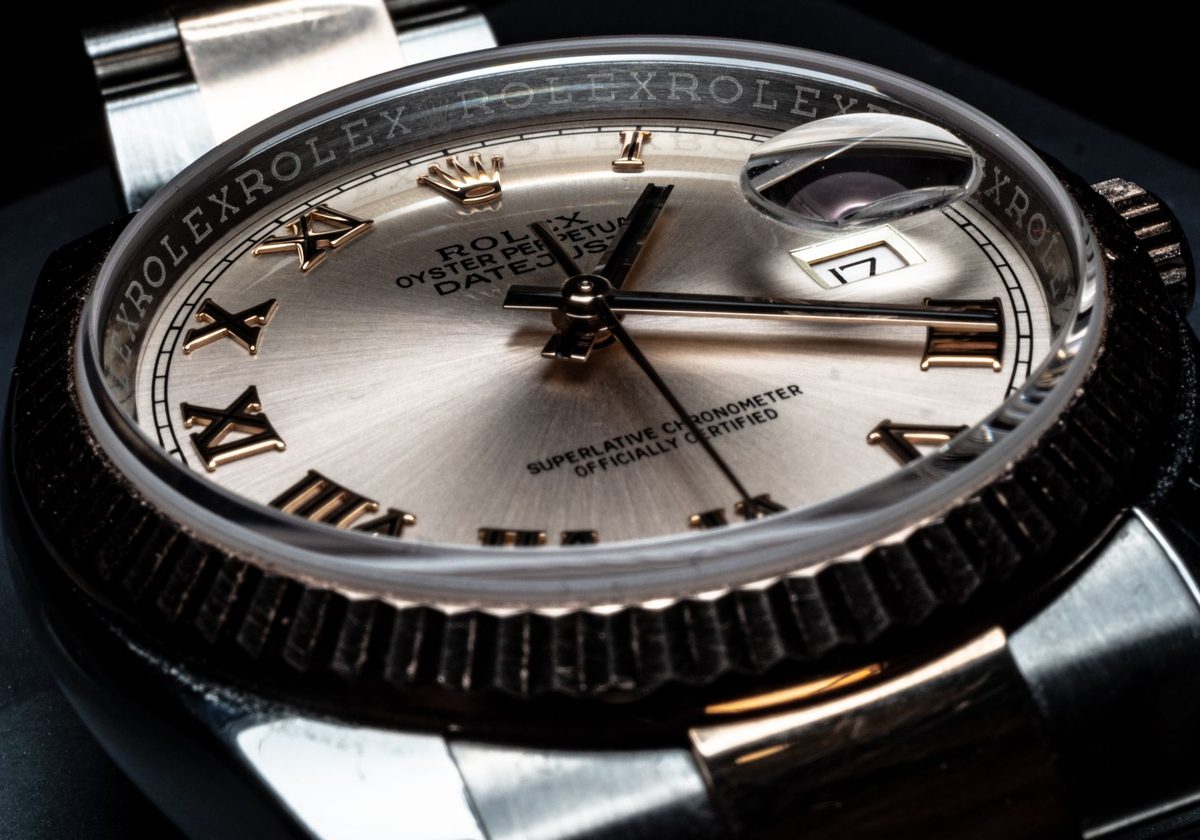
Patek Philippe (1839) built a specialty in complicated watches and grand complications for royalty and the new industrial elite; its late-nineteenth-century perpetual-calendar pocket watches and minute repeaters are still benchmarks. Rolex was founded in London in 1905 as Wilsdorf and Davis, then moved its headquarters to Geneva in 1919, partly for the Swiss-made cachet and partly to dodge British post-war taxation. Its 2008 Acacias headquarters is one of the largest watchmaking facilities in the city, and the Hans Wilsdorf Foundation that controls Rolex is one of Geneva’s most influential institutional landlords.
Piaget began in 1874 in La Cote-aux-Fees and is now headquartered in Plan-les-Ouates. Chopard, founded in Sonvilier in 1860, moved its base to Meyrin just outside Geneva in 1974. Hublot, founded in Nyon in 1980, is now part of LVMH with major operations near the city.
06 — The quartz crisis and how mechanical Geneva survived it
The single biggest threat to Genevan watchmaking in five centuries was the quartz crisis of the 1970s and 1980s. Cheap quartz movements from Japanese makers (Seiko launched the first commercial quartz wristwatch in 1969) and American firms upended an industry that had spent two hundred years competing on mechanical refinement. Quartz was more accurate, cheaper to build and needed almost no traditional craft. Swiss watch exports fell from a 1974 peak of 91 million pieces to a 1983 trough of 30 million, and two-thirds of Swiss watchmaking jobs vanished.
The Genevan response split in two. The mass-market end consolidated under what became the Swatch Group, Nicolas Hayek’s audacious rescue of the bankrupt SSIH and ASUAG conglomerates, launching the colourful plastic Swatch in 1983. The high-end makers went the opposite way. They doubled down on mechanical watchmaking, raised the artisanal content of their pieces, leaned hard on heritage and craft in their marketing, and repositioned mechanical watches as luxury heirlooms rather than tools for telling the time.
It worked. By the mid-1990s mechanical watchmaking was back on a sustained climb, and the high-end Genevan houses have posted record export values ever since. The Federation of the Swiss Watch Industry put Swiss watch exports above CHF 25 billion in 2023, driven overwhelmingly by the high-end mechanical sector the quartz crisis was supposed to kill.
07 — Modern Geneva watchmaking, and what is actually here
Today the canton of Geneva hosts the headquarters or manufactures of roughly eighty watchmaking firms employing about 9,000 people. The names worth knowing:
Vacheron Constantin: the world’s oldest continuously operating watchmaker, with its historic HQ in the Ile building on Quai de l’Ile and a modern manufacture in Plan-les-Ouates. Patek Philippe: independent, family-owned, the gold standard, HQ on Rue du Rhone, manufacture in Plan-les-Ouates, and the best watch museum in the world on Plainpalais. Rolex: officially Genevan since 1919, HQ in Acacias. Piaget and Roger Dubuis (founded in Geneva in 1995, now Richemont) sit in Plan-les-Ouates; Chopard in Meyrin; Hublot near Nyon; Frank Muller at its Watchland site in Genthod.
Then there are the independents: Greubel Forsey, MB&F, Urwerk, plus the Vallee de Joux names that are commercially Geneva-anchored, like Audemars Piguet and Jaeger-LeCoultre. This is the small-batch, high-complication, often experimental end of the trade, mostly made in or marketed through Geneva.
08 — The Geneva Seal (Poincon de Geneve)
One of the most prestigious quality marks in horology, the Poincon de Geneve was established by Geneva cantonal law in 1886 and has been administered through the Timelab institute since 2011. To qualify, a watch must clear three bars: the movement must be entirely assembled, regulated and cased within the canton of Geneva; the movement must meet a long list of construction and finishing criteria (chamfered bridges, polished steel parts, perlaged surfaces and the rest); and since 2011 the complete watch must also pass extended testing for accuracy, water resistance and power reserve.
Fewer than 4% of Swiss watches qualify. Holders include Vacheron Constantin, Roger Dubuis and Chopard’s L.U.C line. Patek Philippe used the Seal until 2009, then withdrew to apply its own (in some ways stricter) Patek Philippe Seal. The mark is engraved into the movement, and it is one of the small details worth looking for on any serious Genevan piece.
09 — Museums and how to actually see watchmaking
You can fill a full day with watchmaking heritage without leaving the city. Here is how the main options compare before the detail.
| Place | What you see | Cost | Time needed |
|---|---|---|---|
| Patek Philippe Museum (Plainpalais) | 500 years of horology, automata, the Patek collection | ~CHF 10 (free under 18) | 2 to 3 hours |
| Musee d’Art et d’Histoire | Early Genevan timepieces, strong Breguet holdings | Free | 45 to 90 min |
| Maison Tavel | Cabinotier daily life, the watch quarter | Free | 30 to 60 min |
| Rue du Rhone boutiques | Current collections, knowledgeable staff | Free to browse | 1 to 2 hours |
| Watch & Wonders (Palexpo) | The year’s high-end releases, public day only | Ticketed | Half a day |
Patek Philippe Museum (Rue des Vieux-Grenadiers 7, Plainpalais) is the single best watchmaking museum in the world and one of the great museums of any kind in Switzerland. Set in a handsome early-twentieth-century factory building, it shows Patek Philippe’s own historical collection alongside an extraordinary trove of antique European watches and automata from the sixteenth century on. The Genevan-watchmaking gallery on the second floor is essentially a textbook on five hundred years of horology. Entry runs about CHF 10 for adults, free for under-18s, open Tuesday to Saturday (Saturday afternoons get busy). Give it two to three hours minimum, and take the free audio guide; it is genuinely good.
Musee d’Art et d’Histoire (Rue Charles-Galland) keeps a substantial horology collection on the first floor, including very early Genevan timepieces and significant Breguet pieces. Free, and easy to combine with the rest of the MAH. Maison Tavel (Rue du Puits-Saint-Pierre 6), Geneva’s oldest house and its museum of urban history, gives strong space to the eighteenth-century watch quarter and the daily life of the cabinotiers. Also free.
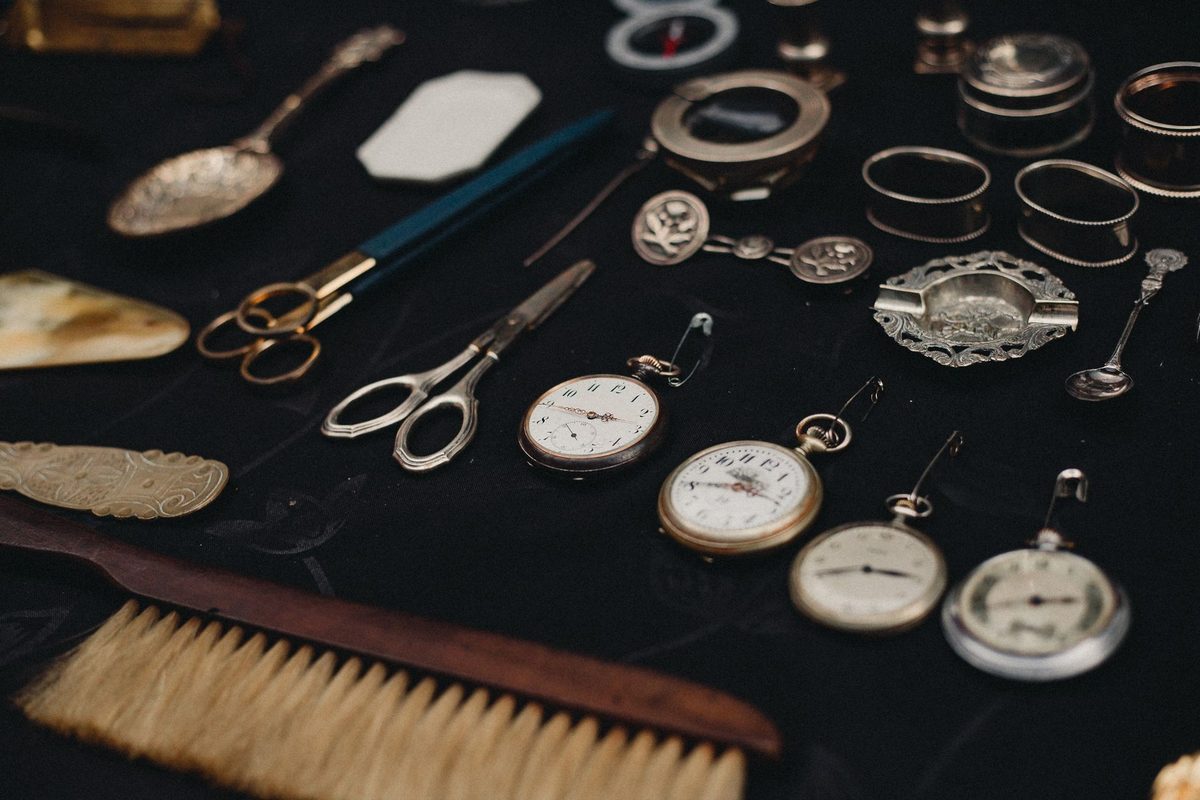
Boutique visits. Most of the major maisons run a flagship on Rue du Rhone or in the adjacent old-town streets: Patek Philippe at Rue du Rhone 41, Vacheron Constantin at Rue du Rhone 33 and Quai de l’Ile 1, Rolex at Rue du Rhone 24, Piaget at Rue du Rhone 40, Chopard at Place du Lac 8 and Rue du Rhone 27. Staff are knowledgeable and, in most cases, welcoming to serious enquirers even if you have no intention of buying, and some will let you handle current pieces on request.
Watch & Wonders Geneva (formerly SIHH) is the world’s most important high-end watch fair, held at Palexpo in late March or early April. It is trade-only on most days but ends with a public day; tickets go on sale in advance and book up fast. If you can get in, it is the best concentrated look at what the high end of Geneva watchmaking is doing in a given year. For shopping context, see our Geneva watch shopping guide and our Rue du Rhone luxury shopping guide, and the broader luxury shopping pillar.
10 — Should you buy a watch in Geneva?
Short answer: yes if you were going to buy a Swiss luxury watch anyway, no if you were not. Boutique prices in Geneva are essentially the same as at the same brand’s authorised dealers worldwide, because the big Swiss makers use globally co-ordinated retail pricing. But Geneva does offer three small edges.
First, VAT recovery. Non-resident visitors can claim back roughly 7 to 8% on purchases over CHF 300 through the Global Blue or Planet systems available at most luxury boutiques, processed at the airport on departure. On a CHF 30,000 watch that is around CHF 2,000 to 2,400 back, which is real money. Second, availability: some Geneva flagships get earlier or larger allocations of hard-to-get models, which matters most for steel sports pieces from Rolex, Patek Philippe and Audemars Piguet where global waitlists run for years. Third, the experience of buying a serious watch in the city where it was made, from staff who can sometimes arrange a manufacture visit for confirmed buyers.
What Geneva is not is cheap. And I would steer well clear of grey-market discounts: any meaningful markdown on a current-collection piece from a non-authorised seller almost always means no manufacturer warranty, no service history and questionable authenticity. If you are pricing a trip around purchases like this, our Geneva trip cost breakdown is a useful reality check, and the neighbourhoods guide helps you base yourself near the Rue du Rhone shopping district.
Frequently asked questions
Why is Geneva famous for watches?
Three things stack up. The Reformation in 1536 turned the city’s existing jewellery and goldsmithing trade toward timepieces. The influx of skilled Huguenot refugees from the 1570s created the world’s first dense watchmaking labour pool. And the 1601 Maitrise des Horlogers, the first watchmakers’ guild, institutionalised the craft. Five centuries of continuous refinement followed, and today Geneva is home to Patek Philippe, Vacheron Constantin, Rolex, Piaget, Chopard and dozens of other makers.
What is the oldest watch brand in the world?
Vacheron Constantin, founded in Geneva in 1755 by Jean-Marc Vacheron and operating continuously ever since, which makes it the oldest watchmaker in the world. It is still headquartered in Geneva.
What is the Geneva Seal?
An official quality mark established by Geneva cantonal law in 1886. To qualify, a watch must be entirely assembled, regulated and cased in the canton of Geneva, meet a long list of construction and finishing standards, and since 2011 pass extended functional testing. Fewer than 4% of Swiss watches make the grade. Holders include Vacheron Constantin, Roger Dubuis and Chopard’s L.U.C line.
Where can I see watchmaking in Geneva?
The Patek Philippe Museum on Plainpalais is the best single stop, five hundred years of horology under one roof for about CHF 10. The Musee d’Art et d’Histoire has a strong free horology collection. Several maisons offer manufacture visits to confirmed buyers, arranged in advance through your authorised dealer, and the Watch and Wonders fair at Palexpo in late March or early April has a public day.
Are watches actually cheaper in Geneva?
Not meaningfully. Luxury Swiss brands use globally co-ordinated retail prices, so the Geneva boutique price matches New York, London or Singapore. Non-residents can claim about 7 to 8% VAT back at the airport on purchases over CHF 300, and Geneva flagships sometimes have better stock of hard-to-get models. Those are the only real, and fairly modest, advantages.
Is Rolex actually Genevan?
Yes, since 1919, when founder Hans Wilsdorf moved the company from London to Geneva. Its Acacias HQ is one of the largest watchmaking facilities in the city, and the brand is owned by the Hans Wilsdorf Foundation, which reinvests profits and donates heavily to Genevan causes.
11 — Related Geneva guides
Keep exploring the city’s past and its present with the Geneva history and heritage pillar, the Geneva museums and culture guide, our luxury shopping guide, the best Geneva attractions roundup, and a ready-made two-day Geneva itinerary to slot a museum morning into.