Renting a Car at Geneva Airport
This article contains advertising. Our booking links are routed through a partner that adds commission tracking automatically, so if you book through one we earn a commission from the provider, at no extra cost to you. It never affects what we recommend. Affiliate disclosure
Nearly every piece of advice about hiring a car at Geneva Airport comes down to one line: rent on the French side, it’s cheaper. The daily rate often is. The trip frequently isn’t. The French sector’s only road out is a customs road into Ferney-Voltaire, on the wrong side of Geneva for almost every ski resort people are driving to, and the quick way round is a Swiss motorway. For a French-plated car that means a vignette, and with at least one of the big rental groups it also means written permission and a €55 fee.
Geneva airport car rental comes in two versions. Swiss-sector desks sit on the arrivals level, and their cars carry Swiss plates, the CHF 40 motorway vignette and, in season, winter tyres. French-sector desks are reached through a controlled crossing inside the terminal, and their cars are often cheaper to hire but start in Ferney-Voltaire, can cost extra to take into Switzerland and normally have to go back to France. Book the Swiss side for anything involving Switzerland and for late arrivals. Book the French side when the whole trip stays in France, and even then price the vignette, the winter kit and any cross-border fee before you decide.
01 — Two desks, two countries, one terminal
Geneva Airport sits on the frontier. Ever since a land exchange in 1956 let the runway grow to nearly four kilometres, part of the terminal has worked as a French customs zone. That strip is the French sector. It has its own check-in for a handful of domestic French flights, its own taxis with French numbers, its own car park, and its own road out, which runs to Ferney-Voltaire without passing a Swiss border post. Everything else — virtually every flight, the railway station, the bus stops, the arrivals hall — is the Swiss sector.
The rental companies mirror that split. On the Swiss side you’ll find Hertz, Avis, Budget, Europcar, Sixt and the Enterprise group (which also trades as National and Alamo), among others. The French side has a shorter list that includes Europcar, Hertz, Avis and the Enterprise group, plus a few local operators. The detail that trips people up is that the same logo on both sides is two different businesses. The Swiss desk is the company’s Swiss operation, pricing in francs under Swiss rules. The French desk is its French operation, pricing in euros under French ones. They quote different prices, they rent cars with different plates and different equipment, and a booking made with one cannot be collected from the other.
Booking sites list them as separate locations with easily confused names. “Geneva Airport” is the Swiss side. “Geneva Airport French Side”, “French Sector” or a Ferney-Voltaire address with a 01210 postcode is the French side. Check the voucher before you land rather than at the wrong counter.
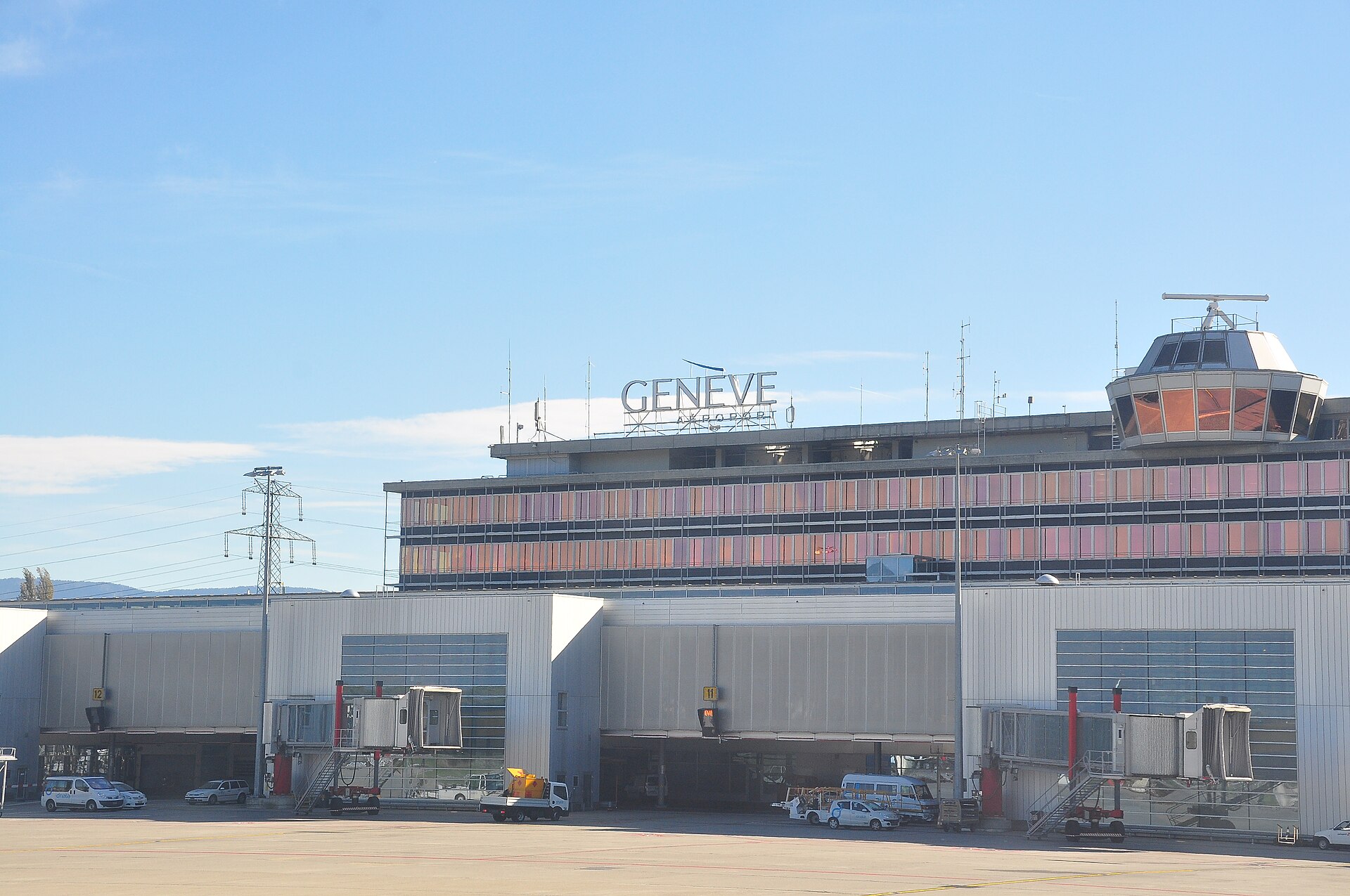
Our guide to Geneva Airport’s French sector explains the history and the border rules in full. For a car hire decision, the only question is where you’re driving.
02 — Which desk for which trip
Start from the destination, not the price. The table below covers the trips people actually take from Geneva, and the reasoning follows it.
| Where you’re going | Book | Why |
|---|---|---|
| Geneva, Lausanne, Montreux, Gruyères, Bern | Swiss side | Swiss motorways from the first kilometre, vignette already fitted, no border paperwork |
| Verbier, Zermatt, Crans-Montana, anywhere in Valais | Swiss side | Swiss motorway almost door to door |
| Chamonix, Megève, Morzine, Les Gets, Flaine | Price both | French plates suit the destination, but the fast route crosses Geneva on the Swiss A1 |
| Annecy, La Clusaz, the Tarentaise resorts | Price both | Same trade-off, with more French motorway after the border |
| Staying in Ferney, Gex, Divonne or Saint-Genis | French side | The customs road delivers you to the Pays de Gex without a border crossing |
| A mixed trip: Chamonix then Zermatt, Annecy then Lausanne | Swiss side | A Swiss car going into France is routine; a French car going into Switzerland needs permission and often a fee |
| Landing after about 20:00 | Swiss side | French-side desks keep shorter hours; Enterprise’s closes at 20:00 |
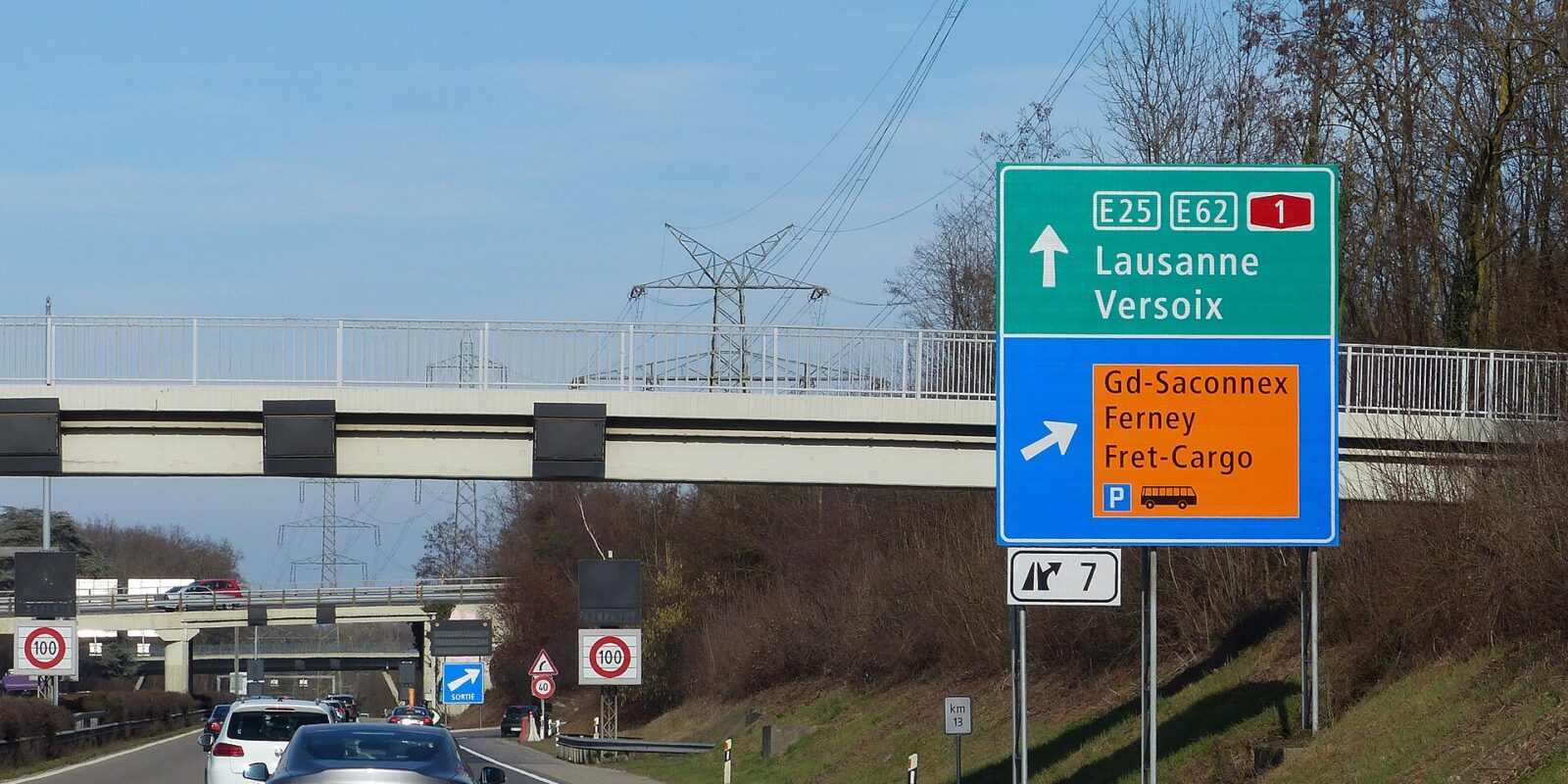
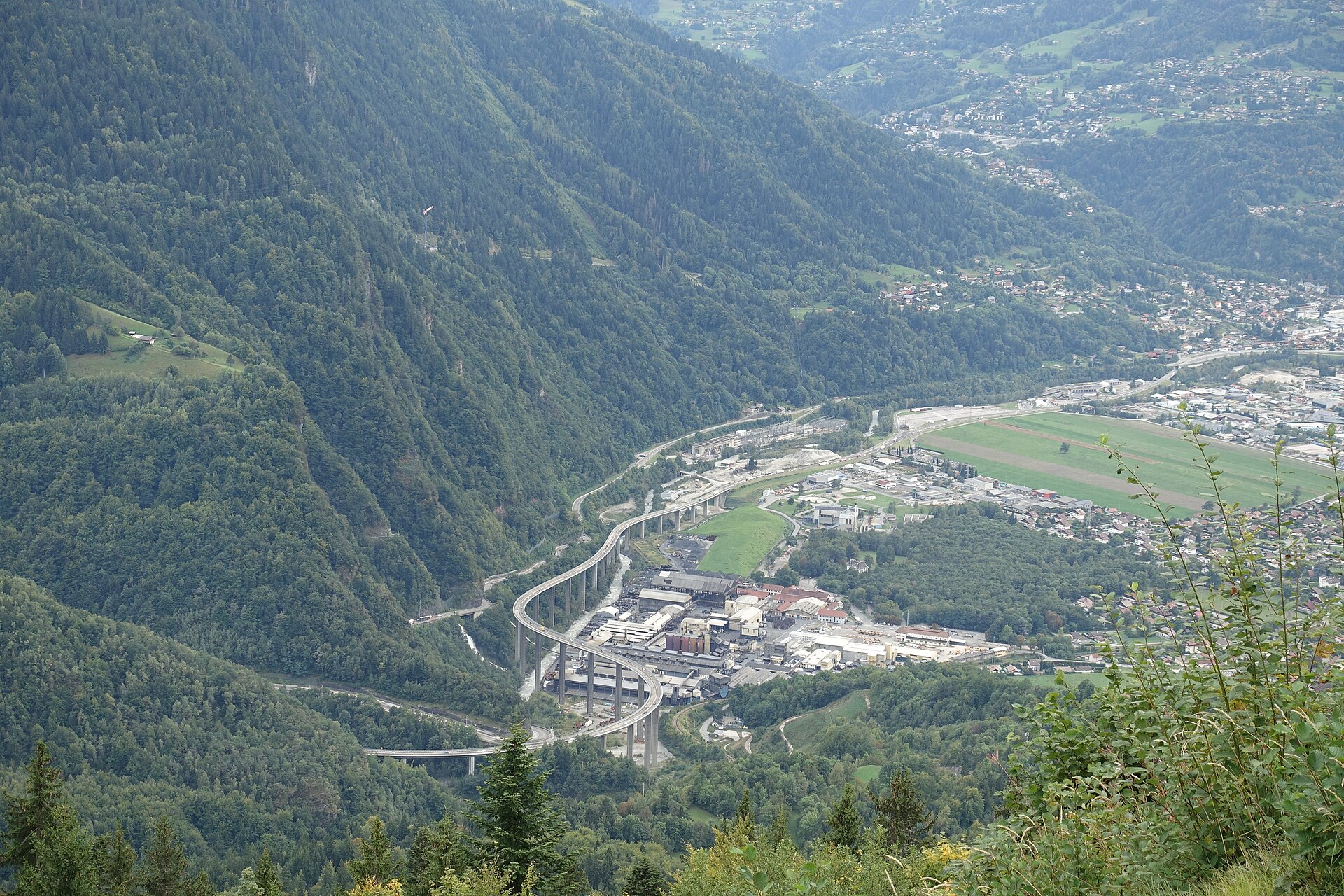
The logic is simple once you see the map. Geneva is a Swiss city almost surrounded by France, and the airport is on its northern edge. Every French ski resort in the catchment lies to the south and east, beyond the city. A Swiss-side car joins the A1 bypass at the airport and swings round Geneva to the border at Bardonnex, where the French A41 and A40 pick up. A French-side car leaves by the customs road into Ferney-Voltaire, north of the airport, and has to get round Geneva from there.
So the French desk makes most sense for people staying in the Pays de Gex, and for anyone who will stay entirely in France and doesn’t mind a longer run to the motorway. For everyone else it’s a price comparison with hidden terms.
03 — What the headline rate leaves out
The rate on the booking site is for the car. What you actually pay depends on four things it doesn’t show you, and they fall very differently on the two sides of the building.
| Cost | Swiss-side car | French-side car |
|---|---|---|
| Swiss motorway vignette | Normally already on the windscreen | CHF 40 if you use any Swiss motorway, including the Geneva bypass |
| Taking it into the other country | France is normally permitted; check whether a cross-border fee applies | Needs written authorisation; the Enterprise group charges €55 |
| Winter tyres, 1 November to 31 March | Normally fitted in season | Legally required in the French Alps; confirm they’re fitted, or pay for chains or socks |
| Currency of the rate, deposit and excess | Swiss francs | Euros |
| Where it goes back | The Swiss sector | France, which in practice means the French sector |
| Getting to the desk | Straight out of arrivals | A controlled crossing inside the terminal, with a same-day boarding pass |
Run the numbers on a typical case. Say the French desk is €80 cheaper than the Swiss one for a week’s hire to Chamonix, which is a realistic gap in some weeks and a generous one in others. Add the CHF 40 vignette for ten minutes on the Geneva bypass and the Enterprise group’s €55 cross-border fee for being there, and close to €100 of extras has cancelled out an €80 saving. Book at the wrong moment and you’re paying more for a car that also has to go back through Ferney.
That isn’t an argument against the French side. It’s an argument for comparing the whole trip rather than the day rate. The French desk wins clearly in two situations: when the gap is large, which happens in peak ski weeks when Swiss-side fleets are tight, and when the route genuinely doesn’t touch Switzerland.
The vignette, briefly
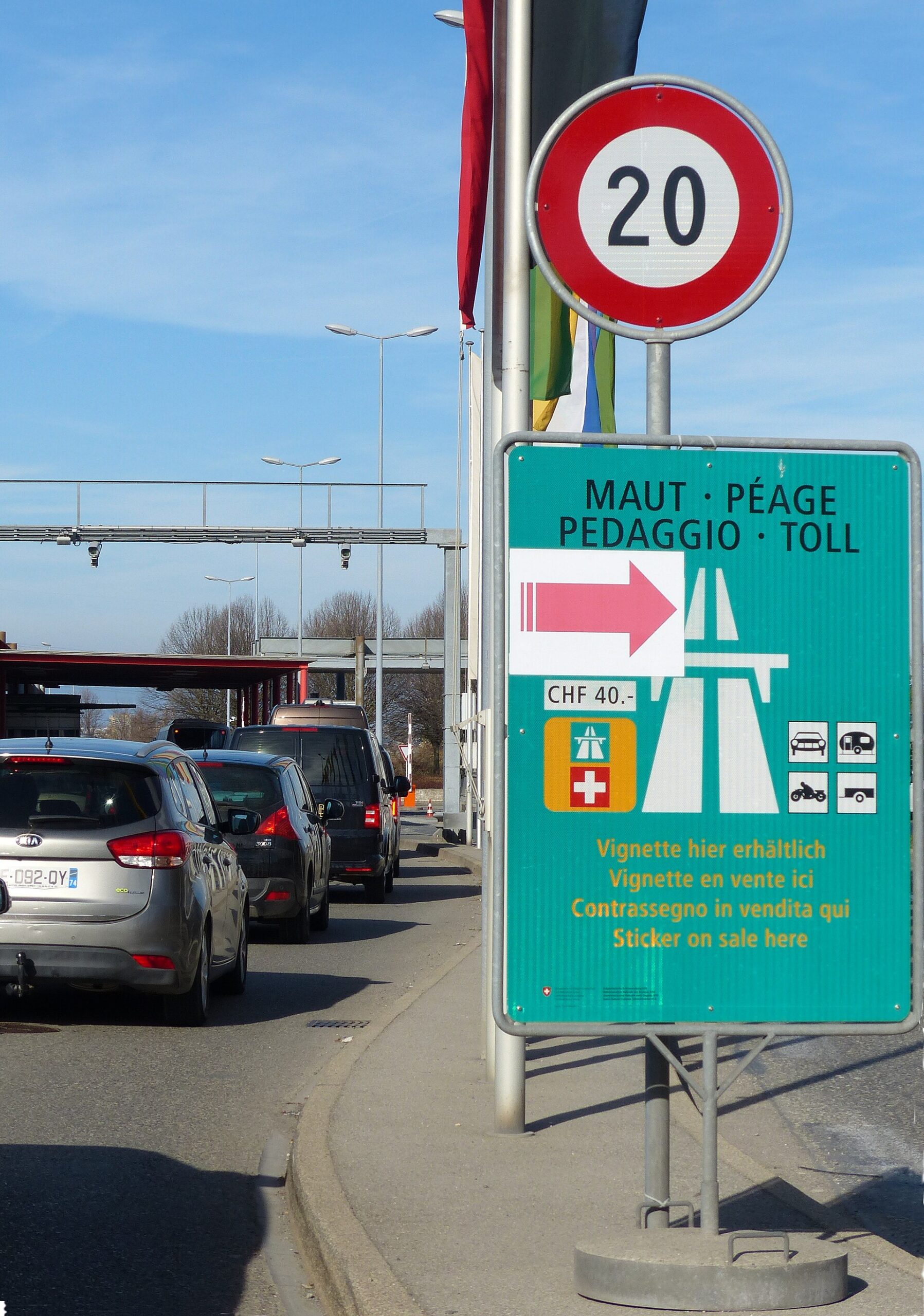
Switzerland charges for its motorways with a single annual vignette at CHF 40. It comes as a windscreen sticker, sold at border posts and filling stations, or as an e-vignette registered to the number plate at e-vignette.ch. Each year’s vignette runs for fourteen months, so the 2027 one is valid from 1 December 2026 to 31 January 2028. Driving a Swiss motorway without one costs a CHF 200 fine on top of the vignette you’ll be made to buy anyway.
A Swiss-registered hire car should already have one. Look for the sticker on the windscreen before you drive off, because the fine is yours, not the rental company’s. With a French-registered car the e-vignette is the tidy answer: two minutes on a phone in the car park, tied to the hire car’s plate, with no sticker to peel off afterwards.
04 — Leaving the French sector: the Ferney problem
The customs road is the French sector’s only road link, and it runs one way: to Ferney-Voltaire, the small French town just north of the airport where Voltaire spent the best part of his last twenty years. From there you have three ways to reach the Alps, and none of them is ideal.
- Back through Switzerland on the motorway. Cross at Ferney, join the A1 at Grand-Saconnex and take the bypass round Geneva to Bardonnex. This is the fast route and the one transfer drivers use. It is also Switzerland, so the car needs a vignette, and it needs the rental company’s permission to be there.
- Through Geneva on ordinary roads. No vignette, because you stay off the motorway, but the city is slow and you’re still in Switzerland for the purposes of your rental contract.
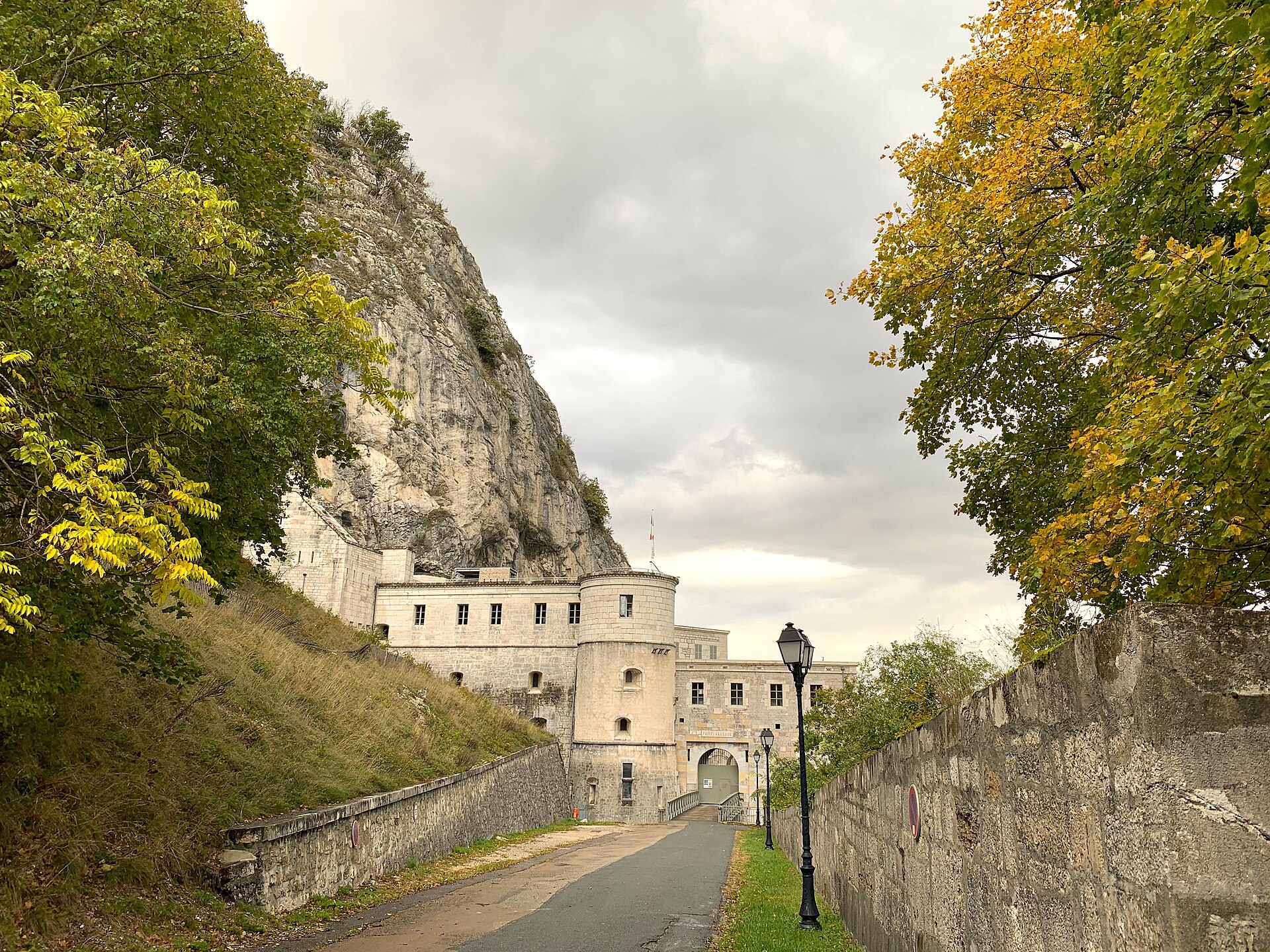
- The all-French route. West through the Pays de Gex, past Saint-Genis-Pouilly and through the gorge at Fort l’Écluse to Bellegarde, where you join the A40 heading east. No border, no vignette, no cross-border fee. It adds something like 50 km to a run to Chamonix, which is fine on a bright afternoon and a grind after a late flight with a car full of skis.
Most people take the first option without thinking about it, which is where the trouble starts. The satnav chooses the Swiss motorway because it’s quicker. The driver doesn’t realise the ring road counts as “taking the car into Switzerland”. The contract said written authorisation was required and nobody asked for it. Most of the time nothing happens. If something does happen on that stretch, you’re arguing about cover from a position you don’t want to be in.
If you rent on the French side and plan to use the fast route, say so at the desk, get it on the contract, pay the fee if there is one, and buy the e-vignette before you leave the car park. It takes ten minutes and removes the whole problem.
05 — Insurance and the small print that matters here
Third-party liability is included on both sides of the building, because both countries require it. Beyond that, a standard rental comes with collision and theft cover that carries an excess. That’s the amount you pay if the car is damaged or stolen, and at airport desks it often runs to four figures. The desk will offer to reduce it for a daily fee. Whether you take that is the real insurance decision, and there are four Geneva-specific points to weigh.
The excess is in the desk’s currency
A Swiss-side excess and deposit are set in francs, a French-side one in euros. If your card charges a foreign exchange fee, it applies to the deposit hold and to any damage charge. That’s rarely decisive, but it does mean a Swiss-side comparison should be converted rather than read as if CHF and € were the same.
Cover follows the contract
The countries your contract authorises are the countries your cover applies in. For a French-side car the Geneva ring road is Switzerland. For a Swiss-side car a day trip to Annecy or Chamonix is France, which Swiss contracts normally allow but sometimes charge for. Declare every country you’ll enter, even for twenty minutes.
Standalone excess insurance is usually better value
An annual or trip excess policy bought before you travel typically costs a fraction of the desk’s daily waiver. Check two things. First, that it covers Switzerland as well as France: Switzerland isn’t in the EU, and some “Europe” policies treat it separately. Second, what it does with the parts basic cover often excludes: tyres, glass, the underside of the car and damage from snow chains, which are exactly the parts a winter drive to a resort puts at risk. If you’re relying on a credit card’s rental cover, check that Switzerland isn’t excluded and whether you have to decline the desk’s own waiver to keep it valid. Our Geneva travel insurance guide covers the wider policy question.
Photograph everything
Walk round the car with your phone before you drive off: every panel, every wheel, the windscreen, the roof if there’s a box. Do the same when you return it. This matters more in winter, when road salt and grit hide scratches until someone washes the car after you’ve gone, and it matters most on an out-of-hours return to a key box, where nobody checks the car with you.
06 — Winter hire: tyres, chains and ski kit
The two countries treat winter driving differently, and a Geneva hire car can easily cross both in one afternoon.
France requires winter equipment from 1 November to 31 March in its mountain communes, which covers the Haute-Savoie and Savoie resorts. You either have four winter tyres carrying the 3PMSF mountain-and-snowflake symbol or you carry chains or snow socks for the driving wheels. Tyres marked only M+S stopped counting in November 2024. The fine is about €135, and hire cars aren’t exempt. The Enterprise group’s French-side desk tells customers to contact the branch to reserve the equipment, so don’t assume a French-side car turns up ready for the mountains.
Switzerland has no blanket winter tyre law. But if you hold up traffic or cause an accident on summer tyres in snow, you’re liable, and your insurer may take a dim view. Swiss-side hire cars normally come on winter tyres during the season. Check the sidewall anyway before you leave the bay.
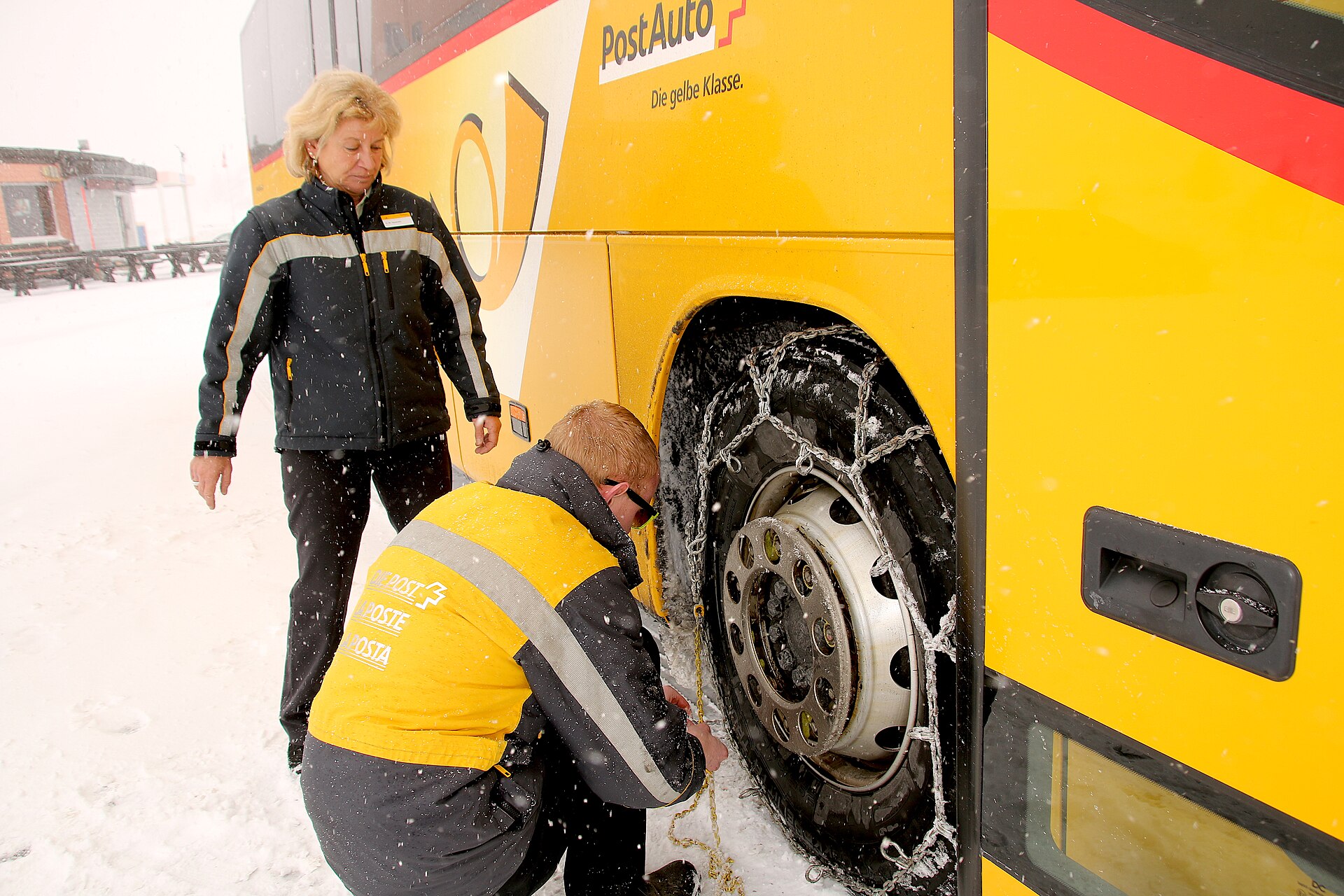
Chains become compulsory on a road when the blue chain sign says so, and that’s usually on the last climb to a resort in heavy snow. Fit them once in the airport car park while it’s dry and light. Ten minutes of fumbling there saves forty on a dark hairpin with a queue behind you. Snow socks are easier for a first-timer and satisfy the French equipment rule, but they’re a get-you-home device rather than something to drive on for hours.
Skis, boxes and four-wheel drive
- Ski racks and roof boxes are extras with limited stock. Reserve them with the car, and expect them to run out on February Saturdays. An estate or a mid-size SUV with the rear seats folded will take two or three pairs inside, which is often simpler.
- Four-wheel drive is nice to have, not necessary. Resort access roads are cleared and gritted, and good winter tyres plus chains will get a front-wheel-drive car to any resort in this catchment. Where 4×4 earns its cost is a chalet up a steep private track.
- Parking at the other end is the cost people forget. Resort car parks often charge €60–120 a week, and some chalets and apartments charge per night.
07 — Picking up the car
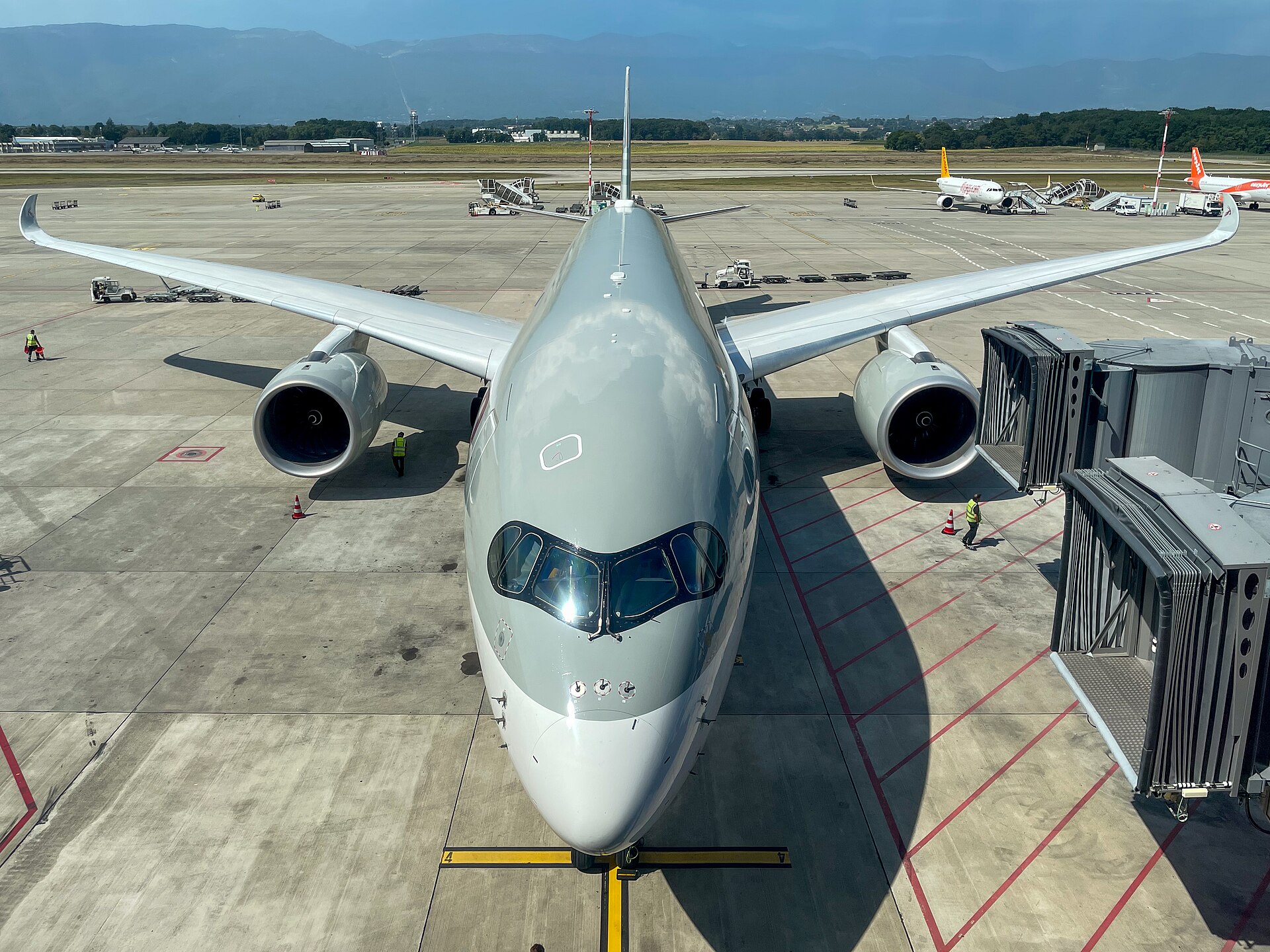
On the Swiss side it’s as easy as it gets. Clear passport control if you’re arriving from outside Schengen, collect your bags, walk through customs, and the rental desks are signposted on the arrivals level a couple of minutes from baggage reclaim. The paperwork takes as long as the queue.
The French side takes more thought. The generic “Car rental / Location de voitures” signs lead to the Swiss desks, so don’t follow them. Follow the signs for the French sector (“France”, “Secteur français” or Gate F), and have your passport and a boarding pass for a same-day flight in hand: the crossing between sectors is controlled, and those are what get you through. On the other side, Enterprise’s desk, for one, is on the right just past the airline check-in counters, and it’s open 08:00 to 20:00 every day. A flight landing at 21:30 needs either a Swiss-side booking or an out-of-hours arrangement agreed in writing before you fly.
Beating the Saturday queue
Between late December and early April, Saturday is changeover day across the Alps and the whole airport runs at capacity. The rental queues are part of that. If two of you are travelling, split up: one goes straight through to the desk with the licence, the card and the booking reference while the other waits for the bags and the skis, which come off a separate oversize belt rather than the carousels. It can save most of an hour on a bad day. Our guide to flying to Geneva with skis explains the oversize belt properly.
Before you leave the bay
- A vignette on the windscreen of a Swiss car, or an e-vignette bought for a French one if you’ll use Swiss motorways.
- The 3PMSF symbol on the tyre sidewalls between November and March, or chains or socks in the boot.
- Fuel level as recorded on the contract. “Full to full” only works if it was full.
- Your walk-round photos, before the first drive.
- The countries you’ll enter, written on the contract.
08 — Returning the car without missing your flight
The return is where airport car hire goes wrong, because it happens on your last morning with a flight to catch and a satnav that doesn’t know which sector you rented from.
Swiss side: come off the A1 at the airport and follow the rental car return signs rather than the public car parks. The return bays are signposted separately, and your contract names the exact location. Allow half an hour on top of your normal airport time for the queue at the return bay, the check-in of the car and the walk to departures.
French side: you return through France. That means driving to Ferney-Voltaire and in along the customs road, not following the ordinary airport signs, which lead to the Swiss terminal. Programme the route before you set off. A wrong turn onto the Swiss approach delivers you to the wrong side of the building, and the only way to the French sector by car is back out and round through Ferney. If the desk is closed, the Enterprise group’s instructions are to park in the car park and leave the keys in the box to the left of the counter. Then you cross into the Swiss sector for your flight with your boarding pass. Allow at least forty-five minutes on top of normal airport time, and more on a winter Saturday.
Fill up before the return, whichever side you’re on. For the French sector, Ferney-Voltaire is the obvious last stop. The refuelling charge on a car that comes back short is always worse than the pump price.
Dropping the car early to see the city before an evening flight? The left-luggage office at the airport railway station takes skis.
Full detail in our Geneva Airport luggage storage guide.
09 — When a hire car is the wrong answer
We’d be doing you no favours if we left this out, because the rental sites never will. Plenty of people pick up a car at Geneva Airport who’d have had a cheaper, calmer trip without one.
- A stay in Geneva itself. Your hotel, hostel or campsite gives you the free Geneva Transport Card, which covers the trams, buses and trains in the city, the airport link included. City-centre parking is scarce and expensive. Leave the car. See our Geneva Transport Card guide and getting from the airport to the city centre.
- A week in one ski resort. The car sits in a €60–120-a-week car park for six days. A shared shuttle, a private transfer or, for Chamonix and Verbier, the train usually beats it on cost and certainly on stress. Our Geneva ski transfers guide compares every option.
- A car-free resort. Avoriaz doesn’t admit cars at all, and Zermatt stops them at Täsch, a shuttle train away. You’d be renting a car to park it.
And when a car is right, it’s very right: a week touring Annecy, Chamonix and the Lake Geneva shore, a family ski trip that moves between valleys, a chalet outside the village, or a summer loop through Gruyères and the Lavaux vineyards. Our guide to renting a car in Geneva covers the driving itself: Swiss road rules, the city’s colour-coded parking zones and the best routes out of town.
10 — Licences, age and paying
- Licence. A full licence from the EU, the UK, the US, Canada or Australia is accepted for a visitor’s rental on both sides. If yours isn’t in the Latin alphabet, bring an International Driving Permit as well.
- Age. The usual minimum is 21, with a young-driver surcharge under 25 and higher minimum ages for premium and large vehicles. The rules are the company’s own, so check the terms of the side you’re booking.
- Payment. A credit card in the main driver’s name, not a debit card, is the norm. The deposit is held on it, in francs or euros depending on the desk, for the length of the rental plus a few days.
- Additional drivers. Name them at the desk and have their licences with you. An unnamed driver is an uninsured driver.
Frequently asked questions
Is it cheaper to rent a car on the French side of Geneva Airport?
The daily rate often is. The trip may not be: add the CHF 40 vignette if you’ll use Swiss motorways, any cross-border fee if you’ll enter Switzerland at all (the Enterprise group charges €55), and winter equipment. Compare totals, not day rates.
Can I take a French-side hire car into Switzerland?
Usually, with the rental company’s written authorisation and often a fee. The Enterprise group charges €55 and requires the car back in mainland France. Declare it even if you’re only crossing Geneva on the motorway.
Do I need a vignette for a hire car from Geneva Airport?
A Swiss-registered car should already have one; check the windscreen. A French-registered car needs one only if it uses a Swiss motorway. It costs CHF 40, and the 2027 vignette is valid from 1 December 2026 to 31 January 2028.
Can I pick up on the Swiss side and return on the French side?
It’s treated as a one-way rental between two countries, so where it’s allowed at all it carries an extra fee. The reverse, French pick-up and Swiss return, runs into the French-side rule that the car must come back to France. Plan to return to the same sector you collected from.
Are winter tyres included on Geneva Airport hire cars?
Swiss-side cars normally are, in season. French-side cars aren’t guaranteed to be, although French law requires 3PMSF winter tyres, or chains or socks in the car, in the Alps from 1 November to 31 March. Confirm at booking and check the sidewall at pick-up.
How do I get to the French-side car rental desks?
Follow the signs for the French sector or Gate F, not the general car rental signs, which lead to the Swiss desks. You’ll need your passport and a same-day boarding pass for the controlled crossing, and a desk that’s still open when you land.