Geneva to Val Thorens: Every Transfer Option

This article contains advertising. Our booking links are routed through a partner that adds commission tracking automatically, so if you book through one we earn a commission from the provider, at no extra cost to you. It never affects what we recommend. Affiliate disclosure
Every transfer company selling Geneva to Val Thorens quotes something in the region of three hours. That number is honest on a Wednesday in January. On the Saturday of a February school holiday, when every chalet in the Three Valleys changes over on the same morning and the whole of northern Europe funnels through one roundabout at Moûtiers, three hours becomes four and a half, and there is nothing your driver can do about it.
The realistic Geneva to Val Thorens transfer is 2h45 to 3h15 by road, and the road is effectively the only option: a shared shuttle costs roughly €65–90 per person each way, a private transfer €420–600 per vehicle, and the train is not competitive on this route because it leaves from Geneva’s city-centre station, changes at Chambéry, and still leaves you an hour of bus from Moûtiers. Val Thorens is the longest of the big Geneva ski routes, and the single most useful decision you can make is not to arrive on a Saturday afternoon.
This guide covers each option with real numbers and real journey times, and is specific about when each one stops making sense. Our Geneva ski transfers guide compares every resort in the Geneva catchment; this page is about the one that is furthest away and most exposed to traffic.
01 — The Val Thorens route in one table
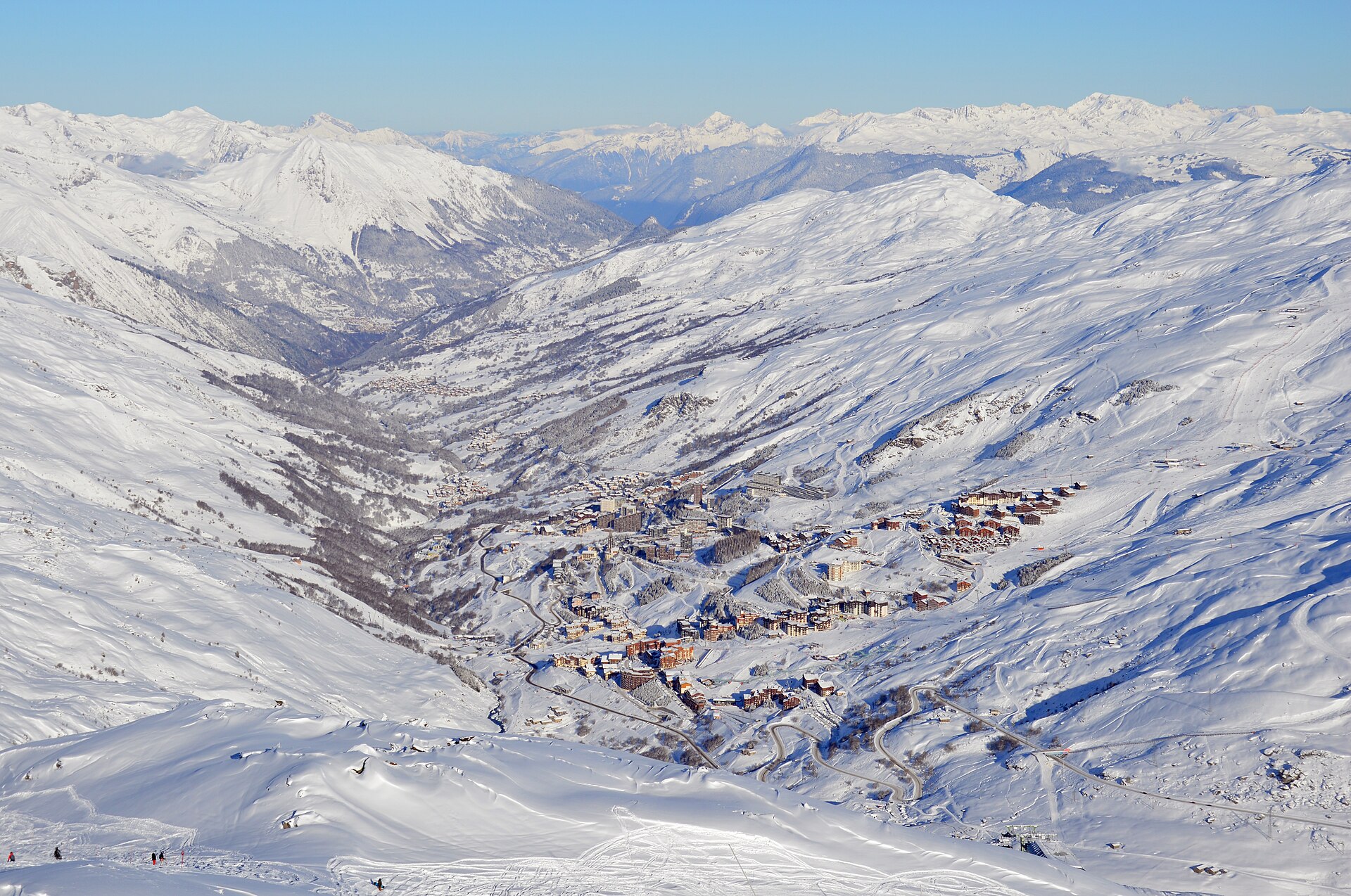
Val Thorens sits at 2,300 metres at the head of the Belleville valley, in the French Tarentaise. It is the highest ski resort in Europe, which is the reason for its snow record and also the reason the last forty minutes of the drive is a sustained climb on a road that gains well over a kilometre of altitude. The road distance from Geneva Airport is about 196 kilometres.
| Option | Cost | Realistic door to door | Verdict |
|---|---|---|---|
| Shared shuttle | €65–90 pp each way | 3h30–4h30 | The default for one or two people |
| Private transfer | €420–600 per vehicle | 2h45–3h15 | Cheaper per head from about five people |
| Weekend coach (Ben’s Bus and similar) | €50–70 pp each way | 4h00–5h00 | Saturdays and Sundays only, but good value |
| Hire car | €280–450 per week, plus fuel, tolls and parking | 2h45 | Only if you are touring the Tarentaise |
| Train to Moûtiers, then Altibus | €45–80 pp | 5h00–6h00 | Not worth it from Geneva |
Prices are indicative for the 2026/27 season and move with demand. What does not move is the ordering, or the fact that every road option converges on the same stretch of tarmac above Moûtiers.
02 — Why Saturday is the whole story
It is worth being blunt about this, because operator sites bury it and it will affect your day more than any price difference on this page.
French Alpine resorts run Saturday-to-Saturday chalet and apartment weeks. That means that on any given Saturday in the season, essentially every bed in the Three Valleys empties and refills within a few hours. Departing guests come down the valley in the morning; arriving guests go up it in the afternoon. Both directions squeeze through Moûtiers, which is a small town at a valley junction with a limited road network and no way to widen it.
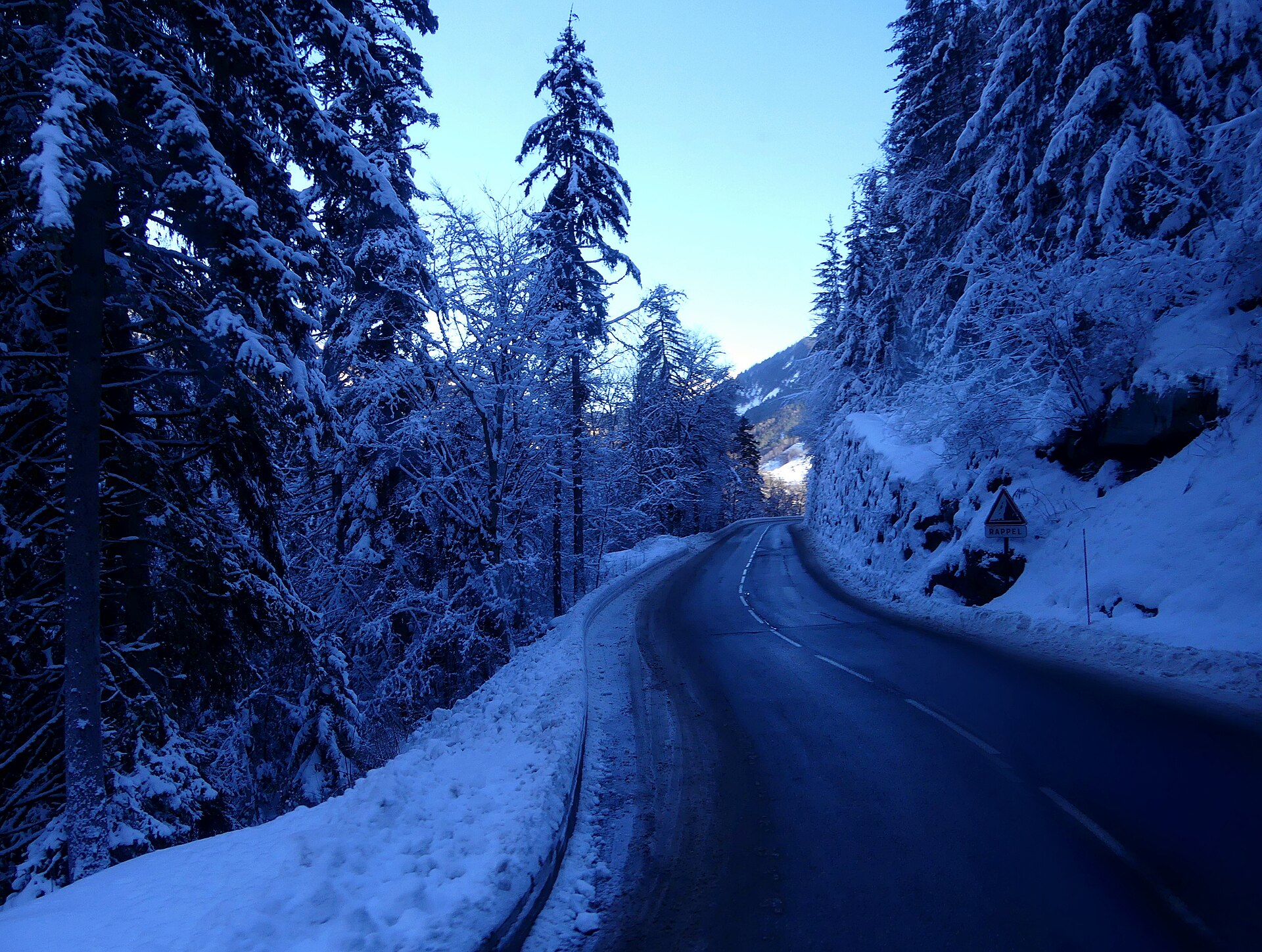
Add the French school holidays, which stagger across three zones through February and produce the busiest weeks of the year, and you get a road that is genuinely gridlocked. Transfer companies plan for it; drivers accept it; the only person surprised is the passenger who read “2h45” on a booking page.
What it actually costs you
- A normal Saturday in January. Add forty-five minutes to an hour on the quoted time.
- A February half-term Saturday. Add ninety minutes to two hours. Four and a half to five hours door to door is normal, not exceptional.
- A weekday, any week. The quoted time is broadly accurate. Two hours forty-five to three hours.
If your accommodation will let you arrive on a Sunday or a Friday instead, take it. You will pay less for the flight, you will spend an hour less in a minibus, and you will reach the resort with the evening intact.
03 — Shared shuttles
The shared shuttle is what most people book and, for one or two travellers, it is the right answer. A minibus collects you from Geneva Airport arrivals, picks up other parties landing in the same window, and drives to Val Thorens, dropping at the resort’s bus station or, with some operators, at your accommodation.
Expect €65–90 per person each way. Midweek and off-peak sits at the bottom of that range; peak Saturdays at the top and sometimes above it.
The stops nobody mentions
Shared vehicles serving Val Thorens usually also serve Les Menuires and Saint-Martin-de-Belleville, both of which are on the same road below you. If the vehicle is dropping in those resorts first, you are adding twenty to forty minutes to your own journey while other people unload their skis.
This is not a reason to avoid shared transfers. It is a reason to ask the operator, before booking, whether Val Thorens is the first or last drop on their route, and to add the answer to your expectations rather than your complaints.
The waiting window
You will also wait at the airport. Shared operators group arrivals into departure slots, typically an hour wide, and the vehicle leaves when it is full or when the window closes. Twenty minutes is lucky; an hour is common; on a chaotic Saturday, longer.

Taken together — the wait, the pickups, the drop order and the Saturday traffic — the honest planning number for a shared shuttle to Val Thorens on a peak Saturday is four and a half hours from touchdown to your apartment door. Plan for that and anything better is a bonus.
04 — Private transfers
A private transfer costs roughly €420–600 each way for a car or minibus, regardless of how many people are in it. Your driver meets you in arrivals, tracks your flight, and goes directly to your address with no other passengers and no other stops.
For Val Thorens specifically, the case for private is stronger than for the short Portes du Soleil routes, because the journey is long enough that the time saved is substantial. Cutting an hour off a ninety-minute transfer is nice. Cutting ninety minutes off a four-hour transfer is most of an evening.
| Party size | Shared (return, indicative) | Private (return, indicative) | Cheaper |
|---|---|---|---|
| 2 people | €260–360 | €840–1,200 | Shared, clearly |
| 4 people | €520–720 | €840–1,200 | Shared, but the gap is narrowing |
| 5 people | €650–900 | €840–1,200 | Line-ball — private wins on time |
| 6 people | €780–1,080 | €900–1,300 | Private |
| 8 people | €1,040–1,440 | €1,000–1,500 | Private, comfortably |
Booking a private transfer well
- Specify the ski bags. Eight passengers plus eight ski bags plus eight suitcases does not fit in a standard eight-seater. Tell the operator the equipment count and let them size the vehicle.
- Confirm the waiting policy in writing. Most reputable operators track your flight and include sixty to ninety minutes of free waiting. Get the number rather than the reassurance.
- Give the exact address. Val Thorens is a compact but vertically arranged resort and the difference between Plein Sud and the Balcons is a real walk with luggage.
- Ask about snow chains. Any operator running this route in winter will carry them. If they hesitate, book someone else.
05 — Weekend coaches
Scheduled coach services run Geneva Airport to the Tarentaise resorts on Saturdays and Sundays through the winter season, sized around the changeover-day traffic that everything else struggles with. Ben’s Bus is the best known on this route; there are others.
Fares of roughly €50–70 per person each way make it the cheapest booked option for one or two travellers. The trade-offs are real, though, and worth stating plainly: it runs on fixed departure times you must fit around rather than around your flight, it stops at several resorts, and the total journey is typically four to five hours. If your flight is delayed past the departure, you are rebooking rather than waiting.
It is a good option if you are a solo traveller or a couple on a budget, arriving on a weekend, on a flight that lands with a comfortable margin. It is a poor option if your flight times are tight or your party is large.
06 — The train, and why it does not work here
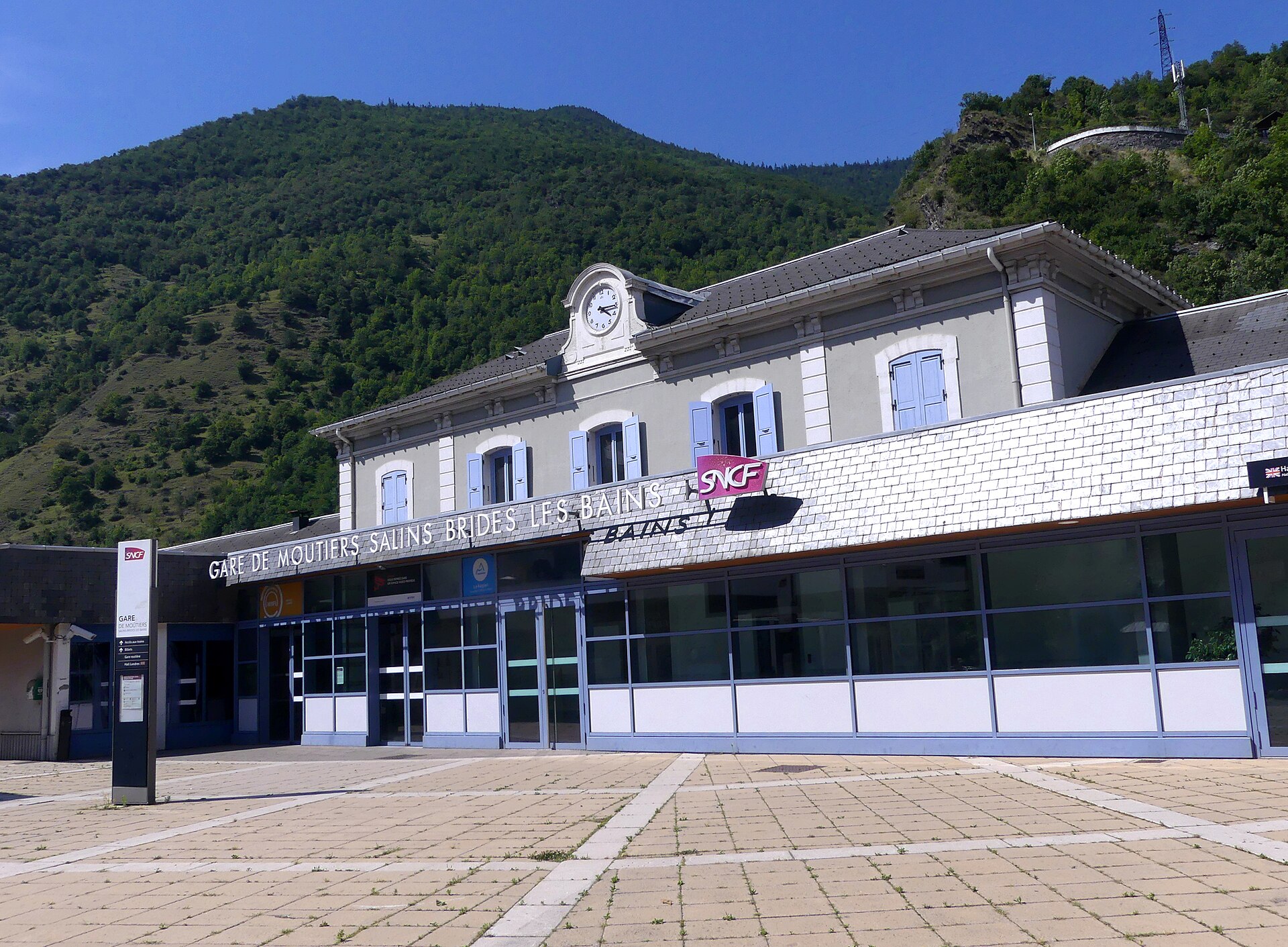
This is where Val Thorens differs sharply from Verbier. There is a railway to the Tarentaise, and in principle it looks appealing: Moûtiers-Salins-Brides-les-Bains station sits at the bottom of the Belleville valley, and Altibus runs a regular bus from the station forecourt up to Val Thorens.
The problem is the Geneva end. Three things go wrong at once:
- The train does not leave from the airport. Services towards Chambéry and the Tarentaise run from Genève-Cornavin in the city centre, so you begin with a train or tram in from the airport.
- The connection is slow. Geneva to Moûtiers always involves a change at Chambéry, via Bellegarde, and takes somewhere between three hours and four and a half depending on which of the handful of daily services you catch.
- There is still an hour of bus. The Altibus S63 from Moûtiers station to Val Thorens takes about an hour to an hour and fifteen, calling at Fontaine-le-Puits, Saint-Jean and Saint-Martin-de-Belleville and Les Menuires on the way.
Add it up and you have five to six hours for something a minibus does in three. It is not close, and this is one of those cases where the honest answer is simply that the rail option is worse. Do not let a well-meaning article about sustainable Alpine travel talk you into it from Geneva.
The exception
The train genuinely does make sense to Moûtiers if you are travelling from Paris or London rather than flying into Geneva. Direct TGV and Eurostar ski services run to Moûtiers on winter Saturdays, and from there the Altibus is straightforward: roughly €12–20 for the leg up to Val Thorens, skis carried, with a limit of two hold bags and one item of hand luggage per person. Different journey, different answer.
07 — Driving yourself
The route is the A40 from Geneva towards Annecy and Albertville, then the RN90 up the Tarentaise to Moûtiers, then the D117 and D902 climb through the Belleville valley. It is around 196 kilometres and takes about two hours forty-five in clear conditions. French motorway tolls apply on the A40 section.
The road up to Val Thorens is well maintained and cleared aggressively — the resort’s whole economy depends on it — but it is a serious mountain road in winter, and the final climb from Les Menuires is exposed.
- Winter equipment is a legal requirement. France’s Loi Montagne rules require winter tyres or chains on board in designated mountain areas from 1 November to 31 March. Specify winter tyres when booking the hire car, and check chains are in the boot.
- Parking is not free and not casual. Val Thorens is largely pedestrianised at its core and parking is managed in covered car parks. Budget roughly €80–120 for a week in a covered space, depending on the car park and the season, and book ahead in peak weeks.
- You will not need the car again. Once you are up, the Three Valleys lift network covers everything. A car parked for six days at €100 has bought you nothing but the journey.
- Hire on the Swiss side of Geneva Airport unless you specifically want a French-registered car; the French sector can complicate cross-border paperwork.
The blunt version: hire a car for Val Thorens only if you intend to ski Tignes or Les Arcs as well, or if you are combining the trip with something else in Savoie. For a straight week in the Three Valleys, it is an expense with no return.
08 — Timing your flights
Given everything above, flight timing matters more on this route than on any other from Geneva.
- Land between 09:00 and 13:00. This gets you to the resort in the late afternoon even with a bad Saturday, and leaves margin if your transfer is delayed.
- Avoid landing after 16:00 on a Saturday. You are joining the tail of the changeover traffic in the dark, on a climbing road, at the end of a long day.
- For the return, allow four hours minimum on a Saturday. Operators will collect you early and they are right to. The descent through Moûtiers is as slow as the ascent.
09 — How Val Thorens compares with the other Geneva routes
| Resort | Road distance | Typical transfer | Saturday penalty |
|---|---|---|---|
| Morzine | 80 km | 1h15 | Modest |
| Chamonix | 88 km | 1h05–1h20 | Modest — and the train is an escape |
| Verbier | 160 km | 2h00 | Low — the train avoids it entirely |
| Courchevel | 185 km | 2h30–3h00 | High — same Moûtiers bottleneck |
| Val Thorens | 196 km | 2h45–3h15 | The worst of the group |
| Val d’Isère | 225 km | 3h00–3h30 | High, but a different bottleneck |
The other Three Valleys route out of Moûtiers is covered in our Geneva to Courchevel transfer guide.
If the transfer length is putting you off, it is worth reconsidering the resort rather than the transport. Our guide to skiing near Geneva sets out what you actually gain from the extra ninety minutes to the Tarentaise, and where to stay near Geneva for skiing covers the closer alternatives honestly. For the route where rail genuinely beats road, see our Geneva to Verbier transfer guide.
10 — The verdict
For one or two people, book a shared shuttle and accept the waiting; it is the sensible price-to-hassle point on this route. For five or more, book a private transfer, because the per-head cost has already crossed over and the ninety minutes you save on a Saturday is worth real money. For a couple on a weekend arrival and a tight budget, the scheduled coach is genuinely good value if your flight has margin.
Do not take the train from Geneva. Do not hire a car unless you are touring. And if you have any flexibility at all in your booking, arrive on a Sunday or a Friday. That one change is worth more than every price comparison on this page.
Frequently asked questions
How long is the Geneva to Val Thorens transfer?
Two hours forty-five to three hours fifteen by road in normal conditions. On a peak-season Saturday, allow four to four and a half hours door to door with a shared shuttle, and three and a half to four with a private car. The variable is the traffic at Moûtiers, not the distance.
Is there a train from Geneva to Val Thorens?
Not a useful one. You would travel from Genève-Cornavin, change at Chambéry, reach Moûtiers in three to four and a half hours, and then take the Altibus S63 for another hour up the Belleville valley — five to six hours in total. The rail route to Moûtiers is excellent from Paris and London, but not from Geneva.
How much is a transfer from Geneva Airport to Val Thorens?
Roughly €65–90 per person each way for a shared shuttle, €420–600 per vehicle each way for a private transfer, and €50–70 per person for a scheduled weekend coach. Private becomes the cheaper option per head at around five passengers.
What is the best day to arrive in Val Thorens?
Any day except Saturday. Sunday, Monday, Thursday and Friday arrivals all avoid the changeover-day traffic through Moûtiers, which is the single biggest variable in your journey time. Many operators also price midweek transfers lower.
Do I need snow chains to drive to Val Thorens?
You need winter tyres or chains on board under France’s mountain regulations between 1 November and 31 March. In practice the road is cleared thoroughly and chains are rarely needed on it, but carrying them is both the law and sensible — conditions on the final climb from Les Menuires can change quickly.
Is Val Thorens really the highest resort in Europe?
Yes, at 2,300 metres for the resort itself, with lifts running considerably higher. That altitude is why it has one of the most reliable snow records in the Alps and one of the longest seasons, and it is the main argument for accepting the longer transfer rather than stopping somewhere closer to Geneva.
Can I get from Val Thorens to Les Menuires or Courchevel by road?
Les Menuires is on the same road, about fifteen minutes below, and shared transfers routinely serve both. Courchevel is in the next valley and reached by a different road from Moûtiers, so a transfer serving both is unusual — on skis, though, the Three Valleys lift network connects them all.
The other big Three Valleys resort out of Moûtiers has the same bottleneck and a slightly shorter climb: see our Geneva to Courchevel transfer guide for how that route compares.
Further up the same valley road, past Bourg-Saint-Maurice, sit the two highest names in the Tarentaise: see our Geneva to Tignes and Val d’Isère guide for that route and its weather risk.