Geneva to Les Arcs & La Plagne
This article contains advertising. Our booking links are routed through a partner that adds commission tracking automatically, so if you book through one we earn a commission from the provider, at no extra cost to you. It never affects what we recommend. Affiliate disclosure
Every transfer company in the Alps will quote you a price to Les Arcs. Almost none of them will mention that Les Arcs is the one resort in the whole Geneva catchment you can reach without ever sitting in a minibus — that there is a funicular railway which starts inside the railway station at Bourg-Saint-Maurice and finishes in the resort seven minutes later, above the traffic, above the hairpins, and included free with your train ticket. It is not a secret. It is simply not a thing an affiliate page earns commission on.
A Geneva to Les Arcs transfer covers roughly 195 km and takes 2h45 to 3h15 by road, costing €55–85 per person on a shared shuttle or €300–550 for a private vehicle; La Plagne sits on the opposite side of the same valley at a near-identical distance. The genuinely different option is the train to Bourg-Saint-Maurice followed by the Arc-en-Ciel funicular, which puts you in Arc 1600 without a road transfer at all — and the funicular return is free if you arrive by rail.
01 — Two resorts, one lift pass, one road
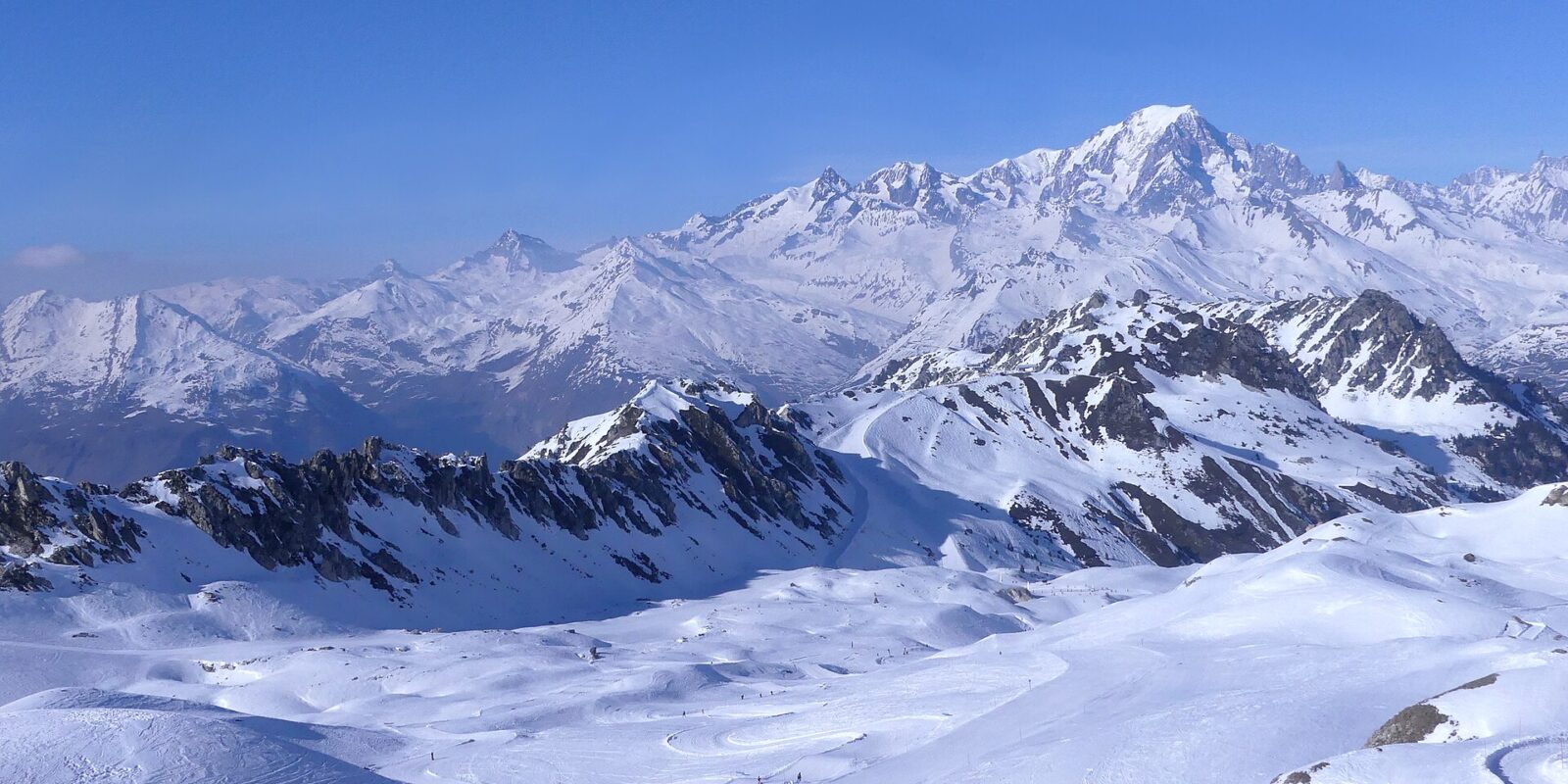
Les Arcs and La Plagne are separate resorts with separate histories, separate villages and separate tourist offices, and they are sold together because in 2003 somebody strung a cable car across the Ponthurin gorge between them. That cable car is the Vanoise Express: a double-decker with cabins big enough to swallow a coach party, crossing the valley in a few minutes. Buy the Paradiski pass and you get both areas plus Peisey-Vallandry, which is the bit in the middle where the cable car lands.
For anybody planning a transfer from Geneva this matters more than it sounds. The two resorts sit either side of the same section of the Tarentaise valley — Les Arcs above Bourg-Saint-Maurice on the north side, La Plagne above Aime and Macot on the south. From Geneva Airport you take exactly the same motorway for two and a half hours and then choose a hairpin. The difference in road time between them is fifteen minutes, sometimes less.
What that means practically: if you are comparing quotes and one operator is €30 cheaper to La Plagne than to Les Arcs, that is a pricing decision, not a distance. Ask them why.
02 — How far it actually is
| Destination | Road distance from GVA | Typical drive | Nearest station |
|---|---|---|---|
| Bourg-Saint-Maurice (valley town) | 185 km | 2h30–2h50 | Bourg-Saint-Maurice |
| Arc 1600 | 193 km | 2h45–3h00 | Bourg-Saint-Maurice + funicular |
| Arc 1800 | 196 km | 2h50–3h05 | Bourg-Saint-Maurice |
| Arc 1950 / Arc 2000 | 200 km | 3h00–3h15 | Bourg-Saint-Maurice |
| Peisey-Vallandry | 190 km | 2h45–3h00 | Landry |
| Plagne Centre / Belle Plagne | 195 km | 2h45–3h10 | Aime-la-Plagne |
| Montchavin / Les Coches | 190 km | 2h40–3h00 | Aime-la-Plagne |
| Champagny-en-Vanoise | 200 km | 3h00–3h20 | Aime-la-Plagne |
Those times are for a clear Tuesday. They are not for a Saturday in February, when the whole of northern Europe changes over its chalets on the same morning and the RN90 through Albertville and Moutiers becomes a car park. Add ninety minutes to two hours to every figure above on a peak Saturday and you will not be far wrong. Some winters it has been worse.
The route itself is straightforward: A40 out of Geneva, past Annecy and Albertville, then the RN90 up the Tarentaise past Moutiers, Aime and Landry to Bourg-Saint-Maurice. It is a good, fast, dual-carriageway road for most of its length. The pain is entirely in the volume of traffic using it and in the final climb, which for Arc 2000 is a genuinely serious mountain road with a couple of dozen hairpins.
03 — The train and the funicular
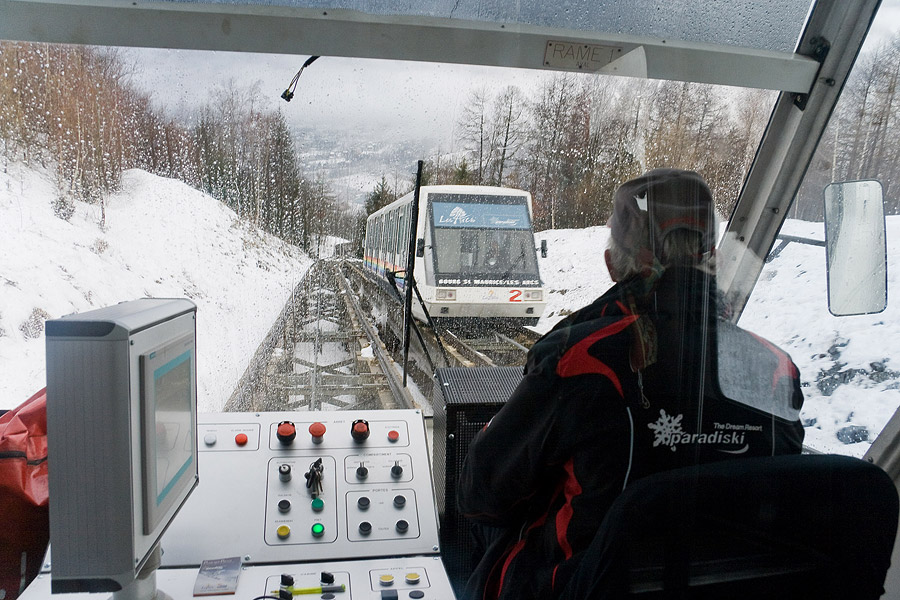
Here is the thing that makes this route different from every other resort in the Geneva ski-transfer set. Bourg-Saint-Maurice is the end of the SNCF line up the Tarentaise, and the Arc-en-Ciel funicular station is part of the same building complex as the railway platforms. You walk out of one and into the other. No shuttle, no car park, no waiting in the cold for a minibus that is stuck twenty kilometres down the valley.
What the funicular costs and when it runs
- Winter 2026/27 season: 12 December 2026 to late April 2027.
- Departures roughly every 20 minutes in high season, every 30 minutes at quieter times, from around 08:30 to 19:30.
- Adult (13–74) €3 single, €5 return. Child (5–12) €2.50 single, €4 return.
- Included in Classic, Essential, Premium, Pedestrian and Pedestrian+ lift passes for the period they cover.
- Free return ticket for anyone arriving by train — the mountain area subsidises it deliberately to push people out of cars.
- Tickets at Bourg-Saint-Maurice station and from the machine at the Arc 1600 top station.
It climbs to Arc 1600. If you are staying in 1600, you are finished — walk to your accommodation. If you are staying in Arc 1800, 1950 or 2000, there is a free resort bus network from the top station, and in season it is frequent. That is still a bus, but it is a five to fifteen minute bus inside the resort rather than a three-hour one from an airport.
Getting to Bourg-Saint-Maurice from Geneva by rail
This is the catch, and it is the same catch that afflicts the whole Tarentaise. There is no fast train from Geneva into the French Alps. Services leave from Genève-Cornavin in the city centre rather than the airport, they change at Chambéry via Bellegarde, and the total from airport to Bourg-Saint-Maurice runs to five hours or more once you have added the airport-to-Cornavin leg and a connection wait. It is not competitive with a car for a week’s skiing.
Where it does work is if you are coming from Paris or London rather than flying into Geneva at all. The winter Saturday TGV and the Eurostar ski train run direct to Bourg-Saint-Maurice, and if you are on one of those the funicular makes Les Arcs one of the easiest resorts in the Alps to reach car-free. It is worth knowing before you book a Geneva flight on autopilot — for Les Arcs specifically, the rail route from the north is genuinely better than the flight-plus-transfer route from the west.
If you are flying to Geneva, treat the train as a fallback rather than a plan: useful if a shuttle cancels, useful if you land late and want to overnight in the valley, not the way to start a week.
04 — La Plagne and the Aime problem
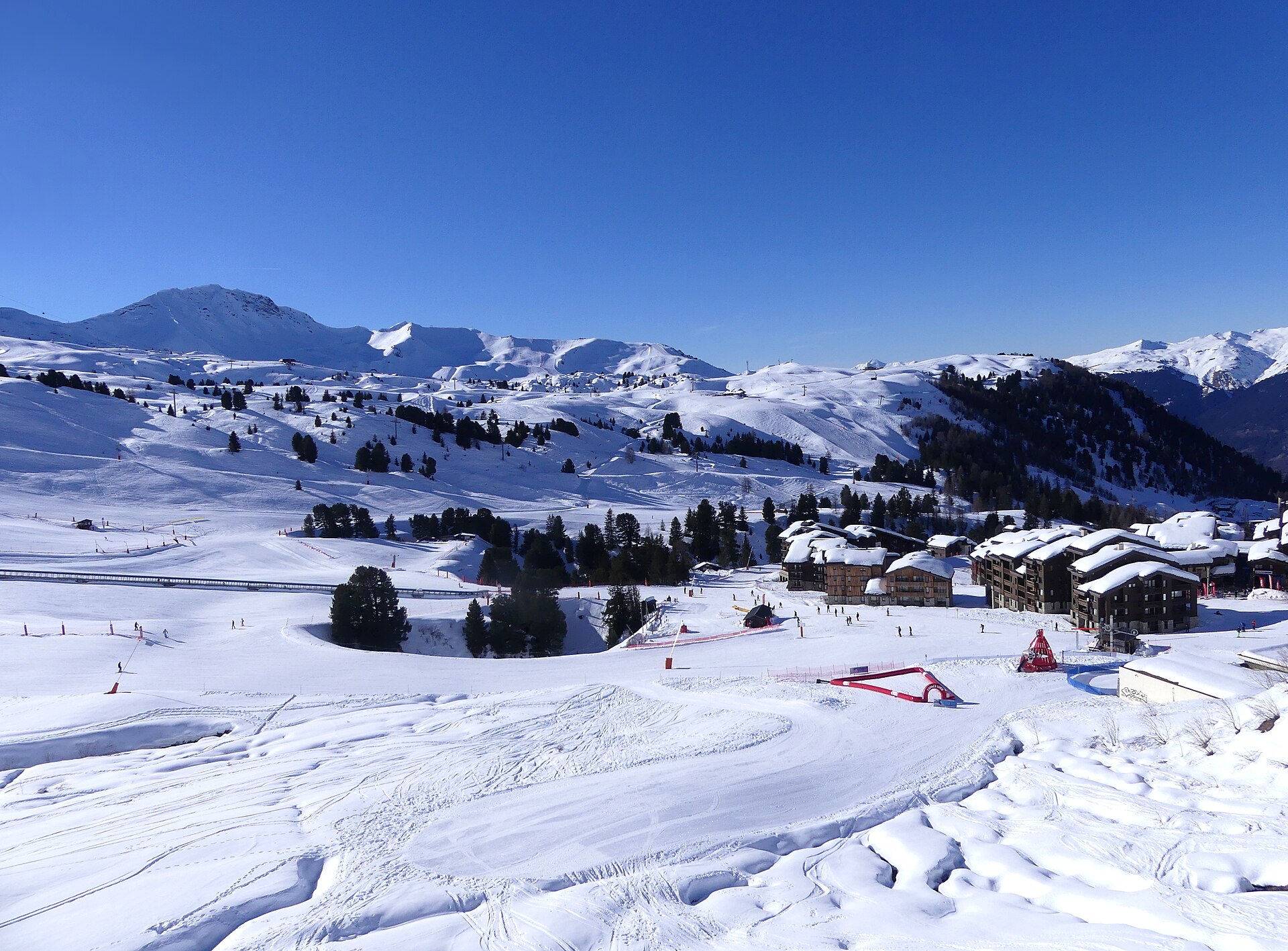
La Plagne has no funicular and no equivalent trick. The railhead is Aime-la-Plagne, one stop down the line from Bourg-Saint-Maurice, and from there you need a road transfer up the mountain — Altibus runs the route, taking somewhere around 40 minutes to the high villages depending on which one you want and how many stops the service makes. Check the current timetable on altibus.com before you commit; the winter frequency is much higher than the summer one, and the last service up is earlier than most people expect.
In practice, almost everybody flying into Geneva for La Plagne takes a road transfer the whole way. That is the honest answer. The rail option only makes sense as part of a longer rail journey, not as a leg bolted onto a flight.
05 — Which village are you actually going to?
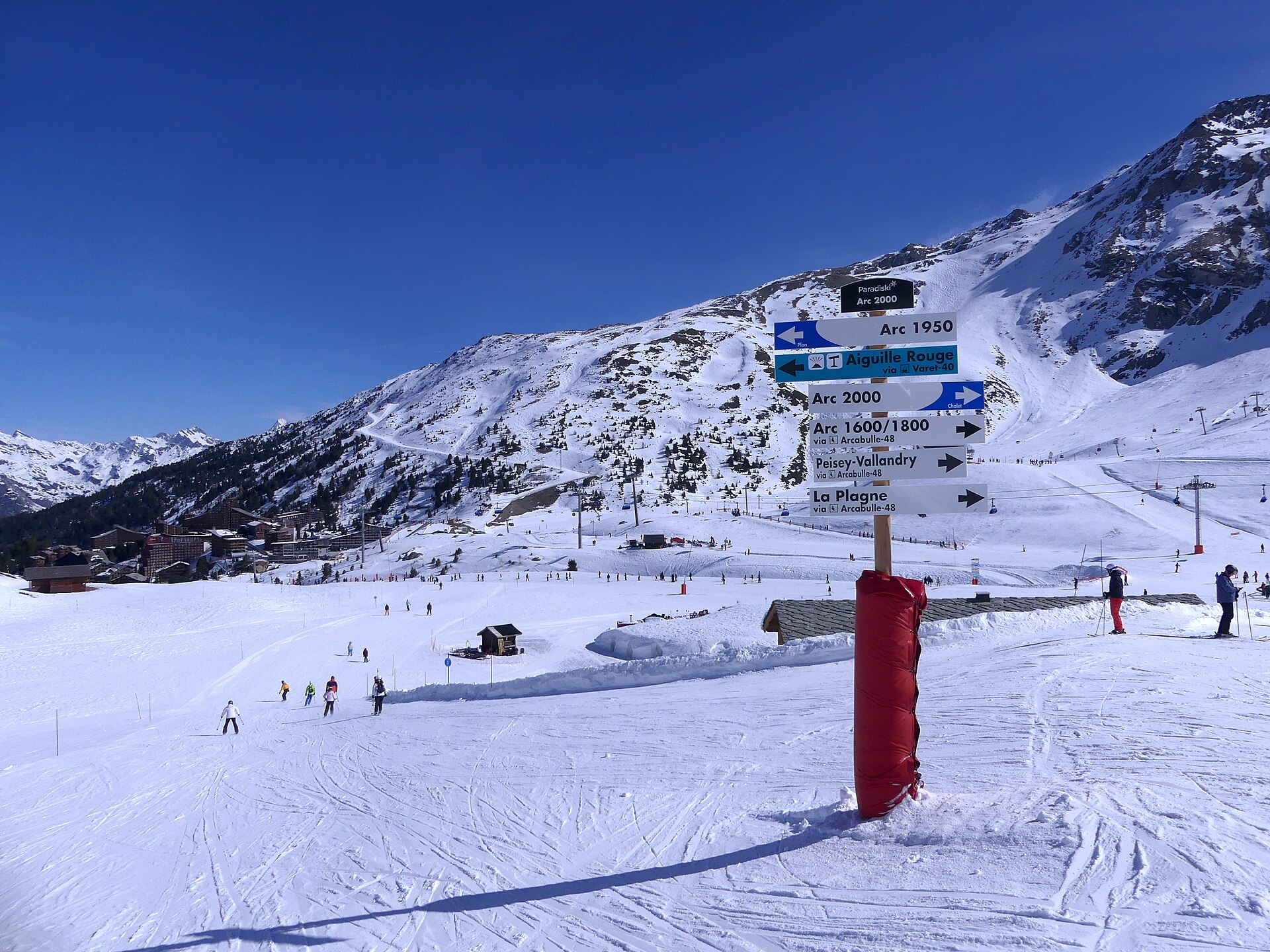
This is where transfer bookings go wrong. Both resorts are collections of villages at different altitudes with confusingly similar names, and drivers charge by drop-off point.
Les Arcs
- Bourg-Saint-Maurice (810 m) — the real town in the valley. Shops, a supermarket, a station, restaurants that are not resort restaurants. Cheapest beds, but you commute up every morning.
- Arc 1600 — the original 1968 development, small, wooded, and the funicular top station. Quiet, and the easiest arrival of all of them.
- Arc 1800 — the biggest, made of three linked hamlets (Charvet, Villards, Chantel). Most of the bars and most of the beds.
- Arc 1950 — built in 2003 as a pedestrian village in a self-consciously traditional style. Polished, expensive, very family-friendly.
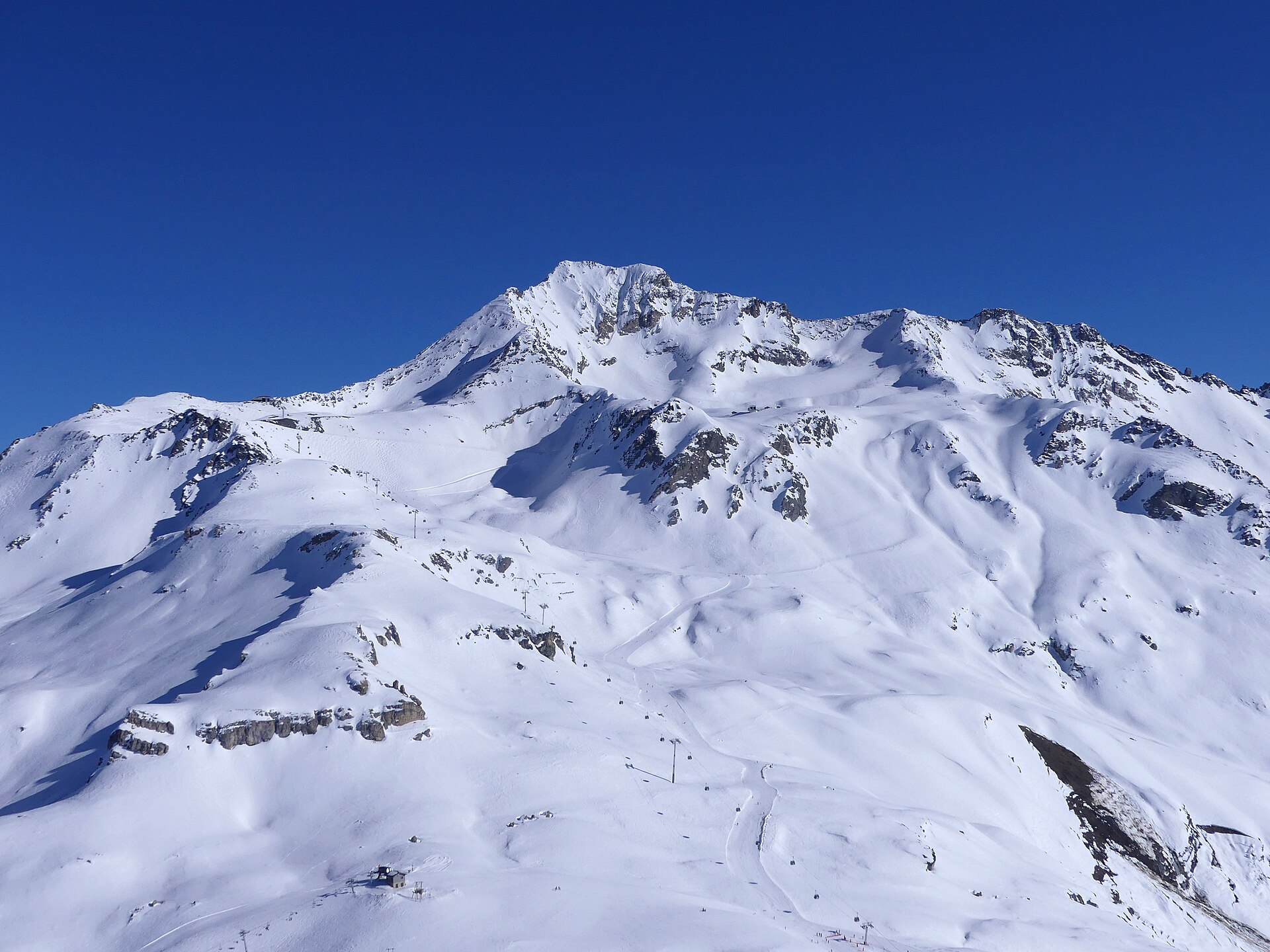
- Arc 2000 — highest and most snow-sure, right under the Aiguille Rouge. Ugly from the outside, unbeatable for ski access. The longest and steepest transfer road.
- Peisey-Vallandry — the quiet corner, and the Les Arcs end of the Vanoise Express.
La Plagne
- High villages — Plagne Centre, Plagne Bellecôte, Belle Plagne, Aime la Plagne, Plagne Soleil, Plagne Villages, Plagne 1800. All around 1,800–2,100 m, all ski-in ski-out, all reached by the same mountain road.
- Valley villages — Montchavin, Les Coches, Montalbert and Champagny-en-Vanoise. Lower, prettier, cheaper, lift-linked into the same area. Montchavin and Les Coches are also the La Plagne end of the Vanoise Express.
Write the exact village on the booking. “La Plagne” is not an address and neither is “Les Arcs”. A driver who has to work it out at 22:00 in a snowstorm will drop you somewhere plausible, and plausible can be a twenty-minute walk uphill with a ski bag.
06 — What each option costs

| Option | Cost, one way | Journey | Honest assessment |
|---|---|---|---|
| Shared shuttle | €55–85 per person | 3h15–4h00 with stops | Fine for one or two people. You will stop at other resorts. |
| Private transfer | €300–550 per vehicle | 2h45–3h15 | Cheaper than shared from about five people up. Door to door. |
| Scheduled coach | £40–55 per person | 3h30–4h30 | Weekends only, fixed times, cheapest reliable option. |
| Train + funicular | €60–100 per person | 5h+ from GVA | Brilliant from Paris or London. Slow from Geneva. |
| Hire car | €250–450 per week + fuel, tolls | 2h45–3h15 | Only if you want to ski more than one valley. Winter tyres are compulsory. |
The break-even between shared and private is the number worth working out before you book anything. Four adults at €70 each is €280 one way, €560 for the return — which is already inside private-transfer territory for a vehicle that leaves when your flight lands and stops nowhere. For a family of five or six, private is not a luxury, it is arithmetic.
07 — Timing, and the Saturday trap
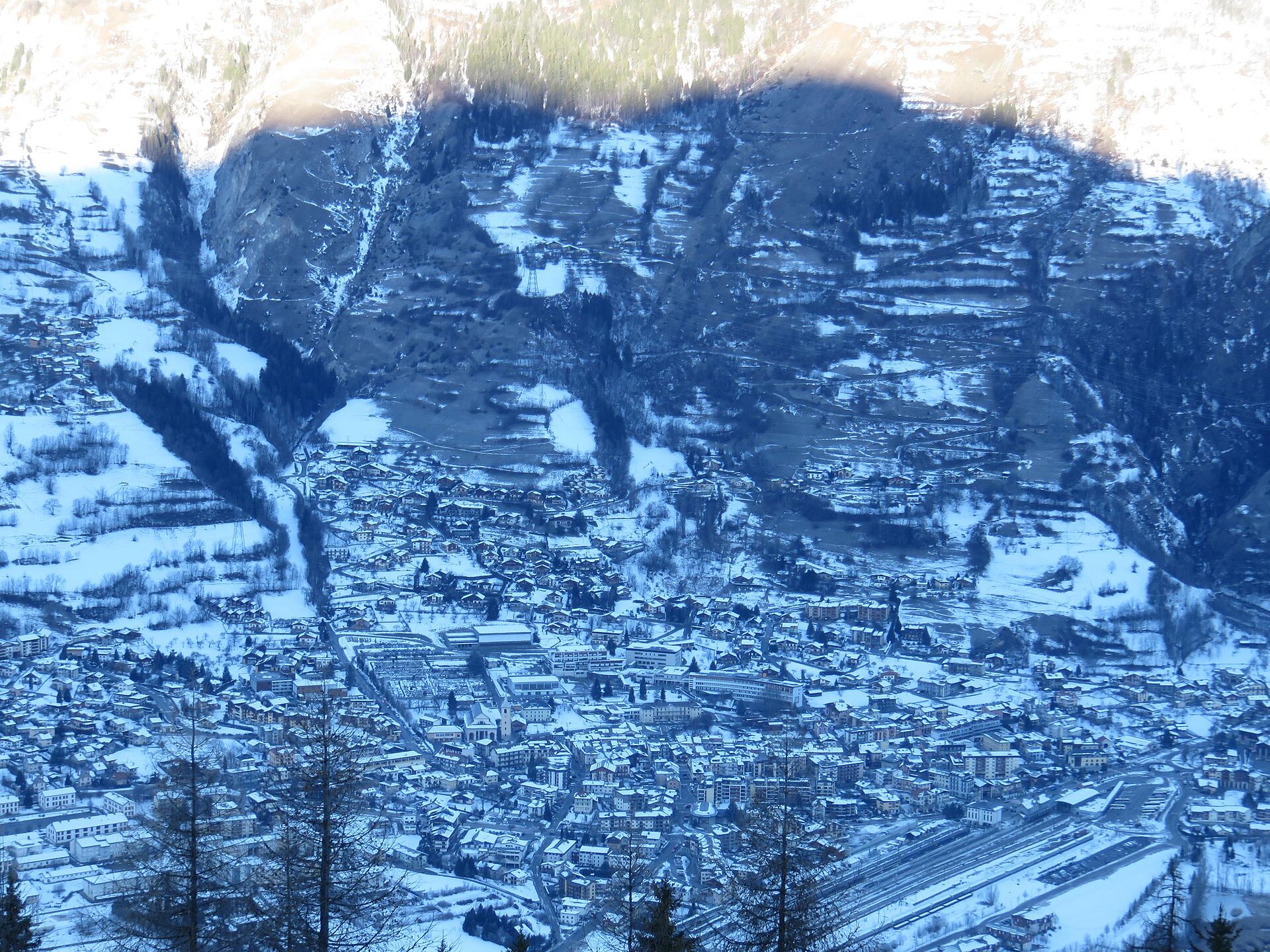
Almost all French Alpine accommodation changes over on Saturday. Every chalet, every apartment, every catered week. The result is a wave of traffic that fills the RN90 in both directions from about 09:00 to 18:00, with the worst of it around Albertville and Moutiers where three valleys’ worth of traffic merges.
- A Saturday flight landing at 11:00 can mean a 16:00 arrival in resort, sometimes later.
- A Sunday flight almost always beats it, often by two hours, and costs less.
- Book transfers with a generous buffer after landing. If you have hold luggage plus ski bags, oversize baggage reclaim at Geneva can add 30–45 minutes on a peak Saturday, and shared shuttles do not always wait.
- Going home, leave the resort earlier than feels sensible. Transfer companies build the buffer in; if you self-drive, you must.
08 — If your flight lands late
Late arrivals are where this route punishes people, and it punishes Les Arcs and La Plagne harder than the closer French resorts because you are three hours out rather than one.
- Shared shuttles typically stop running from the airport somewhere between 21:00 and 22:00, and the last departure is often already full weeks ahead. If your flight lands at 22:30, a shared seat may simply not exist.
- Private transfers run at any hour and price accordingly — expect a night supplement on top of the figures above.
- The funicular’s last departure is in the evening, not at midnight. A late flight into Geneva cannot be rescued by the train, because you will not be in Bourg-Saint-Maurice in time for it either way.
- The pragmatic answer for a genuinely late arrival is a night in the valley — Bourg-Saint-Maurice or Aime — and the funicular or a bus up in the morning. It is cheaper than a night-rate private transfer and you start the week having slept.
Whatever you do, do not book the last shuttle of the evening against a connecting flight. One delayed leg and you are looking for a taxi at Geneva Airport at 23:00 with skis, and the number on that meter to the Tarentaise is not one you want to see.
09 — What I would actually book
Two people, mid-week flight, staying in Arc 1600 or 1800: a shared shuttle, and no regrets about it. The premium for private hire is not worth it for two.
A family of four or more, any day: private transfer, booked direct with a Tarentaise-based operator rather than a marketplace. You are paying for a vehicle, and the vehicle costs the same whether it is carrying two people or seven.
Anyone travelling from Paris, Lille, Brussels or London: seriously look at the direct train to Bourg-Saint-Maurice before you book a Geneva flight. Free funicular, no transfer, no Saturday gridlock. For Les Arcs it is the best arrival in the Alps and it is not close.
Anyone going to La Plagne: road, all the way, and put the village name on the booking.
Frequently asked questions
How long does the transfer from Geneva to Les Arcs take?
Two hours forty-five to three hours fifteen by road in normal conditions, depending on which Arc you are heading for. On a peak Saturday in February, budget four to five hours and be pleasantly surprised if it is less.
Is the funicular included in my lift pass?
Yes, if you hold a Classic, Essential, Premium, Pedestrian or Pedestrian+ pass, for the period the pass covers. On arrival day, before the pass is active, an adult return is €5 — or free if you arrived by train.
Can I get from Les Arcs to La Plagne without a car?
On skis, yes — the Vanoise Express cable car links them and is covered by the Paradiski pass. On foot in the evening it is far harder; the road route between the two goes all the way down one valley side and up the other. Do not book accommodation in La Plagne expecting to pop over to Arc 1800 for dinner.
Do I need snow chains?
If you are self-driving, yes — in the designated Savoie mountain communes, from 1 November to 31 March a car needs either four winter tyres marked 3PMSF or chains or snow socks in the boot for two driven wheels, and chains are strongly advisable on top for the climb to Arc 2000 or the high La Plagne villages. Transfer operators carry their own and their drivers fit them without stopping the clock.
Is Bourg-Saint-Maurice a reasonable place to stay?
It is if you want a real town, a supermarket at normal prices and a much lower nightly rate, and you accept a funicular ride at each end of the day. It is not if you want to walk out of the door onto snow. For a first Alpine trip on a tight budget it is a genuinely sensible base.
What about flying into Chambéry or Lyon instead?
Chambéry is closer by road — around two hours — but has a thin winter schedule and mostly weekend charters. Lyon is a similar drive to Geneva with cheaper flights from some cities. Geneva wins on flight choice, frequency and transfer availability, which is why almost everyone uses it despite the distance.
10 — Related Geneva guides
- Geneva ski transfers: the complete guide — every resort, every mode, one page.
- Geneva to Tignes and Val d’Isère — the next valley up, from the same railhead.
- Geneva to Courchevel — the Three Valleys equivalent of this route.
- Geneva to Val Thorens — highest resort in Europe, longest climb.
- Skiing near Geneva — how the resorts compare before you pick one.
- Where to stay near Geneva for skiing — if you would rather not transfer at all.
- Geneva transport guide — trains, buses and the free travel card.