Geneva Airport’s French Sector, Explained
This article contains advertising. Our booking links are routed through a partner that adds commission tracking automatically, so if you book through one we earn a commission from the provider, at no extra cost to you. It never affects what we recommend. Affiliate disclosure
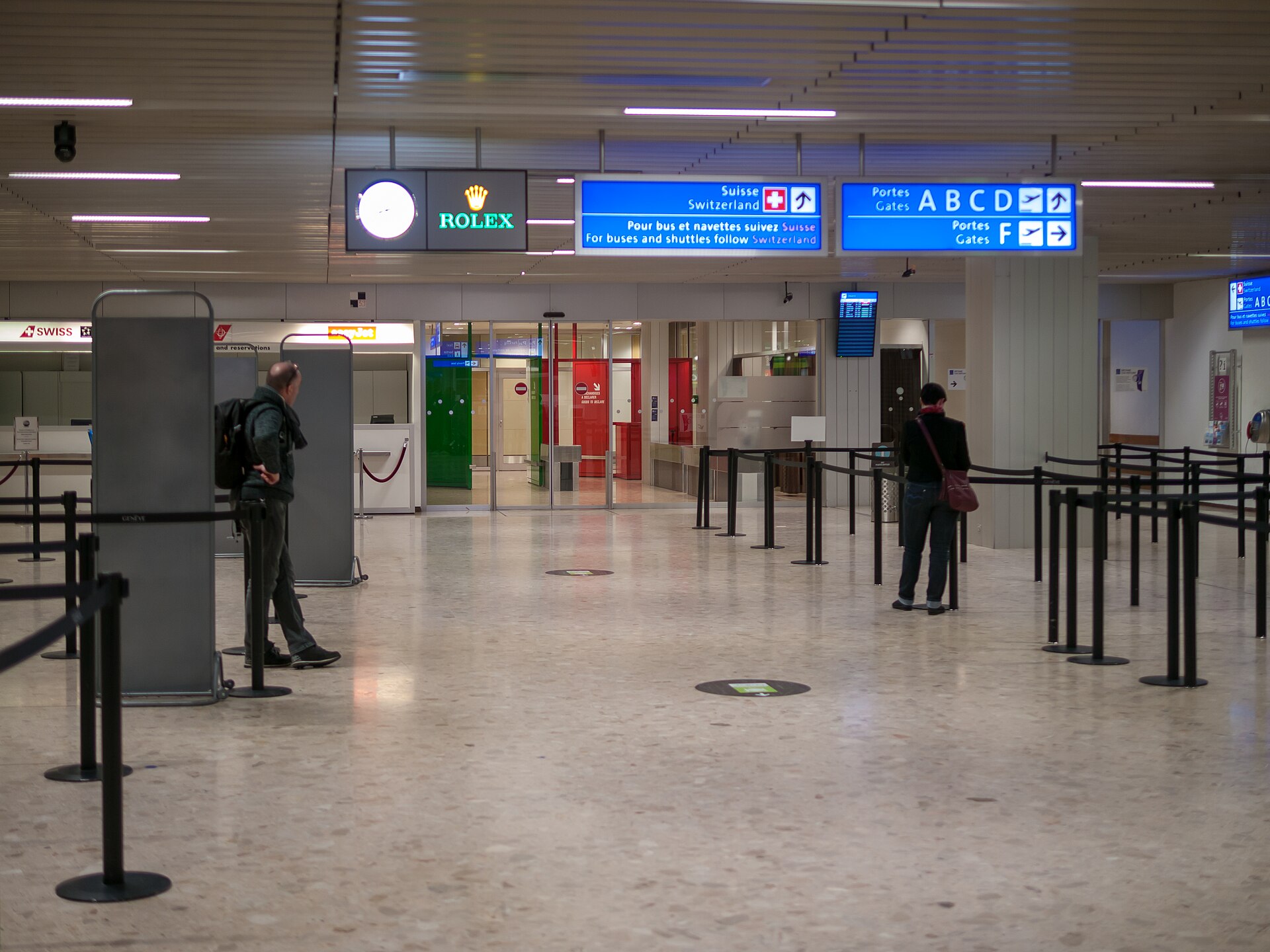
There is a door at Geneva Airport that leads to France. Not metaphorically — a signposted exit onto a road that runs to Ferney-Voltaire, with no Swiss customs post between you and it, because the ground you are standing on is treated as French. It has been there since 1956, it is entirely official, and roughly nobody who books a flight to Geneva knows it exists until they are standing in front of a sign saying Suisse with an arrow pointing one way and nothing pointing the other.
The Geneva airport French sector is a section of Terminal 1 legally treated as French territory, created by a 1956 land-exchange agreement that let the airport extend its runway onto French soil. It has its own check-in, its own baggage hall, its own customs channels and its own road out — but the customs road at Ferney-Voltaire is open to motor vehicles only, pedestrians and cyclists cannot use it, and you may only cross between the two sectors if you hold a valid flight ticket for that day or the day either side of it.
01 — Why a French sector exists at all
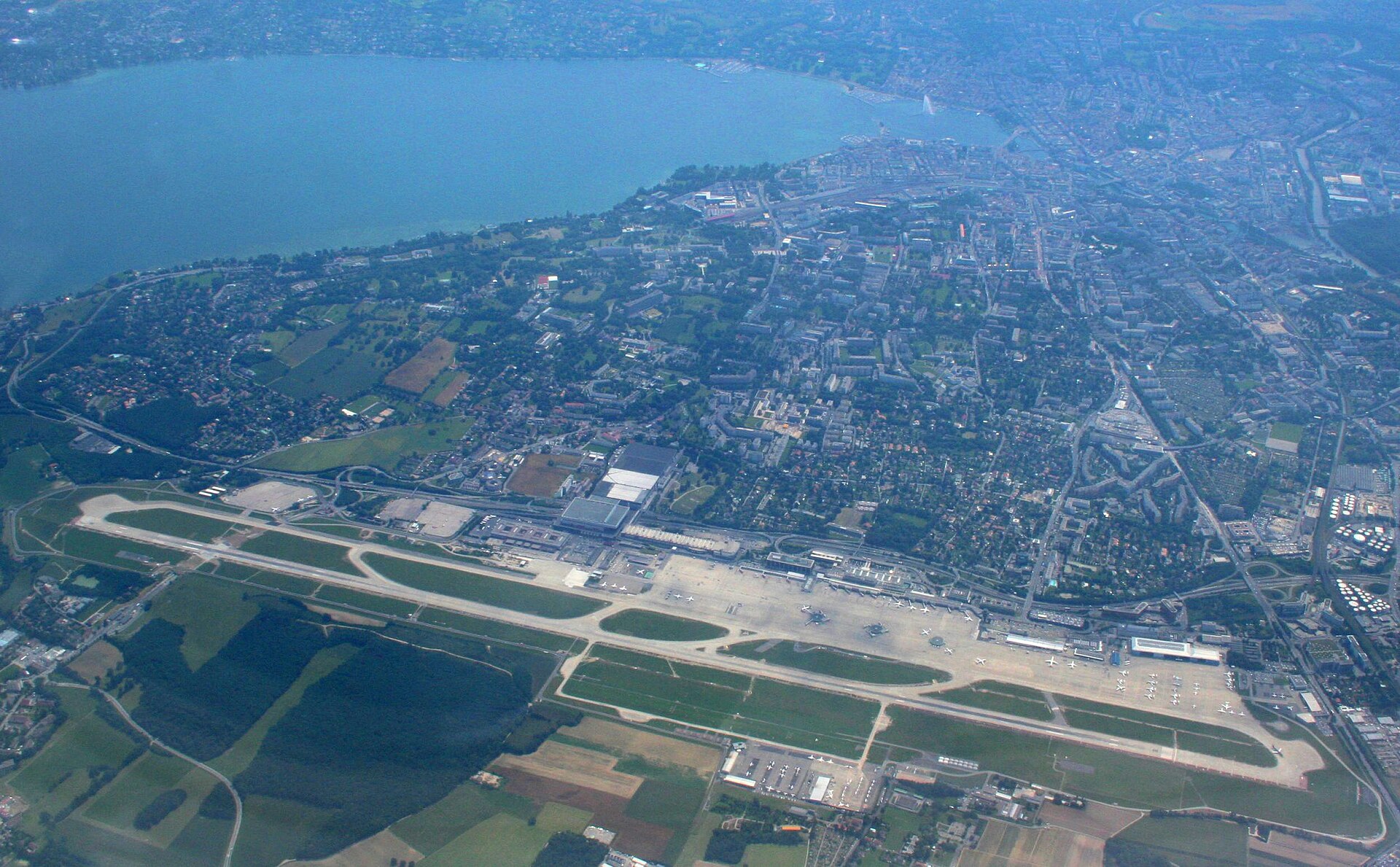
Look at Geneva Airport from the air and the problem is obvious. The canton of Geneva is a small piece of Switzerland almost entirely surrounded by France, and the airport occupies most of the flat land it has. By the 1950s the runway needed to be longer for jet aircraft, and there was nowhere left to put it that was not French.
So in 1956 France and the Canton of Geneva made a deal. France ceded land that let the runway extend to close to 4,000 metres — long enough for anything then flying and most things flying now. In exchange, France got a sector inside the terminal, with a dedicated customs road running to it from the French side, so that people in the neighbouring Pays de Gex could use the airport without entering Switzerland or clearing Swiss customs.
It is a genuinely elegant solution to a genuinely awkward geography, and it is the kind of arrangement that only makes sense on a border this porous. It is also why Geneva Airport has two of several things it would otherwise have one of.
02 — What changed when Switzerland joined Schengen
Before 2008, the French sector did exactly what its name says: it handled flights between Geneva and France, and only those. Switzerland was outside the Schengen area, so a Paris flight arriving into the Swiss side meant a full passport control, and the French sector let French domestic-style traffic bypass it entirely.
Switzerland joined Schengen in December 2008, and at a stroke that rationale weakened. A flight from Paris to the Swiss sector no longer involves a passport check. The French sector kept going — the agreement is still in force, the road is still there, the customs channels are still staffed — but its role narrowed from “the way French flights work” to something more specific: a border crossing with a terminal attached.
What survives is real and useful. It is just smaller than the signage suggests.
03 — The rules, as the airport states them
Genève Aéroport publishes the terms plainly, and they are stricter than most people assume.
- Road access is via the customs road at Ferney-Voltaire — route douanière, which is what you should put into a satnav rather than the main airport address.
- The customs road is for motor vehicles only. The airport’s own wording: pedestrians and cyclists are not permitted to use it. You cannot walk out of the French sector into France.
- Crossing between sectors requires a valid flight ticket for the same day, give or take one day. This is not a shortcut for the curious.
- There is no access between the international sector and the French sector for non-travellers. If you are meeting somebody, you meet them on the side their flight uses.
- Hire cars are the exception. A non-passenger may collect or return a rental in the French sector — but only by driving in on the Ferney-Voltaire customs road.
Those five lines answer almost every question people actually have about the French sector, and between them they close off most of the clever ideas travellers come up with.
04 — Will your flight use it?
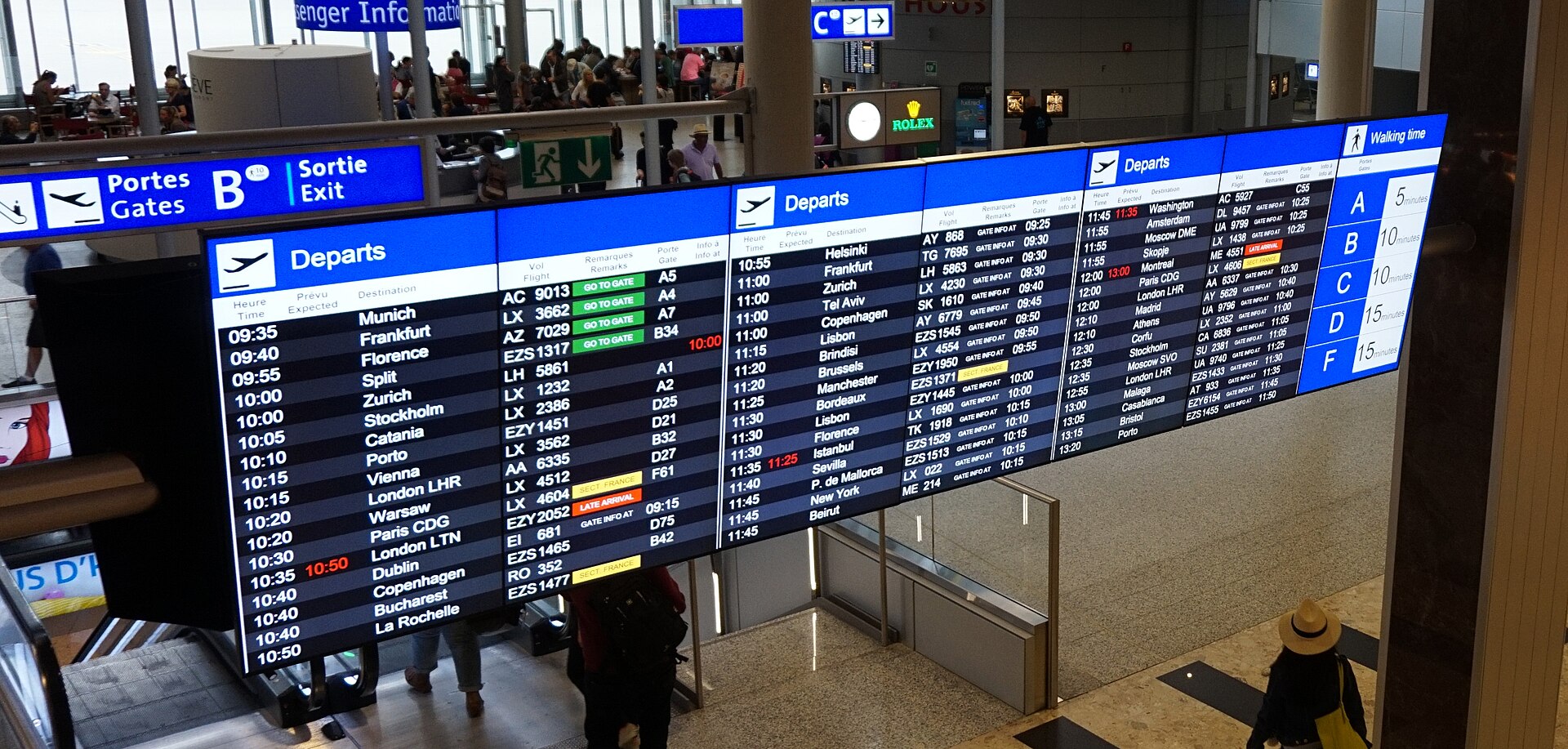
Geneva makes this easier than it might. The departure boards mark French-sector flights in the remarks column with SECT. FRANCE, and gates in the French sector carry the letter F. If your boarding pass shows an F gate, or the board flags your flight, that is your answer.
Before you travel, the reliable checks are:
- The airport code on your booking. Some systems distinguish the French sector explicitly; car hire bookings in particular often say “Geneva Airport French Sector” in the address.
- The address given for a rental pick-up. If it names Ferney-Voltaire or a route douanière, you are going to the French side.
- Your airline’s own airport information for Geneva, which will say which sector it uses.
- If in doubt, assume Swiss sector. That is where the overwhelming majority of traffic goes.
05 — Where it genuinely saves you money
Two situations, and they are both real.
Car hire
This is the big one. The same companies operate desks on both sides of the building, and the French-side rates are frequently lower — different country, different tax treatment, different pricing. If you are flying into Geneva and driving to a French resort, the French sector desk is often the right choice.
The catches are worth stating clearly:
- You must be able to reach the desk. If you arrive in the Swiss sector, you cannot simply stroll across — you need a same-day flight ticket to cross, which as an arriving passenger you have, but the crossing is a controlled one and takes time.
- A French-registered car has no Swiss motorway vignette. If any part of your route uses a Swiss motorway, you must buy one.
- Returning the car means driving back in on the customs road, not following the ordinary airport signs. Programme it into the satnav before you set off, not on the last morning.
- Confirm that cross-border use is permitted and that winter tyres are fitted for the season you are travelling in.
Living or staying in the Pays de Gex
If you are staying on the French side — Ferney-Voltaire, Saint-Genis-Pouilly, Divonne-les-Bains, Gex — the customs road is a genuine convenience. You drive to the terminal without crossing a border post, and you drive home the same way. This is the population the 1956 agreement was written for, and it still works for them exactly as intended.
For a visitor, this matters mainly if you have booked accommodation on the French side to save money, which plenty of people do. It is a reasonable strategy — French-side hotels are cheaper than Geneva ones and the airport is minutes away — but it commits you to a car or a taxi, because the public transport picture on that side is thinner and the customs road is closed to you on foot.
06 — Getting to and from the French sector
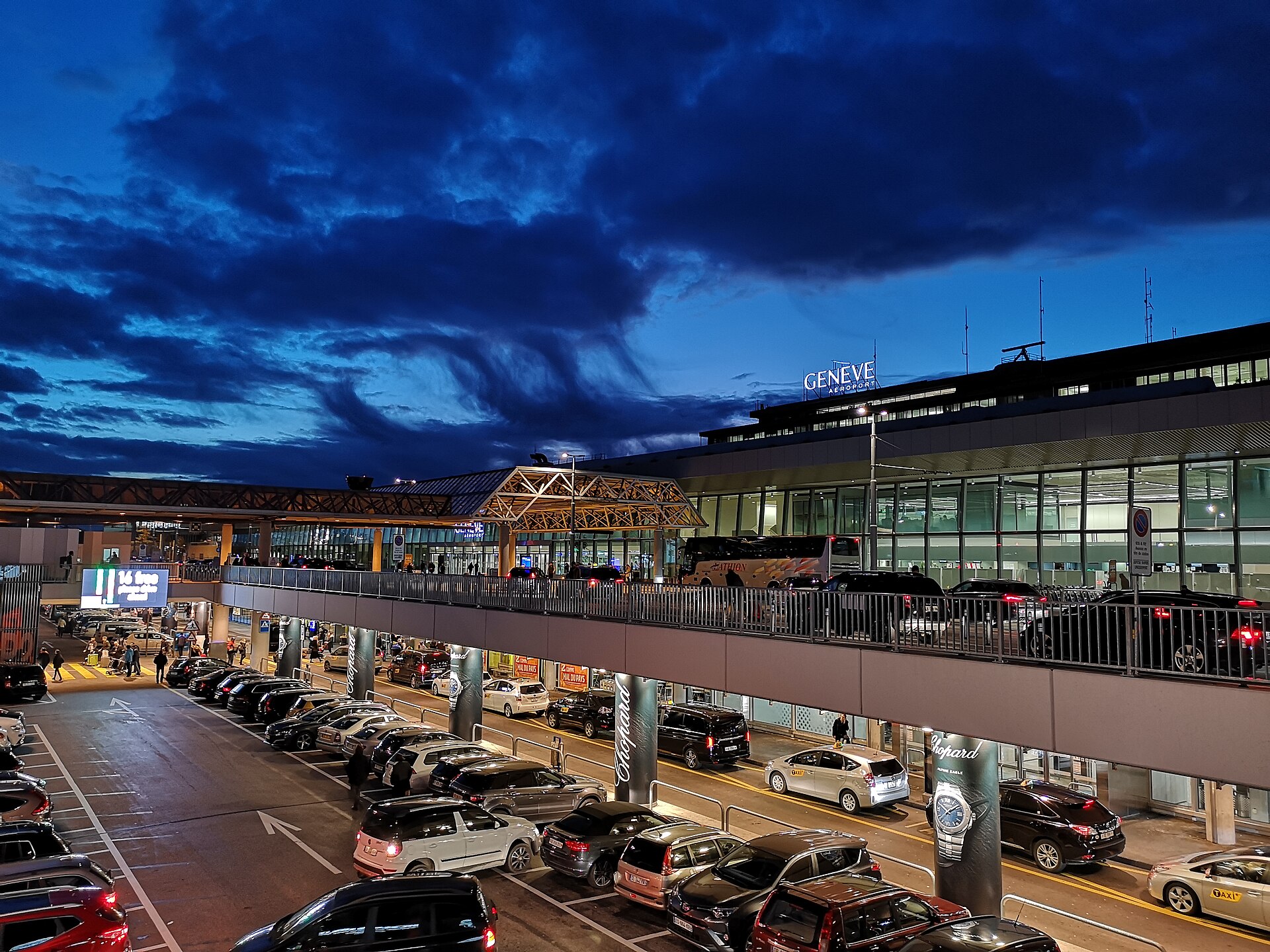
This is the section most guides skip, and it is the one that decides whether the French sector is a convenience or a trap for you specifically.
By car
The intended way. You approach on the customs road from Ferney-Voltaire, park in the French-sector car parks, and walk into the terminal. No Swiss border formalities, no vignette needed if you never touch a Swiss motorway. For anyone based in the Pays de Gex this is simply how the airport works.
By taxi
The airport publishes a list of taxi operators serving the French sector, all with French numbers. They are a separate trade from the Swiss taxis at the main rank — different licences, different currency, different meters. If you are arriving into the French sector without a car, book one in advance rather than assuming a rank will be waiting; the sector is quiet outside its flight times.
By public transport
Effectively, you cannot. The railway station and the TPG bus stops serve the Swiss side. French bus services in the Pays de Gex exist but are built around commuters rather than air passengers, and none of them is a substitute for the six-minute train into Geneva that Swiss-side passengers take for granted.
On foot
Not permitted. It is worth repeating because the map is so misleading: Ferney-Voltaire sits barely more than a kilometre away and there is no lawful pedestrian route to it from the sector. The customs road carries motor vehicles only.
07 — Where it strands people
Now the honest part, because the French sector generates more travel problems than it solves for the average visitor.

- Your transfer driver is on the wrong side. Ski transfer operators work the Swiss arrivals hall. If your flight lands in the French sector and you have not told them, you are standing in a quiet hall on a different road while they wait in a busy one you cannot reach quickly.
- The facilities are thin. Fewer shops, fewer places to eat, a much smaller waiting area. If you have a long wait, you want the Swiss side.
- Public transport is Swiss. The railway station, the TPG buses and the taxi rank that everyone means when they say “the airport” are on the Swiss side. From the French sector, your options are a car, a French taxi, or a crossing.
- You cannot walk out. Ferney-Voltaire is genuinely close, and there is no legal way to reach it on foot from the French sector. The customs road is for vehicles.
- Connections between sectors are not connections. Two flights on separate tickets, one in each sector, is not a transfer — it is two airport visits with a border in the middle.
08 — Parking, and the cross-border arithmetic
The French sector has its own car parks, and they are the reason a certain kind of traveller cares about all this. Parking costs at Geneva are Swiss, and Swiss parking costs are not gentle. French-side parking is priced in euros and generally lower.
Before you get excited, weigh the whole picture:
- You must be able to drive the customs road at both ends of the trip, which means starting and finishing your journey in France or being willing to loop round.
- Long-stay options on the Swiss side, and independent car parks around the airport, are cheaper than the terminal decks and may close most of the gap without any border complication.
- The saving is real for a fortnight and negligible for a weekend.
- If your flight departs from the Swiss sector, parking French-side means a controlled sector crossing with luggage on the morning of your flight. That is not what you want at 05:30.
The general rule: park on the side you are flying from. Cross-border cleverness at an airport tends to cost more in stress than it saves in francs, and the exceptions are narrow.
09 — The towns on the other side
The Pays de Gex, the strip of France between the airport and the Jura, is the reason the sector exists, and it is a genuinely pleasant part of the world that visitors to Geneva mostly never see.
- Ferney-Voltaire — the closest town, a couple of kilometres from the terminal, and the address the customs road bears. Voltaire lived here for the last twenty years of his life, deliberately just outside the reach of both the French crown and the Geneva consistory, and his chateau is open to visitors. There is a good Saturday market.
- Saint-Genis-Pouilly — a working town beside CERN, with the large accelerator complex straddling the border just outside it.
- Gex — the old administrative centre under the Jura, and the gateway to the Col de la Faucille and the ski slopes of Monts Jura.
- Divonne-les-Bains — a spa town with a casino and a lake, longer established as a resort than anything on the Swiss side of this stretch.
None of these is a substitute for staying in Geneva if you have come to see Geneva. But if you are hiring a car anyway, or if Geneva hotel prices have made your eyes water, they are worth knowing about — and the airport’s French sector is, quite literally, the door to them.
10 — Practical rules to travel by
- Check your sector before you book anything else. Transfers, parking and car hire all depend on it.
- Tell whoever is meeting you. One sentence at booking prevents the whole problem.
- Carry your passport in hand luggage. You are on an international border, and the sector crossing is a border crossing.
- Use “Ferney-Voltaire, route douanière” for satnav if you are driving to the French sector, not the main airport address.
- Do not plan to walk anywhere from the French sector. Plan a vehicle.
- Allow extra time for a sector crossing. It is controlled, it is checked, and it is not a corridor.
11 — Is it worth going out of your way for?
Almost never, and that is the honest verdict a page selling car hire will not give you.
The French sector is a piece of administrative machinery built for people who live in the Pays de Gex. It works beautifully for them. For a visitor flying in for a week in Geneva or a week in the Alps, the calculation looks like this:
| Situation | French sector? | Why |
|---|---|---|
| Flying in, staying in Geneva | No | Everything you need — station, buses, taxis — is Swiss-side |
| Flying in, transferring to a French resort | Only if your flight lands there | Transfer operators work the Swiss hall by default |
| Hiring a car for a French road trip | Often yes | Genuinely cheaper rates, and you are driving into France anyway |
| Staying in Ferney, Gex or Divonne | Yes | This is precisely what the customs road is for |
| Long-stay parking for a fortnight | Worth pricing | Euro pricing can beat Swiss, if your journey starts in France |
| A tight connection between sectors | Never plan one | It is a border crossing, not a corridor |
Treat it as a fact about the airport that occasionally becomes useful, rather than a hack to be engineered around. The people it was designed for use it daily without thinking about it. Everyone else should check which sector their flight uses, tell their driver, and get on with the holiday.
Frequently asked questions
Can I use the French sector to skip Swiss customs?
If your flight uses it, yes — that is exactly what it is for, and it is entirely legitimate. What you cannot do is choose it: you use the sector your flight is allocated to, and only passengers with a same-day ticket can move between the two.
Can I walk from the French sector into Ferney-Voltaire?
No. The airport states that the customs road is reserved for motor vehicles and that pedestrians and cyclists may not use it. However close the town looks on a map, you need a car or a taxi.
Is car hire really cheaper on the French side?
Often, yes, and sometimes substantially. Price both sides for your dates before booking. Factor in the Swiss motorway vignette if your route needs one, and check that winter tyres are included for a ski trip.
Which airlines use the French sector?
It is a small share of traffic and the mix changes. Rather than trying to learn a list, look for the SECT. FRANCE flag on the departure board or an F gate on your boarding pass, and check your airline’s Geneva airport page when you book.
Can someone meet me in the French sector?
Only if they drive in on the customs road. There is no access between the international and French sectors for non-travellers, so a friend who has come to the Swiss arrivals hall cannot walk through to you.
Does the French sector have its own security and check-in?
Yes — its own check-in desks, its own baggage acceptance for the flights it handles, its own security and its own customs channels. It functions as a small terminal inside a large one.
What if I land in the wrong sector for my onward plans?
As an arriving passenger with a same-day ticket you are entitled to cross, and the crossing exists precisely for that. Allow real time for it, tell your driver where you actually are, and do not attempt it on a tight margin.
One more thing the French sector does not have is a lounge, and the airport’s VIP Pack excludes flights to France: our guide to Geneva Airport lounges explains what is available where.
The France sector has its own car park, P20, and it is not the bargain the internet believes it to be: see our Geneva Airport parking guide for what each lot actually charges.
Before you book the cheaper French-side car, price the whole route rather than the day rate: our guide to renting a car at Geneva Airport adds up the vignette, the cross-border fee and the winter kit.
12 — Related Geneva guides
- Geneva Airport: the complete guide — how the whole airport works.
- Geneva Airport terminals and map — the piers, the walking times and where gate F sits.
- Geneva Airport to the city centre — the routes available from the Swiss side.
- Geneva ski transfers — why the sector matters to your driver.
- Shared, private, coach or train? — choosing how to reach the Alps.
- Hotels near Geneva Airport — Swiss side and French side compared.
- Geneva transport guide — getting around once you are in Switzerland.