Geneva Weather Guide — Month-by-Month Forecast & Packing Tips
This article contains advertising. Our booking links are routed through a partner that adds commission tracking automatically, so if you book through one we earn a commission from the provider, at no extra cost to you. It never affects what we recommend. Affiliate disclosure
If you only learn two things about Geneva weather and packing, make them these: the city sits in a lake basin at 375 m between the Jura and the Alps, and that geography produces two quirks most guides skip. The first is the Bise, a cold dry north-easterly that blows for two to four days at a stretch and drops the felt temperature 8-10C below the thermometer. The second is the winter mer de nuages, the November-to-February inversion that buries the city under fog while the Salève summit at 1,100 m sits in full sun. Pack for the wind, not just the cold, and you have already beaten most visitors.
The good news the brochures undersell: Geneva gets more sunshine than Zurich or Bern, about 1,930 hours a year against 1,680 in Zurich. The climate is on your side; knowing how to use it is what this guide is for. Below you get the month-by-month MeteoSwiss normals, lake water temperatures (because the Bains des Pâquis swims run all year), daylight hours, the Bise and fog explained, and a packing list for every season. It sits under our plan your Geneva trip pillar.
01 — Geneva weather at a glance
| Detail | What to know |
|---|---|
| Climate | Moderately continental with a lake-moderation effect |
| Average highs | 5C in January, 27C in July |
| Average lows | -1C in January, 15C in July |
| Rainfall | 925 mm across 108 rainy days a year |
| Sunshine | 1,930 hours a year, more than Zurich (1,680) or Bern (1,790) |
| Snow | About 30 cm a year over 10-15 city snow days; reliable above 1,000 m from late November |
| Daylight | 8h 40m on 21 December to 15h 40m on 21 June |
| Lake water | 5-7C in winter up to 22-24C at the August peak |
| The quirks | The Bise (cold NE wind) and the winter fog inversion |
02 — Geneva month-by-month climate table
This is the data the rest of the guide leans on, drawn from the MeteoSwiss 1991-2020 normals for the Cointrin station.
| Month | Avg high | Avg low | Mean | Rain mm | Rain days | Sun hr/day | Daylight | Lake water |
|---|---|---|---|---|---|---|---|---|
| January | 5C | -1C | 2C | 70 | 10 | 2.0 | 9h 05m | 6-7C |
| February | 7C | -1C | 3C | 55 | 8 | 3.5 | 10h 25m | 5-6C |
| March | 12C | 2C | 7C | 60 | 8 | 5.5 | 12h 00m | 7-9C |
| April | 16C | 5C | 10C | 65 | 9 | 6.5 | 13h 35m | 10-12C |
| May | 20C | 9C | 15C | 75 | 10 | 7.0 | 15h 00m | 14-16C |
| June | 24C | 13C | 18C | 80 | 9 | 8.5 | 15h 40m | 18-20C |
| July | 27C | 15C | 21C | 80 | 8 | 8.5 | 15h 20m | 21-23C |
| August | 26C | 14C | 20C | 80 | 8 | 8.0 | 14h 05m | 22-24C |
| September | 21C | 11C | 16C | 85 | 8 | 6.5 | 12h 30m | 19-21C |
| October | 16C | 7C | 11C | 90 | 10 | 4.0 | 10h 55m | 15-17C |
| November | 10C | 3C | 6C | 90 | 10 | 2.5 | 9h 25m | 11-13C |
| December | 6C | 0C | 3C | 90 | 10 | 1.5 | 8h 40m | 8-9C |
03 — The Bise: Geneva’s defining wind
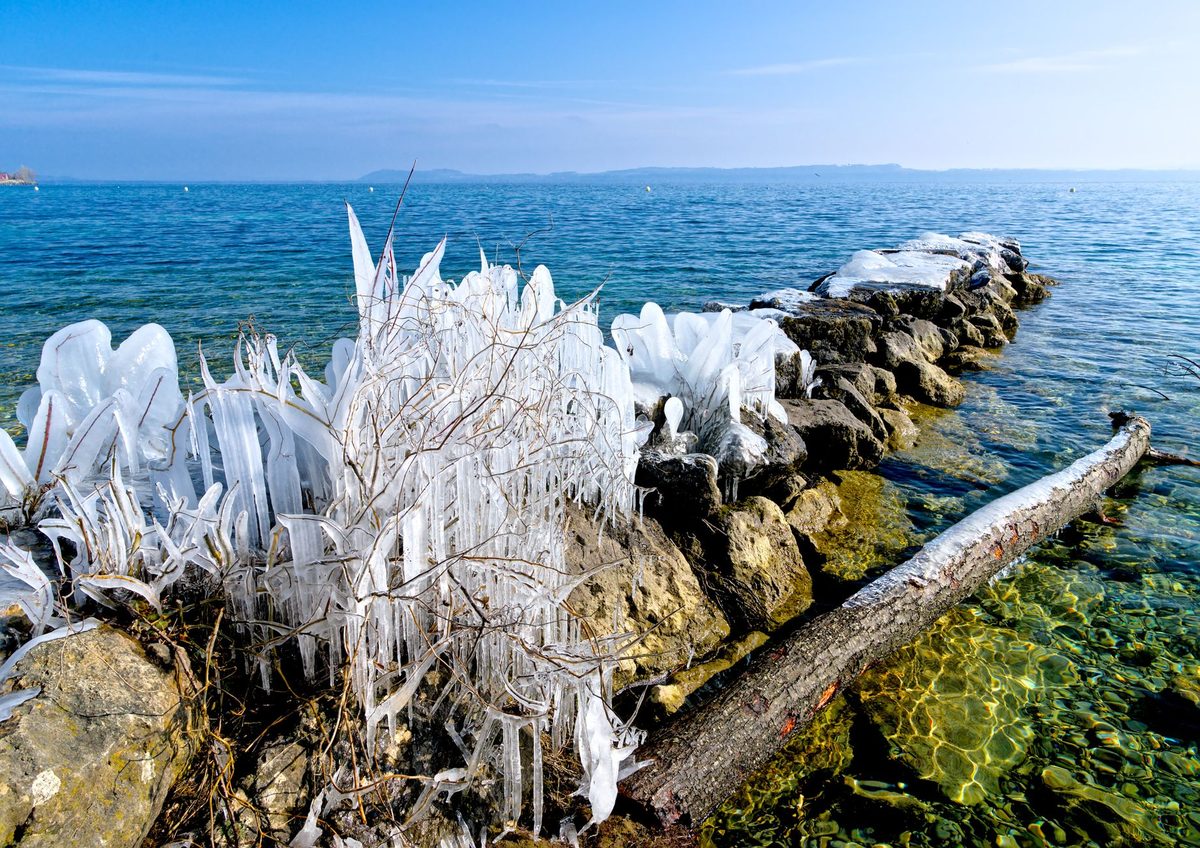
If you understand one Geneva weather phenomenon, make it the Bise. It is a cold, dry north-easterly that develops when high pressure parks over central Europe and funnels air down the lake basin, blowing for two to four days at a time, several times a year, mostly in winter and early spring. Here is what it actually does:
- Drops the felt temperature 8-10C below the reading. A 5C January day in the Bise feels like -5C.
- Freezes lake spray onto the pier railings. That postcard of the Pâquis lighthouse cased in ice happens on Bise days.
- Destroys umbrellas. The rain comes in sideways; a windproof hood works, an umbrella does not.
- Dries skin and lips fast. Pack face balm and lip balm.
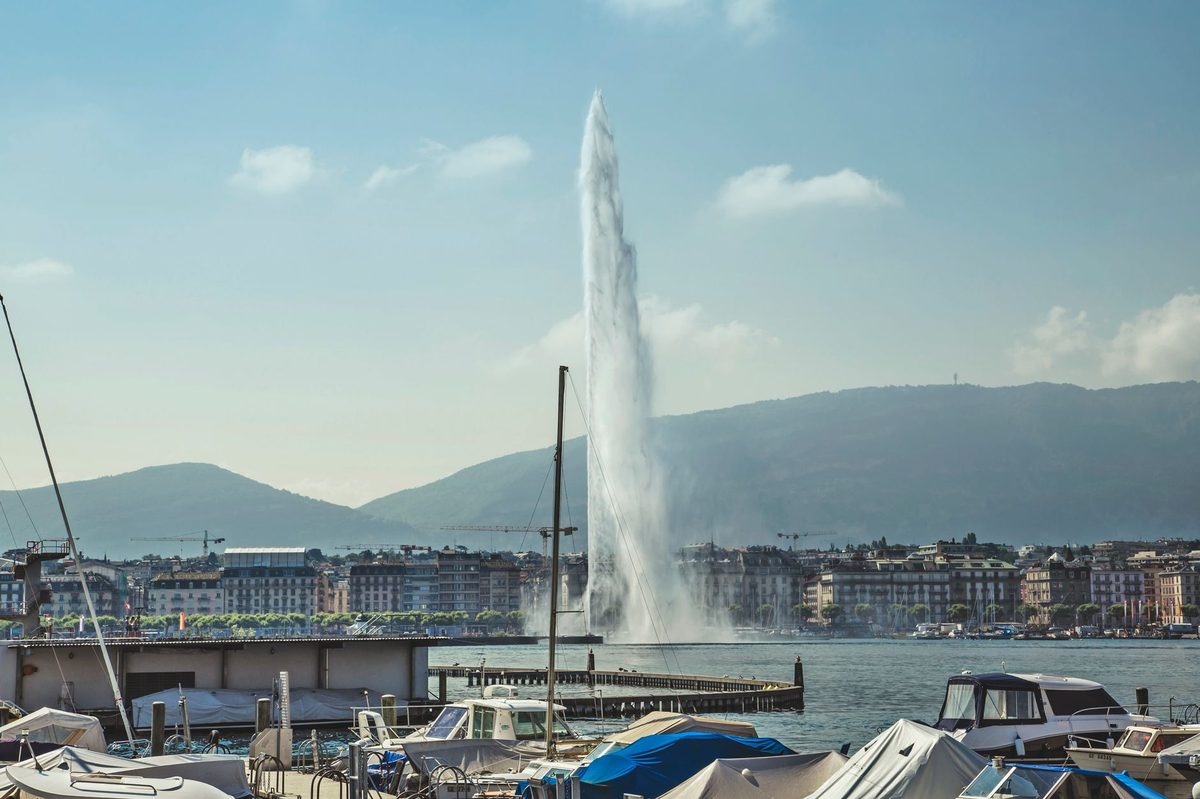
- Can switch off the Jet d’Eau, which is turned off in heavy Bise to avoid icing damage.
The Bise is forecastable, so check the MeteoSwiss app before you pack. If it shows Bise during your trip, prioritise a windproof shell over extra insulation, because wind protection matters more here than warmth.
04 — The mer de nuages, and how to escape it
From November through February (and sometimes October and March), Geneva sits under an inversion-layer fog that can hang around for days. Cold air trapped in the basin condenses into fog, visibility can drop under 100 m, and the city goes grey and damp. The fix is one of Geneva’s most underrated weather hacks: the fog ceiling usually sits at 800-1,000 m, and above it the sky turns blue. Your options:
- Mont Salève cable car, 15 minutes from the centre, summit at 1,100 m, the cheapest fix. See our Mont Salève guide.
- Col de la Faucille, 45 minutes by car to the Jura ridge, reliably above the cloud.
- Saint-Cergue and La Dôle, train to Nyon then the NStCM cog railway, about an hour total.
- Les Voirons, 30 minutes by car east of the city.
From up there you get the sea of clouds: a white blanket below, Mont Blanc on the horizon, the Jura across the way. It is a genuine winter pleasure, and our Geneva winter outdoor activities guide builds whole days around it.
05 — Lake Geneva water temperature by month
Geneva is a lake-swimming city, so the water pattern matters as much as the air. Roughly: January-February sit at 5-7C (cold-water swimmers only), March warms to 7-9C, April to 10-12C (brave dips), and May to 14-16C for the acclimatised. June crosses into comfortable at 18-20C, July hits 21-23C, and August peaks at 22-24C. September stays warm at 19-21C and is the locals’ favourite, October is brisk but doable at 15-17C, and November and December drop back to cold-water territory at 11-13C and 8-9C. The Bains des Pâquis pier is the year-round hub for all of it.
06 — More sun than other Swiss cities
A real but under-promoted fact: Geneva logs 1,930 sunshine hours a year, ahead of Zurich (1,680), Bern (1,790) and most plateau cities, because the lake-basin geography keeps it sunnier than the higher Swiss centres. The summer peak runs 8.5 hours of sun a day in July and August; the December trough drops to just 1.5. In practice that means terrace season genuinely holds from May to October, winter visitors should accept short days and front-load afternoons, and the fog inversion is what drags those late-autumn sunshine numbers down.
07 — Snow in the city versus the mountains
The city sees about 30 cm of snow a year over 10-15 days, and it usually melts within a day or two rather than sticking, so persistent white is not the Geneva experience. Above 1,000 m it is a different story: snow is reliable from late November through March, the day-trip resorts (Les Houches, Les Gets, Avoriaz, Flaine, La Clusaz, Le Grand-Bornand) run full schedules December to April, and Glacier 3000 operates year-round. The packing upshot is simple: staying in the city and skipping the mountains means you do not need full snow gear, while ski day-trippers should bring or rent it at the resort. The outdoor activities pillar covers the ski options.
08 — Summer thunderstorms: the 4-7pm pattern
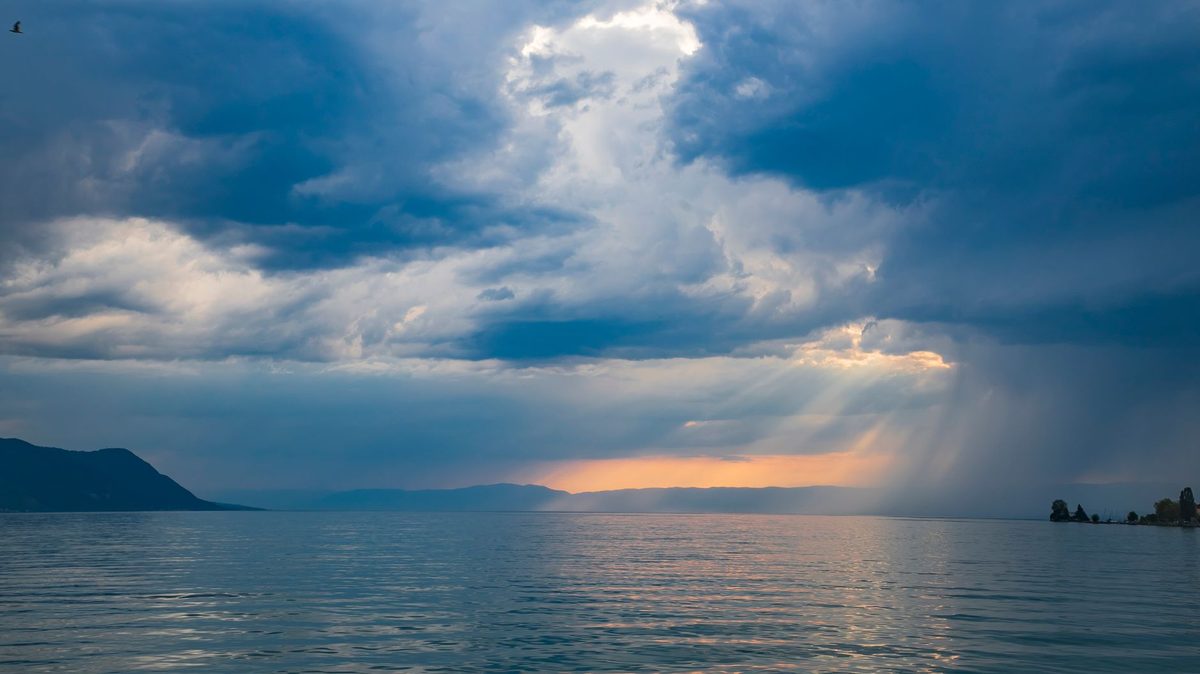
June, July and August are thunderstorm season, and the pattern is predictable: clear sunny mornings, heat building through midday, storm cells forming over the Jura around 14:00-15:00, hitting the city from 15:00 to 19:00, and clearing by sunset. Storms are usually brief, 30 to 90 minutes, but can be intense with heavy rain, lightning and the odd Alpine hailstorm. The local summer rhythm follows it exactly: lake activities in the morning, rest or indoors through the hot midday, watch the storm pass with a coffee, then apéro on the terrace. For outdoor plans, check the morning forecast and schedule indoor time for the afternoon window.
09 — Daylight and Daylight Saving
The swing from 8h 40m on 21 December to 15h 40m on 21 June is huge, and it changes how you plan a day. In deep winter the sun rises around 08:00 and sets around 16:45 in late December, so end afternoon activities before dark. In high summer it rises around 05:45 and sets around 21:45 in late June, with restaurants serving outdoors until 22:00 and lake activities running into the evening. Spring and autumn give you roughly 12-hour days at the equinoxes (20 March and 22 September). The clocks go forward on the last Sunday of March and back on the last Sunday of October, and the October switch is the one that stings: sunset drops from around 18:45 to 17:45 in a single weekend.
10 — What to pack, by season
Spring (March-May)
Variable: cool mornings, warm midday sun, cool evenings again. Bring layered clothing (base layer, sweater, light jacket), a waterproof shell for the persistent April showers, a light scarf for cool lake-breeze evenings, sunglasses for the climbing UV, comfortable shoes with grip for slippery cobbles, a compact umbrella, light gloves for cold March mornings, and a swimsuit if you plan to use the Bains des Pâquis sauna or cold-water swim.
Summer (June-August)
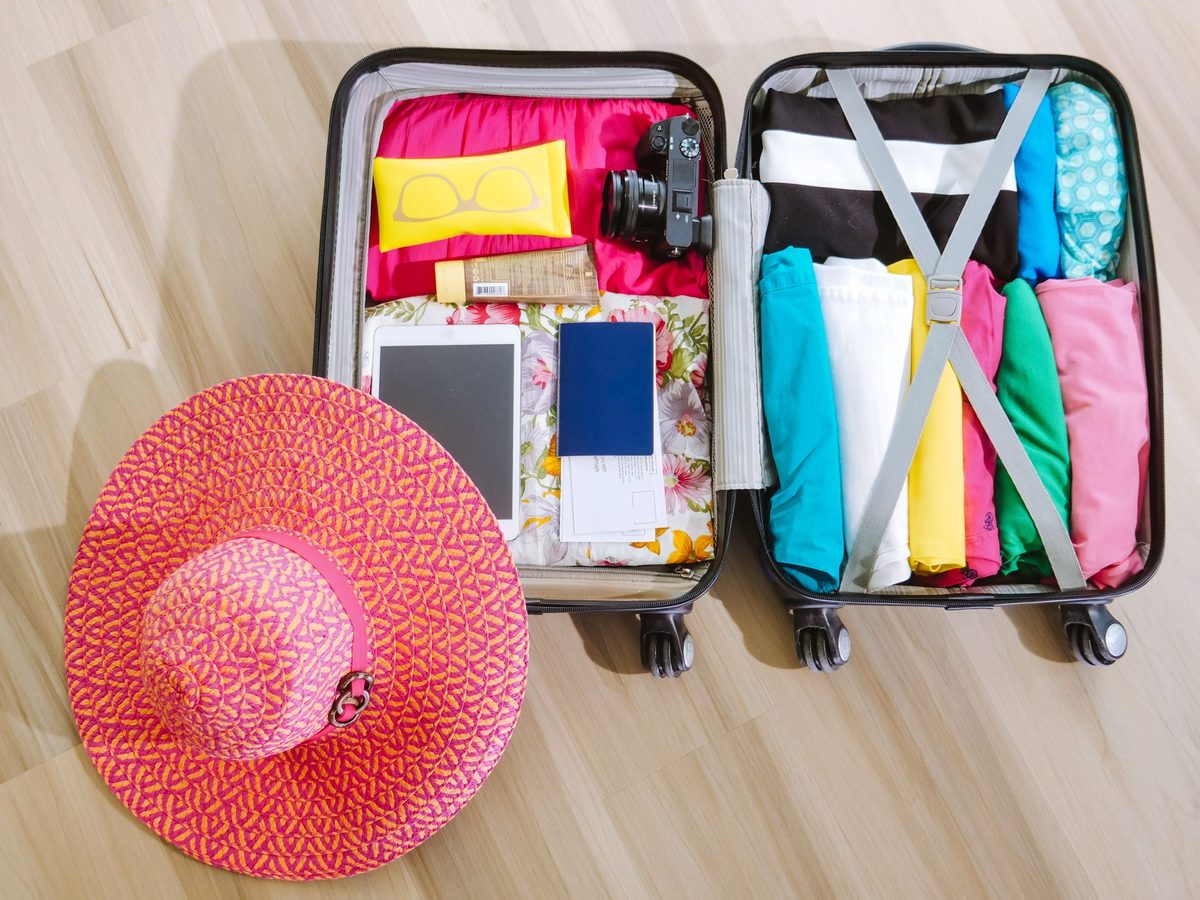
Warm to hot with afternoon thunderstorms. Pack two swimsuits because they get used, a sun hat and sunglasses, SPF 50 (UV is strong at altitude), light layers for evenings that drop 8-10C after sunset, walking shoes with grip plus sandals, a light rain shell for the storms, a refillable water bottle for the city’s excellent fountains, insect repellent for lakeside picnics, one smart-casual outfit for dining, and a Swiss Type J power adapter.
Autumn (September-November)
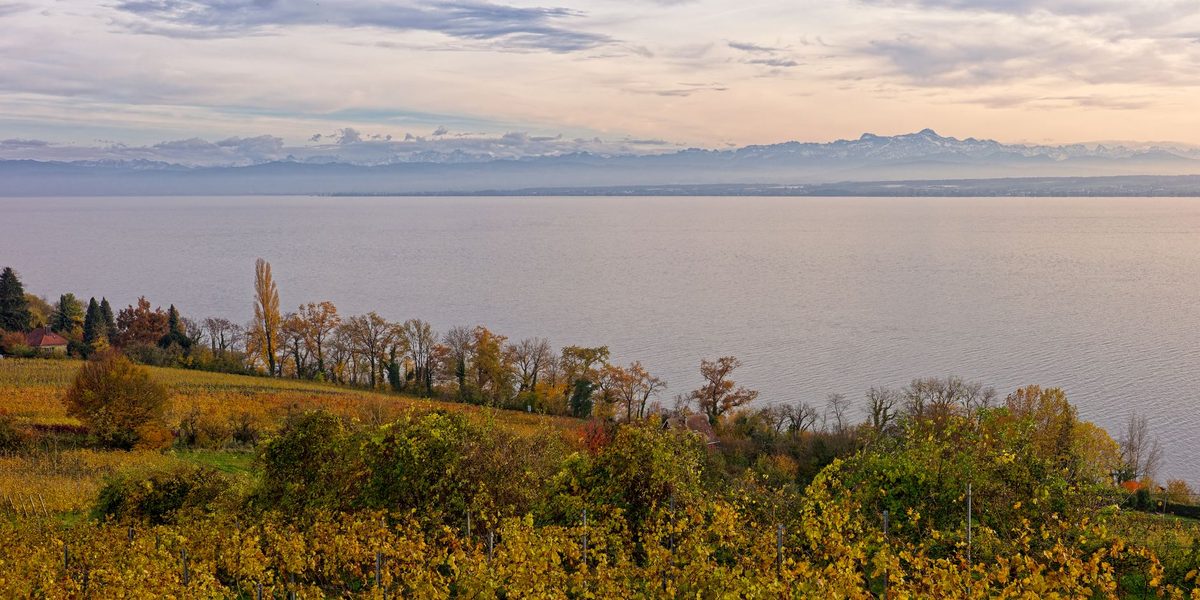
Mild September cooling into a cold, foggy November. Bring layered clothing with a warm mid-layer for late October and November, a waterproof shell for the persistent autumn rain (October and November are the wettest months at 90 mm each), a light scarf and beanie from October, light gloves for November, walking shoes with grip for wet leaves, sunglasses for the still-strong September UV, a compact umbrella, and a swimsuit if you will be at the Bains des Pâquis, where the cold-water crowd swims all year.
Winter (December-February)
The Bise-defining season. The non-negotiable is a waterproof, windproof shell, because wind protection beats maximum insulation here. Add an insulated mid-layer (down or synthetic), a thermal base layer (merino is best), a beanie and windproof gloves, waterproof boots with grip for frozen promenades, a wool scarf, face balm and lip balm against the drying Bise, sunglasses for snow glare on ski days or above the fog, and a swimsuit and robe for the Bains des Pâquis sauna. Skip the umbrella, which fails in the Bise, and rely on a hood. Our winter outdoor activities guide goes deeper on cold-season days.
11 — Best time to visit, by traveller type
| You want | Best months | Why |
|---|---|---|
| Lake swimming and warm weather | July-August | Water 21-24C, sunny, long days |
| Festivals | August (fireworks), late Jan-Feb (Antigel) | The big city events |
| Ski day trips | January-February | Best snow conditions |
| Christmas markets | December | Markets, L’Escalade, festive mood |
| Hiking | May-October (peak Jun, Sep) | Salève and Jura accessible |
| Budget travel | November (not NYE), March | Lowest hotel rates |
| Vineyards | September | Vendange harvest, warm weather |
| Families | Late June or early September | Long days, lake season, no peak heat |
| Romance and photography | September | Warm but not hot, autumn light, fewer crowds |
For ideas on filling those days, our things to do in Geneva list and a ready-made 3-day itinerary are good starting points, and the events and festivals calendar shows what is on when.
12 — Geneva’s other winds, briefly
Beyond the Bise, a few local winds are worth knowing. Le Foehn is the rare dry, warm south wind from across the Alps, less common here than in Valais but capable of a 10C spike in a day, exceptional clarity, and winter snowmelt. Le Joran is the Jura katabatic breeze that drops down the range on summer evenings and can surprise paddlers and small-boat sailors, so check evening wind forecasts if you are on the water. Le Vent, the south-westerly, brings warmer pre-frontal air and is the windsurfers’ friend at Port-Choiseul. And on heat: summer heatwaves can push the city to 32-35C, and many older buildings in the Old Town and Carouge lack air conditioning, so confirm AC at booking if you are heat-sensitive. The Salève summit runs 5-7C cooler than the city when you need to escape.
13 — How weather affects what is open
| Attraction | Weather note |
|---|---|
| Jet d’Eau | Off in heavy Bise and freezing temperatures |
| Bains des Pâquis paid season | 11 May to 11 Sep (free the rest of the year) |
| Genève-Plage | Mid-May to mid-September |
| Splash pools (pataugeoires) | Mid-June to mid-September; close in bad weather |
| Lake cruises (CGN) | Full schedule April-October; reduced in winter |
| Mont Salève cable car | Daily April-October (Thu/Fri/Sat to 22:45); Wed-Sun in winter |
| Ski lifts | Typically mid-December to mid-April |
| Christmas markets | Mid-November to 24 December |
Frequently asked questions
What is the best month to visit Geneva for good weather?
June or September. June brings the longest days with warm-but-not-hot 24C highs, while September keeps the warm weather with fewer crowds, the vendange and a still-swimmable lake. July and August are warmest but the most crowded.
What is the Bise wind in Geneva?
A cold, dry north-easterly that blows for two to four days at a time, mostly in winter and early spring. It drops the felt temperature 8-10C, ices the pier railings, dries skin and lips, and can shut off the Jet d’Eau. Pack a windproof shell.
Does it snow in Geneva in winter?
Only sporadically: about 30 cm a year over 10-15 city snow days, usually melting within a day or two. Snow is reliable above 1,000 m on the Salève, the Jura and in the Alps from late November through March.
Can you swim in Lake Geneva in May?
If you are acclimatised, yes; the water sits at 14-16C in May, comfortable for hardy swimmers. It reaches 18-20C in late June and stays swimmable through September.
What should I pack for Geneva in winter?
A waterproof, windproof shell (essential for the Bise), an insulated mid-layer, a thermal base layer, a beanie, gloves, waterproof boots, a wool scarf, and face and lip balm. Add a swimsuit if you plan to use the Bains des Pâquis sauna.
Does Geneva have a fog problem in winter?
From November through February the inversion fog can sit over the city for days. The fix is the 15-minute Salève cable car up to 1,100 m, where you emerge above the fog into Alpine sun.
14 — Related Geneva guides
Keep planning with our plan your Geneva trip pillar, the things to do in Geneva list, a 3-day itinerary, the events and festivals calendar, the Mont Salève guide for the sea-of-clouds escape, and budget tips in Geneva on a budget.