Hidden Gems in Geneva — 21 Secret Spots Tourists Miss (2026)
This article contains advertising. Our booking links are routed through a partner that adds commission tracking automatically, so if you book through one we earn a commission from the provider, at no extra cost to you. It never affects what we recommend. Affiliate disclosure
The hidden gems in Geneva are what turn a good trip into a memorable one. Step one block off the lakefront, take the wrong tram, ask the wrong barman a question, and you land in a Geneva almost no first-timer sees: hidden passageways in the Old Town, a Russian church, a river beach at the Jonction, and building facades that look drawn for a children’s book.
This is my map to the lesser-known city, 21 quiet corners and local favourites that tourists rarely find. None of them will break the bank, and most are an easy ride on public transport, which costs nothing inside the city if you stay in approved Geneva accommodation: guests get a free Geneva Transport Card covering zone 10 for their whole stay. Every one gives you a better story to tell than another Jet d’Eau selfie. If you have already ticked off the classics in the best Geneva attractions guide, this is where to go next.

01 — How to use this guide
These spots fall into four loose groups: quirky architecture, secret nature, off-the-radar museums and galleries, and local-favourite cafes, bars, and food. I have grouped them by area so you can fold them into existing plans for the Old Town, the lakefront, the International Quarter, or Carouge instead of backtracking across the city. The Geneva neighbourhoods guide is a useful companion if you want to plan by district. If you have not covered the headline sights yet, start with the main things to do in Geneva guide and come back here for round two.
02 — Quirky architecture and secret corners
1. The Schtroumpfs Buildings
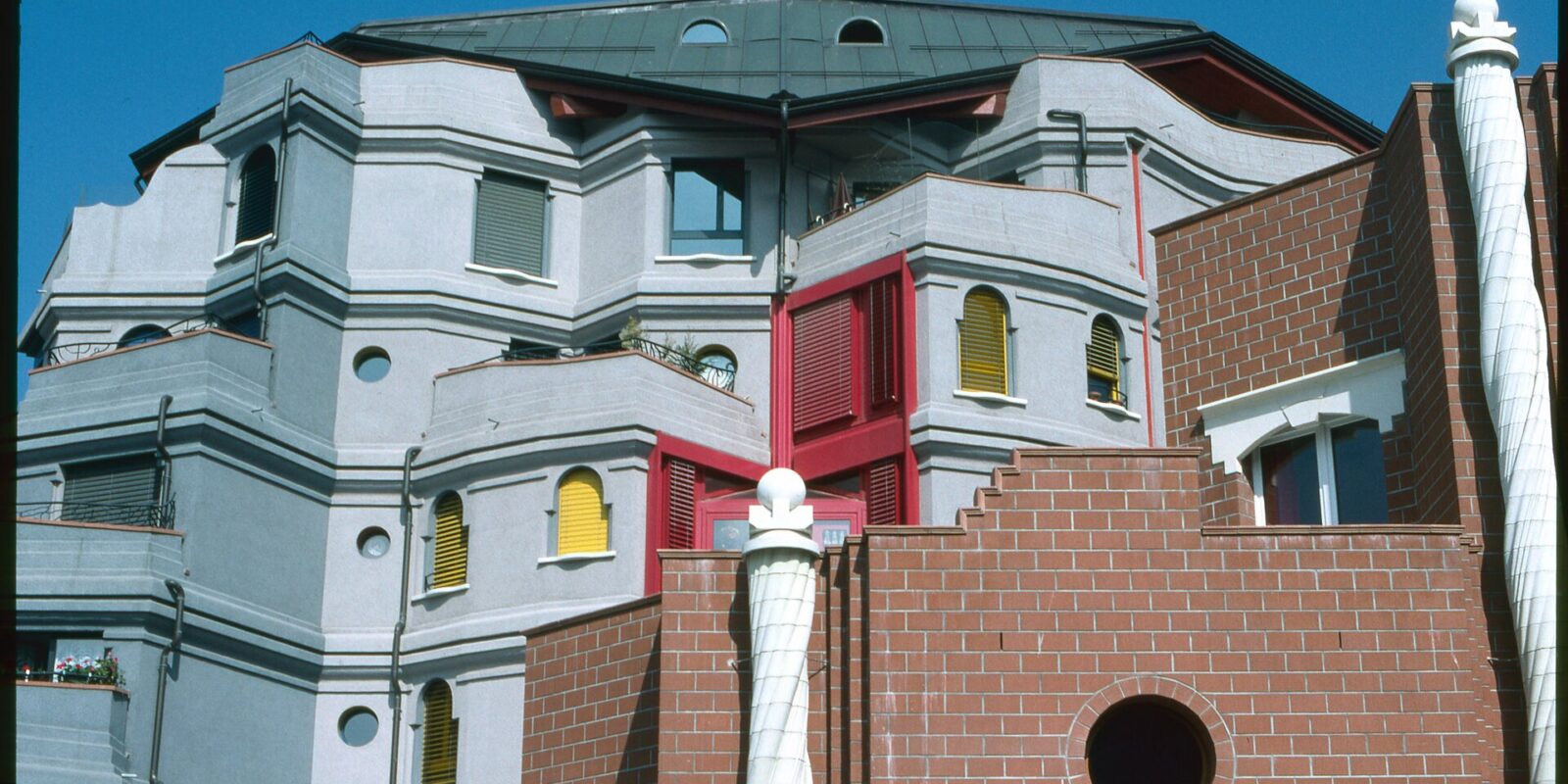
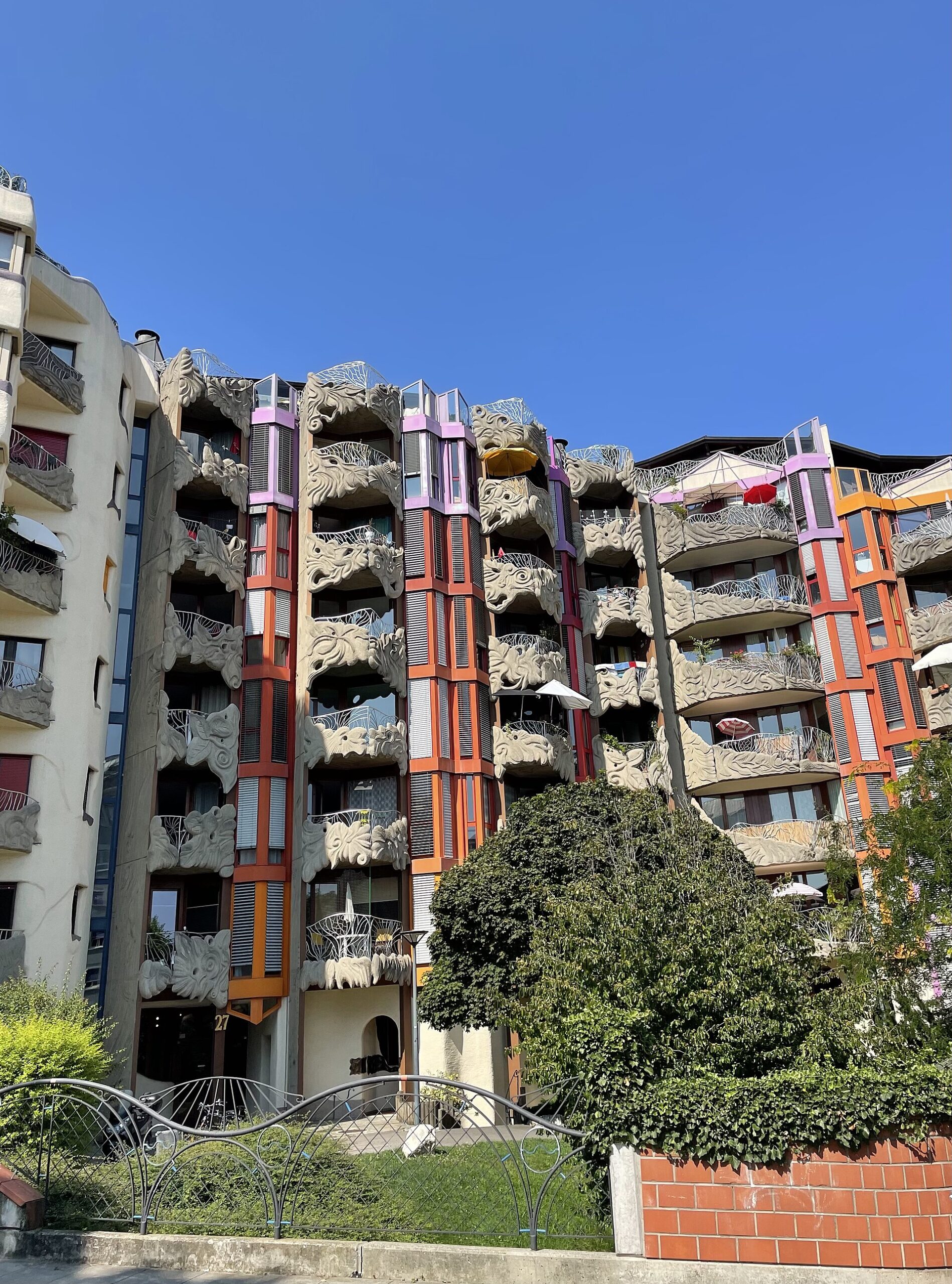
In the residential Grottes neighbourhood, a five-minute walk from Cornavin station, sits one of the strangest architectural ensembles in Switzerland: the Schtroumpfs Buildings, nicknamed after the Smurfs (whose French name is Schtroumpfs). Built between 1982 and 1984 by Robert Frei, Christian Hunziker, and Georges Berthoud, the four buildings reject straight lines almost entirely. The facades undulate, sprout chimneys at impossible angles, and seem to grow out of one another in colours from terracotta to seafoam to deep purple.
Walk through the small inner courtyards (free and public) and you will find spiral staircases, jellybean-coloured doors, and rooftop gardens visible from below. This is one of the few finished examples of organic architecture in modern Europe, and almost no guide mentions it. The buildings are a short walk behind Cornavin station.
2. The Russian Church
On a residential street in Eaux-Vives, steps from the lake, the Russian Orthodox Church of the Exaltation of the Holy Cross is a slice of imperial Russia dropped into Geneva. Consecrated in 1866 and paid for by donors across Russia, the imperial family among them, its gold onion domes feel completely out of place in Calvinist Geneva, which is exactly the point. It stands on Rue Rodolphe-Toepffer and is a working parish church, so check visiting times on the parish’s website before you go.
3. Promenade de la Treille
Most people who cross Parc des Bastions never notice the 120-metre wooden bench on the Promenade de la Treille just above, on the Old Town’s ramparts, which Geneva Tourism describes as the world’s longest wooden bench. Fewer still know the promenade is home to the Marronnier officiel, a horse-chestnut tree whose first leaf is recorded each spring by the Sautier of the Republic, an official of the cantonal parliament, to announce the start of Geneva’s spring. Free, atmospheric, and a fine spot for a quiet picnic.
4. Hidden passageways in the Old Town
The Old Town is full of unmarked passages connecting streets two and three levels apart. The Passage des Degres-de-Poules (Hens’ Steps Passage) drops steeply between Rue de la Cite and Rue Calvin via a covered staircase that has turned up in films. The Passage de Monetier ducks under a private courtyard. Wandering them is free and feels like a small architectural treasure hunt.
03 — Secret nature and quiet outdoor spots
5. Parc Alfred-Bertrand, Champel
In the affluent Champel neighbourhood on the south bank, this small park is one of the most romantic green spaces in the city. It is named after the photographer and explorer Alfred Bertrand, whose family acquired the estate in the 19th century; his widow gave it to the city in 1940. Mature plane trees, trimmed lawns, a delicate Belle Epoque pavilion, and rose gardens that go off in colour each May. Genevans love it; tourists barely know it. It is an easy bus ride from the centre, and tpg has a page on getting to the park.
6. La Perle du Lac
This small, immaculate park on the lake’s north shore, between the Botanical Gardens and the centre, is one of the few places where Geneva’s elite once kept private estates. The name (Pearl of the Lake) gives it away: the views across to the Saleve and Mont Blanc are remarkable. There is a small lakefront restaurant for an aperitif, but the park itself is free and beautifully quiet.
7. The river beach at Pointe de la Jonction
Where the Rhone and Arve meet at the Pointe de la Jonction, the swirling line of clear and silty water is one of the most photographed natural curiosities in Geneva. What guides rarely mention is the small grassy beach right below the viewing point, reached by a steep but easy footpath. In summer, locals sunbathe and swim here, a free, almost private river beach in the middle of a major European city.
8. The vineyards of Cologny
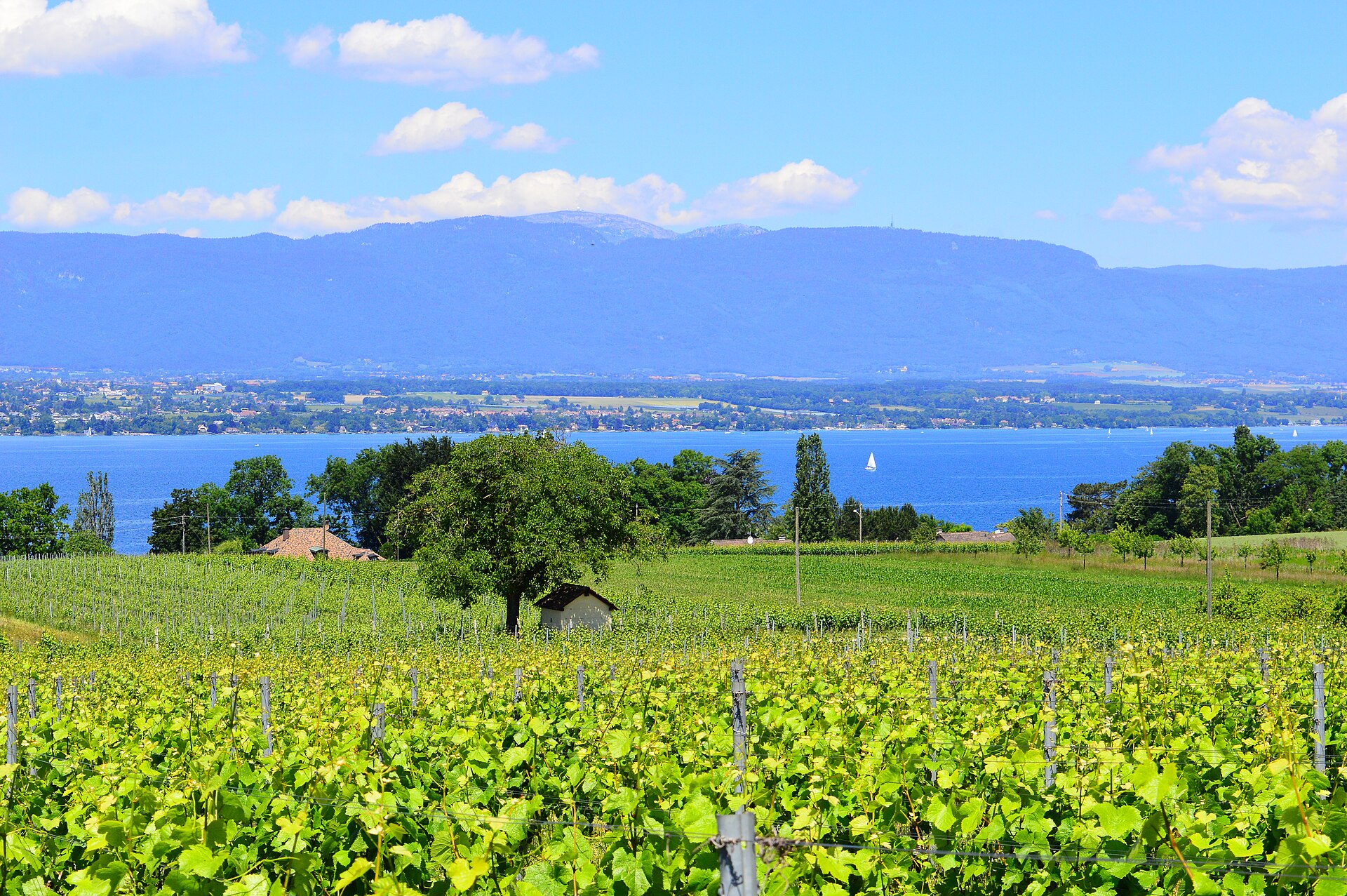
Just east of the city in the village of Cologny, the wine-growing slopes around the Domaine de la Penthiere hold quiet public footpaths through some of the canton’s last vineyards. The view back across the lake to the Old Town is one of the best in the region, and you can usually find a Cologny vintner pouring a free taste of local Gamay if you knock politely. Check tpg’s journey planner for the bus from Place des Eaux-Vives.
04 — Off-the-radar museums and galleries
9. Baur Foundation
Inside an elegant 19th-century townhouse in the diplomatic district near the Old Town, the Baur Foundation holds around 9,000 objects of Chinese and Japanese art: rare 18th-century imperial pieces, jade carvings, and Edo-era prints. It is one of the finest collections of East Asian art outside Asia and almost unknown to first-timers. Entry around 10 CHF, free for under-18s and on the first Sunday of each month.
10. The Voltaire Museum (Les Delices)
Les Delices, Voltaire‘s main residence from 1755 to 1760, sits in a quiet garden in the Saint-Jean neighbourhood and now opens to visitors for guided tours and events. Original manuscripts, his correspondence, period furniture, and the actual desk where he wrote Candide are all on display. The museum is small, the staff are passionate, and the visit is genuinely intimate. Check the museum’s guided-tour dates and book a place before you go.
11. Maison Rousseau et Litterature
The birthplace of Jean-Jacques Rousseau in the heart of the Old Town is now a literary house whose multimedia experience traces Rousseau’s life through text, films, photographs, illustrations and music. It is a small museum but a lovely one. Entry around 7 CHF, free on the first Sunday of the month.
05 — Local cafes, bars, and food spots
12. Cafe du Remor, Plainpalais
A historic cafe on Place du Cirque and a beloved local institution, the Cafe du Remor is the place to linger over a cafe creme. The old wood panelling, the regulars of artists and students, and the absence of any English menus make it one of the most genuine stops in town. Excellent for breakfast.
13. La Cave Valaisanne
Below an unassuming restaurant near Plainpalais, this stone-walled wine cave specialises in obscure Valais grapes (Petite Arvine, Cornalin, Humagne Rouge) paired with Swiss cheese and dried-meat boards. Locals only.
14. Restaurant Medusa, Rue de Montbrillant
At Rue de Montbrillant 87, away from the lakefront crowds, this Mediterranean restaurant is a neighbourhood address rather than a tourist one. Reservation required, especially at weekends.
06 — Cultural quirks
15. Calvin Auditorium
Behind St. Pierre Cathedral, the Calvin Auditorium is the small Gothic chapel where John Calvin lectured during the Reformation. It is still used by Geneva’s English- and Italian-speaking Protestant congregations and is open to silent visitors most weekday mornings. A quiet, weighty stop, and entirely free.
16. Pharmacie Principale
The Pharmacie Principale was founded in 1912 by the de Toledo and Mori families, and Rue du Marche runs through its history. It is a small piece of the city’s commercial past hiding in plain sight on one of its busiest shopping streets.

07 — Day-trip corners within an hour of Geneva
17. Yvoire
One of the Most Beautiful Villages in France, Yvoire is a medieval lakeside village across the French border, reached from Geneva by car or by CGN ferry. Its Jardin des Cinq Sens is a five-senses garden with a sensory labyrinth of hornbeam hedges and espaliered apple trees, and a cloister garden of medicinal and aromatic plants. Most Geneva-based tourists never make it. For the full route, see the Geneva to Yvoire day trip.
18. The Saleve caves
The Saleve has dozens of caves and rock arches above the cable-car station, most unmarked. For the Grotte de la Diau, go with a guide: a local mountain-guide office runs equipped caving outings into the Diau resurgence.
19. The vineyards of Dardagny
Geneva is the third-largest wine canton in Switzerland. The hilly western suburb of Dardagny is laced with footpaths between vineyards and pours free tastings at over a dozen small estates at weekends. It makes an easy half-day: tpg buses 74 and 75 serve the village, and the Leman Express L5 runs from Cornavin to La Plaine, so plan the connection on tpg’s journey planner.
20. The Roman site of Nyon
Twenty minutes by train from Geneva, the lakeside town of Nyon has substantial Roman ruins, including a complete second-century basilica and amphitheatre, almost entirely missed by visitors who breeze on to Lausanne. The Roman Museum is one of Nyon’s three museums: an adult ticket costs 12 CHF and covers one visit to each of the three within 12 months, and entry is free on the first Sunday of each month.
21. The Chateau de Voltaire at Ferney
Just over the French border, the Chateau de Voltaire at Ferney was the philosopher’s home for the final years of his life. The estate has been restored, the gardens are immaculate, and entry is just a few euros. Check tpg’s journey planner for the bus from Place des Nations.
08 — How to find even more quiet corners
Three simple rules keep Geneva yielding new spots for the curious:
- Walk one street off the lakefront in any direction. Most people hug the water. Fifty metres inland you find empty squares, locals’ cafes, and quiet courtyards.
- Eat where the queue speaks the local language. If French is the only language at a small lunch place, you are in the right room.
- Ask hotel staff for their three favourite weekend spots, not their three tourist tips. The answers are almost never what is in the guidebook.
09 — Hidden gems in Geneva: frequently asked questions
Are there really hidden bars in Geneva?
Geneva’s best-kept secrets are mostly quiet corners rather than hidden bars. Bar staff are the best source for where to drink next, so ask.
Are these spots suitable for families?
Most are. The Schtroumpfs Buildings, the Botanical Gardens and the Saleve hiking are all great with kids. See the Geneva for families guide for more.
Do I need to speak French to enjoy Geneva’s quiet corners?
No, but a few polite phrases help. Genevans appreciate the effort and are far more likely to share a favourite spot if you open the conversation in French, even badly.
What is the most overlooked spot for first-time visitors?
The Schtroumpfs Buildings. They are a five-minute walk from the train station, completely free, wildly photogenic, and almost no first-time visitor finds them.
How do I find Geneva’s secret swimming spots?
The river beach at Pointe de la Jonction and the rocky shores beyond Bains des Paquis are local favourites. Both are an easy trip from the centre and need nothing but swimwear.
When is the best time to explore these quieter corners?
Late spring and early autumn are ideal: the parks and vineyards are at their best, the weekend tastings in Dardagny and Cologny are running, and the crowds that gather around the central sights in July and August are thinner once you head a few streets inland.
10 — Official sources and further reading
For current opening hours, events, and official confirmations on the spots above, these are the authoritative sources:
- Geneva Tourism Official Site — the City of Geneva’s tourism portal with event listings and pass details.
- MySwitzerland — Geneva — Switzerland Tourism’s national-level Geneva guide.
- United Nations Office at Geneva — tour booking and visitor information for the Palais des Nations.
- International Red Cross and Red Crescent Museum — hours, exhibitions, and tickets.
- CGN Lake Geneva Cruises — timetables and routes for the historic Belle Epoque steamers.
11 — Related Geneva guides
Once you have ticked off the must-sees, the real pleasure of Geneva is in its corners. Keep exploring with the best Geneva attractions, the free things to do in Geneva, the most photogenic spots in Geneva, the Geneva neighbourhoods guide, and the Geneva outdoor activities guide.
The best Geneva is the one you find without a guidebook in your hand. Start with this list, then go further: down the unfamiliar street, through the half-open courtyard gate, into the cafe where the menu is taped to the wall. The city has been quietly tucking things away from tourists for centuries, and rewarding the curious is part of the deal.