Geneva to Flaine & the Grand Massif
This article contains advertising. Our booking links are routed through a partner that adds commission tracking automatically, so if you book through one we earn a commission from the provider, at no extra cost to you. It never affects what we recommend. Affiliate disclosure
The Grand Massif is the ski area most people drive past. Every transfer heading for Morzine, Megève, Chamonix or the Tarentaise goes up the Arve valley through Cluses, and the turning for Flaine, Samoëns and Les Carroz is right there on the way. It is the fourth-largest linked ski area in France, an hour and twenty from the airport, and consistently cheaper than anywhere with a comparable amount of skiing.
A Geneva to Flaine transfer takes about 1h15 to 1h30 and costs roughly €45–60 per person each way on a shared shuttle, or €220–340 per vehicle privately. Samoëns and Les Carroz are ten to fifteen minutes closer and slightly cheaper. All three sit on the same Cluses valley routing, and the choice between them changes the cost of your week far more than it changes your skiing, because they share one lift network.
This guide covers Flaine and its neighbours together, because they share a road, a lift pass and most transfer vehicles. For the wider picture, see our Geneva ski transfers guide.
01 — The routing, and why it matters
Flaine is about 85 kilometres from Geneva Airport. The A40 runs towards Cluses — the same road used by everything heading for Chamonix, Megève and the Tarentaise — and then the route branches up the Arve valley side roads to the three main villages.
| Village | Altitude | Road distance | Typical transfer | Shared, one way |
|---|---|---|---|---|
| Les Carroz | 1,140 m | 70 km | 1h05–1h15 | €40–55 |
| Samoëns | 720 m | 75 km | 1h05–1h15 | €40–55 |
| Morillon | 700 m | 72 km | 1h05–1h15 | €40–55 |
| Flaine | 1,600 m | 85 km | 1h15–1h30 | €45–60 |
Flaine is the furthest and the highest, at the top of a climb from Les Carroz. Everything else sits lower down, on or near the valley floor. That single fact drives most of the decisions on this page.
02 — The options
| Option | Cost | Realistic door to door | Verdict |
|---|---|---|---|
| Shared shuttle | €45–60 pp each way | 1h50–2h30 | The default |
| Private transfer | €220–340 per vehicle | 1h15–1h30 | Cheaper per head from four people |
| Weekend coach | €35–50 pp each way | 2h15–3h00 | Good value, weekends only |
| Hire car | €250–400 per week plus fuel, tolls and parking | 1h15 | Useful if you want to use the whole area |
| Train to Cluses, then bus | €20–40 pp | 2h30–3h30 | Possible, and genuinely cheap |
The Cluses option
Cluses has a railway station on the Saint-Gervais line, and it is the valley-floor town from which all the Grand Massif roads climb. Regional buses run from Cluses up to Les Carroz and Flaine, and up the Giffre valley to Morillon and Samoëns, with a winter timetable heavier than the rest of the year.
Reaching Cluses from Geneva takes an hour and a half or so by rail with a change, and the whole journey comes in around €20–40 and two and a half to three and a half hours. That is slower than a shuttle but roughly half the price, and it is one of the few Geneva ski routes where public transport is a real answer rather than a technicality. Check current winter timetables before relying on it.
03 — Shared and private transfers
A shared shuttle at €45–60 per person each way to Flaine is the normal choice. Vehicles serving the Grand Massif often call at Les Carroz and sometimes Samoëns before climbing to Flaine, which makes Flaine the last drop and adds fifteen to twenty-five minutes.

Private transfers cost €220–340 for the whole vehicle, with the crossover point against shared seats at about four passengers. Because Flaine is car-free in its core and the last climb is a real mountain road, a private driver who takes you directly to your building is worth more here than the price difference suggests.
| Party size | Shared (return, indicative) | Private (return, indicative) | Cheaper |
|---|---|---|---|
| 2 people | €180–240 | €440–680 | Shared |
| 4 people | €360–480 | €440–680 | Close — private on convenience |
| 6 people | €540–720 | €500–760 | Private |
| 8 people | €720–960 | €550–850 | Private, comfortably |
04 — Which village?
This is the decision that matters, because all four share the Grand Massif lift pass and the same skiing. What differs is altitude, price and character.
Flaine
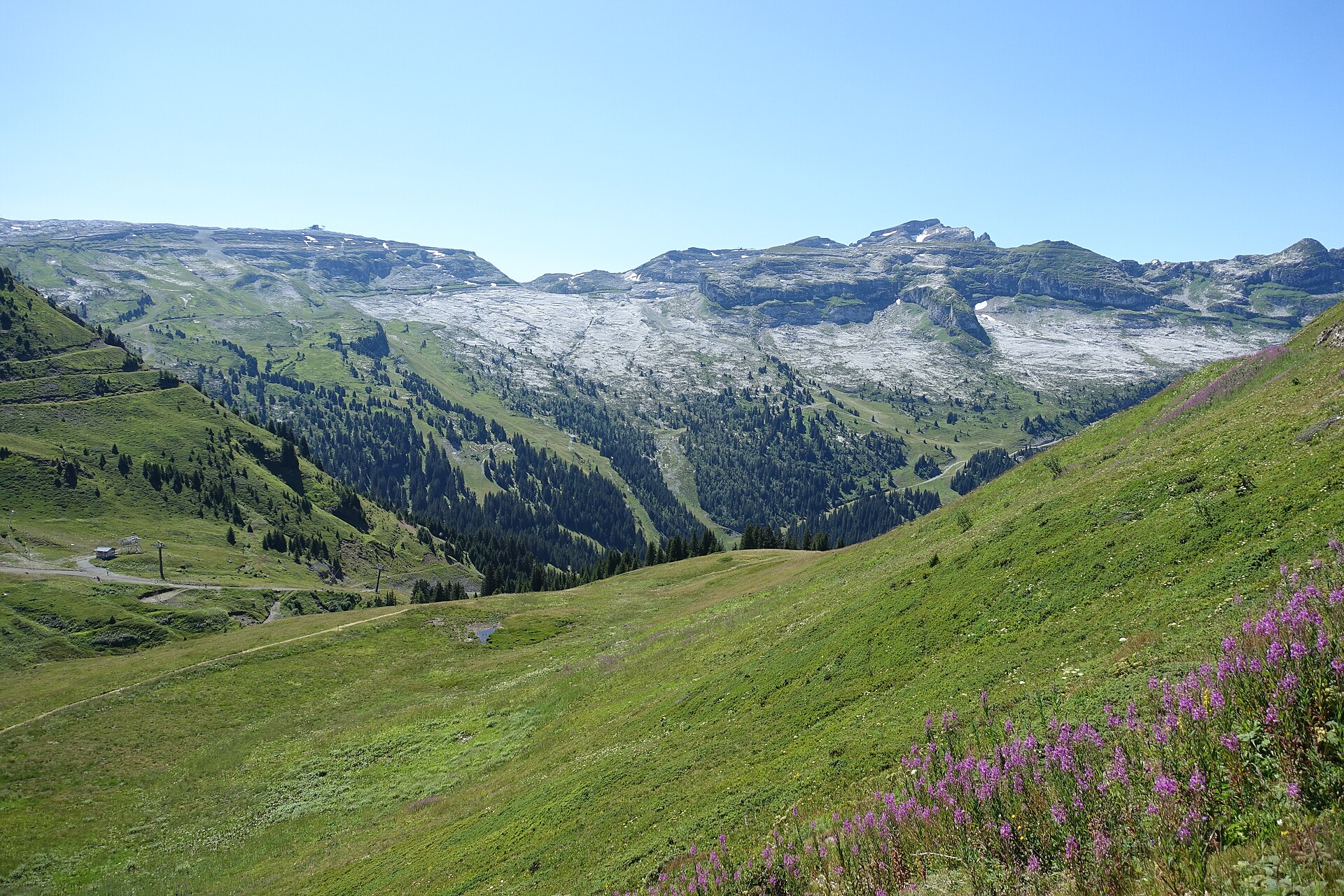
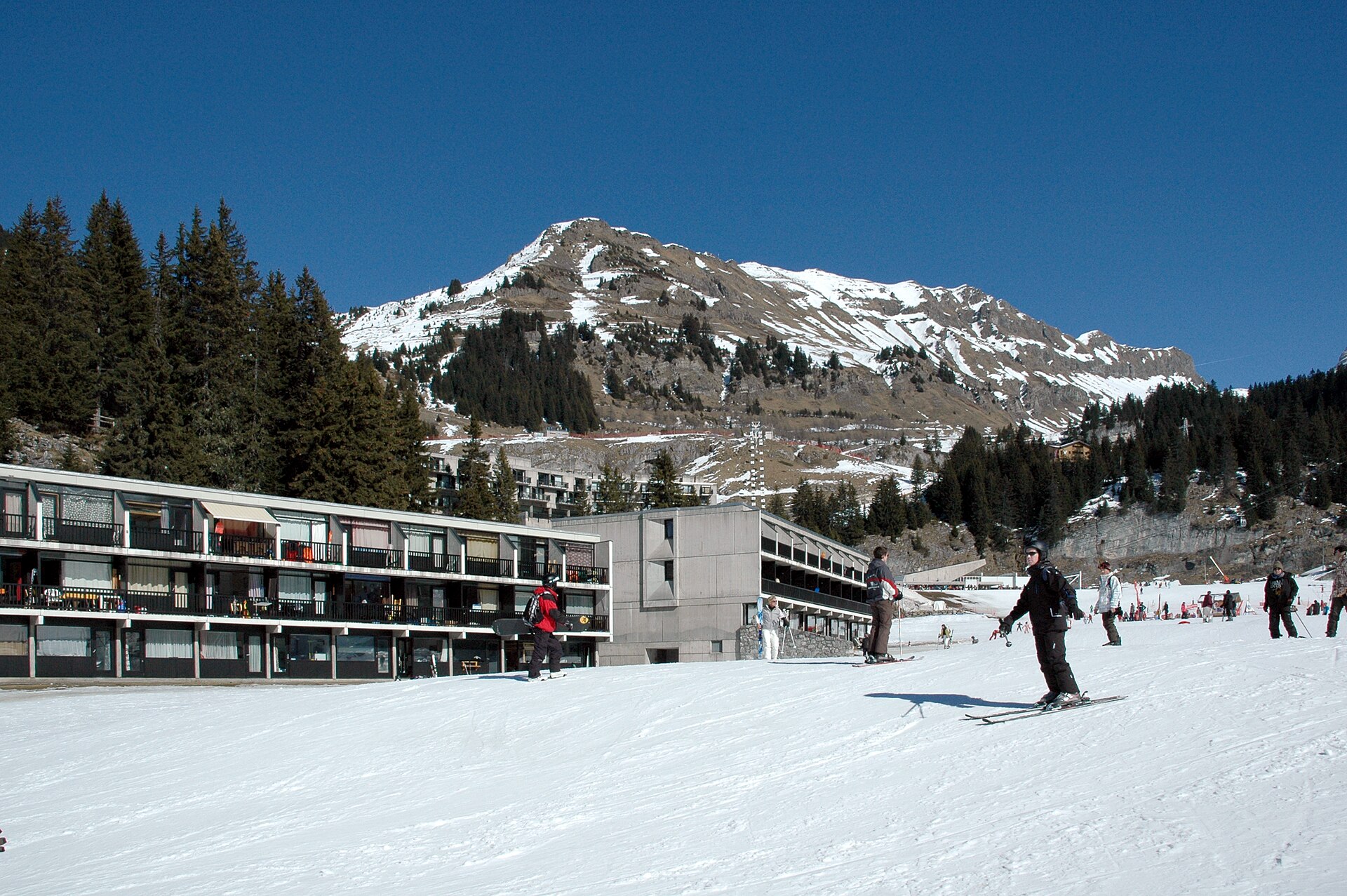
Purpose-built in the 1960s at 1,600 metres in a high limestone bowl, with modernist concrete architecture that people either admire or dislike intensely — there is not much middle ground. It is the snow-sure choice by a distance, genuinely ski-in ski-out, and the core is largely pedestrianised. It has the least atmosphere of the four and the fewest restaurants.
Samoëns
A real medieval Savoyard village on the valley floor at 720 metres, with a stone-carvers’ heritage, a proper centre and by far the best evenings of the four. It is linked into the ski area by the Grand Massif Express gondola. The catch is the altitude: at 720 metres there is no skiing from the village, and you are committed to the gondola’s hours.
Les Carroz
The compromise, and for many people the right one. At 1,140 metres it is a working village with a decent centre, cheaper than Flaine, and directly on the lift network. It is also the first drop on most transfer runs.
Morillon
The quietest and cheapest, on the valley floor near Samoëns, with its own lift into the area and a village at Morillon 1100 higher up. Good for families on a budget, thin on evenings.
05 — What the skiing is actually like
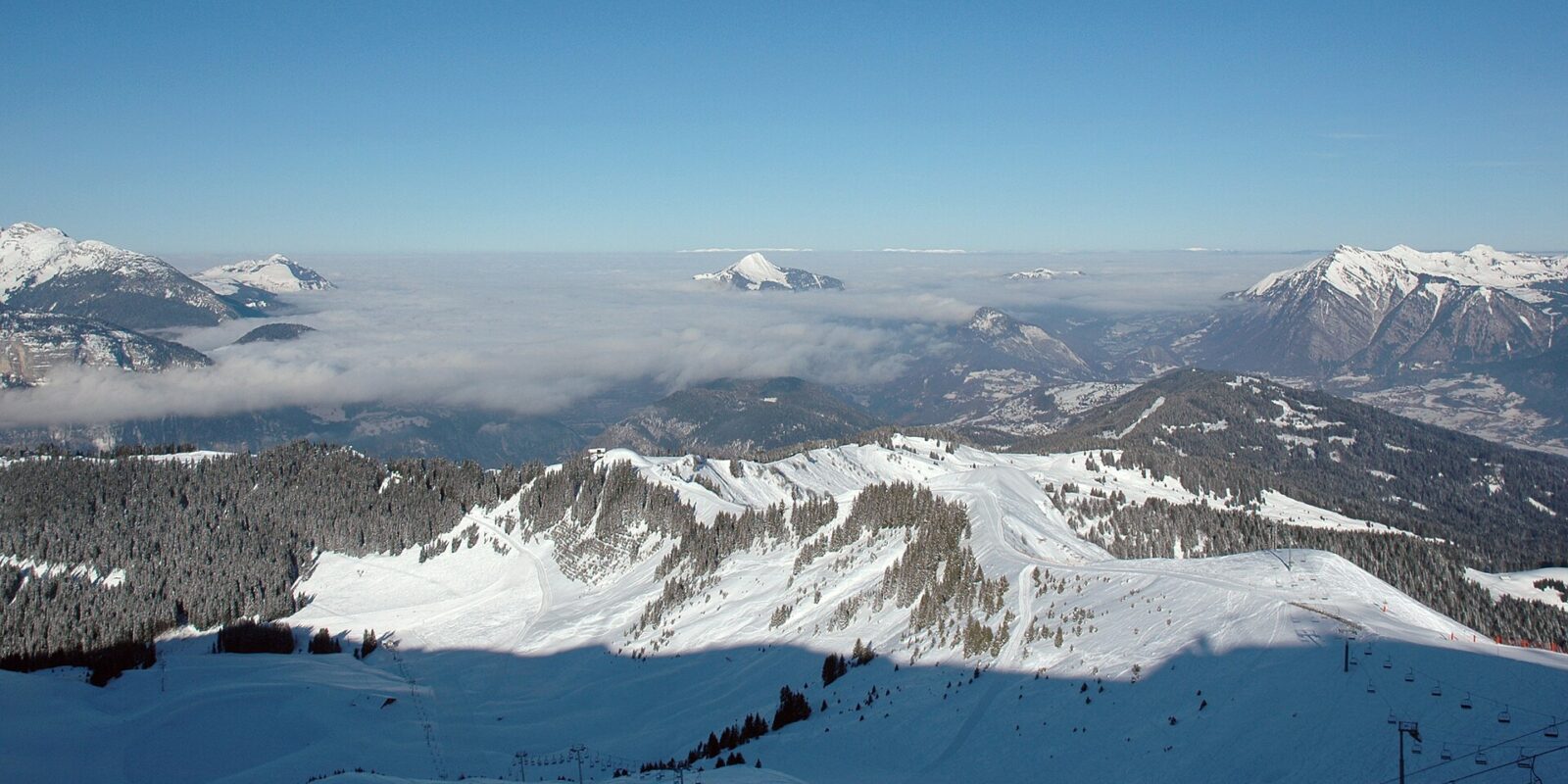
The Grand Massif links around 265 kilometres of piste across the four villages plus Sixt, which puts it among the largest areas in France, and it is genuinely underrated.
- The Cascades run from Flaine down to Sixt is about 14 kilometres, one of the longest marked runs in the Alps, and it is a green-blue cruise rather than a test — a genuine highlight for intermediates.
- Flaine’s bowl is high, open and treeless, and holds snow well.
- The lower sectors above Les Carroz, Morillon and Samoëns are tree-lined, which is a real advantage in poor visibility — and a real vulnerability in a warm winter.
The altitude split
This is the honest caveat and it cuts both ways. Flaine at 1,600 metres with skiing above it is reliable. Samoëns at 720 metres and Morillon at 700 are not, at village level, in anything but a cold winter — and while the gondolas mean you can always get up to the snow, the ski-home runs are the first to close.
If you are travelling in early December or after mid-March, stay in Flaine or Les Carroz. In January and February, the lower villages are better value and pleasanter places to be.
06 — Driving yourself
The drive is easy for most of its length: A40 towards Cluses, then the valley roads. French motorway tolls apply. The final climb to Flaine is the only demanding section, with sustained hairpins from Les Carroz.
- Winter tyres or chains are legally required in designated mountain areas from 1 November to 31 March, and the Flaine climb is where you would need them.
- Flaine’s core is pedestrianised, with parking in structures on the edge. Budget for a week’s parking.
- The lower villages have cheap, easy parking, which is one more argument for staying in Les Carroz or Samoëns.
- A car lets you use the whole area, which matters because the villages are spread around the massif rather than clustered.
- Hire on the Swiss side of Geneva Airport unless you want a French-registered vehicle.
07 — Why the Grand Massif is cheaper than it should be
It is worth understanding, because it is the main reason to book here rather than an hour further down the road.
The Grand Massif has never had the brand recognition of the Portes du Soleil or the Three Valleys in the British market. Flaine’s architecture puts some people off; Samoëns and Morillon are low enough that tour operators are cautious about selling them; and none of the villages has a famous name attached. The result is that a lift pass covering 265 kilometres of piste, and accommodation in the villages beneath it, both cost noticeably less than the equivalent in a better-known area.
That gap is real and it is worth exploiting. A week in Les Carroz with a full Grand Massif pass will generally cost meaningfully less than a week in Morzine with a Portes du Soleil pass, for a comparable amount of skiing and a transfer that is fifteen minutes longer.
Where the discount is earned rather than free
- Fewer catered chalets. The stock is heavily weighted towards apartments, which suits self-caterers and suits chalet-holiday traditionalists less.
- Quieter evenings everywhere except Samoëns.
- Fewer flights of fancy on the mountain. The restaurants are decent rather than destination-worthy, which after Megève is a noticeable step down.
None of that affects the skiing, which is the point.
08 — Timing
Changeover-day traffic is moderate. The A40 around Cluses is the pinch point, shared with everything heading further up the valley, and it bunches on Saturday afternoons. Add twenty-five to forty minutes on a peak Saturday.
- Land before 11:00 or after 16:00 to miss the worst.
- Saturday arrivals are manageable here, unlike the Tarentaise.
- For the return, three hours before your flight is comfortable, a little more from Flaine because of the descent.
09 — How the route compares
| Resort | Road distance | Typical transfer | Shared, one way |
|---|---|---|---|
| La Clusaz | 75 km | 1h00–1h10 | €40–55 |
| Les Gets | 75 km | 1h10–1h20 | €40–55 |
| Megève | 75 km | 1h15–1h25 | €40–60 |
| Morzine | 80 km | 1h15 | €40–55 |
| Flaine | 85 km | 1h15–1h30 | €45–60 |
| Courchevel | 185 km | 2h30–3h00 | €60–85 |
Flaine offers more linked skiing than any of the other short-transfer resorts, which is the strongest argument for it. For the alternatives, see our guides to Morzine and Avoriaz, Les Gets, La Clusaz and Le Grand-Bornand and Megève and Combloux. For the terrain rather than the roads, skiing near Geneva.
10 — The verdict
Book a shared shuttle for one to three people and a private car from four. Book earlier than you would for Morzine, because fewer operators serve this valley and departure windows are thinner.
Stay in Flaine if snow reliability and ski-in convenience matter most, and if the architecture does not put you off. Stay in Les Carroz for the best balance of altitude, price and village life. Stay in Samoëns if evenings and atmosphere matter more than ski-home runs, and you are travelling in the reliable middle of the season.
And if you are counting the cost, take the train to Cluses and the bus up. Along with the Aravis, this is one of only two places near Geneva where a real ski week is reachable on scheduled public transport for the price of a couple of lift-pass days.
Frequently asked questions
How long is the Geneva to Flaine transfer?
About an hour and fifteen to an hour and thirty by road. Les Carroz, Samoëns and Morillon are ten to fifteen minutes closer because Flaine sits at the top of a climb. With a shared shuttle, allow around two to two and a half hours from landing to your accommodation.
How much is a transfer from Geneva Airport to Flaine?
Roughly €45–60 per person each way on a shared shuttle and €220–340 per vehicle each way privately. The lower villages are around €40–55 per person. Private becomes cheaper per head at about four passengers.
Can I get to Flaine by public transport?
Yes. Take a train to Cluses on the Saint-Gervais line, then a regional bus up to Les Carroz and Flaine or up the Giffre valley to Morillon and Samoëns. The whole journey costs around €20–40 and takes two and a half to three and a half hours. Check winter timetables, which differ from the year-round pattern.
Should I stay in Flaine or Samoëns?
Flaine if snow reliability and true ski-in ski-out matter most — it sits at 1,600 metres in a high bowl. Samoëns if you want a beautiful medieval village with real restaurants and evenings, accepting that at 720 metres you ride a gondola up and down and there is no skiing from the door. Les Carroz at 1,140 metres is the sensible compromise.
Is the Grand Massif a big ski area?
Yes — around 265 kilometres of piste linking Flaine, Les Carroz, Morillon, Samoëns and Sixt, which puts it among the largest in France. The Cascades run from Flaine down towards Sixt is about 14 kilometres and one of the longest marked pistes in the Alps. It is genuinely underrated relative to its size.
Is Flaine’s architecture really that bad?
It is a matter of taste, and worth knowing about before you book rather than after. Flaine was purpose-built in the 1960s in a modernist concrete style, and it looks nothing like a traditional Alpine village. Some visitors find it striking; others find it bleak. The skiing and the snow record are not in dispute.
Do I need a hire car in the Grand Massif?
Not if you are staying in Flaine, which is compact and lift-connected. It is more useful if you are in one of the valley villages, because the settlements are spread around the massif rather than clustered together, and buses between them are less frequent than within a single resort.