The Geneva to Zermatt day trip is the most ambitious single-day excursion you can attempt from the city, and the question I get asked most is whether it is worth it. Honest answer: yes, but only if you accept three things. It is a transport-heavy day at 3h45 each way by train. The weather makes or breaks it, because a cloudy day at Gornergrat is genuinely not worth the journey. And you will spend more time on trains than at the Matterhorn. If those conditions sit right with you, the payoff is one of the great Alpine experiences in Europe: the cogwheel train climbing to 3,089 m, the Matterhorn filling the western horizon, and the real feeling of having stood at altitude in the Swiss Alps.
This is my candid guide to making the trip work in 2026. I cover the realistic timing (leave Geneva by 06:30, back around 22:00), the SBB route via Visp, the Gornergrat ticket strategy, what to do with limited town time, why an overnight is almost always smarter, and the weather check you must run the morning you go. If you have one day for one Alpine experience, Chamonix is the easier answer. Zermatt is the bigger one, and it sits at the top of our day trips from Geneva list for good reason.
The honest verdict: is it worth it?
Three scenarios, and which one you fall into decides the whole thing.
Do it as a day trip if: the forecast is clear and stable, you are willing to leave Geneva by 06:30 and return after 22:00, you accept 7+ hours on trains for 5 to 6 hours on the ground, and you specifically want the Matterhorn with no other plan to combine it with.
Skip it as a day trip if: the forecast shows cloud or rain, you are travelling with young kids or anyone who tires of long train days, you could overnight in Zermatt instead (you can, and you really should), or you are trying to wedge it in alongside other day trips.
The better play: a two-night Zermatt stay (CHF 200 to 500 per night for accommodation) gives you the Matterhorn at sunrise, the Gornergrat with no time pressure, and one of the best Swiss Alpine villages without the train-day fatigue. The Swiss Travel Pass often makes the maths work for three-day Swiss circuits that include Zermatt.
Getting from Geneva to Zermatt
There is really one sensible option: the train. Driving is technically possible, but Zermatt itself is car-free (cars stop at Tasch, 5 km before the village, where there is a parking garage and a 12-minute shuttle train into town), so rail is the only route that makes sense.
The SBB train route
Geneva-Cornavin to Visp to Zermatt. The IC1 InterCity from Geneva runs hourly to Visp (2h30, CHF 75 walk-up or CHF 35 to 45 on a Saver fare). At Visp you change to the Matterhorn-Gotthard-Bahn cogwheel line for the final 1h15 to Zermatt (CHF 40 each way on its own, or covered by a combined ticket). Total journey time is 3h45 each way, and total ticket cost runs roughly CHF 120 to 150 round trip walk-up, or CHF 80 to 95 with a Saver or half-fare. Free with the Swiss Travel Pass.
The IC1 leaves Geneva every hour. The first practical train for a day trip departs Geneva-Cornavin around 06:30, and the last sensible return arrives in Geneva around 22:30. That gives you about 5 to 6 hours on the ground, minus the two hours you need for the Gornergrat round trip.
Driving and flying (both impractical)
Driving is roughly 4 hours each way, Zermatt is car-free, and you would park at Tasch (CHF 16 per day) then take the shuttle train (CHF 8 round trip) the last 5 km. The time saving versus the train is zero, so do not drive. Sion has a small regional airport with seasonal flights from Geneva, but the journey time after landing is similar to the train. Skip it. For the full picture on rail tickets and passes, see the Geneva transportation guide.
The Gornergrat cogwheel railway
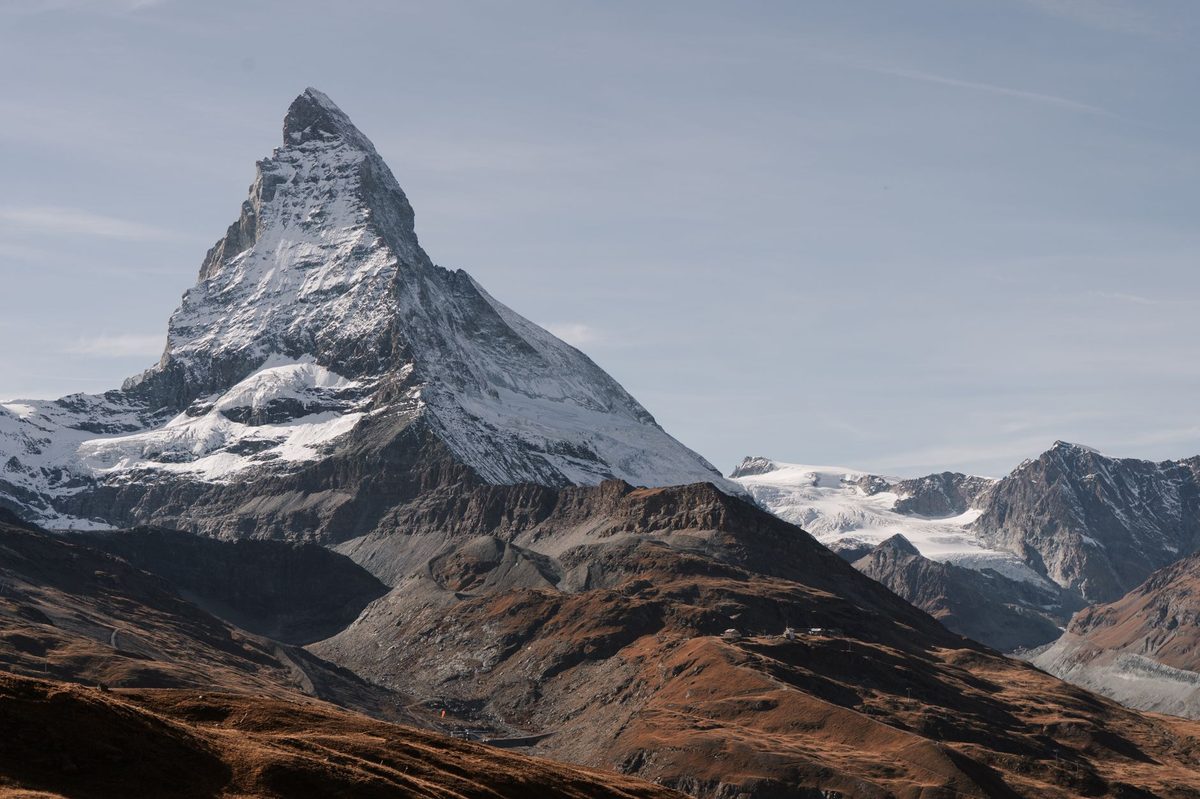
This is the one thing you cannot skip. The Gornergrat Bahn is a historic cogwheel railway that opened in 1898 and climbs from Zermatt town (1,605 m) to a viewing terrace at 3,089 m in 35 minutes, with the Matterhorn growing larger out the right-hand window the whole way up.

What you see at the top
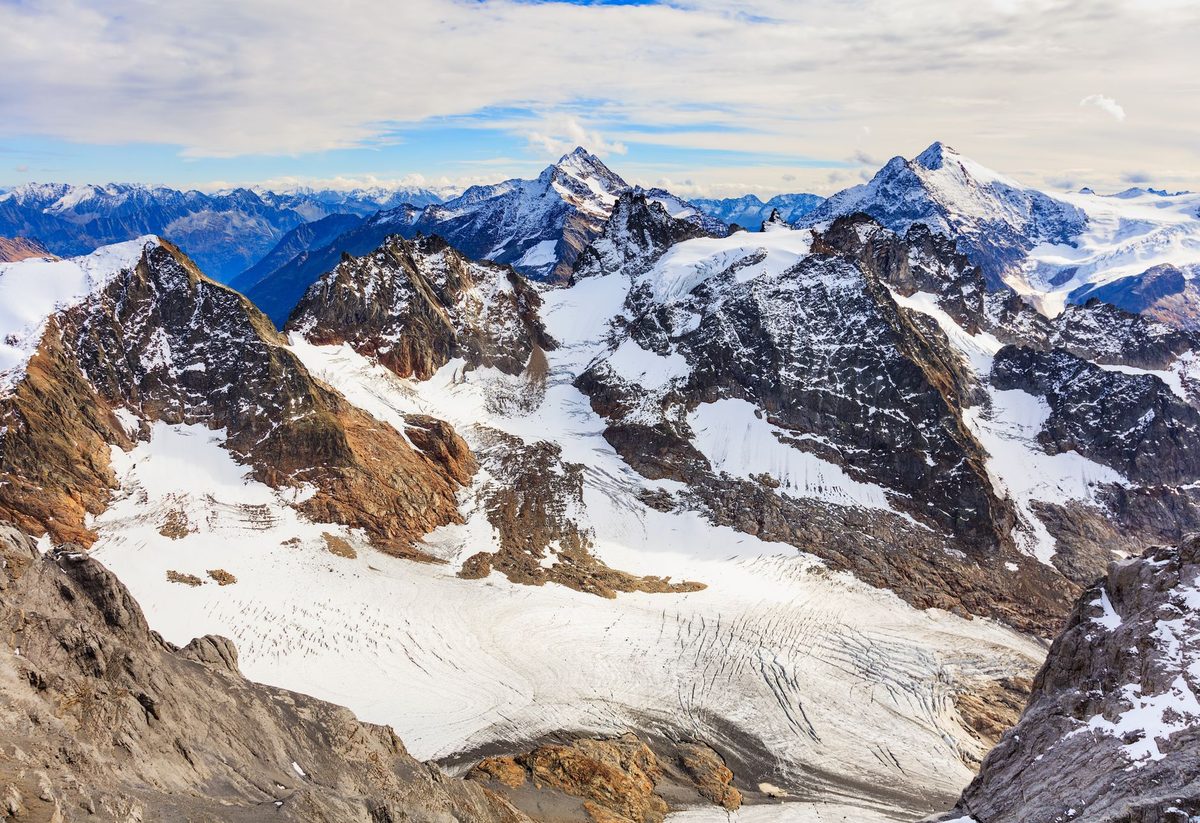
The summit terrace gives you a 360-degree panorama: the Matterhorn (4,478 m) directly west, the Monte Rosa massif (with Switzerland’s highest peak, Dufourspitze at 4,634 m) to the south, the Gorner Glacier (the second-longest in the Alps) directly below, and on a clear day dozens of 4,000-metre peaks fanning out across the horizon. Up here you will also find the Gornergrat Hotel 3100 Kulm (the highest hotel in the Swiss Alps and a lovely spot for a coffee), the ZOOOM Matterhorn multimedia exhibition (included in the train ticket), an observatory with a telescope (free entry), and marked trails for anyone who wants to walk down rather than ride.
Tickets and pricing
- Summer (May to October): CHF 132 adult round trip.
- Winter (November to April): CHF 96 adult round trip.
- Swiss Travel Pass or Half Fare Card: 50% off, so CHF 66 summer and CHF 48 winter.
- Maintenance closure 2026: 2 to 14 November, when the railway shuts for its annual service.
Booking is well worth it for peak summer Saturdays. The first morning trains (08:00 and 08:24) sell out three to four days ahead in July and August. Book at gornergrat.ch.
Seat strategy and timing
Sit on the right side going up, which is the Matterhorn side. If it is a packed train, stand for the first five minutes and grab any window seat as it frees up, because the views only improve as you climb. Give yourself 60 to 90 minutes at the top to walk the terrace, photograph the panorama, and have a coffee at the Kulm. Budget two hours or more if you want the ZOOOM exhibition or a short hike.
Matterhorn Glacier Paradise: the alternative
The other major lift out of Zermatt. The Matterhorn Glacier Paradise climbs in three stages to a summit station at 3,883 m, the highest cable-car-accessible point in Europe and 800 m above the Gornergrat. It faces a different direction, sitting on the south side of Zermatt looking across to Italy and at the Matterhorn’s south face. Pricing is around CHF 130 round trip in summer, again 50% off with the Swiss Travel Pass. At the top you get an ice palace carved into the glacier, a summit terrace with views into Italy, and the highest cable-car station on the continent.
My verdict for a day trip: pick Gornergrat over Glacier Paradise. Gornergrat gives you the iconic east-face Matterhorn view you have seen in every Switzerland photo. Glacier Paradise gives you more altitude but a less famous angle. Do both on a multi-day trip; pick Gornergrat if you only have one day.
Zermatt town: what to do with your time
Zermatt is one of Switzerland’s most appealing Alpine villages: car-free since 1947, with traditional Walliser wooden chalets on the side streets and a single pedestrian main street (Bahnhofstrasse) full of mountain-gear shops, jewellers, watchmakers and restaurants. The half hour you spend wandering the village is part of the experience, even on a tight day-trip clock.

The spots I would prioritise:
- The Matterhorn Museum (Zermatlantis). An excellent small museum on the first ascent of the Matterhorn in 1865, the Whymper expedition where four of the seven climbers died on the descent. CHF 12, about 45 minutes.
- The St. Mauritius Parish Church. A small alpine church on the main street; the cemetery behind holds the graves of climbers who have died on the Matterhorn since 1865, a sobering few minutes.
- Hinterdorf. The oldest district of Zermatt, all original Walliser timber buildings on tiny back lanes. A 10-minute photogenic stroll.
- The Vispa river path. A 15-minute walk along the water through the village.
My one-day itinerary (tight)
Here is what the day actually looks like, hour by hour.
| Time | What happens |
|---|---|
| 05:45 | Wake up in Geneva. Hotel coffee; pack a snack and a layer. |
| 06:30 | SBB IC1 from Geneva-Cornavin toward Visp. |
| 09:00 | Arrive Visp. Change to the Matterhorn-Gotthard Bahn. |
| 10:15 | Arrive Zermatt. Five-minute walk through town. |
| 10:30 | Gornergrat Bahn up, 35 minutes climbing. |
| 11:05 | Top of Gornergrat. 90 minutes to photograph, walk the terrace, coffee at Hotel Kulm. |
| 12:35 | Gornergrat train down, 35 minutes. |
| 13:15 | Lunch in Zermatt (Le Snowboat or Hotel Whymper), 75 minutes. |
| 14:30 | Walk the village: Hinterdorf, the church and cemetery, the river path. |
| 15:30 | Coffee on a sunny terrace, last view of the Matterhorn from town. |
| 16:30 | Matterhorn-Gotthard Bahn to Visp. |
| 18:00 | SBB IC1 from Visp to Geneva. |
| 20:30 | Back in Geneva. Quick dinner near the station or something to take to your hotel. |
Total time on the ground in Zermatt: around 6 hours, of which roughly 2 hours are on the Gornergrat trains and 90 minutes at the summit. That is the honest split, and it is exactly why I keep nudging people toward an overnight.
Why I recommend an overnight instead
A Zermatt overnight is one of the best money-for-time trades in Switzerland. For CHF 200 to 400 per person you get:

- The sunrise Matterhorn from your hotel window or balcony. Nearly every Zermatt hotel has the view.
- The Gornergrat at first light, before the day-trippers arrive.
- Time for a proper hike (the Riffelalp loop or the 5-Lakes Walk).
- The full Zermatt evening: fondue at a chalet restaurant, a mountain bar with local musicians.
- Sunset from the Sunnegga viewpoint.
- The Matterhorn Glacier Paradise as well, with no need to choose.
If your Geneva trip can stretch to a two-night Zermatt extension, take it. The day trip works as a feasibility test; the multi-day stay is when Zermatt becomes one of the best Alpine experiences in Europe.
Weather strategy
This is the single most important variable, full stop. The Matterhorn is only visible from Zermatt and Gornergrat when it is out of cloud, and Zermatt sits in a weather pocket where mid-morning clouds often roll in even when the Geneva forecast says clear.
The morning you travel, check the Zermatt webcam at zermatt.ch and the local conditions at meteo.gornergrat.ch. If the Matterhorn is socked in at 06:00 with low pressure forecast, the day will not improve, so reschedule if you can. The most reliable summer windows are June to early July and September; August brings more thunderstorm activity; February and March give you the most stable cold-and-clear winter days.
If the weather turns on your booked day, the Gornergrat ticket is non-refundable inside 24 hours (though Swiss Travel Pass holders pay nothing, since the ride is free), and Saver train fares are also non-refundable. Have a backup ready. A cloudy day still works fine for Chamonix, Lausanne, or Gruyeres.
Where to eat in Zermatt
Zermatt is the most expensive small village in Switzerland for food, so set your expectations on price. These are the four I send people to:

- Restaurant Whymper-Stube. A cosy historic chalet on the main street. Fondue (CHF 30), raclette, traditional Walliser classics. Reservations essential.
- Le Snowboat. A boat-themed bistro by the Vispa river doing modern Alpine cooking; the rosti with smoked trout is the local order. CHF 25 to 35 mains.
- Hotel Whymper. A casual brasserie (lunch CHF 20 to 28) plus more formal evening dining. Handy to know if you stay over.
- Bayard Metzgerei. The local butcher with a takeaway counter: Walliser dried meat, sausages and bread for an Alpine picnic. Eat it on a riverside bench. CHF 15 for a serious lunch.
If you only have 30 minutes between trains, grab a coffee and a croissant at the Bahnhof cafe by the station.
The Matterhorn story: why this mountain matters
The Matterhorn is one of the most photographed mountains on earth for a reason. Its near-perfect four-faced pyramidal shape is geologically unusual, and its position at the head of the Zermatt valley makes it the centrepiece of every photo you take. The first ascent in 1865 by Edward Whymper’s expedition is one of mountaineering’s foundational tragedies: four of the seven climbers, including the experienced guide Michel Croz, fell to their deaths on the descent when a rope snapped. The Matterhorn Museum (Zermatlantis) in the centre of town tells the full story, including the recovered rope and the climbers’ belongings.
Today the Matterhorn is climbed roughly 3,000 times a year, with about five climbers dying annually, which makes it statistically one of the most dangerous popular climbs in the Alps. The standard Hornli ridge route demands serious mountaineering experience and takes 8 to 12 hours from the Hornli hut. For the rest of us, the Gornergrat or Sunnegga viewpoints are the right way to meet the mountain.
For hikers: the Riffelalp and 5-Lakes walks
If you can extend your trip to fit in any walking, two short, family-friendly trails turn the Gornergrat ride into something you remember for years.
The Riffelalp panoramic trail (90 min)
An easy downhill walk from the Gornergrat summit to Rotenboden station (one stop down on the cogwheel). The trail follows the ridge with continuous Matterhorn views, and the Riffelsee lake, where you get the postcard reflection, sits right beside the path. Walking time is about 90 minutes, flat to gentle downhill.
The 5-Lakes Walk (about 2 hours)
The other essential Zermatt walk. From Sunnegga (top of the funicular from town, separate ticket), a marked trail passes five Alpine lakes: Stellisee, Grindjisee, Grunsee, Moosjisee and Leisee, each with a different Matterhorn reflection. Stellisee is the most photographed lake in Switzerland. Walking time is around two hours, mostly downhill. Adding either walk means dropping at least one other activity, usually the town wander, and committing to the latest return train to Geneva. If alpine scenery is your priority, the wider Swiss Alps excursions from Geneva guide covers more options at different difficulty levels.

Geneva to Zermatt day trip: FAQ
Is Zermatt worth a day trip from Geneva?
Yes, but only if the weather is clear, you are willing to accept 7+ hours on trains for about 6 hours on the ground, and you have no room to stay overnight. If you can manage a night in Zermatt, that is genuinely the better trip.
How long is the train from Geneva to Zermatt?
It is 3h45 each way with one change at Visp. The IC1 from Geneva to Visp runs hourly and direct, then the cogwheel line carries you the rest of the way.
How much does the Gornergrat cost?
CHF 132 round trip in summer and CHF 96 in winter. Holders of the Swiss Travel Pass or the Half Fare Card get 50% off.
Should I buy the Swiss Travel Pass for this?
For a single Zermatt round trip, the train alone is about CHF 150 walk-up plus the Gornergrat at CHF 132, so CHF 280. A three-day Swiss Travel Pass is around CHF 254 plus the Gornergrat at half price, so roughly CHF 320 total. If Zermatt is the only thing you are doing, individual tickets win. If you are pairing it with other Swiss day trips, the pass pulls ahead. Our Swiss Travel Pass guide runs the numbers, and the Geneva Pass vs Swiss Travel Pass comparison helps you choose.
Can I see the Matterhorn from Zermatt town?
Yes. The Matterhorn dominates the southern skyline from most of the main street. The Gornergrat summit is the iconic up-close view, but you do not have to ride up to see the mountain.
What time is the last train back to Geneva?
The last sensible day-trip return is roughly 16:00 to 17:00 from Zermatt, which puts you back in Geneva around 21:30 to 22:30. Earlier returns run throughout the day if you want a shorter outing.
Official sources and further reading
- Zermatt Tourism (official)
- Gornergrat Bahn (official)
- Matterhorn Glacier Paradise
- Zermatt webcams (weather check)
- SBB, Geneva to Visp trains
Related Geneva guides
Keep planning with the best day trips from Geneva, the easier Geneva to Chamonix day trip, our wider Swiss Alps excursions from Geneva, the Swiss Travel Pass for Geneva, and Geneva to Zurich if you are building a longer Swiss route.
Zermatt as a day trip is the Geneva excursion you do once, talk about for the rest of the year, and quietly admit you should have stayed overnight. The Matterhorn from Gornergrat is one of the great mountain views in Europe, and if the weather cooperates and the trains run on time, the day works. If your trip has any give in it, hand Zermatt two nights. If it does not, leave Geneva at 06:30, sit on the right side of the cogwheel, and earn one of Switzerland’s iconic photos.