Layover at Geneva Airport: What to Do
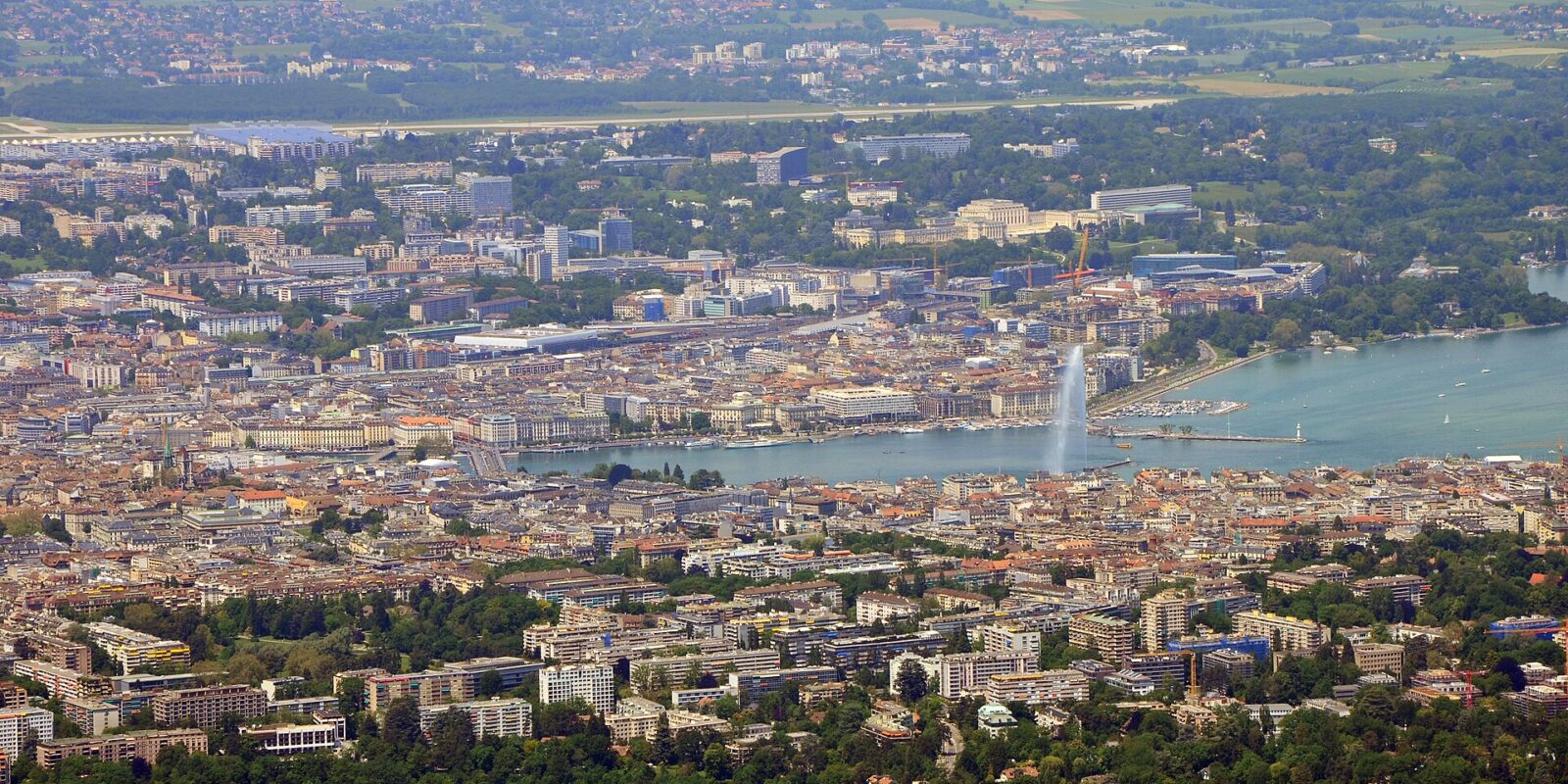
This article contains advertising. Our booking links are routed through a partner that adds commission tracking automatically, so if you book through one we earn a commission from the provider, at no extra cost to you. It never affects what we recommend. Affiliate disclosure
Most layover advice is written by people who have never had to make the decision at 11 a.m. with a boarding pass in their hand and four hours on the clock. The honest version is arithmetic, not enthusiasm: at Geneva the train takes six minutes each way, and everything else — passport control, luggage, the walk, the return security queue — is what actually eats your afternoon.
A Geneva airport layover is one of the easiest in Europe to turn into a real visit, because the city centre is a six-minute train ride from a station directly beneath the terminal. With four hours or more between flights you can comfortably reach the Old Town, see the lake and be back through security. With three you can manage the lakefront. Under three hours, stay airside — the return security queue at a peak hour will undo everything you gained.
01 — The only calculation that matters
Work backwards from your departure, not forwards from your arrival. Here is the honest budget for leaving and returning.
| Step | Realistic time |
|---|---|
| Disembark and reach the arrivals hall | 10–20 minutes |
| Passport control, if non-Schengen | 10–30 minutes, worse in winter |
| Store luggage and buy a ticket | 20–30 minutes |
| Train to Cornavin | 6 minutes, plus waiting for one |
| Walk from Cornavin to the lakefront | 10 minutes |
| Walk on to the Old Town | A further 10–15 minutes, uphill |
| Return train and walk back to check-in | 20 minutes |
| Security and passport control outbound | 20–45 minutes, more on a Saturday |
Add it up and the round trip costs roughly two hours before you have looked at anything. That is why the thresholds are what they are.
- Under 3 hours: stay in the terminal. Geneva airside is perfectly decent and the risk is not worth it.
- 3 to 4 hours: a lakefront walk. Train in, Jet d’Eau, one coffee, train back. Roughly an hour in the city.
- 4 to 6 hours: a proper visit. Old Town, cathedral, lunch, back with margin.
- 6 hours or more: you can add a museum, a boat across the harbour, or lunch somewhere you actually chose.
- Overnight: a different problem entirely, because the terminal does not stay open all night.
If your layover runs through the small hours, read sleeping at Geneva Airport before you plan to sit it out in the building.
02 — First: what to do with your bags
Nothing ruins a layover faster than dragging a cabin bag around a city for four hours. Geneva gives you two options and both are straightforward.
- At the airport. There are left-luggage lockers and a staffed baggage desk, with lockers in several sizes. A large one runs to around CHF 12 for the day. The office at the railway station beneath the terminal also takes skis and boards, which the lockers will not.
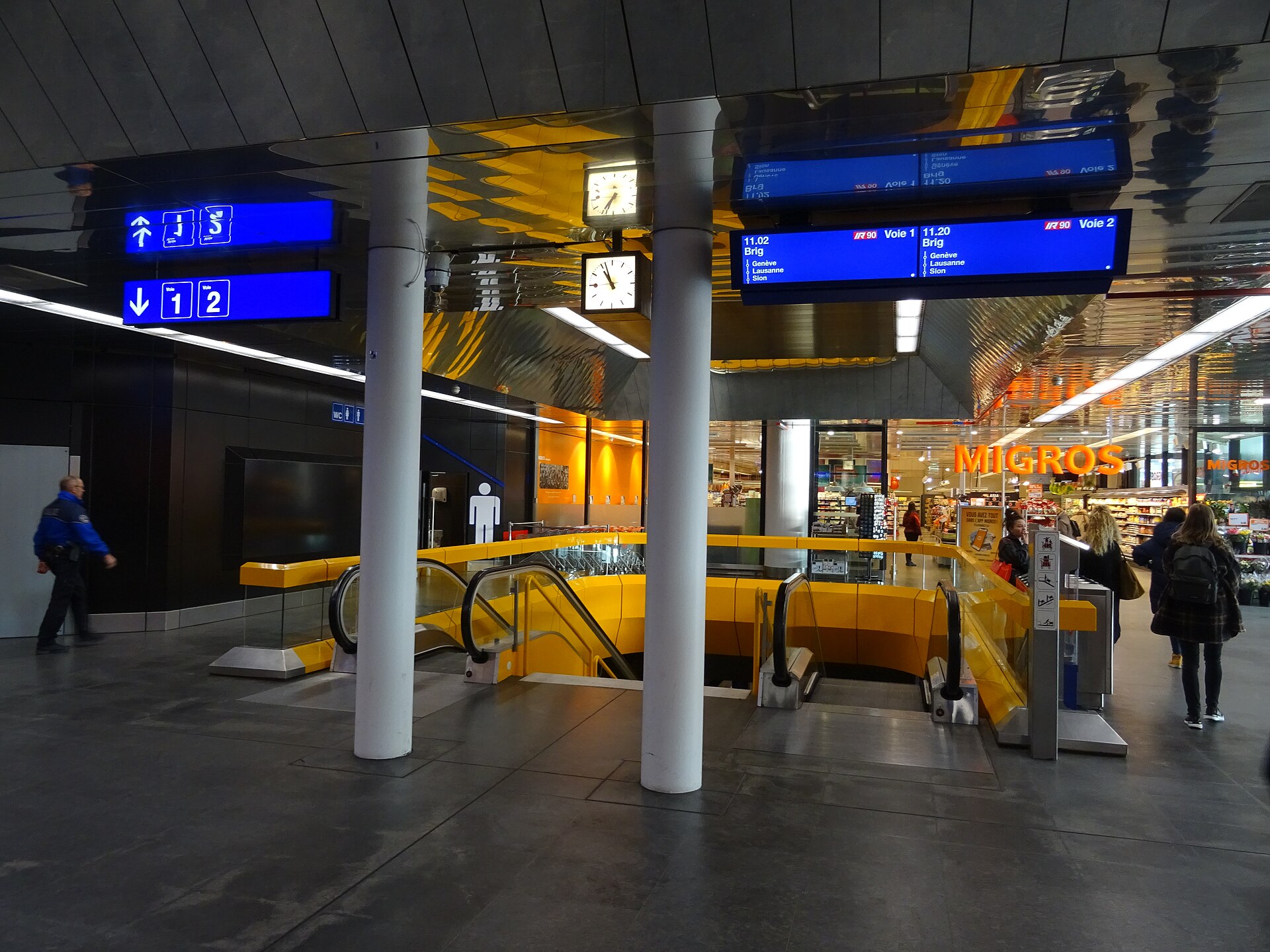
- At Cornavin. The main station in the city has automated lockers on the ground floor near the escalators, in a range of sizes, paid by QR code. Handy if you would rather carry your bag for six minutes on a train than queue twice at the airport.
If your bags are checked through to your final destination, none of this applies and your layover just got two hours longer. Check at the desk on arrival if you are not certain — on a single ticket they usually are, on separate tickets they usually are not.
03 — Getting into the city
Down the escalator from arrivals, buy a ticket from the machine, get on the next train. Genève-Cornavin is six minutes away and departures run several times an hour from early until late.
- A single ticket to the city costs a few francs from the machines at the station or on the platform.
- The Geneva Transport Card is free to anyone staying overnight in Geneva accommodation, so it does not usually help a layover — but if your onward journey includes a night in the city, ask for it.
- Buses run from outside arrivals as an alternative, taking around twenty minutes rather than six. Use them only if your destination is somewhere the train does not reach.
- Do not take a taxi. It costs many times the train fare and saves nothing.
Cornavin puts you a ten-minute walk from the lake and about twenty from the cathedral. Geneva is small — that is the whole reason this works.
04 — Three hours: the lakefront loop
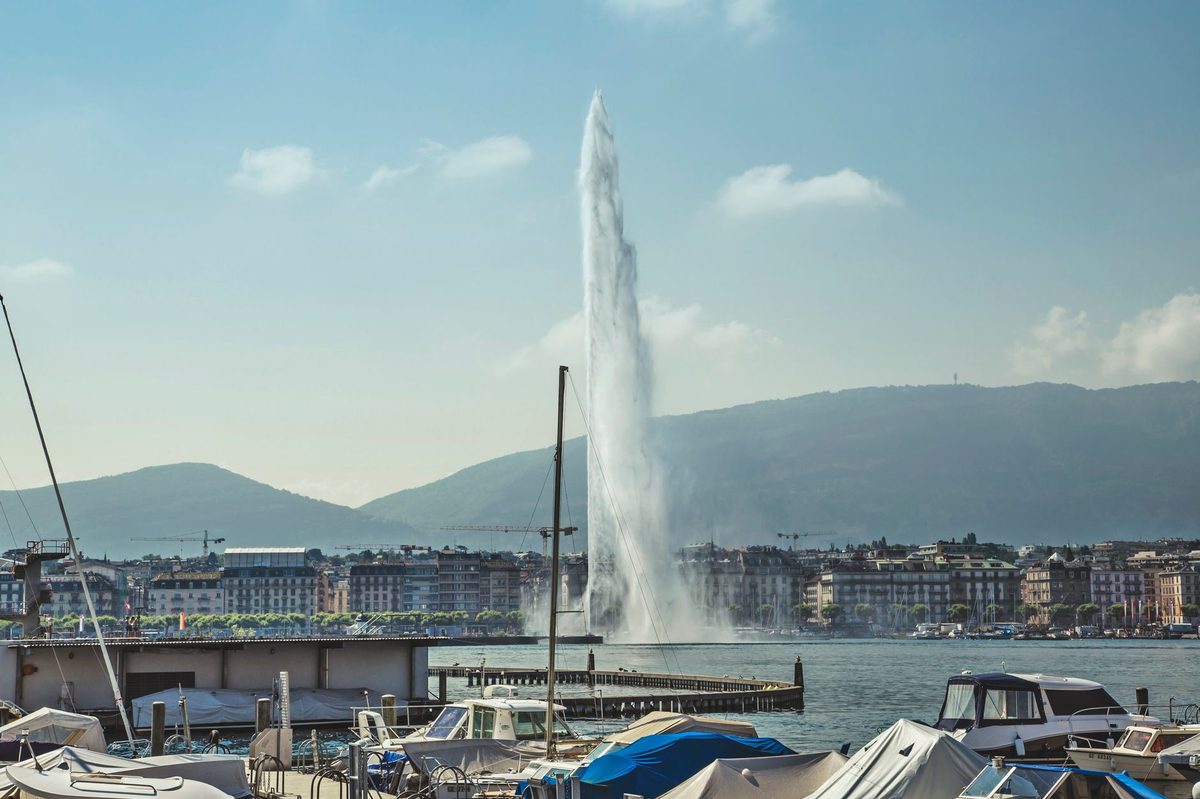
The minimum viable Geneva. Walk down the Rue du Mont-Blanc from Cornavin to the water, cross the Pont du Mont-Blanc, and you have the Jet d’Eau, the harbour, the flower clock and the whole lakefront panorama in one straight line of about a kilometre.
- Jet d’Eau — 140 metres of water, and you can walk out along the jetty to stand beneath it. You will get wet. It runs most of the year but is switched off in hard frost and for maintenance.
- Bains des Pâquis — the public baths on their own jetty, five minutes from the bridge on the north side. Locals swim here year-round, there is a buvette serving genuinely good food at genuinely reasonable prices, and it is the single most Genevan thing you can do in an hour.
- Jardin Anglais and the flower clock — on the south bank, unavoidable, mildly ridiculous, photographed by everybody.
- A boat — the little yellow Mouettes shuttle across the harbour for the price of a bus ticket and take about five minutes. A good way to see the water rather than walk beside it.
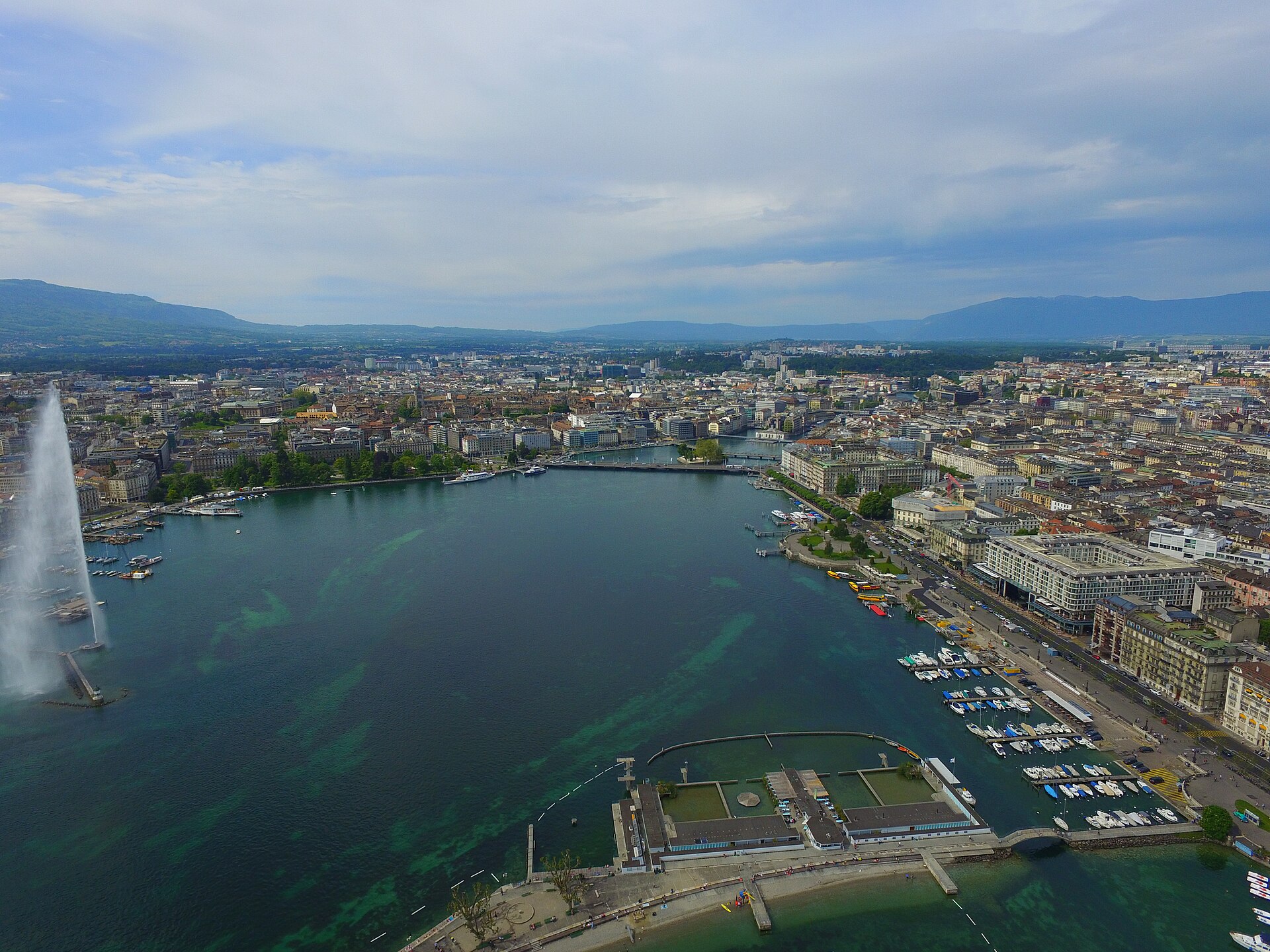
Turn round at the bridge and you are back at Cornavin in fifteen minutes. This is a comfortable three-hour layover and you will have seen the postcard.
05 — Four to six hours: the Old Town
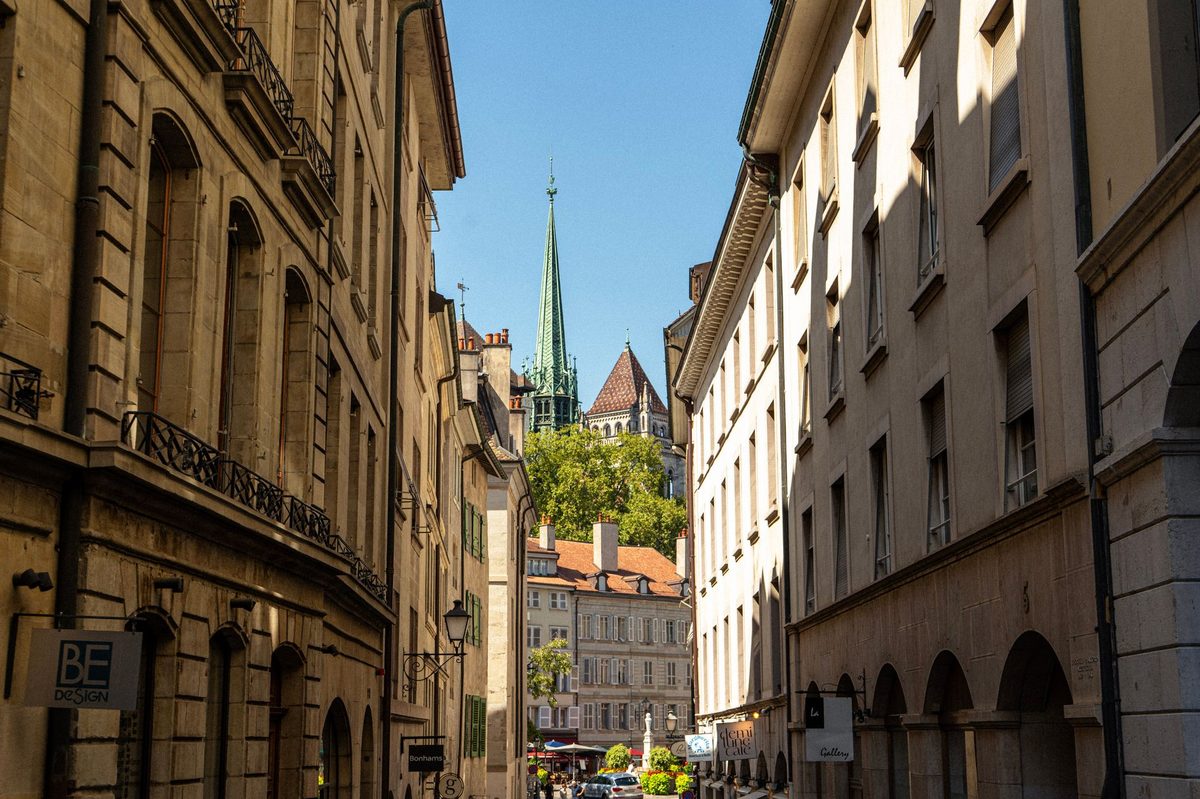
With four hours or more you can do the thing that actually makes Geneva interesting, which is the hill behind the lake.
From the lakefront, walk up through the Vieille Ville — steep, cobbled, quiet, and roughly fifteen minutes from the water. A sensible route:
- Cathédrale Saint-Pierre. Calvin’s church, and severe inside in a way that tells you a great deal about the city. The tower climb gives you the best free-ish view in Geneva, and the archaeological site beneath is remarkable if you have the time.
- Place du Bourg-de-Four. The oldest square in the city and the obvious place to sit down. Cafés with terraces, and a fountain.
- Maison Tavel. The oldest house in Geneva, now a city museum, and free.
- The Reformation Wall. Down the other side in the Parc des Bastions, with Calvin, Farel, Bèze and Knox glowering out at you in stone. Free, outdoors, ten minutes.
- Back down to Cornavin through the shopping streets, about fifteen minutes.
That is a genuinely good two hours in the city and it needs a four-hour layover to be comfortable, five to be relaxed.
06 — Six hours or more: add one real thing
With six hours you have time to choose something rather than just walk past it.
- The Musée d’Art et d’Histoire — Geneva’s big general museum, pay-what-you-wish for the permanent collection (you can pay nothing), ten minutes from the cathedral.
- The Palais des Nations — the UN’s European headquarters, visitable on a guided tour that needs booking ahead and identification. Allow two hours including the journey, and check the tour schedule before you commit.
- The Red Cross and Red Crescent Museum — across the road from the UN and, for many people, the more affecting of the two.
- Lunch at the Bains des Pâquis buvette — a plat du jour on a jetty over the lake, at a price that will surprise you in a good way for Geneva.
- A lake boat — the CGN runs short cruises out into the rade in season. An hour on the water, and you are back where you started.
What not to attempt on a layover: Chamonix, Annecy, Montreux, the Salève cable car. All of them are excellent and all of them need a day. A six-hour layover is not a day.
07 — Three layover plans you can follow exactly
Because the hardest part is deciding, here are three routes with the clock attached. Times assume you have cleared passport control and stored a bag.
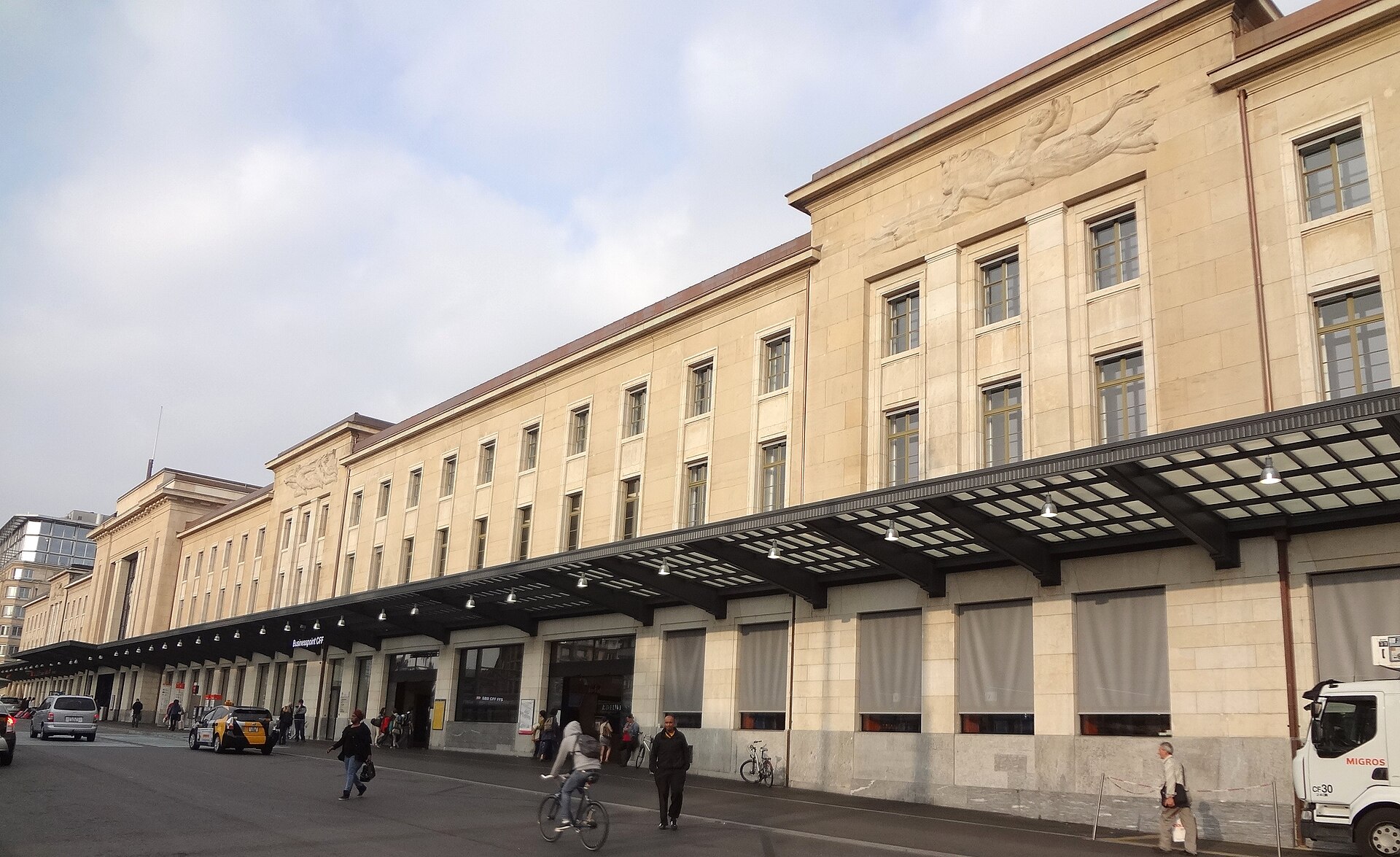
The 90-minute lakefront (for a 3-hour layover)
- Train to Cornavin — 6 minutes.
- Walk down Rue du Mont-Blanc to the water — 8 minutes.
- Cross the Pont du Mont-Blanc, photograph the Jet d’Eau, look for Mont Blanc on the horizon — 15 minutes.
- Turn left along the Quai du Mont-Blanc to the Bains des Pâquis, walk out along the jetty — 20 minutes.
- Coffee at the buvette, sitting over the water — 20 minutes.
- Walk back to Cornavin and train to the airport — 20 minutes.
The two-hour Old Town (for a 4- to 5-hour layover)
- Train to Cornavin, walk to the lake — 15 minutes.
- Cross the bridge, past the flower clock, and up into the Vieille Ville — 15 minutes.
- Cathédrale Saint-Pierre, including the tower if the queue is short — 30 minutes.
- Place du Bourg-de-Four, and a sit down — 20 minutes.
- Down past Maison Tavel to the Reformation Wall in the Parc des Bastions — 20 minutes.
- Back through the shopping streets to Cornavin, train to the airport — 25 minutes.
The half-day (for 6 hours or more)
- Everything in the two-hour Old Town route, unhurried.
- Add lunch — the Bourg-de-Four terraces, or the Bains des Pâquis buvette if you want the view.
- Add one indoor thing: the Musée d’Art et d’Histoire, ten minutes from the cathedral and pay-what-you-wish for the permanent collection (you can pay nothing).
- Or, instead of the museum, take a Mouettes boat across the harbour and walk the far bank.
- Leave the city 2 hours 30 before your flight, not 2 hours.
08 — Layovers by time of day
The same four hours behave very differently depending on when they fall, and this is the part generic layover advice always misses.
Early morning, before 09:00
The city is quiet and largely closed. Cafés open from around 07:00, museums do not. The lakefront and the Old Town are at their best — genuinely empty — but there is nothing to go inside. Take the walk, take the photographs, have breakfast at Cornavin or on the water, and accept that this is a looking layover rather than a visiting one.
Late morning to mid-afternoon
The ideal window. Everything is open, lunch is available at a sensible hour, and the return journey happens before the evening peak. If you have any choice about which layover to book, book this one.
Late afternoon and evening
Museums start closing from around 17:00 or 18:00 and most Geneva shops close by 19:00, earlier on Saturdays. What stays open is the lakefront, the restaurants and the Bains des Pâquis, which serves food into the evening and is beautifully lit. An evening layover is a dinner layover, not a sightseeing one — and it is not a bad way to spend three hours.
Sundays
Shops shut, and Geneva on a Sunday is quieter than visitors expect. Museums, cafés, the lake and the Old Town all work perfectly well. Shopping does not; do not plan a layover around buying a watch on a Sunday.
09 — What it costs
A layover in Geneva is cheaper than the city’s reputation suggests, provided you do not eat in the wrong places.
| Item | Rough cost |
|---|---|
| Train, airport to Cornavin, single | A few francs from the machine |
| Airport luggage locker, large, per day | Around CHF 12 |
| Coffee at a lakefront café | CHF 5–7 |
| Plat du jour at the Bains des Pâquis buvette | Well under a restaurant lunch |
| Saint-Pierre cathedral tower climb | A few francs |
| Maison Tavel, Reformation Wall, lakefront | Free |
| Mouettes boat across the harbour | The price of a bus ticket |
Cards work everywhere, including the ticket machines, and there is no reason to change money for a few hours. Geneva is expensive when you sit down in the wrong restaurant and surprisingly reasonable when you do not.
10 — Staying airside instead
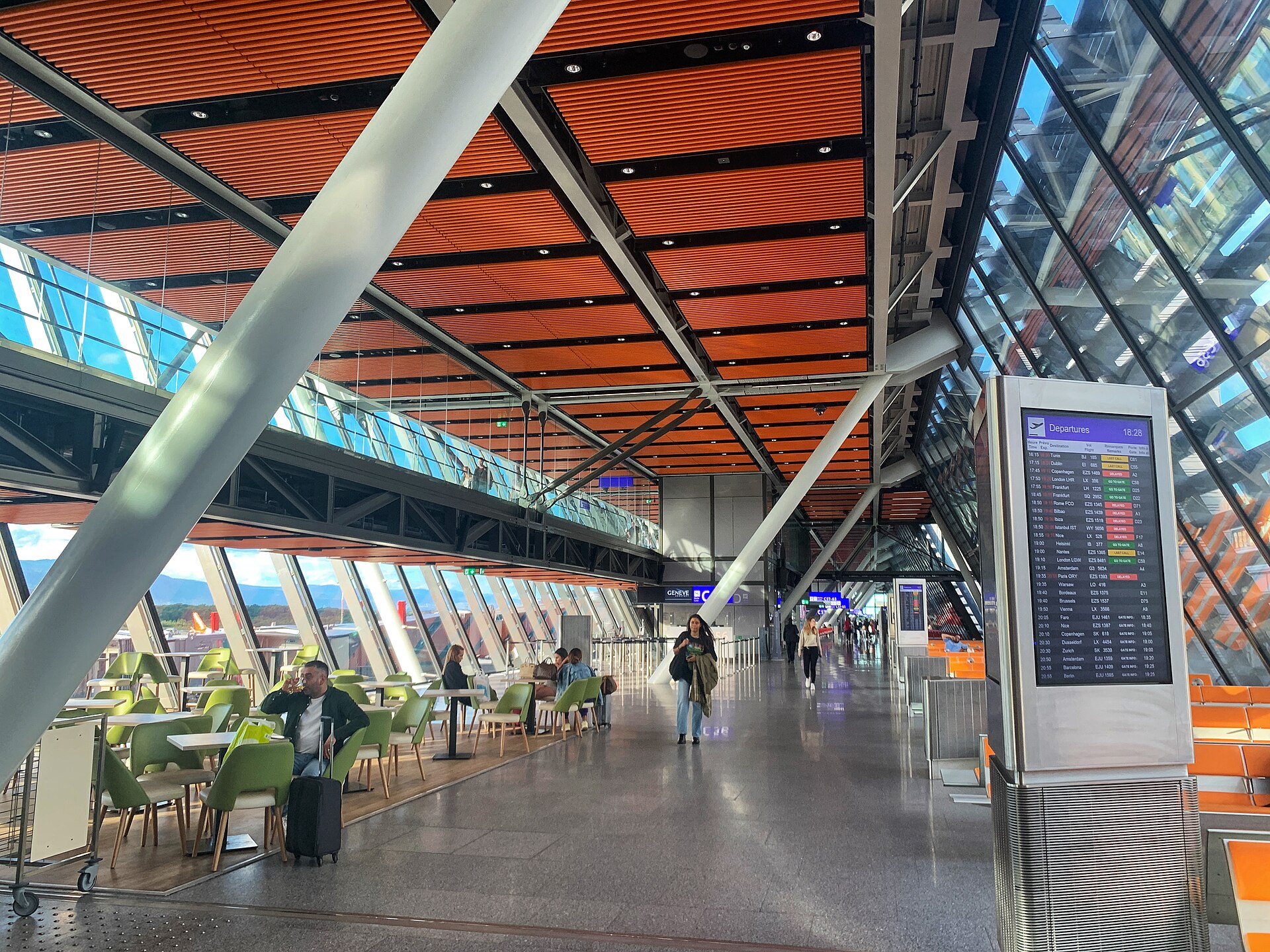
If the maths says stay, Geneva is a reasonable airport to stay in, which is not true everywhere.
- A good spread of cafés, bakeries and sit-down restaurants, at Swiss prices.
- Free wi-fi throughout and charging points at most seating.
- A viewing terrace with a real view over the apron to the Jura — the best free way to spend forty minutes here.
- Serious Swiss watch and chocolate retail, if that is your idea of a layover.
- Water fountains. The tap water is excellent; do not buy bottled.
- Quieter seating at the far ends of the piers than in the central hall.
If you would rather pay for somewhere calm, a lounge is often the sensible answer on a long layover — Geneva Airport lounges covers which ones you can actually get into and what they cost.
11 — The things that go wrong
- Underestimating the return. Security and passport control on the way back are the variable, and on a winter Saturday they are the whole problem. Build in an hour, not twenty minutes.
- Assuming you can re-enter easily. If you leave the airport you are re-entering as a departing passenger, with the full check-in and security process.
- Separate tickets. If your two flights are on separate bookings you must collect bags, exit and check in again — which is a layover activity in itself. Allow three hours minimum for that alone before considering a trip into town.
- Visa and Schengen questions. Leaving the airport means formally entering Switzerland. If you are transiting on a passport that needs a Schengen visa, you cannot simply stroll out.
- Sunday closures. Most Geneva shops shut on Sundays. Museums, cafés and the lakefront are unaffected; shopping is not.
- Winter weather. Geneva in January can be grey, damp and cold, and the Jet d’Eau may be switched off. A museum is a better plan than a lakefront walk.
Frequently asked questions
How long a layover do I need to leave Geneva Airport?
Four hours is the comfortable threshold for a real look at the city, and three is the minimum for a quick lakefront walk. Under three hours, stay in the terminal — the round trip and the return security queue will use everything you have.
How do I get from Geneva Airport to the city centre?
Train, from the station directly beneath arrivals, to Genève-Cornavin in about six minutes for a few francs. Buses take around twenty minutes; taxis take ten to fifteen and cost many times the fare.
Can I store luggage at Geneva Airport?
Yes — lockers and a staffed baggage desk at the airport, and the left-luggage office at the railway station beneath it, which also takes skis. Cornavin station in the city has automated lockers as well.
Is Geneva worth leaving the airport for?
For four hours or more, yes, unreservedly. The city centre is six minutes away and small enough to see something real in ninety minutes. Few airports in Europe make it this easy.
Do I need a visa to leave the airport during a layover?
If your nationality requires a Schengen visa, yes — leaving the terminal means entering Switzerland. Passengers who can enter Schengen visa-free simply walk out through passport control.
Can I see Mont Blanc or Chamonix on a layover?
You can see Mont Blanc from Geneva on a clear day, from the lakefront or the Pont du Mont-Blanc — it is a genuinely good view. You cannot visit Chamonix and get back safely on a layover. That is a day trip, not an interval.
What is there to do at Geneva Airport itself?
Eat, shop, use the viewing terrace, or pay for a lounge. It is a pleasant enough airport with good food options and free wi-fi, and the terrace is a better view than most airports offer.
A layover that runs through the small hours is a different problem, because the building itself closes: read sleeping at Geneva Airport overnight before you plan to wait it out inside.
Every independent lounge here caps you at three hours, which is worth knowing before you plan a long wait around one — Geneva Airport lounges has the hours and the prices.
A layover in town is only fun without a suitcase, and the lockers are in the station rather than the terminal. See our guide to luggage storage at Geneva Airport for where they are and what fits.
Don’t plan a layover around the free airport ticket you may have read about: it was withdrawn at the end of 2021. Our guide to Geneva Airport’s free transport ticket sets out what you’ll actually pay to get into town.
12 — Related Geneva guides
- Geneva Airport: the complete guide — how the airport works end to end.
- Geneva Airport to the city centre — every route into town in detail.
- Geneva Airport terminals and map — the piers and the walking times.
- Two days in Geneva — if your layover turns into a real stop.
- Geneva Old Town guide — the hill above the lake, in detail.
- Free things to do in Geneva — most of a good layover costs nothing.
- Geneva transport guide — trains, trams, buses and boats.
- Hotels near Geneva Airport — for a layover that becomes an overnight.